
Naomie Fournier Dubé is an Assistant Professor at the Department of Administration and Foundations of Education, Faculty of Education, Université de Montréal. Her research focuses on educational assessment , preschool education , and gross motor development in children aged 4-6 years. She has secured significant grants from the FRQSC (CAD 70,000 over 4 years) and the Relève professorale program (CAD 20,000 in 2022). Current research projects include "Quand le jeu guide l’évaluation des personnes enseignantes" (2025-2028, SSHRC-funded) and "L'évaluation dans et par le jeu en éducation préscolaire" (2024-2026, SSHRC). She collaborates with multidisciplinary teams on topics like educational inclusion , distance learning , and mathematical awakening in early education. Key publications examine assessment practices in preschool settings, spatial reasoning development, and motor skills evaluation tools. Her work appears in journals like Revue canadienne des jeunes chercheures et chercheurs en éducation and InspirAction . Awards include: 2022 FRQSC Relève professorale scholarship 2021-2025 FRQSC doctoral scholarship
جستجوی استاد راهنمای دانشگاهی
برای مسیر پژوهشیتان، استاد راهنما، استاد دانشگاه و پژوهشگر مناسب را پیدا کنید و با آنها ارتباط بگیرید.
نمایش ۷۳۶-۷۵۰ از ۱٬۶۳۱ استاد راهنما
اطلاعات پروفایلها از صفحات عمومی دانشگاهها گرفته شده و ممکن است بهروز نباشد.
Dr. Regina L. Suriel serves as a Professor in the Department of Teacher Education at Valdosta State University, where she teaches science education and research methodology courses across undergraduate and graduate programs while chairing multiple doctoral dissertation committees. Her academic qualifications include: Ph.D. in Science Education from the University of Georgia (2011) Post-Doctoral Fellowship at the University of Connecticut (2011-2013) M.S.Ed. in Science Education from Lehman College, CUNY (2002) B.S. in Science Education from City College, CUNY (1992) Dr. Suriel's research program centers on science teacher education and multicultural science education , with rigorous attention to equity and social justice in STEM. She investigates technology integration for science learning through qualitative and mixed methods, particularly examining how instructional design serves English language learners and underrepresented groups. Her scholarship consistently bridges theory and practice to address systemic inequities in science classrooms. Analysis of her 15 most recent publications reveals thematic continuity in advancing equity through curriculum development, teacher preparation, and critical pedagogy. Key trajectories include ecojustice in environmental science education, pandemic-responsive teacher training, and innovative uses of 3D modeling for conceptual understanding—demonstrating methodological versatility across workshop presentations, book chapters, and peer-reviewed articles. No scientific awards were documented in the source materials. Dr. Suriel maintains extensive mentoring relationships with teacher candidates, graduate students, and junior faculty, evidenced by her dissertation committee roles and pandemic-era partnership initiatives that sustained clinical experiences during educational disruption. Her collaborative work with schools demonstrates commitment to practical solutions for teacher development challenges. No laboratory facilities or dedicated research teams were specified in the available documentation.
Guli-Sanam Karimovaمشاهده پروفایل
پژوهشگر ارشد
Dr. Guli-Sanam Karimova serves as a University assistant and Postdoctoral Researcher at the Institute for Ethics in Management within the Department of Management at Vienna University of Economics and Business. She also holds a research fellowship at the Kiel Centre for Globalization in Germany, where she contributes to interdisciplinary research on global value chains and their ethical implications. Dr. Karimova earned her Bachelor's degree in Economics from the National University of Uzbekistan in Tashkent, followed by dual Master's degrees in Economics (with focus on business studies, marketing, and information management) and Philosophy from the University of Kassel. She completed her doctoral thesis at Kiel University's Chair of Practical Philosophy titled "Governing Responsibly: Practicing Sustainability, Responsibility and Ethics in Global Value Chains." Her research program bridges philosophical inquiry with practical business applications, focusing on how ethical frameworks can guide responsible practices in global supply chains. Dr. Karimova examines cross-cultural perspectives on business ethics, particularly comparing Eastern and Western philosophical traditions, and investigates the roles of consumers, corporations, and governments in creating sustainable economic systems. Her work demonstrates how virtue ethics can inform contemporary challenges in global business, especially regarding sustainability and social responsibility. Dr. Karimova's scholarly output reveals consistent thematic development across her publications, with increasing sophistication in addressing the intersection of digital transformation, circular economy principles, and ethical consumption within global supply chains. Her recent work shows particular innovation in applying philosophical frameworks to emerging challenges in AI-driven supply chains and consumer responsibility in the digital age. Dr. Karimova has received significant recognition for her contributions to business ethics: Patrick Primeux Best Paper Award 2019 for "Global Standards and Philosophy of Consumption: Towards Consumer-driven Governance of Global Value Chains" German Academic Exchange Service (DAAD) scholarships She actively contributes to the academic community through presentations at major international conferences including the AMA Winter Academic Conference in New Orleans, the International Vincentian Business Ethics Conference in Dublin, and numerous European venues. Her collaborative work with the Kiel Centre for Globalization examines cross-cultural differences in perceptions of corporate and consumer social responsibility, contributing valuable insights to both academic discourse and practical business applications. As a key member of the Kiel Centre for Globalization, a Leibniz ScienceCampus dedicated to analyzing global value chains, Dr. Karimova helps shape research that bridges theoretical philosophical inquiry with practical business ethics applications. Her work with this interdisciplinary center contributes significantly to understanding how cultural contexts influence ethical business practices in an increasingly interconnected global economy.

Alain Paganiمشاهده پروفایل
پژوهشگر
Alain Pagani is a Principal Researcher and Deputy Director of the Augmented Vision department at the German Research Center for Artificial Intelligence (DFKI) . He leads a team of 10 PhD students and researchers, focusing on Augmented Reality, Computer Vision, and Machine Learning. Research Interests include 3D Computer Vision, Image-based Scene Reconstruction, Object Detection and Tracking, and Extended Reality (AR/VR) applications. His work spans both industrial and academic projects, such as the EU initiatives dAIEDGE , CORTEX² , and FLUENTLY . Scientific Awards include a Google Research Award, Best Paper Award (INI-GraphicsNet 2007 Honorable Mentions), and Best Paper Award (INI-GraphicsNet 2008 Honorable Mentions). Projects like dAIEDGE (AI at the Edge) and CORTEX² (Collaborative XR) highlight his leadership in distributed AI and real-time extended reality systems. He has also coordinated EU projects such as LARA (Outdoor AR using Galileo) and Eyes of Things (Low-power Computer Vision).
Kimberly Conner is an Associate Professor of Mathematics Education at the University of Northern Iowa, affiliated with the College of Humanities, Arts and Sciences. Her research focuses on designing and analyzing pedagogical strategies for teaching proof at the secondary level, particularly through number talks, dot talks, and peer critique processes. Office: 308 Wright Hall Phone: (319) 273-2907 Office Hours: TTH 11:00-12:00 & 2:00-3:00 (Fall 2025) Her research examines how teachers' questioning practices foster mathematical reasoning, with emphasis on generality requirements in proof, technology-mediated instruction, and the development of collaborative proof-construction frameworks. Recent work explores virtual simulations for preservice teacher training, instructional tensions in geometry classrooms, and leadership roles of elementary mathematics specialists. Kimberly's publications span topics such as peer critique systems, proof understanding trajectories, and the integration of technology in mathematics education. While no formal awards or student advisement details are listed in the provided data, her work addresses critical gaps in secondary mathematics pedagogy and teacher development.
Zijian Wangمشاهده پروفایل
پژوهشگر ارشد
- Artificial Intelligence in Construction
- Building Information Modeling
- Graph Neural Networks
- +۳ مورد دیگر
Dr. Zijian Wang is an independent postdoctoral researcher at the TUM Georg Nemetschek Institute (TUM GNI), Technical University of Munich, advancing construction digitalization through AI and graph-based approaches to Building Information Modeling (BIM). His educational background includes a PhD from Technion – Israel Institute of Technology (Marie Curie Early-Stage Researcher in EU Horizon 2020 Cloud BIM project), a master's in Computer and Machine Vision from Cranfield University, a master's in Civil Engineering from Central South University, and a bachelor's in Civil Engineering from Chongqing Jiaotong University. He has also conducted research at the University of Cambridge and industry work at Trimble Finland. Dr. Wang's research centers on Building Information Graphs (BIGs), transforming design data into graph structures to enable machine learning applications. His work addresses critical gaps in BIM interoperability through semantic enrichment using graph neural networks, with applications in construction safety monitoring, multidisciplinary change propagation, and automated consistency maintenance. Specific projects include PPE detection via deep learning, tunnel temperature data mining, and graph-based object classification. His publication trajectory (2021-2025) demonstrates increasing sophistication in graph-based BIM solutions, evolving from foundational room classification to complex cross-domain interoperability frameworks and generative AI applications for construction planning constraints. He has received significant recognition: Thorpe Medal, European Council on Computing in Construction (EC3) (2023) Eastman Best Ph.D. Paper, Int Joint Conference CIB W78 - LDAC (2021) Dr. Wang supervises theses in TUM's Software Lab and contributes to EU-funded research initiatives. His current BIGs research aims to establish graph-based foundations for generative design tools, fostering more collaborative and intelligent construction workflows through explicit relationship modeling and multi-modal data embedding.

Caroline Leininger-Frézal is a Professor of Geography Teaching at the University of Paris Cité, affiliated with the André Revuz Didactics Laboratory (LDAR). She has held this position since September 2010 and serves as co-head of the History and Geography specialty of the Master's in Discipline Teaching since September 2014. Her work spans the Faculty of Human and Social Sciences and the Faculty of Geography, History, Economy and Societies. Her research focuses on innovative approaches to geography education, particularly through experiential learning and virtual field trips. She has developed significant projects like the CRISEPAC activity booklet for primary school students about natural hazards and the V-Global Erasmus Plus project focused on education for sustainable development. Her work emphasizes critical thinking in geography education and addresses contemporary challenges like climate change through educational frameworks. Her recent publications demonstrate a strong focus on global change education, blended learning approaches, and the development of geocapabilities in students. Through projects like GeoCapabilities 3, she has contributed to international efforts to enhance teachers' expertise in geography education. Her work bridges theory and practice, with significant contributions to both academic research and practical teaching resources. Among her notable scientific contributions are: Leadership in the V-Global Erasmus Plus project on sustainable development education Development of the CRISEPAC MOOC for teaching climate change risks Creation of the action-research group "Spatial Thinking" with Irem of Paris Coordination of binational teacher training initiatives using virtual field trips As an educator and mentor, Leininger-Frézal has supervised numerous doctoral students working on geography education topics, including Julie Maurice on "Teaching geographic reasoning through comics," Karine Férol on geographical narratives in middle school, and Natacha Binard on climate change education. She serves on multiple scientific councils, including the European Journal of Geography and the international conference on the teaching of history, geography and citizenship education. Her laboratory work centers on the André Revuz Didactics Laboratory, where she leads the "Higher Education" research group. She is actively engaged in developing innovative teaching approaches that address contemporary challenges through geography education, with particular emphasis on sustainability, critical thinking, and spatial reasoning.
W. Gary Martin serves as the Leischuck Endowed Professor of Mathematics Education within the Department of Curriculum and Teaching at Auburn University's College of Education. A national leader in mathematics education, he has held significant leadership roles in professional organizations and contributed to major standards documents including Common Core State Standards for Mathematics. His work focuses on systemic transformation of secondary mathematics teacher preparation through evidence-based practices and collaborative networks. Dr. Martin's educational qualifications include: Ed.D. in Mathematics Education, University of Georgia His research program investigates networked improvement communities for teacher preparation, cognitive demand in mathematical tasks, statistical reasoning environments, and real-world applications of vector geometry. He examines how collaborative professional networks like MathTwitterBlogosphere create learning opportunities and how structured wait time influences classroom discourse, with consistent attention to equity in mathematics education and development of robust teacher pathways. Analysis of recent publications reveals cohesive themes in scaling educational reforms through institutional networks, sustainability of active learning initiatives, and alternative certification pathways for career-changers. His work demonstrates how networked communities transform teacher preparation by connecting research with clinical practice and policy implementation across diverse educational contexts. Dr. Martin's contributions have been recognized through prestigious honors: Leischuck Endowed Professorship NCATE Program Reviewer Recognition His major externally funded initiatives include: Director, Mathematics Teacher Education Partnership (MTEP) - NSF-funded national coalition of over 100 universities transforming secondary mathematics teacher preparation Principal Investigator, DREAM-Math project - NSF-funded initiative preparing STEM degree holders for mathematics teaching careers through alternative certification pathways Dr. Martin leads the Mathematics Teacher Education Partnership network and DREAM-Math project team, fostering interdisciplinary collaboration among university faculty, school practitioners, and policymakers to create sustainable models for high-quality mathematics teacher preparation with national impact.
Sophia Meeres serves as Lecturer at University College Dublin's School of Architecture, Planning and Environmental Policy since 2004, directing Master's programs from 2013-2022 and undergraduate landscape architecture programs from 2006-2009. Her dual expertise bridges professional practice and academia, informed by 18 years in international design firms including SOM, Fosters, and BDP. BSc Civil, Structural and Environmental Engineering: University College London MLA Landscape Architecture: University of Edinburgh Other: Institute des Hautes Etudes de Défence Nationale (AA-IHEDN) Her research centers on anthropogenic landscape transformation, with current focus on Irish tree management policy and rural-urban connections. She explores communication methods for illustrating landscape change to communities, emphasizing transparent planning processes and fundamental connections between local/global environments. Recent work examines trees outside forests and develops strategies for rural County Councils. Publications reveal evolving focus from European urban gardens and allotments to Irish-specific landscape challenges, with significant contributions through EU projects like LE:NOTRE and COST Action TU1201. Her work increasingly addresses climate adaptation through rural tree policies and small town studies. As active committee member in European Council of Landscape Architecture Schools (ECLAS) and ARENA Architectural Research Network, she connects Irish planning with continental frameworks. Her professional activities include French Ministry of Culture consultancy (2009-2011) and municipal projects in Nice and Alpes Maritimes. Principal supervisor for Landscape Architectural THESIS (30 ECTS) and Landscape STUDY modules since 2016 Coordinator of Nature as Builder, Landscape Research, and Understanding Landscape modules Participant in EU-funded LE:NOTRE (2010-2013) and COST Action TU1201 (2013-2016) Based in UCD's Richview campus, her work integrates studio teaching with policy development, particularly through collaborations with Irish rural councils on tree management strategies and community engagement frameworks.
Davide Talonمشاهده پروفایل
پژوهشگر ارشد
Davide Talon is a Research Fellow at Fondazione Bruno Kessler (FBK) working on efficient multi-modal learning as part of the Deep Visual Learning (DVL) unit under Prof. Elisa Ricci and Dr. Yiming Wang. He holds a PhD in Computer Vision from the University of Genova and the Italian Institute of Technology (IIT), with prior degrees from the University of Padova. His research spans deep learning, representation learning, vision-language models, and causality, with significant contributions in fashion image generation, visual question answering, and domain adaptation. Talon has published extensively in top-tier conferences including CVPR, ICCV, and WACV, with multiple papers accepted for 2025 venues. As an educator, he teaches Introduction to Machine Learning for the Data Science Master Program and Advanced Multimodal Learning for the IECS Doctoral School at the University of Trento. His service to the academic community includes roles as Workshop Organizer for GreenFOMO@ECCV24, Area Chair for BMVC25, and reviewer for major computer vision conferences and journals. His recent work demonstrates strong interdisciplinary focus, particularly in translating abstract language for vision-language models and developing novel approaches to fashion image generation and domain adaptation problems.

Ruben Schlagowski is a scientific employee at the Chair for Human-Centered Artificial Intelligence , part of the Faculty of Applied Informatics at the University of Augsburg . His work bridges Human-Computer Interaction with Musical XR , Sonic Interaction Design , and Extended Reality , focusing on creativity support systems and immersive experiences. Research spans Mixed Reality , AI ethics , and physiological computing Active in IEEE International Workshop on the Musical Metaverse (IWMM) and reviewing for CHI , ISMAR , and other top venues Recipients of multiple Honorable Mentions at IEEEVR , C&C , and CHI Supervised 8 Master's theses and 5 Bachelor's theses in interactive systems Publishes on AI explainability , creative tools , and physiological human-machine symbiosis , with recent work on XR-based music production , GAN manipulation , and AI bias awareness through VR. His projects integrate computer vision , audio analysis , and user-centered design to create systems that adapt to human needs. Scientific accolades include: IEEEVR 2022 - Honorable Mention C&C 2022 - Honorable Mention CHI 2024 - Honorable Mention HCMKDT Best Driver Awards (2023) His research explores the intersection of music technology , immersive systems , and ethical AI , with a focus on user experience optimization in mixed reality environments and alterfactual explanation frameworks for AI transparency.
- Social Law
- Health Law
- Rehabilitation Law
- +۴ مورد دیگر
Professor Felix Welti serves as Professor of Social and Health Law, Rehabilitation and Disability Law at the University of Kassel. His extensive academic career focuses on the intersection of legal frameworks and social policy, particularly concerning disability rights and social security systems. He maintains an active presence at the university with regular consultation hours held on Tuesdays from 9-10am, both in person and via Zoom. Welti's research interests center around Social Law, Health Law, Rehabilitation Law, Disability Law, Social Security Law, and Human Rights Law, with particular emphasis on the implementation of the UN Convention on the Rights of Persons with Disabilities (UN CRPD) in German legal frameworks. His work critically examines how legal structures can promote or hinder social inclusion, accessibility, and equal participation for people with disabilities. An analysis of his recent publications reveals a consistent focus on rehabilitation law, particularly examining the German Social Code Book IX (SGB IX), legal implementation of disability rights, and the practical application of social security systems. His scholarly output demonstrates increasing attention to pandemic impacts on social courts, federalism challenges in disability policy, and the evolving landscape of protected employment for people with disabilities. Professor Welti has established himself as a leading scholar in German disability law through his numerous monographs, edited volumes, and journal articles. His work frequently addresses the tension between theoretical legal frameworks and practical implementation in social administration, highlighting areas where legal reform could better support social inclusion. His academic contributions include significant work on social self-administration, legal instruments for barrier-free environments, and the rights of people with disabilities in educational and employment settings. Welti's research often involves interdisciplinary collaboration with scholars in social work, rehabilitation sciences, and disability studies.
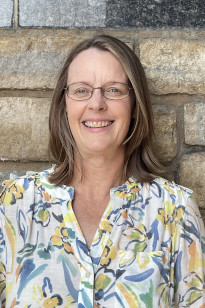
Michele W. McColgan serves as Professor and Department Chair of Physics in Siena University's School of Science, where she has held progressive academic appointments since 2005. Her leadership spans curriculum development, physics club advisement, and departmental administration within this Catholic liberal arts institution located in New York's Capital Region. Her academic credentials include: Ph.D. in Physics, University of Alabama M.S. in Physics, University of Alabama B.S. in Optical Science, University of Rochester Dr. McColgan's research pioneers Physics Education Research methodologies, with emphasis on augmented reality applications for 3D physics visualization and team-based learning frameworks. She advocates for structured collaborative environments where students progress through preparation, readiness testing, application exercises, and summative assessments to build conceptual understanding, mathematical competence, and computational skills. Her work bridges theoretical physics with practical classroom implementation. Analysis of her 2017-2021 publications reveals consistent innovation in STEM pedagogy, particularly regarding remote learning adaptations during the pandemic, MATLAB integration in physics instruction, and assessment of conceptual knowledge. These works collectively advance evidence-based strategies for improving student engagement and mastery in physics education through technology-enhanced and collaborative approaches. As physics club advisor and research supervisor, Dr. McColgan mentors students in PER projects and outreach activities including senior symposia and community events. Her department leverages external funding from NASA, NSF, and DOE to support undergraduate research at facilities like CERN and international field sites, though specific grant leadership isn't documented in the source material. She directs hands-on instruction in electronic instrumentation where students build circuits, program microcontrollers, and construct robots. Her department fosters a close-knit academic community through small classes (
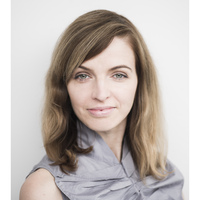
Marta Olcoń-Kubicka is a Professor at the Institute of Philosophy and Sociology of the Polish Academy of Sciences (IFiS PAN) in Warsaw, specializing in the sociology of money and new economic sociology. As an Associate Professor since 2014, she leads significant research projects examining household financial practices and intergenerational wealth transfers, contributing to our understanding of economic life from cultural and ethnographic perspectives. Her research focuses on culturally oriented economic sociology and the sociology of money, with particular attention to ethnographic studies of money practices in households. She investigates how young middle-class couples in Warsaw manage their finances, exploring the moral dimensions of financial arrangements, cultural meanings of money, and how digital technologies mediate domestic economic life. Her work reveals how households create 'domestic currencies' and establish fairness rules, connecting micro-level practices to broader economic transformations in post-socialist Poland. Dr. Olcoń-Kubicka's publications demonstrate consistent focus on the cultural and moral dimensions of money practices within households. Her research shows how financial arrangements reflect household order and moral reasoning, particularly examining how young couples navigate tensions between market logic and relational values. She has pioneered research on digital householding, revealing how spreadsheet technologies mediate moral judgments about money. Her work bridges economic sociology with everyday life, showing how macroeconomic transformations manifest in micro-level domestic practices. Her scientific recognition includes: Best performance prize (with Mateusz Halawa) for the presentation 'Społeczne życie pieniędzy i finansów w młodych gospodarstwach domowych' at the XV Congress of Market and Opinion Researchers, Warsaw, October 2015 As Principal Investigator of multiple National Science Center Poland (NCN) projects, Dr. Olcoń-Kubicka has secured significant research funding. She led 'Practices of handling money in close relationships in young family households' (2014-2017, NCN OPUS 9) and currently leads 'Intergenerational transactions: Relational work and moral frames in transfers of wealth from parents to their adult children' (2019-2021, NCN OPUS 15). She also serves as Key-Investigator in the Max Planck Partner Group for the Sociology of Economic Life (2017-2020), demonstrating her capacity to secure competitive international research funding. Dr. Olcoń-Kubicka is affiliated with the Research Team for the Sociology of Politics, Economy and Education at IFiS PAN. She co-organizes workshops through the Max Planck Partner Group, including events on 'Meaning of Money' and 'Contested Futures and Temporalities of Capitalism.' Her research collaborations extend internationally, with visiting researcher positions at the Max Planck Institute for Study of Societies in Cologne and Lancaster University's Centre for Mobilities Research.
Dr. Feng Liu serves as Professor and Chair of the Department of Informatics and Mathematics within Mercer University's College of Professional Advancement, while also coordinating the B.S. in Software Application Development and Human-Computer Interaction program. Her leadership spans curriculum development, department administration, and program coordination across multiple technical disciplines. Her academic credentials include a PhD and MS in Computer Science from Georgia State University (2005, 2000), an MBA in Business Administration from Mercer University (2010), and a BE in Automobile Engineering from Jilin University of Technology (1995). Professional certifications include a UX Certificate from Nielsen Norman Group (2016) and Interaction Design Specialization from UC San Diego, complemented by recent data analysis training through SimpliV. Dr. Liu's research program centers on Human-Computer Interaction with specialized expertise in Computer Graphics, Information Visualization, and immersive technologies including Virtual Reality, Augmented Reality, Web3D, and the Metaverse. Her work uniquely bridges technical innovation with human-centered applications, particularly focusing on user experience design, educational technology, and community impact. She has pioneered two significant educational frameworks: the Community Project Based Learning Model (CPBLM) that integrates real-world service projects into technical coursework, and the Concurrent Learning/Teaching Model (CLTM) enabling seamless online/in-person student collaboration. Recent publications (2021-2024) demonstrate her evolving research trajectory from educational technology toward ethical metaverse development, with particular emphasis on designing child-safe digital environments using AI and psychological principles. Her scholarly output spans ACM conferences, educational technology journals, and interdisciplinary publications addressing both technical innovation and social impact. Dr. Liu's teaching excellence has been formally recognized through Mercer University's 'Excellent in Teaching' award (2021) and three consecutive Teaching Innovation nominations (2017-2019). She maintains active professional engagement as Chairperson of the Web3D User Experience Working Group and through presentations at major conferences including ACM Web3D, ASCUE, and AAC&U. Her departmental leadership has driven the development of Informatics, Computer Graphics, and Data Science programs since 2011, with particular focus on serving non-traditional students through High-Impact Practices. Through her Web3D Consortium leadership and community-focused teaching model, Dr. Liu cultivates research environments where students develop technical skills while addressing real societal challenges. Her current work explores the critical intersection of emerging technologies and human well-being, positioning her at the forefront of responsible innovation in immersive digital spaces.
نمایش نتایج تا ۷۵۰ مورد اول. برای یافتن نتایج دقیقتر، جستجوی خود را با فیلترها محدود کنید.