Aleksandar Pavlović is a researcher at the Institute of Computer Sciences specializing in knowledge graph technologies and Datalog-based systems. His work bridges semantic web standards with machine learning methodologies to advance knowledge representation and query processing efficiency. Research interests focus on: Knowledge graph embedding techniques with spatial and geometric interpretations Datalog optimization for SPARQL query evaluation Integration of graph neural networks with symbolic reasoning systems Interoperability solutions for semantic web technologies Recent publications (2023-2024) demonstrate consistent innovation in knowledge graph completion and reasoning, featuring novel embedding architectures like ExpressivE and region-based neural networks. His work shows strong alignment with database community priorities while pushing boundaries in neural-symbolic integration. Collaborations span international institutions through co-authorships with researchers including Sallinger, Schockaert, Angles, and Gottlob. He actively contributes to academic discourse through conference presentations, including recent work on AI-supported language services for long-term care systems.
Silvia Miksch is a Full Professor of Visual Analytics at the Vienna University of Technology (TU Wien), leading the Research Unit Visual Analytics (E193-07) and coordinating the Research Focus on Visual Computing and Human-Centered Technology. She holds a PhD from TU Wien and has held academic roles at institutions like Stanford University (FWF postdoc), Danube University Krems (2006–2010 as University Professor), and TU Wien. Her research focuses on visualization, visual analytics, interaction design, and temporal data analysis with applications in medical informatics, process engineering, and cultural heritage. Education: Master of Social and Economic Science (University of Vienna, 1987), PhD (TU Wien, 1990). Former roles include Chair of the Austrian Society for Artificial Intelligence (ÖGAI) and leadership in EU projects like VALCRI and KAVA-Time. She has authored over 200 publications and received awards such as the IEEE VGTC Visualization Technical Award (2023) and induction into the IEEE VGTC Visualization Academy (2020). Research interests include knowledge-assisted visual analytics, task-driven guidance systems, and spatiotemporal data exploration. She oversees the Laura Bassi Centre of Expertise 'CVAST' and advises numerous PhD and master’s students. Her work bridges theory and practice, with notable projects like the Marvel Cinematic Universe infographic (GD 2019 Best Creative Challenge) and Game of Thrones character networks (GD 2018 Third Prize). Key Awards: Best Paper Award at vis4dh 2019, IEEE VGTC Technical Award 2023 Editorial Roles: Associate Editor of Transactions on Visualization and Computer Graphics (2011–2015), Editorial Board of Journal of Biomedical Informatics (2012–2020) Leadership: Chair of EuroVis Steering Committee (2023–2027), Member of VIS Executive Committee (2015–2020)
David I. Inouye is an Assistant Professor in the Elmore Family School of Electrical and Computer Engineering (ECE) at Purdue University. His research focuses on trustworthy AI/ML, causal inference, distribution robustness, and explainable AI. He holds a PhD in Computer Science from The University of Texas at Austin and completed a postdoc at Carnegie Mellon University. Education: PostDoc in Machine Learning, 2019 – Carnegie Mellon University PhD in Computer Science, 2017 – The University of Texas at Austin MS in Computer Science, 2015 – The University of Texas at Austin BS in Electrical Engineering, 2012 – Georgia Institute of Technology BA in Natural Sciences, 2011 – Covenant College Research Interests: Developing robust machine learning methods resilient to distribution shifts and computational assumptions Exploring causal mechanisms to mitigate ML robustness issues Advancing explainable AI and fairness in automated decision systems Designing robust collaborative learning frameworks for edge device networks Publications Highlight Trends in: Counterfactual fairness and causal reasoning Federated learning and domain generalization Generative models and distribution matching Vertical data partitioning and dynamic network inference Grants: Funded by NSF, Army Research Laboratory (ARL), and Office of Naval Research (ONR). Active lab collaborations include projects on federated domain translation and causal ML. Labs/Teams: Leads the Inouye Lab, with contributions to open-source tools like FedINB and StarCraftImage datasets.
Noah Goodman is a Professor of Psychology and Computer Science at Stanford University. He holds dual appointments in the Department of Psychology and the Department of Computer Science, reflecting his interdisciplinary work at the intersection of cognitive science and artificial intelligence. Education: B.A. in Mathematics (1997), B.S. in Physics (1997) from the University of Arizona, and a Ph.D. in Mathematics (2003) from the University of Texas at Austin. Research focuses on cognitive modeling, probabilistic programming, AI alignment, and the computational foundations of human-like reasoning. Recent work explores topics such as in-context learning strategies, causal abstraction mechanisms, and the ethical implications of advanced AI systems. His lab, the Computation & Cognition Lab, develops tools like NumPyro and frameworks like BoxingGym to advance AI research. Articles from 2025 highlight trends in AI ethics, cognitive modeling, and symbolic reasoning in neural networks. Notable collaborations include work on self-improving reasoners and value profiles for encoding human variation. No awards explicitly listed, but contributions to foundational AI research are widely recognized. No student advisees listed in available texts. Labs/Teams: Computation & Cognition Lab at Stanford University.
Zimu Zhou is an Assistant Professor at Tsinghua University's School of Software, Department of Computer Science and Technology, specializing in federated learning, edge computing, and mobile systems. With an extensive publication record spanning from 2018 to 2025, Dr. Zhou has established themselves as a leading researcher in distributed machine learning systems. Dr. Zhou's research focuses on federated learning systems , mobile AI optimization , and spatial data processing . Their work addresses critical challenges in distributed machine learning including data heterogeneity, communication efficiency, privacy preservation, and practical deployment constraints. Recent research has expanded into federated large language models and advanced personalization techniques for mobile environments. Analysis of Dr. Zhou's publication trends reveals a strong emphasis on practical deployment of federated learning systems, with increasing focus on real-world applications in mobility, urban computing, and AIoT. Their work bridges theoretical advances with practical implementations, as evidenced by multiple publications in top-tier systems and AI conferences. Best Paper Award, MobiCom 2024 ACM SIGSPATIAL Best Paper Honorable Mention, 2022 Dr. Zhou has supervised several PhD students who have become active contributors in the field, including Xiaochen Li, Sicong Liu, and Yexuan Shi. Their research has been supported by multiple grants focused on edge intelligence and privacy-preserving distributed learning. Current projects include federated reasoning with large language models and resource-efficient AIoT systems. Dr. Zhou leads the Distributed Intelligence Lab at Tsinghua University, which focuses on building practical frameworks for decentralized machine learning across mobile and edge environments. The lab collaborates with industry partners to deploy federated learning solutions in real-world settings.
Afra Mashhadi is an Associate Professor in the Division of Computing & Software Systems at the University of Washington Bothell within the School of Science, Technology, Engineering & Mathematics. She concurrently serves as an Adjunct Associate Professor at the University of Washington Information School (i-School) and holds affiliate positions at the e-Science Institute and Center for Studies in Demography and Ecology (CSDE). Dr. Mashhadi co-chairs the steering committee for the Responsible AI Systems and Experiences Centre (RAISE) and is recognized as a leading advocate for ethics and diversity in computing. Educational Background: Ph.D. in Computer Science, University College London, London, England Her research pioneers computational behavioral modeling through ethical AI frameworks, developing mathematical models that leverage digital data and machine learning to analyze societal phenomena across spatial scales and human behavioral dynamics. This work bridges ubiquitous computing, algorithmic fairness, and privacy-preserving systems with direct applications in social computing and responsible technology deployment. Recent publications demonstrate a cohesive research trajectory focused on ethical AI challenges, particularly examining social reasoning in LLMs, bias quantification in co-authorship networks, fairness benchmarking for generative models, and privacy-preserving federated learning. These works appear in premier venues including ACM WSDM, ICTIR, IEEE DCOSS, and ACM JCSS, reflecting her leadership at the AI-society intersection. Scientific Awards: Sr. Chief Ronald G. Gamboa Endowment Faculty Fellowship Award Scholarly Service: Program Chair: ICWSM 2021, SocInfo 2019 Tutorial Chair: IC2S2 Broadening Participation Chair: ACM Ubicomp 2023 Senior Committee: FAccT, CHI, WebSci, ICWSM Dr. Mashhadi maintains active research affiliations with the Responsible AI Systems and Experiences Centre (RAISE), e-Science Institute, and Center for Studies in Demography and Ecology (CSDE), where she leads interdisciplinary projects connecting computational methods with social science and ethical frameworks through European collaborations and industry deployments including WebSummit trials.
Juliane Cron is a researcher in the Department of Cartography and Visual Analytics at the Technical University of Munich. Her work bridges cartographic principles with modern data visualization techniques, focusing on spatial analysis and human-computer interaction. Current affiliation: Technical University of Munich Email: juliane.cron@tum.de Research Interests Cartography Geographic Information Systems Visual Analytics Data Visualization Spatial Analysis Human-Computer Interaction Recent publications highlight her expertise in academic cartography education, international collaboration frameworks, and innovative approaches to spatial data reasoning using Bayesian networks. Her work also explores visual narratives for routing applications and curriculum development in GIS education. Juliane Cron is actively involved in the academic cartography community, contributing to proceedings at major conferences like the International Cartographic Conference (ICC) and EuroVis Workshop.
Michele Sevegnani is a Senior Lecturer in the School of Computing Science at the University of Glasgow, where he also earned his PhD. His work focuses on formal methods, particularly bigraphs with sharing, for modeling and verifying complex, location-aware, event-based systems. He is actively involved in major research initiatives including Probable Futures, TransiT, and CHEDDAR, funded by Responsible AI UK, UKRI, and industry partners. Education: PhD in Computing Science, University of Glasgow MSc in Bioinformatics, University of Edinburgh and University of Trento His research interests include formal verification, digital twins, probabilistic model checking, IoT, mixed-reality systems, and human-autonomy teaming. He has developed BigraphER, an open-source suite for bigraph simulation and analysis. His recent work addresses formal modeling of BDI agents, 5G/6G protocols, and AI in law enforcement. His publications span formal methods, AI, networking, and human-robot interaction, showing a consistent focus on applying rigorous mathematical models to real-world systems. Trends include runtime verification, safety assurance in autonomous systems, and the integration of AI with formal guarantees. Scientific Awards: Nominated for the BCS Distinguished Dissertation Award (2013) Recipient of Amazon Research Award (2022) He advises multiple PhD students and postdoctoral researchers. He has secured grants from the Royal Society of Edinburgh, Taiwan’s Ministry of Science and Technology, and Amazon. He has been a visiting researcher at UC Berkeley and collaborates with institutions in France and Taiwan. He leads the development of BigraphER and is a member of the editorial board of Science of Computer Programming . He regularly presents at international venues and workshops on formal methods and AI safety.
Sandra Swenson is a Lecturer, Curriculum Coordinator, and Academic Advisor in the Department of Sciences at John Jay College, CUNY. She is also the Principal Investigator for the Environmental Science Laboratory and co-coordinates the Environmental Justice Minor. Her work integrates science education, curriculum development, and student engagement in environmental and earth sciences. Education: EdD in Geoscience Education, Columbia University Teachers College, 2010 EdM in Technology Education, Columbia University Teachers College, 1989 BS in Natural Science and Science Education, Northeastern University, 1983 Dr. Swenson's research centers on how students, especially non-science majors, understand and interpret scientific data visualizations such as topographic and bathymetric maps. Her expertise lies in developing research-based pedagogical strategies to improve data literacy in undergraduate science education. She has designed curricula for general education science courses and integrates active learning, technology, and collaborative methods in her teaching. Her work is particularly focused on urban public college settings, aiming to enhance science learning among diverse student populations. Her recent publications show a consistent focus on data interpretation, visualization tools, and innovative teaching methods in science education. From web-based learning modules like the Earth Exploration Toolbook to peer-reviewed studies on video tutorials and data heuristics, her work bridges educational theory and practical classroom application. The research spans disciplines including geoscience, chemistry, and environmental science, with a strong emphasis on pedagogical innovation. Scientific Awards and Grants: National Science Foundation grant ($150,101) as PI for 'A Multi-tiered Approach to Undergraduate Science Learning in an Urban Public College' (2013–2015) Dr. Swenson has advised students in Forensic Science and contributes to curriculum administration for adjunct faculty in the sciences. She has not published a list of advisees, but her role as Academic Advisor and PI indicates active mentorship and leadership. She is deeply involved in professional development and scholarly dissemination through memberships in NSTA, NAGT, NARST, and AAAS. She leads the Environmental Science Laboratory at John Jay College, where she implements and researches innovative teaching practices. Her lab serves as a hub for curriculum development, pedagogical experimentation, and student engagement in environmental science topics, particularly sustainability and urban ecology.
Moreno Colombo is a postdoctoral researcher and doctoral assistant at the Department of Computer Science, University of Fribourg, affiliated with the Human-IST Institute. He holds a PhD in Phenotropic Interaction and is actively engaged in research and teaching within the Faculty of Mathematics, Natural Sciences and Medicine. His work bridges human-centered computing, smart cities, and sustainable technology design. His research interests focus on making human-technology interaction more natural and personalized. Key areas include Human-Computer Interaction (HCI), Human-Building Interaction, Smart Cities, Sustainability, Green Mobility, and the application of machine learning and fuzzy logic in perceptual computing. He specializes in Computing with Words and Phenotropic Interaction, aiming to reduce protocol dependency in interfaces. His recent publications (2020–2024) demonstrate a consistent focus on human-centered smart environments, including lighting systems, urban perception mapping, citizen engagement in smart cities, and semantic modeling for natural language understanding. These works reflect interdisciplinary collaboration and a strong commitment to user experience and environmental sustainability. PhD in Phenotropic Interaction, University of Fribourg He has supervised numerous Bachelor’s and Master’s theses on topics such as mobility visualization, smart city applications, and human-building interfaces. While no scientific awards are listed, his active publication record and involvement in international conferences indicate strong recognition in the research community. Moreno Colombo leads and contributes to projects involving crowdsourcing, machine learning, and fuzzy systems, often in collaboration with researchers across disciplines. His labs and research teams include the Human-IST Institute and collaborations within the Energy Informatics and Engineering departments.
Petros Katsioloudis is the Associate Dean for Faculty Affairs and Research at Old Dominion University's Darden College of Education & Professional Studies, with a focus on STEM Education , Technology Education , and Engineering Technology . He holds an Ed.D. in Technology Education from North Carolina State University (2007), an M.Ed. in Technology Education (2004), a B.S. in Industrial Technology (2003), and specialized diving certifications from IANTD/PADI. Education: Ed.D., Technology Education, North Carolina State University (2007) M.Ed., Technology Education, California University of Pennsylvania (2004) B.S., Industrial Technology, California University of Pennsylvania (2003) A.S., Pennsylvania Gunsmith School (1998) His research explores the intersection of spatial visualization , pedagogical techniques , and non-conventional learning styles , often integrating virtual reality and dynamic visualizations to enhance educational outcomes. His 15 most recent publications (2004–2018) address topics like holographic modeling, music's impact on technical drawing, and game-based port logistics simulations. Scientific Awards include: Distinguished Technology and Engineering Professional (2017), New Investigator Grants Award (2010), DELOS Best Paper Award (2012), and multiple Outstanding Graduate Student Citations (2004, 2006). He has secured over $4.5 million in grants for projects such as Research Experiences for Teachers ($500,000) and VisPort port logistics visualization ($21,888). His work bridges academia and practical application through initiatives like Project SEARCH 2.0 , Maritime Mechatronics Technician Training , and Policy-Ready Citizen Science , reflecting a commitment to experiential learning and workforce development.
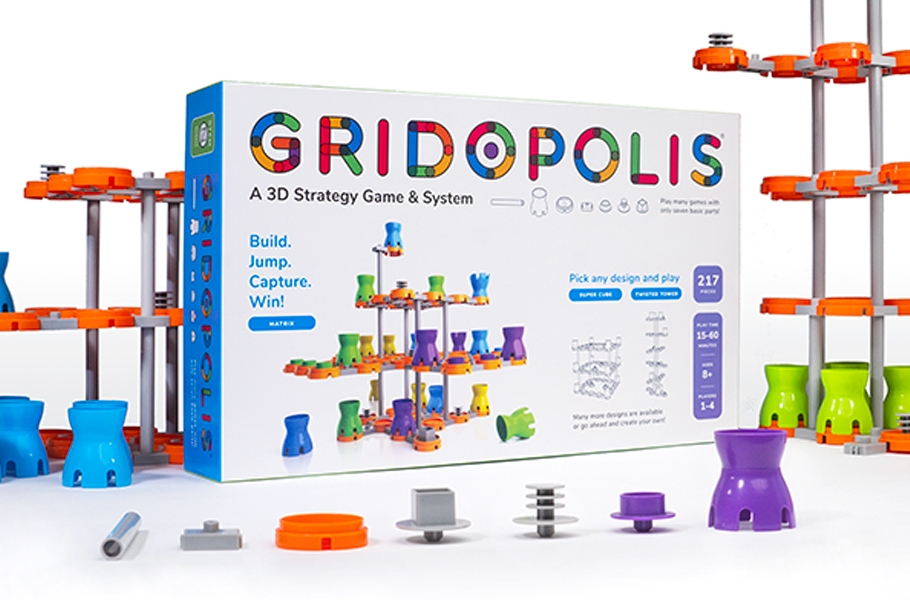
Dave Schultze is a Senior Lecturer at OTIS College of Art and Design , where he has taught since 2001. He is an industrial designer with extensive experience developing products for major clients such as Microsoft, LG, Target, and Hasbro. Additionally, he founded Gridopolis Games in 2018, creating an innovative 3D strategy game. Senior Lecturer at OTIS College of Art and Design Founder of SchultzeWORKS designstudio and Gridopolis Games LinkedIn Learning author of 20 courses on 3D design Education: Bachelor of Architecture, University of Oklahoma (1987) Master of Industrial Design, Art Center College of Art and Design (1997) Dave's research and practice focus on industrial design , product development , and STEAM education . His work bridges 3D modeling , game design , and educational toy development , emphasizing creativity and functionality. Scientific Awards: IDA Gold Award (2018) - Board Game & Educational Toy STEM.org Certification (2018) Mom’s Choice Gold Award (2019) National Parenting Product Award First Place (2020) Toys of the Year Finalist (2021) Dave has authored numerous publications and media-covered projects , including the Philco PC and Gridopolis . His work has been featured in New York Times , Engadget , and Gizmodo .
Vicenç Torra is a Professor at the Department of Computing Science, Umeå University, Sweden. He leads the NAUSICA: PrivAcy-AWare traNSparent deCIsions research group, focusing on artificial intelligence, data privacy, and approximate reasoning. His work bridges computer science and applied mathematics. Research Interests: Data Privacy (differential privacy, k-anonymity, secure multiparty computation) Approximate Reasoning (fuzzy sets, non-additive measures, Choquet integrals) Decision Making and Aggregation Operators Information Fusion and Clustering Recent Article Trends: His publications emphasize data privacy in machine learning, non-additive measure theory applications, and integrating privacy guarantees with mathematical rigor. 2024 works focus on Frechet manifold privacy and LLM knowledge distillation. Scientific Awards: EurAI Fellow (2010) ISI Elected Member (2013) IEEE Fellow (2017) Additional Contributions: Founder of Transactions on Data Privacy and MDAI conference series. Active in editorial boards of Fuzzy Sets and Systems, IEEE Transactions on Fuzzy Systems, and Information Sciences. Collaborates extensively with institutions in Japan and Spain.
Professor Paul Vickers holds the position of Professor of Computer Science and Sonification at Northumbria University since 2001, previously at Liverpool John Moores University from 1989-2001. He specializes in sonification, auditory display, cybersecurity, and interdisciplinary applications of computing. His research explores intersections between sonification, network security, and aesthetic computing, with notable projects including SoNSTAR (network traffic sonification) and SoniFRED (healthcare sonification). Education: PhD in Computing Science (2000), BSc (Hons) in Computer Studies (1989). Professional qualifications include Chartered Engineer (CEng), Fellow of the Higher Education Academy (FHEA), and membership of the Institution of Engineering and Technology (MIEE). Research focuses on sonification for cyber situational awareness, structural biology, and healthcare applications. His work emphasizes transdisciplinary collaboration, combining art, science, and technology. Key contributions include auditory monitoring systems for network security, sonification of biomedical data, and interactive tools for molecular visualization. Professional activities include organizing international conferences (e.g., ICAD), serving as a PhD examiner, and leading research initiatives such as the Leverhulme Trust-funded RADICAL project. His work is disseminated through academic publications, open-source software (e.g., GitHub repositories), and platforms like YouTube and ResearchGate. Current projects include the Northumbria University Sonification Network (nuson), exploring applications of sonification in healthcare, cybersecurity, and artistic collaboration. He actively engages in public outreach and STEM education initiatives.
Sema Alaçam is an Associate Professor at Istanbul Technical University , affiliated with the Department of Architecture . She has active research in computational design , artificial intelligence in architectural education , and sustainable materials like rammed earth and reused wind turbine blades . Her work focuses on: Architectural heritage (e.g., Sinan mosques, Harran houses) Environmental comfort (thermal, natural ventilation) Digital tools (BIM, VR, AI-assisted design) Recent publications include machine learning models for heritage analysis and AI literacy in design education. She leads projects on robotic fabrication and digital stereotomy . Scientific recognition: Multiple İTÜ Academic Performance Awards (2021–2023) Sigradi Best Reviewer Award CAADRIA Best Presentation Award (2014) FABFEST Prizes (2017–2018)