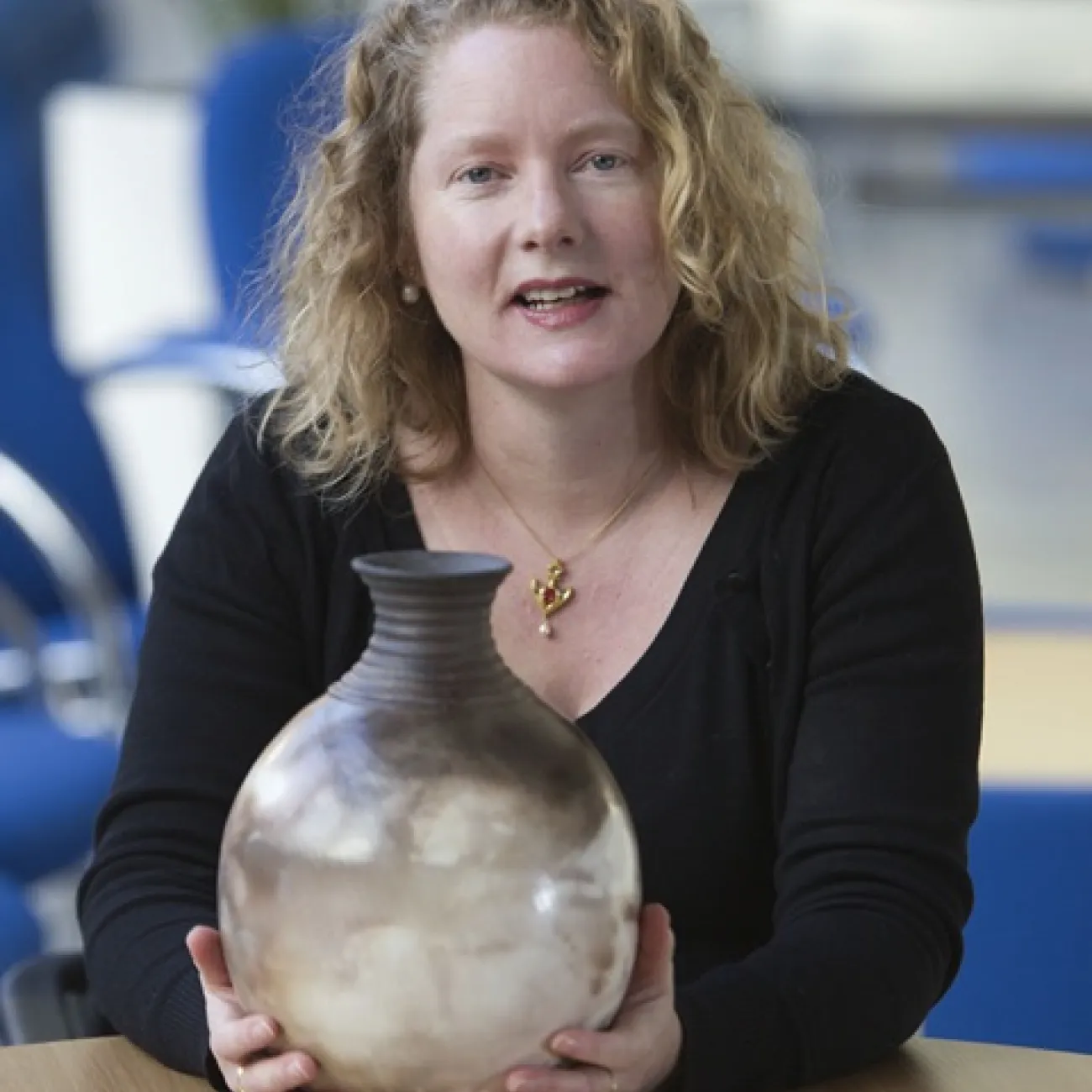
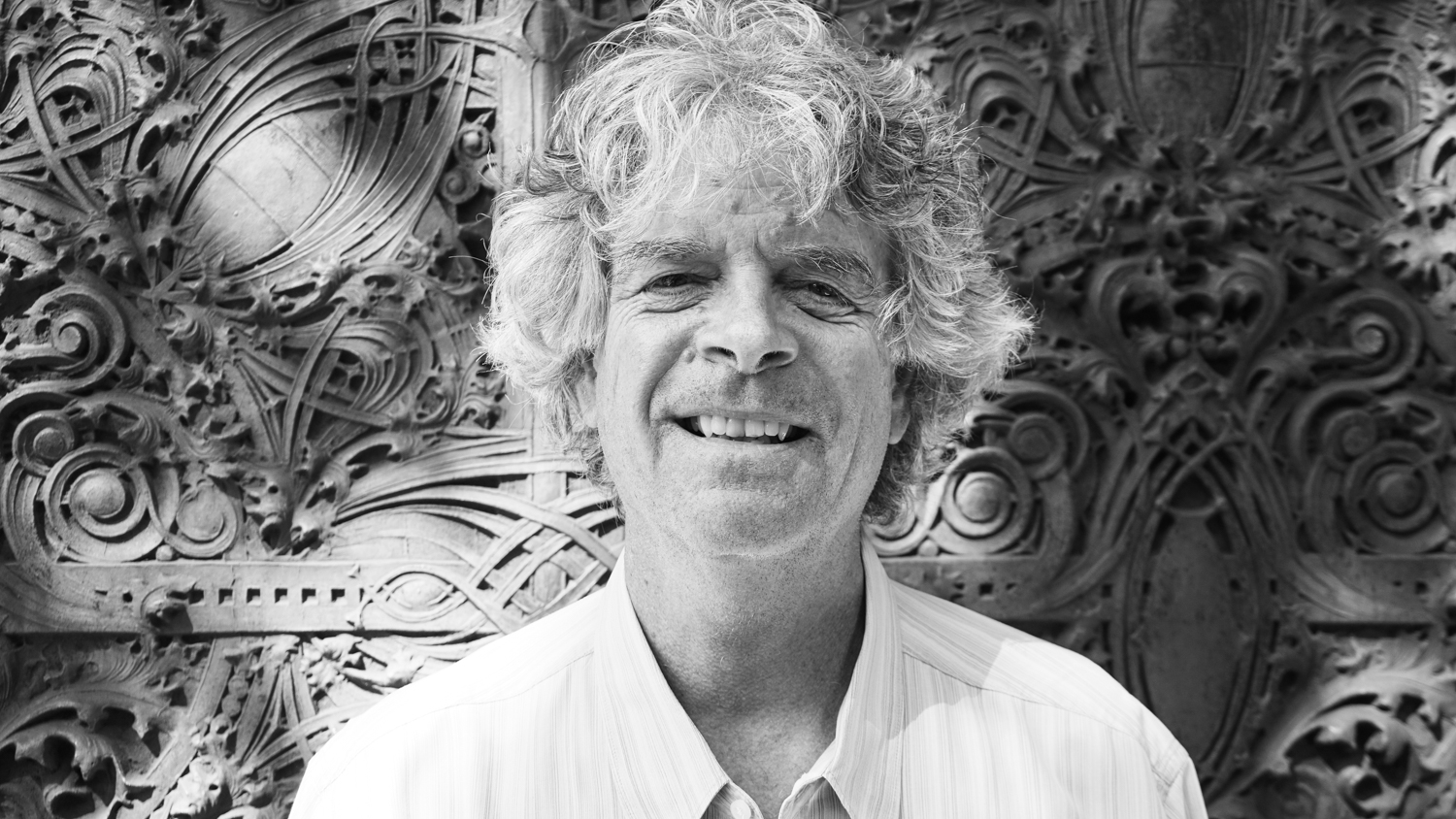
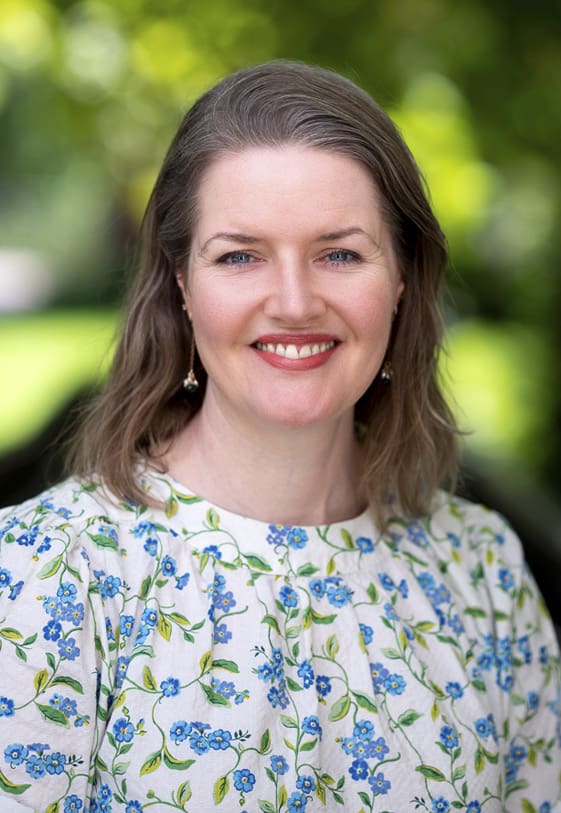
Dr. Sylwia Horska-Schwarz serves as a Lecturer at the Department of Landscape Research and Environmental Management within the Institute of Socio-Economic Geography and Spatial Management at the Faculty of Social Sciences, University of Gdańsk. Her academic role centers on environmental geography with a focus on river basin dynamics and sustainable landscape management. Her research spans environmental geography , hydrology , and landscape ecology , emphasizing the Oder River system's hydromorphological evolution under anthropogenic pressures. Key investigations include renaturalization strategies, climate change adaptation through small water retention, and biodiversity conservation in river valleys. She examines critical intersections between infrastructure development (e.g., high-speed rail) and ecosystem integrity using ecological indicators and landscape typology frameworks. Analysis of her 15 most recent publications reveals a methodological trajectory from detailed habitat studies (2007-2011) toward contemporary socio-ecological challenges (2023-2024). Current work prioritizes strategic infrastructure investments in Poland and the Oder River's resilience amid climate crises, while maintaining foundational expertise in fluvial geomorphology and plant community ecology. Her scholarship consistently bridges theoretical landscape assessment with practical water management solutions.
Prof. Vesa Välimäki is an Audio Signal Processing Professor at Aalto University's School of Electrical Engineering, leading the Audio Signal Processing Research Group within the Aalto Acoustics Lab. He also serves as Vice Dean for Research and Head of the Doctoral Programme at the university. His research focuses on digital signal processing, machine learning, and their applications in audio, acoustics, and music technology, particularly in artificial reverberation, audio filter design, and virtual analog modeling. He has pioneered techniques like velvet noise for reverberation synthesis and contributed to open-source tools like FLAMO. His academic accolades include IEEE, AES, and AAIA Fellowships, along with multiple best paper awards at venues like DAFx and ICASSP. He has advised numerous students, including recipients of prestigious awards like the Huawei Master's Thesis Award. Prof. Välimäki has held editorial roles at the Journal of the Audio Engineering Society and organized major conferences such as SMC-17. His work extends to applied projects like acoustic optimization for early childhood education facilities and immersive audio in virtual reality (e.g., the 'Space Walk' project). Key Projects: NordicSMC (Nordic University Hub for Sound and Music Computing), Aalto Acoustics Lab, FLAMO library Grants: NordForsk funding (2018–2023), Foundation for Aalto University Science and Technology His research spans both theoretical advancements (e.g., diffusion models for audio restoration) and practical implementations (e.g., real-time equalizers, headphone compensation systems). He collaborates internationally, contributing to acoustic measurement techniques and noise reduction strategies for diverse environments.
Professor Alison Gascoigne serves as Head of Department in the Department of Archaeology within the Faculty of Arts and Humanities at the University of Southampton. A specialist in Egyptian archaeology with particular expertise in the Islamic world, she directs significant fieldwork projects and supervises multiple PhD students while maintaining an active research profile. Her research interests focus on the archaeology of the Islamic world, archaeological ceramics, and Medieval Egyptian urbanism. Gascoigne examines urban development patterns from late antiquity through the medieval period, with particular attention to ceramic production systems and environmental interactions. Her interdisciplinary approach bridges archaeology, environmental science, and historical studies to understand societal transformations. Recent publications reveal strong trends in urban archaeology (particularly Fustat and Tinnis), climate-archaeology intersections, and ceramic analysis. Her work increasingly integrates paleoclimatic data with archaeological evidence to explore societal resilience during environmental change, while maintaining deep engagement with Islamic-era material culture across Egypt and the Near East. Her scientific recognition includes prestigious British Academy fellowships: British Academy Reckitt Travelling Fellowship in Archaeology British Academy Postdoctoral Research Fellowship Gascoigne actively supervises doctoral research and has secured significant funding from the British Academy, Fondation Max Van Berchem, and The Barakat Trust for projects including the Tell Tinnis survey and educational material development. Her external engagements include editorial review for Iran and Journal of Islamic Archaeology, chairing Arts & Humanities Research Council panels, and presenting invited lectures internationally on topics ranging from pottery production to urban water systems in medieval Egypt. She leads research groups including the Centre for Medieval and Renaissance Culture, Southampton Marine and Maritime Institute, and Coastal Communities Ocean Justice initiatives, directing collaborative interdisciplinary work that bridges archaeological practice with contemporary environmental concerns.
Margaux Schindler is an Assistant Professor and Chair of the Interior Design Program at the California College of the Arts (CCA), where she plays a key leadership role in shaping design education. She is also a practicing designer and Founding Partner of SIZL Studio, an interdisciplinary design practice active in architecture, landscape, interior design, and objects. Educational Background: Bachelor of Science in Interior Design, Florida International University Visiting Diploma Student, Architectural Association, London Master of Architecture, University of Pennsylvania Her research and professional work focus on innovative spatial explorations and dynamic strategies for living environments. With a strong interdisciplinary approach, her interests span interior design, architectural design, landscape, and object-making, emphasizing complex, multifaceted projects across scales. Her practice-based scholarship bridges academic inquiry with real-world design challenges. Margaux brings over 20 years of professional experience from leading design firms including IwamotoScott Architecture, Kohn Pedersen Fox, Jaklitsch/Gardner Architects, and others in cities such as San Francisco, New York, Philadelphia, and Miami. This extensive industry background deeply informs her pedagogy and curriculum leadership. She is actively engaged in teaching and program development at CCA and shows no indication of part-time status, retirement, or emeritus standing.
Thomas Barrie is a Professor of Architecture at North Carolina State University's College of Design, serving as Director of the Affordable Housing and Sustainable Communities Initiative and Coordinator of the Master of Advanced Architectural Studies program. An internationally recognized scholar in religious architecture and spirituality in the built environment, he is a Fellow of the American Institute of Architects (AIA) and has received numerous accolades including the 2024 NCSU Alexander Quarles Holladay Medal for Excellence. His educational background includes: Master of Philosophy in Architectural History and Theory, University of Manchester Master of Architecture, Virginia Polytechnic Institute and State University B.A. in English, University of North Carolina at Greensboro Professor Barrie's research explores the symbolism, cultural significance, and ritual functions of architecture across religious traditions, while examining housing through the ontological roles of home. His work bridges architectural theory and practice, emphasizing architecture's social mission and spiritual dimensions. Key publications include four books addressing sacred space, world religions, and domestic environments, establishing foundational frameworks for understanding architecture's role in human experience. His scholarly output reveals consistent exploration of architecture as a mediator between sacred and secular realms, with recent works focusing on comparative religious architecture and cultural contexts of home. This trajectory demonstrates deep commitment to understanding how built environments shape communal identity and individual well-being across diverse cultural settings. His distinguished career has been recognized with numerous honors: NCSU Alexander Quarles Holladay Medal for Excellence (2024) ACSA Distinguished Professor Award (2019) AIA Fellowship (2020) Three NC State Outstanding Extension Service Awards (2019, 2015, 2014) Induction into the Academy of Faculty Engaged in Extension (2015) Two AIA Honor Awards for design excellence As director of the Affordable Housing and Sustainable Communities Initiative, Professor Barrie has mentored hundreds of students through community-based design studios addressing housing challenges in the Triangle region. His leadership has fostered interdisciplinary collaboration across architecture, planning, and social sciences, resulting in award-winning student projects and tangible community impact through the Architecture, Culture and Spirituality Forum which he co-founded. Professor Barrie leads the Affordable Housing and Sustainable Communities Initiative and co-founded the international Architecture, Culture and Spirituality Forum, creating platforms for scholarly dialogue and practical application that bridge academic research with community engagement in housing and spiritual dimensions of the built environment.
Eunchun Park serves as an Assistant Professor in the Department of Agricultural Economics and Agribusiness at the University of Arkansas, concurrently holding the position of Director of the Experiment Station (DREX). A specialist in Bayesian spatial statistics and econometrics, his research focuses on agricultural risk analysis with particular emphasis on crop insurance mechanisms and financial commodity markets. His methodological expertise addresses critical data scarcity challenges in federal crop insurance premium calculations through advanced spatial modeling techniques. Dr. Park's academic foundation includes: Ph.D. in Agricultural Economics from Oklahoma State University (2017) M.S. in Food and Resource Economics from Korea University (2013) B.S. in Food and Resource Economics from Korea University (2010) His research program centers on extreme price and yield risk quantification in agricultural commodities, employing sophisticated Bayesian modeling frameworks to overcome data limitations in spatial risk assessment. Current work develops innovative approaches for measuring catastrophic risks in crop production systems and refining insurance rating structures through spatial smoothing of yield densities. This research bridges theoretical econometric advances with practical applications for risk management tools used by farmers and policymakers. Analysis of Dr. Park's recent publications reveals a consistent trajectory in spatial risk modeling for agricultural insurance systems, with increasing focus on prevented planting coverage factors, commodity market volatility around information releases, and climate-related production risks. His work demonstrates methodological progression from theoretical Bayesian frameworks toward actionable risk assessment tools, particularly through the application of kriging techniques to non-normal yield distributions and extreme event modeling. Dr. Park's scholarly contributions have been recognized through: Outstanding Contribution to Applied Risk Analysis Award (2020) from the Agricultural and Applied Economics Association Outstanding Graduate Student Paper Award (2018) from the Agricultural and Applied Economics Association Outstanding Doctoral Dissertation Award (2018) from the Southern Agricultural Economics Association While specific details of current advisees and grant funding are not provided in available materials, his active publication record in top agricultural economics journals suggests an ongoing mentorship role for graduate students and potential involvement in externally funded research initiatives related to agricultural risk management. His work on spatial smoothing techniques and extreme risk modeling likely informs collaborative projects with agricultural extension services and federal risk management agencies. No specific laboratory facilities or dedicated research teams are mentioned in the available documentation, though his methodological expertise suggests collaboration with spatial statistics and agricultural risk modeling groups within the university's research infrastructure.
Professor Zoran A. Ristić serves as Head of Department at the Department of Geography, Tourism and Hotel Management, Faculty of Natural Sciences and Mathematics, University of Novi Sad. With over 40 years of academic and professional engagement in wildlife management, he has established himself as Serbia's leading expert in hunting science and game biology. His research interests focus on Wildlife Management , Game Biology , and Hunting Tourism , with particular expertise in population dynamics of game species, hunting ground management, and sustainable utilization of wildlife resources. His work bridges academic research with practical applications through extensive collaboration with hunting associations across Serbia, Republika Srpska, and Croatia. Analysis of his recent publications reveals a strong trend toward integrating ecological monitoring with management practices , particularly in roe deer population genetics, habitat assessment using remote sensing, and disease surveillance in wildlife. His work consistently addresses practical challenges in game management while advancing methodological approaches. Silver Order of the Hunting Association of Yugoslavia (1986) Gold Order of the Hunting Association of Serbia (1995) University of Novi Sad Plaque for Best Rated Professor (2008-2013) Over 40 hunting association awards and diplomas Professor Ristić has mentored 1 doctoral student, 3 master's students, 15 specialist students, and 105 diploma students. His extensive grant portfolio includes leadership roles in over 15 major research projects funded by the Provincial Secretariat for Science, Ministry of Agriculture, and hunting associations, focusing on game population dynamics, habitat management, and wildlife health monitoring. He directs the Hunting Breeding, Protection and Scientific Research Commission of the Hunting Association of Vojvodina and serves on multiple editorial boards for hunting publications.
Andrea Burattin is an Associate Professor at the Department of Applied Mathematics and Computer Science, Technical University of Denmark. His work bridges formal methods and practical process analysis, focusing on process mining, business process management, and hybrid modeling techniques. He actively contributes to research in healthcare process optimization, streaming data analysis, and system verification through Petri nets and CCS transformations. UN Sustainable Development Goals: Poverty eradication, environmental protection, and prosperity for all (via process optimization) Active projects: Immersive Process Mining (2024-2027), Usability and Understandability of Hybrid Process Models (2018-2021) His research explores large language model integration with process mining, proposing frameworks like Tiramisù for multi-faceted process visualization and PN2CCS for formal model translation. Recent work emphasizes real-time monitoring, conformance checking, and IoT-driven process analytics. Key trends in his publications include: 1) Streaming process mining pipelines (2022-2025); 2) LLM-plan generation frameworks (2024); 3) Formal verification techniques (Petri nets, CCS); 4) Healthcare process modeling (2019-2023); 5) Behavioral pattern analysis in process compliance. Scientific Awards Best Demo Award (2022, 2016) Best Process Mining Dissertation Award (2014) Best Workshop Paper (EDBA and PODS4H, 2023) As advisor, he supervises PhD projects on process mining and hybrid modeling. His editorial roles include Information Systems reviewer (2024-2025) and past editor for Engineering Applications of AI (2022-2023). Collaborations span Denmark, Italy, and the Netherlands.
Margaret E. L. Renwick serves as Associate Research Professor and Director of Undergraduate Studies in the Department of Cognitive Science at Johns Hopkins University's Krieger School of Arts and Sciences. Previously holding a tenured position in Linguistics at the University of Georgia, she brings extensive expertise in speech variation and phonological systems to her current role. Her academic journey includes affiliation with the Phonetics Laboratory at the University of Oxford. Dr. Renwick's research focuses on sociophonetics and laboratory phonology, examining how speakers manipulate phonetic detail in patterned ways while listeners extract linguistic and social meaning from speech. Her work investigates phonological contrast, regional accents of US English (particularly Southern accents), and linguistic change across generations. A significant portion of her research explores African American vowel systems in Georgia and Italian mid-vowel systems, bridging theoretical linguistics with empirical acoustic analysis. Analysis of her recent publications reveals a strong trend toward computational approaches in phonetics, with increasing use of machine learning techniques like the Phonet library for vowel variation analysis. Her work consistently bridges theoretical phonology with empirical acoustic data, showing particular strength in regional variation studies across multiple language systems including English and Romance languages. Dr. Renwick actively mentors students through the Renwick Lab, welcoming advisees at all levels including PhD and MA candidates in Cognitive Science at JHU. Her teaching portfolio includes courses in Acoustic Phonetics, Sociophonetics, and her First-Year Seminar 'Who Has an Accent?' examines sociolinguistic perceptions of speech variation. The Renwick Lab functions as a comprehensive research environment focused on spoken language analysis, providing resources for phonetic research including tools for IPA transcription, acoustic analysis with Praat, and computational approaches to speech data. The lab supports both theoretical investigations of phonological systems and practical applications of speech technology.
Aurélie Labbe is a Full Professor in the Department of Decision Sciences at HEC Montréal, holding the prestigious FRQ-IVADO Chair in Data Science. Appointed as Co-Scientific Director – Academic Partnerships at IVADO in October 2023, she plays a key leadership role in establishing connections between IVADO and partner universities. Her academic journey includes a PhD in Statistics from the University of Waterloo, a Master's degree in Statistics from the University of Montreal, and dual Bachelor's degrees in Applied Mathematics and Social Sciences from Paris-Dauphine University and Pure Mathematics from Versailles-St Quentin University. Her research spans multiple interdisciplinary domains with a focus on developing advanced statistical and machine learning methodologies for big data analysis. Labbe's work bridges theoretical statistics with practical applications across diverse fields including genomics, neuroscience, transportation systems, and health informatics. She has made significant contributions to kernel methods, matrix factorization techniques, random forest applications, and spatiotemporal data analysis, with publications appearing in top journals across multiple disciplines. Analyzing her recent publications reveals a clear trend toward methodological innovation applied to complex real-world problems. Her work demonstrates expertise in handling high-dimensional data from diverse sources including neuroimaging, transportation networks, and genomic studies. The interdisciplinary nature of her research connects statistical theory with applications in healthcare, transportation safety, and biological sciences, reflecting her ability to develop methods that address domain-specific challenges while advancing statistical methodology. Holder of the FRQ-IVADO Chair in Data Science Member of the Center for Mathematical Research Training Professor Labbe actively mentors the next generation of data scientists, supervising numerous doctoral and master's students. Her supervision portfolio includes 1 doctoral thesis (2023), 4 master's theses (2022-2024), and 32 supervised projects spanning 2019-2025. Her students' work covers diverse applications including transportation safety, healthcare analytics, financial modeling, and environmental analysis. Through her leadership of the FRQ-IVADO Chair in Data Science, she coordinates research activities that integrate mathematical, statistical, and computer science expertise with domain knowledge from various data-generating fields. As Co-Scientific Director at IVADO, Professor Labbe leads efforts to establish connections with faculties and departments across five partner universities, integrating them into IVADO's research and knowledge transfer activities. Her leadership role positions her at the forefront of advancing data science research and applications in Quebec's academic ecosystem.
Katarina Domijan is an Associate Professor in Statistics at the Department of Mathematics and Statistics, Maynooth University, Ireland. She holds a PhD in Statistics from Trinity College Dublin (2008) and has been affiliated with Maynooth University since 2008, transitioning from Lecturer/Assistant Professor to her current role in 2024. Her academic career includes editorial roles as Associate Editor for The R Journal (2021–present) and the Journal of Computational and Graphical Statistics (2015–2024). Research Interests focus on Bayesian methods for high-dimensional data, particularly in classification problems. She specializes in feature selection and model visualization, with applications spanning agricultural data analysis (e.g., hyperspectral imaging for lactose prediction), medical diagnostics (e.g., sepsis and cancer detection), and space physics (e.g., Saturn Kilometric Radiation classification). Her work bridges theoretical statistics with real-world challenges, including socio-economic studies and forensic science. Key Research Areas Bayesian statistical inference Machine learning for large feature spaces Statistical computing and model interpretability Data visualization and chemometrics Scientific Contributions include leading projects like VistaMilk Phase II (2024–2030, €152,300) and Measuring Carbon Sequestration (2024–2028, €174,788.90). Her 15 most recent publications highlight advancements in ensemble modeling, spatial statistics, and medical diagnostics. Scientific Awards Associate Editor, The R Journal (2021–present) Associate Editor, Journal of Computational and Graphical Statistics (2015–2024) Student Supervision includes PhD and MSc graduates such as Dr. Bruna Wundervald (2024) and Dr. Mark O’Connell (2017). She also collaborates with researchers across disciplines, including Dr. Nadim Akasheh in food hypersensitivity studies.
Adam T. Smith is Distinguished Professor of Arts and Sciences in Anthropology at Cornell University, where he has been faculty since 2011. He is a leading scholar in Eurasian archaeology with a focus on the South Caucasus, particularly Armenia. Smith co-founded Project ArAGATS, a long-term archaeological program in Armenia, and co-directs the Aragats Foundation and Caucasus Heritage Watch, organizations dedicated to heritage preservation in the region. His educational background includes: Ph.D. (1996) in Anthropology from the University of Arizona M.A. (1993) in Anthropology from the University of Arizona M.Phil. (1991) in Social and Political Science from the University of Cambridge B.A. (1990) in Anthropology and Political Science from Brown University Smith's research centers on the role of material culture in political life, examining how objects, landscapes, and built environments shape political procedures and values. His work spans archaeological theory, political anthropology, and heritage studies, with a particular focus on the South Caucasus region. He investigates the long-term social and political dynamics from the Bronze Age to contemporary times, exploring themes of sovereignty, heritage preservation, and the political dimensions of material culture. His approach integrates theoretical frameworks with empirical fieldwork to understand political power through material evidence. His recent publications demonstrate a consistent focus on the archaeology of power and politics in Eurasia, with increasing attention to contemporary heritage issues. Smith's work bridges theoretical frameworks with empirical research, particularly through his long-term fieldwork in Armenia and the Caucasus region. His scholarship shows a progression from studies of ancient political systems to contemporary issues of cultural heritage and political violence, with a strong emphasis on ethical engagement with archaeological practice and heritage management. Smith has received numerous prestigious awards including: 2023-2025 Fellow, Milstein Program in Technology and Humanity, Cornell University 2023 Finalist, Falling Walls Science Breakthrough of the Year, Social Sciences and Humanities 2023 Certificate of Communal Partnership, St. James AME Zion Church, Ithaca NY 2010-2011 John Simon Guggenheim Memorial Foundation Fellow 2010-2011 Fellow, Cornell University Society for the Humanities 2006-2007 Fellow, Howard Foundation Smith has directed multiple field seasons and collaborative research projects in Armenia, involving both American and Armenian scholars. His work with Project ArAGATS has received continuous support over two decades, while Caucasus Heritage Watch represents a newer initiative addressing urgent heritage preservation needs through satellite monitoring. He has supervised numerous graduate students and secured significant research funding for his projects, demonstrating strong leadership in both academic and community-engaged research contexts. Smith leads several research initiatives including Project ArAGATS, the Aragats Foundation, and Caucasus Heritage Watch. His Landscapes and Objects Laboratory at Cornell serves as a hub for material culture studies, while his work with the St. James AME Zion Community Excavations demonstrates his commitment to community-engaged archaeology. These teams bring together interdisciplinary scholars to address complex questions about political power, material culture, and heritage preservation across time, with particular attention to how archaeological practice can engage with contemporary political issues and community needs.
Professor Matthew James Keeling is a distinguished academic at the University of Warwick, where he serves as Director of the Zeeman Institute for Systems Biology & Infectious Disease Epidemiology Research (SBIDER). He holds a professorship in the Department of Mathematics within the School of Science, specializing in mathematical modeling of infectious disease dynamics. His work bridges theoretical mathematics with practical public health applications, making significant contributions to epidemic prediction and control strategies. Professor Keeling's educational background includes a B.A. in Mathematics (1991), Master in Mathematics (1992), and PhD in Mathematical Modelling (1995). His career progression at Warwick shows steady advancement from Lecturer (2002) to Reader (2005) and finally to Professor (2007), supported by prestigious fellowships including the Royal Society University Research Fellowship (1998-2006) and Wellcome Trust Fellowship (1995-1998). His research focuses on mathematical models for infectious disease transmission, with particular expertise in network-based approaches to understanding how diseases spread through populations. Keeling has applied his modeling expertise to numerous outbreaks including the 2001 Foot-and-Mouth Outbreak, 2009 Swine flu pandemic, and most notably the COVID-19 pandemic. His work spans both human and animal diseases, covering pathogens such as influenza, measles, HPV, and various livestock infections. Analysis of Professor Keeling's publications reveals a strong emphasis on network theory applied to epidemiology, with significant contributions to understanding cattle movement networks, human social contact patterns, and spatial disease dynamics. His work consistently bridges theoretical mathematics with practical disease control applications, demonstrating how mathematical models can inform real-world policy decisions regarding vaccination strategies and outbreak control measures. Scientific Awards and Recognitions: Royal Society University Research Fellowship (1998-2006) Wellcome Trust Fellowship (1995-1998) Professor Keeling has been actively involved in advising government agencies during major disease outbreaks, including providing critical modeling input during the COVID-19 pandemic. His work on HPV vaccination cost-effectiveness directly influenced policy decisions regarding gender-neutral vaccination programs. He maintains an active research group focused on developing novel mathematical approaches to infectious disease modeling, with particular interest in household transmission dynamics and the impact of network structure on disease spread. The Zeeman Institute (SBIDER), which he directs, serves as a hub for interdisciplinary research connecting mathematical sciences with biological and medical applications.
Dr. Patrick Shane Crawford serves as Assistant Professor in the Department of Civil, Construction and Environmental Engineering at the University of Alabama's College of Engineering. Affiliated with the Center for Sustainable Infrastructure and Alabama Water Institute, his research focuses on enhancing community resilience to tornadoes, floods, and hurricanes through interdisciplinary engineering approaches integrating social science and policy perspectives. His educational background includes: B.S. in Civil Engineering (2012, University of Alabama) M.S. in Civil Engineering (2014, University of Alabama) Ph.D. in Civil Engineering (2018, University of Alabama) Dr. Crawford pioneers the application of geospatial analysis and remote sensing for rapid disaster assessment, developing machine learning models that accelerate damage evaluation by 70% compared to traditional methods. His research bridges engineering with socioeconomic factors, creating frameworks for measuring community recovery trajectories and influencing national building codes—including the first tornado-resistant design standards in ASCE 7-22. Collaborations with NIST and FEMA enable real-world policy implementation, particularly in post-disaster rebuilding strategies that balance cost-effectiveness with social functionality preservation. Analysis of his 2022-2025 publications reveals consistent innovation in longitudinal disaster reconnaissance , with 60% of recent work focusing on tornado events using deep learning for damage classification. Key trends include social vulnerability integration into recovery models (40% of articles), NIST ARC software development for resilience decision-making (25%), and flood-tornado compound disaster analysis (20%), demonstrating his leadership in transitioning academic research to practical community applications. Active in federal partnerships, Dr. Crawford's 2025 feature Confident but Exposed: How Prepared Are U.S. Homeowners for Extreme Weather? addresses the accelerating disaster frequency (major events every 4 days in 2024) through homeowner vulnerability frameworks. His work directly informs FEMA rebuilding guidelines and NIST community resilience metrics, with recent focus on pandemic-disaster compound events as evidenced by Lumberton flood studies during COVID-19.
Emily Burkhead is a Teaching Associate Professor in the Department of Mathematics at the University of North Carolina at Chapel Hill (UNC). She holds a Ph.D. in Mathematics from UNC (2006) and has held academic positions at Meredith College, Duke University, and as a Visiting Lecturer/Researcher at UNC. Her research bridges discrete dynamical systems, ergodic theory, and mathematics education. Early work focused on topological classifications of cellular automata, while recent contributions involve stochastic cellular automata models for virus dynamics (HIV, Ebola) and pedagogical best practices. Key publications include analyses of HIV spread in lymph nodes (with Jane Hawkins and Donna Molinek) and Ebola virus dynamics. Her methodological innovations in stochastic cellular automata have been cited in studies on disease progression, computational modeling, and urban information diffusion. Emily earned a B.A. from the College of Wooster (2001), M.S. (2004) and Ph.D. (2006) from UNC, followed by postdoctoral work at the Santa Fe Institute (2006-2007).