
Professor Emma Murphy is a leading scholar in the School of Government and International Affairs at Durham University , holding the Chair of Political Economy . She is also a Senior Fellow in the Global Policy Institute and a member of the Institute for Middle Eastern and Islamic Studies . Her research focuses on the political economy of the Middle East and North Africa , with particular emphasis on ICTs, youth policy, food security, economic liberalization, and Arab-Israeli relations . Recent work explores youth exclusion and inclusion in the MENA region, Africa, and Europe, and gendered transport systems in African cities. Her publications (2025-2009) span gendered mobility practices , ICTs and democratization , economic reforms in Tunisia, and youth activism across the Mediterranean. She co-edits the journal Mediterranean Politics (IF 0.722) and has served on the HEFCE Research Excellence Framework Sub-Panel . Honors : Fellow of the Royal Society of Arts and Manufacturing (FRSA) Academician of the Academy of Social Sciences (ACSS) International Election Observer, Tunisia (2011) Doctoral students supervised include Abdullah Al-Maani and Saleh Albulayhi. Her work intersects with social policy, gender studies, and urban mobility , with recent projects analyzing COVID-19 impacts on youth .
جستوجوی استاد و پژوهشگر
استاد راهنما، استاد دانشگاه یا پژوهشگر مناسب برای مسیر پژوهشیتان را پیدا کنید و با او ارتباط بگیرید.
نمایش ۷۳۶-۷۵۰ از ۲۸٬۰۱۸ استاد راهنما
اطلاعات این پروفایلها از صفحات عمومی دانشگاهها جمعآوری شده و ممکن است بهروز نباشد.

Sylvain Kahn is a Tenured Lecturer at the Centre for History (CHSP) at Sciences Po , specializing in the history and geography of European integration. He holds a PhD in Geography, the agrégation (highest state teaching qualification) in History, and a degree in Geopolitics. Education : PhD in Geography, agrégation in History, Ecole Normale Supérieure (Fontenay-Saint-Cloud/Lyon), Geopolitics degree. Teaching : European integration and geopolitics at Sciences Po since 2001; leads 'History of European integration' class in the Master of European Affairs program. Research interests center on the role of nation-states in European integration, the territoriality of the European Union, and the Europeanization of higher education. His work bridges historical analysis with geopolitical frameworks, examining paradoxes in EU territorial governance. Recent publications include analyses of EU crises (e.g., Brexit, pandemic responses), geopolitical dynamics (e.g., Franco-German leadership), and cultural studies (e.g., 'La Reine Margot' as feminist critique). He has also explored the interplay between EU territorial policies and national sovereignty. Professional contributions extend to media production: he created the MOOC 'Geopolitics of Europe' (available in French and English) and hosted the radio program 'Planète Terre' on France Culture (2006-2016). He has served on examination juries (ENA) and as an expert for the European University Association.
Gaël Kermarrecمشاهده پروفایل
پژوهشگر
Dr. Gaël Kermarrec is a researcher at the Boundary Layer Meteorology Group , part of the Institute of Meteorology and Climatology within the Faculty of Mathematics and Physics at Leibniz University Hannover . His work focuses on atmospheric turbulence, GNSS applications, and remote sensing for environmental monitoring. Boundary layer meteorology Turbulence theory GNSS signal processing Terrestrial laser scanning Climate change impacts Geodetic time series analysis His research integrates advanced mathematical models like LR B-splines and Matérn covariance with large eddy simulations to study: Atmospheric turbulence effects on optical/GNSS signals Hydrospheric mass loading Deformation analysis of terrain/port infrastructure Climatic sea-level changes Machine learning for remote sensing The 15 most recent articles (2025-2023) demonstrate his focus on: GNSS-based turbulence detection AI-enhanced climate mapping Advanced surface approximation techniques Multi-sensor data fusion Stochastic modeling of geodetic observations Environmental impacts on optical measurements He has developed tools like the Klimascanner QGIS plugin for urban climate resilience and contributes to: Understanding atmospheric scale lengths Improving TLS/GNSS deformation monitoring Analyzing hydrospheric changes Wavefront modeling Ionospheric corrections
Professor Peter Smith is a Chair in Plant & Soil Science at the University of Aberdeen within the School of Biological Sciences . He obtained his PhD in 1991 and has held academic positions since 2001, including Senior Lecturer (2001), Reader (2003), and Professor of Soils & Global Change (2005). His work focuses on modelling greenhouse gas mitigation , bioenergy systems , and global food security . Fellowships: Royal Society (FRS), Royal Society of Edinburgh (FRSE), European Academy of Sciences (FEurASc), Indian National Science Academy (FNA) Leadership: Co-leader of the Environmental Modelling Group , Science Director at Scotland's Climate Change Centre of Expertise His research spans soil carbon dynamics , greenhouse gas removal technologies , and climate-agriculture interactions , with over 900 publications. Articles highlight work on bioenergy crops , soil monitoring frameworks , and global food system resilience . Funding includes major grants from NERC , EU , and UK government for projects like GHG Europe, DEVIL, and VERIFY. He serves as Editor for Global Change Biology and Global Change Biology Bioenergy .

Julian Adamekمشاهده پروفایل
پژوهشگر
Julian Adamek is a computational cosmologist and lead developer of gevolution , a general-relativistic N-body code for cosmological simulations. His work focuses on modeling relativistic effects in cosmic structure formation to better understand gravity’s role on large scales and dark energy. Research Interests: Computational Cosmology, Theoretical Cosmology, Large-scale structure of the Universe, Relativistic N-body simulations. Technical Leadership: Lead developer of gevolution , a public cosmological simulation code available via GitHub. Recent publications span diverse applications of deep learning in geospatial analytics, environmental monitoring, and computer vision, including phenology modeling, biomass mapping, conflict assessment, and 3D reconstruction from point clouds. Key Trends: Integration of AI/ML for environmental tasks, cross-domain applications (cosmology, ecology, forestry), and satellite data processing. Technical Focus: Transformer networks, diffusion models, super-resolution imaging, and ensemble learning for uncertainty quantification. Julian collaborates with researchers in cosmology and geospatial science, though specific students or awards are not mentioned in the provided texts.
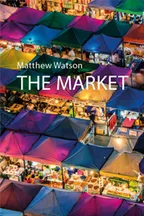
Matthew Watson is a Professor of Political Economy at the University of Warwick's Department of Politics and International Studies, and an ESRC Professorial Fellow (2013-2019). His work explores the intersection of political economy and the history of economic thought, focusing on how markets are ideologically framed as naturalized institutions and the political implications of such framing. He leads the 'Rethinking the Market' project and serves as Department REF Lead and Director of Academic Staff Development. PhD from University of Birmingham Joined Warwick in 2007 Watson's research investigates the cultural and political evolution of market ideology, tracing its roots in economic theory and its pervasive influence on public discourse. He challenges the dominance of mathematical market models across social sciences, critiques the historical underpinnings of comparative advantage theory, and examines the role of narratives like Robinson Crusoe in shaping economic subjectivity. His work also extends to analyzing austerity policies post-financial crisis and the politicization of economic expertise. His recent publications include False Prophets of Economics Imperialism (2024), which critiques the ontological separation between abstract economic models and empirical realities, and The Market (2018), which unpacks the ideological construction of market forces. Articles span topics such as epistemic injustice in budgetary politics, financialization's impact on state action, and the raced market frames in economics education. ESRC Professorial Fellow (2013-2019) Over 20 years of academic leadership Watson supervises PhD and postdoctoral researchers in political economy and history of thought, emphasizing alignment with his 'Rethinking the Market' project. He has mentored 20 postdoctoral fellows and 38 PhD students to completion, with six current supervisees. His insights are disseminated through academic presentations, blog posts, and podcasts.
Ankit Kariryaaمشاهده پروفایل
استادیار
Ankit Kariryaa is a Tenure Track Assistant Professor at the Department of Computer Science and Department of Geosciences and Natural Resource Management , University of Copenhagen. His work bridges Machine Learning and Environmental Informatics , focusing on remote sensing, geospatial analysis, and ecological modeling. University of Copenhagen, Denmark Machine Learning Section, Department of Computer Science Geography, Land, Environment and Society, Department of Geosciences Kariryaa specializes in applying deep learning and computer vision to environmental challenges. His research includes: Automated tree detection and biomass estimation via satellite imagery Multi-modal geospatial representation learning Monitoring farmland tree decline and carbon sequestration potential Agroforestry system mapping using AI Developing AI tools for climate policy and sustainability Recent work trends show a focus on quantum-inspired machine learning , environmental monitoring , and cross-cultural AI applications . His 15 most recent publications span topics in remote sensing , ecological modeling , and AI ethics , with methods ranging from neural networks to tensor-based learning. He collaborates across disciplines, notably with researchers in ecology , climate science , and quantum computing . His outreach includes seminars on AI in agroforestry and ecosystem management , while his team contributes to global tree resource databases like TreeSense.

- Rural Sociology
- Demographic Change
- Civil Society
- +۳ مورد دیگر
Prof. Dr. Claudia Neu is a Professor of Rural Sociology at the Department of Agricultural Economics and Rural Development (Georg-August-University Göttingen) and the Department of Rural Sociology (University of Kassel). Her work focuses on demographic change, civil society, and public services in rural areas. Deputy Chair, Expert Council on Rural Development, Federal Ministry of Food, Agriculture, and Consumer Protection (2016–2019) Member, Working Group "More Security with Security?", Hamburg Academy of Sciences (2016–) Scientific Advisory Board, German Volunteer Survey (2012–2016) Commission "Art for the Village - Villages for Art", German Foundation for Cultural Landscapes (2009, 2012) Her research examines how demographic shifts impact rural democracy and social cohesion, emphasizing equitable living conditions and participatory governance. Recent analyses link rural loneliness to populist susceptibility and declining institutional trust. Publications include studies on regional services of public interest and structural policy investments. She contributes to public discourse through media engagements (ARD Audio Library, Frankfurter Allgemeine Zeitung) and policy statements, notably advocating for EU rural development funding independent of agricultural policy. Legal victories highlight her commitment to academic freedom.

John Infrancaمشاهده پروفایل
دانشیار
John Infranca is an Associate Professor of Law at Suffolk University School of Law , where he serves as Director of Faculty Scholarship & Research. His work bridges land use regulation , affordable housing policy , property theory , and law and religion , with a focus on urban legal frameworks and regulatory innovation. Education: JD from New York University School of Law, MTS in Moral Theology from Notre Dame, BA in Liberal Studies from Notre Dame. His research examines zoning reforms , sharing economy regulation , and religious liberty-adjacent land use issues . He co-edited the Cambridge Handbook on the Law of the Sharing Economy (2018) and the Elgar Research Agenda for Land Use and Planning Law (2023). Recent articles analyze exclusionary zoning , development rights transfers , and state-level preemption in housing crises . His work has been recognized in leading journals and forums, including the Stanford/Harvard/Yale Junior Faculty Forum (2020). Notably, he has served as a Florence Rogatz Visiting Professor at Yale Law School (Spring 2024, returning 2026) and teaches courses in Property Law , Land Use , and Religion & Law . Scientific Recognition: Differentiating Exclusionary Tendencies selected for Stanford/Harvard/Yale Junior Faculty Forum (2020) Multiple articles featured in Land Use & Environmental Law Review as top land use law works

Anton Rozhkovمشاهده پروفایل
استادیار
Anton Rozhkov is an Industry Assistant Professor and Director of the M.S. in Applied Urban Science and Informatics Program at the Center for Urban Science and Progress (CUSP) at New York University (NYU) Tandon School of Engineering. His work focuses on applying geospatial tools, modeling techniques, and data science to address complex challenges in urban environments, with particular emphasis on infrastructure planning and city design. Dr. Rozhkov earned his Ph.D. in Urban Planning and Policy from the University of Illinois Chicago, where his research centered on decentralized and renewable energy systems in urban contexts through a complex systems approach. Prior to his doctoral studies, he received an M.S./B.S. in Engineering in Land Cadaster from the State University of Land Use Planning in Moscow, Russia, and worked as a senior specialist in the Russian power grid sector with "Rosseti" Group of Companies. His research interests span the application of complex systems, data science, and spatial analytics to solve urban challenges, particularly focusing on how data-driven policies and new technologies can transform infrastructure planning and city design. Dr. Rozhkov employs methods including causal loop diagrams, system dynamics, and agent-based modeling to understand how decentralized energy systems interact with existing power grids and contribute to sustainable urban development. He has published extensively on urban transportation, energy systems, and census data analysis, with a notable focus on Chicago's urban landscape and Illinois state initiatives. Dr. Rozhkov has been actively involved in several significant research projects including an empirical investigation into affordable transit-oriented development in California sponsored by the California State University Transportation Consortium, the Sustainable Urban-Regional Modeling Network project funded by the Illinois Innovation Network, and the Census 2020 Map-The-Count project with the Illinois Department of Human Services which developed predictive models for census response rates and a GIS platform for reporting outreach activities. Ph.D. in Urban Planning and Policy, University of Illinois Chicago M.S./B.S. in Engineering in Land Cadaster, State University of Land Use Planning (Moscow, Russia) His teaching portfolio includes courses on geographic information systems (GIS), advanced spatial analysis, decision modeling, and machine learning for cities. Dr. Rozhkov emphasizes not just understanding urban trends but exploring the "why" behind these trends to develop sustainable solutions. His recent publications (2020-2025) demonstrate a consistent research trajectory examining the complex interrelationships between urban infrastructure systems, particularly focusing on energy, transportation, and spatial patterns through sophisticated analytical methods. Outside of his academic work, Dr. Rozhkov is passionate about urban and landscape photography, traveling, running, snowboarding, and playing guitar. He was born and raised in Balashikha, a city in the Moscow suburbs in Russia, and maintains a gallery of his photographic work from various global locations.

Marta Severo is a Lecturer at University of Paris Nanterre in the Department of Information, Communication, Digital Media within the Faculty of Humanities and Social Sciences. She also maintains significant research affiliations with University of Lille where she has directed multiple projects including the PEPS Digital Routes Project (2015-2016). Her academic profile is characterized by interdisciplinary research at the intersection of digital technologies and cultural heritage. Her research focuses on digital representations of cultural heritage, particularly intangible cultural heritage (ICH) and cultural itineraries like the Via Francigena. She investigates how digital methods can be used to study, represent, and safeguard cultural heritage through social media analysis, network mapping, and participatory platforms. Her work examines the relationship between amateurs and institutions in knowledge production, with special attention to Wikipedia as a citizen science tool. Her publication portfolio demonstrates consistent scholarly output with significant contributions to understanding digital representations of cultural routes, stakeholder networks along heritage paths, and participatory approaches to cultural heritage management. Her research shows a clear trajectory from methodological development in digital humanities to applied studies of specific heritage contexts. Humboldt Research Fellowship for Experienced Researchers (2023-2025) for project on ethics of digital participation IUF project funding for 'Data in action' research on research trajectories of implication NEST project (Marie Skłodowska-Curie RISE Action Programme) visiting fellowship at UC Berkeley (2022) As a research leader, Marta Severo has directed multiple significant projects including the ANR COLLABORA project (construction of an observatory of cultural contributory devices), the Wikipatrimoine project (exploring collaborative management of cultural heritage), and the ICH Observatory project (mapping digital networks of ICH stakeholders in France). Her work demonstrates strong commitment to interdisciplinary collaboration across computer science, social sciences, and heritage management. She frequently partners with European institutions including the European Association of Via Francigena Routes and has presented at numerous international conferences on cultural heritage and digital methods.

Olga Khessinaمشاهده پروفایل
دانشیار
Olga Khessina is an Associate Professor of Business Administration at the University of Illinois at Urbana-Champaign's Gies College of Business. She currently serves as Director of Graduate Studies and has held academic roles at Cornell University and Georgetown University. Her research focuses on organizational and industrial evolution, product naming strategies, market stigma, and regional identities in industries like craft beer, medical cannabis, and biotechnology. Khessina has been recognized with awards including the ISOI Best Paper Award (2025) and has advised on grants from the Gies College of Business. She teaches courses on organizational design, graduate research methods, and organizational behavior. Education Ph.D., Business Administration, University of California at Berkeley, 2003 M.A., Sociology, Columbia University, 1998 Specialist, Sociology, Moscow State University, 1995 Research Interests Khessina explores how organizational identities and naming strategies influence market dynamics, particularly in controversial or emerging industries. Her work examines stigma reduction in medical cannabis markets, the role of emotional branding in craft beer, and the impact of political polarization on industry legitimacy. She also investigates regional industrial clusters and their cultural embeddedness, such as the co-evolution of movie theaters and television programming industries. Awards & Grants ISOI Best Paper Award (2025) Gies Research Grant Awards (2024, 2025) Nominated for Excellence in Graduate Mentoring (2023) Advising & Service As Director of Graduate Studies, Khessina oversees doctoral training and curriculum development. She has reviewed grants and serves on editorial boards, including for Organization Science (2012–2023). Her advising focuses on balancing innovation risks and organizational survival in high-velocity markets. Labs/Teams Khessina collaborates with interdisciplinary teams on projects like Conquering the Divide (medical marijuana destigmatization) and Roadblock on the Highway to Heaven (religious effects on controversial industry clusters).
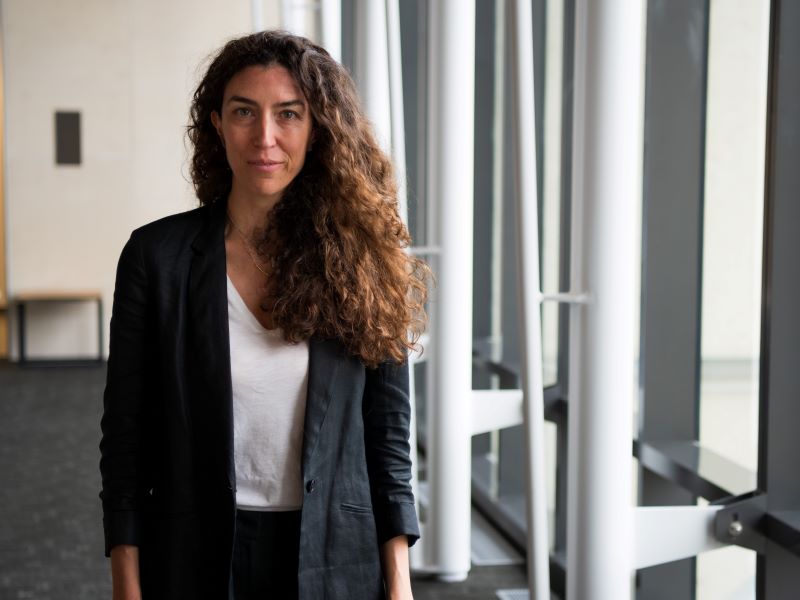
Paola Passalacqua is a Professor of Environmental and Water Resources Engineering and Earth and Planetary Sciences at the University of Texas at Austin, holding the L.B. (Preach) Meaders Professorship in Engineering. She leads research at the intersection of water resources engineering, geomorphology, and hydrology, focusing on river networks, coastal restoration, and remote sensing applications. Her work addresses delta dynamics, floodplain connectivity, and community resilience to compound hazards. Dr. Passalacqua earned a PhD in Civil Engineering (2009) and MS in Water Resources from the University of Minnesota, and dual MS/BS in Environmental Engineering from the University of Genoa (2002). Her technical expertise includes hydrological connectivity, network theory, and morphodynamic modeling using LiDAR and satellite data. Research interests emphasize river delta structure/dynamics, floodplain sedimentation, and translating science into community adaptation strategies. She co-developed tools like GeoFlood for large-scale flood mapping and the pyDeltaRCM numerical delta model. Her interdisciplinary approach integrates socio-technical vulnerability analysis with environmental systems. Awards include the endowed Meaders Professorship. Current projects involve coastal Alaska infrastructure resilience, SWOT satellite data applications, and delta sustainability in the Anthropocene. She leads the Passalacqua Research Group, engaging in citizen science through initiatives like UTBiome.
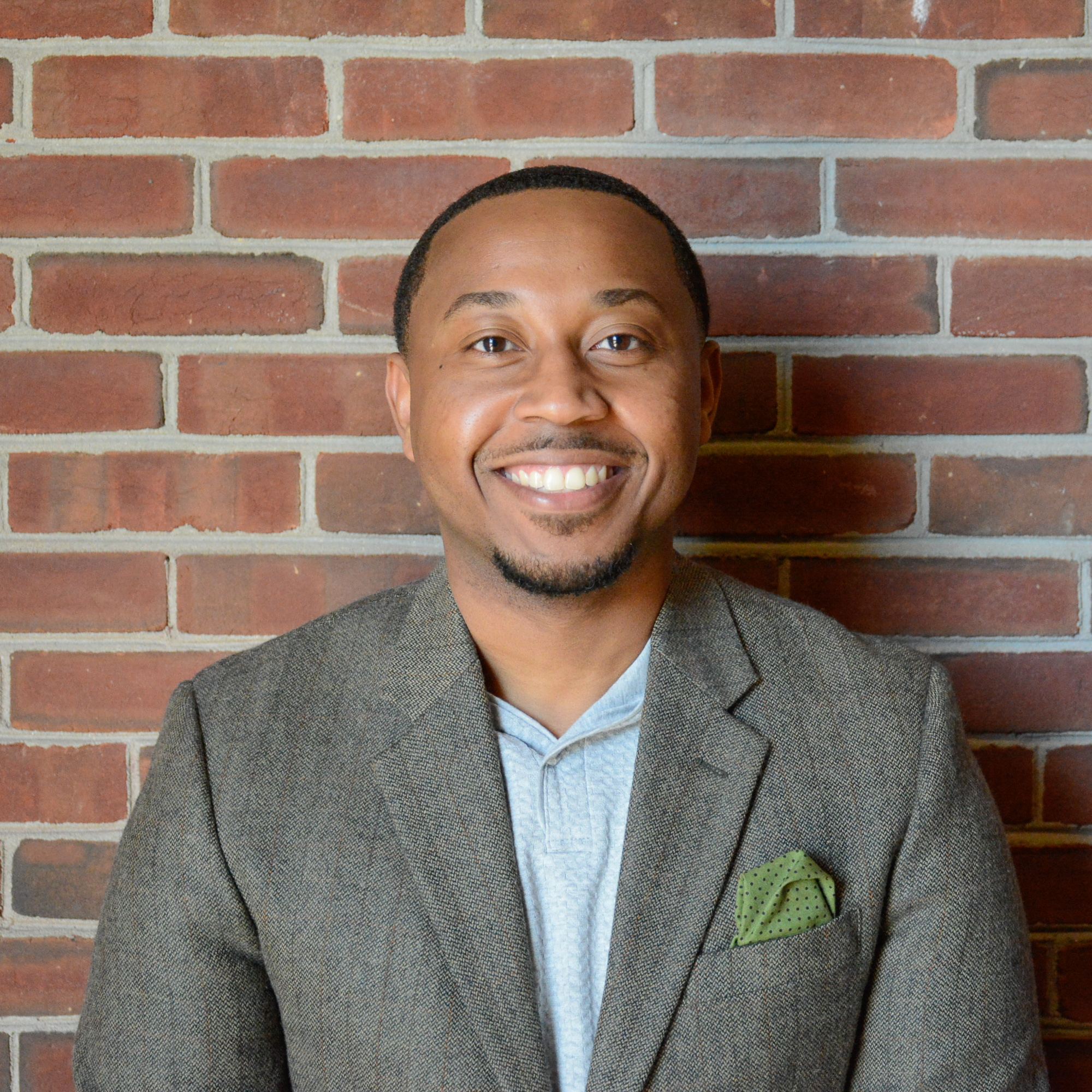
Dr. Marccus D. Hendricks is an Associate Professor of Urban Studies and Planning at the University of Maryland, where he directs the Stormwater Infrastructure Resilience and Justice (SIRJ) Lab. His work examines how development patterns create infrastructure vulnerabilities in marginalized communities. Research investigates: Equity in green-gray infrastructure systems Health impacts of sewer overflows Participatory flood risk assessment Climate adaptation planning As former Senior Advisor for Climate and Community Resilience at the White House Council on Environmental Quality, he shaped federal environmental justice initiatives. Community-engaged projects in Texas, D.C., and Maryland employ photography, water monitoring, and GIS to document infrastructure failures. Honors include selection as a Grist 50 Emerging Leader (2021) and contributions to the U.S. Fifth National Climate Assessment. Research appears in AJPH, Sustainable Cities and Society, and Risk Analysis.
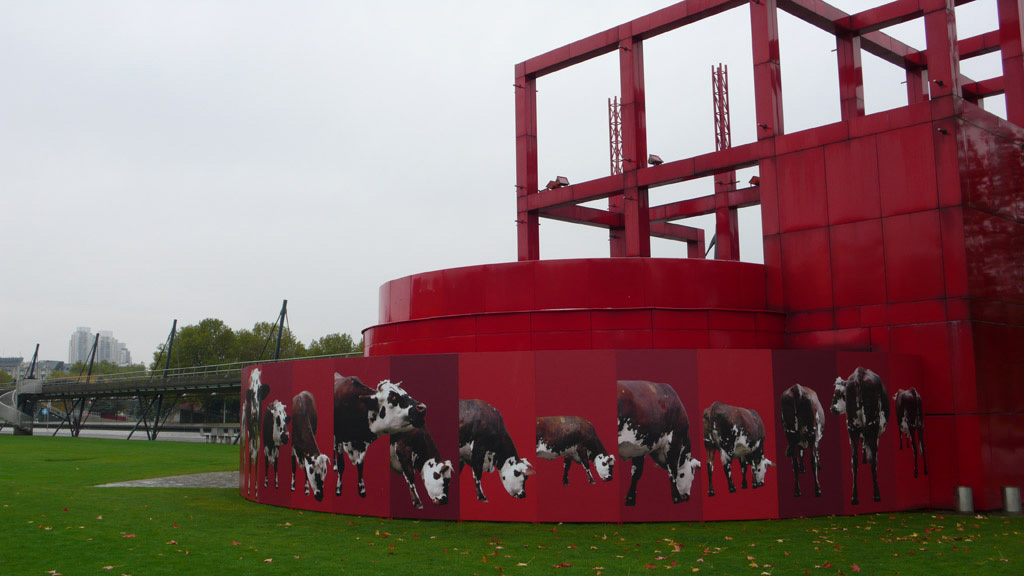
Matthew Gandy is a Professor of Cultural and Historical Geography at the University of Cambridge and a Fellow of King’s College. He holds affiliations with the Infrastructural Geographies and Vital Geographies research groups. His work spans urban metabolism, epidemiology, critical landscape studies, and cinematic methodologies. Gandy earned a BA (First Class) from St. Catharine’s College, Cambridge, and a PhD in Geography from the London School of Economics. His research explores intersections of nature, culture, and infrastructure in cities like Mumbai, Berlin, and Lagos. Notable contributions include The Fabric of Space (2014) and Natura Urbana (2022), award-winning works analyzing urban water systems, biodiversity, and ecological constellations. He has held visiting roles at institutions including Columbia University and UCLA, and founded the UCL Urban Laboratory (2005–2011). Key honors include the AAG Meridian Award (2014), British Academy Fellowship (2016), and John Brinckerhoff Jackson Prize (2023). Gandy’s films, such as Liquid City (2007) and Natura Urbana (2017), blend documentary techniques with academic research. He is actively involved in urban biodiversity initiatives, including Hackney Biodiversity Partnership. Teaching focuses on global urbanism, cultural landscapes, and the Anthropocene. Editorial roles include co-editing The International Journal of Urban and Regional Research (2012–2018). His work addresses urban political ecologies, multispecies urbanism, and the socio-cultural dimensions of urban environments.
فقط ۷۵۰ نتیجه اول نمایش داده میشود. برای رسیدن به نتایج دقیقتر، جستوجو را با فیلترها محدودتر کنید.