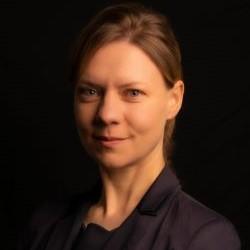
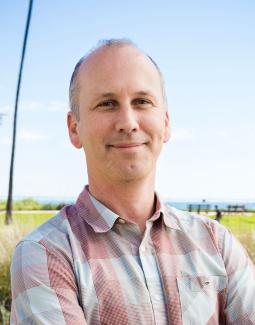
Stephanie Rogers is an Assistant Professor of Geosciences at Auburn University's College of Sciences and Mathematics, specializing in geospatial technologies and environmental applications. She leads the GeoIDEA Lab, focusing on GIScience, water quality modeling, and environmental impacts on honey bee colonies. Her research integrates emerging technologies like drones for ecological monitoring and addresses interdisciplinary challenges such as groundwater management and pollution tracking. Education: PhD in Geosciences from the University of Fribourg, Switzerland. Research Interests: Rogers' work bridges geospatial innovation with real-world problem-solving. Key areas include: GIS-driven environmental monitoring and modeling Drone-based assessment of water quality and algal blooms Groundwater contamination dynamics and public health implications Honey bee colony health through spatial analysis Advising & Grants: Currently mentors two trainees (Bethany Foust and Mallory Jordan) and collaborates on projects funded by environmental agencies. Her grants focus on geospatial data integration for ecological decision-making. Labs/Teams: GeoIDEA Lab coordinates multidisciplinary efforts in environmental geoscience, with active projects in Alabama's Black Belt region and international glacial archaeology initiatives.
Nicolas Davidenko is an Associate Professor in the Department of Psychology at the University of California, Santa Cruz (UCSC). He leads the High Level Perception Lab, focusing on behavioral and computational studies of human perception, particularly face recognition, spatial orientation, and visual ambiguity. His work emphasizes 'top-down' processes like attention and expectations. Davidenko holds a Ph.D. in Psychology from Stanford University (2006), an M.S. in Statistics from Stanford (2004), and an A.B. in Mathematics from Harvard (1998). His research explores how humans perceive and interpret complex visual information, including studies on illusions, virtual reality, and misophonia. He has developed parametric models of faces to study memory encoding and drawing accuracy. Notable achievements include a Top-10 Finalist placement in the 2015 Best Illusion of the Year Contest for his 'Mind-controlled motion' research. He teaches courses such as PSYC 121 (Perception), PSYC 139K (Face Recognition), and advanced cognitive research seminars. Davidenko also runs the CSASS Matlab Workshops, training researchers in statistical tools. His lab includes graduate students and postdocs, with alumni like Jennifer Day (Ph.D. ’19) and Pat Samermit (Ph.D. ’18). Recent projects include investigations into vection in VR environments, cross-sensory modulation of aversive sounds, and time perception in virtual reality. His work bridges cognitive psychology, neuroscience, and computational modeling, contributing to understanding how perception shapes human interaction with the environment.
Ebrahim Bedeer Mohamed is an Assistant Professor in the Department of Electrical and Computer Engineering at the University of Saskatchewan. He joined in July 2019, following roles as an Assistant Professor (Lecturer) at Ulster University, UK, and postdoctoral fellowships at Carleton University and the University of British Columbia. He holds a Ph.D. (Distinction) from Memorial University of Newfoundland (2014), with expertise in signal processing and wireless communications. His research focuses on optimizing communication systems through advanced signal processing techniques, including faster-than-Nyquist signaling, IoT network design, AI integration, and energy-efficient protocols. Key areas include next-generation communication networks, non-orthogonal modulation, and MIMO systems. Notable contributions include work on channel estimation for FTN signaling, RIS-aided wireless systems, and LR-FHSS protocols in IoT. His publications span spectral efficiency, interference minimization, and energy management in 5G/6G contexts. He actively seeks Ph.D. students with strong backgrounds in signal processing fundamentals. Awards and grants are not explicitly listed in the provided texts. His work emphasizes practical applications, such as UAV trajectory optimization for IoT data collection and energy-efficient caching strategies in dynamic networks.
Dr. Saman Razavi is an Associate Professor at the University of Saskatchewan, holding dual appointments in the School of Environment and Sustainability (SENS) and the Department of Civil, Geological and Environmental Engineering in the College of Engineering. He is a member of the Global Institute for Water Security and leads the Razavi EnviroFutures Lab. His research focuses on hydrological modeling, water resources management, climate change impacts, and the integration of machine learning with environmental science. Dr. Razavi has earned a PhD in Civil and Environmental Engineering from the University of Waterloo. Education: PhD in Civil and Environmental Engineering, University of Waterloo MS in Civil and Environmental Engineering, Amirkabir University, Iran BS in Civil Engineering, Iran University of Science and Technology Research interests include hydrologic model development, optimization, uncertainty quantification, climate change analysis, and socio-hydrological modeling. He emphasizes interdisciplinary approaches to address water challenges through integrated frameworks that bridge natural science, engineering, and socio-economic factors. Award: Walter L. Huber Civil Engineering Research Prize from ASCE (2024) Advising & Grants: Dr. Razavi leads the Integrated Modelling Program for Canada under Global Water Futures, focusing on transboundary water systems. His work involves developing decision-support tools for flood/drought management and climate adaptation. Labs/Teams: The Razavi EnviroFutures Lab advances research on water-human systems, leveraging AI and big data to enhance resilience against water-related hazards. Current projects include flood-prone area mapping, drought prediction, and socio-hydrological modeling in transboundary basins.
Stephen Ferrigno is an Assistant Professor and Chair of the Biology of Brain and Behavior Area Group at the University of Wisconsin-Madison's Department of Psychology. His research investigates the origins of uniquely human cognition through developmental, comparative, and cross-cultural methodologies. He focuses on foundational cognitive abilities such as number sense, recursive grammar, logical reasoning, and metacognition, exploring their evolutionary and developmental bases. Ferrigno's work bridges disciplines including cognitive neuroscience, developmental psychology, and cultural anthropology, with practical applications in early childhood education and curriculum design. His research employs cross-cultural studies with indigenous populations (e.g., the Tsimane) to assess cultural variability in cognitive development. Key themes include spatial mappings of numerical concepts, recursive sequence processing in non-human primates, and the metacognitive capacities shared between humans and monkeys. The Cognitive Origins Lab, led by Ferrigno, seeks to uncover universal cognitive principles while identifying culturally mediated differences. No scientific awards or grants are explicitly listed in the provided materials. While no advisees are mentioned, his research program suggests involvement in mentoring graduate students through the Department of Psychology's PhD program. Current projects include investigating the developmental trajectories of logical reasoning, the neural correlates of recursive sequence processing, and the design of culturally adaptive educational interventions targeting early math and language skills in preschool settings.
Tony Porter is a Professor in the Department of Political Science at McMaster University , Canada. He specializes in global governance and business regulation , with a particular focus on financial regulation , digital technologies , and the organizational effects of time in governance systems. Research Highlights : Currently leads SSHRC-funded research on the interplay of geopolitics and cross-border infrastructures related to digital currencies , GPS systems , and global supply chains . Co-editor of the Handbook of Business and Public Policy (2021) and author of multiple influential books on transnational financial governance. Academic Contributions : Published 15+ articles since 2014 on topics ranging from big data governance to cybersecurity policy . Key research areas include algorithmic governance , transnational temporalities , and benchmarking networks . Educational Background : BA in Political Science from McGill University MA and PhD in Political Science from Carleton University Teaching Roles include graduate courses on Global Governance , Digital Democracy , and Political Economy , along with undergraduate courses on Globalization and International Relations .
Dr Andrea Greve is a Lecturer in the Department of Psychology at the University of Cambridge . Her research focuses on cognitive processes related to memory, prediction error, and learning mechanisms. Key areas of interest include declarative memory formation, semantic predictions, and the influence of novelty on memory retention. She has explored topics such as word learning in variable-choice paradigms, the role of hippocampal lesions in memory binding, and predictive coding in neuroimaging contexts. Her work integrates experimental psychology with neuroscience methodologies, particularly leveraging neuroimaging techniques to investigate memory systems. Notable contributions include studies on false memory effects, the nonmonotonic relationship between object-location memory and expectedness, and the impact of prior knowledge on memory encoding. Dr. Greve has also contributed to methodological advancements, such as improved MRI anonymization for MEG coregistration. While her research spans multiple decades, recent efforts (2023–2025) emphasize predictive frameworks and their applications in understanding cognitive phenomena like semantic surprise and episodic memory formation. Her findings challenge traditional assumptions about fast mapping in adults and highlight the importance of integrating computational models with empirical data. Dr. Greve collaborates extensively with neuroimaging and cognitive science teams, contributing to interdisciplinary projects that bridge theoretical and applied research in memory systems. Her work maintains a strong focus on methodological rigor, particularly in experimental design and data interpretation.
Dr. Teresa Puthussery is an Associate Professor in the School of Optometry & Vision Science at the University of California, Berkeley. Her research focuses on retinal neurobiology and neurophysiology, investigating how visual signals are encoded in healthy retinas and disrupted during degeneration. She uses advanced techniques like patch-clamp electrophysiology, immunohistochemistry, and microscopy to study retinal circuits, neurotransmitter receptors, and ion channels. Dr. Puthussery teaches courses on vision science anatomy, physiology, and problem-based learning, including VISION SCIENCE 206B/C and 260C. Her research explores questions such as how retinal neurons extract motion/spatial details, how photoreceptor mutations cause degeneration, and how inner retinal circuits adapt post-photoreceptor loss. Recent work includes studies on ON-type direction-selective ganglion cells, optogenetic therapy for vision restoration, and calcium dynamics in foveal ganglion cells post-degeneration. She collaborates on projects involving primate and rodent models, contributing to understanding retinal disease mechanisms and therapeutic targets. Dr. Puthussery’s lab (retinalab.berkeley.edu) emphasizes translational research, bridging basic science and clinical applications. Her work has been published in journals like Nature and Cell Reports , with a focus on retinal degeneration, synaptic plasticity, and optogenetic interventions. She actively participates in training future vision scientists through Berkeley’s Optometry program and oversees GSI affairs as a faculty advisor.
Nico Trocmé is the Philip Fisher Chair in Social Work and Director of the School of Social Work at McGill University. He holds a PhD and MSW from the University of Toronto and has over 30 years of leadership in child welfare research, policy, and practice. His work focuses on child abuse/neglect, First Nations service collaboration, and systemic inequities in child protection systems. Education: PhD, University of Toronto (1992) MSW, University of Toronto (1983) Bachelor of Arts (Philosophy), University of Toronto (1981) Affiliations: Director, School of Social Work (2014–2023) Adjunct Professor, Factor-Inwentash Faculty of Social Work, University of Toronto (2005–2020) Scientific Director, Centre of Excellence for Child Welfare (2000–2008) His research spans national child maltreatment studies (e.g., Canadian Incidence Studies), First Nations partnership initiatives, and policy development. Key areas include socioeconomic disparities in child protection, trauma-informed care, and culturally responsive services for Indigenous communities. He has authored over 230 peer-reviewed publications and led grants totaling $14.3 million. Recent work emphasizes reducing overrepresentation of Indigenous children in systems and addressing mental health inequities. Awards include Fellow of the Royal Society of Canada (2017) and the SSHRC Impact Award (2014). Grants & Projects: Co-developing evaluation mechanisms for Indigenous child welfare (2024–2030) Pan-Canadian Child Welfare Administrative Data Project (2020–2025) Ontario Incidence Study of Child Abuse (2023–2025) Labs/Teams: Canadian Child Welfare Research Portal (cwrp.ca) Centre for Research on Children and Families (McGill) International Society for the Prevention of Child Abuse and Neglect (ISPCAN)
Prof. Tobias Müller is a Professor at the Bernoulli Institute for Mathematics, Computer Science and Artificial Intelligence at the University of Groningen. His academic journey includes previous positions at Utrecht University, CWI (Centrum Wiskunde & Informatica), Tel Aviv University, and Eindhoven University of Technology, with a doctorate from the University of Oxford under Colin McDiarmid. His research focuses on combinatorics, probability theory, random graphs, percolation, discrete and stochastic geometry, and combinatorial game theory. He has contributed extensively to understanding complex networks, hyperbolic models, and geometric random structures. Research Interests: Random Graphs and Percolation Theory Discrete and Stochastic Geometry Hyperbolic Network Models Probabilistic Combinatorics Geometric Probability Graph Algorithms and Connectivity Notable Contributions: Analysis of Voronoi and Poisson-Voronoi percolation in hyperbolic planes. Studies on Mallows random permutations and their cycle structures. Research on component games and logical limit laws in graph theory. Investigations into the geometry and properties of random geometric graphs. Grants & Collaborations: Active in organizing workshops and conferences on random graphs and geometric networks, including the BIRS Workshop on Random Geometric Graphs and the STAR Workshops series. Labs/Teams: Member of the Bernoulli Institute’s research groups, focusing on stochastic studies, combinatorics, and algorithmic methods.
Konstantinos Pelechrinis is an Associate Professor in the Department of Informatics and Networked Systems at the University of Pittsburgh's School of Computing and Information. He holds a Ph.D. in Computer Science from the University of California, Riverside. His research focuses on network science, urban informatics, and sports analytics. He has been recognized with the Army Research Office Young Investigator Award for his contributions. Education: Ph.D. in Computer Science, University of California, Riverside Research Interests: Urban mobility patterns and infrastructure analysis Sports performance quantification and strategy Data-driven decision-making in transportation systems Network science applications in social and urban systems His recent work explores topics such as implicit biases in sports refereeing, anomaly detection in NFT markets, and optimizing bike-sharing systems using predictive models. He also investigates urban infrastructure resilience through projects like the Epui platform for experimental urban informatics. Awards: Army Research Office Young Investigator Award He contributes to academic outreach through courses like TELCOM2125 (Network Science and Analysis) and collaborates on initiatives like the Healthy Ride Pittsburgh bike-sharing study. His lab focuses on bridging theoretical models with real-world urban and sports datasets.
Pauliina Patana is an Assistant Professor at Georgetown University's Edmund A. Walsh School of Foreign Service and core faculty in the BMW Center for German and European Studies. She holds a PhD in Political Science from Cornell University and previously served as a Democracy Postdoctoral Fellow at Harvard Kennedy School's Ash Center. Her research focuses on European political transformations, including globalization's impact on party politics, populism's rise, political representation in diverse societies, and climate change politics. She is writing a book analyzing why populist radical right parties thrive in certain local contexts. At Georgetown, she teaches courses on EU politics, populism, and electoral political economy. Education: PhD in Political Science, Cornell University. Prior affiliations include Harvard Kennedy School as a postdoctoral fellow. Research interests emphasize party politics, populism, political behavior, and the intersection of political economy with electoral dynamics. Her work bridges macro-level structural changes (e.g., economic restructuring, migration) with micro-level voter behavior. Recent studies explore how residential constraints and political geography influence support for populist radical right parties in France and Finland. Awards: Democracy Postdoctoral Fellowship (Ash Center/Harvard Kennedy School). Her research also extends to inclusive education policy, social service integration for vulnerable groups, and mental health policy analysis across Nordic countries. She collaborates internationally on projects analyzing cross-sectoral service delivery innovations. Labs/Teams: Active contributor to the BMW Center's initiatives on European studies and global governance. Engaged in interdisciplinary collaborations linking political science with urban studies and public health.
Ben Halpern is a Professor at the Bren School of Environmental Science & Management and Director of the National Center for Ecological Analysis and Synthesis (NCEAS) at UC Santa Barbara. He holds a PhD in Ecology from UCSB and a BA in Biology from Carleton College. His research focuses on marine ecology and conservation planning, with expertise in cumulative impact assessments, marine reserves, and the Ocean Health Index. He has led global projects on ocean health, biodiversity threats, and sustainable aquaculture, collaborating with institutions worldwide. Notable roles include co-founding the Conservation Aquaculture Research Team (CART) and serving as a part-time Chair in Marine Conservation at Imperial College London (2013–2018). Research interests span marine biodiversity conservation, climate change impacts on ecosystems, and the integration of ecological and social data into policy. His work emphasizes interdisciplinary approaches to address environmental challenges, such as mapping wastewater impacts, evaluating aquaculture sustainability, and developing tools for marine spatial planning. Awards include the Smith Fellowship Program (sponsored by The Nature Conservancy) during his postdoctoral work. He teaches Bren School courses, mentors graduate students, and leads collaborative research teams. Current projects include analyzing climate change effects on aquaculture and advancing the Ocean Health Index framework to support global conservation efforts.
Dr. Emily Cuming is a Senior Lecturer in the Humanities and Social Science school at Liverpool John Moores University , specializing in British literature, culture, and social history from the 19th century to the present. Her research focuses on maritime relations, working-class girlhood, life writing, and representations of domestic spaces including council estates, slums, and bedsits. PhD, MA, BA in English & Russian from University of Manchester (2006, 2002, 2001) Editor of Key Words: A Journal of Cultural Materialism Co-leader of the Home and Domestic Cultures research network Committee member of the Research Institute for Literature and Cultural History Board member of the Centre for Port and Maritime History Her research combines literary analysis with historical and cultural studies, emphasizing material culture, port cities, and marginalized voices. Recent publications include Maritime Relations: Life, Labour and Literature at the Water’s Edge, 1830-1914 (Cambridge University Press, forthcoming 2025) and Housing, Class and Gender in Modern British Writing, 1880-2012 (CUP, 2016). She has received multiple research grants including AHRC Connected Communities funding and Liverpool John Moores University QR awards. Dr. Cuming teaches undergraduate modules on Life Stories , Representing Domestic Space , and Waterscapes , as well as MA courses on Place: Imagining Place in Modern Times . She supervises three PhD projects and welcomes new supervisees in her research areas. 2025: Enhancing Research Cultures funding for 'The Sinking of the Lancastria' 2024: Editorial board member of Journal of Victorian Culture 2023: NCCPE Engage Prize for 'Around the Toilet' project 2022: Caird Short-term Research Fellowship 2016: NCCPE Engage Prize winner
Jesper Rindom Jensen is an Associate Professor in the Department of Electronic Systems at Aalborg University, Denmark, under the Technical Faculty of IT and Design. He is the Head of the Audio Analysis Lab, a leading research group in audio signal processing, since 2023. His work bridges theoretical signal processing and practical applications in artificial intelligence and audio systems. Full Name: Jesper Rindom Jensen Institution: Aalborg University School: The Technical Faculty of IT and Design Department: Department of Electronic Systems Research Lab: Audio Analysis Lab Email: jrj@es.aau.dk Office: Fredrik Bajers Vej 7B, B5-206, 9220 Aalborg Øst, Denmark Education: M.Sc. in Electronic Systems, Aalborg University (cum laude, 2009) Ph.D. in Signal Processing, Aalborg University (2012) Research Interests: Jesper Rindom Jensen's research centers on audio signal processing, with a strong emphasis on artificial intelligence, speech enhancement, noise reduction, beamforming, and multichannel systems. His work applies to diverse domains including robot and drone audition, spatial audio, and active noise control. He develops novel filtering techniques, including variable span linear filters and harmonic beamformers, to improve speech quality and intelligibility in noisy and reverberant environments. Publication Trends: His recent publications (2023–2025) show a strong trend toward integrating deep learning with classical signal processing, particularly in direction-of-arrival estimation, underwater acoustics, and robust multichannel systems. There is a clear focus on real-world applications, including sound zone control, active noise control, and limited-data scenarios using knowledge distillation. His work consistently emphasizes robustness, efficiency, and practical deployment. Scientific Awards and Recognition: AAU Talent for emerging research leaders Recipient of a competitive postdoc grant from the Danish Independent Research Council Advising and Grants: Jesper has supervised multiple PhD and master’s students, including Nørholm, Karimian-Azari, Zhang, and Wang. He has led significant research projects such as 'Sound Processing for Robots and Drones' (2018–2020) and participated in others related to joint audio-visual tracking and speech enhancement. His research has been supported by national funding bodies, reflecting its innovation and impact. Labs and Teams: He is a founding and core member of the Audio Analysis Lab at Aalborg University, which focuses on cutting-edge audio signal processing and AI-driven solutions. The lab fosters interdisciplinary collaboration and has produced numerous publications, datasets, and real-world applications. Jensen’s leadership since 2023 underscores his pivotal role in shaping the lab’s research direction.