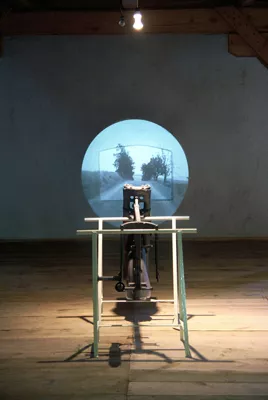
Patrik Kovačovský is a Professor and Studio Manager at the Department of Sculpture, Object, Installation at the Academy of Fine Arts in Bratislava. He works at the intersection of sculpture, architecture, and digital space, focusing on innovative artistic research and practice. Academy of Fine Arts in Bratislava (Department of Sculpture, 1990–1996) Art.D. studies, Academy of Fine Arts, 2001–2003 His research integrates traditional sculpture with virtual reality and architectural contexts, producing installations that explore memory, cosmic themes, and cultural identity. Recent works include Fluid Pictures (2011) and Kosmos (2006). 1996 Young Artist of the Year, Slovak National Gallery 2000 Annual Award, Galéria Klatovy/Klenová 2008 Visegrad Artist Residency 2010 Prohelvetia Residency in Zurich
Anna Michálková is an Associate Professor at the Department of Tourism, Faculty of Commerce, Bratislava University of Economics and Business. Her expertise spans regional tourism, destination management, and tourism economics, with a focus on sustainable development and innovation. Education: Study stays at University of St. Gallen (Switzerland), University of Economics in Vienna (Austria), and University Lüneburg (Germany). Her research investigates institutional frameworks for destination management, tourism cluster dynamics, and economic impacts of tourism, particularly in crisis periods. She emphasizes stakeholder cooperation, societal value metrics, and sustainable growth strategies. Key trends in her publications include regional policy integration, gazelle enterprises in tourism, and cross-border collaboration. She has led projects like KEGA 034EU-4/2020 on innovative teaching methods and VEGA grants on competitiveness and innovation. Anna supervises bachelor and master programs in tourism management, teaches case studies in German, and collaborates with institutions across Europe. Her work bridges academia and practice through projects with local governments and tourism organizations.
Kvetoslava Matlovičová is an Associate Professor in the Department of Tourism at Bratislava University of Economics and Business. Her work bridges Tourism Geography , Territorial Marketing , and Sustainable Development with a focus on Roma communities , cultural heritage , and urban resilience . Her research explores the intersection of semiotic place branding , Anthropocene challenges , and postdisciplinary geographical frameworks . She pioneered studies on medical tourism in Hungary and pro-poor tourism in marginalized Roma settlements, emphasizing community-based solutions. Key projects include the 15-minute city sustainable urban model and metamodern shifts in geographical epistemology. Her 2025 article on AI adoption in EU tourism highlights data-driven spatial analysis. Scientific Awards: Rector's Award 2015 (Social Sciences and Humanities) Rector's Award 2016 She has led grants like Game-based learning innovation (KEGA 020EU-4/2024) and Sociological dialogue support (project 312031V749). Her advisory roles focus on territorial development and geographic education reform .
Vladimír Siládi, PhD, serves as Assistant Professor and Head of the Department of Computer Science at Matej Bel University in Banská Bystrica, Slovakia, where he has held academic positions since 1995. His current roles include Project Coordinator for the Virtual University initiative and Registration Authority for SlovakGrid, with prior experience as a part-time Assistant Professor at Slovak University of Technology. Educational Background: PhD in Computer Science, Slovak University of Technology in Bratislava (1997-2007) Master's in Theology, Comenius University in Bratislava (2003-2008) Master's in Secondary Education and Teaching (cum laude) and PaedDr. (EdD), Matej Bel University (1988-1993, 2005) High School Diploma, GMN Banská Štiavnica (1984-1988) His research centers on Grid Computing architectures , parallel processing techniques , and security frameworks for distributed systems . Specialized expertise includes GPU-accelerated algorithms for NP-hard problems, trust models in ad hoc grid environments, and cloud-based educational platforms. His interdisciplinary work bridges computer science with environmental modeling and psychological applications through virtual reality systems. Publication analysis reveals a consistent focus on computational optimization across 12 major works (2006-2014), with recent contributions emphasizing trust intersection models for decentralized grids (2012-2013) and cloud-based educational infrastructure (2013). Earlier works established foundations in GPU-accelerated network topology optimization and genetic algorithms for irregular systems (2006-2010). Scientific Awards: No awards documented in source materials Project leadership includes the Virtual University of Matej Bel University (ITMS 26110230077) coordinating 85 team members across 280 courses, plus TEMPUS-FLACE distance learning development (1998-2000). His registration authority role for SlovakGrid since 2009 supports national research infrastructure. Departmental leadership involves managing the Computer Science team while teaching core courses in algorithms, grid technologies, and GPU programming, maintaining consultation hours for student engagement.
Martin Nitsche is an Associate Professor specializing in Phenomenology , Philosophy of Art , and Philosophy of Religious Experience . He currently teaches at the Faculty of Art and Design, University of Jan Evangelista Purkyně (UJEP) in Ústí nad Labem and leads the Department of Contemporary Continental Philosophy at the Institute of Philosophy of the Academy of Sciences of the Czech Republic . His work bridges phenomenological theory with interdisciplinary applications in sound studies, spatial analysis, and resilience. His research focuses on Phenomenological Topology and Applied Phenomenology , notably through his Transitive-Topological Model and publications on sonic environments. Key trends in his work include: Exploring the philosophy of place and space through Heidegger and Husserl. Investigating sound environments as frameworks for phenomenological inquiry. Integrating resilience theory and religious experience into philosophical systems. Nitsche has received the Fulbright Foundation Research Fellowship (2016/17) and serves as co-editor of the Phenomenologies of Religious Experience book series.
Prof. Peter Adamišin is a Professor and Vice-Rector for Strategy and Marketing at the University of Prešov's Faculty of Management and Business. He holds a Ph.D. in Management and has been a full Professor since 2022. His academic career includes roles as an Associate Professor (2009) and Engineer (1998). He specializes in Environmental Economy and Management, focusing on sustainable development, environmental projects, and regional policy. Education: He earned his engineering degree from the Slovak University of Agriculture in Nitra (1998) and completed pedagogical qualifications there in 2001. His research spans environmental project management, sustainable development metrics, and the economic implications of environmental policies. Research Interests: Adamišin's work centers on environmental management, sustainable development strategies, and the integration of environmental policies with economic frameworks. He has led over 6 domestic and 14 international research grants, emphasizing environmental project funding and regional disparities. Awards: He has received prestigious medals from the University of Prešov (Gold, 2021; Silver, 2016; Bronze, 2015) and Rector's Awards (2012, 1998). His research addresses environmental infrastructure, climate change mitigation, and the economic viability of green energy. Grants and Advising: He has coordinated major grants focusing on environmental project financing, sustainable agriculture, and regional economic analysis. His advising focuses on environmental economics and management practices. Labs/Teams: While no specific labs are named, he collaborates with interdisciplinary teams in environmental policy, sustainable development, and economic modeling across the Faculty of Management and Business.
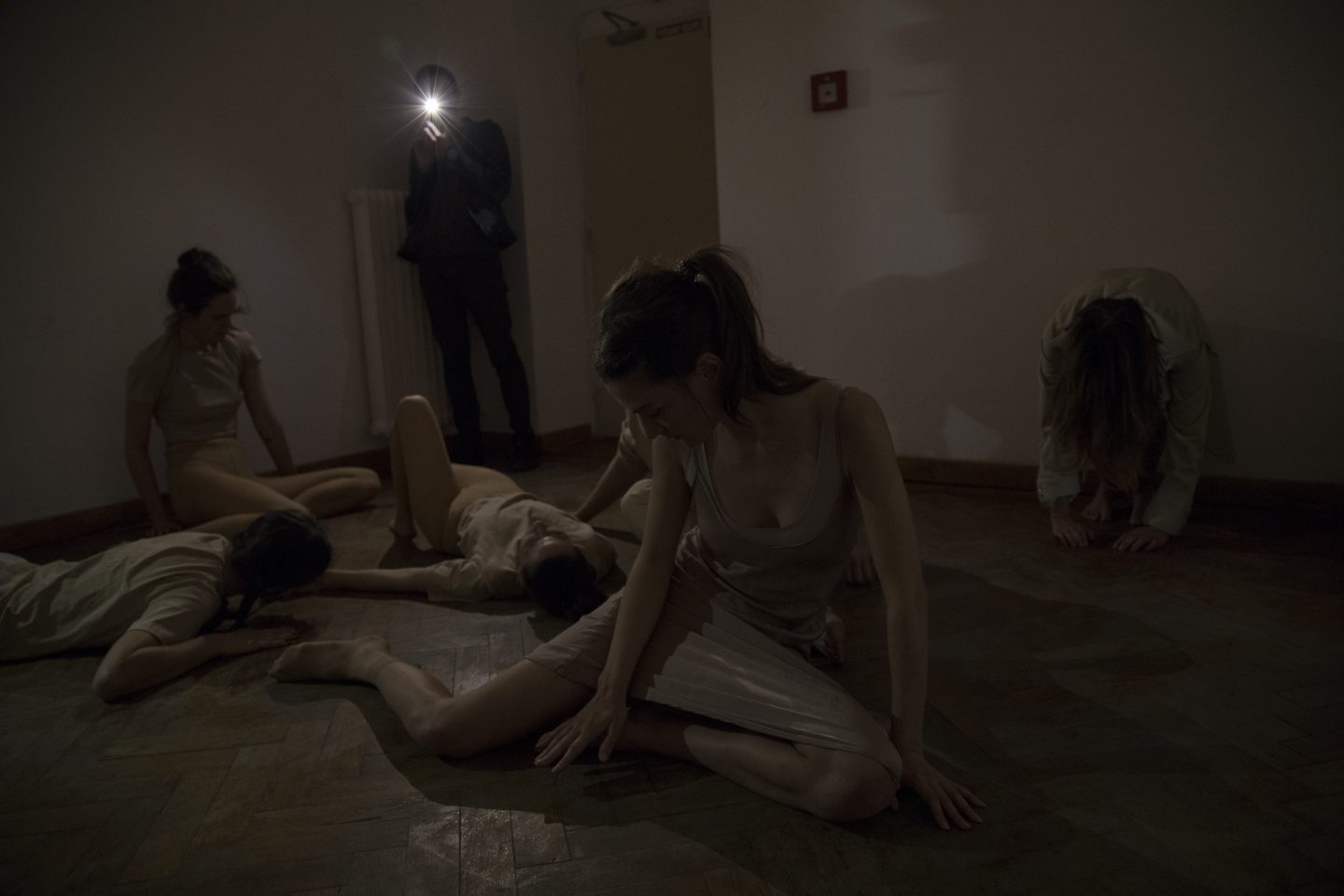
Ľuboš Kotlar is an Assistant Professor at the Department of Photography and New Media at the Academy of Fine Arts Bratislava. Operating between Bratislava and Prague, he is a visual artist, photographer, curator, and educator whose work spans commercial photography, free artistic creation, and collaborative practices. He graduated from VŠVU Bratislava and has participated in international exchanges at Aalto School of Arts in Helsinki and Bezalel Academy in Jerusalem. His research interests focus on queer theory, particularly queer temporality and spatial relations, collaborative art practices, representation of non-normative bodies, and Roma queer identity. His work challenges normative categories through performative approaches and genre-blurring techniques. His notable project 'nowlessness' (2017-present) consists of three interconnected events exploring alternative relationships to time and space. Kotlar's recent artistic output demonstrates a strong engagement with social and political issues, particularly through his 2022 installation 'mould mix melt stir break pinch SUGAR repeat *receipt against racism' at the Biennale Matter of Art in Prague, created with Robert Gabris as part of the i pack* collective. His work examines the intersection of Roma identity, queer experience, and institutional critique. His artistic practice emphasizes collaboration as a survival strategy in times of crisis, drawing on queer theory to understand interdependence rather than celebrating individual genius. He co-founded the art collective dsk. in 2012 and has been actively engaged in creating alternative narratives around marginalized bodies within art institutions.
Jana Kapelová is an Associate Professor and Studio Manager at the Department of Intermedia, Academy of Fine Arts and Design in Bratislava. Her practice bridges intermedia art, institutional critique, and civic activism. Academy of Fine Arts and Design, Bratislava (2009-2013, ArtD.) Faculty of Fine Arts, Banská Bystrica (2004-2006, MFA) University of Trnava (2000-2004, MA in Slovak Language & Art Education) Her research interrogates: Social resistance strategies through performance and participatory projects Temporal dynamics of labor and leisure in bureaucratic systems Institutional critique of Slovak cultural policy Oral history and polyphonic narratives in art practice Urban space alienation and reclamation Intergenerational identity transmission through art Major works include the Kunsthalle documentary project (2011-2012), which compiled 18 expert testimonies about Slovakia's failed contemporary art institution campaign, and Free Working Time (2011), analyzing creative acts during labor hours through Michel de Certeau's 'tactics' theory. She employs video installations, mail art, and public interventions as primary mediums. Scientific recognition includes: 2014 Oskár Čepan Award for emerging Slovak artists 2014 Tatra Tiger Award for innovative art projects 2013 Essl Art Award CEE Finalist 2005 Egoart Award Finalist She has completed international residencies at ICPA New York (2015) and Oberliht Moldova (2013), while co-founding Artyčok TV (2009-2015) – Slovakia's first art-focused online television platform.
Štefan Rehák is an Associate Professor and Head of the Department of Public Administration and Regional Development at the University of Economics in Bratislava. His academic career focuses on regional development, urban economics, and spatial analysis. He holds a PhD and serves as a ResearchGate profiled scholar in regional sciences. Affiliations: Faculty of Economics and Finance, University of Economics in Bratislava Key Roles: Department Head, Academic Researcher, Educator His research explores human capital migration, innovation ecosystems, and spatial economic dynamics. Specific interests include hedonic pricing models for real estate, local economic impacts of major events, and regional policy effectiveness. Research Trends: Over 60+ publications emphasize urban development, creativity metrics in economies, and EU regional policy analysis. Grants & Projects: Led projects on university impact assessment (UNIREG), creative economy stimulation (KRENAR), and EU cohesion policy evaluations. He advises on regional innovation strategies and collaborates internationally on topics like smart cities and academic patenting trends.
Jana Faixová Chalachanová is an Assistant Professor at the Department of Global Geodesy and Geoinformatics, Faculty of Civil Engineering, Slovak University of Technology in Bratislava. Since 1998, she has contributed to teaching and research in geospatial technologies, CAD systems, and data interoperability. Teaching Subjects: Geoinformatics, GIS in Building Sciences, Spatial Modeling in GIS, CAD Systems in Geodesy, Programming, Web Technologies in GIS Current Research Focus: Geographic Information Systems, spatial modeling of geoobjects, optimization of spatial analyses, and integration of heterogeneous geospatial data Her research spans applications in archaeology, solar radiation modeling, and environmental protection, leveraging LiDAR data and fuzzy logic frameworks. She has participated in multiple VEGA and APVV projects as a researcher and project leader. Scientific grants and projects she has participated in include: VEGA 1/0300/19 - 3D solar radiation modeling on tree vegetation APVV-0249-07 - Prediction of archaeological sites (project leader) VEGA 1/1035/04 - Standardization of geographic information (project leader) VEGA 1/5062/1998 - Geoinformation model of agricultural regions
Roles & Affiliation: Ing. Alexandra Bucha Rášová, PhD, is an Assistant Professor at the Department of Global Geodesy and Geoinformatics, Faculty of Science, Slovak University of Technology. Her research focuses on geospatial methodologies and data analysis. Academic Rank: Assistant Professor (since 2021) Previous Role: Researcher (postdoctoral stay, 2018–2020) Research Interests: Specializes in spatial analyses in GIS , visibility analyses , and spatial data uncertainty , contributing to geospatial data modeling and uncertainty quantification. Contact Information: Work phone: +421 2 32888 343. Office located at A-609, KGGI SvF, Radlinského 11, 81005 Bratislava - block A, 6th floor on the right.
Ing. Adriana Lukáčiková, PhD., is an Assistant Professor and Deputy Head of the Department of Operations Research and Econometrics at the Faculty of Economic Informatics, University of Economics in Bratislava. She has been employed since 1996 and focuses on econometric modeling, macroeconomic analysis, and spatial econometrics. Doctorate in Econometrics and Operations Research (2004), University of Economics in Bratislava Masters in Mathematical Methods in Economics (1993), University of Economics in Bratislava Her research spans asymmetric price reactions in energy markets, spatial spillover effects in EU regional development, Bayesian econometric methods , and macroeconomic impacts of pandemics . She collaborates on VEGA and KEGA grants related to green economy transitions and structural parameter estimation. Current grant projects include: VEGA 1/0052/24: Estimating structural parameters in macroeconomic models KEGA 026EU-4/2024: Interactive web-based quantitative economic analysis textbook VEGA 1/0047/23: Spatial spillovers in EU green economy initiatives Lukáčiková contributes to scientific societies as a member of the Slovak Society for Economic Informatics and the Academic Senate of the Faculty of Economic Informatics. Her teaching includes econometrics and management science courses at bachelor and master levels.
Prof. Erik Šoltés is a Professor at the Department of Statistics, Faculty of Economic Informatics, University of Economics in Bratislava. He holds a PhD in Quantitative Methods in Economics and has served as a Professor since 2021. His academic journey includes roles as an Assistant Professor (1998–2010) and Associate Professor (2010–2021). Education: Mgr. in Teaching of General Education (1998, Comenius University) and PhD in Statistics (2004, University of Economics in Bratislava). Research Interests: Focus on statistical methodologies applied to socio-economic issues, including poverty analysis, social exclusion, insurance risk modeling, and data science. He employs advanced statistical techniques like logistic regression, generalized linear models (GLM), and contrast analysis to study labor market dynamics, household work intensity, and regional disparities in the EU. His work frequently involves collaboration with institutions like the Czech Academy of Sciences and Springer Nature. Grants & Projects: Lead researcher in projects such as 'Impact of Inflation on Poverty and Social Exclusion in Slovakia and the EU' (2024–2026) and 'Application of Data Science in Labor Market Trend Analysis' (2023). Collaborates on EU-funded initiatives like the APVV-SRB logistics optimization project (2019–2021). Academic Roles: Former Deputy Dean for Science and Doctoral Studies (2015–2022), current Dean of the Faculty of Economic Informatics (2023–present). Serves on editorial boards of journals like Statistika: Statistics and Economy Journal and Equilibrium . Actively participates in international academic committees and conferences, including the Aleksander Zelias International Conference. International Collaboration: Engages in teaching and research exchanges with universities in the Czech Republic, Poland, Germany, and Uzbekistan through Erasmus+ and VEGA-funded projects.
Marek Káčer is an Assistant Professor at the Department of Finance within the Faculty of Economics and Finance at Bratislava University of Economics and Business. His research focuses on financial risk management, corporate finance, econometrics, and sovereign credit risk modeling. His notable research interests include SME failure prediction using machine learning, audit fee dynamics of Big 4 auditors, and sovereign credit rating analysis for emerging economies. He has collaborated with institutions like the SecureDataLab and contributed to projects on creative capacity measurement and regional development. Key contributions include studies on Slovak SMEs' financial distress prediction, gender diversity in private firms, and the equity gap in knowledge-based enterprises. His work blends quantitative methods with real-world applications in transition economies and innovation financing. Teaching responsibilities include courses like Foundations of Financial Econometrics and Risk Analysis in Finance. He maintains active international collaborations and publishes in journals such as Journal of Business Finance and Accounting and Journal of Corporate Finance .
Roman Dzambazovic is an Associate Professor and Head of the Department of Sociology at the Faculty of Arts, Comenius University in Bratislava. He has been working at the university since 1996, initially as an assistant professor until 2022 when he was promoted to associate professor. He has served as Head of Department since 2019 and is also the webmaster of the department website. His educational background includes: 1996: Mgr. in Sociology, Faculty of Arts, Comenius University in Bratislava 2006: PhD. in Sociology, Faculty of Arts, Comenius University in Bratislava 2022: Scientific qualification degree IIa, Slovak Academy of Sciences 2022: Associate Professor title in Sociology, Faculty of Arts, Comenius University in Bratislava Roman Dzambazovic's research focuses on social inequalities, social stratification and mobility, family sociology, intimacy and sexuality, youth subcultures, adolescence, and social deviance. His work often examines how socioeconomic factors influence family formation, educational pathways, and social mobility in Slovak society. He has conducted extensive research on poverty, social exclusion, and demographic trends in Slovakia, with particular attention to Roma communities and youth transitions to adulthood. His approach combines theoretical frameworks with empirical data from national surveys and international comparative research projects. His recent publications show a strong focus on residential homogamy, educational inequalities, youth transitions to adulthood, and social stratification in Slovakia. His work demonstrates consistent engagement with both theoretical sociological frameworks and empirical data analysis, often participating in international comparative research projects. The articles reveal a trajectory of increasingly sophisticated methodological approaches and theoretical integration across his career. His scientific awards include: Rector's Award of Comenius University in Bratislava for pedagogical and research activities (2008) Scholarship from Educational Foundation of Jan Hus (2006) Award from Literary Fund for scientific and professional literature in social sciences (2015) A. Hirner Award for best sociological work - Second place (2020) Commemorative Letter from Comenius University in Bratislava (2022) Professor Dzambazovic has supervised 61 bachelor's theses and 54 master's theses, and currently supervises 7 bachelor's, 4 master's, and 3 doctoral students. He has been involved in numerous research projects, including APVV, VEGA, and Horizon 2020 grants, focusing on educational paths of young people, social stratification, and cultural heritage. His most significant projects include 'Educational paths of young people - factors and mechanisms of their choice' (APVV 2021-2025), 'Close relatives? Slovakia and the Czech Republic in the context of international comparative research' (APVV 2019-2023), and 'Cultural Heritage and Identities of Europe's Future' (Horizon 2020 2018-2021). He is an active member of the academic community, serving as Vice-President of the Slovak Sociological Society (2018-2022), member of the editorial board of the journal Sociológia since 2018, and representative of Slovakia in the International Social Survey Programme (ISSP) since 2004. He is also a founding member of the Slovak Social Data Archive (SASD) team and has participated in numerous international research collaborations across Europe.