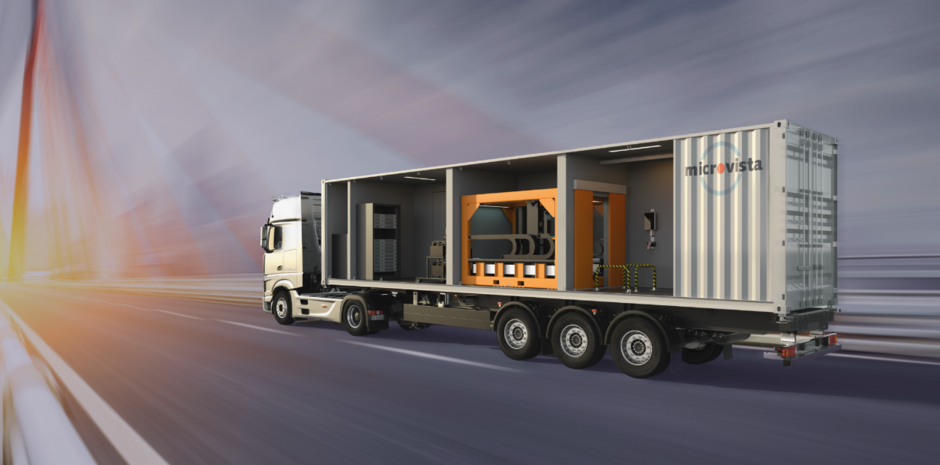
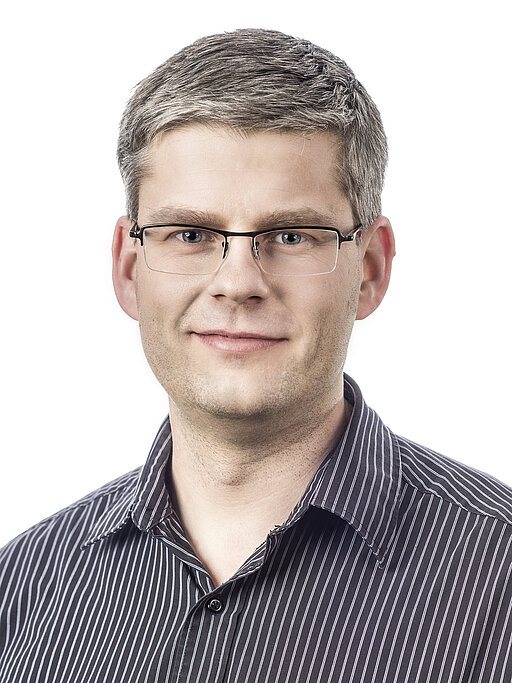
Prof. Dr. Lutz Hagner is a part-time Professor at Harz University of Applied Sciences, Faculty of Automation and Information. He is also the Managing Director of Microvista GmbH, specializing in non-destructive testing (NDT) using industrial computed tomography and air-coupled ultrasound. His career spans academia and industry, with a focus on advancing NDT methods for quality assurance in manufacturing. Education: Otto von Guericke University of Technology (1980–1984), Doctorate in Digital Small Automation Systems (1989). His research interests include industrial computed tomography, automation technology, sensor systems, and embedded electronics. His work addresses spatial resolution optimization, portable testing systems, and AI integration for defect analysis. Recent publications highlight applications in casting inspection, composite materials, and medical device manufacturing. Scientific awards: Not explicitly mentioned. Teaching roles include courses on smart automation, NDT, and industrial CT at Harz University of Applied Sciences, Otto von Guericke University, and Freiberg Mining Academy. His part-time academic role complements his leadership at Microvista GmbH and NetCo Professional Services GmbH.
Patrik Vagovic is a Staff Scientist at the European XFEL GmbH, affiliated with the Center for Free-Electron Laser Science (CFEL), a collaborative research center between DESY, the University of Hamburg, and the Max Planck Society. He leads research in the Coherent Imaging Team, focusing on advanced X-ray imaging techniques using X-ray free-electron lasers. His work bridges the gap between fundamental physics and practical applications in materials science, biology, and fluid dynamics. Dr. Vagovic's research interests center around developing and applying cutting-edge X-ray imaging methodologies, particularly high-speed and phase-sensitive techniques. His work encompasses X-ray phase contrast imaging, coherent diffractive imaging, tomography, and advanced data processing methods. He has pioneered MHz frame rate X-ray imaging capabilities at the European XFEL, enabling unprecedented observation of ultrafast phenomena previously impossible to capture with conventional X-ray sources. Analyzing his recent publication record reveals a strong focus on pushing the temporal and spatial boundaries of X-ray imaging. His work demonstrates a consistent progression from developing fundamental imaging techniques to applying them to complex scientific problems across multiple disciplines. The research shows increasing sophistication in both hardware development (optical systems, detectors) and computational methods (phase retrieval, machine learning). Dr. Vagovic actively collaborates with international research teams across Europe and beyond, contributing to numerous high-impact publications in top journals including Optics Express, Journal of Synchrotron Radiation, and Nature Communications. His work on MHz X-ray microscopy has particularly advanced the field of time-resolved imaging of irreversible phenomena. As part of the Coherent Imaging Team at European XFEL, Dr. Vagovic works with state-of-the-art instrumentation including the SPB/SFX instrument, where he has developed pump-probe capabilities and advanced diagnostics for megahertz pulse trains. His research group utilizes advanced computational approaches alongside experimental innovations to solve complex imaging challenges.
Francis Engelmann is an incoming Assistant Professor at the University of Lugano (USI) Faculty of Informatics, currently completing his postdoctoral research at Stanford University working with Prof. Leonidas Guibas and Prof. Jeannette Bohg. Prior to Stanford, he was a postdoctoral research fellow at ETH Zurich with Prof. Dr. Marc Pollefeys and conducted his PhD in Computer Vision, Machine Learning and 3D Scene Understanding at RWTH Aachen University under Prof. Dr. Bastian Leibe. His research focuses on advancing 3D scene understanding through computer vision, machine learning, and robotics. Engelmann's work explores open-vocabulary 3D scene understanding, functional scene analysis, 3D reconstruction, and semantic segmentation. He has made significant contributions to open-vocabulary 3D instance segmentation, 3D scene graph construction, and language-augmented 3D vision. His research bridges theoretical computer vision with practical robotics applications, particularly in scene understanding for robotic manipulation. Analysis of his recent publications reveals a strong trajectory in developing methods for open-vocabulary 3D scene understanding, with increasing focus on functional understanding, language integration, and practical robotics applications. His work spans from foundational 3D representation learning to applied robotics systems, with a consistent emphasis on making 3D scene understanding more accessible, scalable, and semantically rich. ETH Zurich Career Seed Award (2022) Outstanding Reviewer for CVPR 2024 (top 2%) Top Reviewer for NeurIPS 2023 Best Paper Award at ICRA'24 MOMA.v2 workshop Multiple oral presentations at top-tier conferences (ICCV, CVPR, ECCV) Engelmann actively mentors PhD students and postdocs, with notable collaborations including Valentin Bieri, Rui Huang, Elisabetta Fedele, and Ayca Takmaz. He has received an NVIDIA Academic grant and serves as an area chair for major computer vision conferences including CVPR'25, WACV'26, and 3DV'25. He co-organizes the annual Open-Vocabulary 3D Scene Understanding Workshop, now in its fourth iteration at CVPR'25.
Dr. Bo Li is a researcher at the Department of Sociology, John F. Kennedy Institute, Freie Universität Berlin. He holds a PhD in Urban Studies from Delft University of Technology (2023) and is currently conducting research under the Rubicon Fellowship from the Dutch Research Council, collaborating with Prof. Sebastian Kohl on the financialization of rental housing from a historical comparative perspective. Research Interests: Housing Financialization Private Rented Sector Residential Satisfaction and Mobility Subjective Well-Being Comparative Urban Studies Behavioural Economics and Big Data Applications Dr. Li's research integrates qualitative and quantitative methods, leveraging web-scraped big data and satellite imagery to analyze housing dynamics across countries, with a regional focus on metropolitan China, especially Shenzhen. His work critically addresses housing rights, affordability, and social equity. His recent publications (2017–2024) show a strong trajectory in urban housing research, with articles in Journal of Urban Management , Cities , Habitat International , and Journal of Housing and the Built Environment . The research trends emphasize policy implications, behavioral drivers, and socio-spatial inequalities in rapidly urbanizing contexts. Scientific Awards and Recognition: Rubicon Fellowship, Dutch Research Council Academic Service: Associate Editor, Journal of Urban Management Associate Editor, Humanities & Social Sciences Communications Coordinator, European Network for Housing Research (ENHR) Conference Reviewer for Urban Studies , Cities , Journal of Housing and the Built Environment , among others Dr. Li actively contributes to the global housing research community through editorial leadership and collaborative projects. While no formal students are listed, he is engaged in advising through collaborative research and academic mentorship. His current work is supported by the Rubicon Fellowship, enabling independent research on transnational housing financialization. Laboratory and Research Teams: Dr. Li is embedded in the research team led by Prof. Sebastian Kohl at Freie Universität Berlin and collaborates extensively with scholars from Delft University of Technology, including S.J. Jansen, H. van der Heijden, and P. Boelhouwer. He is also connected to the European Network for Housing Research (ENHR), contributing to broader scholarly coordination in the field.
Professor Daniel Wachsmuth holds the Chair of Mathematics VII (Optimal Control) at the University of Würzburg, where he has been a professor since 2012. He is affiliated with the Faculty of Mathematics and Computer Science and maintains his office in Building 30 (Mathematics West), Room 02.011. Prior to his current position, he completed his academic training with positions as a postdoc at RICAM in Linz, Austria (2008-2012) and as a research assistant at TU Berlin (2002-2008). Wachsmuth's research focuses on optimal control theory , particularly concerning partial differential equations, nonsmooth optimization problems, and regularization of problems with bang-bang control. His work bridges theoretical mathematical analysis with practical numerical methods for solving complex control problems. He has made significant contributions to the understanding of sparse optimization, topological derivatives, and non-convex optimization problems in function spaces. His recent publications demonstrate a strong trend toward addressing L 0 constraints in optimal control, developing advanced numerical methods for non-smooth problems, and exploring connections between optimal control theory and deep neural networks. His work spans both theoretical developments (such as second-order conditions and stability analysis) and practical algorithmic implementations for solving challenging optimization problems. Among his notable recognitions is the Dimitrie-Pompeiu Preis awarded in 2016. His research has been published in top-tier journals including SIAM Journal on Control and Optimization, Computational Optimization and Applications, and Inverse Problems. Current Position: Professor of Mathematics at University of Würzburg (since 2012) Previous Positions: Postdoc at RICAM, Linz (2008-2012); Research Assistant at TU Berlin (2002-2008) Contact: daniel.wachsmuth@uni-wuerzburg.de; +49 931 31-89071
Prof. Dr. Dominik Mattes is a Visiting Professor at the Institute of Social and Cultural Anthropology, part of the Department of Political and Social Sciences at Freie Universität Berlin. His research focuses on Medical Anthropology, Global Health, and Religious Diversity, with particular attention to HIV/AIDS treatment dynamics in Tanzania and the governance of religious pluralism in urban contexts like Berlin. He leads the Collaborative Research Center (SFB 1171) project C03 on 'Affective Societies.' His work integrates fieldwork methodologies with critical analyses of healthcare systems, social inclusion/exclusion, and affective dimensions of religious practices. Research interests include the intersection of health care and global mobility, the politics of religious diversity in urban spaces, and the ethical dimensions of medical interventions in marginalized communities. He has published extensively on topics such as antiretroviral treatment adherence, the spatial politics of religious communities in Berlin, and the socio-cultural impacts of global health policies. His recent work explores 'Radical Health' frameworks and the embodiment of belonging in transnational contexts. Prof. Mattes is affiliated with the CRC 1171 'Affective Societies' and collaborates on projects like 'Spatialities of Belonging' examining neo-Pentecostal and Sufi groups in Berlin. His teaching and research emphasize participatory ethnographic methods and interdisciplinary engagement with global health challenges. He has advised numerous conferences and workshops, including the Medical Anthropology Young Scholars Meeting and an International Summer School in Medical Anthropology.
Prof. Knut Haase holds the position of Professor at the University of Hamburg Business School's Institute of Logistics, Transport and Production. He is affiliated with the University of Hamburg in Hamburg, Germany, and his office is located in Room 2033. His contact information includes the email knut.haase@uni-hamburg.de and telephone number +49 40 42838 9026. Office hours require prior arrangement via email with his team assistant. His research focuses on transportation systems optimization, production planning in manufacturing industries, and facility location strategies in public services. Specific areas of interest include: Logistics and supply chain management Transport economics and urban mobility solutions Healthcare facility location modeling Operations research applications in public safety Mathematical programming for production scheduling Event management and crowd safety optimization His recent work exhibits strong trends in applying optimization algorithms to: Public transportation networks Large-scale event logistics (e.g., FIFA World Cup, Hajj pilgrimage) Healthcare and police service district planning Brewery production systems Academic program evaluation in business schools Analyses often combine simulation methods with spatial and stochastic modeling techniques. Prof. Haase has advised multiple institutions including DB Schenker, Lufthansa Technical Training, and Bosch GmbH. His research collaborations involve: Development of decision support systems for production planning Optimization of crew scheduling in transportation sectors Revenue-maximizing tariff zone designs He leads research teams focusing on: Transport economics within the Institute of Logistics Mathematical modeling for public sector challenges Logistics optimization in manufacturing and service industries
Bruce Thomas , M.Sc., is a Scientific Employee at the Institute of Geodesy within the University of Stuttgart . His research focuses on geodesy, natural hazards, and disaster risk reduction, particularly leveraging GNSS (Global Navigation Satellite Systems) technology for tsunami detection and coastal vulnerability analysis. He contributes to advancing early warning systems and spatial analysis methodologies for mitigating the impacts of submarine volcanic eruptions, earthquakes, and tsunamis. Thomas’s work emphasizes innovative applications of ship-based GNSS networks to enhance tsunami monitoring capabilities, as well as rapid, cost-effective methods for assessing population and infrastructure exposure to natural hazards. His research spans diverse geographic regions, including the South Sandwich Islands, Tonga, Alaska, and New Caledonia. He collaborates on projects involving seafloor geodetic constraints, spatial discretization of cultivated landscapes, and high-resolution mapping of coastal hazards. His recent publications highlight advancements in tsunami detection algorithms, cargo ship network optimization for hazard monitoring, and the development of tools for community-level risk perception and mitigation strategies. Thomas’s interdisciplinary approach bridges geophysics, remote sensing, and GIS applications to address global challenges in environmental and coastal resilience. Currently, he is affiliated with the Institute of Geodesy at the University of Stuttgart, where he actively engages in research, technology development, and academic collaboration through platforms like ORCID, ResearchGate, and LinkedIn.
Dr. Pascal Grittmann is a Research Fellow in Computer Graphics at Saarland University, specializing in efficient and robust rendering algorithms. His research advances Monte Carlo methods, importance sampling, and bidirectional rendering techniques for global illumination. Current DFG-funded project develops adaptive bidirectional rendering solutions requiring minimal user configuration. Research aims to create universal rendering algorithms balancing efficiency and robustness across diverse scenes. Publications demonstrate innovations in variance-aware sampling, path guiding optimizations, and caustic rendering. Served as Eurographics Symposium on Rendering conference co-chair (2021). Teaching includes practical implementation of rendering techniques using Vertex Connection and Merging methods. Maintains collaborations with international computer graphics researchers.
Dr. Ann Hipp is a researcher at the University of Bremen and the Thünen Institute of Rural Economics. She holds a position as a research associate and is a habilitation candidate. Her work focuses on innovation systems, industry dynamics, and knowledge transfer, particularly in the context of socialist economies like East Germany. She has held visiting positions at ETH Zurich and Hitotsubashi University Tokyo, and her research has been recognized with awards from the Stifterverband and others. Dr. Hipp completed her studies in economics at TU Dresden, TU Chemnitz, Audencia School of Management (France), and Lappeenranta University of Technology (Finland), earning a B.Sc. in 2011 and an M.Sc. in 2015. She obtained her Ph.D. (Dr. rer. pol.) from TU Dresden in 2020 with a dissertation on innovation activities and policy support in the solar photovoltaics industry. Her research interests span innovation systems and policies, industry dynamics, knowledge and technology transfer, and the economic history of socialist systems, particularly East Germany. She examines the interplay between innovation activities, policy interventions, and their impacts on industry development and structural change. Recent work focuses on barriers to technology transfer in historical contexts and the role of trust in regional innovation ecosystems. Awards include the Inncentive Scholarship (Stifterverband), Dr. Händel Prize (TU Dresden), and a scholarship for young researchers from the Graduate Academy Dresden. She leads the DFG Network "The Dynamics of Innovation Systems" and has contributed to projects funded by the DFG and BMBF, including studies on DDR economic modernization and rural innovation. Teaching includes courses on microeconomics, quantitative methods, and firm/regional analysis. She is affiliated with the University of Bremen’s Chair of Economics of Innovation and the Thünen Institute’s Innovation and Value Creation in Rural Areas division.
Prof. Daniel Weiskopf is a Professor at the University of Stuttgart's Faculty of Computer Science, Electrical Engineering and Information Technology, affiliated with the Institute of Parallel and Distributed Systems. His research focuses on visualization techniques, eye tracking, and human-computer interaction, with applications in virtual/augmented reality (VR/AR), data analysis, and uncertainty modeling. He has contributed to advancements in scientific visualization, including ML-driven flow visualization, energy-efficient rendering, and gaze-aware interfaces. His work emphasizes empirical methodologies, such as eye-tracking studies for evaluating visualization literacy and collaborative learning in AR environments. Research interests include: Scientific Visualization and Uncertainty Representation Eye Tracking Methodologies and Human Factors VR/AR Systems and Immersive Analytics Machine Learning Applications in Visualization Recent publications highlight trends in optimizing visualization performance, improving data interpretation through gaze-aware systems, and integrating advanced visualization into gaming and engineering contexts. His work bridges computational methods with user-centric design principles. He leads efforts in the Institute of Parallel and Distributed Systems , collaborating on tools like Gazealytics for exploratory gaze analysis and mint for VR visualization integration. No awards or grants are explicitly listed in the provided information.
Dr. Patrick Schultheiss is a PostDoc at the Department of Zoology II (University of Würzburg) within the Biocenter . His research focuses on understanding how insects, particularly ants, navigate natural environments through integrative approaches combining behavioral, neurobiological, and ecological perspectives. Research Interests: Visual navigation in ants and bees Neural mechanisms of search behavior Biogeography and macroecological patterns of ant distribution Swimming kinematics in mangrove ants Desert ant orientation using ultraviolet cues Publications highlight his work on spatial cognition in Melophorus bagoti , mangrove ant biomechanics, and visual perception in desert ants and honeybees. His methods blend field experiments, lab studies, and neurobiological investigations. Contact: Email: patrick.schultheiss@uni-wuerzburg.de Location: Building B1 (Biocenter), Room D112
Prof. Dr. Benedikt Jahnel is a Professor at the Institute of Mathematical Stochastics, Carl Friedrich Gauss Faculty, Technical University of Braunschweig, and Head of the Leibniz Junior Research Group on Probabilistic Methods for Dynamic Communication Networks. His research focuses on the modeling and analysis of spatially embedded systems with interacting random components, with applications in physics, epidemiology, and telecommunications. Education: PhD in Organismic and Evolutionary Biology from Ruhr University Bochum (2011), Diploma from Technical University of Berlin. Research interests: Uses tools from statistical mechanics and stochastic geometry to study phase transitions, percolation theory, and spatial random processes. Current projects investigate continuum percolation, interacting particle systems, and probabilistic methods for communication networks. Recent publications demonstrate strong emphasis on spatial stochastic processes and percolation theory, with applications to network connectivity and epidemic modeling. Trends include mathematical analysis of phase transitions in random environments and dynamics of communication networks. Scientific awards include leadership of Leibniz Junior Research Group, EURANDOM Ambassador appointment, and election to the board of the Probability and Statistics Group of the German Mathematical Society. Leads a research team including 3 postdocs and 3 predoctoral researchers. Current projects funded by DFG, ERC, and Math+ Cluster of Excellence. Heads the DYCOMNET research group at Weierstrass Institute Berlin, focusing on dynamic spatial random systems.
Judith Igelsböck is a Researcher at the Department of Science, Technology and Society at the Technical University of Munich (TUM), affiliated with the TUM School of Social Sciences and Technology. Her work focuses on innovation research, science and technology studies, and organizational behavior. She holds a background in sociology from the University of Vienna and has conducted postdoctoral research at the MCTS Post/Doc Lab. Currently, she investigates industrial boundaries and leads the LIT Project ‘Upper Austrian Innovation Scripts’, exploring innovation activities through artistic interventions like Innovation Theater. Her research interests span transdisciplinary sustainability studies, anti-disciplinary methodologies, and the fusion of theater with innovation studies. She has explored topics ranging from workplace democracy through technological tools like whiteboards to the sociotechnical imaginaries of future human-robot relationships. Her projects emphasize experimental approaches, re-enactment methods, and boundary-crossing collaborations. Judith’s work challenges traditional academic boundaries, advocating for experimental and theatrical interventions in research practice. Her recent focus includes institutional scripts, spatial configurations in organizations, and the moral economies of fictional collectives. She has collaborated internationally, including with the Institut Mines-Télécom in France, and her research often intersects with policy design and public engagement in sustainability contexts.
Jürgen Kusche is a Professor at the University of Bonn's Institute of Geodesy and Geoinformation, affiliated with the Collaborative Research Centre SFB1502 and Faculty of Agriculture. His research develops satellite-geodetic methods for Earth system analysis. Kusche's group integrates geodetic data with Earth System Models to study sea level changes, terrestrial water cycles, and climate processes. They investigate lunar orbiter ranging, satellite radar altimetry, and spaceborne gravimetry for mass change monitoring. Current research explores quantum technology applications for climate change quantification, advancing observation techniques from terrestrial to spaceborne platforms across multiple spatial scales.