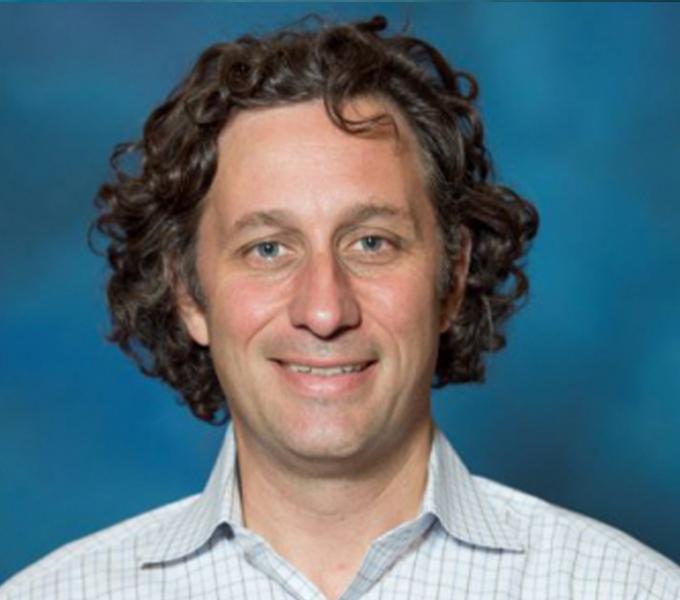
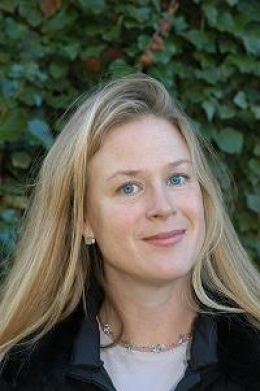
Professor Sascha O. Becker is affiliated with the University of Warwick's Department of Economics and contributes to the CESifo Research Network. His work spans Labour Economics, Demographic Economics, and Economic History, focusing on religion, migration, and policy analysis. Recent research explores topics such as religion's role in economic development, forced displacement in historical contexts, and the long-term effects of political regimes. His empirical methods leverage administrative datasets and econometric techniques. Key themes in his publications include the economic impact of religious institutions, migration patterns post-conflict, and labor market dynamics. Notably, his 2025 work on religion and development highlights cross-cultural trends.
Mindy Blaise and Veronica Pacini-Ketchabaw are prominent scholars in early childhood education and critical theory, advocating for postdevelopmental pedagogies that disrupt traditional developmental frameworks. Their interdisciplinary work integrates feminist, decolonial, and environmental humanities perspectives to reimagine childhood and education in response to ecological crises and social inequities. Central to their collaboration is the development of a Living Feminist Postdevelopmental Lexicon , challenging Cartesian dualisms and human exceptionalism while prioritizing relational ethics and multispecies entanglements. Their research critiques neoliberal and colonial legacies in education, emphasizing care, decolonization, and rethinking power-knowledge relationships in early childhood spaces. Key themes include: decolonization of educational spaces, queer worlding, vibrancy of materiality, and response-ability in pedagogical practices. Their work bridges theory and practice through experimental empiricism and transdisciplinary methods, fostering ethical engagements with children, environments, and marginalized communities.
Seyda Öney is a doctoral researcher at the Visualization Research Center (VISUS) of the University of Stuttgart, affiliated with the Weiskopf Group and the Cluster of Excellence IntCDC . Her work focuses on eye tracking, augmented reality, and data visualization, with an emphasis on accessibility and human-computer interaction.
Aslaug Andreassen Becher is a Professor at Oslo Metropolitan University (OsloMet), affiliated with the Faculty of Teacher Education and International Studies. Her work focuses on pedagogy in early childhood and beginning school education, with strong emphasis on play, inclusion, and the physical learning environment. Her research interests include: Early years in school – pedagogical perspectives Multicultural education Guidance Social inclusion and peer relationships Materiality and spatial design in education Teacher well-being and professional development Place-sensitive and Indigenous (Sámi) pedagogy Her recent publications (2013–2023) highlight a consistent focus on play-based learning, classroom environments, and inclusive practices in early education. Themes such as children's social relationships, teacher-student dynamics, and the integration of cultural knowledge—especially in Sámi contexts—are central. She often employs qualitative and discourse-analytic methods, contributing to both national and international educational discourse. She has been involved in dissemination through public platforms like Utdanningsnytt.no, advocating for increased play to enhance student well-being and motivation. Her collaborative work spans multiple institutions and interdisciplinary projects, including those on teacher well-being and educational architecture. Scientific contributions include numerous book chapters and journal articles in pedagogical journals such as Nordisk tidsskrift for pedagogikk og kritikk and Norsk pedagogisk tidsskrift . She actively participates in research networks and conferences, including Reconceptualizing Early Childhood Education and international Erasmus+ projects. Her email for professional contact is aslaugandreassen.becher@oslomet.no .
Chistov Roman Sergeevich is an Associate Professor at the Department of Sociology and Demography within the Institute of Philosophy, Political Science and Social Work at Siberian Federal University. With 12 years of professional experience, his academic focus spans social capital, digitalization, ethics, demography, and human resource development. Candidate of Philosophical Sciences Specialist in Economics and Management at Forestry Enterprise, Siberian State Technological University Advanced training in Human Resources Management, Higher School Teacher, Philosophy, Anti-corruption, Medical Aid, and Educational Technologies His research explores social capital dynamics, ethical frameworks in digital societies, demographic challenges, and the interplay between education and human development. His 15 most recent publications address topics ranging from digital education to corporate social responsibility and postmodern cultural analysis. Key scientific trends in his work include social capital development, digital transformation impacts, ethical governance, and educational innovation. Publications often integrate interdisciplinary approaches combining sociology, philosophy, and demography.
Jaleesa Reed, PhD, is an Assistant Research Professor in the Department of Human Centered Design at Cornell University's College of Human Ecology. Her research focuses on millennial Black women’s beauty culture, beauty retail spaces, and the intersection of human geography, feminist studies, and merchandising within the fashion, apparel, and textile industries. Her work explores critical themes such as: Black women’s agency in beauty supply stores Intersectionality of race, gender, and politics in fashion Social justice pedagogy in fashion education Feminist methodologies in beauty research Sustainable fiber networks (e.g., fibershed approaches) Evolution of Black American beauty standards (1995–2022) Recent research trends highlight connections between: Beauty retail environments and body image Ethical consumption (e.g., 'Buying Black') Generational differences in fashion education Historical documentation of Black beauty culture Technology's role in omnichannel retail trust Rihanna’s socially conscious beauty entrepreneurship
Anne U. Gold, PhD , is Director of the CIRES Center for Education, Engagement and Evaluation (CEEE) at the University of Colorado Boulder , where she also holds appointments as Senior Associate Scientist at the Cooperative Institute for Research in Environmental Sciences (CIRES) and Affiliate Faculty in the School of Education . A trained paleoclimatologist (PhD, University of Regensburg), she has spent over a decade designing, leading, and evaluating large‐scale climate, water, and geoscience education programs funded by NSF, NOAA, and NASA. Education PhD, University of Regensburg, Germany Fulbright Scholarship (2000–2001), University of Colorado Boulder German Diploma in Paleoclimatology Research Interests Anne’s scholarship centers on climate and environmental education , place-based pedagogy , spatial reasoning , and inclusive science communication . Recent foci include: Designing scenario-based role-playing games and immersive VR experiences to foster climate action; Advancing career development for undergraduates through REU and community-college pathways; Developing culturally responsive curricula on polar regions, water resources, and natural hazards; Leveraging social network analysis to strengthen the Climate Literacy and Energy Awareness Network (CLEAN). Publications & Research Impact Across 60+ peer-reviewed works, Anne’s research reveals consistent themes: bridging scientific data and educational practice, fostering community-engaged learning, and evaluating scalable models for STEM engagement. Her 2025 PLOS Climate article charts the evolving landscape of climate literacy, while 2024–2023 outputs illuminate youth empowerment, rural resilience, and data-science skill building. Scientific Awards & Honors 2025 State of Colorado Innovative Environmental Education Award – Girls on Rock 2024 CIRES OPA Science Service Award for “unparalleled leadership” 2023 CO-LABS Governor’s Award for High-Impact Research – We are Water 2022 Colorado Association for Environmental Education Program Award – HEART Force 2018 Goldin Foundation Exemplary Project Award – CLEAN Collection Multiple CU Chancellor’s & President’s Awards (2014, 2017, 2021) Grants, Programs & Teams Anne currently leads the 24-member CEEE team and serves as PI or Co-PI on flagship initiatives: We are Water – NSF-supported place-based water education in rural libraries and tribal communities; CLEAN – NOAA-funded national climate-literacy resource network; HEART Force – hazards education and community resilience across Colorado; Girls* on Rock – field-based STEM identity program for high-school girls; RECCS – Research Experience for Community College Students; Data Puzzles & Virtual Reality in Climate Education – NSF and NASA funded. Labs & Collaborations CEEE serves as a hub linking CIRES scientists , School of Education faculty, and national networks such as CLEAN, MOSAiC, and Tribes Eye. Anne fosters cross-disciplinary evaluation teams that assess learning outcomes, mentor graduate students and postdocs via CECA, and ensure programs are inclusive, scalable, and rigorously evaluated.
Marie-Line Brunet is an Associate Professor of French at Ball State University’s Department of Modern Languages and Classics within the College of Sciences and Humanities. Her work bridges cinema and literature, focusing on migration, Renoir studies, and pedagogical innovation. Ph.D. in French and Francophone Studies (20th/21st Century Literature & Cinema), Indiana University-Bloomington (2013) MA in French and Francophone Studies, Indiana University-Bloomington Maîtrise in English, Université Paris X Nanterre Her research explores the interplay between cinematic and literary mediums, with particular attention to francophone migration narratives, Renoir’s cinematic techniques, and pedagogical strategies integrating film into language instruction. Recent publications analyze contemporary French cinema’s sociopolitical engagement, disability representation, and interdisciplinary approaches to teaching. Notable awards include the 2021 French for Specific Purposes Teaching Diploma (DDIFOS) from the Paris Chamber of Commerce and Industry. Teaching experience spans English and French institutions, covering language sequences to specialized courses like French Cinema and Francophone Island Hopping.
Frank Reinhold serves as Professor of Mathematics Education at the University of Education Freiburg (Pädagogische Hochschule Freiburg), where he leads the Institute for Mathematical Education. His academic career spans research, teaching, and leadership roles focused on mathematics education and digital learning environments. Previously, he held postdoctoral positions at both the University of Education Freiburg and Technical University of Munich, where he completed his PhD in Mathematics Education in 2018. His educational background includes a PhD from Technical University of Munich (2018), State Examination for Gymnasium Teaching in Mathematics and Physics from University of Regensburg (2012), and undergraduate studies in Mathematics and Physics Education at University of Regensburg (2007-2012). Before his academic career, he worked as a high school teacher at Wilhelm-Hausenstein-Gymnasium Munich (2014-2017). Reinhold's research centers on mathematics education with emphasis on digital tools, fraction learning, cognitive processes, and teacher training. His work explores how technology-enhanced learning environments impact mathematical understanding, particularly in fraction concepts and statistical reasoning. He investigates cognitive processes through methods like eye-tracking and process data analysis from digital learning environments, examining how students develop conceptual understanding and how teachers can effectively diagnose and address misconceptions. His research portfolio includes significant projects such as Di.ge.LL2 (Digital teaching-learning settings for cognitive activation), eye-teach-stats (teacher training with eye-tracking vignettes), frACTIONs (learning fractions with digital tools), and MINT-ProNeD (professional networks for adaptive innovations in STEM teacher education). These projects collectively address how digital tools can enhance mathematical understanding while considering individual differences among learners. Scholarship for postdoctoral researchers 2021 from Daimler and Benz Foundation GDM Dissertation Award 2020 for outstanding mathematics education dissertation Nomination for Polytechnik-Preis 2019: Dealing with Diversity in MINT Education As a mentor, Reinhold guides doctoral students and emerging researchers in mathematics education. His research is supported by substantial funding from organizations including the German Federal Ministry of Education and Research (BMBF), Baden-Württemberg Ministry of Science, Research and Art, and Erasmus+. He serves as scientific advisor to the State Institute for School Quality and Educational Research (ISB) Munich and participates in expert panels for educational initiatives in Baden-Württemberg. Reinhold co-leads the working group 'Mathematics Education and Digital Tools (AK MdW)' of the Society for Didactics of Mathematics (GDM) and contributes to the development of educational standards for digital mathematics instruction. His collaborative work spans international partnerships with institutions in Germany, the Netherlands, Belgium, and Colombia, reflecting a commitment to advancing mathematics education through both theoretical insight and practical classroom applications.
Laura Putnam is a Professor in the Department of History at the University of Pittsburgh and Director of the Civic Resilience Initiative. Her work bridges Latin American History , Atlantic History , and modern political dynamics , with a focus on power and inequality , digital literacy , and election security . Education: PhD, University of Michigan (2000) Her research explores transnational labor history , race and anti-racism , and the social life of data , particularly in the post-emancipation Atlantic World. She leads the Mellon Foundation-funded Information Ecosystems seminar, examining how digitized sources reshape knowledge production. Her recent articles (2018-2020) analyze grassroots activism , suburban political shifts , and digital campaign limitations . Collaborative works with scholars like Theda Skocpol and Jeremy Pressman highlight her interdisciplinary approach. Scientific Awards: Andrés Ramos Mattei-Neville Hall Article Prize (2014-2015) Elsa Goveia Memorial Lecturer (2016) ACLS/SSRC/NEH Fellowship (2006) Premio Nacional de Historia Aquileo J. Echeverría (2000) She has contributed to media outlets like The Washington Post and The American Prospect , emphasizing community organizing and pragmatic policy approaches . Her edited volume Caribbean Military Encounters underscores her collaborative work in multidisciplinary scholarship.
Stephen J. Quigley serves as a Teaching Professor in the Department of English at the University of Pittsburgh's Dietrich School of Arts & Sciences, where he teaches in the Digital Narrative and Interactive Design (DNID) Program. His academic affiliations include Homewood CEC, Pitt Cyber, Remake Learning, and the STEM Coding Lab. Quigley's research centers on digital rhetoric and basic coding education, with particular focus on craft theory applications in digital composition. His work bridges woodworking craftsmanship principles with digital pedagogy, emphasizing scaffolded learning approaches where technical skills inform theoretical development. Key projects include Open Fuego web tools for classroom coding integration and My Nature Study for environmental digital literacy. His publication portfolio demonstrates consistent contributions to digital humanities journals including Kairos , Reflections , and Computers and Composition Online . Recent work analyzes multimodal environmental education frameworks and digital archiving practices, showing strong interdisciplinary connections between rhetoric, computer science, and environmental studies. Quigley actively participates in educational technology initiatives, serving on the Senate Computing Committee and contributing to NSF-funded Computer Science for All (CSforALL) projects. His teaching portfolio spans technical communications, digital composing, usability studies, and project-based design courses that integrate writing with computational thinking.
Cecilia Lundholm is a Professor at Stockholm University’s Department of Subject Didactics, focusing on conceptual change in social science education and climate/environmental education. Her research emphasizes teaching strategies that revise students’ prior knowledge in geography, economics, and social studies. She leads the research group Conceptual Change and collaborates with international institutions like the University of Southern California and the University of Staffordshire. Educational Background: PhD in Educational Psychology from Stockholm University (2003), with prior studies at KTH Royal Institute of Technology (2001). Her research explores how social science knowledge (economics, political science, law) influences climate action, supported by grants from the Swedish Research Council , Riksbankens Jubileumsfond , and Åke Wiberg Foundation . Key projects include analyzing students’ conceptions of environmental policies and developing interdisciplinary courses on climate solutions. Recent publications address topics like earthquake understanding, Gulf Stream dynamics, and ownership rights in legal education. Her work appears in journals such as Environmental Education Research , Journal of Political Science Education , and Education Sciences . She also contributes to policy discussions through presentations at conferences like EARLI and the Swedish National Agency for Education. External funding includes: 2021-11-04: SEK 5.8 million (Swedish Research Council, Committee for Educational Science). 2016-06-09: SEK 1 million (Riksbankens Jubileumsfond). 2007-06-05: £18,000 (Leverhulme Foundation). She co-developed a multidisciplinary online course Klimatförändringar och lösningar - ett didaktiskt perspektiv and participates in international initiatives like the CIVIS master’s program on climate and energy studies.
DIEGO FERNANDEZ NOVOA is a postdoctoral researcher affiliated with the Department of Applied Physics at the Faculty of Sciences , University of Vigo. He is associated with the Marine Research Center of the University of Vigo in Ourense campus, working within the research group FA9 EphysLab (Earth Physics Laboratory). Research interests focus on hydrology , climate change impact modeling , and remote sensing for coastal and riverine systems. His work includes: Flood risk management using numerical simulations Machine learning applications for river flow forecasting Climate change projections for extreme hydrological events Salinity dynamics in estuaries under extreme precipitation Hydrodynamic modeling of historical catastrophic floods Publications reveal expertise in MODIS satellite data applications for turbid plume characterization (Iberian Peninsula, French Atlantic) and interdisciplinary collaborations in oceanography education . His work spans from 2013 to 2025, covering multiscale analyses and knowledge transfer initiatives.
María Isabel Mociño González is a full-time Professor at the Department of Special Didactics, Faculty of Education and Social Work, University of Santiago de Compostela. She works at the Ourense Campus and is affiliated with the research group RITME (Reflection, Innovation, Transfer and Educational Improvement). Her research focuses on the Didactics of Language and Literature, with an emphasis on children's and young adult science fiction narratives in Galician and Portuguese literatures. University: University of Santiago de Compostela School: Faculty of Education and Social Work Department: Special Didactics Research Group: RITME Her recent publications (2023-2025) highlight her work on educational innovation, narrative analysis, and cultural studies. These articles explore themes such as historical representation in graphic narratives, bilingual literacy, and interdisciplinary teaching methods. Her research integrates pedagogical practices with literary analysis, emphasizing gender, cultural identity, and social issues. Key Areas: Children's Literature, Science Fiction, Educational Technology Collaborations: Blanca Ana Roig Rechou, Ana Margarida Ramos, Carmen Ferreira Boo She supervises theses in comparative literature and contributes to educational policy discussions. Her work bridges theoretical frameworks with practical applications in literacy instruction and teacher training.
Evgenya Abelyuk serves as Associate Professor at the School of Philological Studies within HSE University's Faculty of Humanities. She concurrently holds the positions of Chief Expert at the Centre for Digital Archival Studies and Programme Head for Contemporary Philology in Russian Language and Literature Instruction at Secondary Schools. Having joined HSE University in 2010, she maintains active roles in research, teaching, and academic leadership. Her educational background includes: 1975: Philological Degree from Lomonosov Moscow State University 1999-2001: Qualification Improvement in Philological Text Analysis (MIROS) 2005: Modern Text Analysis Methods (NIIRO) 2012: Work with Gifted Children (Moscow State University) 2015: Professional Internship in France (French Embassy Program) 2018-2021: Multiple advanced training programs in literary research and Russian language pedagogy Professor Abelyuk's research centers on philology , Russian literature (particularly Soviet-era works), and theater studies with specialized focus on Taganka Theater. Her work explores mythological language in art , digital commentary systems , and historical contexts of literary production. She pioneered the Digital Universal Commentary project, creating visual annotations for Soviet-era literary texts. Her recent publications (2020-2025) reveal three dominant trajectories: Bulgakov studies examining socio-political dimensions of his work; Taganka Theater analysis focusing on Yuri Lyubimov's directorial legacy; and digital humanities innovations in literary commentary. These intersect with her educational mission through textbooks and teacher training materials. Her scientific recognition includes: Best Teacher Award (2025) Best Teacher Award (2021-2022) Best Teacher Award (2017) Best Teacher Award (2013-2015) Professor Abelyuk supervises master's theses in philology while developing educational programs like the "Mentor's Seminar" and "Research Seminar on Reading Practices." Her grant work centers on digital projects including the Visual Commentary initiative and distance learning methodologies. She leads collaborative efforts through the Centre for Digital Archival Studies and maintains active partnerships with Taganka Theater researchers and international philological conferences.