معرفی
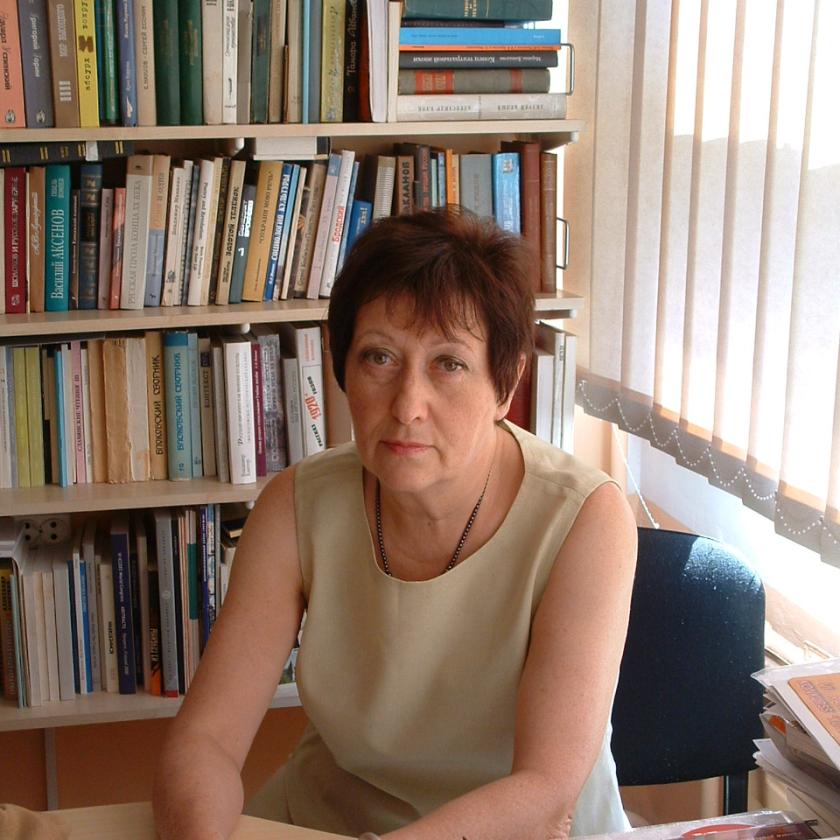
Evgenya Abelyuk serves as Associate Professor at the School of Philological Studies within HSE University's Faculty of Humanities. She concurrently holds the positions of Chief Expert at the Centre for Digital Archival Studies and Programme Head for Contemporary Philology in Russian Language and Literature Instruction at Secondary Schools. Having joined HSE University in 2010, she maintains active roles in research, teaching, and academic leadership.
Her educational background includes:
- 1975: Philological Degree from Lomonosov Moscow State University
- 1999-2001: Qualification Improvement in Philological Text Analysis (MIROS)
- 2005: Modern Text Analysis Methods (NIIRO)
- 2012: Work with Gifted Children (Moscow State University)
- 2015: Professional Internship in France (French Embassy Program)
- 2018-2021: Multiple advanced training programs in literary research and Russian language pedagogy
Professor Abelyuk's research centers on philology, Russian literature (particularly Soviet-era works), and theater studies with specialized focus on Taganka Theater. Her work explores mythological language in art, digital commentary systems, and historical contexts of literary production. She pioneered the Digital Universal Commentary project, creating visual annotations for Soviet-era literary texts.
Her recent publications (2020-2025) reveal three dominant trajectories: Bulgakov studies examining socio-political dimensions of his work; Taganka Theater analysis focusing on Yuri Lyubimov's directorial legacy; and digital humanities innovations in literary commentary. These intersect with her educational mission through textbooks and teacher training materials.
Her scientific recognition includes:
- Best Teacher Award (2025)
- Best Teacher Award (2021-2022)
- Best Teacher Award (2017)
- Best Teacher Award (2013-2015)
Professor Abelyuk supervises master's theses in philology while developing educational programs like the "Mentor's Seminar" and "Research Seminar on Reading Practices." Her grant work centers on digital projects including the Visual Commentary initiative and distance learning methodologies. She leads collaborative efforts through the Centre for Digital Archival Studies and maintains active partnerships with Taganka Theater researchers and international philological conferences.