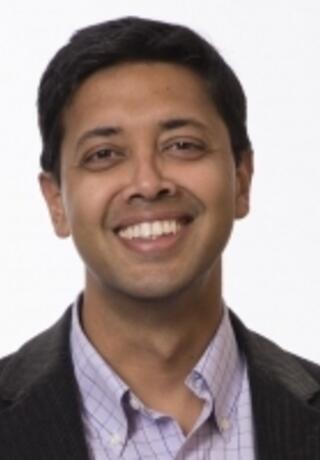
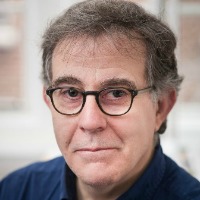
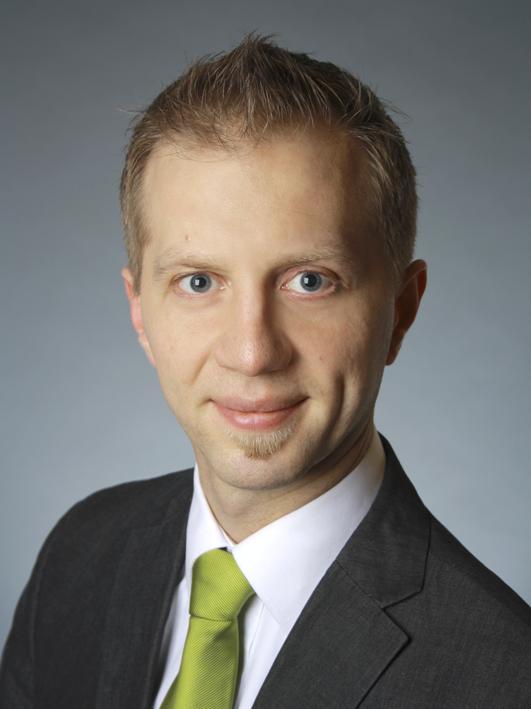
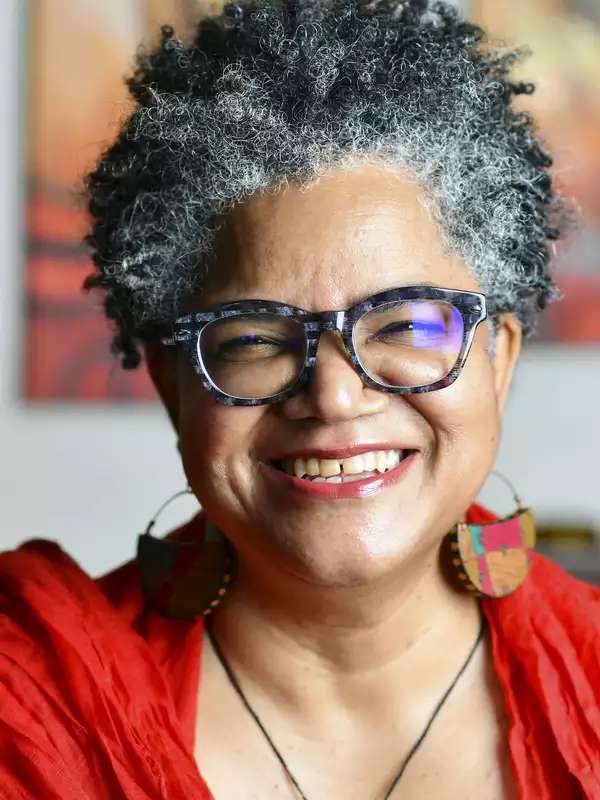
Professor Ahmed Mushfiq Mobarak is a leading scholar in Development Economics at Yale University, holding concurrent appointments in the School of Management and the Department of Economics (Faculty of Arts and Sciences). He is the founder of the Yale Research Initiative on Innovation and Scale (Y-RISE), focusing on scaling evidence-based interventions in global development. His research spans Behavioral Economics, Development Economics, and Environmental Economics, with a focus on field experiments in Bangladesh, Nepal, Sierra Leone, and Indonesia. Key projects include strategies to address seasonal poverty through migration subsidies and consumption loans, and evidence-based responses to the COVID-19 pandemic. Collaborations with governments and NGOs have reached over 100 million people via mask distribution programs informed by the NORM model. Mobarak has been honored with the Carnegie Fellowship (2017) and recognition by Vox as a scientist shaping the future. His teaching includes PhD courses in development economics and an MBA course on business-government-society interactions, addressing policy issues like race, gender, and public health. Recent awards: 2017 Carnegie Fellowship, 2022 Vox '50 Scientists' Key research partnerships: Governments of Bangladesh, Sierra Leone, Global Innovation Fund Notable interventions: Malaria mask distribution, vaccine delivery in Sierra Leone
David L. Tschirley is a fixed-term Professor in the Department of Agricultural, Food, and Resource Economics at Michigan State University (MSU), co-Director of the Food Security Group (FSG), and Director of the USAID-funded Innovation Lab for Food Security Policy, Research, Policy and Influence (PRCI). He holds a Ph.D., M.S., and B.S. from MSU and Colorado State University, respectively. His work focuses on agrifood system transformation, food security policy, dietary change in Africa and Asia, and the intersection of food aid with market dynamics. Fluent in Spanish and Portuguese, he has extensive field experience in Ecuador and Mozambique. Dr. Tschirley has advised major international organizations including the World Bank, IFAD, and FAO, and received the 2022 Ralph Smuckler Award for advancing international programs at MSU. His research emphasizes policy-relevant topics such as modern vs. traditional marketing channels, emergency food response strategies, and linking smallholder farmers to cash crop markets. Over 30 years of applied research have yielded >40 journal articles, book chapters, and policy reports, with recent focus on processed food systems and the double burden of malnutrition. Education: Ph.D., Michigan State University M.S., Michigan State University B.S., Colorado State University Key Roles: Director, PRCI Innovation Lab Co-Director, FSG at MSU Lead Author, IFAD 2019 Rural Development Report Awards: Ralph Smuckler Award (2022) Labs/Teams: Feed the Future Innovation Lab for Food Security Policy Cross-country Agrifood System Transformation Initiative His recent work highlights global food system challenges, including policy responses to crises like the Russia-Ukraine war and pandemic impacts on food systems. He collaborates with institutions worldwide to strengthen policy influence and evidence-based decision-making in food security.
Johan Schimanski is a Professor of Comparative Literature at the University of Oslo, affiliated with the Faculty of Humanities and the Department of Literature, Area Studies and European Languages. He holds a Ph.D. from the University of Oslo (1997) and has held academic positions at institutions including the University of Tromsø and the University of Eastern Finland as a visiting professor. His research focuses on borders in literature, postcolonialism, Arctic discourses, and migration narratives, with notable contributions to border aesthetics and cultural encounters. Education: Magister in Comparative Literature (University of Oslo, 1990), Ph.D. (1997). Key professional milestones include leadership roles such as Head of Research at ILOS (2017–2020) and co-leadership of the TRAUM project on author museums (2016–2019). He has authored or edited over 20 books and numerous articles, exploring themes like migration literature, Arctic studies, and the political aesthetics of borders. Research interests span borders and national identity, postcolonialism, science fiction, and literary museums. He co-leads initiatives like the Temporalities and Subjectivities workshop series (2019–2021) and serves on editorial boards for journals such as Journal of Borderlands Studies . His work bridges literary analysis with interdisciplinary approaches to contemporary global issues, emphasizing the role of aesthetics in understanding border dynamics.
Tim McNeil is a Professor of Design at the University of California Davis and Director of the UC Davis Design Museum. He holds an M.F.A. in Exhibition Design from the University of the Arts, London, and a B.A. in Graphic Design from Middlesex University, London. McNeil specializes in exhibition design, environmental sustainability, and museum practices, emphasizing the intersection of design with curatorial processes and audience engagement. His research includes pioneering work on green exhibition design, notably the Natural Resources Defense Council’s Santa Monica Environmental Action Center (2003), recognized as the first 'green' exhibition in a LEED platinum building. He chairs the California Association of Museums’ Green Museum Initiative and co-founded the Green Museums Accord. McNeil teaches courses such as Exhibition Design, Environmental Graphic Design, and Narrative Environments, and has advised projects like the Huntington Library’s augmented learning environments. His 2023 book, The Exhibition and Experience Design Handbook , explores design principles for creating immersive experiences. Awards include the SEGD Global Design Award (2024) and National Environmental Hall of Fame induction. Education: M.F.A. Exhibition Design, University of the Arts, London B.A. Graphic Design, Middlesex University, London Research Focus: Sustainability in museums, participatory design, and the role of exhibitions in environmental advocacy. Recent projects include the 'Village Homes: A Radical Plan' exhibition (2026) and the 'Deborah Butterfield: P.S. These are not horses' exhibition at the Jan Shrem and Maria Manetti Shrem Museum. Awards & Recognition: SEGD Merit Award (2024) National Environmental Hall of Fame (2023) Top 50 Museum Influencer (2023) Inductee, Green Museums Accord Founder Teaching & Projects: Courses include DES185 (Exhibition Design), DES186 (Environmental Graphic Design), and DES187 (Narrative Environments). Student-led projects include bike scavenger hunts and Davis City Hall signage concepts.
Dai Heide is a Senior Lecturer in the Department of Philosophy and Associate Dean, Learning and Teaching, in the Faculty of Arts and Social Sciences at Simon Fraser University. He holds a PhD from Ohio State University (2010) and a BA from Northwestern University (2003). His research focuses on Kant’s metaphysics and epistemology, particularly transcendental idealism, freedom, and rationalist philosophy in early modern and contemporary contexts. He teaches courses on 17th- and 18th-century philosophy, metaphysics, and the philosophy of religion. Education: B.A. Philosophy, 2003: Northwestern University Ph.D. Philosophy, 2010: Ohio State University Research Interests: Kantian metaphysics and epistemology Transcendental idealism Freedom and agency Early modern rationalism (Leibniz, Berkeley) Metaphysical and ethical theory His scholarly work engages with systematic unity in Kant’s Critique of Pure Reason , critiques of ontological arguments, and the unity of space in Kant’s pre-critical philosophy. He also explores divine causality and the principle of sufficient reason in early modern thought. Grants & Advising: No explicitly stated grants or advisees listed. He maintains an active role in academic administration through his Associate Dean position, focusing on pedagogical innovation and student learning initiatives.
Stefan Haefliger is Professor of Strategic Management & Innovation at Bayes Business School, City, University of London. His research focuses on business model innovation, open strategy, and organization theory in technology-driven environments. Key research streams: Business model portfolios and corporate strategy diversification Organization theory and technology-mediated regulation Open strategy and innovation ecosystems His work examines how technology transforms organizational practices, with empirical studies on compliance systems in investment banks and digital infrastructure governance. Recent projects explore modularity in R&D teams, digital resilience, and human-AI interaction in organizations.
Daphna Buchsbaum is an Associate Professor of Cognitive and Psychological Sciences at Brown University, leading the Computational Cognitive Development Lab and Brown Dog Lab. She holds a dual background in Psychology and Statistics from UC Berkeley, a Master’s in MIT Media Lab, and a Brown undergraduate degree. Her work explores causal and social reasoning in children and non-human animals like dogs, focusing on how learners combine social and observational data. Education: A.B. in Human Biology, Brown University (2002) M.Sc. in Media Arts & Sciences, MIT Media Lab (2004) M.A. and Ph.D. in Psychology, UC Berkeley (2013) Research Focus: Investigates how children and animals form causal beliefs through social interactions and direct observation. Key topics include: Canine cognition and problem-solving Children’s causal reasoning and pretend play Computational models of belief systems Key Achievements: NSF/Office of Naval Research grants Templeton World Charity Foundation funding 2021 Society for Research in Child Development Early Career Award 2018 APS Rising Star designation Lab Activities: Conducts participatory studies with children and dogs, using eye-tracking and behavioral experiments. Recent projects include: Head-mounted eye-tracking in dogs Cross-cultural studies of causal reasoning Analysis of canine visual environments
Professor Javier Hidalgo is a Professor of Econometrics at the Department of Economics, London School of Economics and Political Science (LSE). He holds roles as Co-Director of the STICERD Econometrics Programme and has extensive editorial experience with journals such as Journal of Econometrics and Econometric Theory . His expertise spans econometric theory, with a focus on semiparametric estimation, long-memory processes, and structural change models. Education: PhD in Economics from LSE (1990), M.Sc. in Econometrics and Mathematical Economics (1985), and a Licenciatura in Mathematics from Universidad Complutense de Madrid (1982). Research Interests: Includes semiparametric estimation, dependence in economic analysis, diagnostic testing, and long-memory processes. His work emphasizes methodological advancements in econometric analysis of nonstationary and dependent data. Grants & Awards: Secured ESRC grants totaling over £400k for research on nonstationary economic data and long-memory processes. His 2015 article received the prestigious Tjalling C. Koopmans Econometric Theory Prize. Teaching & Supervision: Teaches advanced econometric courses including EC309 and EC518. Supervised 3 PhD students and served as Program Director for the M.Sc. in Econometrics and Mathematical Economics (2004–2019). Labs/Teams: Active in STICERD’s Econometrics Programme, fostering collaborative research in time series and econometric theory.
Prateep Nayak is a Professor at the School of Environment, Enterprise and Development within the University of Waterloo. His academic focus combines political science, environmental studies, and international development through transdisciplinary research on human-environment connections. With expertise in commons governance, social-ecological resilience, environmental justice, and political ecology, he has taught courses like INDEV 100: Introduction to International Development SUSM 675: Governing the Commons INDEV 617: Environmental Change and Governance He has received prestigious awards including the Trudeau Scholarship, Harvard Giorgio Ruffolo Fellowship, Canada's Governor General Academic Gold Medal, and SSHRC Banting Fellowship. Professor Nayak's research explores social-ecological systems, emphasizing vulnerability-to-viability transitions in small-scale fisheries, gender dynamics in dried fish value chains, and multidimensional justice in coastal governance. His Google Scholar publications since 2017 highlight Asia-Africa comparative studies, marine protected areas, and policy frameworks for adaptive management. Article keywords reveal engagement with climate resilience, equity in resource access, and institutional pluralism in governance systems. Scientific awards include Trudeau Scholar Harvard Giorgio Ruffolo Fellow in Sustainability Science Canada's Governor General Academic Gold Medal SSHRC Banting Fellow His fieldwork experience includes development projects in India focusing on community-based governance of land, water, and forests at the research-implementation-policy interface. Current teaching aligns with his expertise in international development and environmental governance, while historical publications show long-term engagement with coastal systems analysis and regime shifts.
Heghnar Zeitlian Watenpaugh is Professor of Art History at the University of California, Davis, where she has been a faculty member since 2005. She is also a Faculty Associate in the Graduate Programs in Cultural Studies, Women and Gender Studies, Performance Studies, Jewish Studies, and Medieval and Early Modern Studies. Her research focuses on the visual cultures of the Middle East, particularly architectural preservation, museums, and cultural heritage. She earned her Ph.D., M.A., and B.A. (summa cum laude) from the University of California, Los Angeles, and an A.A. from Beirut University College. Her research has been supported by prestigious fellowships from the Guggenheim Foundation, the National Endowment for the Humanities, the J. Paul Getty Trust, Fulbright-Hays, and the Social Science Research Council. Watenpaugh’s research spans art and architectural history, cultural heritage, Islamic art, Ottoman urbanism, provenance and restitution, and the intersections of art, conflict, and human rights. Her work often centers on survivor objects—artifacts that endure genocide and displacement—and their role in justice and memory. She has published extensively in journals such as International Journal of Middle East Studies , Journal of the Society of Architectural Historians , and Muqarnas . Her recent publications, including The Missing Pages (2019) and several 2023 articles, reflect a strong trend toward the study of cultural survival, restitution, and the ethical dimensions of museum collections. Her scholarship bridges academic rigor with public engagement, appearing in The New York Times , Newsweek , and The Los Angeles Times , and featured in BBC podcasts. Spiro Kostof Book Award, Society of Architectural Historians (2006) Ömer Lütfi Barkan Article Prize, Ottoman and Turkish Studies Association (2015) Best Article Prize, Syrian Studies Association (2007) Gold Medal in World History, Independent Publisher Book Awards (2020) Book Award, Society for Armenian Studies (2020) Book Award, Ottoman and Turkish Studies Association (2020) Shortlisted, William Saroyan International Prize for Writing (Non-Fiction, 2020) Guggenheim Fellowship NEH Public Scholar Aga Khan Career Development Professor, MIT Watenpaugh has advised numerous scholarly initiatives and served on the boards of the Society of Architectural Historians, Historians of Islamic Art Association, and Syrian Studies Association. She is currently President of the American Research Institute of the South Caucasus. Her teaching includes courses on Islamic art, the Islamic city, arts of the Islamic book, and art, architecture, and human rights. She also leads seminars on visual theory, cultural conflict, and the exhibition of Islamic art. She is affiliated with multiple research centers and collaborates internationally on heritage preservation, particularly in post-conflict zones. Her public scholarship program at UC Davis reflects her commitment to bridging academic and public discourse on cultural heritage.
Isabella Di Lenardo is a Lecturer and Scientist at the Digital Humanities Institute (DHI) at École Polytechnique Fédérale de Lausanne (EPFL), where she also serves as the coordinator of the EPFL Time Machine Unit and the European Local Time Machines. She holds affiliations across multiple departments, including DHI-GE, SAR-ENS, SHS-ENS, and EDDH-ENS, reflecting her interdisciplinary role in teaching and research. Her educational background includes a PhD in Theories and Art History, with postdoctoral and faculty experience at institutions such as INHA (Paris), EPFL, and IUAV (Venice). Her research spans Digital Humanities, Art History, Urban History, and GIS , with a focus on digital urban reconstruction, historical cadastres, and AI applications in cultural heritage. She employs advanced computational methods including machine learning, 4D modeling, and semantic segmentation to analyze historical maps, cadastral records, and art archives. Her work bridges humanities scholarship with computer science, particularly in reconstructing urban evolution and analyzing visual patterns. The recent publications reveal a consistent trend in AI-powered historical data analysis , especially in processing non-standardized historical documents, reconstructing urban spaces, and developing open-source tools for digital heritage. Her work frequently involves large-scale datasets from Venice, Lausanne, Paris, and Jerusalem, demonstrating a transnational and interdisciplinary approach. She has contributed to significant collaborative projects such as the Venice Time Machine , Parcels of Venice , and Time Machine Organization , often acting as a principal investigator or project leader. Her role involves coordinating diverse teams of researchers, engineers, and cultural institutions. Scientific contributions include: Development of the Morphograph tool for visual pattern recognition in art archives Automatic vectorization and analysis of Napoleonic cadastres Creation of 4D models for historical cities AI-driven text and pattern extraction from historical maps Building discovery engines for digital art history She actively teaches ex cathedra courses in Digital Urban History and Art History at EPFL and internationally. Her work in grants and projects emphasizes open data, reproducibility, and interdisciplinary collaboration. She has led research funded by organizations supporting digital heritage innovation. She is a key member of the Digital Humanities Laboratory at EPFL and the Time Machine Organization , where she fosters collaboration between computer scientists, historians, and cultural institutions. Her work in the Replica Project and ARCHiVe center highlights her leadership in digitizing and making accessible large art historical archives.
Steven Vertovec is Founding Director of the Max Planck Institute for the Study of Religious and Ethnic Diversity in Göttingen, Honorary Joint Professor of Sociology and Ethnology at the University of Göttingen, and Supernumerary Fellow at Linacre College, Oxford. Previously, he was Professor of Transnational Anthropology at the University of Oxford and Founding Director of COMPAS. He remains an active academic leader in migration and diversity studies. Research Interests: His work centers on globalization, transnational social formations, international migration, ethnic diasporas, and urban diversity. He is best known for pioneering the concept of super-diversity , which examines the increasing complexity of migration patterns and urban populations. His research integrates sociological, anthropological, and policy-oriented perspectives. Recent Publications Trends: His most recent articles focus on super-diversity, complexity thinking in migration studies, visualization of urban diversity, public attitudes toward diversity and refugees, and the societal impacts of the pandemic on transnationalism. These works emphasize interdisciplinary and systemic approaches to understanding migration and integration. Scientific Awards: Honorary Doctorate in Social Sciences, Université de Liège (2018) Advising and Grants: While no direct students are listed, Vertovec has led major research projects funded by foundations and public agencies. He has advised the Volkswagen Foundation, UK government departments, the European Commission, UNESCO, the World Bank, and the G8. His leadership in COMPAS and the Max Planck Institute reflects extensive grant management and team supervision. Labs and Teams: He leads the GlobaldiverCities (GloDiv) project and the ProDiv initiative on diversity assent in urban Germany. His teams include researchers from multiple institutions and countries, working on topics such as asylum seekers’ needs, intergroup contact, and urban integration. The Max Planck Institute serves as a hub for interdisciplinary migration research in Europe.
Prof. Dr. Matthias Krauledat is a faculty member at Hochschule Rhein-Waal , specifically within the Faculty of Technology and Bionics . His academic career spans both theoretical research and industrial application, with a focus on Machine Learning and Brain-Computer Interfaces . After completing his PhD in Electrical Engineering/Computer Science at Technische Universität Berlin , he has contributed significantly to the advancement of EEG-based communication systems and neural signal processing methodologies. Born in Essen, Germany Studied Mathematics with a minor in Computer Science at University of Münster/Oxford Doctoral research at TU Berlin on Brain-Computer Interfaces Industrial experience at Henkel AG & DMT GmbH Research Interests focus on Machine Learning applications in Neuroscience and Biomedical Engineering , specifically Brain-Computer Interfaces , EEG Signal Processing , and Adaptive Classification Systems . His work explores how algorithms can be developed to enable self-learning computers to solve complex tasks involving neural data interpretation and prediction for previously unseen data in clinical and technological contexts. Publications demonstrate a consistent contribution to Neuroscience and Machine Learning fields, with particular emphasis on Brain-Computer Interface systems from 2004 through 2009. His research has focused on reducing training requirements, improving signal processing accuracy, and developing novel interaction paradigms like the Hex-o-Spell mental typewriter while addressing statistical challenges like covariate shift in neural data analysis. Professional Experience includes academic research at TU Berlin's Intelligent Data Analysis group, industrial software development roles at Henkel AG's Scientific Computing department, and TÜV Nord Group's Optical Metrology and Machine Diagnostics divisions. He maintains active research connections through collaborative publications with leading experts in the field.
Yannik Thiem serves as an Associate Professor in the Department of Religion at Columbia University, with his office located at 80 Claremont Avenue, Room 206, Mail Code 9610, New York, NY 10027. He is scheduled for academic leave during Fall 2025 and Spring 2026, with office hours available by appointment only. His contact phone number is 212-851-4128. Education: PhD in Rhetoric, University of California at Berkeley (2009) Dr. theol. in Catholic Theology, Eberhard–Karls–Universität Tübingen, Germany (2004) Thiem's research centers on queer and feminist theory, religious studies, political theology, and critical theory, exploring how religion and sexuality function as methodologies for analyzing 'infrastructures of experience'—material convergences of truth and affect that become visible only when disrupted. His work challenges conventional boundaries by treating queerness and religion as irreducible to bodies or traditions, examining their sedimentation through textual, ritual, architectural, and spatial transmissions. He actively develops queer religious studies frameworks to engage broader fields, with current focus on his project Queer Nuisances: Race, Religion, Sex and Other Monsters , which synthesizes queer theory, transfeminism, critical race theory, and European early modern philosophy. His scholarship critically investigates intersections of gender, race, sexuality, coloniality, class, and ability in meaning-making practices. Thiem's publications from 2014-2023 reveal consistent engagement with queer theory's expansion into religious and political contexts, particularly examining whiteness in psychoanalysis, fetishism in materialist politics, knowledge capitalism's affective economies, and Benjamin's theological metaphysics. His work demonstrates a trajectory toward dismantling normative frameworks and analyzing how collective practices shape embodied experience. Scientific awards: None mentioned in the provided text. Thiem mentors graduate students within Columbia's Department of Religion, though no specific advisees are listed. No grant funding details or collaborative research projects are documented in the available materials, with scholarly activity centered on individual theoretical work and departmental affiliations. No dedicated research labs or institutional teams are referenced; his work operates through the Department of Religion's academic structure, emphasizing textual and theoretical analysis over experimental or group-based research environments.
Celia E. Naylor is a Professor in the Department of Africana Studies at Barnard College, Columbia University, where she has been a faculty member since 2010. She previously served as Assistant Professor and then tenured Associate Professor of History at Dartmouth College (2002–2010). Her academic home is in the College of Arts and Sciences, where she contributes to interdisciplinary scholarship across history, gender studies, and the African diaspora. B.A., Cornell University, Summa Cum Laude (Africana Studies with concentration in Women's Studies) M.A., UCLA (Afro-American Studies) M.A., Duke University (History) Ph.D., Duke University (History) Her research focuses on African-American, Caribbean, and Native American histories, with deep engagement in women’s and gender studies in the African diaspora, colonialism, and the cultural memory of slavery. She examines how race, gender, and power intersect in historical narratives and public representations. Her work critically analyzes the reconstruction of slavery in modern cultural forms, particularly in tourism and literature. The majority of her recent publications revolve around the history of enslaved people at Rose Hall Plantation in Jamaica, culminating in her 2022 monograph UnSilencing Slavery and a companion digital humanities project. These works combine microhistory, interdisciplinary critique, and digital storytelling to recenter the lives of the enslaved. Earlier works explore Black-Indian relations in U.S. history, particularly among the Cherokee Nation. Her publications span journals and edited volumes in history, ethnic studies, and cultural theory. Columbia University, Black Students Organization, Professor of the Year Award, May 2024 Barnard College, Digital Humanities Center Summer Fellowship, 2019 The Heyman Center for the Humanities, Faculty Fellowship, 2017–2018 Barnard College, BOSS Professor of the Year Award, May 2015 Columbia University, Black Students Organization, Professor of the Year Award, May 2012 Dartmouth College, Jack E. Thomas 1974 Family Fellowship, 2008–2009 Dartmouth College, John M. Manley Huntington Teaching Award, July 2008 Dartmouth College, Arthur M. Wilson Faculty Research Fellowship, 2005–2006 Woodrow Wilson Career Enhancement Fellowship (Alternate), 2005–2006 Nelson A. Rockefeller Center Research Scholars Program, 2004–2006 Professor Naylor advises student research through senior thesis seminars and mentors emerging scholars in Africana and women’s studies. She has received grant support from prestigious institutions including Columbia, Barnard, and Dartmouth. Her work with the Institute for Strategic and Equitable Development (ISED), where she serves as President of the Board of Directors, reflects her commitment to racial equity and community-centered development. She leads initiatives such as Inclusion, Diversity, and Equity in Environmental Philanthropy (InDEEP) and the Presidents' Forum on Racial Equity in Philanthropy. She also collaborates with organizations like Keecha Harris & Associates and InPartnership Consulting. Her digital humanities project (Un)Silencing Slavery serves as both a research archive and public educational tool, launched on the 60th anniversary of Jamaica’s independence. She regularly presents her work at major academic conferences including the American Historical Association, Association of Caribbean Historians, and Berkshire Conference on Women’s History. Her scholarship is deeply collaborative, often involving interdisciplinary teams across history, anthropology, and digital media.