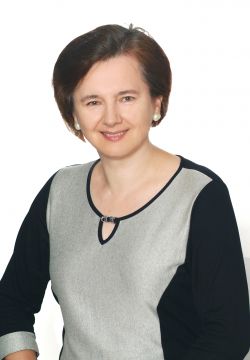
Dr. Jolanta Sak-Wernicka serves as Assistant Professor in the Department of Applied Linguistics at the Institute of Linguistics, Faculty of Humanities, John Paul II Catholic University of Lublin. Her research bridges linguistics, cognitive science, and disability studies, focusing on how visual impairment shapes communication and pragmatic competence. Education: MA (2006), John Paul II Catholic University of Lublin, Institute of English Philology PhD (2012), John Paul II Catholic University of Lublin, Institute of English Philology Research Focus: Sak-Wernicka investigates the cognitive and linguistic consequences of blindness, particularly in deixis interpretation, theory of mind application, lie detection, and nonverbal communication. Her work employs Relevance Theory frameworks to analyze how blind individuals compensate for visual information deficits during social interaction, with significant implications for inclusive communication practices and linguistic theory development. Publication Trends: Her scholarly output demonstrates consistent growth in methodological sophistication, evolving from early studies on emotion recognition (2014-2016) to current research on pandemic-era communication challenges (2021) and specialized methodology development (2023). The majority of her work appears in disability-focused linguistics journals, reflecting her niche expertise in visual impairment communication research. Scientific Recognition: Prime Minister's Award for outstanding doctoral dissertation (2013) Rector's Award of the Catholic University of Lublin (2022) Research Leadership: Sak-Wernicka directs multiple NCN and MEiN-funded projects examining visual impairment's impact on deixis interpretation and gesture frequency. Her international collaboration includes Erasmus+ teaching mobility at Spain's University of Castilla-La Mancha (2023), while national contributions include organizing the "Pragmatics of Humor" conference and peer-reviewing for academic journals. Professional Engagement: Beyond research, she contributes through scholarly translations of Polish music texts and active participation in international conferences on linguistics and disability studies, maintaining a visible role in both Polish and global academic communities.