Kåre Synnes is a Professor in Pervasive and Mobile Computing at Luleå University of Technology, where he is affiliated with the Department of Computer Science, Electrical and Space Engineering. He is an active researcher and educator, recognized as an "Excellent lärare" (Excellent Teacher) and maintains his office in Luleå at location A3305a. Professor Synnes conducts research in pervasive computing and multimedia communication, with significant applications in eHealth. His work bridges theoretical computer science with practical implementations in distributed systems. He is also an affiliated researcher at the Centre for Distance-spanning Technology (CDT), focusing on technologies that enable communication across geographical boundaries. His recent publications demonstrate a clear trajectory toward sustainable computing solutions, with emphasis on circular economy applications, supply chain management, and environmental impact assessment. His research integrates computer science with economic and sustainability principles, showing how digital technologies can address contemporary environmental challenges through innovative auction systems, behavior analytics, and resource management frameworks. IST Prize winner as co-founder of Marratech AB Synnes has been deeply involved in European research projects since 1995, including multiple Framework Programme projects (FP4 through FP7). His work as an expert/reviewer for European projects since 2009 demonstrates his standing in the research community. His entrepreneurial success with Marratech AB, which was acquired by Google to form the basis for Google+ Hangouts, shows his ability to translate research into impactful commercial applications. Professor Synnes maintains strong connections with industry through his European project work and his entrepreneurial experience. His research group likely focuses on pervasive computing applications with real-world implementations, particularly in eHealth contexts, though specific lab details aren't provided in the available information.
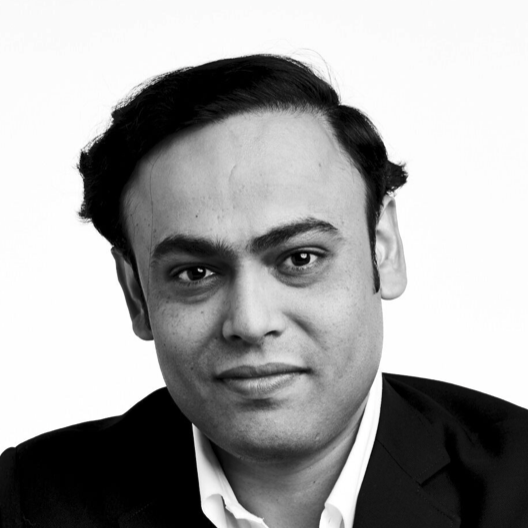
Saurabh Amin is a Professor in the Department of Civil and Environmental Engineering at the Massachusetts Institute of Technology (MIT), where he also serves as the Edmund K. Turner Professor and Undergraduate Officer. He is a Principal Investigator at the Laboratory of Information and Decision Systems and holds affiliations with the Operations Research Center and the Center for Computational Science and Engineering. His educational background includes: B.Tech. 2002, Indian Institute of Technology (IIT) Roorkee M.S. 2004, University of Texas (UT) Austin Ph.D. 2011, University of California (UC) Berkeley Saurabh Amin's research focuses on the design and control of infrastructure systems using game theory and optimization in networks. His work spans three main areas: resilient network control, information systems and incentive design, and optimal resource allocation in large-scale infrastructure systems. By concentrating on critical infrastructure domains including highway transportation, electric power distribution, and urban water networks, his research develops innovative theory and tools to enhance system performance against both stochastic and adversarial disruptions. His approach involves modeling cyber-physical interactions in infrastructures to assess vulnerabilities, developing detection and response tools for failures at various scales, and designing economic incentive schemes that improve aggregate public good while accounting for dependencies and private information among strategic entities. Amin's work bridges mathematical systems theory with practical civil engineering applications, creating a rigorous theoretical foundation for infrastructure resilience that addresses diverse failure mechanisms from natural disasters to deliberate malicious actions. His recent publications demonstrate a strong focus on decarbonization of energy systems, resilient infrastructure planning under climate uncertainty, optimization methods for complex networked systems, and game-theoretic approaches to sustainable infrastructure management. His work increasingly integrates artificial intelligence and machine learning techniques with traditional control theory to address contemporary challenges in infrastructure resilience and sustainability. The research shows a clear trajectory toward addressing climate change impacts on infrastructure systems while maintaining economic efficiency and operational reliability. Professor Amin has received numerous prestigious awards and honors: Common Ground Excellence in Teaching Award, 2025 HSCC Test-of-Time Award, 2024 MIT CEE, Distinguished Service and Leadership Award, 2023 Samuel M. Seegal Prize (SoE) – inspiring students in pursuing and achieving excellence, 2022 Earll M. Murman for Excellence in Undergraduate Advising, 2022 C3.ai Digital Transformation Institute Research Award, 2020 MIT, Ole Madsen Mentoring Award, 2020 MIT, Energy Initiative Research Award, 2020 National Academy of Engineering, China-America Frontiers of Engineering Symposium speaker, 2019 MIT, Robert N. Noyce Career Development Professor, 2015-2018 Google Faculty Research Award, 2015 National Science Foundation CAREER Award, 2015 Siebel Energy Institute Research Award, 2015 MIT, Solomon Buchsbaum AT&T Research Fund Award, 2012 Professor Amin has been actively involved in significant research projects including the C3.ai DTI project on Causal Reasoning for Real-Time Attack Identification in Cyber-Physical Systems and another on Learning in Routing Games for Sustainable Electromobility. He serves as the chief scientist on multi-institutional NSF grants, including the $9 million Foundations of Resilient Cyber-Physical Systems (CPS) project. His teaching portfolio includes courses such as 1.008 Engineering for a Sustainable World, 1.104 Sensing and Intelligent Systems, 1.020 Engineering Sustainability: Analysis and Design, and 1.208 Resilient Networks. As Undergraduate Officer, he plays a key role in shaping the educational experience for civil and environmental engineering students at MIT. Professor Amin leads the Resilient Infrastructure Networks Lab at MIT, where his team develops theoretical foundations and practical tools for infrastructure resilience. The lab focuses on the intersection of control theory, game theory, and optimization applied to cyber-physical infrastructure systems. Current research directions include pandemic-resilient urban mobility and hurricane-resilient smart grid operations, reflecting the lab's commitment to addressing pressing societal challenges through rigorous systems engineering approaches.
Anders Karlström is a Professor at KTH Royal Institute of Technology, specializing in Transport Modelling and Economics. His research focuses on sustainable transportation systems, emissions reduction, and energy efficiency. Key interests include activity-based modelling, dynamic discrete choice frameworks, and policy analysis for urban mobility. He has contributed to studies on travel behavior, infrastructure planning, and environmental impacts of transport systems across multiple international cities. His work integrates advanced methodologies such as recursive logit models, spatial regression, and machine learning for predictive analytics. Notable research areas involve evaluating weather variability effects on travel patterns, optimizing traffic state estimation with sensor data, and developing scenario-based models for future employment growth. Karlström collaborates with industries to enhance the competitiveness of sustainable transport solutions globally.
Jonas Eliasson is a Visiting Professor at Linköping University's Department of Science and Technology (ITN), focusing on Communications and Transport Systems. He concurrently serves as Director of Transport Access at the Swedish National Transport Administration and chairs the Planning & Construction committee of the Royal Academy of Engineering Sciences. Previously, he was Director of the Stockholm City Transportation Administration (2016–2019) and a professor at the Royal Institute of Technology (KTH) from 2007 to 2016. His research emphasizes transport policy design and evaluation, including cost-benefit analysis, transport pricing, railway capacity allocation, and public acceptability of policies. He advises governments on sustainable transport planning, congestion pricing, and socio-economic appraisals. His work bridges theoretical frameworks and practical implementation, with a focus on accessibility, equity, and climate targets. Key research themes include infrastructure cost overruns, traffic demand reduction strategies, and the integration of passenger and freight transport systems. Recent publications analyze policy impacts, forecasting methods, and carbon-neutral transportation systems. His interdisciplinary approach addresses both technical and socio-political dimensions of transport challenges. Eliasson collaborates with research groups like Railway and Public Transport and contributes to initiatives like the 'Next Generation Smart Transportation Systems' project. Despite extensive professional roles, no formal student advisees are listed. His work is disseminated through journals like Transportation Research Part A and policy reports for national and regional governments.
Ulla Mörtberg is a Professor and Docent at KTH Royal Institute of Technology's Digital Futures Faculty, specializing in Sustainable Development, Environmental Science and Engineering. She holds academic roles in the Department of Sustainable Development, Environmental Science and Engineering and is actively involved in interdisciplinary projects such as the EO-AI4GlobalChange initiative and the Embedding AI in geospatial policy tools for clean cooking adoption. Her work bridges geospatial technologies, environmental policy, and sustainable urban planning. Key research focuses include renewable energy planning (wind farms, bioenergy), urban ecosystem services, biodiversity conservation, and geodesign applications. She leads projects addressing climate solutions in Stockholm, such as integrating nature-based solutions into urban compaction strategies and evaluating green infrastructure impacts on urban heat. Her methods emphasize GIS-based decision support systems and multi-criteria analysis for balancing environmental, social, and economic objectives. Recent publications highlight advancements in ecosystem services assessment frameworks, wind energy sustainability, and urban biodiversity dynamics. Notable contributions include spatial optimization models for forest management and policy assessments of Brazil's Forest Code. Her work often involves global case studies but emphasizes regional applications in Sweden and the Stockholm region. Mörtberg collaborates extensively with municipal planners and policymakers, contributing to sustainable development goals through actionable research. Her projects often involve international partnerships and address global challenges such as deforestation in the Amazon and energy transition pathways in Europe.
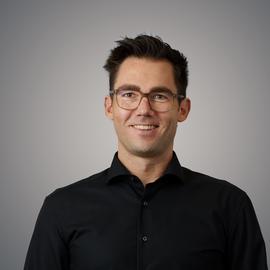
Alexander Hollberg is an Associate Professor in the Division of Building Technology at Chalmers University of Technology, within the School of Architecture and Civil Engineering. His academic role focuses on Computational Sustainable Design, emphasizing the development of digital tools for sustainable building and urban design. He holds a PhD in Parametric Life Cycle Assessment (2016) from Bauhaus University Weimar, an MSc in Architectural Engineering (2011), and a BSc in Civil Engineering (2008) from Technical University of Munich (TUM). His research interests include Sustainable Design Optimization, Stakeholder Interaction, Artificial Intelligence, and Life Cycle Assessment (LCA). He co-founded CAALA, a software and consulting startup in Munich, Germany, advancing tools for real-time environmental performance evaluation in early design stages. Recent work includes studies on digital twins for urban planning, robust renovation strategies, and AI-driven facade optimization. Hollberg was promoted to Docent (Associate Professor) in Computational Sustainable Design in 2022, focusing on bridging computational methods with sustainable environmental transitions. His collaborative projects address tool development for stakeholder engagement, BIM integration, and circular economy frameworks in construction. Key Projects: Development of Bombyx and Twinable tools for real-time LCA and urban simulation Leading the Nordic Build-LCA PhD forum and BIM-based LCSA applications Contributions to IEA EBC Annex 72 guidelines on life cycle environmental impacts Education Background: PhD in Parametric Life Cycle Assessment, Bauhaus University Weimar, 2016 MSc in Architectural Engineering, Bauhaus University Weimar, 2011 BSc in Civil Engineering, Technical University of Munich, 2008 His research outputs prioritize early design-stage decision support through parametric modeling and AI, with a focus on carbon neutrality and material circularity in construction.
Leonardo Rosado is an Associate Professor at the Department of Water Environment Technology (School of Architecture and Civil Engineering) at Chalmers University of Technology . His work focuses on Urban Metabolism , developing methods to analyze cities' resource flows through the Urban Metabolism Analyst framework. His research spans: Circular Economy implementation Waste Management systems Household consumption modeling Agent-based urban scenario analysis Recent publications (2025–2021) cover geospatial sharing economy frameworks, behavioral modeling of waste sorting, and machine learning applications for infrastructure analysis. Major funded projects include: Digital Twin Cities Centre (VINNOVA, 2020–2024) CREATE (Swedish Energy Agency, 2022–2025) SEsam (Kamprad Family Foundation, 2020–2023) Contact: rosado@chalmers.se | ORCID
Jorge Gil is an Associate Professor in Urban Analytics and Informatics at Chalmers University of Technology's Department of Architecture and Civil Engineering. His research focuses on integrated urban models, Smart Cities, City Information Modelling (CIM), and Urban Digital Twins, with applications in sustainable mobility, social inclusion, energy transition, and circular economy. He develops GIS solutions and open science methodologies. Teaching includes GIS, sustainable mobility, and spatial data science courses. He supervises Bachelor, Master's, and PhD students. Current projects include LogiNets (logistics network flows analysis), ComCy (cycling safety), and FlowSense (traffic flow data). Key research outputs span agent-based modeling of waste sorting behavior, mobility equity analysis, and multimodal urban network frameworks. He co-authored over 50 publications and actively contributes to interdisciplinary urban planning initiatives.
Stefan Gelfgren is Associate Professor of Sociology of Religion and Senior Lecturer in Didactics of Religion at Umeå University's Department of Historical, Philosophical and Religious Studies. He holds a PhD in History of Ideas (Umeå University), MPhil in History of Christianity (Birmingham University), and BA in Construction Engineering. His research examines: Social/technical/religious transformations throughout history Digital media's impact on Christian institutions Digital humanities methodologies Surveillance in everyday life Religious geography and mapping Recent publications (2020-2025) focus on digital religion, surveillance ethics, Swedish revivalism, and geospatial humanities. Key trends include institutional adaptation to digitalization and historical continuities in religious media. Awards include the 2022 Erik Allardt Fellowship at Helsinki Collegium for Advanced Studies. He leads multiple research initiatives: Wallenberg-funded DINO project on digital privacy/social benefit (Co-investigator) Nordic Places of Worship Map (Project Leader) iAccept: Soft Surveillance (Principal Investigator 2017-2021) As former Director of Humlab (2015-2020), he developed digital humanities infrastructure. He chairs the Swedish Association for Sociology of Religion and serves on Umeå University's Faculty Board.
Camilla Sandström is a Professor at Umeå University's Department of Political Science, Faculty of Social Sciences. Her research focuses on environmental policy, conservation, and governance, with a particular emphasis on human-wildlife conflict, forest governance, and adaptive management. She leads projects exploring biosphere reserves, climate policy equity, and the application of machine learning in environmental analysis. Research Interests: Conservation biology, sustainable development, political ecology, and the governance of socio-ecological systems. Key Projects: Contested Spaces: Bridging Protection and Development in a Globalizing World (VR-funded). GOVFORBIO: Governance Pathways for Sustainable Forest Use (Formas-funded). Her work bridges theory and practice, contributing to international guidelines like the IUCN's Human-Wildlife Conflict & Coexistence Framework. She collaborates with interdisciplinary teams to address challenges in multi-use landscapes, such as lion conservation in Tanzania and forest conflicts in Sweden. Publications highlight innovative methodologies, including machine learning for media analysis and spatial ecology for wildlife connectivity. She emphasizes participatory approaches to ensure equitable policy outcomes in climate and biodiversity crises.
Lars Hanson is a Professor of Product Design Engineering at the University of Skövde's School of Engineering Science. His research focuses on ergonomics, digital human modeling, and optimizing manufacturing systems with a strong emphasis on human well-being and sustainable production. He leads projects like LITMUS (Industry 4.0 to 5.0 transition) and has contributed to developing tools such as IPS IMMA for ergonomic simulations. Active in virtual verification of human-robot collaboration and smart textile systems for workplace safety Published extensively in journals like International Journal of Human Factors Modelling and Simulation and IEEE Access Editor of conference proceedings and contributor to industry standards in automotive and healthcare sectors Research interests include multi-objective optimization of factory layouts, musculoskeletal risk assessment, and integrating ergonomic evaluations into product design processes. Current projects address Industry 5.0 sustainability challenges through digital twin technologies and smart manufacturing solutions.
Niklas Mattsson-Carlgren serves as an Associate Professor and Senior Lecturer at Lund University's Faculty of Medicine, Department of Clinical Sciences. He holds multiple significant roles including Deputy Research Team Manager and Principal Investigator for several major research projects. His affiliations extend to the Wallenberg Centre for Molecular Medicine (WCMM), LU Profile Area: Proactive Ageing, and MultiPark: Multidisciplinary Research Focused on Parkinson's Disease. Dr. Mattsson-Carlgren's research primarily focuses on Alzheimer's disease and other neurodegenerative conditions, with additional work on acute brain injuries such as those following cardiac arrest. His expertise spans neurochemistry, including the regulation of pain and sleep. He employs biochemical measurements, neuroimaging, and cognitive testing to study disease processes in vivo across the spectrum from preclinical disease to advanced dementia. His work aims to improve diagnostic and prognostic methods in clinical practice, enhance clinical trial design for novel therapies, and deepen understanding of disease mechanisms. His recent publications demonstrate a strong emphasis on plasma biomarkers for Alzheimer's disease detection and monitoring, with particular focus on tau and amyloid pathology. The research shows increasing integration of machine learning approaches with traditional biomarker analysis, reflecting a trend toward more sophisticated diagnostic tools that combine multiple data sources for improved accuracy in predicting disease progression. As Principal Investigator for multiple significant projects including 'Longitudinal plasma biomarkers, cognitive data and amyloid PET to improve early prevention of Alzheimer's disease' and 'Validation of an MTBR tau immunoassay for CSF and plasma,' he leads substantial research efforts funded by organizations including Familjen Rönströms stiftelse, Eli Lilly and Company, and the Knut and Alice Wallenberg Foundation. He also serves as supervisor for PhD students, notably for 'Studies of induced neuronal cells in Alzheimer's disease.' Dr. Mattsson-Carlgren is actively involved in the neuroscience community, serving on the program committee for Neuroscience Day 2025. His research contributes to UN Sustainable Development Goals related to health and wellbeing. His work has gained significant attention, with multiple papers being picked up by news outlets and referenced across social media platforms including X (Twitter) and Bluesky.
Jonas Stålhand is a Professor at Linköping University, affiliated with the Department of Management and Engineering (IEI) and the Division of Solid Mechanics (SOLMEK). His research focuses on biomechanics, smart textiles, haptic technologies, and cardiovascular mechanics. He leads interdisciplinary projects such as a study on pain relief using smart textile garments, combining neuroscience, materials science, and biomechanics. His work spans arterial wall mechanics, wearable haptic systems, and biomaterial characterization. Recent projects include parameter identification in arteries and the development of electroactive yarn actuators for wearable applications. Collaborations involve multidisciplinary teams across engineering, medicine, and textile science. Research interests emphasize translating biomechanical insights into clinical and industrial applications. Notable contributions include studies on aortic stress analysis, acetabular cup stability, and electroactive polymer-based actuators. His publications address both fundamental and applied aspects of soft tissue mechanics and medical engineering. No scientific awards are explicitly listed, but his work has been highlighted in university news for its innovative potential in healthcare and technology.
Nicolò Dell'Unto serves as Professor of Archaeology at Lund University's Department of Archaeology and Ancient History within the Faculty of Humanities and Theology. His research pioneers digital methodologies for archaeological analysis, specializing in 3D visualization, spatial technology, and virtual reality applications that transform how we perceive and investigate the past. Based at Helgonavägen 3 in Lund (Room LUX:A122), he directs the Digital Archaeology Laboratory (DARKLab) and oversees undergraduate/postgraduate digital archaeology programs. His educational background includes: Archaeology studies at University of Rome, La Sapienza PhD in Technology and Management of Cultural Heritage from IMT Lucca, Italy Postdoctoral fellowship at University of California Merced Dell'Unto's research focuses on how laser scanners, photogrammetry, GIS, and virtual reality technologies fundamentally reshape archaeological practice. His work bridges technical innovation with theoretical frameworks in landscape archaeology, emphasizing practical field applications while addressing methodological challenges in data interpretation. Key themes include digital documentation standards, 3D data management, and the cognitive impact of visualization tools on archaeological reasoning. His publication trends reveal a shift toward AI integration in archaeological data interpretation, infrastructure development for 3D data sharing, and cross-disciplinary collaborations examining Mediterranean connectivity. Recent works emphasize practical frameworks for implementing digital tools in fieldwork while addressing sustainability challenges in digital heritage preservation. Award highlights: Einar Hansen Prize for Humanities (2017) Royal Physiographic Society of Lund election (2024) Best Paper Award (2014) Highly Cited Research recognition (2017) Dell'Unto supervises PhD and master's students while leading major projects including RE-OSTRAKON (3D artifact scanning), TETRARCHs (data reuse), and AIR (Archaeological Interactive Report). His DARKLab serves as Sweden's national infrastructure for digital archaeology, collaborating with institutions like University of Oslo's Museum of Cultural History where he holds a visiting professorship since 2019. He actively shapes digital archaeology policy as Domain Specialist for Swedish National Data Service, Board Member for Statens historiska museer, and Open Science Champion at Lund University, driving national standards for archaeological data management and open science practices.
Anders Brandt is an Associate Professor (Docent) in Geospatial Information Science and Senior Lecturer in Geomatics at the University of Gävle, Sweden, within the Department of Computer and Geospatial Sciences under the Faculty of Engineering and Sustainable Development. His research focuses on flood risk mapping uncertainties, agent-based modeling of pedestrian movement, and spatial decision-support systems for sustainable urban planning. He holds a PhD in Physical Geography from the University of Copenhagen and has extensive international collaboration experience. Education: PhD in Physical Geography (University of Copenhagen, Denmark), focusing on fluvial geomorphology of Costa Rica’s Reventazón River Master’s Degree in Physical Geography (Uppsala University, Sweden) Research Interests: Brandt’s work addresses uncertainties in flood modeling, spatial decision analysis, and geospatial data applications for urban resilience. His projects include the 'Big Data Methodology for Experiential and Cognitively Sustainable Urban Growth' initiative, emphasizing ecosystem service mapping and spatial MCDA methods. His agent-based modeling research explores emergent urban path systems to optimize pedestrian infrastructure. Publications Trends: Recent work spans flood risk visualization, blue-green infrastructure roles in climate resilience, and urban form complexity metrics. His 2025 papers highlight innovative applications of agent-based modeling and systematic reviews of climate hazard mitigation strategies. Advising & Grants: While no formal advisee list is provided, his collaborative publications suggest involvement in student projects. His grants include international initiatives like Mongolia’s land administration capacity-building programs. Labs/Teams: Co-founded GeoVega , a consulting firm specializing in flood risk mapping and geospatial solutions. Active in educational initiatives like harmonizing GIS curricula in Swedish universities.