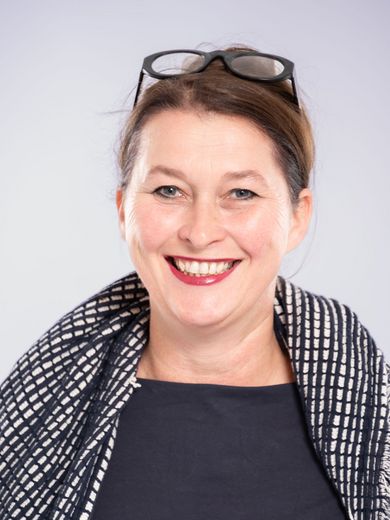
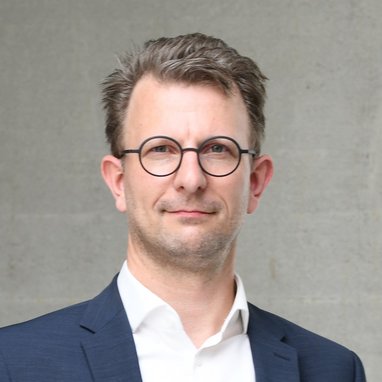
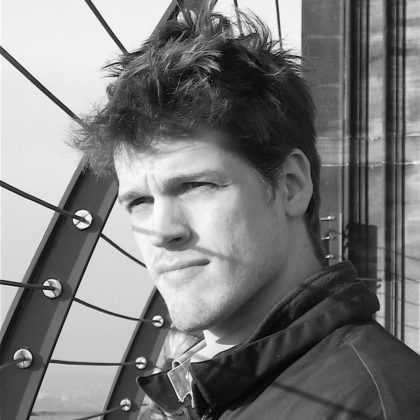
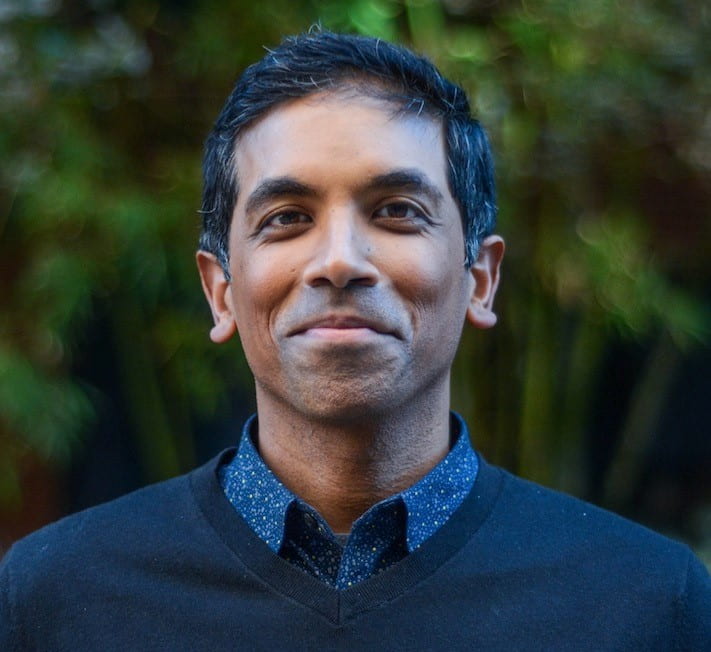
Andrea Dung is a Professor at the School of Architecture Bremen within Hochschule Bremen (HSB). Her work focuses on design methodology , architectural representation , and creative exploration of spatial configurations. Research areas include participatory planning processes , ambivalent spaces , and sustainable architectural solutions Projects span from daycare center design to cross-cultural urban planning in Europe and Africa Research Trends : Her recent projects (2023-2025) emphasize emissions-free mobility and social infrastructure , while earlier works explore traditional materials in modern contexts (e.g., rammed earth) and digital design methods for responsive architecture. Project Highlights : Interspace - the social city (2020-2021): Teaching and transfer initiative for social urban development Pop-Up Lab (2019): Mobile event space using shipping containers Zoom In/Out Drawing Series : Investigates scale transitions in architectural visualization
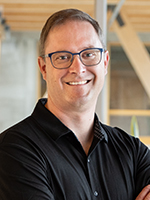
Lorenzo Marini is an Associate Professor at the University of Padua, working in the Department of Agronomy, Food, Natural Resources, Animals and the Environment (DAFNAE). He has been with the university since December 2011, after completing a PostDoc position at the Swedish University of Agricultural Sciences in Uppsala, Sweden from January to December 2011. His verified institutional affiliation demonstrates his active role in academia. Dr. Marini's research focuses on several interconnected areas within ecology and conservation biology. His primary interests include pollinator conservation, biodiversity dynamics in agricultural and forest landscapes, invasive species management, and the effects of climate change on ecological systems. He has made significant contributions to understanding how landscape composition and configuration affect biodiversity patterns, particularly regarding pollinators and pest species. His work often bridges theoretical ecology with practical conservation applications, examining trade-offs between agricultural production and biodiversity conservation. Recent research has increasingly focused on human-pollinator relationships, urban ecology, and the impacts of disturbances like drought and windthrows on ecological communities. Dr. Marini has received significant recognition for his work, with 234 publications accumulating over 11,600 citations and 112,000+ reads on ResearchGate. His research has evolved from more traditional ecological studies to increasingly applied work addressing contemporary environmental challenges. Among his notable contributions is the development of practical tools for non-experts to assess pollinator diversity, synthesis of pollinator-promoting interventions in urban environments, and analyses of how forest restoration supports pollinator conservation in agricultural landscapes. He has also contributed to large-scale collaborative efforts like EuPPollNet, a European database of plant-pollinator networks. Dr. Marini actively collaborates with researchers across Europe and beyond, working with ecologists, conservation biologists, agricultural scientists, and social scientists to address complex socio-ecological challenges. His work often appears in high-impact journals and addresses pressing environmental issues with both scientific rigor and practical relevance.
Alexis Achim is a Full Professor and Scientific Director of the Montmorency Forest at Laval University, where he is affiliated with the Faculty of Forestry and Geomatics and the Department of Wood and Forest Sciences. His research program focuses on developing silvicultural approaches for wood production and valorization as a renewable material, with particular expertise in remote sensing applications for forest management. Dr. Achim earned his Doctorate in forestry from Université Laval in 2004, following a Bachelor's degree in forest management and environment from the same institution in 1998. Prior to joining Laval University, he worked as a researcher in tree biomechanics and wood science at the Forest Research Institute in Edinburgh, UK. His primary research interests span silviculture , wood quality assessment , remote sensing applications , and climate change adaptation in forest management. Dr. Achim has made significant contributions to the field through the development of the lidR package for R, which has enabled advanced analysis of airborne LiDAR data for characterizing forest structure at large scales. His work bridges the gap between theoretical forest science and practical applications, with a strong emphasis on sustainable forest management practices that enhance forest resilience to global change impacts. Analysis of Dr. Achim's recent publications reveals a strong focus on integrating remote sensing technologies with traditional forest management practices. His research increasingly addresses climate change impacts on forest ecosystems, with particular attention to wood quality, forest resilience, and innovative approaches to forest inventory and monitoring. The interdisciplinary nature of his work is evident in collaborations spanning forestry, economics, remote sensing, and ecology, demonstrating how these fields converge to address complex forest management challenges. Dr. Achim is a regular member of the Centre for Research on Renewable Materials (CRMR) at Laval University and a member of the Ordre des ingénieurs forestiers du Québec. His laboratory's development of the widely-used lidR package for R represents a significant technical contribution to the field of forest remote sensing, facilitating more accessible and sophisticated analysis of LiDAR data in forestry applications. As an advisor, Dr. Achim has supervised numerous graduate students, including 6 doctoral candidates and 5 master's students currently completing their degrees, with many more having successfully completed their studies under his guidance. His research program benefits from strong industry partnerships and collaborations with government agencies, enabling practical applications of his research findings in real-world forest management contexts. The extensive list of co-authors across his publications demonstrates his collaborative approach to research. Dr. Achim leads a productive research laboratory that includes postdoctoral researchers, professionals, and technicians working collaboratively on various aspects of forest management, wood quality assessment, and remote sensing applications. His leadership extends to directing the Montmorency Forest, a significant research and teaching facility that serves as a living laboratory for forest research and education.
Giovanni Del Galdo is a full Professor at the Technische Universität Ilmenau, where he leads the Electronic Measurement Technology and Signal Processing (EMS) group within the Faculty of Electrical Engineering and Information Technology. He also maintains an affiliation with the Fraunhofer Institute for Integrated Circuits IIS. Since 2012, he has directed a research group comprising both a Fraunhofer department and a university chair, which expanded to approximately 60 staff members following a 2016 merger with another research group. Del Galdo received his Laurea degree in Telecommunications Engineering from Politecnico di Milano in 2002 and his Dr.-Ing. from TU Ilmenau in 2007 under Prof. Martin Haardt, with a dissertation titled "Geometry-based Channel Modeling for Multi-User MIMO Systems and Applications." Prior to his current position, he worked as a Senior Scientist at Fraunhofer IIS and was a member of the International Audio Laboratories Erlangen, where he focused on audio watermarking and spatial sound representation. His research spans multidimensional signal processing, wireless communications, and advanced measurement techniques. He specializes in channel modeling, MIMO systems, Over-The-Air testing, and high-resolution parameter estimation methods including compressed sensing. His work addresses challenges from sub-THz frequencies to practical industrial applications. Analysis of his recent publications reveals strong focus on wireless channel characterization, particularly for 5G/6G and V2X applications. His research integrates theoretical signal processing with practical measurement systems, often developing novel hardware implementations for real-world testing scenarios. Key application areas include automotive communications, industrial measurement systems, and next-generation wireless technologies. Del Galdo actively supervises numerous research projects and has extensive experience with laboratory testbed development for wireless systems validation. His group maintains advanced facilities for channel sounding, OTA testing, and signal processing algorithm development, supporting both academic research and industry collaboration.
Juan Manuel García Guerrero serves as an Associate Professor specializing in Civil Engineering with demonstrated expertise across structural, geotechnical, and environmental disciplines. His research portfolio exhibits strong interdisciplinary connections between theoretical modeling and practical infrastructure applications. Primary research interests center on structural engineering with particular emphasis on bridge mechanics (tied-arch systems, Nielsen-type configurations, hanger arrangements), geotechnical challenges (groundwater flow around deep excavations), and environmental applications (flood risk modeling, sediment management). His work integrates computational methods like non-dimensional analysis and 2D hydrodynamic simulations to address real-world infrastructure vulnerabilities. Publication analysis from 2015-2025 reveals consistent innovation in structural solutions for arch bridges and flood hazard mitigation. Key trends include optimization of hanger systems for eccentric loads, multi-scale erosion control measures, and practical case studies like Murcia's sanitation networks and Irish river catchments. His methodology frequently combines theoretical frameworks with location-specific engineering challenges. No information regarding academic advising responsibilities, research grants, laboratory facilities, or collaborative research teams was provided in the source material.
Professor Stefan Korschildgen serves as Professor for Design and Interior Space Teaching at the Peter Behrens School of Arts, Hochschule Düsseldorf. Appointed in 2001, he teaches design studios across multiple programs including Bachelor of Arts in Architecture and Interior Architecture, Master of Arts in Interior Architecture, and Master of Arts in Exhibition Design. His academic career spans teaching positions at RWTH Aachen, Academie van Bouwkunst in Maastricht, and as a guest professor at RMIT University Melbourne in 2006. Korschildgen's research focuses on architectural design at the interface between interior space, structural construction, and urban aspects. He emphasizes conceptual design strategy addressing contemporary challenges, with particular expertise in spatial and atmospheric design. His work explores 'optional architecture' through flexible living interiors to mobile buildings, seeking contemporary functional, technical, and atmospheric solutions. His teaching methodology prioritizes developing students' conceptual design capabilities alongside spatial sensitivity. His extensive publication record since 1991 demonstrates consistent scholarly contribution to architectural discourse. The most recent publications (2014-2005) reveal evolving interests in cinema architecture, experimental construction, spatial transitions, office design, and roof architecture. These works collectively showcase his interdisciplinary approach connecting spatial design with cultural context, material innovation, and atmospheric composition across various building typologies. Since 2008, Korschildgen has been a founding member of the Exhibition Design Institute (edi) at Hochschule Düsseldorf, expanding his influence into exhibition and communication spaces. His professional practice through Kalhöfer-Korschildgen (founded 1995) informs his academic work, creating a productive dialogue between theory and practice in architectural education.
Mario Flammann serves as Professor holding a Deputy professorship in Urban Planning at Stuttgart University of Applied Sciences, teaching within Civil Engineering programs with focus areas in Urban Planning, Urban Design, and Public Space. His academic affiliation spans both Stuttgart University of Applied Sciences and prior appointments at University of Stuttgart. Educational background includes Architecture and Urban Planning studies at University of Stuttgart (1995-2002). Professional trajectory shows progression from architect at pesch partner architekten stadtplaner (2002) to teaching assistant/lecturer roles (2003-2013), managing partnership at pesch partner (2014), and lecturer position at Stuttgart University of Applied Sciences (2017-2019) before assuming current deputy professorship. Research interests emphasize practical urban development through interdisciplinary approaches to public space design and infrastructure management. His work bridges academic theory with professional practice in shaping functional urban environments, particularly examining spatial configurations in contemporary city planning. Scientific Awards: No scientific awards documented in source materials Advising and Grants: While extensive teaching experience is documented since 2003, specific student advisement details and research grant information remain unreported. Professional project management at pesch partner architekten stadtplaner (Stuttgart/Dortmund offices since 2014) represents significant applied work though distinct from academic grant structures. Labs and Teams: Professional collaboration occurs through pesch partner architekten stadtplaner (project portfolio: www.pesch-partner.de), but no dedicated university research laboratory or academic team structure is specified in institutional materials.
Dr. Eng. Arch. Agata Gąsowska-Kramarz serves as an Assistant Professor in the Department of Residential and Public Architecture Design at the Faculty of Architecture, Silesian University of Technology in Gliwice, Poland. Her academic credentials include a recently earned doctorate (2024) with specialization in Architecture and Urban Planning. Her research portfolio demonstrates deep engagement with spatial design concepts across multiple dimensions: Philosophical foundations of architectural design Public space architecture and urban planning Residential space configuration and housing solutions Real-world spatial implementation challenges With 53 scholarly publications and an h-index of 1 according to Web of Science, her work has accumulated a total ministerial score of 625 in the Polish academic evaluation system. Her research output primarily focuses on the intersection of theoretical architectural concepts and practical spatial implementation. Dr. Gąsowska-Kramarz maintains active scholarly connections through her ORCID profile (0000-0003-3332-2535) and participates in multiple academic databases including Scopus, EuropePMC, and Crossref.
Prof. Anne-Kathrin Schulz serves as a faculty member in the Department of Design at Dortmund University of Applied Sciences, specializing in the BA Object and Spatial Design program where she provides portfolio consultations and academic guidance to students. Her research and teaching focus spans interdisciplinary design domains including object design, spatial configuration, interior architecture, and communication design. She emphasizes portfolio development as a critical tool for demonstrating conceptual thinking and technical execution in spatial and object-based projects. Prof. Schulz maintains active student engagement through scheduled consultations, such as the online portfolio advice session held on May 8, 2025, requiring advance registration via her institutional email.
David Adamcyk is a Canadian composer, sound artist, and electronic musician currently serving on the composition faculty at Manhattan School of Music since 2015. He also teaches sound recording, 20th and 21st-century music analysis, live sound, and electronic music at Columbia University's Computer Music Center. As technical director of Talea Ensemble, Adamcyk bridges the worlds of academic instruction and professional performance in contemporary music. Adamcyk holds a doctorate in composition from McGill University and was a SSHRC funded postdoctoral researcher at Columbia University's Computer Music Center. His academic journey includes participation in IRCAM's cursus program, further solidifying his expertise in music technology and electronic composition. David Adamcyk's creative work spans concert hall compositions, theatrical stage productions, and sound installations, consistently integrating technology with traditional musical forms. His research interests focus on the intersection of acoustic instruments and electronic processing, interactive performance systems, and the application of technology in contemporary composition. Adamcyk explores how electronic elements can extend the expressive capabilities of traditional instruments while maintaining their acoustic integrity. His work often addresses social themes, as evidenced by projects like "Father, My Father," which reflects on the #MeToo movement's impact on fatherhood. Adamcyk's compositional output reveals a consistent exploration of the relationship between acoustic instruments and electronic processing. His recent works show increasing sophistication in spatial audio techniques and interactive systems, with a particular focus on piano and chamber ensemble configurations integrated with electronics. The artist demonstrates a strong commitment to interdisciplinary collaboration, frequently working with visual artists and performers to create multimedia experiences that challenge traditional boundaries between music, installation, and performance art. David Adamcyk has received significant recognition for his work, including: Four prizes at the SOCAN Foundation composer's competition Finalist at CBC/SRC Evolution composition competition Adamcyk has received support from prestigious organizations including the American Composer's Fund, the Canada Council for the Arts, and the Conseil des arts et des lettres du Québec. His collaborative work extends to numerous ensembles and institutions such as the New York Philharmonic, Carnegie Hall, the Montreal Symphony Orchestra, IRCAM, Juilliard's Axiom Ensemble, and many others. As technical director of Talea Ensemble, he plays a key role in shaping the artistic direction of this contemporary music group. Adamcyk maintains active collaborations with leading contemporary music ensembles and regularly works with performers who specialize in new music. His technical expertise in concert music electronics has made him a sought-after collaborator for institutions requiring sophisticated electronic setups for contemporary repertoire.
Rhys Dafydd Jones is a Senior Lecturer in the Department of Geography & Earth Sciences at Aberystwyth University. He is co-convenor of the WISERD research network Migration Research Wales and co-director of the Centre for Welsh Politics and Society. His academic journey began with a BA in Geography and International Politics in 2006, followed by an MA in Space, Place & Politics in 2007, and a PhD on 'Faith, Identity, and the everyday: the quotidian geographies of Muslims in west Wales' in 2011. His research spans migration and multiculturalism in rural regions and minority nations, the role of religion in society, and civic participation as place-making activities. Jones has particular expertise in Brexit's impact on migration patterns, transnational belonging in Wales, and religious diversity in rural contexts. His work frequently examines how EU migrants navigate post-referendum Wales and the complex interplay between rural identity and migration. Analysis of his recent publications reveals a strong focus on intersectional approaches to migration, with increasing attention to sanctuary movements, political polarization, and the micro-social management of Brexit discourse. His research bridges theoretical geography with practical policy implications, particularly regarding Welsh society's evolving relationship with migration and diversity. Gwobr Adnodd Cyfrwng Cymraeg (Welsh Medium Resource Award) 2020 As an active researcher, Jones leads multiple projects including Migration Research Wales Network and contributes to major initiatives like the WISERD Civil Society Centre. His work with PhD students and early-career researchers demonstrates commitment to developing the next generation of migration scholars, while his collaborations across Welsh institutions highlight the interdisciplinary nature of his approach to understanding migration in minority nations.
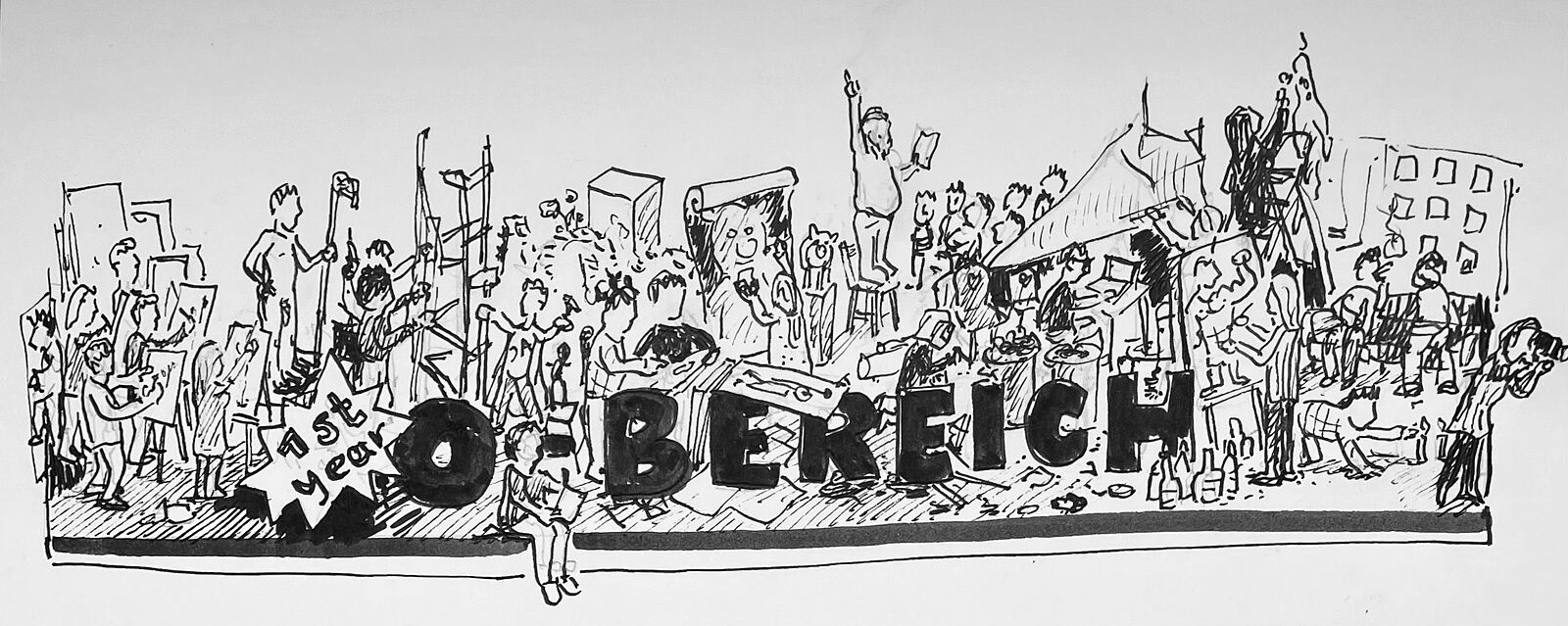
Prof. Gereon Krebber serves as Professor at the Düsseldorf Art Academy, where he teaches in the foundational Orientation Area (O-Bereich) program. He is deeply involved in guiding first-year art students through intensive studio practice and artistic development within the academy's Rheinflügel annex. His research focuses on experimental sculpture and ceramic art, characterized by monumental scale works using glazed ceramics, luster finishes, burnt wood, and steel structures. Krebber emphasizes material transformation and spatial intervention, often creating pieces that bridge industrial processes with artistic expression. Notable series include 'Tnösis' (2020-2021) incorporating beekeeping elements and 'Keramocringe' (2021) exhibited at Marl's Glaskasten Sculpture Museum. His recent artistic output demonstrates mastery in ceramic techniques through collaborations with the European Ceramic Work Centre (EKWC) in Oisterwijk, Netherlands. Works like 'Hut (Over the top)' and 'Meanwhile (Burned Passage)' explore material memory and spatial narratives through large-scale interventions. Krebber's teaching philosophy centers on practical studio work and artistic self-discovery, having himself transitioned from O-Area student to professor. He operates from a studio in Cologne while maintaining his academy responsibilities.
Eliane Bucher is a Professor at the School of Communication and Culture at BI Norwegian Business School, specializing in digital labor practices and platform governance. Her research centers on algorithmic management, gig economy dynamics, and digital media literacy within contemporary work environments. Previously, she completed her doctorate at the University of St. Gallen and conducted research at Harvard University's Berkman Center and Stanford's SCANCOR. Her research interests focus on digital labor practices , algorithmic management , digital platform governance , and online community dynamics . She investigates how workers navigate algorithmic control systems, construct identity in gig work environments, and develop voice mechanisms within digital platforms. Her work often examines the psychological and social implications of platform-mediated work, including worker alienation, emotional labor, and mattering perceptions in digital contexts. Bucher's publication record reveals a clear trajectory exploring the intersection of technology and labor relations. Her recent work (2023-2025) increasingly focuses on multimodal identity construction , algorithmic paranoia , and digital voice formation in platform ecosystems. She employs mixed-method approaches including visual methods, qualitative interviews, and large-scale text analysis of community forums to examine worker experiences across platforms like Upwork, Fiverr, and Airbnb. Her research consistently highlights worker agency within constrained algorithmic systems and the emergent social structures within digital labor markets. Bucher actively investigates worker responses to algorithmic management, including anticipatory compliance behaviors and identity work strategies that help workers navigate platform constraints. Her findings contribute to understanding how digital labor platforms reshape traditional employment relationships and worker organizing possibilities.
Christian Teckert is Professor for Space/Concept at the Muthesius Academy of Art and Design in Kiel, specializing in spatial strategies. He also serves as Lecturer at the Institute of Art and Architecture of the Academy of Fine Arts Vienna. His academic career spans multiple institutions across Europe, with a focus on the intersection of architecture, urbanism, and spatial theory. Teckert studied architecture at the Academy of Fine Arts Vienna, earning his diploma in 1996. His educational background forms the foundation for his interdisciplinary approach that bridges architectural practice with theoretical inquiry. His research interests center on spatial theory, cognitive urbanism, and the politics of exhibition design. Teckert investigates how spaces shape social interactions, with particular focus on urban interventions, the role of displays in public space, and the relationship between architecture and digital technologies. He explores how spatial configurations influence perception, movement, and social dynamics in contemporary urban environments. Analysis of his recent publications reveals consistent exploration of spatial boundaries, urban fragmentation, and the impact of digital technologies on spatial experience. His work consistently examines how physical and conceptual boundaries shape urban life, with increasing attention to algorithmic urbanism and the impact of digital technologies on spatial experience. Teckert's research bridges theoretical frameworks with practical spatial interventions. His scientific achievements have been recognized with numerous prestigious awards: Margarethe Schütte-Lihotzky Projektpreis (1998) Dietrich Ecker Architekturtheorie Förderungspreis (1998) Theodor Körner Forschungs-Förderungspreis (2001) Deutscher Architekturpreis Auszeichnungspreis (2005) Austrian Architecture Award Auszeichnungspreis (2006) Nominierung für den Mies van der Rohe Preis (2007) Teckert has supervised numerous research projects including the FWF (PEEK)-funded artistic research project CURATING THE URBAN / Project space HALFWAY in Vienna (2017-19). His professional activities extend beyond traditional academic advising to include curatorial work and collaborative research ventures. He has served as board member of the Austrian Society for Architecture OEGFA (2005-2008) and the Vienna SECESSION (2006-2007), and as Curatorial Advisor of MANIFESTA8 in Rovereto/Italy (2007-2008). Teckert co-founded the Office for Cognitive Urbanism with Andreas Spiegl in 1999 and as-if berlinwien Architekten with Paul Grundei and Stephanie Kaindl in 2001. These collaborative entities have produced significant exhibition projects including 'STUDIOCITY', 'SCREENCLIMBING', 'LAST MINUTE', and 'manifeSTAtion' as part of Manifesta7. His teams specialize in creating spatial interventions that challenge conventional understandings of urban space and architectural practice.
Dr. Krishna S. Nayak serves as Dean's Professor of Electrical and Computer Engineering at the University of Southern California's Viterbi School of Engineering. He directs the Signal and Image Processing Institute, Dynamic Imaging Science Center, and Magnetic Resonance Engineering Laboratory (MREL), leading interdisciplinary collaborations with radiologists, cardiologists, pulmonologists, and obesity researchers. His educational background includes a PhD (2001) and MS (1996) in Electrical Engineering from Stanford University, and BS degrees in Electrical Engineering, Computer Science, and Applied Mathematics from Florida State University (1995). Nayak's research pioneers MRI technology development with core expertise in pulse sequence design, real-time imaging, and quantitative reconstruction. His lab focuses on translating innovations to clinical applications for cardiovascular disease, obesity, and speech production through low-field systems, compressed sensing, and machine learning techniques. Current projects target high-performance imaging for coronary disease, cancer biomarkers, and vocal tract dynamics. His publication portfolio shows consistent advancement in MRI methodology, with recent work emphasizing low-field systems (0.55T), real-time speech imaging, and artifact correction. Key trends include clinical translation of quantitative biomarkers and hardware-software co-design for specialized applications. Jan 2022, Fellow, IEEE Apr 2020, USC Viterbi Use-Inspired Research Award May 2019, ISMRM Board of Trustees Apr 2018, Fellow, SCMR Apr 2017, Fellow, AIMBE Apr 2009, GE Healthcare Thought Leader Award His research program receives sustained funding from NIH, NSF, American Heart Association, and Coulter Foundation, supporting mentorship of graduate students and postdocs. As evidenced by his USC-Mellon Mentoring Award, he maintains strong commitment to training next-generation engineers through the MREL's collaborative environment. The Magnetic Resonance Engineering Laboratory operates as a multidisciplinary hub developing state-of-the-art imaging solutions, with active projects spanning hardware configurations, real-time cardiac imaging, and quantitative pulmonary assessment through close clinical partnerships.