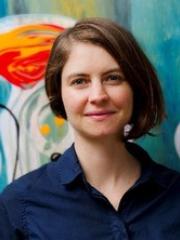
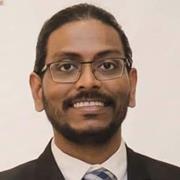
Craig Jin is an Associate Professor at the University of Sydney, leading the CARlab (Computing and Audio Research Laboratory) and Spatial Audio Research initiatives within the School of Electrical and Computer Engineering. He holds a BS from Stanford University, an MS from Caltech, and a PhD from the University of Sydney. His work focuses on immersive audio technologies, biomedical signal processing, and assistive technologies for sensory augmentation. Research interests include spatial audio reproduction, binaural processing, acoustic sensing for accessibility, and machine learning applications in signal processing. Key contributions span HRTF interpolation, noise reduction algorithms, and acoustic touch systems for the visually impaired. Recent projects include real-time MRI analysis of vocal tract dynamics and sparse recovery techniques for sound field reconstruction. His publications span over 150 peer-reviewed articles in journals like IEEE Transactions on Audio, Speech, and Language Processing, and conferences such as ICASSP. He advises four current PhD/Master’s students on projects like predictive gesture tracking, voice disorder classification, and magnetic resonance imaging techniques.
Dr. Bo Liu is an Associate Professor in the School of Computer Science at the University of Technology Sydney (UTS), where he serves as a core member and director of the AI Security and Privacy (AISP) Research Lab at the Australian Artificial Intelligence Institute (AAII). With expertise spanning cybersecurity, privacy protection, AI and machine learning, and wireless communications, Dr. Liu has established himself as a leading researcher in the field of AI security and privacy. Dr. Liu earned his PhD from the Department of Electronic Engineering at Shanghai Jiao Tong University in 2010. His academic journey at UTS has progressed from Senior Lecturer (November 2019-December 2022) to his current position as Associate Professor (January 2023-present). Dr. Liu's research focuses on the critical intersection of artificial intelligence and security, particularly addressing emerging threats in the age of advanced AI systems. His work spans multiple dimensions of security and privacy, including deepfake detection, privacy-preserving data synthesis, AI model security, and fair machine learning. He has pioneered approaches to detect AI-generated content, protect visual privacy through de-identification techniques, and address the complex relationship between algorithmic fairness and privacy preservation. His publication record demonstrates significant contributions across multiple cutting-edge research areas, with particular emphasis on detecting and mitigating threats from generative AI systems. His recent work reveals a strong focus on deepfake detection across multiple modalities (images, video, and audio), privacy-preserving techniques for sensitive data, and the security implications of emerging AI architectures like Retrieval-Augmented Generation systems. Dr. Liu has secured substantial research funding, including as Lead Chief Investigator on multiple ARC Discovery and Linkage Projects, totaling over $3.5 million AUD. His industry collaborations include partnerships with the NSW Department of Planning and the Reserve Bank of Australia, demonstrating the practical applicability of his research. As an academic leader, Dr. Liu serves as Associate Editor for IEEE Transactions on Broadcasting and actively contributes to the academic community through conference organization, peer review for top-tier venues, and assessment for ARC grant schemes. He also teaches courses including Penetration Testing, Ethical Hacking and Offensive Security, and supervises Masters and PhD students in cybersecurity and privacy research.
Dr. Lucy Fraser is a Senior Lecturer in Japanese at the School of Languages and Cultures , University of Queensland. Her work bridges Japanese and English literary traditions with a focus on fairy tales, gender studies, and animal-human relationships. Her research explores: Transnational adaptations of fairy tales Gender representations in Japanese literature and manga Literary translation and cross-cultural connections Environmental narratives through fictional animal depictions Recent publications examine fairy tale fashion translation (2024), border-crossing narratives (2023), and animal symbolism in classical/modern Japanese texts (2022). She co-edited The Routledge Companion to Gender and Japanese Culture (2020) and supervises PhD projects on feminist discourse, queer narratives, and cross-cultural modernity. Dr. Fraser's translation work includes Tsushima Yuko’s Tōkina-to (2020) and collaborations on shojo manga gender studies (2018). She previously received funding for technology-enhanced Japanese language assessment (2019).
Professor David Taubman is a distinguished academic serving as Professor and Deputy Head of School (Research) at the School of Electrical Engineering and Telecommunications (EE&T) at the University of New South Wales (UNSW) in Sydney, Australia. He is also co-director of Kakadu Software Pty. Ltd. and its affiliates Kakadu R&D and Kakadu GPU. With a career spanning over three decades, Professor Taubman has made significant contributions to the field of image and video compression, most notably as the author of the EBCOT coding algorithm adopted in the JPEG2000 international standard. Professor Taubman earned his B.Sc. in Mathematics and Computer Science (1986) and B.E. (Medal) in Electrical Engineering (1988) from the University of Sydney, followed by an M.Sc. (1992) and Ph.D. (1994) in Electrical Engineering from the University of California at Berkeley. His professional journey includes engineering work at the Electricity Commission of N.S.W. (1988-1990), research positions at Hewlett-Packard Laboratories in Palo Alto (1994-1998), and an academic career at UNSW where he progressed from Senior Lecturer (1998-2003) to Associate Professor (2004-2009) and finally to Professor (2009-present). He has held various leadership roles including Head of the EE&T Telecommunications Research Group (2003-2014), Head of the EE&T Signal Processing Research Group (2014-present), Director of Research for the School of EE&T (2011-2016), and Deputy Head of School (Research) since 2017. Professor Taubman's research interests center on image and video compression, with particular expertise in JPEG2000 standards and implementations. His work spans signal processing, wavelet transforms, scalable video coding, motion modeling, and multimedia systems. He has pioneered numerous compression algorithms and frameworks, including the EBCOT coding algorithm that became central to the JPEG2000 standard. His recent research focuses on efficient motion modeling with cuboidal partitioning, learned lifting-based transform structures, and high-throughput implementations of JPEG2000 for video applications. His work bridges theoretical foundations with practical implementations, as evidenced by the commercially successful Kakadu Software tools that have garnered around 500 commercial licensees. Analysis of Professor Taubman's recent publications reveals a consistent focus on advancing compression technologies with particular emphasis on scalability, efficiency, and adaptability. His work spans traditional image compression (JPEG2000 extensions), video coding (cuboid-based partitioning for UHD/360-degree video), and emerging applications (nanopore sequencing data compression). A notable trend is the integration of machine learning techniques with traditional compression frameworks, as seen in his work on learned lifting-based transform structures. His research maintains strong connections to real-world applications across diverse domains including medical imaging, astronomical data processing, and genomic sequencing. IEEE Fellow Engineers Australia Fellow (by invitation) Professor Taubman has served as Associate Editor for the IEEE Transactions on Image Processing for two four-year appointments (2003-2005 and 2010-2013). He has been actively involved in numerous research grants focused on image and video compression technologies, particularly those related to the JPEG2000 standard and its extensions. His work has received significant industry support, reflected in his consultancy with various U.S., Japanese, and Australian corporations. He has also contributed to international standards development as a member of Standards Australia Technical Committee MS-065 (mirroring ISO TC42 on Digital Photography) and as a constitutional member of Standards Australia Technical Committee IT-029 (Coded Representation of Picture, Audio and Multimedia/Hypermedia Information). Professor Taubman co-directs Kakadu Software Pty. Ltd. and its research affiliates Kakadu R&D and Kakadu GPU, which have developed the commercially successful Kakadu Software tools for JPEG2000. His research group at UNSW focuses on advanced image and video compression techniques, with particular expertise in wavelet-based methods, scalable coding, and motion modeling. The group maintains strong industry connections and has contributed significantly to the development and standardization of image compression technologies worldwide.
Dr. Sam Ferguson is a Senior Lecturer at the School of Computer Science, University of Technology Sydney (UTS), with a multidisciplinary background in music performance, cognitive science, and psycho-acoustics. His research explores the intersection of sound, music, and human experience through creative coding, machine learning, and interactive systems. Key Research Areas: Sound and Music Computing, Human-Computer Interaction, Creative Coding, Cognitive Science, Installation Art, and Acoustics. Current Projects: ARC Linkage project on creative coding and multiplicitous media; industry collaborations on IoT-based audiovisual systems. Recent Publications: Focus on spatial audio complexity, gestural interaction with networked sound, music emotion recognition frameworks, and robotic performance through genre-based cultural platforms. Leadership Roles: Director of Teaching & Learning Engagement; former Deputy Head of School (Teaching and Learning); active in ACM Creativity and Cognition Steering Committee. Teaching: Courses like Digital Media Studio , Prototyping Physical Interaction , and Data Processing using R within UTS's interdisciplinary Software Development Studio.
Sarah Howard is an Honorary Professor at the School of Education, University of Wollongong, and concurrently holds roles such as Visiting Professor at Vrije Universiteit Brussel. Her research focuses on leveraging new technologies and data science to understand classroom practices, teacher change, and technology integration. Key areas include cultural and individual factors influencing teachers' digital technology use, blended learning environments, and automated classroom observation systems. She leads projects like national app use studies in primary schools and data/video mining methods for digital-physical space integration. Her academic roles include supervision of higher-degree research students across multiple institutions. Funding includes ARC grants and internal university schemes exploring rural student potential, generative AI in education, and flexible learning spaces. Her work emphasizes innovative educational technologies, teacher professional development, and systemic educational change. Recent publications span AI in education, blended learning frameworks, and teacher readiness for online instruction. She collaborates internationally, with a focus on integrating theoretical and practical insights to drive educational innovation.
Professor Helen Mitchell is a multidisciplinary scholar in music performance and perception at the University of Sydney's Sydney Conservatorium of Music. Her research explores the intersection of music practice with scientific discovery, focusing on vocal pedagogy, listener perception, and multisensory performance analysis. She holds a BA (Hons) from Oxford and a PhD from the Sydney Conservatorium. Previously, she served as Dean of Students at the University of Sydney's Women’s College (2004–2005). Research Interests: Mitchell’s work investigates listeners’ sound quality perception, vocal identity recognition, and the cognitive effects of verbal descriptions on musical memory. Notable projects include longitudinal studies on music training outcomes and current investigations into audio-visual integration in performer identification. Her ARC-funded research emphasizes practical applications in pedagogy and performance valuation. Grants & Collaborations: Key grants include the 2022 ARC Discovery Project on bel canto sound rediscovery (with Neal Peres Da Costa) and a 2014 OLT grant for perceptually-aware music leadership training. She collaborates with institutions like Sydney Living Museums via projects such as The Dowling Songbook Project, blending historical performance practice with educational innovation. Teaching & Supervision: Mitchell convenes postgraduate research methods courses and supervises Honours, Masters, DMA, and PhD students in music performance studies. She coordinates Honours research at the Conservatorium and integrates empirical approaches into ethics and methodology training. Affiliations: Member of the Charles Perkins Centre, contributing to interdisciplinary health and performance research.
Janet McGaw is an Associate Professor in Architectural Design at the University of Melbourne’s Faculty of Architecture, Building and Planning. She holds dual expertise as a registered architect and visual artist, with a PhD by Creative Works. Her research focuses on equitable, sustainable urban spaces and the intersection of place, identity, and health. Key projects include the Million Minds Program (2019–2024), co-leading investigations into Indigenous cultural practices’ impact on youth well-being, and the Yalinguth audio app project (2014–present). She has led major grants like the ARC Linkage Grant on Indigenous Placemaking (2010–2014) and pioneered creative collaborations in bio-materials research. Education includes a PhD by Creative Works and prior degrees from the University of Melbourne. She coordinates the Master of Architecture’s core design studio, emphasizing culturally sensitive design. Leadership roles include Chairing the Architecture Design Studios review (2022), co-chairing decolonization curriculum reforms, and Pathway coordination in Bachelor programs (2015–2019). Research interests span decolonial design, Indigenous health, and creative methodologies. Recent publications (2023–2025) explore cultural therapy models for Indigenous youth mental health, bioinformed materials, and community-driven placemaking. Her work bridges art, architecture, and public health, advocating for marginalized voices in urban spaces. Awards include the 2007 Dean’s Prize for Research and RAIA Vic Chapter recognition. She actively collaborates with First Nations Elders and interdisciplinary teams on projects like the Mycelium Matters Webinar and spatial design interventions in Melbourne.
Associate Professor Darrin Verhagen is an award-winning sound designer and composer at RMIT University's School of Design, where he teaches in the Sound Design specialization within the Digital Media Program and directs the Audiokinetic Experiments (AkE) Lab. His academic work bridges creative practice with scientific inquiry into multisensory perception. Verhagen's research centers on the neurobiology of aesthetic experience, particularly exploring how sound interacts with vision, movement, and vibration. His work in the AkE Lab utilizes motion simulators, 4D cinema seating, and light to create installations that investigate the relationship between hearing, vision, movement and vibration. His academic background includes postgraduate research on musical extremes - lowercase sound for his Masters and Noise for his Doctorate. His creative output spans sound design for contemporary dance, theatre, installation, film, television and computer games. Verhagen has released over 20 albums internationally and performs audiovisual live shows globally. He was founder and curator of Dorobo records, which showcased Australian sound art for 15 years. Industry collaborations include work with Melbourne Theatre Company, Malthouse, Chunky Move, Australian Dance Theatre, and others. Notable awards include multiple Green Room Awards for Sound Design, Australian Academy of Cinema & Television Arts award finalist status, APRA Art Music awards finalist for experimental music, RMIT Research Award for technical innovation, and RMIT Teaching Award for excellence in teaching practice. Verhagen's supervision projects reveal a trajectory toward increasingly sophisticated explorations of sound in relation to space, perception, and human experience, with recent work focusing on transdisciplinary design, spatial sound applications, distributed audio systems, and vocal ecology. His work consistently bridges artistic practice with technological innovation and scientific inquiry into perceptual phenomena.
Professor Juan Francisco Salazar Sutil is an active academic specializing in interdisciplinary research at the intersection of anthropology, environmental studies, and futurism. His work explores polar geopolitics, indigenous media cultures, and the ethics of outer space exploration. He has contributed to over 95 publications and 13 research projects since 2002. Salazar Sutil is a member of prominent organizations including the American Anthropological Association and the European Association of Social Anthropologists. His research frequently engages with global environmental governance, Antarctic policy, and decolonial approaches to science and technology. Key Research Themes: Climate change, planetary health, Antarctic futures, media activism, and temporal politics. Notable Projects: Antarctic Cities initiative, studies on soil politics, and participatory game design for policy engagement. Salazar Sutil's publications span documentary film analysis, policy frameworks for outer space, and ethnographic studies of marginalized communities' environmental resilience. His work emphasizes transdisciplinary collaboration and the role of imagination in shaping sustainable futures.
Lawrence Harvey is an Associate Professor in RMIT University's School of Design and founding director of SIAL Sound Studios. His practice-based research explores spatial sound through electroacoustic composition, urban soundscapes, and speaker orchestra performance. He has curated and performed 34 concerts for the RMIT Speaker Orchestra, a 32-channel spatial audio system, while leading research projects funded by the Australian Research Council. Recent collaborations include 'The Planting' with Indigenous thinkers and 'Site and Sound' exhibitions at McClelland Gallery. His publications investigate sound curation methodologies, noise transformation in urban environments, and interdisciplinary approaches integrating sound with architecture and drawing. Current research develops sonic responses to ecological challenges through critical listening practices.
Associate Professor Densil Cabrera is affiliated with the School of Architecture, Design and Planning at The University of Sydney, where he directs the Audio & Acoustics Program. He holds a PhD in psychoacoustics from the University of Sydney, along with degrees from UTS and Sydney in music and communication studies. His research focuses on architectural acoustics, retroreflective surfaces, room acoustics modeling, and auditory environments in built spaces. He explores applications in concert halls, open-plan offices, and historical structures like Indian stepwells. Key areas include acoustic retroreflection for speech support, sustainable acoustic materials, and the integration of digital fabrication techniques. Recent work addresses acoustic comfort in open-plan offices, adaptive acoustic models, and the impact of materials like mycelium composites. He has led projects on robotic fabrication for acoustic surfaces and the psychoacoustic effects of room design. Grants: Australian Research Council (DP23), Australian Acoustical Society (2019) Expertise: Stage acoustics, auditorium design, noise control, virtual reality simulations Labs/Teams: Audio & Acoustics Program at Sydney School of Architecture, collaborations with robotics and material science teams.
Professor Tracey Rogers is a distinguished academic at the University of New South Wales, Faculty of Science, School of Biological, Earth and Environmental Sciences. Her research focuses on marine mammals and their adaptation to changing environments, with particular expertise in Antarctic wildlife, predator-prey interactions, and wildlife communication. Her research interests span marine mammal ecology, behavioral ecology, evolutionary biology, and animal behavior. Professor Rogers leads the MammalLab at UNSW, conducting cutting-edge research on various marine mammal species including whales, seals, and dolphins. Her work combines field observations, bioacoustic analysis, and physiological studies to understand how mammals overcome environmental challenges. Professor Rogers's publication record shows a strong focus on marine mammal vocalizations, Antarctic ecosystems, and conservation biology. Her recent work has increasingly incorporated advanced analytical techniques for studying large audio datasets and examining physiological responses to environmental change. 2015: Finalist Australian Academy Science, Nancy Millis Medal 2011: Finalist Eureka Prize People's Choice Science Award 2011: Finalist Eureka Prize Animal Protection, Research & Innovation 2008-2010: Ambassador, Australian Institute of Policy & Science Tall Poppy Program 2009: F.G. Wood Memorial Prize, International Society Marine Mammalogy 2007: Research Award, Australasian Association of Zoological Parks & Aquaria 2005: NSW Tall Poppy Award Professor Rogers has successfully supervised over 20 PhD students to completion, with many now holding prominent positions globally in academia, government agencies, and conservation organizations. She currently supervises five doctoral candidates working on diverse projects related to marine mammal acoustics and ecology. She is an active participant in Scientists in Schools and conducts workshops at the Powerhouse Museum and Taronga Conservation Society Australia.
Dr. Avinash Singh is a Senior Lecturer at the School of Computer Science at the University of Technology Sydney (UTS), Australia. He serves as co-chair of the IEEE Neuroethics Framework for the Workplace, sponsored by IEEE Brain, and is a member of the IEEE Standards Committee on Unifying Brain-Computer Interfaces (BCI). He also serves as an expert advisor for UNICEF and The Centre of Neurotechnology and Law, UK. Dr. Singh completed his PhD in Computer Science in 2019 at UTS, collaborating with the Technical University of Berlin, Germany, the University of California San Diego, USA, and the US Army Research Lab. Prior to his doctorate, he earned a Master's in Software Systems from Birla Institute of Technology and Science Pilani, India, and earlier degrees in Computer Science and Mathematics from Indian institutions. Working at the intersection of machine learning, cognitive neuroscience, and mixed-reality, Dr. Singh focuses on designing and developing real-world neuroadaptive BCI systems. His research integrates AI technologies with cognitive neuroscience to explore cognitive functions, discover relationships between brain dynamics, evaluate everyday interactions, and develop robust next-generation neuroadaptive BCIs. His work spans areas including neuroadaptive BCI applications for improving interpersonal communication, sensory augmentation for blind individuals, and dream reconstruction from brain signals. Analysis of Dr. Singh's recent publications reveals a consistent focus on developing novel EEG signal processing techniques, creating neuroadaptive interfaces, and applying BCI technology to real-world problems. His work shows increasing integration of deep learning with neuroscience, particularly in the context of cognitive conflict detection, spatial navigation, and assistive technologies for the visually impaired. The research demonstrates strong interdisciplinary connections across computer science, neuroscience, and human-computer interaction. Google TensorFlow Faculty Award (2021) Dr. Singh actively supervises PhD students and has received multiple research grants, including ARC Linkage Projects and NHMRC Ideas Grants. His funded research spans neuro-AI for personalized image generation, sensory augmentation for blind individuals, and ethical frameworks for BCI technology. He leads the UTSxDream Recording project (formerly DreamMachine) and collaborates with international institutions on BCI standardization efforts. Dr. Singh founded the India Future Society, a think tank focused on transhumanism, and actively advocates for the ethical development of neurotechnology. His work bridges academic research with practical applications in assistive technology, human-robot collaboration, and spatial navigation systems.
Phil Edwards is a Lecturer in the School of Art at RMIT University, specializing in interdisciplinary art practices that explore hybridity, cultural critique, and contemporary artistic expression. His research spans children’s art, outsider art, and the intersection of fine art with everyday aesthetics. He holds a Master’s degree examining innate aesthetic tendencies in everyday object assemblages and a PhD analyzing the role of audio CDs in fine art culture. Research Interests: Edwards focuses on six core themes: children’s art/outsider art’s relationship to formal painting, fake poetry integration in visual art, alchemy as metaphor, music brut, temporality in hybrid art forms, and abstract landscape painting. His creative works often blend digital media (e.g., Instagram-based projects) with traditional techniques. Teaching & Supervision: Edwards supervises Masters and PhD students in research topics like border identity visualizations (Maria Penne’s DFA project). He actively mentors projects such as An Exploration of Zen-inspired Poetic Nature Painting and Museum of Emotion . Exhibitions & Projects: His works include installations like Museum of Platitudes AND Aphorisms and digital projects such as Continual Instagram Painting . He frequently exhibits in venues like the c3 Art Gallery and George Paton Gallery, emphasizing public engagement and conceptual depth.