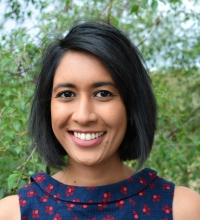
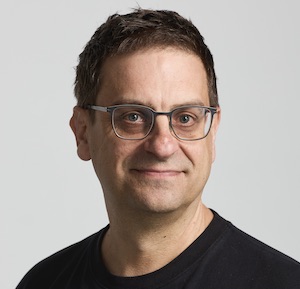
Dr Tricia King is Senior Lecturer in Photography at University of the Sunshine Coast, specializing in creative arts health for older adults. She founded the Ageing Well Creative Lab developing interdisciplinary programs bridging creativity, technology, and social engagement. Education PhD, Queensland University of Technology BA Visual Arts (Photography), Griffith University Her research employs participatory visual methodologies like photovoice and collaborative photography to challenge visual ageism and enhance social connection. Current projects investigate how creative technologies (AR, drone photography) foster intergenerational learning and technological empowerment. King's work emphasizes place-based environmental connections and ecological empathy through embodied experiences. As founding member of UniSC Creative Ecologies and Healthy Ageing Research Clusters, she integrates art, psychology, and environmental studies. King convenes the Australian Association of Gerontology's Creativity, Art, and Design Special Interest Group and serves as Associate Editor for Arts & Health journal. Research Projects Picture Yourself: Co-creating authentic images of ageing (Creative Australia funded) Creativity and Movement in Ageing Communities (USC funded) The Beeyali Project - Visualising Acoustic Ecology (Australia Council funded)
Stewart Long - Lecturer in Audio Design Stewart Long is a Lecturer in Audio Design at the University of Tasmania , specifically within the Conservatorium of Music under the School of Creative Arts and Media. He has been actively involved in music and audio technology since 1984, transitioning to academia in 2009 after 17 years in the audio/music/media industry. His professional experience includes running Red Planet Recording studio for 27 years and managing Sonic Solution Pty Ltd . Research & Teaching Focus His research emphasizes music as a communication tool for sustainability, climate change, and indigenous knowledge, alongside innovations in recording techniques and music production. He coordinates Music Technology at the Conservatorium and teaches core units including Music Practice 1-6 , Music and the Future , and the capstone Music Industry Project . Community Engagement Stewart has collaborated extensively with national media outlets (ABC, SBS) and produced recordings for artists like Psycroptic, Violent Femmes , and Hey Mook . Notable projects include the USA Tour Documentary of the Southern Gospel Choir and the I Can Make This Journey exhibition. His work spans over 100 recorded projects, blending technical expertise with artistic vision. Teaching & Supervision Teaches 11 music practice and performance units. Focuses on ensemble skills development and music technology integration. Guides students through industry-oriented capstone projects. Technical Expertise Expert in analog/digital recording, live sound engineering, and mastering. Specializes in capturing classical, rock, folk, and experimental music with a focus on studio acoustics and artist collaboration.
Dr. Prasanga Samarasinghe is an Associate Professor at the Australian National University (ANU) within the College of Systems & Society. Her research focuses on spatial audio, acoustic signal processing, and drone audition. She holds a B.E. in Electrical and Electronic Engineering from the University of Peradeniya (2010) and a PhD in Signal Processing from ANU (2015). Key professional achievements include a 2022 Fulbright Fellowship at Yale University and the 2023 ARC DECRA Fellowship. She has secured significant funding through ARC Linkage, Discovery grants, and industry partnerships with Sony, Dolby, and META. Her industry experience includes roles at Dolby Laboratories and collaborations with defense-related entities like the Australian Signals Directorate. Research Groups: Joint supervisor of ANU Audio and Acoustic Signal Processing Group Professional Roles: Member of IEEE Signal Processing Society's Audio & Acoustic Signal Processing TC (2021–2023), former Chair of IEEE ACT Section's COMMS/SP Chapter (2018–2020) Her work bridges theoretical advancements in spatial audio with practical applications in noise cancellation, drone audition, and virtual acoustics. She actively supervises PhD and Honours students in these areas. Awards: Fulbright Fellowship (2022), ARC DECRA (2023) Industry Collaborations: Sony-Japan, Dolby (Sydney/USA), META (USA), Australian Defence Portfolio
Professor Zhiyong Wang is a faculty member at the School of Computer Science, University of Sydney, serving as Deputy Director of Sydney Informatics Hub and Director of the Multimedia Computing Laboratory. His research focuses on multimedia computing, including information retrieval, computer vision, AI, and applications in agriculture, healthcare, and environmental monitoring. He holds a B.Eng., M.Eng. from South China University of Technology, and a Ph.D. from The Hong Kong Polytechnic University. His work bridges theoretical advancements and real-world applications, with over 200 peer-reviewed publications. He is a member of IEEE and former President of Australia Pattern Recognition Society (APRS). Research Interests: Enabling computers to understand and create multimedia content, with emphasis on human-centric computing, remote sensing, and interdisciplinary applications. Notable areas include action recognition, medical image analysis, and environmental monitoring. Current Roles: Leads the Multimedia Computing Lab, collaborates with Sydney Institute of Agriculture and Brain and Mind Centre. Teaches COMP5216 (Mobile Computing), COMP5405 (Digital Media Computing), and COMP5425 (Multimedia Retrieval). Students: Supervises 9 Ph.D. students focusing on topics like precision agriculture, biomedical engineering, and AI-driven video analytics. Key projects include soil moisture forecasting, biomechanical risk analysis for knee osteoarthritis, and explainable machine learning.
David Haines is a Senior Lecturer in Visual Art at Sydney College of the Arts, University of Sydney. He holds a BA(VA) from UNSW and a PhD from the University of Sydney. His research focuses on interdisciplinary practices blending installation art, sound performance, and aroma chemistry, often exploring unseen energies like cosmic rays and electromagnetic fields. Collaborations with Joyce Hinterding are central to his work, producing immersive installations exhibited globally. Education: BA(VA), UNSW PhD, University of Sydney GradDipProfArtStudies, UNSW Research interests include aroma utilization in art, real-time 3D game engine visuals, and hydrogen alpha solar photography. His work bridges science and art, using technologies like gas chromatographs and thermoelectric modules. Key projects include Energies: Haines & Hinterding (2016) and Pink Steam (2022). Awards: Australia Council for the Arts 2-year Fellowship (2017) Premier of Queensland's National New Media Art Award (2008) Advising and grants: Haines has held academic positions at COFA (UNSW) and University of Western Sydney. His work involves institutional collaborations like the Museum of Contemporary Art and Bundanon Trust. Current research explores VR environments and aroma-based installations. Key affiliations include the Sarah Cottier Gallery and Asialink-Myer Foundation. His work is represented in major collections including the Tate Liverpool and Sao Paulo Biennale.
Dr. Sadia Sadia is a Senior Industry Fellow at RMIT University's School of Art (College of Design and Social Context), specializing in neuroaesthetics, visual arts, and immersive environments. She holds a PhD in Fine Art from RMIT, M.A. in Design Studies (University of the Arts London), and M.Sc. in Political Science and Economics (University of London). Her research focuses on transcendent experiences in installation art, combining empirical methodologies with subjective analysis. Key roles include Managing Director of Chimera Arts Ltd and installation artist with exhibitions at institutions like the Cinémathèque Française and Melbourne International Film Festival. Awards include Fellowship from the Royal Society of Arts (UK). Notable works: 'Ghosts of Noise' (RMIT Gallery), 'All Time and Space Fold into the Infinite Present' (QVMAG permanent collection). Her studio is based at Real World Studios, UK, and she has collaborated with figures like Peter Gabriel. Research explores affect-driven sensory experiences, 3D audio impacts on cognition, and ecological art narratives.
Ms. Stephanie Andrews is a Lecturer and Program Manager for the Masters of Animation, Games, and Interactivity (MAGI) at RMIT University's School of Design. She holds a PhD in Virtual Reality (VR) and has a career spanning art, technology, and academia. Previously, she was a Technical Director at Pixar, led curriculum innovation at the University of Washington's DXARTS program, and served as Creative Director at Liminal, a VR and neuroscience company. Her research focuses on stereoscopic spatial hacking in VR, 3D graphics, and user experience design. She has received over $300,000 in grants for stereoscopic research and exhibited internationally in Australia, Iceland, the UK, and the USA. Education: PhD in VR creation, Technical Director experience at Pixar, and leadership roles in academic programs. Her work blends art and tech through interactive installations, digital media, and educational initiatives. Research interests include immersive VR experiences, spatial perception, and experimental art forms. She co-founded companies for the metaverse and 3D printing sectors, showcasing her entrepreneurial spirit. Recent projects include Existential Crisis (2024), an interactive VR artwork exploring embodiment, and Citizen Tree , presented at ISEA2024. Awards/Grants: Secured $300k+ USD in stereoscopic research grants and established a groundbreaking audio-video suite at the University of Washington. Service: Jury member for ISEA2024's art exhibition selection. Labs/Teams: Center for Digital Art and Experimental Media (DXARTS), Liminal VR.
Caleb Kelly is an Associate Professor in the Faculty of Arts, Design and Architecture at the University of New South Wales (UNSW). His research focuses on sound in the fields of media arts, gallery arts, and music, leading to a rethinking of how art is listened to, historically and in contemporary practice. Kelly coordinates the research group Sound, Energies and Environments (SEE), which explores the intersection of sound, energy, and environmental concerns in contemporary art practices. His educational background includes: Bachelor of Arts in Art History & Philosophy from the University of Otago, New Zealand (1993) Master of Arts (Hons) in Art History from the University of Auckland, New Zealand (1996) Doctor of Philosophy in Creative Communications from the University of Canberra, Australia (2007) Kelly's research centers on sound studies , particularly examining the role of sound in contemporary art and gallery contexts. His work explores cracked media (the sound of malfunction), imperfection in experimental instruments , and feedback systems in artistic practice. He investigates how sound functions within visual art spaces, challenging traditional distinctions between visual and auditory experience. His research has led to significant contributions in understanding gallery sound , audio installations , and the materiality of sound in contemporary art. Kelly's approach combines art historical analysis with practical experimentation, often working directly with artists to understand the technical and conceptual dimensions of sound-based art. Kelly's publications reveal a consistent focus on the intersection of sound, media, and contemporary art practices. His work traces the historical development of sound art exhibitions while simultaneously exploring cutting-edge sonic art practices. A notable trend is his sustained interest in imperfection, malfunction, and error as creative forces within media art. His research spans from historical examinations of sound art exhibitions to contemporary investigations of ecological concerns in media practices. Kelly's writing frequently addresses the material dimensions of sound, examining how physical substances and technological systems shape auditory experiences in gallery settings. Among his notable recognitions: Edgard Varèse Guest Professor at the Technische Universität Berlin (2015) Kelly has supervised numerous doctoral and master's students working at the intersection of sound, art, and technology. His current and completed students have explored diverse topics including cello performance with long-throw speakers, improvisational feedback systems, underwater sound experiences, electro-acoustic feedback, neural networks in music, sound surveillance, ecological sound practices, video feedback art, electromagnetic constellations in radio, and organizational structures in experimental music. His supervision emphasizes practice-based research, encouraging students to develop both theoretical frameworks and creative outputs. While specific grant information isn't detailed in the provided text, his research activities suggest involvement in substantial funding projects supporting his publications, exhibitions, and research group activities. Kelly coordinates the research group Sound, Energies and Environments (SEE), which serves as a hub for interdisciplinary research on sound in contemporary art. The group brings together artists, curators, and scholars to explore how sound functions within gallery contexts and beyond. SEE has facilitated numerous exhibitions, publications, and collaborative projects examining the relationship between sound, energy systems, and environmental concerns. The group's work has contributed significantly to the field of sound studies, particularly in understanding how sound operates within institutional art spaces.
Leo Murray is a Senior Lecturer at Murdoch University's School of Media and Communication within the College of Law, Arts and Social Sciences. His research focuses on sound design in film/TV, interactive media, and digital forensics, blending theoretical inquiry with practical applications. Before academia, he worked as a BBC radio engineer and recording studio technician, later transitioning to education after completing a Graduate Diploma in Education at Murdoch in 1999. PhD in Media Studies, Murdoch University (2014) Bachelor of Arts in Social Sciences, University of Westminster (1997) Research interests include semiotics applied to sound design, environmental media studies, and the ethics of audio in documentary production. Notable projects include sound installations at the Venice Biennale (2023) and critical analyses of advertising's environmental impact. His work bridges creative practice with theoretical frameworks like Peircean semiotics. Recent publications explore climate change narratives, urban pollution economics, and interdisciplinary sound art practices. He has pioneered approaches to teaching audio remix techniques in undergraduate education. Recipient of Murdoch University's Graduate Teaching Award (2020) Advises on projects combining sound design with environmental advocacy, and collaborates with the Murdoch Sound Lab. Current research focuses on acoustic ecology and cultural representations of climate crisis.
Isaac Salisbury is a Researcher at the School of Psychology, University of Queensland (UQ), specializing in human factors and ergonomics within healthcare and high-tempo environments. His work focuses on optimizing clinical monitoring systems through innovative display technologies and auditory interfaces. Research Highlights Human-computer interaction in clinical settings Medical sonification and auditory display design Head-worn display usability for patient monitoring Evaluation of medical device ergonomics Healthcare workflow optimization Key Collaborations Regularly collaborates with: Penelope M. Sanderson (UQ) Robert G. Loeb (UQ) Paul D. Schlosser (UQ) Ismail Mohamed (UQ) Publication Trends Recent scholarship demonstrates expertise in: Development of head-worn displays for clinical monitoring Comparative studies of tablet vs wearable devices in healthcare Optimization of auditory displays for critical care Human factors analysis in high-tempo environments (restaurants, EMS) Experimental evaluation of medical device interfaces through simulation
Professor Christian Ritz serves as Director of SMART and Professor in the School of Electrical, Computer and Telecommunications Engineering within the Faculty of Engineering and Information Sciences at the University of Wollongong. He has held his professorship since 2017 and served as Associate Dean (Research) in 2022 and Associate Dean (International) from 2016-2021. Professor Ritz's research focuses on signal processing for speech, audio, acoustics and visual information. His current projects include microphone array signal processing for enhancing sound recorded in classrooms, sound scene classification for dementia care environments, spatial audio for Virtual and Augmented Reality, and undersea surveillance. His work spans multiple technical domains including signal processing, audio engineering, computer vision, and communications engineering. His recent publication trends show a strong focus on neural network applications for audio processing, particularly for classroom monitoring and spatial audio reproduction. His work integrates deep learning with traditional signal processing techniques to address challenges in spatial audio synthesis, room impulse response generation, and directional audio reproduction. He has also contributed to applications in mining automation, public safety surveillance, and positioning systems. Professor Ritz is a member of the Centre for Signal and Information Processing (CSIP), part of the Signals, Information and Communications Research Institute (SICOM) at the University of Wollongong. His research is funded by the ARC, overseas research institutes, and defense organizations. His grant portfolio is extensive, including projects such as AI/IoT-powered Airborne System for Monitoring Water Level and Tidal Floods, Multi-Modal Satellite-based Vessel Surveillance, Net Zero Industry and Innovation Program, Smart Eye: Airborne and AI-Driven Assessment Solution of Sugarcane, and numerous projects related to spatial audio and underwater surveillance. He has secured funding from diverse sources including the Australian Research Council, defense organizations, and international collaborations. Professor Ritz maintains an active research laboratory environment focused on signal and information processing. His work spans multiple application domains from classroom monitoring to underwater mine detection, with strong connections to both academic and industry partners. His research group appears to focus on practical applications of signal processing techniques to solve real-world problems across various domains.
Dr. Gregory Ferris is a Senior Lecturer in the Faculty of Design and Society at the University of Technology Sydney (UTS). His academic work bridges media art practice and research, with a focus on interactive and immersive media environments. He is affiliated with the Faculty Visualisation Institute (VI) Research Network and The Trustworthy Digital Society at UTS. Dr. Ferris completed his PhD at the College of Fine Arts, Sydney, Australia in 2013 with a thesis entitled "Every time I leave the room: image, time and metadata in off-screen space." His academic journey reflects a unique blend of artistic practice and scholarly research in contemporary media. Dr. Ferris's research interests span multiple domains of contemporary media practice. As a "media 'construct-ant'", he works across interactive media, installation art, virtual reality, and traditional moving image production. His creative practice has evolved from experimental films that screened on the ABC in the mid-eighties to pioneering work in panoramic interactive narratives and 360-degree virtual reality. His research focuses on microbudget feature filmmaking, immersive and interactive narrative structures, and emerging media technologies including virtual reality. His work explores the intersection of media production, post-production technologies, and experimental media making, with particular attention to aesthetic considerations in contemporary digital environments. Dr. Ferris's creative outputs demonstrate a consistent trajectory of innovation in media art. His work shows increasing sophistication in immersive technologies, with a focus on VR, 360-degree media, and interactive installations. His scholarly contributions connect media practice with educational applications, particularly in how immersive media can be integrated into teaching contexts. The themes across his work include explorations of narrative structures beyond traditional frames, spatial relationships in media, and the evolving relationship between creators, technologies, and audiences in digital environments. Dr. Ferris has received research funding from significant sources including the City of Sydney, UTS Chancellor's Research Fellowship, and Create NSW. His current projects include "Spirit of the Hoey" (2023-2024), "Envisaging and enacting just climate futures through immersive media" (2022-2027), and "Sympathetic Threads" (2017-2018). As an educator, Dr. Ferris teaches "Experimental Media" and is available for Masters Research and PhD student supervision. His teaching focuses on media arts exploration, production and post-production techniques, experimental media making, and aesthetics. He has organized academic conferences including microWAVE 2011 and microWAVE 2013, demonstrating leadership in his field.
Dr. Ivan Zavada is a Senior Lecturer and Program Leader in Composition & Music Technology at the Sydney Conservatorium of Music, part of the University of Sydney. His work focuses on the intersection of sound, visuals, and technology, with specialties in electroacoustic music, digital media, and environmental sustainability. He holds a MMus in Electroacoustic Composition from the Université de Montréal and a PhD from the University of Sydney. Education: MMus (Montreal), PhD (Sydney) Research Interests: Sound composition, digital music media, visual music, cross-cultural composition, AI in music His research explores innovative approaches to sound and visual art, including immersive audiovisual performances and sustainability-themed projects like 'Sounds of Sustainability' with AMP Capital. Current projects include Southeast Asia-focused collaborations on cultural heritage and urban soundscapes. Recent grants include a New Colombo Plan mobility grant for studying underwater sounds in Southeast Asia. He advises PhD students on topics ranging from Korean traditional instruments to spectral music and temporal location in composition. Key Projects: Sounds of Sustainability, Sydney Southeast Asia Centre Collaborative Grants Publications: Over 20 works spanning journals, conferences, and composed pieces
Professor Damian Candusso is the Head of School in the School of Creative Arts at QUT's Faculty of Creative Industries, Education & Social Justice. He holds a PhD from the Australian National University and is a leading figure in sound design, immersive media, and spatial audio engineering. His professional career spans film, television, and music, with credits on major projects like The LEGO Movie , The Great Gatsby , and Happy Feet . He has also served on the Board of Directors for the Motion Picture Sound Editors (MPSE) in Los Angeles. Candusso's research focuses on sound design for 3D cinema, virtual reality, and audience perception, with notable contributions to understanding spatial sound in immersive environments. His awards include a Centenary Medal (Queen's Award), the City of Los Angeles Certificate of Recognition, and multiple peer-reviewed accolades. He actively collaborates with interdisciplinary teams, as seen in his 2023 study on snake acoustic responses, and teaches screen, sound, and music technology at both undergraduate and postgraduate levels. Recent publications highlight his work on project management in local government, immersive cinematic sound spaces, and adapting sound design practices for virtual reality. His research bridges academic theory with industry application, influencing both creative and technical fields.
Benedict Carey is a Casual Academic in the Faculty of Arts and Social Sciences at the University of Technology Sydney (UTS), and a doctoral candidate at the Hochschule für Musik und Theater Hamburg (HfMT Hamburg, Germany). His academic career includes teaching roles at National Institute of Dramatic Art (NIDA), Sydney Conservatorium of Music, University of Sydney School of Architecture, and UNSW School of Art and Design. He has extensive experience in audio engineering, lighting design, and computer technology in academic and performance settings. His research focuses on the intersection of music technology and digital media, including projects like the 'Sonic Environments for Healing' initiative at UKE Hamburg and the development of the 'Huosphere' networked light/sound system. Key technical areas include virtual reality interfaces for music composition, networked notation systems, and real-time spectral analysis applications. His work bridges music production, human-computer interaction, and therapeutic sound design. Benedict has taught courses in programming, sound design, and music technology at multiple institutions, including courses on interactive media at HfMT Hamburg. His funded research interests span IoT applications in music, machine learning for composition, and rapid prototyping in digital media. Notable collaborations include DAAD exchange projects on internet-based music performance and a German-Australian-US research network for innovative composition systems.