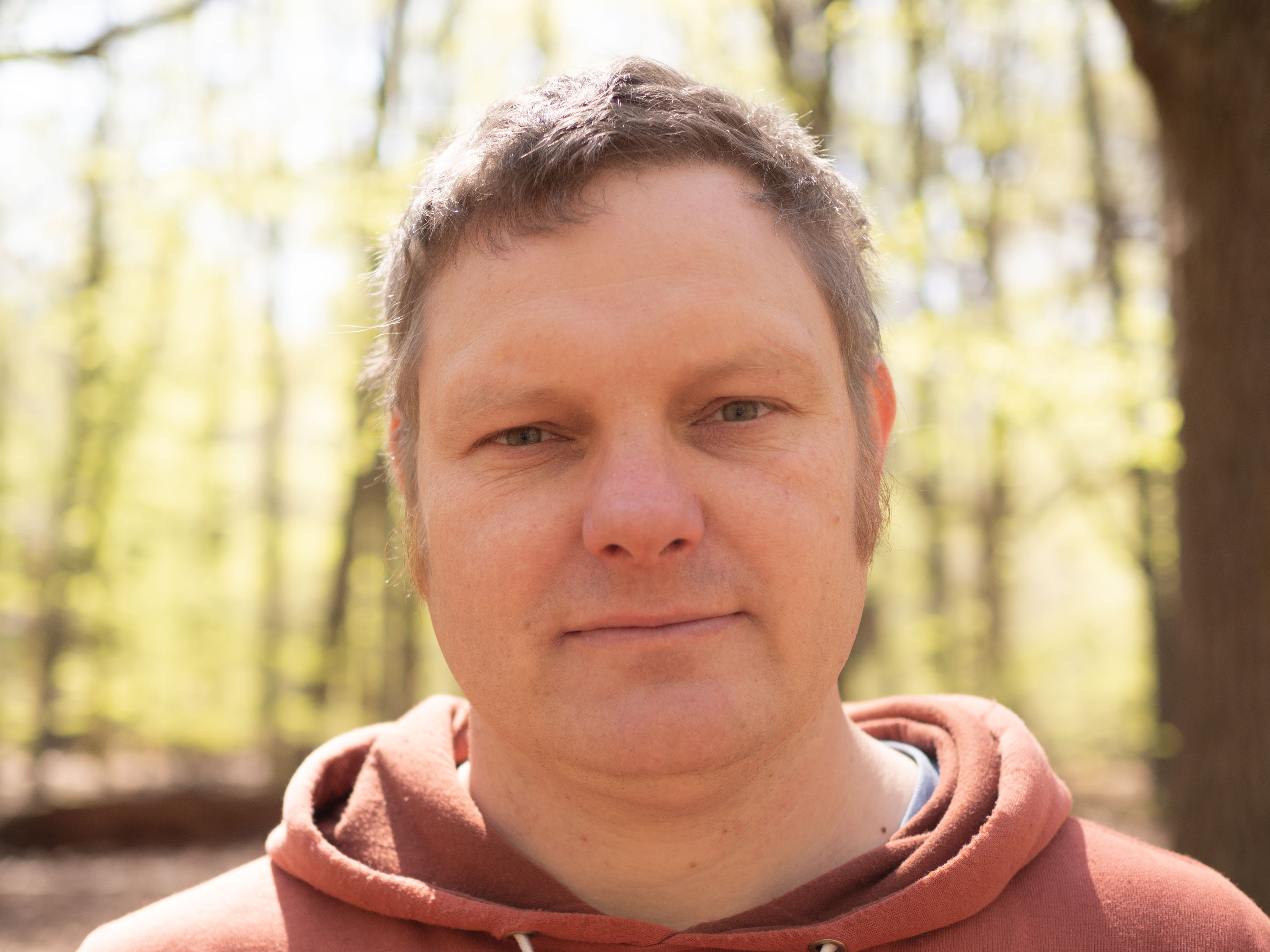
Dr Jonathan Magee is a Lecturer at the School of Curriculum Teaching & Inclusive Education , Monash University, with a focus on sport sociology and social inclusion. His work spans informal sport, refugee resettlement, gender equity, disability studies, and public health. Research Themes: Sport-for-Development, spatial justice, mental health recovery through sport, and diversity management in community sports. Key Collaborators: Ruth Jeanes, Ramon Spaaij, Dean Lusher. Recent Publications (2025-2024) explore informal sport's role in Australian community spaces, Afghan women's agency in sports, and public health contributions. His work aligns with UN Sustainable Development Goals related to inclusion and health. Notable Award: Co-recipient of the 2016 Sociology of Sport Journal Outstanding Article of the Year award.
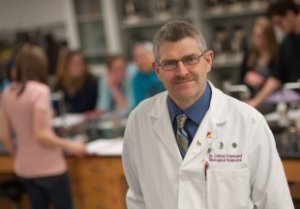
Clifton Franklund is a Professor of Microbiology in the Department of Biological Sciences at Ferris State University's College of Arts, Sciences and Education. He actively teaches microbiology courses while conducting research on bacterial genetics, anaerobic bacteria, and wastewater-based epidemiology, and contributes to student learning assessment and General Education program development. PhD, Medical College of Virginia/Virginia Commonwealth University, Microbiology and Immunology Certificate, James Madison University, Higher Education Assessment Specialist MS, North Dakota State University, Bacteriology BA, Concordia College, Biology, Minor in Philosophy Dr. Franklund has extensive expertise in anaerobic bacteria cultivation, bacterial genetics, bioinformatics, and reproducible research methods. His research bridges traditional microbiology with modern data science approaches, focusing on environmental monitoring and public health surveillance. He's particularly known for applying computational methods to biological problems and innovating in educational assessment practices. His teaching philosophy emphasizes hands-on learning and real-world applications of microbiological principles. Analysis of his recent publications (2021-2023) reveals a strong shift toward applied public health microbiology, with most work focused on wastewater-based SARS-CoV-2 surveillance and water quality testing for recreational environments. Earlier in his career (1990s-2000s), his research centered on bacterial genetics of Pseudomonas aeruginosa and bile acid metabolism in Eubacterium species. This evolution demonstrates his ability to adapt research focus to address contemporary health challenges while maintaining core microbiological expertise. Outstanding Course Assessment (2015) Top 25 STEM Professor in Michigan (2013) Ferris State University Distinguished Teacher of the Year (2012) Softchalk Higher Education Online Challenge Winner (2011) Exemplary On-Line Course, Web Enhanced (2007) Dr. Franklund actively mentors undergraduate researchers, with numerous students co-authoring his recent publications and presenting at regional conferences including the West Michigan Regional Undergraduate Research Symposium and Michigan Society of Toxicology meetings. His research program integrates classroom instruction with real-world public health applications, particularly in wastewater surveillance. He has developed innovative assessment tools and reproducible research methods that enhance both student learning and scientific rigor in his field. His laboratory work focuses on environmental microbiology applications for public health monitoring, particularly wastewater-based epidemiology. Through collaborations with local health departments and student researchers, his team has established ongoing surveillance systems for tracking SARS-CoV-2 variants and water quality indicators in West Michigan. His involvement with Software Carpentry and the Center for Open Science demonstrates commitment to open science practices and computational approaches in microbiological research.
Prof. Dr. Dirk Neumann is a faculty member at the Institute for Information Systems at the University of Freiburg, Germany. His research spans multiple interdisciplinary domains including business analytics, reinforcement learning applications, energy systems, and social policy analysis. He leads research initiatives including the Climate Action Research Lab (CARL) and Business Analytics Research group at the university. Dr. Neumann's research interests focus on the intersection of information systems, operations research, and societal challenges. His work particularly emphasizes: Application of reinforcement learning to operations research problems Energy systems analysis and smart grid optimization Social implications of technology adoption and policy Information processing of fake news and deep fakes Business analytics for social good His recent publications demonstrate a strong trend toward interdisciplinary research that combines technical methodologies with social impact assessment. The articles span fields from political science and environmental policy to operations research and cognitive science, highlighting his ability to bridge technical and social domains. A significant portion of his recent work focuses on energy systems, particularly smart grids and renewable energy integration, while maintaining strong connections to social equity considerations. Dr. Neumann is actively involved in multiple research collaborations as evidenced by his extensive publication record across diverse domains. His work often involves interdisciplinary teams combining expertise from computer science, economics, political science, and social sciences. His research group, the Climate Action Research Lab (CARL), focuses on applying analytical methods to climate-related challenges, while his Business Analytics research examines practical applications of data science in organizational contexts.
Dr. Karen Boyce serves as Senior Lecturer at Ulster University's Belfast School of Architecture & the Built Environment within the Faculty of Computing, Engineering and the Built Environment. With over 30 years of continuous research at FireSERT (Fire Safety Engineering Research and Technology Centre), she specializes in human behaviour during fire evacuations, particularly focusing on vulnerable populations including people with disabilities and elderly occupants. PhD in Fire Safety Engineering (1997), Thesis: "Towards the Characterisation of Disabled Persons for Evacuation" BSc in Mathematics and Computer Science (1984), Queen's University Belfast Her research program integrates experimental fire safety engineering with pedestrian dynamics, examining occupant movement through motion capture studies, funnel-shaped bottleneck analyses, and biomechanical measurements. Key contributions include an EPSRC-funded investigation of World Trade Centre evacuations on 9/11 and development of engineering data for the Society of Fire Protection Engineers Handbook. She has published over 60 research papers addressing evacuation modeling for diverse populations. Analysis of her 2019-2024 publications reveals accelerating focus on microscopic crowd flow modeling, with increasing emphasis on experimental biomechanics and cognitive components of pedestrian movement. Recent work quantifies stop/start processes in pedestrian traffic and examines demographic impacts on evacuation performance, reflecting growing urgency in adapting fire safety standards for aging populations and reduced mobility groups. Dr. Boyce holds significant leadership positions including Chair of the Programme Committee for the International Symposium Human Behaviour in Fire series and membership on editorial boards for Fire Science Reviews and Case Studies in Fire Safety. She serves on the Advisory Board of Fire and Materials and previously co-chaired the Planning Committee for the 12th International Association of Fire Safety Science Symposium (2017). As Principal Investigator for the "Means of Escape for Disabled People" project (2020-2023) and contributor to the HARMONISE infrastructure security initiative (2013-2019), she bridges academic research with regulatory impact. Her external roles include membership on the Northern Ireland Building Regulations Advisory Committee (NIBRAC) Part E technical sub-committee and External Examiner position at Glasgow Caledonian University since 2014.
Aljoscha Neubauer is a Professor at the Institute of Psychology, University of Graz, Faculty of Natural Sciences. He focuses on intelligence research, cognitive enhancement, personality assessment, and educational psychology, with a strong emphasis on self-estimates of abilities, teacher selection, and neuroscientific implications of enhancement technologies. Research networks: Brain and behavior, Human Factor in Digital Transformation Leadership roles: Past President of Austrian Society of Psychology (2016–2020), International Society for Intelligence Research (2014), ISSID (2009–2011) Research Interests Intelligence and its neurocognitive underpinnings Cognitive enhancement acceptance and ethical implications Self-assessment accuracy and metacognition Personality traits in educational and professional contexts Psychometric validation of diversity and creativity assessments Scientific Awards Franz-Emanuel-Weinert Prize (2024) from the German Society for Psychology Lifetime Achievement Award (2022) from the International Society for Intelligence Research William Stern Prize for Differential Psychology (1997) Advising : Mentors doctoral students in intelligence, personality, and educational psychology, with consortia fostering international collaboration and interdisciplinary training via the Research Careers Campus. Regularly contributes to teacher training quality assurance and journal editorial work.
Emmanuela CARBÉ is an Associate Professor in the Department of Humanities at Ca' Foscari University of Venice, specializing in Contemporary Italian Literature (SSD: LICO-01/A). She is a member of the Venice Centre for Digital and Public Humanities (VeDPH) and teaches courses in the Master's Degree in Digital and Public Humanities, including Modeling and Visualizing Textual Data, Digital Literary Studies, Textual Heritage and Digital Preservation, and Storytelling for Hospitality. Her educational background includes Modern Philology studies at the University of Pavia, where she worked as a research fellow for the Pavia Digital Archives project (2013-2017). Prior to joining Ca' Foscari, she worked at the University of Siena from 2018 to 2025 in various research roles. Dr. CARBÉ's research focuses on the intersection of digital technologies and literary scholarship. Her work spans: Digital Humanities methodologies for literary analysis Preservation and study of literary archives in digital formats Authorial philology in the digital age Modern and Contemporary Italian Literature Textual criticism and digital editions Native digital literary archives Her publications and projects demonstrate a strong commitment to advancing digital approaches to literary scholarship, particularly in creating semantic catalogs for literary archives and studying digitally created literary materials. She has directed major projects including the BiGraFo semantic catalog of Franco Fortini's bibliography and the recovery of native digital material from Franco Fortini's last computer stored on floppy disks. Her notable awards include: AIUCD Giuseppe Gigliozzi Award (2020) for the ELA - Eurasian Latin Archive project Gemma Biroli prize (2015) for her doctoral thesis on Cialente's unpublished war diary Dr. CARBÉ actively contributes to the academic community through editorial roles and research leadership. She serves on the editorial boards of "Strumenti critici" and "L'Ospite ingrato" journals, and is the director of ALDiNa (Native Digital Literary Archives). She has secured research funding for projects including Biblio-graph, SCRIPTA, and SOS-DH, demonstrating her ability to lead significant scholarly initiatives. She also serves on the scientific committee of the Franco Fortini Research Center and the Technical-Scientific Committee of the Manuscript Center of the University of Pavia. Her current research involves the study of native digital literary archives and the development of digital methodologies for literary scholarship, continuing her work on digitally created literary archives through her monograph "Digitale d'autore. Macchine, archivi, letteratura" (2023).
Dr. Sara Strauß is a Senior Lecturer in the Institute for English and American Studies at the University of Paderborn, Faculty of Cultural Studies. She serves as Project Coordinator for the EU Jean Monnet Module 'Ireland, Europe and Brexit: Cultural Discourses on European Community' (2021-2024), a significant research initiative funded by the European Union. Her academic profile combines expertise in British and Irish literary studies with cultural analysis of contemporary European issues, particularly focusing on the cultural implications of Brexit. Dr. Strauß's research interests span British and Irish Literature from the Middle Ages to the present, with specializations in Modernism, Contemporary Writing, Narrative Studies, and Cultural Studies with emphases on Ability and Mental Health, the Medical Humanities, Gender, Diversity, Intersectionality, Feminism, and Ireland's relationship with Europe. Her scholarly work demonstrates a consistent interdisciplinary approach that bridges literary analysis with medical humanities and contemporary political discourse. Her recent publications (2020-2023) reveal a strong focus on contemporary Irish writing, dementia narratives, and the cultural implications of Brexit. These works show her commitment to analyzing how literature and cultural representations shape and reflect understandings of identity, community, and political change in post-Brexit Europe. Her research particularly examines the situation of Ireland and Northern Ireland within the transformed European landscape. DGS-Forschungspreis 2012 für das Projekt 'Body and Awareness' Promotionsstipendium der Universität Paderborn DAAD-Forschungsstipendium für Visiting Scholar position at University of East Anglia As an educator, Dr. Strauß supervises graduate students and offers specialized seminars on Ireland and Europe in Transnational Perspective, Contemporary Irish Writing, and Memory and Identity in British and Irish Culture. Her EU Jean Monnet project has created multiple opportunities for student engagement through guest lectures, symposia, and collaborative research activities. She maintains regular office hours for student consultation and encourages direct engagement with her ongoing research projects, particularly those related to Brexit's cultural implications.
Daniel S. Whitman serves as Associate Professor in the Rucks Department of Management at Louisiana State University, where he holds the prestigious Ourso Professorship in Management. His work bridges organizational behavior and psychological science through rigorous quantitative analysis. His educational foundation includes a PhD in Psychology from Florida International University (2009) and a BA in Psychology from the University of Georgia (2006), establishing his expertise in psychological frameworks applied to management contexts. Professor Whitman's research centers on Collective Constructs, Leadership, and Personality and Individual Differences, with particular emphasis on meta-analytic examinations of organizational phenomena. He investigates how collective justice climates affect authority figures' well-being, analyzes the Dark Triad's workplace manifestations through identity-reputation lenses, and synthesizes evidence on emotional intelligence's role in leadership effectiveness. His methodological rigor in meta-analysis provides robust insights into unit-level counterproductive behavior and satisfaction-performance relationships. Recent publications reveal a trend toward integrating personality psychology with organizational theory, notably exploring agglomeration effects on venture performance and monetary incentives' behavioral impacts. His work consistently addresses practical implications for organizational design and personnel management. His scientific recognition includes the distinguished Ourso Professorship in Management, reflecting significant contributions to management scholarship. Professor Whitman actively mentors through collaborative research, evidenced by co-authored publications across institutions. His conference presentations at Academy of Management and Society for Industrial & Organizational Psychology events demonstrate ongoing scholarly engagement and knowledge dissemination.
Fernando Gomez serves as Associate Professor of Modern Languages (Spanish) at Knox College, where he has taught since 2005. His academic journey includes a PhD in Hispanic Languages and Literatures from UC Santa Barbara (2007), an MA in Spanish and Spanish-American Literature from the same institution (2003), and undergraduate studies at California State University-Chico. Professor Gomez's research specializes in monster studies within Spanish Golden Age literature , examining how monstrous figures articulate societal moral boundaries regarding gender, sexuality, race, and political ideologies. His work interrogates the epistemological foundations of 'reality' construction in literary narratives, with particular focus on Pedro Calderón de la Barca's plays and Cervantes' Don Quixote . He investigates how these texts reveal cultural fears and challenge 'us vs them' worldviews. His publication record demonstrates consistent contributions to Hispanic literary scholarship, with significant articles in Symposium and Bulletin of the Comediantes analyzing representations of St. Patrick's Purgatory in 17th-century Spain and reinterpreting Plato's cave allegory in Calderonian theater. The publications reveal a methodological trajectory moving from textual analysis toward broader cultural epistemology. Award Highlights: Philip Green Wright-Lombard College Prize for Distinguished Teaching (2008) Samuel A. Wofsy Memorial Prize for Outstanding PhD Student (2007) Hispanic Language and Literatures Outstanding Graduate Student Performance (2004) Professor Gomez maintains active engagement with the academic community through the Modern Language Association and Phi Kappa Phi honor society. His conference presentations consistently bridge Golden Age scholarship with contemporary social discourse, as evidenced by his 2017 AHCT Symposium paper on gender transgression in La Dama Duende and his 2015 Knox College presentation celebrating Don Quixote 's 400th anniversary. Student testimonials highlight his 'enthusiastic' teaching style and ability to foster inclusive classroom dialogue.
Dr. Elise Filotas is a faculty member in the Department of Science and Technology at TÉLUQ, University of Quebec, where she conducts research on ecological complexity and modeling. As a Regular member of the Centre d'études de la forêt (CEF), she contributes to interdisciplinary research on forest ecosystems, bringing together perspectives from geography, physics, and complex systems science. Dr. Filotas earned her Ph.D. in Geography from the University of Montreal in 2009, following an M.Sc. in Physics from McGill University (2002) and a B.Sc. in Mathematics-Physics from the University of Montreal (2000). Her diverse educational background has shaped her interdisciplinary approach to ecological research. Her research focuses on two main themes: the dynamics of ecological communities in forest landscapes, examining how inter- and intraspecific interactions and dispersal ability influence population dynamics across scales; and the interplay between forest management and forest function, investigating how ecological processes and management practices affect ecosystem dynamics. She develops quantitative, theoretical, and applied modeling tools to address these questions. Analysis of Dr. Filotas' publication record reveals a strong emphasis on ecological modeling, forest management, and the application of complex systems theory to forest ecosystems. Her work frequently examines climate change impacts, forest resilience, biodiversity conservation, and sustainable management practices. She often collaborates with researchers across multiple institutions, reflecting the interdisciplinary nature of her work. Dr. Filotas has supervised multiple graduate students, including McNie, P. (2024 PhD), Gagne, C. (2023 PhD), Laginha Pinto Correia, D. (2018 PhD), and Carpentier, S. (2015 Master's). Her supervision record demonstrates her commitment to training future researchers in ecological modeling and forest management. While specific grant details aren't provided in the available information, Dr. Filotas' consistent publication record since 2008, with recent publications in 2025, indicates active research funding. Her work appears to involve collaborations with researchers across multiple institutions, which typically requires successful grant applications.
Dr. Virginia Wayman Davis is Professor of Music Education at the University of Texas Rio Grande Valley, School of Music. She received her Ph.D. from the University of Arizona in 2005 and brings extensive experience from having taught public school music at all levels before transitioning to higher education. Dr. Davis holds Level I & II certification in both Orff and Kodaly techniques, which are specialized approaches to music education. Her academic journey reflects a deep commitment to both practical teaching experience and scholarly research in music education. Dr. Davis's research focuses on the meaningfulness of music education to students, particularly at the elementary and middle school levels. Her work explores how music education impacts cognitive development, student engagement, and overall educational experiences. She has conducted significant research on the effects of musical ensembles-in-residence on students' auditory discrimination and spatial reasoning skills through a longitudinal study involving 684 elementary students. Her research interests span several important areas in contemporary music education, including: Music education curriculum development Elementary and middle school music education Music teacher training and professional development Popular music in music education Growth mindset and resilience in music learning Student perspectives on music education Dr. Davis has published extensively on these topics, with recent work focusing on the need for more inclusive music education programs that reflect the diverse musical backgrounds of students. Her 2022 publication "A Critical Examination of Percussion and Drums in the Collegiate Curriculum" addresses the gap between popular music in society and traditional Western art music in higher education settings. Among her notable contributions are studies examining music teachers' personal listening habits, the skills important for successful music teaching, and the meaning that middle school students ascribe to their music education experiences. Her research consistently bridges theory and practice, providing valuable insights for music educators at all levels.
Gregor Wolbring is a tenured Full Professor at the University of Calgary's Cumming School of Medicine, specializing in Community Health Sciences and Disability Studies. His affiliations include roles at the Institute for Technology Assessment and Systems Analysis (Karlsruhe) and as a Senior Fellow at the University of Ottawa's Institute for Science, Society and Policy. He leads the WolbPack research group, focusing on disability justice and equity. Research interests center on: Disability and ability studies, exploring societal perceptions of human capabilities. Governance of emerging technologies (AI, neurotech) and their impact on marginalized groups. Equity, diversity, and inclusion (EDI) frameworks in academia and policy. Sustainability, climate justice, and eco-ableism. Accessibility, attitudinal barriers, and disability rights advocacy. His recent publications analyze trends in social equity, technology ethics, and disability inclusion. Works emphasize participatory research, critical pedagogy, and policy-driven solutions to address systemic inequities. Awards and recognition: 2022 University of Calgary EDI Award (Faculty) Tanis Doe Award for disability advocacy (2017) Queen Elizabeth II Diamond Jubilee Medal (2013) Multiple BHSc Research Mentor Awards He actively mentors through the WolbPack, securing grants for projects like SSHRC-funded accessibility mapping and CIHR neurotechnology governance studies. His lab collaborates globally, emphasizing community-engaged scholarship.
Prof. Dr. Andreas Krafft serves as Professor for German Language and its Didactics at the Pädagogische Hochschule Freiburg since 2017. He is affiliated with the Institute for German Language and Literature, the Department of Language Teacher Training, and the Writing Center. Previously, he held positions at Pädagogische Hochschule Karlsruhe (2002-2016) and served as Visiting Professor at Pädagogische Hochschule Ludwigsburg (2016-2017). He completed his doctorate at Goethe-Universität Frankfurt a.M. in 2014 with a dissertation on the development of metalinguistic abilities in children with monolingual and multilingual backgrounds. Prof. Krafft's research focuses on syntax-based orthographic phenomena in German, particularly compound and separate writing and punctuation. He investigates how children develop metalinguistic awareness and how this knowledge can be effectively integrated into language instruction. His work challenges traditional grammar teaching approaches, advocating for methods that connect language reflection with practical language skill development. He is actively involved in the Di.ge.LL research project, exploring how digital tools can enhance cognitive activation in language learning. His publication record shows consistent output in German language didactics, with recent work emphasizing practical classroom applications for diverse learners. His research demonstrates how intuitive writing and punctuation skills develop in children and how instruction can build on these foundations rather than contradicting them. He particularly examines how multilingual students' stronger initial word concepts can inform teaching approaches for all learners. Prof. Krafft actively supervises bachelor's and master's theses, preferring empirical research projects that contribute to practical language teaching. He encourages students to develop research questions from his courses and provides guidance on methodology while recommending additional support from the Writing Center. His teaching philosophy emphasizes connecting theoretical understanding with practical classroom application, particularly regarding how language awareness development can support actual language competence.
Markku Kilpeläinen is a University Lecturer at the Department of Psychology, University of Helsinki, affiliated with the Faculty of Medicine. His work focuses on cognitive psychology, perception, and neuroscience, with particular emphasis on visual system research and human-computer interaction. Dr. Kilpeläinen's research explores: Cognitive abilities and their impact on computer task performance Retinal processing mechanisms in primate and human vision Sound-action and sound-space symbolic associations Comparative studies of human and AI visual recognition capabilities His publications since 2025 demonstrate active engagement in interdisciplinary research spanning psychology, neuroscience, and technology design. Recent work includes studies on parenting interventions in perinatal care and novel methods for XR device legibility testing. In collaborative projects, Dr. Kilpeläinen has contributed to: Human Optimized XR (Multisensory Signals and Meanings) International collaborations with institutions like UC Berkeley Business Finland-funded research initiatives
Dr. Paul Magdon is a Professor of Geoinformation and Forest Planning at the Faculty of Resource Management, HAWK University of Applied Sciences and Arts (HAWK) in Göttingen, Germany. He specializes in geospatial data management, remote sensing applications for forestry, and spatial data infrastructure development. His core research focuses on: Advanced remote sensing techniques (LiDAR, radar, multispectral) Forest inventory methodologies and carbon monitoring Geospatial web platforms and data infrastructure Biodiversity assessment through landscape metrics 3D forest modeling and structural analysis Recent publications demonstrate strong emphasis on: Machine learning applications in tree crown detection Multi-temporal analysis of forest dynamics Integration of airborne/satellite data with ecological studies Development of open-source geospatial tools Cross-scale biodiversity pattern analysis He leads significant research projects including a BMVI-funded initiative on climate-adapted tree species distribution modeling and coordinates spatial data for the CRC 990 ecological research program. He teaches courses on remote sensing image processing, forest inventory, and drone applications at the University of Göttingen. As part of the ForestEye research group and UAV Campus initiative, he develops operational tools like the EFForTS-WebGIS platform for spatial data analysis in tropical rainforest research.