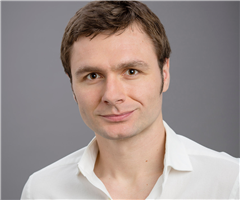
Ivan Dokmanic is an Assistant Professor at the Coordinated Science Laboratory (CSL) within the University of Illinois . His research bridges signal processing , machine learning , and applied inverse problems , with a focus on acoustics, biomedical imaging, and distance geometry. Current Role : Assistant Professor, CSL Email : dokmanic@illinois.edu Research Interests : Dokmanic explores machine learning applications in inverse problems , particularly distance geometry for molecular imaging and acoustics . His work includes unlabeled sensing , where distances between points are known but their arrangement is not. This has implications for powder diffraction , indoor localization , and echo modeling . Article Trends : His recent publications emphasize distance geometry in machine learning , acoustic signal processing , and inverse problem theory . Key areas include molecular imaging , audio encryption , and sensor positioning . Collaborative work spans medical imaging , cyberphysical systems , and geometric invariants . 2016 Google Faculty Award NSF Grant (1 year, $157,079) Students and Grants : Dokmanic mentors PhD students like Puoya, Shuai, and Anadi. His research is funded by the National Science Foundation , Google , VISA , and nVidia .
Prof. Dr. Julia Vogt is an Assistant Professor at the Department of Computer Science at ETH Zürich, leading the Professur für Medizin. Datenwiss. Her research focuses on medical machine learning, data science, and AI applications in healthcare. She specializes in developing interpretable AI systems for clinical decision support, particularly in pediatric diabetes management, medical imaging analysis, and anomaly detection. Her work bridges translational gaps by emphasizing causal approaches and clinical validation. Her academic role includes teaching courses like the Data Science Lab (263-3300-00L/10L) and Topics in Medical Machine Learning (263-5100-00L). Her lab's research spans predictive modeling for nocturnal hypoglycemia, echocardiogram analysis for pulmonary hypertension detection, and multimodal learning in radiology. She also contributes to national pediatric data initiatives like SwissPedHealth. Key technical areas include concept bottleneck models, stochastic AI frameworks, and generative models for medical signal denoising. Her work often emphasizes model interpretability, fairness, and robustness to distribution shifts. She collaborates on projects involving wearable devices for pediatric monitoring and AI-driven rehabilitation tools for post-stroke gait analysis.
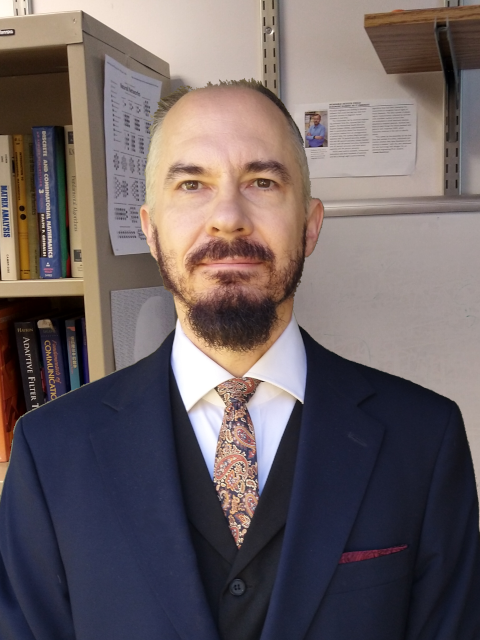
Yasushi Sakurai is a Professor in the Department of Translational Datability at Osaka University's Institute of Scientific and Industrial Research, co-leading the Sakurai and Matsubara Laboratory within the Center for Industrial Science and AI. His research mission focuses on transforming society through real-time prediction of natural and social phenomena using large-scale data analytics, with emphasis on practical technological implementation. His research spans time-series big data analysis, dynamic learning systems, and real-time information provision. Key areas include tensor stream mining, EEG-based healthcare applications, cybersecurity anomaly detection, and multi-omics cancer subtyping. The lab specializes in developing deployable technologies that optimize social activities through predictive modeling of evolving data streams. Recent publications (2023-2025) reveal concentrated innovation in time-series data stream processing, with dominant themes in tensor analytics, frequency-domain forecasting, and causal modeling. His team produces high-impact work accepted at premier AI venues (ICLR, AAAI, KDD, WWW), consistently featuring oral presentations that highlight technical novelty and societal relevance. Scientific Awards: FY2024 Minister of Education, Culture, Sports, Science and Technology Award for Science and Technology (Research Category) for dynamic learning and real-time data stream analysis Professor Sakurai mentors graduate students including Naoki Chihara (DEIM2024 Outstanding Paper Award winner), Yuka Tamura (DEIM2024 Student Presentation Award winner), and Ren Fujiwara. His lab maintains active industry-academia partnerships focused on practical technology deployment, with research directly addressing real-world challenges in healthcare monitoring and cybersecurity. The Sakurai and Matsubara Laboratory operates as a dynamic research unit within Osaka University's Center for Industrial Science and AI, structured around specialized teams for tensor stream analysis, medical data mining, and network dynamics. Current projects emphasize real-time prediction systems with immediate societal applications, supported by strong industry collaboration frameworks.
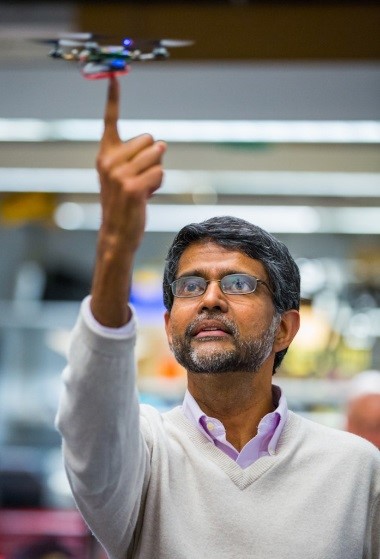
Vijay Kumar is the Nemirovsky Family Dean of Penn Engineering at the University of Pennsylvania, with faculty appointments in the Departments of Mechanical Engineering, Computer and Information Science, and Electrical and Systems Engineering. He is a leading figure in robotics and computer architecture research. Research Interests include robotics, particularly multi-robot systems and micro aerial vehicles (MAVs), as well as computer architecture innovations for machine learning, GPU acceleration, and datacenter efficiency. His work spans theoretical foundations and practical applications in autonomous systems and hardware optimization. Scientific Awards include: 1991 NSF Presidential Young Investigator Award 1996 Lindback Award for Distinguished Teaching 2012 ASME Mechanisms and Robotics Award 2014 Engelberger Robotics Award 2017 IEEE George Saridis Leadership Award Multiple best paper awards at DARS, ICRA, and RSS conferences Editorial Leadership includes serving as Editor of the ASME Journal of Mechanisms and Robotics and Advisory Board Member of AAAS Science Robotics Journal . His GRASP Lab team developed foundational frameworks for micro UAV testbeds and swarm robotics.
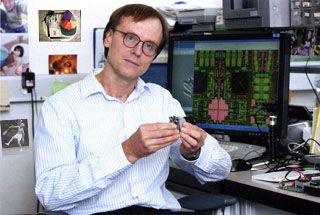
Tobi Delbruck is a titular professor of physics and electrical engineering at ETH Zurich, where he leads the Sensors Group at the Institute for Neuroinformatics (INI) in Zurich, Switzerland. He collaborates closely with Shih-Chii Liu and Giacomo Indiveri as part of the 'hardware groups' at INI. Delbruck has also served as visiting faculty at Caltech and is a Fellow of the IEEE. His work focuses on bio-inspired and neuromorphic event-based sensory processing systems. Professor Delbruck's research spans multiple areas of neuromorphic engineering, with particular emphasis on event-based vision systems and low-power analog VLSI circuits. His work has significantly advanced the field of Dynamic Vision Sensors (DVS), which mimic the human retina's response to changes in brightness rather than capturing full frames. This approach enables extremely low-latency vision processing with minimal power consumption, making it ideal for high-speed applications and robotics. His research has applications in robotics, autonomous systems, and low-power embedded vision. Delbruck is an active contributor to the neuromorphic engineering community, co-organizing the annual Telluride Workshop on Neuromorphic Engineering and serving in leadership roles with IEEE. He has authored numerous influential publications and co-authored books including "Event-Based Neuromorphic Systems" and "Analog VLSI: Circuits and Principles." His jAER (Java Address-Event Representation) project provides open-source tools for real-time event-based sensory processing. Analysis of his recent publications shows a clear trend toward integrating event-based vision with deep learning techniques and applying these systems to practical robotics problems. His scientific achievements have been recognized with multiple awards including: IEEE Fellow Winner of Best Live Demonstration award at ISCAS 2012 Honorable Mention Award from Sensory Systems Technical Committee at ISCAS 2012 Overall Best Student Paper Award and Best Paper Award from Sensory Systems Technical Committee at ISCAS 2010 Winner of the 2006 ISSCC Jan Van Vessem Outstanding European Paper Award Professor Delbruck actively mentors students and has supervised numerous PhD and Master's theses in the areas of neuromorphic engineering and event-based vision systems. His group has secured significant research funding from various sources to support their innovative work in bio-inspired sensory processing. He teaches courses on "Electronics for Physicists II (Digital)" and "Neuromorphic Engineering," helping to train the next generation of researchers in this field. The Sensors Group at INI, which Delbruck leads, operates state-of-the-art facilities for designing and testing neuromorphic vision systems. The group maintains close collaborations with researchers worldwide and has developed several important open-source resources including the jAER project and bias generator design kits. Their work continues to push the boundaries of what's possible with event-based sensory processing, with applications ranging from high-speed robotics to low-power embedded vision systems.
Habib Ullah is an Associate Professor in Data Science at the Norwegian University of Life Sciences (NMBU), Norway, where he conducts research at the intersection of computer vision and machine learning. He is affiliated with the Institute of Data Science under the Faculty of Science and Technology. He has previously held academic positions at COMSATS University Islamabad, Pakistan, and the University of Ha'il, Saudi Arabia, and served as a postdoctoral researcher at The Arctic University of Norway. Educational Background: PhD in Information and Communication Technology (Computer Vision), University of Trento, Italy (2011–2015) MSc in Electronics and Computer Engineering, Hanyang University, South Korea (2007–2009) BSc in Computer Systems Engineering, NWFP University of Engineering and Technology, Pakistan (2002–2006) Habib Ullah's research is primarily focused on computer vision and machine learning, with applications in aquaculture, agriculture, and human behavior analysis. He investigates underwater fish feeding sounds using audio classification, develops zero-shot learning models for recognizing unseen classes, and applies deep learning to detect stress in salmon via skin dot patterns. He also explores AI-driven controlled environment agriculture, leveraging sensors and automation for optimal crop growth. His work emphasizes practical AI solutions for real-world challenges in environmental and biological domains. The recent publications highlight a strong trend in leveraging deep learning for zero-shot and semi-supervised learning, particularly in computer vision tasks such as sea ice classification, crowd anomaly detection, and agricultural monitoring. His research spans remote sensing, biomedical signal processing, and human activity recognition, demonstrating interdisciplinary versatility. The keywords reflect a focus on robust feature representation, knowledge transfer, and model generalization. Scientific Awards and Funding: Industrial PhD grant 'Advancing Controlled Environment Agriculture AI' from The Research Council of Norway (Project number 354125, 2 million NOK, 2024) Team member (Coordinator-Participant) in the Battery Cell Assembly Twin (BatCAT) project funded by Horizon Europe (7 mEuro, 2023–2027) Development of an AI-Based Image Analysis System for Monitoring Plant Status (Funding: 1.8 mNOK, starting 2025) Habib Ullah actively supervises PhD projects and contributes to academic service through editorial and organizational roles. He has served as an Associate Editor for IEEE Access, Guest Editor for MDPI Remote Sensing, and Editor of the Springer book Machine Learning Techniques and Sensor Applications for Human Emotion, Activity Recognition, and Support (ML-SHEARS) . He has also been a Track Chair and Program Committee Member for several international conferences, reflecting his leadership in the academic community. His research is supported by significant grants and collaborative projects, indicating strong institutional and international engagement. He is involved in multiple research teams and projects, including the BatCAT project on battery manufacturing and AI applications in controlled environment agriculture with RIFT LABS AS. His lab work integrates deep learning, sensor fusion, and data analytics for environmental and biological monitoring systems.
Surya Ganguli is an Associate Professor in the Department of Applied Physics at Stanford University, with courtesy appointments in Neurobiology and Electrical Engineering. He serves as Senior Fellow at the Stanford Institute for Human-Centered AI and is affiliated with the Stanford Neuroscience Institute , Bio-X , and Wu Tsai Neurosciences Institute . His research spans theoretical neuroscience, machine learning, and statistical mechanics. Ph.D. , UC Berkeley, Theoretical Physics (2004) M.A. , UC Berkeley, Physics (2000) M.A. , UC Berkeley, Mathematics (2004) M.Eng. , MIT, Electrical Engineering and Computer Science (1998) B.S. , MIT, Physics (1998) B.S. , MIT, Mathematics (1998) B.S. , MIT, Electrical Engineering and Computer Science (1998) His lab explores how higher-level cognitive phenomena emerge from neural network dynamics, focusing on perception, memory, attention, and decision-making . Research themes include statistical mechanics of learning , neural representational geometry , and biologically plausible learning rules . Current work examines nonlinear interactions in neural networks through the Schmidt Science Polymath Award (2023). Key article trends reveal expertise in neural coding limits (2022 Nature), synaptic plasticity models (2022 Neural Computation), and deep learning theory (2022 NeurIPS publications). His 2019 Annual Review chapter on statistical mechanics of deep learning established foundational insights into network criticality. Scientific Awards : NSF Career Award (2019) Simons Foundation Investigator (2016) McKnight Scholar Award (2015) James S. McDonnell Foundation Scholar (2014) Sloan Research Fellow (2013) As advisor, he mentors 10+ doctoral students across Applied Physics, Neurosciences, and Computer Science, including Vamshi Balanaga and Mason Kamb. His lab collaborates with experimental teams at Stanford and beyond, supported by grants from NSF , Simons Foundation , and Swartz Foundation . The Neural Dynamics & Computation Lab unites physicists, mathematicians, and neuroscientists to decode cognition through interdisciplinary methods.
Alexandros G. Dimakis is a Professor at the University of California, Berkeley's Department of Electrical Engineering and Computer Sciences (EECS), College of Engineering. He is also Co-Director of the National AI Institute for Foundations of Machine Learning and Co-Founder of BespokeLabs.ai. PhD (2008) and Diploma (2003) in Electrical Engineering His research focuses on Generative AI , Information Theory , and Machine Learning . Recent work includes advancements in diffusion models, compressed sensing, and causal inference. His publications (150+) emphasize inverse problems, neural network verification, and generative model optimization. Recent publications highlight trends in Diffusion Models for inverse problems, Language Model Scaling , and 3D-Aware Generative Systems . Collaborative projects span biomedical applications, large-scale dataset curation (Datacomp-LM), and parameter-efficient model fine-tuning. Scientific Awards : IEEE Fellow (2022) James Massey Award (2018) NSF CAREER Award (2011) Google Research Faculty Award Best Paper awards at UAI workshops Eli Jury Dissertation Award (UC Berkeley) He advises PhD students in generative modeling, compressed sensing, and information theory. His research group collaborates with institutions like MIT, NYU, and IBM Research. Former students hold positions at Google, Amazon, and academic institutions like Purdue University.
Robert Dick is a Professor in the Department of Electrical Engineering and Computer Science at the University of Michigan, part of the College of Engineering. He previously held roles as Associate Professor at Northwestern University and Visiting Professor at Tsinghua University. He earned his Ph.D. from Princeton University and a Bachelor's degree from Clarkson University. His research focuses on Embedded Systems, Learning Dynamics, Efficient Machine Learning, Privacy, and Censorship Resistance. Key themes include defining problems with correct costs/constraints, broadening access to information technology, mitigating negative tech impacts, and solving inference problems with limited resources. He leads the Embedded Systems Graduate Program and is a member of the Michigan Integrated Circuits Laboratory (MICL). His work spans thermal management, energy-efficient computing, and low-power wireless networks. Notable contributions include innovations in embedded system design, machine vision frameworks, and sensor networks. Courses taught include EECS 507 (Embedded Systems Research), EECS 373 (Embedded System Design), and ENGR 100 (Autonomous Systems). His recent publications emphasize AI model analysis, energy-efficient networks, and environmental sensing. Projects include MemX (attention-aware wearable tech) and LoRa-based LPWAN protocols. Dick co-founded Stryd, a company commercializing embedded systems innovations.
Berrak Sisman is an Assistant Professor in the Department of Electrical and Computer Engineering at Johns Hopkins University, affiliated with the Data Science and AI Institute and the Center for Language and Speech Processing (CLSP). She leads the Speech & Machine Learning Lab (SmILe Lab), focusing on AI-driven speech technologies. She received her PhD from the National University of Singapore in 2020 and was previously a tenure-track faculty member at the University of Texas at Dallas (2022–2024). Research Interests: Her work spans artificial intelligence, speech synthesis, voice conversion, emotion analysis in speech, medical speech applications, and secure speech technology. She develops neural models for expressive and adaptive speech processing. Publications: Her recent articles (2024–2025) emphasize speech emotion recognition, zero-shot prosody control, accent conversion, and disentangled representations in TTS, reflecting a focus on cross-modal learning, robustness, and real-world applications. Awards & Grants: NSF CAREER Award (2024) Amazon Faculty Research Award (2022) Singapore Ministry of Education Award (2021) A*STAR Singapore International Graduate Award (2016–2020) Leadership: She directs the SmILe Lab, recruiting PhD/Master’s students for projects in neural speech modeling. Her grants include NSF and Amazon funding for voice conversion and emotion synthesis research.
Alexei A. Efros is the Howard Friesen Professor in the EECS Department at UC Berkeley, affiliated with the Berkeley Artificial Intelligence Research (BAIR) Lab. Previously, he spent a decade at CMU's Robotics Institute and held a postdoc at the University of Oxford under Andrew Zisserman. He collaborates with INRIA/École Normale Supérieure in Paris. His research focuses on self-supervised learning, generative models, and visual data mining, with applications to robotics, computational photography, and art. Education & Academic Roles: Postdoc at Oxford (with Andrew Zisserman), faculty at CMU (2005–2015), currently at UC Berkeley. Teaches courses like CS 180/280A (Computer Vision) and CS 280 (Graduate Computer Vision). Research Interests: Self-supervised learning, generative models (e.g., diffusion models, inpainting), visual commonsense, and cross-modal reasoning. His work bridges computer vision and graphics, emphasizing data-driven approaches. Recent projects include Visual Jenga, Diffusion Models as Data Mining Tools, and Prioritized Generative Replay. Grants & Labs: Leads the Efros Research Group, advised over 40 PhD students (e.g., Jun-Yan Zhu, Tinghui Zhou). Collaborates with institutions like INRIA and NVIDIA. Active in grants related to AI, vision, and robotics. Labs/Teams: BAIR Lab (UC Berkeley), former affiliations with CMU Robotics Institute and Willow Team (INRIA/ENS Paris). Current lab focuses on generative AI, 3D perception, and visual reasoning.
Hadi Daneshmand is an Assistant Professor of Computer Science at the University of Virginia, specializing in theoretical machine learning. Prior to joining UVA, he completed postdoctoral research at FODSI (jointly hosted by MIT and Boston University), Princeton University, and INRIA Paris following his 2020 PhD in Computer Science from ETH Zurich. Education Ph.D. in Computer Science, ETH Zurich, 2020 His research bridges computational perspectives and neural network theory, focusing on theoretical guarantees for deep learning systems. Key interests include understanding neural network mechanisms through optimization frameworks, foundations of machine learning, and stochastic processes in learning systems. His work reveals how neural networks implement computational primitives like gradient descent and optimal transport through architectural components. Recent publications demonstrate a cohesive trajectory analyzing transformers' computational capabilities, batch normalization's theoretical properties, and optimization dynamics in deep learning. His studies consistently establish formal connections between neural architectures and classical optimization methods, particularly in in-context learning scenarios. Scientific Awards Stanford CPAL Rising Star Award Spotlight award at ICML In-context Learning workshop (2024) Postdoc fellowship of the Foundation of Data Science Institute (FODSI) Early Postdoc Mobility grant from SNSF Best poster award at Max Planck ETH deep learning workshop (2016) Reviewer awards for ICML (2022, 2019) and NeurIPS (2020) Dr. Daneshmand actively mentors graduate students, with advisees including PhD candidates at ETH Zurich who have secured positions at Harvard, Yale, Meta, and NVIDIA. His research is supported by competitive grants including the SNSF Early Postdoc Mobility award and FODSI fellowship. He serves the community as Area Chair for NeurIPS 2023-2024 and ICML 2025, and regularly reviews for top machine learning conferences and journals. He teaches specialized courses including "Neural Networks: A Theory Lab" at UVA, emphasizing experimental-theoretical connections in neural computation through hands-on coding exercises.
Jee Choi is an Assistant Professor in the Department of Computer and Information Science within the College of Arts and Sciences at the University of Oregon. His research focuses on developing high-performance algorithms for big data analytics, particularly in tensor decomposition and parallel computing systems. Education: PhD in Electrical and Computer Engineering, Georgia Institute of Technology, 2015 MS in Electrical and Computer Engineering, Georgia Institute of Technology, 2004 BS in Electrical and Computer Engineering, Georgia Institute of Technology, 2000 Research Interests: Dr. Choi specializes in High Performance Computing with expertise in parallel algorithm design, performance modeling, and energy efficiency. His work targets Tensor Decomposition & Data Mining for big data, developing scalable solutions for sparse and dense tensor computations. He advocates leveraging HPC systems to transform massive datasets into societal benefits through efficient data mining techniques. Publication Trends: Choi's recent publications (2021-2025) demonstrate consistent innovation in tensor decomposition methodologies, with increasing focus on adaptive storage (Alto), streaming data factorization, and energy-aware autotuning. His work spans GPU clusters, distributed systems, and emerging architectures, maintaining strong connections to real-world big data challenges while advancing theoretical algorithm design. Professional Background: After completing his PhD under Richard Vuduc at Georgia Tech (notable for SpMV GPU autotuning and Energy Roofline Model), Choi conducted DoD-funded research on tensor decomposition at IBM Watson Research Center (2015-2018) before joining the University of Oregon faculty.
Teemu Roos is a Professor at the Department of Computer Science , University of Helsinki , and a Principal Investigator for the Complex Systems Computation Group under the Helsinki Institute for Information Technology. He serves as a Supervisor for the Doctoral Programme in Computer Science and leads multiple research initiatives, including Distributed AI in Supercomputing , AI & Kids , and Generation AI . Dr. Roos also holds a Docent title in Computer Science. His research spans Artificial Intelligence , Machine Learning , and Data Science , with a focus on AI education , graph neural networks , Bayesian modeling , and health informatics . He has pioneered tools like Elements of AI , a free online course now translated into 22 EU languages, and explores the ethical implications of AI-generated content in authorship and inventorship. The 15 most recent publications highlight applications in environmental forecasting (e.g., Mediterranean Sea via graph-based deep learning), healthcare (e.g., skin cancer detection with transfer learning), and social media analysis (e.g., explainable AI platforms for K-12 education). Methodologically, his work advances clustering algorithms , dimensionality reduction , and approximate nearest neighbor search . Scientific Awards: Cor Baayen Award (2009) Nokia Foundation Recognition Award (2019) Best Paper Honorable Mention Award (2013) ICT Influencer of the Year 2019 (Vuoden TiVi-vaikuttaja 2019) World Summit AI's Top-50 Innovators in 2020 Dr. Roos has supervised 2 doctoral students and contributed to 163 academic activities , including invited talks at MIT, University of Cambridge, and the Finnish Institute in Rome. He has secured funding from the Academy of Finland and the Strategic Research Council, focusing on projects like Fast AI-assisted Space Environment Prediction and Urban Exerciser .
Anna Levina is an Assistant Professor for Computational Neuroscience at the University of Tübingen , affiliated with the Department of Computer Science under the Faculty of Science. Her research focuses on the self-organization of neuronal activity, critical dynamics in neural networks, and the excitation/inhibition balance in cortical circuits. Current positions: Assistant Professor (since 2018), Group Leader (2017-2018), Equality Officer (Computer Science) Previous roles: IST Fellow (2015-2017), Associated Researcher (2011-2015), Postdoc/PI (2011-2015), Postdoc (2008-2011) Her research integrates mathematical modeling , statistical physics , and computational neuroscience to study criticality phenomena, neural avalanches, and adaptive network dynamics. Key interests include: Self-organized criticality in neural systems Excitation/Inhibition balance mechanisms Network topology and dynamics Timescale analysis in neural processing Stochastic modeling of neural activity Recent publications reveal trends in understanding critical dynamics across biological and artificial networks, with applications to memory systems, sensorimotor integration, and disease modeling. She has received recognition as an IST Fellow .