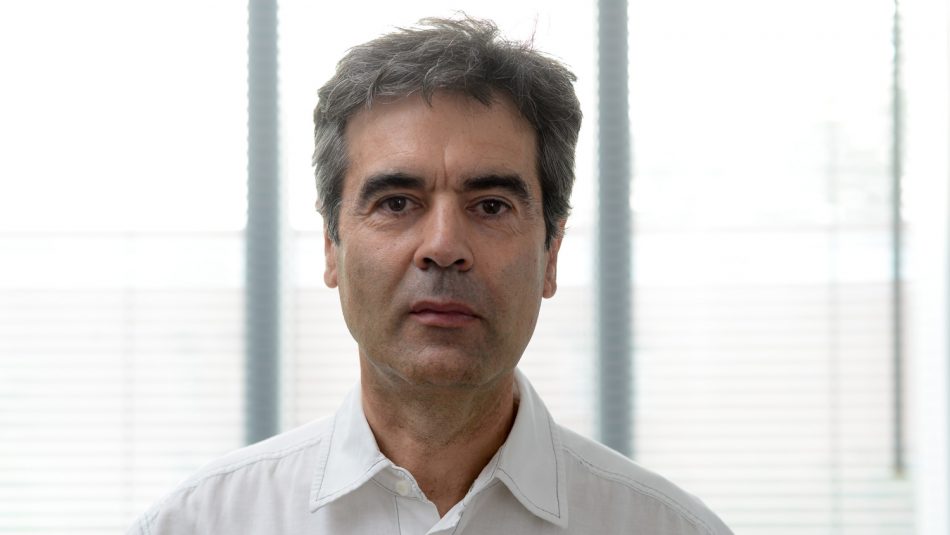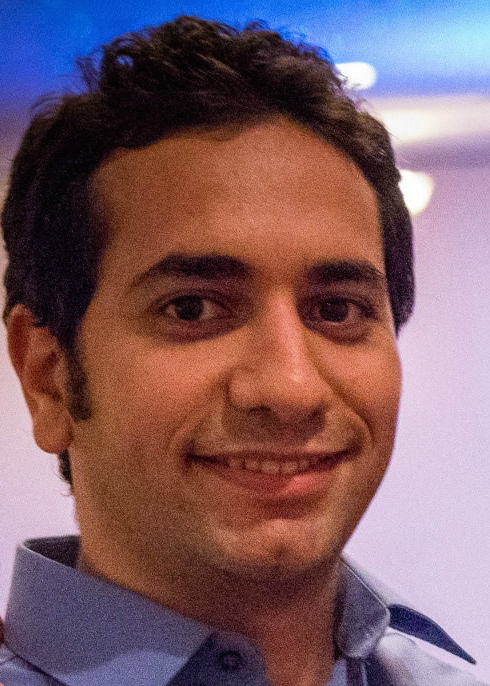
Peter Oswald is a Professor and holds a Bonn Research Chair at the Hausdorff Center for Mathematics, affiliated with the Institute for Numerical Simulation at the University of Bonn. His research lies at the intersection of approximation theory, function spaces, and numerical methods for partial differential equations, with a focus on wavelets, splines, and multiscale computational techniques. University: University of Bonn School: Hausdorff Center for Mathematics Department: Institute for Numerical Simulation Email: oswald@ins.uni-bonn.de His research interests include Approximation Theory, Function Spaces and Applied Harmonic Analysis, Multiscale Methods in Scientific Computing, Numerical Methods for PDEs, Finite Elements, Splines, Wavelets, and Mathematical Modelling. These areas reflect a deep commitment to both theoretical foundations and computational applications in modern applied mathematics. The analysis of his recent publications reveals a consistent focus on iterative and subspace correction methods, preconditioning in sparse grid contexts, function space theory (especially Besov and Hilbert spaces), and the mathematical underpinnings of finite element and wavelet-based discretizations. His work often bridges pure and computational mathematics, with increasing exploration of stochastic and randomized algorithms in numerical linear algebra and high-dimensional problems. Peter Oswald has not been mentioned as having formal advisees in the provided texts, and no scientific awards are listed. However, his extensive collaboration with Michael Griebel and publication in prestigious journals and book series (e.g., Springer Series in Computational Mathematics) underscores his active and influential role in the mathematical community. He is involved in advanced research on space splittings, iterative solvers, and high-dimensional function approximation, contributing to both theoretical developments and practical computational frameworks. His work supports broader efforts in scientific computing, uncertainty quantification, and the numerical solution of complex physical models.