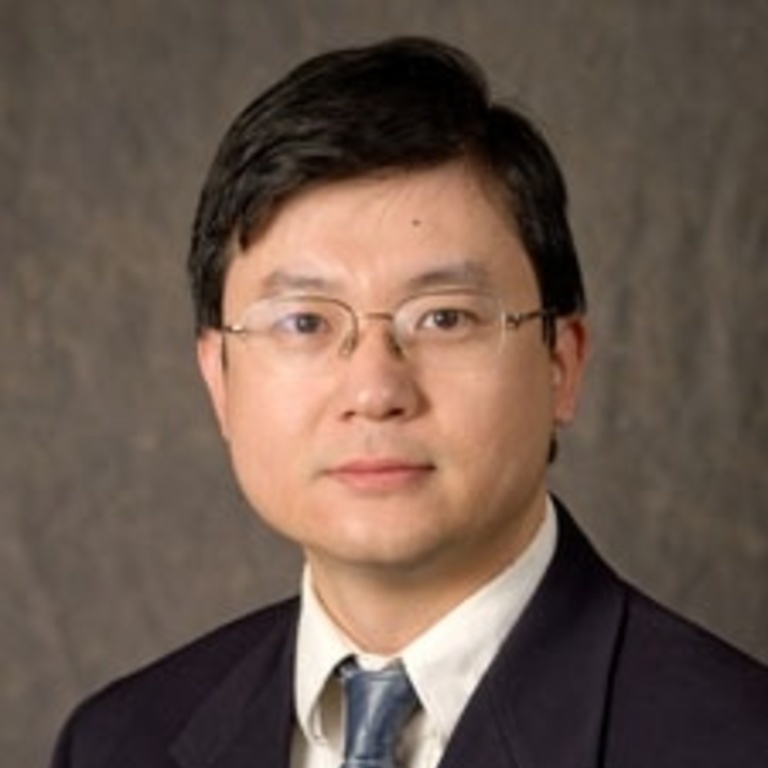
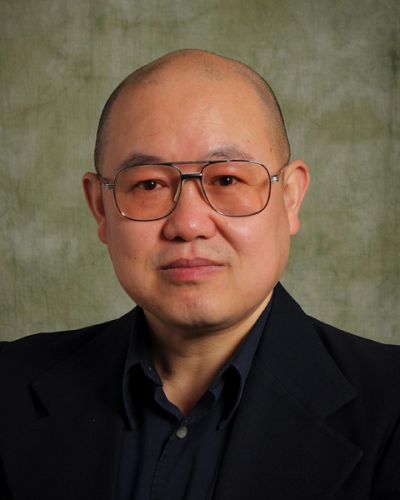
Professor Paresh Date is a faculty member in the Department of Mathematics at Brunel University London, College of Engineering, Design and Physical Sciences. He holds a PhD from the University of Cambridge and an MTech from the Indian Institute of Technology Mumbai. His research focuses on Mathematical Finance , Nonlinear Filtering , and Power Systems Optimization , with applications in financial portfolio modeling, energy market forecasting, and stochastic control systems. He authored the book 'Nonlinear Estimation: Methods and Applications with Deterministic Sample Points' (Taylor & Francis, 2019). Recent publications analyze exchange rate modeling via Kalman filters, basket option pricing, wind power risk hedging, and sparse-grid filtering techniques. His work combines financial engineering with mathematical control theory, often addressing measurement delay and uncertainty. Scientific awards include Fellow of the Institute of Mathematics and its Applications Teaching includes Year 1 Calculus (2014-2021), Year 2 Analysis (2017-2018), and Financial Mathematics MSc courses on interest rate theory and financial markets (2018-2022). He has supervised 11 PhD and 3 MPhil students to completion.
Roni Sengupta is an Assistant Professor in the Department of Computer Science at the University of North Carolina at Chapel Hill, where she leads the Spatial & Physical Intelligence (SPIN) Lab. Her academic journey includes a Ph.D. from the University of Maryland (2019), a postdoctoral position at the University of Washington (2019-2022), and an undergraduate degree in Electronics and Tele-Communication Engineering from Jadavpur University in India. Her research lies at the intersection of Computer Vision and Computer Graphics, with four primary themes: Inverse Rendering : Recovering physical scene properties like geometry, material reflectance, and lighting 3D Perception from Endoscopy : Monocular depth estimation and SLAM for medical imaging applications Inverse Physics : Recovering 3D geometry and physical properties from sparse video inputs Generative Facial Editing : Developing personalized, training-free methods for facial attribute manipulation Her work has practical applications in visual content creation, telepresence, AR/VR, robotics, and healthcare, with several technologies adopted by companies including Microsoft. Dr. Sengupta's publication record shows a clear trajectory toward increasingly sophisticated inverse problem solving, with recent work (2023-2025) focusing on neural approaches to inverse rendering, medical imaging applications, and personalized generative models. Her research demonstrates strong interdisciplinary connections between computer vision, graphics, and medical applications. Her scientific recognition includes: NIH NIBIB Trailblazer Award for New and Early Stage Investigators (2024) UNC Junior Faculty Development Award (2024) UNC CS Student Association Excellence in Teaching Award (2023) CVPR Best Student Paper Honorable Mentions (2021) Dr. Sengupta actively mentors a diverse team of researchers, including 5 current PhD students, 3 MS students, and several undergraduates. Her former students have gone on to positions at Google, Kitware, Databricks, and Capitol One. She has secured significant research funding, with recent work supported by NIH and industry partners. Her teaching portfolio includes undergraduate and graduate courses in computer vision, 3D generative models, and neural rendering. The SPIN Lab maintains strong industry connections, with research collaborations and technology adoption by Microsoft, NVIDIA Research, and Snapchat Research. The lab's work on background matting has been particularly influential, receiving recognition at CVPR 2021 and being adopted by multiple companies.
Han Özsöylev serves as an Assistant Professor in the Department of International Finance at Özyeğin University's School of Business since 2021. His distinguished academic career includes joint faculty appointments at Queen Mary University of London (2019-2022), Koç University (2012-2021), and the University of Oxford (2004-2018), along with visiting positions at Johns Hopkins University, Sabancı University, and UC Berkeley. Dr. Özsöylev earned his Ph.D. in Economics from the University of Minnesota (2004) and B.Sc. in Mathematics from Bilkent University (1999). His educational background established the foundation for his interdisciplinary research approach bridging finance and economics. His research program centers on asset pricing , market microstructure , uncertainty and asymmetric information , and economic and financial networks . Özsöylev's theoretical frameworks often integrate network theory with behavioral finance principles to explain market anomalies, particularly focusing on how information diffusion and ambiguity aversion shape trading behavior and asset valuations. His work has established critical connections between network topology and price formation mechanisms. Analysis of his publication record reveals consistent contributions to top-tier finance and economics journals, with recent work emphasizing regulatory impacts on asset returns (2024), ambiguity in financial decision-making (2023), and inflation's behavioral effects in emerging markets (2023). His research demonstrates methodological sophistication through both theoretical modeling and empirical analysis of large-scale market datasets. Honors include: Editor's Choice/Lead Article designation in Review of Asset Pricing Studies (2024) Abstracted in CFA Digest (2014) Invited summary article in Finance & Accounting Memos (2016) Dr. Özsöylev teaches advanced courses including Corporate Finance (Executive MBA), Strategic Financial Management (Executive MBA), Theoretical Asset Pricing (Ph.D.), and Economic Theory (Ph.D.). His academic service includes previous roles as a governing body fellow at Linacre College, Oxford and membership at the Oxford-Man Institute of Quantitative Finance. While specific grant details aren't provided, his research output suggests sustained funding support for complex modeling projects and data acquisition.
Marcel Nutz is a Professor at Columbia University in the Department of Statistics , with secondary affiliations in the Department of Mathematics and the Data Science Institute . He holds a PhD in Mathematics from ETH Zurich and is recognized for his contributions to quantitative finance and optimal transport . His research integrates stochastic control , game theory , and machine learning to address problems in financial markets and probabilistic modeling. Key themes include martingale transport , regularized optimal transport , and mean-field analysis , with applications to market microstructure and risk management . Marcel’s recent work focuses on regularization techniques to mitigate the curse of dimensionality in optimal transport, stability analysis of variational methods, and martingale Schrödinger bridges for portfolio optimization. His publications emphasize numerical algorithms like Sinkhorn’s method and theoretical guarantees for financial models. Scientific Awards: IMS Medallion Award Alfred P. Sloan Fellowship IMS Fellow Marcel acknowledges support from five NSF grants and the Center for Digital Finance and Technologies . He currently serves on the editorial boards of Annals of Applied Probability (AAP), Mathematical Finance (MF), and others, with past roles at Stochastic Processes and their Applications (SPA) and Finance and Mathematics (FMF).
Yong Chen serves as a Professor in the Department of Industrial and Systems Engineering within the College of Engineering at the University of Iowa. His academic appointment centers on advancing methodologies in industrial engineering with emphasis on system reliability and optimization across diverse applications. Chen's research spans Industrial Engineering, Reliability Engineering, and Maintenance Optimization, with significant contributions to Statistical Process Control, Bayesian Statistics, and Machine Learning applications. His work develops novel frameworks for condition-based maintenance, multi-component system optimization, and IoT-enabled industrial analytics, addressing critical challenges in manufacturing quality control and system reliability. The integration of stochastic modeling and data-driven approaches characterizes his methodological innovations. Analysis of his 15 most recent publications (2016-2025) reveals a dominant research trajectory in Markov decision processes for maintenance optimization (35% of publications), Bayesian modeling for process monitoring (27%), and IoT/data analytics applications (13%). His work demonstrates increasing interdisciplinary expansion from traditional manufacturing systems into healthcare (dementia care analysis) and renewable energy sectors, while maintaining core focus on reliability engineering fundamentals. Scientific awards: No scientific awards were mentioned in the provided text. Advising and grants: The available documentation contains no information regarding doctoral students, postdoctoral researchers, or research funding sources. His academic profile focuses exclusively on research outputs and methodological contributions without reference to mentoring activities or sponsored projects.
Associate Professor Deepayan Chakrabarti is affiliated with the McCombs School of Business at the University of Texas at Austin. He also holds an affiliation as an Amazon Scholar. McCombs School of Business, UT Austin Amazon Scholar His research spans Machine Learning and Data Mining, with a focus on analyzing large graphs, social networks, robust optimization, and financial networks. Key projects include: Trading Networks Portfolio Optimization Low-rank Models Robust Linear Classification Network Embeddings in Sparse Networks He has developed open-source software tools like SURE (Fair Classification), AlphaRob (Portfolio Construction), NEWS (Network Embeddings), and ROLIN (Robust Classification). Prospective Ph.D. students interested in working with him should indicate this in their Statement of Purpose when applying to UT Austin, as direct contact is discouraged.
Hyukjun Gweon is an Assistant Professor in the Department of Statistical and Actuarial Sciences at Western University . His research focuses on Sparse-labeled Data Analysis , Predictive Model Assessment , and Predictive Analytics in Actuarial Science . Research Areas: Sparse-labeled Data Analysis Predictive Model Assessment Predictive Analytics in Actuarial Science Automated coding for text/survey data Publications highlight methodological advancements in active learning, bias correction, multi-label classification, and reliability assessment for probabilistic models. Applications span insurance valuation, time series analysis, and survey methodology.
Giuseppe Carlo Calafiore is a Full Professor at the Department of Electronics and Telecommunications (DET) of the Polytechnic University of Turin , where he has been since 1998. He has held visiting positions at institutions like Stanford University , University of California at Berkeley , and Vietnam National University . His research focuses on convex optimization , control systems , and randomized algorithms , with applications in finance , robotics , and machine learning . Education : Laurea in Electrical Engineering (1993) and Ph.D in Information and System Theory (1997) from Politecnico di Torino. Research Interests : Span large-scale optimization , robust portfolio optimization , and distributed algorithms , with emphasis on sparsity-based methods and data-driven control for autonomous systems. Recent Publications include works on nonlinear model predictive control , financial network robustness , and adaptive gain control in population games. His scientific awards include the IEEE CSS George S. Axelby Outstanding Paper Award (2008) and Fellow of the IEEE (2018) . He has advised students in artificial intelligence and communications engineering programs. His projects include research on smart energy allocation and financial risk modeling .
Robert J. Vanderbei is a full Professor in the Department of Operations Research and Financial Engineering (ORFE) at Princeton University. He also holds courtesy appointments in Mathematics, Astrophysics, Computer Science, Mechanical and Aerospace Engineering, and Applied Mathematics, and is a member of the Bendheim Center for Finance. He served as department chair from 2005 to 2011. Education: BS in Chemistry and MS in Operations Research and Statistics from Rensselaer Polytechnic Institute (1976) PhD in Applied Mathematics from Cornell University (1981) Vanderbei's research spans optimization, applied mathematics, and astrophysics. He is a pioneer in linear and semidefinite programming, having co-developed the influential HKM algorithm and contributed to robust optimization. His work at Bell Labs led to patented algorithmic enhancements. He has also made significant contributions to space telescope design for exoplanet detection and is an accomplished astrophotographer. His interdisciplinary work bridges theoretical research and real-world applications in finance, engineering, and astronomy. His recent publications reflect a strong trend in interdisciplinary research, combining mathematical optimization with astrophysical applications, data visualization, and educational outreach. Key themes include interior-point methods, robust optimization, space imaging, and 3D astronomical visualization. His work continues to influence both theoretical and applied domains. Author of a widely adopted textbook on Linear Programming Developer of the LOQO nonlinear optimization software Co-author of popular science books: Sizing Up The Universe and Welcome To The Universe in 3D Creator of the 'Purple America' election visualization Vanderbei has been actively involved in academic leadership and public engagement. His research has been supported by various grants, particularly in optimization and space science. He has mentored students and collaborated widely across disciplines, though specific advisees are not listed. He led the ORFE department for six years and continues to contribute to curriculum development and interdisciplinary initiatives. He maintains a strong presence in scientific and public communities through his astrophotography gallery and educational outreach. His Fitzrandolph Observatory supports both personal and educational imaging projects. He was formerly a glider pilot and flight instructor, demonstrating a lifelong passion for aerospace and observational science.
Krzysztof Podgórski is a Professor and Head of the Department of Statistics at Lund University School of Economics and Management (LUSEM). His research spans applied probability, statistics, and interdisciplinary applications in engineering, finance, and environmental sciences. Key Research Areas: Multivariate non-Gaussian stochastic models Statistical analysis of spatio-temporal random fields Distributions at random crossing events Applications: Mechanical engineering (road modeling) Ocean engineering (wave/ship reliability) Financial econometrics (market linkages, risk analysis) Actuarial sciences (non-Gaussian claims) Methodological Contributions: Include ergodic theory of stochastic processes, extreme value theory, and computational statistics. His recent work explores functional data analysis with periodic splines and matrix variate distributions. Collaborative Networks: Extensive partnerships across theoretical and applied disciplines, with projects involving road dynamics, stochastic fields, and uncertainty quantification.
Jacek Gondzio is a Professor in the School of Mathematics at the University of Edinburgh. He received his M.Eng. in Electronics (1983) and PhD in Automatic Control and Robotics (1989) from Warsaw University of Technology. His career includes positions at the Polish Academy of Sciences (1989–1993), University of Geneva (1993–1998), and the University of Edinburgh since 1998, where he progressed from Lecturer to Professor. Research Interests: Gondzio's work spans large-scale optimization techniques, including interior point methods, sparse matrix computations, parallel algorithms, and applications in finance and engineering. Key focus areas include: Development of efficient solvers (HOPDM, OOPS) for linear/quadratic/nonlinear programming Matrix-free methods and preconditioning for massive-scale problems Applications in quantum information, tomography, structural design, and financial planning Publication Trends: His recent articles emphasize scalable algorithms for optimization, including proximal methods for semidefinite programming, interior-point innovations, and applications in medical imaging and transport. Work frequently integrates regularization, decomposition techniques, and structure-exploiting linear algebra. Awards: EUROPT Fellow (2019) for contributions to continuous optimization Grants & Advising: Current projects include EPSRC-funded work on building structure optimization (EP/N019652/1), Google-funded LP solvers, and risk modeling with Standard Life Investments. He has supervised 16+ PhD students on topics ranging from interior point methods to machine learning optimization. Software includes HOPDM, PDCGM, and the parallel solver OOPS. Leadership: Organizes workshops on optimization (e.g., COA, Advances in Preconditioners series) and serves on editorial boards for Mathematical Programming Computation , Computational Optimization and Applications , and other leading journals.
Dr. Luke Mazur is an active Research Fellow at the School of Mathematics and Applied Statistics, University of Wollongong, Australia. His work focuses on computational methods for statistical modeling in agricultural and financial contexts. Education: Bachelor of Mathematics and Economics (First Class Honours, 2014), PhD in progress Key Affiliation: Centre for Bioinformatics and Biostatistics at University of Wollongong (CBaDSSPI) Research Interests: Mazur specializes in optimizing linear mixed models for datasets from sustainable primary industries. His methodology emphasizes: Exploitation of sparse matrix techniques Multi-threaded computational approaches Integration of efficient third-party libraries Modern coding practices for statistical analysis Publishing Trends: His research bridges computational statistics and practical applications, with recent work covering financial network analysis and data privacy techniques. Earlier publications focus on statistical formulations for agricultural trials and multivariate data analysis. Laboratory Affiliation: Currently works with the Computational Biology and Data Science Solutions for Primary Industries (CBaDSSPI) research team.
Ming An is an Associate Professor in the Department of Chemistry at Binghamton University, specializing in organic, bio-organic, medicinal, and pharmaceutical chemistry. His research bridges chemical biology and drug discovery, with a focus on innovative methodologies in network connectivity analysis and uncertainty quantification. He holds a PhD from the University of California, Berkeley and a BS from the University of Michigan, Ann Arbor. Education PhD in Chemistry, University of California at Berkeley BS in Chemistry, University of Michigan at Ann Arbor Research Interests Dr. An’s work integrates organic synthesis with biological systems, exploring drug discovery pathways through advanced chemical methodologies. His recent projects apply machine learning to network analysis for biological systems and epidemiological modeling, alongside studies in manufacturing process optimization and biomass conversion technologies. Publications Overview His articles highlight interdisciplinary approaches: from Bayesian network inference in small datasets to pandemic intervention strategies using control theory. He also investigates machining process uncertainties and biomass pretreatment techniques for biofuel production, demonstrating a commitment to both fundamental and applied research. Advising & Grants Currently accepting BCCB graduate students. While specific grants or lab affiliations are not detailed, his research portfolio suggests active engagement in collaborative, cross-disciplinary projects.
Pietro Lovato serves as a Temporary Professor in the Department of Computer Science within the School of Science and Engineering at the University of Verona. His academic work focuses on Information Processing Systems (ING-INF/05), with active teaching responsibilities across multiple degree programs including Human Centered Medical System Engineering, Computer Science and Engineering, and Bioinformatics. Dr. Lovato's research centers on advancing beyond traditional text representation models, particularly through his BeBoW (Beyond the Bag of Words) project that examines structural and statistical perspectives in information processing. His work spans artificial intelligence, machine learning, pattern recognition, and information retrieval systems with applications in bioinformatics and medical text analysis. His research demonstrates a consistent focus on developing more sophisticated models that capture contextual and structural information beyond simple word frequency approaches. His publication record from 2010-2019 shows a progression from traditional information retrieval techniques toward more complex neural network architectures and structural analysis methods. This evolution reflects broader trends in the field moving from statistical models to deep learning approaches while maintaining a focus on practical applications in specialized domains. Dr. Lovato contributes to several research laboratories at the university including the Networked Embedded Systems (NES) Laboratory and the ALTAIR Laboratory, where his work intersects with electronic systems design and parallel computing. His teaching portfolio includes both theoretical coursework and laboratory components, indicating a hands-on approach to student education in artificial intelligence and machine learning.
Ahmad Mousavi serves as an Industrial Associate at the University of Florida's Informatics Institute and a part-time lecturer in American University's Data Science Program within the College of Arts and Sciences, teaching graduate courses including Advanced Machine Learning and Statistical Machine Learning through Fall 2025. His academic foundation spans applied mathematics with specialized expertise in computational optimization. His educational background includes: Ph.D. in Applied Mathematics, University of Maryland, Baltimore County (2013-2019) M.S. in Applied Mathematics, Sharif University of Technology (2008-2011) B.S. in Applied Mathematics, University of Guilan (2004-2008) Dr. Mousavi's research centers on machine learning and optimization theory, with significant contributions to sparse recovery algorithms, portfolio optimization, and support vector machine development. His work bridges theoretical mathematics with practical financial and data science applications, particularly in developing constrained optimization frameworks for real-world problems requiring sparsity and volatility control. Analysis of his publication record reveals a consistent focus on optimization techniques applied to machine learning, with recurring themes in sparse modeling for financial portfolios, kernel methods for classification, and theoretical foundations of compressive sensing. His 2020 survey paper demonstrates expertise in synthesizing complex technical domains. His professional development includes postdoctoral research at the University of Florida's Informatics Institute and the University of Minnesota's Institute for Mathematics and its Applications, where he collaborated on interdisciplinary projects connecting mathematical theory with data-intensive applications.