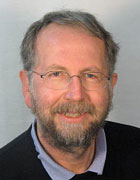
Lennard Hilgendorf is a Researcher at the Department of Computer Science , University of Copenhagen . His work focuses on Machine Learning with applications in quantum computing, medical imaging, natural language processing, and environmental sustainability. Research Trends: His recent publications highlight interdisciplinary work at the intersection of quantum mechanics and machine learning, efficient AI architectures for environmental sustainability, explainable models for medical diagnostics, and multimodal approaches to ecological monitoring. Key keywords include Machine Learning , Quantum Computing , Medical AI , and Environmental Science . Labs & Collaborations: Affiliated with the SCIENCE AI Centre and the TreeSense Centre , which specialize in foundational machine learning research and remote sensing for global tree resources, respectively.
Edgar Solomonik is an Associate Professor at the University of Illinois at Urbana-Champaign, affiliated with the Siebel School of Computing and Data Science. His research focuses on high performance computing, parallel algorithms, and tensor computations. He earned a PhD from UC Berkeley (2014) and a BS from UIUC (2010). Notable contributions include the Cyclops Tensor Framework and work on communication-avoiding algorithms. Awards include the NSF CAREER Award (2020) and the Jack Dongarra Early Career Award (2024). He teaches courses on parallel numerical algorithms, tensor computations, and numerical analysis. Current research explores quantum computing, graph algorithms, and efficient tensor operations for scientific computing. Education: PhD, UC Berkeley (2014); BS, University of Illinois (2010) Research interests span numerical linear algebra, parallel programming systems, and quantum algorithms. Key projects include optimizing tensor contractions for quantum chemistry simulations and developing scalable algorithms for distributed-memory systems. His work has been published in top venues like SISC, SIAM Review, and SC conferences.
Aydin Buluç is a Senior Scientist at Lawrence Berkeley National Laboratory (LBNL) and an Adjunct Associate Professor of EECS at UC Berkeley. His work focuses on parallel computing, high-performance graph analysis, machine learning, sparse computations, and computational biology. He leads the Sparsitute DOE center and directs the PASSION Lab, emphasizing scalable algorithms and their applications in genomics and data science. Education: PhD in Computer Science from UC Santa Barbara (2010); BS in Computer Science and Engineering from Sabanci University, Turkey (2005). Research: Develops parallel algorithms for graph analysis, sparse linear algebra, and communication-avoiding techniques. Key projects include HipMCL for metagenome analysis and GraphBLAS for combinatorial computing. Awards: DOE Early Career Award (2013), IEEE TCSC Early Career Award (2015), ACM Gordon Bell Prize Finalist (2022). Teaching: Co-teaches CS267 (Applications of Parallel Computers) at UC Berkeley, emphasizing practical high-performance computing. Professional Roles: Editor of ACM Transactions on Parallel Computing, PC member for major conferences (SPAA, IPDPS), and leader in ExaGraph and DOE initiatives.
Joel S. Emer is a Professor of the Practice in MIT's Department of Electrical Engineering and Computer Science (EECS) and a Senior Distinguished Research Scientist at NVIDIA. His research focuses on computer architecture, processor micro-architecture, and performance modeling. He has contributed to advancements in simultaneous multithreading, cache optimization, and reliability analysis. Emer holds over 25 patents and has published over 60 papers, earning awards like the IEEE Rau Award and induction into the National Academy of Engineering. Education: Ph.D., Electrical Engineering, University of Illinois Urbana-Champaign, 1979 M.S., Electrical Engineering, Purdue University, 1975 B.S., Electrical Engineering, Purdue University, 1974 (highest honors) Research interests include accelerator architectures for sparse computation and deep learning, spatial processing, memory hierarchy design, and reliability analysis. His work on Eyeriss and other accelerators has shaped energy-efficient neural network hardware. Recent projects explore hierarchical structured sparsity (HSS) and compute-in-memory (CIM) techniques. Key awards include the ISCA Best Paper Session (2024), IEEE Micro Top Picks (2024), and the SIGMICRO Test of Time Award (2022). He co-advises students with Prof. Vivienne Sze, focusing on sparse tensor acceleration and energy-efficient designs. Awards: 2023 IEEE Rau Award 2022 IASED Lifetime Achievement Award 2020 National Academy of Engineering Membership 2009 Eckert-Mauchly Award Grants and collaborations span industry partnerships (e.g., NVIDIA) and academic initiatives. Emer leads the Emze Group, exploring hardware-software co-design for emerging architectures. Current work includes sparse tensor accelerators (e.g., HighLight, Tailors) and modeling tools like Sparseloop and Accelergy.
Malte von Scheven is a Senior Researcher and Deputy Director at the Institute of Structural Analysis and Dynamics at the University of Stuttgart. He holds a Dr.-Ing. degree (2009) and specializes in adaptive structures, fluid-structure interaction, and computational mechanics. Research Focus: Redundancy matrices for structural assessment, high-performance computing, actuator placement optimization Teaching: Finite element methods, computational mechanics, nonlinear structural analysis Leadership: Deputy Director since 2006, conference organizer for ECCOMAS and SMART symposia His work bridges structural mechanics with bio-inspired design, including studies on sea urchin skeletons as models for segmented shells. He has supervised numerous theses on SFRP composites, topology optimization, and adaptive systems. Scientific Engagement: Published 15+ papers on redundancy matrices and FSI Organized mini-symposia at international conferences (ECCOMAS 2024, SMART 2023) Active in university governance through Faculty Council and TIK committee Recent research investigates mechanical modeling of adaptive structures, with applications in civil engineering and architectural geometry. His redundancy matrix framework provides novel performance indicators for robust design and assemblability assessment.
Saiprasad Ravishankar is an Associate Professor at the Department of Computational Mathematics, Science and Engineering at Michigan State University. His research focuses on robust machine learning methods for imaging, particularly in medical imaging and computational tomography. Current Position: Associate Professor, MSU Research Areas: Machine Learning, Image Reconstruction, Medical Imaging His recent work explores the intersection of deep learning and physics-driven models, addressing challenges in sparse-view CT, dynamic X-ray tomography, and MRI reconstruction. He has made significant contributions to untrained neural network priors and diffusion-guided optimization frameworks. The CAREER grant-funded project on robust machine-learning for imaging highlights his emphasis on theoretical guarantees and practical algorithms for inverse problems in computational imaging. His publications demonstrate expertise in structured dictionary learning, sparsifying transforms, and reinforcement learning for imaging tasks. Scientific awards include the NSF CAREER Award. His research benefits from collaborations with time projection chamber projects like GADGET II and emphasizes algorithmic efficiency in imaging applications.
P. (Saday) Sadayappan is a Professor at the University of Utah's School of Computing, specializing in high-performance computing and compiler optimizations. His research focuses on performance optimization for parallel systems, particularly for tensor computations, sparse matrix operations, and machine learning workloads. He leads multiple NSF and DARPA-funded projects focused on GPU optimization, tensor computations, and scalable machine learning frameworks. Research Interests: Dr. Sadayappan's work spans compiler optimizations for high-performance systems, optimization of sparse/dense matrix/tensor computations, scalable machine learning, and algorithm-architecture co-design. His recent projects include developing performance-portable frameworks for tensor applications and optimizing data locality for scientific computing. Publication Trends: His recent publications (2020-2022) predominantly focus on GPU acceleration of machine learning workloads (especially CNNs), automated I/O complexity analysis, and optimization techniques for sparse matrix/tensor operations. Earlier work (2018-2019) established foundations in GPU code generation for tensor contractions and cache optimization. Awards and Honors: ACM SIGPLAN Most Influential PLDI Paper Award (2018) for A Practical Automatic Polyhedral Parallelizer and Locality Optimizer Active Grants and Projects: NSF: A Comprehensive Framework for Efficient, Scalable, and Performance-Portable Tensor Applications (2022-2027) NIH SBIR: Enabling next generation machine learning for large scale image analysis (2023-2025) NSF: AI Institute for Intelligent CyberInfrastructure (ICICLE) (2021-2026) NSF: Data Locality Optimization for Sparse Matrix/Tensor Computations (2020-2024) DARPA SBIR: Performance Portable Framework for Developing Graph Applications (2017-2022) Teaching: He currently teaches CS 4230/6230 (Parallel and High-Performance Computing) at the University of Utah.
Dr. T Vijaykumar is a Professor in the Department of Electrical and Computer Engineering at Purdue University. His research focuses on computer architecture, GPU optimization, machine learning acceleration, and high-performance computing. He leads projects involving hardware-software co-design for energy-efficient systems and secure speculative execution techniques. His work spans innovations in GPU concurrency, sparse matrix processing, and distributed training frameworks for neural networks. He has contributed to advancements in memory systems, including PIM architectures and address translation optimizations. Recent projects include Proteus (model confidentiality) and Disorf (mobile 3D reconstruction). Key research themes include accelerating irregular computational graphs, secure hardware design, and efficient data movement in disaggregated systems. His publications reflect a strong emphasis on practical implementations with real-world applications in robotics, genomics, and cloud computing. Dr. Vijaykumar has received institutional awards for his contributions to computer architecture and holds patents in areas like microfluidics and data center congestion control. He collaborates with industry on GPU kernel design and memory consistency verification frameworks like QED.
T. N. Vijaykumar is a Professor of Electrical and Computer Engineering at Purdue University, with a courtesy appointment in Computer Science. He joined the university in 2003. His research focuses on computer architecture, machine learning acceleration, high-performance computing, and hardware-software co-design. He holds degrees from Birla Institute of Technology and Science (BE, MSc) and the University of Wisconsin (MS, PhD in Computer Science). Education: B.E. (Hons), Electrical and Electronics Engineering, Birla Institute of Technology and Science (1990) M.Sc. (Tech), Computer Science, Birla Institute of Technology and Science (1992) M.S. and Ph.D., Computer Science, University of Wisconsin (1997) His research interests span GPU architectures , memory systems , neural network acceleration , and secure computing . Recent work includes optimizing sparse tensor processing, secure speculative execution, and distributed training frameworks for mobile robotics. Publications highlight contributions to GPU kernel concurrency, neural radiance fields, and memory consistency verification. His work often bridges hardware design and software efficiency, with applications in data centers and edge computing. Notable grants include projects like QED (scalable hardware memory verification) and ESPIM (sparse processing-in-memory for ML inference). He has also contributed to frameworks like Disorf for real-time rendering in robotics. Labs/Teams: Active involvement in Purdue’s Computer Science and ECE departments, with collaborations on AI hardware and systems research.
Dr. Keaton Hamm is an Assistant Professor in the Department of Mathematics and Division of Data Science at The University of Texas at Arlington. His research bridges theoretical mathematics and computational data science, with postdoctoral experience at the University of Arizona and Vanderbilt University. Primary research domains include computational mathematics, manifold learning techniques, optimization algorithms, and tensor decompositions. His work develops novel methods for high-dimensional data analysis with applications in machine learning and scientific computing. Recent publications demonstrate strong focus on Wasserstein space methodologies (2023-2025), advancing techniques in optimal transport, dimensionality reduction, and geometric learning. Machine learning research explores adversarial robustness and federated learning systems, while mathematical contributions include innovations in matrix decompositions and approximation theory. No awards or student information was available in the provided profile.
Rena Huang is an Associate Professor in the Department of Electrical, Computer and Systems Engineering at Rensselaer Polytechnic Institute (RPI) with additional affiliations in Physics, Applied Physics, and Astronomy. She joined RPI in October 2004 after completing her Ph.D. in Electrical Engineering at Georgia Institute of Technology (2003) and serving as a postdoctoral fellow at the Microsystem Packaging Research Center (PRC) at Georgia Tech. Her research focuses on: Optoelectronic devices and integration/packaging 3-D integrated microsystems and lightwave circuits Integrated slow wave structures Photodetectors and electro-optic modulators Laser diodes and silicon photonics She is affiliated with the Center for Materials, Devices, and Integrated Systems (CMDIS), conducting cutting-edge work in photonic computing architectures. Analysis of her 90+ publications shows strong emphasis on: Silicon photonic modulators with slow-light enhancement Foundry-based fabrication of photonic integrated circuits Photonic tensor cores for AI acceleration Reservoir computing for biomedical applications Inverse design and optimization methodologies No scientific awards or student advisees are mentioned in the source material. Her research demonstrates consistent focus on hardware-efficient photonic computing solutions with recent work exploring co-design approaches across device, circuit, and architecture levels.
Dr. Flavio Vella is an Associate Professor at the Department of Information Engineering and Computer Science (DISI) at the University of Trento. He holds roles on the management board of the national HPC laboratory at CINI and the Steering Committee of ICSC’s spoke4. His research focuses on parallel algorithms for emerging computing systems, machine learning systems, and quantum computing, with an emphasis on irregular computation and large-scale graph analysis. He has industrial experience at NVIDIA and Dividiti, and has contributed to EU projects like ARCHYTAS (AI acceleration) and NET4EXA (exascale networking infrastructure). Dr. Vella earned his Ph.D. from Sapienza University of Rome in 2017. His academic journey includes roles at the Free University of Bozen, CNR Italy, and ETH Zurich. He actively serves HPC communities as Artifact co-chair for PPoPP and Computing Frontiers, and as PC member for IPDPS, SC, and EuroPAR. His work has produced over 40 peer-reviewed publications, including Best Paper Awards at SC22/24 and Best PhD Paper at IPDPS17. His research themes include GPU performance optimization, quantum device reliability, and HPC/AI interconnects. Recent work explores tensor networks, physics-constrained neural networks, and exascale system engineering. Projects like ARCHYTAS (EUDF-2023) and NET4EXA (Horizon) highlight his leadership in European HPC initiatives.
Virginia Vassilevska Williams is Professor of Computer Science and Artificial Intelligence + Decision-making at MIT EECS. Her research focuses on theoretical computer science with emphasis on algorithms, computational complexity, and graph theory. She has made significant contributions to matrix multiplication complexity and fine-grained hardness results. Recent publications explore fundamental problems in graph algorithms including cycle detection, shortest paths, and clique enumeration. Her work demonstrates consistent advancement in understanding computational limits for graph problems and matrix operations. Key research themes include: Breaking barriers in matrix multiplication exponents Establishing hardness thresholds for approximation algorithms Developing efficient graph traversal methods for sparse structures Her 2024 publications continue this trajectory with refinements to the laser method for matrix multiplication and improved clique listing techniques. The research consistently pushes boundaries in algorithm optimality proofs and computational complexity theory.
Dr. Sheehan Olver is an Associate Professor in Applied Mathematics and Mathematical Physics at the Department of Mathematics, Imperial College London. He holds affiliations in Applied Mathematics and Mathematical Physics, Applied and Numerical Analysis, and Mathematics research and teaching staff. His research focuses on numerical analysis, computational methods, and spectral methods for differential equations, singular integral equations, and Riemann–Hilbert problems, with applications in integrable systems and random matrices. Education: PhD in Applied Mathematics from the University of Cambridge (2008). Smith-Knight/Rayleigh-Knight Prize Winner (2006). Research Interests: Spectral methods, orthogonal polynomials, fractional differential equations, representation theory applications, and numerical solutions of integrable systems. His work emphasizes efficient, sparse numerical techniques for solving complex mathematical problems across domains like fluid dynamics and quantum mechanics. Labs/Teams: Active in software development for computational mathematics, including packages like ApproxFun.jl and RHPackage . Collaborates widely with institutions such as the University of Oxford, Cornell University, and the University of Sydney. Grants/Awards: While no specific awards are listed, his extensive publication record and software contributions reflect sustained recognition in computational mathematics.
Prof. Thomas Huckle is a Professor of Scientific Computing at the Technical University of Munich (TUM), affiliated with the TUM School of Computation, Information and Technology and the Department of Computer Science. His research focuses on numerical linear algebra, parallel computing, and their applications in physics and computer science. Key interests include solving linear problems on parallel architectures, image processing, multigrid methods, preconditioning, and tensor-based high-dimensional problem approximation. Education: Studied mathematics and physics at the University of Würzburg (diploma in mathematics, 1985 PhD, 1991 habilitation). Professional History: DFG-funded research at Stanford University (1993–1994), appointed to TUM in 1995, and member of the Mathematics Department since 1997. Research Interests: Prof. Huckle’s work spans numerical methods for large-scale systems, including structured matrices, regularization techniques, and quantum computing applications. He develops algorithms for parallel computing environments and contributes to software tools like ELPA for eigenvalue problems. Grants and Labs: Engaged in projects such as the ELPA-AEO eigensolver and ESSEX-II initiatives. Active in the SCCS (Scientific Computing and Computational Science) group at TUM, focusing on high-performance computing and numerical methods.