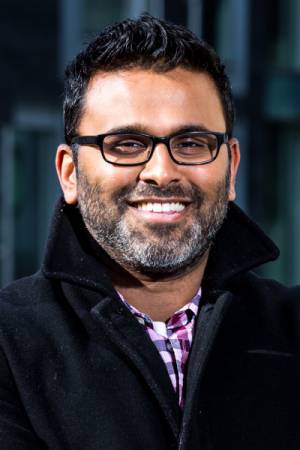
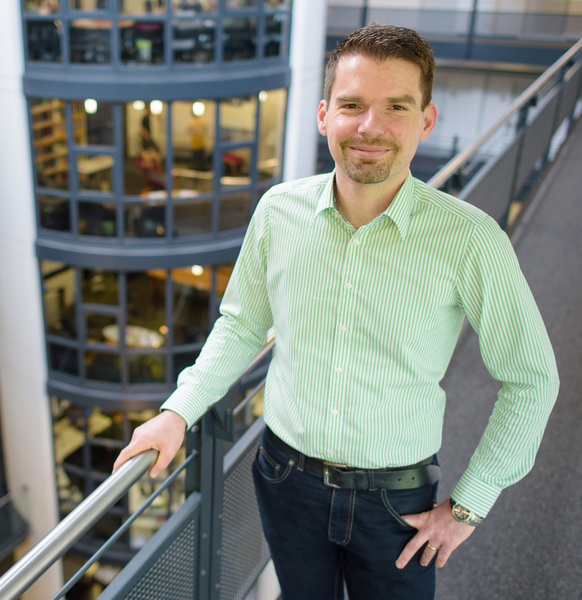
Deva Kannan Ramanan is a Professor at the Robotics Institute of Carnegie Mellon University , focusing on computer vision , machine learning , and human-centered robotics . His work bridges neurorobotics and visual perception , with applications in autonomous driving and 4D reconstruction . Research Topics Computer Vision 3-D Vision and Recognition Visual Servoing Neurorobotics Human-Centered Robotics Graphics & Creative Tools His recent publications in CVPR , ICRA , and ICCV emphasize 4D human reconstruction , neural rendering , and vision-language models for autonomous systems. He serves as General Chair of CVPR 2027 and Program Chair of CVPR 2018 , with IARPA funding for aerial-ground rendering (2023-2027). Current students include PhD candidates Sally Chen, Kangle Deng, and Zhiqiu Lin, while past advisees like Arun Vasudevan and Olga Russakovsky now hold positions at Amazon and Meta respectively.
Prof. Ingmar Posner is a leading figure in applied artificial intelligence at the University of Oxford, where he serves as Principal Investigator for the Applied Artificial Intelligence Lab (A2I) and founding Director of the Oxford Robotics Institute. His work focuses on enabling robots to operate effectively in complex real-world environments through experience-driven learning. Key research areas: robot learning, scene interpretation, data-efficient learning, and transfer learning Applications in manipulation, autonomous driving, logistics, and space exploration His team has produced groundbreaking work in world models, sim-to-real transfer, and constraint-based manipulation systems (e.g., COMBO-Grasp). Notable contributions include the TWIST distillation framework and foundational research in tactile data generation (TactGen). He has received multiple best paper awards at top robotics venues. Publications reveal evolving research themes: 2025 work emphasizes language-conditioned learning (Lumos) and multi-agent decision-making, while 2024 focused on diffusion models for locomotion and differentiable simulators. Earlier work spans from urban scene analysis to physically plausible scene synthesis (RELATE).
Christian Theobalt is a Professor of Computer Science at Saarland University and Scientific Director of the Visual Computing and Artificial Intelligence Department at the Max Planck Institute for Informatics . He leads the Saarbruecken Center for Visual Computing as a strategic partnership between Google and MPI. PhD in Computer Science (2005) from MPI-INF/Saarland University Postdoctoral Researcher at MPI (2005-2007) Visiting Assistant Professor at Stanford (2007-2009) His research focuses on the intersection of Computer Graphics, Computer Vision, and Artificial Intelligence , with specializations in: 3D/4D Human Reconstruction Neural Rendering Performance Capture Geometric Deep Learning Volumetric Video Quantum Visual Computing Recent article trends show emphasis on: Quantum computing applications in visual reconstruction Neural rendering with radiance fields Human motion capture from egocentric views Gesture-language interaction modeling Multi-modal scene understanding Real-time free-viewpoint rendering Scientific Awards : Fellow of EUROGRAPHICS (2022) CVPR Best Student Paper Honorable Mention (2020) ERC Consolidator Grant (2017) Karl Heinz Beckurts Award (2017) Busy Beaver Teaching Award (2016) ERC Starting Grant (2013) Advising over 50 students and researchers including: Current researchers: Viktor Rudnev, Linjie Lyu, Mohit Mendiratta Postdocs: Kwang In Kim, Kiran Varanasi Alumni: Franziska Mueller (Google), Dushyant Mehta (Qualcomm), Ayush Tewari (MIT) Grants include ERC grants, Google Glass Research Award, and multiple industry partnerships. His lab maintains cutting-edge facilities with: Multi-camera capture systems Quantum annealing infrastructure HDR radiance field technology GPU clusters for AI research Time-of-flight imaging systems Event camera arrays
Kevin Jamieson is an Associate Professor at the Paul G. Allen School of Computer Science & Engineering and an Adjunct Professor in the Department of Statistics at the University of Washington . His academic journey includes a B.S. (2009) , M.S. (2010) , and Ph.D. (2015) in electrical engineering from the University of Washington, Columbia University, and University of Wisconsin–Madison respectively. He completed a postdoc at UC Berkeley's AMP Lab before joining UW in 2017. Ph.D., Electrical Engineering, University of Wisconsin–Madison (2015) M.S., Electrical Engineering, Columbia University (2010) B.S., Electrical Engineering, University of Washington (2009) Jamieson's research lies at the intersection of interactive machine learning , active learning , and sequential decision making . His work focuses on: Adaptive sampling strategies in multi-armed bandits and reinforcement learning (RL) Developing instance-dependent optimal algorithms that adapt to problem difficulty Applications in robotics , human perception studies , and hyperparameter optimization Representation learning for large models and experimental design frameworks His 15 most recent publications (2025-2022) demonstrate expertise in bandit theory , contextual RL , and game-theoretic learning . Notable trends include sample-efficient optimization , adaptive A/B testing , and sim-to-real transfer in robotics. Jamieson has received: NSF CAREER award for foundational contributions Amazon Faculty Research award for innovation in learning systems He actively recruits graduate students and postdocs , emphasizing collaboration in areas like: Multi-agent RL and strategic actor learning Empirical process suprema and adaptive sampling theory Applications in robotics , large language model finetuning , and biomedical data analysis Jamieson leads the Washington AI Lab (WAIL) and develops open-source learning systems like the NEXT framework for real-world adaptive data collection. He serves as co-PI for the Institute for the Foundations of Data Science (IFDS) and co-organizes the Distinguished Seminar in Optimization & Data .
Fanny Yang is an Assistant Professor in the Computer Science Department at ETH Zurich . She previously held postdoctoral positions at Stanford University and a Junior Fellowship at the Institute for Theoretical Studies at ETH Zurich, advised by Nicolai Meinshausen . Her PhD was completed at the EECS Department of UC Berkeley , supervised by Martin Wainwright . Research Interests : Theoretical foundations of machine learning and statistics , particularly focusing on overparameterized models and high-dimensional data . Developing trustworthy ML models with emphasis on distributional robustness , domain generalization , and interpretability . Applications in medical diagnostics and treatment effect analysis , aiming to address reliability issues in real-world domains. Recent Work Trends : 2025 Articles : Theoretical analysis of semi-supervised multi-objective learning , test-time scaling with verifiers, and foundation models for efficient randomized experiments . 2024 Articles : Studies on robust mixture learning , privacy-preserving data synthesis via optimal transport , confounding quantification in causal inference , and semi-private learning frameworks. 2023 Articles : Investigations into active vs. passive learning in high dimensions, inductive bias in noisy interpolation , and semi-supervised novelty detection using model ensembles .
Hao Su is an Associate Professor in the Department of Computer Science and Engineering at University of California, San Diego . He serves as Chairman & CTO of Hillbot Inc , and leads the SU Lab which focuses on building autonomous systems that learn actively in physical environments. His affiliations include the Institute for Learning-enabled Optimization at Scale , Artificial Intelligence Group , Contextual Robotics Institute , Halicioğlu Data Science Institute , and Center for Visual Computing . As a researcher in Computer Vision, Robotics, and Neural Geometry , he has made significant contributions to 3D foundation models, reward-free world models, diffusion policy frameworks, and GPU-accelerated simulation environments. His 2024-2025 publications include advancements in hand-eye calibration, dynamic mesh reconstruction, and multi-stage robotic manipulation. His scientific awards include: Frontiers of Science Award (2025) TPAMI Young Research Award (2025) NSF CAREER Award (2023) ACM SIGGRAPH Best Doctorate Thesis Honorable Mention (2019) He has served as Program Chair for CVPR 2025 and Area Chair for ICLR 2022 and NeurIPS 2023 , while previously serving as Publication Chair for 3DV 2016 and Program Committee for SIGGRAPH Asia Workshops .
Michael Kaess is an Associate Professor at the Robotics Institute, Carnegie Mellon University (CMU), within the School of Computer Science. He leads the Robot Perception Lab (RPL) and contributes to the Field Robotics Center (FRC) and Computer Vision Group (CV). His research focuses on efficient perception algorithms for mobile robots, particularly in 3D mapping, SLAM, and sensor fusion using vision, LiDAR, inertial, and sonar data. Kaess holds a PhD in Computer Science from Georgia Tech and was a postdoc at MIT's Marine Robotics Lab. Education: Georgia Institute of Technology, PhD in Computer Science (2008) MIT, Postdoctoral Associate (2008–2010) Research Interests: Kaess develops algorithms for robust and efficient inference in robotics, emphasizing factor graphs and linear algebra. His work spans underwater robotics, aerial systems, tactile SLAM, and multi-sensor integration. Key areas include SLAM with planes/lines, imaging sonar reconstruction, and neural field methods for LiDAR-visual fusion. Publications: Over 145 papers, including work on EDPLVO (visual odometry), HoloOcean (underwater simulation), and neural radiance fields with LiDAR. Recent trends focus on robust incremental smoothing, acoustic-optical fusion, and real-time volumetric mapping. Awards: Recognized with the RSS Test of Time Award (2020), Outstanding Associate Editor (2022), and paper awards at ICRA/ICRA. Active in conference organization (IROS/ICRA program committees). Advising & Grants: Supervises 10+ current PhD/MSc students, with past advisees contributing to CoRL/ICRA work. Manages grants in perception, autonomy, and marine robotics. Teaches courses like Robot Localization and Mapping (16-833). Labs/Teams: Directs RPL, collaborates with FRC on field robotics. Develops open-source tools like GTSAM (GNU Toolkit for Smoothing and Mapping).
Manik Varma is a Distinguished Scientist and Vice President at Microsoft Research India, and an Adjunct Professor at the Indian Institute of Technology Delhi. He is a Fellow of the Indian Academies of Science (IASc, INSA, NASI), the Indian National Academy of Engineering (INAE), and the Association for Computing Machinery (ACM). He has received prestigious awards such as the Shanti Swarup Bhatnagar Prize and Microsoft Gold Star Award. Education : BSc in Physics from St. Stephen's College (David Raja Ram Prize) BA in Theoretical Physics from the University of Oxford (Rhodes Scholar) DPhil in Computer Vision and Machine Learning from the University of Oxford (University Scholar) Post-doctoral Fellow at the Mathematical Sciences Research Institute (MSRI), Berkeley Visiting Miller Professor at UC Berkeley His research focuses on Machine Learning (Extreme Classification, Resource-efficient ML, Supervised Learning), Information Retrieval (Computational Advertising, Dense Retrieval, Recommender Systems), and Computer Vision (Image Search, Object Recognition). Recent work includes graph-regularized encoders, label variance reduction, and multimodal classification frameworks. His publications span extreme classification algorithms like NGAME , SiameseXML , and DECAF , with applications in IoT, web search, and recommendation systems. He leads a research group at Microsoft Research India and advises PhD students at IIT Delhi. Scientific Awards : Shanti Swarup Bhatnagar Prize (Government of India) Microsoft Gold Star and Achievement Awards WSDM 2019 Best Paper Prize BuildSys 2019 Best Paper Runner-up Fellow of ACM, IASc, INSA, NASI, INAE He has supervised numerous PhD students, including Sonu Mehta and Suchith Prabhu, and collaborates with institutions like Microsoft Research India, IIT Delhi, and UC Berkeley. His research has led to scalable solutions for billion-label classification and resource-constrained IoT applications.
Shoudong Huang is a Professor at the School of Mechanical and Mechatronic Engineering , University of Technology Sydney, and Deputy Director of the UTS Robotics Institute. His research focuses on mobile robot navigation , SLAM , nonlinear state estimation , and surgical robotics . He has published over 200 papers and is recognized as one of the 100 Most Influential Scholars in Robotics (Aminer, 2018). PhD in Automatic Control, Northeastern University (China) Postdoctoral Research Fellow, University of Hong Kong (1998-2000) Research Fellow, Australian National University (2001-2003) Full-time academic roles at UTS since 2004 His work addresses challenges in robot localization across extreme environments (underwater, underground mining, surgical settings) and develops globally optimal SLAM algorithms with guaranteed performance. He has secured over $4 million AUD in external funding, including ARC Discovery grants and industry partnerships. Recent publications emphasize cross-modal calibration (camera-LiDAR), interval analysis for bounded noise , and template-based deformable surface reconstruction . These span applications in autonomous driving, surgical navigation, and UAV guidance. Chancellor’s Medal for Research Excellence (2020) Supervisor of the Year (2023) Best Paper Award (2016 ICARCV) Huang serves as Associate Editor for IEEE Transactions on Robotics and International Journal of Robotics Research , and has held leadership roles in top robotics conferences like IROS and RSS. His collaborations span MIT, USC, Zhejiang University, and industry partners including PMSW Research Pty Ltd and Multiplex Constructions Pty Ltd.
Colin Raffel , currently an Associate Professor at the University of Toronto and Associate Research Director at the Vector Institute , is a leading researcher in machine learning and natural language processing . His career spans roles at Hugging Face (Faculty Researcher), Google Brain (Senior Research Scientist), and UNC Chapel Hill (Assistant Professor). Education: PhD in Electrical Engineering (Columbia), MA in Music/Science (Stanford), BA in Mathematics (Oberlin) Key affiliations: Google Brain (2016-2020), Hugging Face (2021-present), Vector Institute (2023-present) His research focuses on language model development , attention mechanisms , efficient machine learning , and music information retrieval . Recent work explores model merging , parameter-efficient fine-tuning , and data-constrained language models . Teaching : Has instructed courses at University of Toronto and UNC Chapel Hill on Neural Networks , Deep Learning , and Information Theory . Academic service includes organizing ICLR workshops and serving as Senior Area Chair for NeurIPS and EMNLP . Notable awards : NSF CAREER (2022), Caspar Bowden Award (2023), NeurIPS Outstanding Paper (2023) Key contributions : Core developer of WT5 , Git-Theta , and mir_eval software
Prof. Luke Zettlemoyer is an Adjunct Professor of Computer Science and Engineering at the University of Washington, with affiliations to the Department of Linguistics. He focuses on machine learning, natural language processing, and multimodal systems, contributing to advancements in large language models, ethical AI, and scalable architectures. His research addresses challenges in model alignment, generalization, and cross-domain integration. Key research interests include multimodal reward models, efficient tokenization strategies, and model optimization techniques. He has explored topics such as neural trajectories for robot learning, content-adaptive image processing, and ethical mitigation of verbatim data reproduction. His publications span 2023–2025, emphasizing practical applications of AI in robotics, vision-language systems, and scalable retrieval-based models. While no formal awards are listed, his work reflects significant contributions to foundational AI research.
Tomaso Aste is a Professor of Complexity Science at the Department of Computer Science, University College London (UCL). He founded the Financial Computing and Analytics group and co-founded the UCL Centre for Blockchain Technologies. His work bridges complex systems, data science, and finance, with applications in blockchain, fintech, and market modeling. Education: PhD in Physics (Politecnico di Milano, 1994); Laurea in Physics (University of Genoa, 1990) Prior Appointments: Reader at University of Kent's School of Physics; Associate Professor at Australian National University's Applied Mathematics His research focuses on data-driven modeling of complex systems , particularly financial systems, complex networks, and statistical physics. He has pioneered information filtering networks and topological machine learning methods for financial applications, including portfolio optimization, risk assessment, and cryptocurrency analysis. Recent publications highlight his expertise in financial time-series analysis, blockchain technology, and AI-driven modeling. Articles explore topics like limit order books, cryptocurrency market fragility, and topological neural networks. His work has influenced regulatory technology (RegTech) frameworks and digital economy strategies. Scientific Awards : Marie Curie Individual Fellowship University of Genoa graduate study specialization Fellowship Bacheflor Boncompagni-Ludovisi Foundation Fellowship Awarded fellowships from European Commission and academic foundations support his interdisciplinary research. He has held editorial roles at journals like Philosophical Magazine and Granular Matter , and contributed to professional societies including American Physical Society and Australian Research Council panels. Teaching & Academic Leadership : Co-created four UCL Master's programs: Financial Risk Management, Computational Finance, Financial Technologies, Emerging Digital Technologies Coordinates executive training on AI, blockchain, fintech, and regtech for regulators and private firms Teaches graduate-level courses in Data-Driven Modeling, Data Science, and Advanced AI
Pascal Frossard is a Full Professor at the Department of Electrical Engineering in the School of Engineering (STI) at EPFL, with a courtesy appointment in the School of Computer and Communication Sciences. He founded and directs the LTS4 laboratory since 2003, co-leads the EPFL AI Center and Swiss Data Science Center, and serves as Associate Dean for Research at STI. Research Focus: Machine Learning, Graph Signal Processing, AI Applications in Healthcare, Computer Vision Academic Leadership: IEEE Fellow, ELLIS Fellow, Conference Chair roles Key Projects: Digital Pathology for Oncology, Cardiac Digital Twins, Robust Machine Learning Research Interests: His work bridges signal processing, machine learning, and applied mathematics, emphasizing biomedical applications. Recent research includes adversarial robustness in classifiers, network representation learning, and 360-degree video analysis. Scientific Awards: IEEE Fellow ELLIS Fellow Leadership in IEEE technical committees Advising & Grants: Supervised 20+ PhD students and postdocs. Secured major grants from PHRT, Hasler Foundation, FNS-Sinergia, Armasuisse, Google, and Cisco.
Xingxing Zuo is an Assistant Professor (tenure-track) in the Robotics Department at MBZUAI. He holds a PhD from Zhejiang University (2021) and a Bachelor’s from UESTC (2016). Previously, he was a Postdoctoral Scholar at Caltech (2024–2025), a Postdoc at ETH Zurich (2019–2021), and held visiting roles at TU Munich, University of Delaware, and University of Technology Sydney. His research focuses on robotics, 3D computer vision, and embodied AI, with emphasis on robot-human collaboration, state estimation, and sensor fusion. Educations: PhD in Robotics, Zhejiang University (2021, with honors) Bachelor’s in Computer Science, University of Electronic Science and Technology of China (2016, with honors) Research Highlights: Develops novel methods for LiDAR-camera-inertial fusion, neural radiance fields, and radar-cameras systems Pioneered techniques like Flying Co-Stereo (long-range aerial mapping) and FMGS (vision-language embedded 3D splatting) Focuses on real-time SLAM, robust depth estimation, and photorealistic scene reconstruction Awards & Recognition: Best Paper Finalist at ICRA 2021 (CodeVIO) Oral Presentation at ICCV 2021 (MBA-VO) Recipient of Google Visiting Faculty Researcher (2023) Grants & Labs: Organized Thermal Infrared in Robotics workshop at ICRA 2025 Leads research on embodied AI and multi-sensor SLAM systems Develops open-source tools like LIC-Fusion and Coco-LIC frameworks
Adriana Kovashka is an Associate Professor at the University of Pittsburgh , affiliated with the School of Computing and Information and serving as Department Chair . Her academic journey began with BA degrees in Computer Science and Media Studies from Pomona College (2008) and a PhD in Computer Science from The University of Texas at Austin (2014). Joined Pitt’s faculty in January 2015 NSF CAREER awardee (2021) Google Faculty Research Award recipient Dr. Kovashka’s research spans Computer Vision , Machine Learning , and Natural Language Processing , focusing on visual rhetoric, weak multimodal supervision, and domain adaptation. She pioneered techniques for analyzing political imagery, developing robust object detection frameworks, and exploring the intersection of visual and textual persuasion through large-scale annotated datasets. Her recent work emphasizes geographic diversity in vision-language systems, audio-visual fusion for domain generalization, and shape-texture bias mitigation in CNNs. Key publications include groundbreaking studies on symbolic reasoning, multimodal dialogue systems, and ethical AI applications in education. Scientific honors include: NSF CRII Award (2016) NSF CAREER Award (2021) Pitt CRDF Award (2016, 2018) Best Paper at ECV Workshop (2021) Google Faculty Research Award (2016, 2018) Dr. Kovashka actively mentors students in multimodal learning projects and collaborates with interdisciplinary teams on NSF-funded initiatives. She co-organizes workshops like the first CVPR workshop on advertisement understanding and leads research groups exploring human-AI co-learning systems.