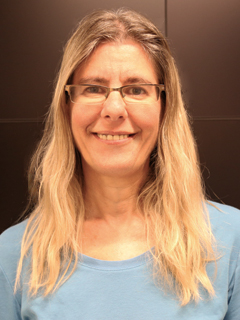
Odelia Schwartz is an Associate Professor in the Department of Computer Science at the University of Miami, College of Arts and Sciences. She also serves as Director of Undergraduate Studies for Computer Science and holds a secondary faculty appointment in Biology. Her research focuses on computational neuroscience, machine learning applications in healthcare and biology, and the intersection of artificial intelligence with visual and neural processing systems. Key research areas include machine learning analysis of medical signals (e.g., ECG for atrial fibrillation prediction), computational modeling of biological systems (e.g., endosymbiont population dynamics via microscopy image analysis), and hierarchical neural network models for visual cortex understanding. Her work integrates statistical methods with deep learning to bridge computational models and biological/neurological phenomena. Publications highlight applications in cardiology, neurotrauma recovery prediction, and visual cortex modeling. While no specific awards are listed, her contributions span interdisciplinary fields at the university and collaborative research institutions. Advising no listed students, but actively engages in graduate training through her faculty roles. No specific labs/teams are mentioned, though collaborations with medical and biological departments are evident.
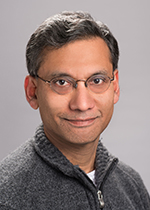
Thirimadura Charith Yasendra Mendis serves as an Assistant Professor at the University of Illinois Urbana-Champaign with dual appointments in the Siebel School of Computing and Data Science and the Department of Electrical and Computer Engineering. He maintains a strong affiliation with the Coordinated Science Lab, where he conducts interdisciplinary research bridging computer architecture, compilers, and artificial intelligence systems. His research program centers on deep neural networks, compiler design, and program verification, with significant contributions to soundness verification of DNN certifiers, domain-specific language development for neural network certification, and hardware-aware compiler optimizations. His work in parallel computing and graph neural networks specifically targets efficiency bottlenecks in AI infrastructure through novel vectorization and level parallelism techniques. Recent 2025 publications reveal a cohesive research trajectory focused on enhancing AI system reliability through formal methods and compiler innovation. Key themes include automated verification frameworks for tensor operations, declarative approaches to neural network certification, and GPU-optimized code generation for sparse attention mechanisms in transformer architectures—collectively advancing trustworthy AI deployment. Dr. Mendis has earned two prestigious national awards: DARPA Young Faculty Award (2024) NSF CAREER Award (2024) These competitive grants fund his research program investigating foundational aspects of AI safety and compiler technology, likely supporting graduate student mentorship in systems and programming languages research. Within the Coordinated Science Lab ecosystem, Mendis collaborates with cross-disciplinary teams on projects spanning hardware acceleration, programming language design, and neural network verification—leveraging this environment to drive innovation in computing systems reliability and performance.
Michelle Effros is the George Van Osdol Professor of Electrical Engineering and Vice Provost at the California Institute of Technology. She holds B.S., M.S., and Ph.D. degrees from Stanford University (1989–1994). Her research focuses on information theory, data compression, communications, theoretical neuroscience, and network coding. She founded the Caltech Data Compression Laboratory (1994) and co-founded Code On Technologies (2009–2016). Education: B.S. (with honors), Electrical Engineering, Stanford University, 1989 M.S., Electrical Engineering, Stanford University, 1990 Ph.D., Electrical Engineering, Stanford University, 1994 Research interests include information theory , data compression , neurostability , neuronal memory , and network coding . Her work spans source coding (data compression), channel coding (reliable communication), and the mathematical underpinnings of neural systems. Her publications explore topics like network coding reliability, finite-blocklength analysis, and secure multicast. Awards include IEEE Fellow, NSF CAREER Award, and Okawa Research Grant. She has served as Editor of the IEEE Information Theory Society Newsletter and President of the IEEE Information Theory Society. Grants and advising: While no student names are listed, her leadership roles in funding bodies like the NSF Advisory Committee reflect her influence on research directions. Labs include the Data Compression Laboratory.
Kannan Ramchandran is the Gilbert Henry Gates Endowed Chair Professor in the Department of Electrical Engineering and Computer Science at UC Berkeley. He holds a Ph.D. from Columbia University (1993) and has been at UC Berkeley since 1999. His research focuses on information theory, signal processing, machine learning, and AI, with contributions to distributed coding, federated learning, and robust video transmission. He leads the Berkeley Audiovisual Signal Processing and Communication Systems (BASiCS) Lab and is affiliated with the Simons Institute and CLIMB. Awards include the IEEE Kobayashi Award (2017) and the NSF CAREER Award (1997). He teaches courses like EE 229A (Information Theory) and has advised numerous students in areas like coding theory and distributed systems. Education: B.E., City College of New York (1982) M.S., Columbia University (1984) Ph.D., Columbia University (1993) Research Interests: Distributed source coding, federated learning frameworks, robust communication systems, and AI-driven signal processing. His work bridges theory and practice, with impactful contributions to video compression, error-resilient systems, and modern machine learning paradigms. Key Contributions: Pioneered DISCUS (Distributed Source Coding using Syndromes), developed SAFFRON for group testing, and advanced federated learning methodologies. His lab’s work on spectrum-blind sampling and diffusion models for MRI reconstruction highlights ongoing innovation. Awards: IEEE Fellow (2004), Okawa Grant (2000), and multiple teaching awards. His research has been published in top venues like IEEE Transactions on Information Theory and Neural Information Processing Systems.
Maggie Zhu (Fengqing Maggie Zhu) is an Assistant Professor at Purdue University's Department of Electrical and Computer Engineering, College of Engineering. She holds a Ph.D. in Electrical and Computer Engineering from Purdue (2011) and has focused on image processing, video compression, computer vision, and computational photography since joining the faculty in 2015. Ph.D. in Electrical and Computer Engineering (2011) Assistant Professor at Purdue (2015–present) Staff Researcher at Huawei Technologies (2012) Her research bridges machine learning with practical applications in image compression , 3D reconstruction , and nutrition analysis , particularly through wearable technologies and edge-cloud systems. Recent work includes class-incremental learning for 3D perception and low-rank adaptation for efficient vision models. Scientific awards include: Huawei Certification of Recognition (2012) NIH mHealth Summer Institute Participant (2011) Charles C. Chappelle Graduate Fellowship Motorola Foundation Fellowship She has contributed to food portion estimation using monocular imaging , neural video compression , and domain adaptation methods, with publications spanning learned compression techniques and healthcare applications. Recent grants focus on technology-enabled dietary assessment and collaborative computing frameworks.
Robert Calderbank is a distinguished academic and researcher at Duke University, holding professorships in Computer Science, Electrical and Computer Engineering, and Mathematics. He serves as Director of the Information Initiative at Duke and is affiliated with the Duke Quantum Center. His interdisciplinary work bridges information theory, quantum computing, and biomedical applications. Education: Ph.D. from California Institute of Technology (1980) Previous Institution: Princeton University (Distinguished Professor) Calderbank's research spans wireless communications, distributed storage systems, machine learning, and quantum information theory. Recent work focuses on two-dimensional magnetic recording, quantum error correction, and biomedical imaging with pump-probe microscopy. His publications demonstrate sustained innovation in constrained coding, matrix completion, and subspace classification. Scientific contributions include grants from the National Science Foundation and collaborative projects with the University of Maryland. Awards include Fellowships from the Royal Society, IEEE, and AAAS. His teaching and mentorship at Duke and Princeton have shaped next-generation signal processing and computer science research.
Jens-Michalis Papaioannou is a prominent Researcher in clinical natural language processing (NLP) and medical informatics, with extensive publications in top-tier venues like ACL, LREC, and EMNLP. His work focuses on improving clinical decision support systems through advanced machine learning techniques. 2024 : Revisiting clinical outcome prediction for MIMIC-IV with biomedical transformers 2023 : Developing MEDBERT.de for German medical NLP and MedAlpaca conversational AI 2022 : Introducing ProtoPatient for interpretable diagnosis prediction 2021 : Creating self-supervised knowledge integration frameworks for admission note analysis His research spans seven major themes : Clinical outcome prediction from admission notes Cross-lingual knowledge transfer in medical NLP Prototypical network applications Data drift analysis in longitudinal datasets Knowledge integration techniques Model optimization for healthcare LLM interpretability frameworks He has collaborated with Wolfgang Nejdl, Alexander Löser, and Betty van Aken on 13+ publications , with over 445 citations. Notable contributions include: Novel patient similarity modeling approaches ICD code hierarchy integration methods Multilingual clinical model strategies Adversarial robustness analysis Medical conversational AI frameworks
Daniel J. Graham is a Professor of Psychological Science at Hobart & William Smith Colleges (HWS), where he has been a faculty member since 2012. He is affiliated with the Department of Psychological Science within the School of Humanities and Sciences, contributing to interdisciplinary research and teaching in vision science, brain networks, and neuroaesthetics. Graham holds a Ph.D. in Psychology and an M.S. in Physics from Cornell University, and a B.A. in Physics from Middlebury College, reflecting his strong foundation in both the natural and cognitive sciences. Ph.D. in Psychology, Cornell University M.S. in Physics, Cornell University B.A. in Physics, Middlebury College His research integrates computational, behavioral, and theoretical approaches to understand how the brain processes visual information, particularly in natural scenes, art, and faces. He is a leading proponent of the 'internet metaphor' for brain function, proposing that neural communication operates similarly to packet-switched networks. His work emphasizes efficiency, statistical regularities, and network dynamics in cortical and whole-brain systems. Key research themes include efficient coding, neuroaesthetics, and models of neural communication. The most recent publications reveal a strong trend toward interdisciplinary synthesis, combining neuroscience, computer science, and psychology. His work increasingly explores machine learning models to predict human affective responses to visual stimuli, critiques of dominant theoretical frameworks like the free energy principle, and educational innovation in perception teaching. The research spans from foundational vision science to philosophical reflections on brain function. Scientific Awards and Recognition: Winner, Outstanding Student Presentation Award at MAA MathFest (2021) Invited speaker at numerous national and international conferences, including the Redwood Neuroscience Institute and the Bernstein Conference Media coverage of PNAS work in Nature , NPR , BBC , and IEEE Spectrum Teaching and Advising: Graham mentors numerous undergraduate students, many of whom co-author his publications. He has developed innovative lab courses involving electrophysiology, perceptual experiments, and creative demonstrations. He teaches core courses such as Introduction to Psychology, Sensation and Perception, and advanced seminars on art and neuroscience. His teaching philosophy emphasizes critical thinking, interdisciplinary reasoning, and active student participation. Research Labs and Collaborations: Graham collaborates closely with Prof. Yan Hao (HWS Mathematics) on modeling neural communication. His research group involves students in computational modeling, data analysis, and experimental design. He is involved in conferences and workshops focused on the mathematics of neuroscience and AI, reflecting his commitment to cross-disciplinary science.
Müjdat Çetin is a Professor of Electrical and Computer Engineering and serves as the Robin and Tim Wentworth Director of the Goergen Institute for Data Science and Director of the New York State Center of Excellence in Data Science at the University of Rochester. He previously held faculty positions at Sabancı University and was a Research Scientist at MIT, with visiting roles at Boston University, Northeastern University, and MIT. Education: PhD in Electrical Engineering, Boston University, 2001 MS in Electrical Engineering, University of Salford, 1995 BS in Electrical Engineering, Boğaziçi University, 1993 His research lies at the intersection of signal processing, machine learning, and data science, with applications in biomedical imaging, radar, and brain-computer interfaces. He develops probabilistic and deep learning models for robust information extraction from noisy and complex data. His work emphasizes computational imaging, sparse representations, and multimodal data fusion. The recent publications reflect a strong trend toward integrating Bayesian methods and deep learning in imaging sciences, particularly in medical image reconstruction, neuroimaging analysis, and radar systems. His group actively explores transformer architectures, federated learning, and model-based deep learning for solving inverse problems in imaging. Scientific Awards and Honors: IEEE Fellow IEEE Signal Processing Society Best Paper Award IET Radar, Sonar and Navigation Premium Award Elsevier Signal Processing Best Paper Award Turkish Academy of Sciences Distinguished Young Scientist Award (GEBİP) ODTÜ Mustafa Parlar Foundation Research Incentive Award TÜBİTAK Career Award Boston University Best Engineering Research Award Professor Cetin has advised numerous PhD and Master’s students and led significant research grants in data science and imaging. He has served as a Senior Area Editor for IEEE Transactions on Image Processing and IEEE Transactions on Computational Imaging, and held editorial roles in several top journals. He has chaired major conferences including ICASSP, ICIP, and IVMSP workshops. He leads a multidisciplinary research group focused on data science and imaging, collaborating with neuroscientists and medical researchers. The team develops novel algorithms for brain-computer interfaces, medical image analysis, and remote sensing systems, often integrating machine learning with physical models of data acquisition.
Peng Jiang is an Assistant Professor in the Computer Science Department at the University of Iowa. His research focuses on machine learning systems, high-performance computing, and graph processing, with a particular emphasis on compiler and programming techniques for GPU acceleration. He earned his Ph.D. in Computer Science from The Ohio State University in 2019 under Dr. Gagan Agrawal. Education: Ph.D., The Ohio State University, 2019 His work spans sparse training, knowledge graph embedding, and subgraph matching, often leveraging fine-grained parameter management and GPU optimization. Key trends in his publications include compiler design for high-performance systems, parallel programming models, and performance-aware weight pruning for neural networks. Scientific Awards 2024 NSF CAREER Award Peng Jiang has collaborated extensively with researchers such as Lihan Hu, Yihua Wei, Shihui Song, and Gagan Agrawal. His contributions to sparse matrix multiplication, distributed learning communication optimization, and PIM architecture-aware frameworks highlight his expertise in bridging machine learning and systems research.
Professor Ram Zamir is a senior faculty member in the School of Electrical Engineering at Tel Aviv University, where he has been a professor since 2009 and a faculty member since 1996. He has held leadership roles including Head of the Electrical Engineering Program (2013–2017) and Head of the School of Electrical Engineering (2020–2023). His research bridges information theory, communication, signal processing, and learning, with a strong emphasis on geometric and lattice-based coding structures. His research interests include: Information Theory and Digital Communications Statistical and Musical Signal Processing Lattice Codes and Analog Coding via Frames Sparse Modeling and Random Matrix Theory His work has led to two influential books—one on lattice codes (Cambridge University Press, 2014) and another on asymptotic frame theory (NOW Publishers, 2021)—and nearly 200 journal and conference publications with significant citation impact. His recent focus includes the intersection of electrical engineering and music, where he promotes curriculum and research integration. Prof. Zamir has served in key roles in the IEEE Information Theory Society, including as editor, branch chair in Israel, and member of the Board of Governors. He organized the ITW 2015 conference in Jerusalem and has consulted for industry leaders such as Orckit, Actelis, and served as Chief Scientist at Celeno Communications (2004–2014), later acquired by Renesas. He advises graduate students and leads research initiatives in coding and signal processing, though specific students are not listed. He also contributes to academic and technological advancement through collaborations, grants, and industrial partnerships. His lab and research group focus on fundamental coding theory and its applications in modern communication and learning systems. Notably, he and his family donated a piano to the Faculty of Engineering in memory of his late mother, Esther Elchanati-Zamir, reflecting his passion for music and interdisciplinary innovation.
Shuchin Aeron is an Associate Professor in the Department of Electrical and Computer Engineering at Tufts School of Engineering, with joint appointments in the Departments of Computer Science and Mathematics. He holds a Ph.D. from Boston University (2009) and completed postdoctoral research at Schlumberger Doll Research, focusing on borehole acoustic signal processing. His research spans statistical signal processing, machine learning, compressed sensing, and information theory, with applications in geophysics, bioengineering, and imaging. Aeron has authored over 175 publications and holds patents in acoustic signal processing. He received the NSF CAREER Award (2016) and is a Senior Member of the IEEE. Educations: Ph.D., Electrical Engineering, Boston University, 2009 M.S., Electrical Engineering, Boston University, 2004 B.Tech., Indian Institute of Technology, 2002 Research Interests: Statistical signal processing (SSP), inverse problems, compressed sensing, information theory, convex optimization Machine learning applications in geophysical signal processing, imaging, and bioengineering His work emphasizes optimal sampling and recovery of multidimensional signals, with contributions to compressed sensing architectures and generative models for particle physics experiments. He leads NSF-funded projects on data science and domain generalization, and collaborates with industry partners like Schlumberger and Mitsubishi Electric Research Labs. Awards: NSF CAREER Award (2016) Mitsubishi Electric Research Lab Research Gift (2015) Grants and Funding: NSF HDR TRIPODS (2019–2023) AFOSR: Enabling Trusted Human-Like Artificial Teammates (2018–2023) NSF: Optimal Sampling and Recovery for Multilinear Signals (2013–2016) Aeron teaches advanced courses in probabilistic systems analysis, information theory, and machine learning. He directs the Tufts Data Science undergraduate and graduate programs, and serves on editorial boards of journals including Frontiers in Signal Processing and IEEE Transactions on Geoscience and Remote Sensing .
Tobias Grosser is an Associate Professor in the Department of Computer Science and Technology at the University of Cambridge. His research focuses on rethinking performance programming by bridging the gap between developers and compilers. He holds a PhD from École Normale Supérieure Paris and has held positions including Reader at the University of Edinburgh and Ambizione Fellow at ETH Zurich. His research interests span compilers, programming language design, static/dynamic analysis, and the integration of machine learning into compiler development. He emphasizes making compilation more modular, automatic, and trustworthy, with applications in quantum computing, climate science, and open-source hardware. Key projects include xDSL (a Python-native compiler framework), LoopOpt, and the Open Earth Compiler for climate simulations. Recent publications highlight advancements in multi-level intermediate representations (IR), formal verification in MLIR, and performance optimization for GPUs and FPGAs. His work often addresses barriers between programmers and compilers, aiming for intuitive collaboration between developers and automated systems. Tobias mentors a dynamic team of PhD students, postdocs, and researchers, including notable contributors like Siddharth Bhat, Arjun Pitchanathan, and Mathieu Fehr. His lab focuses on compiler toolchains for domain-specific hardware accelerators, quantum computing ecosystems, and verified compilation techniques.
Leon Derczynski is a researcher at the IT University of Copenhagen with a focus on Natural Language Processing and computational linguistics. His work spans multiple NLP subfields including temporal information extraction , misinformation detection , and social media analysis . He has contributed to the development of NLP resources for Danish and Nordic languages, and created frameworks like garak for model security probing. Research interests include: Temporal relation classification and time expression modeling Social media analysis and misinformation detection Model efficiency and resource-aware NLP Scandinavian language processing Ethical considerations in NLP Publications highlight trends in transformer architecture optimization , set-to-sequence modeling , and abusive language detection . His work frequently appears in top venues like Transactions of the Association for Computational Linguistics , EMNLP , and COLING . Key collaborations include work with Kalina Bontcheva on rumor evaluation, Manuel R. Ciosici on efficient NLP methods, and Erick Galinkin on model security. He has also contributed to datasets like the Danish Gigaword Corpus and evaluation frameworks like Risk Cards for model deployment assessment.
Min Xu is an Assistant Professor in the Department of Statistics at Rutgers University – New Brunswick. He is affiliated with the School of Arts and Sciences and focuses his research on theoretical and methodological aspects of machine learning and high-dimensional statistics, with applications in network analysis and nonparametric estimation. Education: Ph.D. in Machine Learning, Carnegie Mellon University (2015) B.S. in Electrical Engineering and Computer Science (with minor in Mathematics), UC Berkeley Research Interests: Min Xu’s research lies at the intersection of machine learning , high-dimensional statistics , and network science . He develops computationally scalable methods with strong theoretical guarantees for complex data structures, particularly in nonparametric estimation , network analysis , and large-scale inference . His work addresses fundamental challenges in estimating high-dimensional distributions and understanding the structure of evolving networks, with applications in economics and social sciences. Grants & Funding: NSF Grant DMS-2113671 NSF Grant DMS-2311299 Research Trends: Across his publications, a consistent theme is the development of statistically rigorous methods for high-dimensional and network data. His work spans optimal estimation in stochastic block models, convex M-estimation, and inference on dynamic network structures, with a strong emphasis on theoretical guarantees and practical scalability. Affiliations: Previously, Min Xu served as a departmental postdoctoral researcher in the Statistics Department at the Wharton School, University of Pennsylvania. He is currently based at Hill Center, Rutgers University.