معرفی
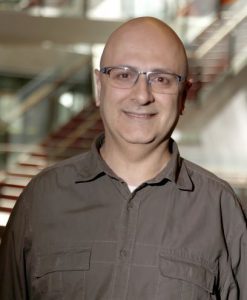
Professor Ram Zamir is a senior faculty member in the School of Electrical Engineering at Tel Aviv University, where he has been a professor since 2009 and a faculty member since 1996. He has held leadership roles including Head of the Electrical Engineering Program (2013–2017) and Head of the School of Electrical Engineering (2020–2023). His research bridges information theory, communication, signal processing, and learning, with a strong emphasis on geometric and lattice-based coding structures.
His research interests include:
- Information Theory and Digital Communications
- Statistical and Musical Signal Processing
- Lattice Codes and Analog Coding via Frames
- Sparse Modeling and Random Matrix Theory
His work has led to two influential books—one on lattice codes (Cambridge University Press, 2014) and another on asymptotic frame theory (NOW Publishers, 2021)—and nearly 200 journal and conference publications with significant citation impact. His recent focus includes the intersection of electrical engineering and music, where he promotes curriculum and research integration.
Prof. Zamir has served in key roles in the IEEE Information Theory Society, including as editor, branch chair in Israel, and member of the Board of Governors. He organized the ITW 2015 conference in Jerusalem and has consulted for industry leaders such as Orckit, Actelis, and served as Chief Scientist at Celeno Communications (2004–2014), later acquired by Renesas.
He advises graduate students and leads research initiatives in coding and signal processing, though specific students are not listed. He also contributes to academic and technological advancement through collaborations, grants, and industrial partnerships. His lab and research group focus on fundamental coding theory and its applications in modern communication and learning systems.
Notably, he and his family donated a piano to the Faculty of Engineering in memory of his late mother, Esther Elchanati-Zamir, reflecting his passion for music and interdisciplinary innovation.