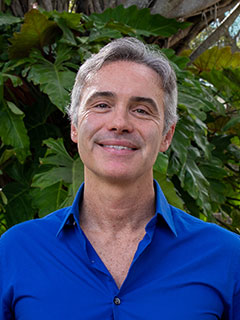
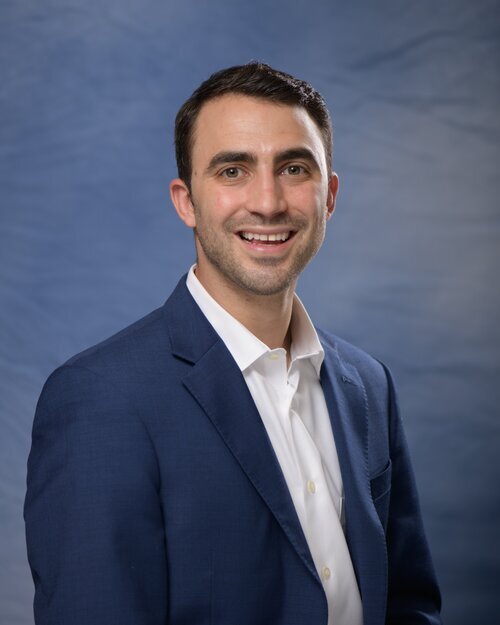
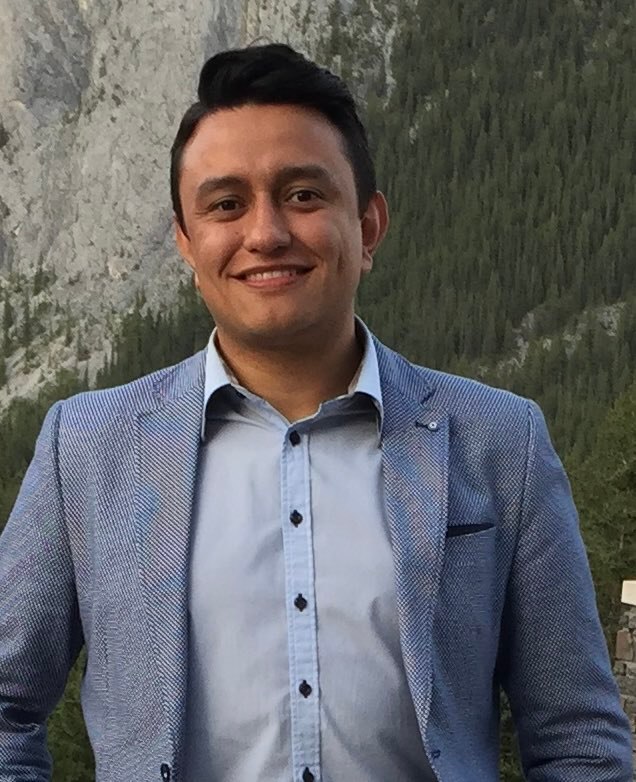
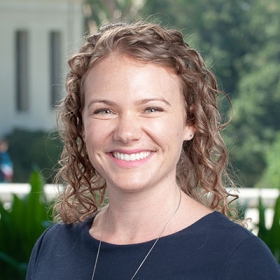
Lillie Padilla is an Assistant Professor of Spanish Linguistics at Sam Houston State University's Department of World Languages and Cultures. Holding a Ph.D. and M.A. in Spanish Linguistics from Arizona State University alongside a Bachelor of Arts from the University of Ghana, her research explores interdisciplinary connections between: Afro-Latinx representation in educational materials Discourse analysis and language ideologies Sociolinguistic studies in Equatorial Guinea Critical race theory applications in language teaching Her work focuses on Spanish subject pronoun expression patterns in multilingual contexts and curriculum development for inclusive pedagogy. Recent publications examine: Representation gaps in Spanish language textbooks Methodological challenges in Equatorial Guinea research Critical discourse analysis of Netflix's Elite series Intersectional representation of Afro-Latinx women Scientific achievements include: Finalist for American Association of Linguistics 2025 award for co-edited volume Representation, Inclusion and Social Justice in World Language Teaching Padilla's research continues to shape conversations about linguistic diversity and marginalized voices in language education through both empirical studies and theoretical frameworks.
Andrew Lynch serves as Professor and Associate Dean for Program Development in the Department of Modern Languages & Literatures within the College of Arts and Sciences at the University of Miami. His academic leadership extends beyond teaching responsibilities to include significant administrative contributions to program development across the institution. Lynch's research interests center on sociolinguistics with particular focus on Spanish language dynamics in Miami, heritage language socialization, bilingualism, and language ideology. His work examines how language functions within specific social contexts, especially in workplace environments where Spanish heritage speakers navigate linguistic demands. He investigates the complex interplay between language, identity, and social structures in postmodern urban settings, with special attention to the Cuban diaspora experience in South Florida. His publication record reveals consistent scholarly engagement with heritage language education, Spanish language variation, and the sociolinguistic landscape of global cities. Lynch's research demonstrates how language practices in Miami reflect broader patterns of linguistic adaptation and resistance within diasporic communities. His work often addresses the tension between linguistic heritage and social integration, examining how language ideologies shape educational practices and community identity. Lynch's scholarly contributions span multiple formats, including single-authored books, co-authored publications, handbook chapters, and journal articles in both English and Spanish. His work frequently appears in high-impact sociolinguistics and language education journals, reflecting his interdisciplinary approach that bridges theoretical linguistics with practical educational implications.
Jonathan Rosa is Associate Professor in the Graduate School of Education, Center for Comparative Studies in Race and Ethnicity, and, by courtesy, Departments of Anthropology, Linguistics, and Comparative Literature at Stanford University. He serves as Director of Stanford's Program in Chicanx-Latinx Studies and has held leadership positions including President of the Association of Latina/o and Latinx Anthropologists of the American Anthropological Association. Dr. Rosa's educational background includes: Ph.D. in Sociocultural and Linguistic Anthropology from the University of Chicago (2010) M.A. in Sociocultural and Linguistic Anthropology from the University of Chicago (2006) B.A. in Linguistics and Educational Studies from Swarthmore College (2003) Dr. Rosa's research examines the co-naturalization of language and race as a key feature of modern governance, tracking colonially structured interrelations among racial marginalization, linguistic stigmatization, and institutional inequity. His scholarship centers on raciolinguistic ideologies, Latinx studies, and educational justice, with a community-based approach that develops tools for challenging systemic vulnerability. He investigates how race and language are jointly defined across historical, geopolitical, and institutional contexts, with particular focus on Latinx communities and educational settings. His recent publications demonstrate a consistent thematic focus on decolonizing linguistic and educational frameworks, challenging standard language ideologies, and examining the intersections of race, language, and power. The work spans multiple disciplines including sociolinguistics, anthropology, education, and critical race studies, increasingly emphasizing undoing raciolinguistics and addressing coloniality in language education and assessment practices. Dr. Rosa has received numerous prestigious awards for his scholarship: Distinguished Summer Scholar, Banks Center for Educational Justice, University of Washington College of Education (2024) Outstanding Book of the Year Award for "Looking like a Language, Sounding like a Race," American Association of Teaching and Curriculum (2022) First Book Award for "Looking like a Language, Sounding like a Race," American Association for Applied Linguistics (2021) Prose Award for Excellence in Language & Linguistics for "Looking like a Language, Sounding like a Race," Association of American Publishers (2020) Charles A. Ferguson Award for Outstanding Scholarship, Center for Applied Linguistics (2018) Dr. Rosa actively mentors doctoral students across multiple programs, serving as primary advisor for students researching race, ethnicity, language, and education. His research has been supported by major grants from the National Science Foundation, Andrew W. Mellon Foundation, Woodrow Wilson National Fellowship Foundation, and Ford Foundation. He collaborates extensively with community organizations, particularly in Chicago, to develop educational approaches grounded in decolonial praxis, focusing on how scholarship can serve as a platform for social transformation. Dr. Rosa co-directed Stanford's Center for Global Ethnography (2021-2023) and directed Stanford's Program in Chicana/o-Latina/o Studies (2020-2023). He serves on multiple editorial boards including Current Anthropology and Equity & Excellence in Education, and has held leadership positions in professional organizations including President of the Association of Latina/o and Latinx Anthropologists (2020-2022).
Salvatore Callesano is an Assistant Professor of Hispanic Linguistics at the University of Illinois Urbana-Champaign (UIUC), affiliated with the Department of Spanish and Portuguese and the College of Liberal Arts & Sciences. His research focuses on sociolinguistics, particularly bilingual communities in the U.S., language perception, and digital media representations of bilingualism. He employs both quantitative and qualitative methods to investigate how language variation interacts with identity, media, and social structures. Dr. Callesano collaborates on Project 16 of the Asociación de Lingüística y Filología de América Latina, addressing linguistic aspects of Latin American diaspora communities. His work bridges traditional sociolinguistic inquiry with modern digital practices, analyzing how social media shapes perceptions of language use among Latinx populations. Recent research highlights include studies on code-switching in Miami's linguistic landscape, dialect perception, and the role of media in mediating language attitudes. His publications span peer-reviewed articles and book reviews, emphasizing empirical rigor and interdisciplinary connections between language, culture, and society.
Leigh Oakes is Professor of French and Linguistics in the Department of Modern Languages and Cultures within the School of Languages, Linguistics and Film at Queen Mary University of London. He has held progressive academic positions at the institution since 2000, advancing from Lecturer to his current professorship. His international academic background includes a PhD from the University of Melbourne and research at Stockholm University's Centre for Research on Bilingualism. His educational qualifications include a PhD (2001) and BA (Hons) (1996), both from the University of Melbourne. Oakes specializes in language policy and planning, with particular focus on language and national identity in France, Quebec, and Sweden. His research has expanded into linguistic justice debates in political theory, advocating for normative and interdisciplinary approaches to language policy. Oakes' publication trends reveal a consistent focus on ethical dimensions of language policy, with increasing emphasis on pluricentric justice and linguistic integration since 2016. His work bridges sociolinguistics and political philosophy, demonstrating strong interdisciplinary connections between language attitudes, national identity construction, and policy implementation across Francophone contexts. The 2018 co-authored monograph 'Normative Language Policy' represents a significant theoretical contribution to the field. 2008 Pierre Savard Prize for 'Language, Citizenship and Identity in Quebec' Leverhulme Trust Research Project Grant for 'The Ethics of Linguistic Integration' project Co-editor-in-chief of Sociolinguistica: European Journal of Sociolinguistics Co-editor of Multilingual Matters book series Member of editorial boards for Language Policy and Modern Languages Open Oakes actively supervises PhD candidates in sociolinguistic topics, with current research focusing on linguistic integration in Quebec and adaptation among mobile French speakers. His major Leverhulme-funded project 'The Ethics of Linguistic Integration' examines moral implications of language requirements for immigrants across England, Quebec, and Wales. He serves on several international academic committees including the Association internationale des études québécoises and the British Association of Canadian Studies. He leads the interdisciplinary 'Ethics of Linguistic Integration' research team, which combines expertise from applied linguistics, sociolinguistics, and political theory to investigate language integration policies. His work connects with broader university initiatives through Queen Mary's research highways in social justice and global challenges.
José Eduardo Villalobos Graillet is an Assistant Professor of Spanish at Idaho State University , specializing in Modern Peninsular Literature and Culture with a focus on visual culture (film and television) . He previously held a position as Spanish Instructor at Wilfrid Laurier University in the Department of Languages and Literatures. Research Areas : Spanish Film Studies, Spanish Medieval Literature, Latin American and Caribbean Studies, Teaching Spanish as a Foreign Language, Visual Culture, and Critical Pedagogy. His scholarly work examines film and television adaptations of 'La Celestina' , analyzing censorship dynamics across Francoist Spain, the Democratic Transition, and contemporary Spain. He also contributes to Spanish pedagogy , developing technological tools like Lang-8 for written expression and culturally immersive teaching units on topics such as winter festivals and Caribbean music. His publications span both critical academic analysis and methodological innovations for language instruction. Key Themes in Publications : Adaptation fidelity, political censorship, intercultural pedagogy, and the role of digital platforms in language learning.
Purnima Dhavan is an Associate Professor of History at the University of Washington's College of Arts & Sciences, holding the Giovanni and Amne Costigan Endowed Professorship. She specializes in early modern South Asia (1500-1800), focusing on religious and cultural identity, Mughal institutions, and literary networks. Her research integrates interdisciplinary methods, with adjunct affiliations in Near Eastern Languages and the Jackson School's South Asia Center. Education: PhD in South Asian History from the University of Virginia (2003), MA (1998), and BA (1996) from the University of Michigan. She has taught at multiple institutions, including the College of St. Benedict/St. John’s University and Bowdoin College. Research Interests: Mughal literary culture, Sikh warrior traditions, gender in pre-colonial societies, and environmental history. Notable works include her book *When Sparrows Became Hawks* (2011) on Sikh militarization and a forthcoming project on literary associations in Mughal urban centers. Publications span peer-reviewed journals and edited volumes, emphasizing pre-colonial South Asia’s intellectual and socio-political dynamics. Awards include the Howard Keller Chair and NEH fellowships. Service: Extensive contributions to academic governance at UW, including roles in the Faculty Senate, departmental leadership, and national professional organizations like the American Historical Association and Association of Asian Studies. Languages: Native Hindi speaker, advanced Urdu/Persian/Punjabi, and proficient in Spanish.
Mariška Bolyanatz Brown is an Assistant Professor in the Department of Spanish and French Studies at Occidental College (Oxy), appointed in 2017. She holds a B.A. from Gordon College, an M.A. from the University of Illinois at Chicago, and a Ph.D. from UCLA. Her research focuses on socially conditioned variation in speech production and perception in Spanish, particularly examining the sociolinguistic implications of phonetic features in Chilean and Salvadoran Spanish. She teaches courses such as Introduction to Linguistics, Spanish in the United States, and Spanish Sociolinguistics, emphasizing inclusive pedagogy and data analysis skills. Education: B.A., Gordon College, Massachusetts M.A., University of Illinois, Chicago Ph.D., University of California, Los Angeles (UCLA) Research Interests: Sociolinguistics, Phonetics, Spanish Language Variation, Linguistic Discrimination, Heritage Language Maintenance, and the social meanings of phonetic variation in Spanish. Her work analyzes acoustic and morpho-phonological patterns to explore how speech features correlate with socioeconomic identity and intergroup perception. Publications: Dr. Bolyanatz Brown has published widely on topics such as coda /s/ weakening in Chilean Spanish, cross-dialectal acoustic differences in /s/, and sociophonetic perception of intervocalic /k/ voicing. Her research bridges laboratory-based phonetic analysis with sociolinguistic theory, contributing to debates on sound change and language variation. Teaching Philosophy: Her courses foster critical engagement with language use, encouraging students to connect linguistic patterns to broader societal issues such as racism and education policy. She emphasizes fieldwork and data collection, as seen in her Spanish in the United States course, where students conduct community-based research in Los Angeles. Labs/Teams: No specific lab is mentioned, though her research involves collaborative fieldwork and acoustic analysis projects with colleagues like Brandon Rogers and Franny Brogan.
Dr. Frank Heitmuller is an Associate Professor at the University of Southern Mississippi, affiliated with the Department of Geology and Geography within the College of Arts and Sciences. His research focuses on fluvial and coastal geomorphology, sedimentology, and hydrology, particularly along the northern Gulf Coast. He collaborates across disciplines to address ecosystem dynamics and land-use policies. He holds a PhD (2009), MA (2002), and BS (1998) from the University of Texas at Austin and Florida State University, respectively. His teaching includes courses like Physical Geology, Geomorphology, and Hydrology. Research interests include river dynamics, sediment transport, coastal ecosystems, and the interplay between abiotic factors and environmental policies. His work emphasizes fluvial systems in Texas and Louisiana, with studies on flood impacts, channel adjustments, and sedimentologic processes. Publications span topics such as flood sedimentation, lithologic controls on river channels, and policy-related sediment transport modeling. He is affiliated with organizations like the Geological Society of America and Association of Environmental and Engineering Geologists. Languages: English (native), Spanish (limited working). His expertise includes environmental science and soils.
Jennifer Leeman is a Professor at George Mason University , focusing on the sociopolitics of language, with emphasis on multilingualism, Spanish in the US, and heritage language education. Her interdisciplinary work bridges critical applied linguistics, sociolinguistics, education, Latinx studies, and linguistic anthropology. BA in Spanish, University of Pennsylvania MA in Hispanic Civilization, New York University in Madrid MAT in TESOL & Bilingual Education, Georgetown University PhD in Hispanic Linguistics, Georgetown University Her research examines: Language ideologies and racialization processes in censuses Antiracist pedagogical frameworks for Spanish teaching Multilingual policy analysis across education and governance Critical service-learning in heritage language contexts Recent publications analyze census categorization, language and immigration policies, and critical pedagogy implementation. She received a 2024-25 Fulbright Senior Scholar award for research at the University of Murcia, Spain, and a 2023-24 Residential fellowship at Mason's Center for Humanities Research. Key scientific contributions include: Pioneering the online graduate certificate in Spanish Heritage Language Education (2021) Leadership roles in AAAL, MLA, and Instituto Cervantes’ advisory committees Editorial board memberships across journals like Language Policy and Hispania Her 15 most recent articles (2018-2025) reveal trends in: Language-race-national identity intersections Census-driven ethnoracial classifications Antiracist pedagogy in language classrooms Heritage speaker identity dynamics Monolingual policy critiques Transnational demographic analysis Contact: jleeman@gmu.edu | Office: Horizon Hall 5132
Lisa L. Wynn is Professor in the School of Social Sciences (Discipline of Anthropology) at Macquarie University in Sydney, Australia. She serves as Associate Editor of American Ethnologist (2022-2027) and previously held leadership positions including President of the Australian Anthropological Society (2020) and membership on the AAS Executive Committee (2018-2021). Wynn earned her PhD in 2003 from Princeton University's Anthropology Department, followed by postdoctoral positions at Princeton's Office of Population Research and Center for Health and Wellbeing. Her research program centers on gender, reproductive health technologies, sexuality, and religion, with continuous fieldwork in Egypt since 1998. More recently, she has expanded her work to examine ethics review bureaucracies, lay understandings of infectious disease, and young adult vaping behaviors in Australia. Her methodological approach combines deep ethnographic engagement with critical analysis of how power structures intersect with medical technologies and bodily experiences, particularly among marginalized communities. Analysis of her recent publications reveals an evolving trajectory that maintains her foundational interest in Middle Eastern contexts while increasingly addressing digital spaces (as seen in studies of online fatwas) and contemporary health crises (including pandemic responses and vaping culture), with consistent attention to bodily autonomy and reproductive justice. Her significant scholarly contributions have been recognized through multiple prestigious awards: Vice Chancellor's Teaching Excellence Award from Macquarie University (2009) Australian Award for Teaching Excellence (2012) OLT National Teaching Fellowship (2012-2014) Leeds Honor Prize from the Society for Urban, National, and Transnational/Global Anthropology (2008) Wynn actively mentors graduate researchers specializing in gender, sexuality, medicine and technology, with particular emphasis on sexual and reproductive health. Her research program has received substantial funding from the Social Science Research Council, Australian Research Council, Office of Learning and Teaching, and Hort Innovation. Notably, she co-led a major international project to develop multilingual sexual and reproductive health resources that have reached millions of users across 208 countries. She also created a free online ethics training program for humanities and social sciences researchers at Macquarie University. Through collaborations with Cambridge Reproductive Health Consultants and other partners, Wynn has successfully translated academic research into accessible public resources, including evidence-based information on medication abortion available in six languages (English, Spanish, French, Arabic, Turkish, and Farsi).
Lucia Binotti is a Professor of Spanish and Digital Humanities at the University of North Carolina at Chapel Hill (UNC-CH), with dual affiliations in the Department of Romance Studies and interdisciplinary Digital Humanities initiatives. She serves as Graduate Advisor for Hispanic Linguistics and Director of the Honors Study Abroad Program in Rome. Her work bridges traditional philology with cutting-edge digital scholarship, emphasizing immersive learning experiences through virtual reality (VR) and augmented reality (AR) technologies. Binotti holds a Ph.D. from UC Santa Barbara (1990), an MA (1985), and a BA (1984) in Romance Philology from the Università degli Studi di Pisa. Her research focuses on linguistic identity, cultural heritage preservation, and innovative educational platforms like Amirabilia—the world’s first experiential learning platform. Notable projects include nXimena (healthcare training for Latinx abuse survivors) and Entiendelo (a linguistic/cultural navigation app for Latinx communities). Her scholarly interests span Early Modern Spanish literature, digital humanities applications, and the intersection of technology with social justice. She has directed grants totaling over $500K for projects involving AR/VR integration in education, including collaborations with the UNC Health Science Library and NCSU’s DELTA initiative. Recent awards include the John K. Walsh Award (2010) and Digital Innovation Fellow status (2014). Grants & Leadership: CFE-Lenovo Technology Grants (2018–2019) for AR/VR expansion iLRN 2020 International Co-Chair XR Faculty Learning Community Leader (UNC) Teaching: Courses span from introductory Hispanic literature to advanced topics like medieval intellectual history and digital humanities methodologies. Binotti’s work emphasizes ‘place, presence, and perspective’ in Cyber-Humanities education, particularly addressing marginalized communities through technology-driven solutions.
Astrid Wagner is a Senior Scientist and Deputy Director at the Institute of Philosophy (IFS) of the Spanish National Research Council (CSIC) in Madrid. She holds a PhD in Philosophy from Technische Universität Berlin, recognized by the National University of Distance Education (UNED), and previously served as professor for 20 years at TU Berlin. Her research focuses on philosophy of culture, science epistemology, and digital society challenges. Key interests include philosophy of language, perception phenomenology, pragmatism, and ethical implications of digital transformation. Recent work examines uncertainty dynamics, trust frameworks, post-truth phenomena, infodemics, conspiracy theories, cognitive vulnerability, and digital citizenship. Wagner leads major research initiatives including the INconRES project on ethical-epistemological keys to digital social dynamics (2021-2025), the ORTEGA-CM interdisciplinary innovation consortium on José Ortega y Gasset's legacy (2024-2026), and previously directed the RESPONTRUST project combating COVID-19 disinformation (2021-2023). She co-leads the DESTERRA project analyzing disinformation's societal foundations (2022-2025) and participates in UCM's Rationality, Knowledge and Action research group. She serves on Spain's Committee of Experts for National Security against disinformation, advises the Congressional Science Office, and holds editorial positions at the Journal of Ortega Studies. Wagner contributes to GENET Association's Gender Studies Network and juries for the Princess of Asturias Award and Javier Muguerza Philosophy Prize.
Alexandra Walsham is Professor of Modern History at the University of Cambridge and a Fellow of Emmanuel College. She previously held roles as Chair of the Faculty of History (2019-2022) and currently serves as President of the Historical Association. Her academic roots include a PhD from Trinity College, Cambridge, following studies at the University of Melbourne and Exeter University. Her research focuses on religious and cultural history of early modern Britain, particularly the Protestant and Catholic Reformations. Key themes include post-Reformation Catholicism, religious tolerance, providence, miracles, the history of the book, and the relationship between religion and landscape. Her work has been supported by grants from the British Academy, AHRC, and the Leverhulme Trust. Walsham has authored award-winning books like Providence in Early Modern England and The Reformation of the Landscape , and edited volumes on topics such as archives, memory, and confessional history. She has delivered prestigious lectures including the Ford Lectures at Oxford (2018) and the Wiles Lectures at Queen’s University Belfast (2024). Her professional service includes editorial roles for Past and Present and the Cambridge Studies in Early Modern British History series. She led the AHRC-funded 'Remembering the Reformation' project (2016-2019) and chairs the Early Modern Section of the British Academy. Awarded a CBE in 2017 and an honorary doctorate from Melbourne in 2023, Walsham’s work bridges academic rigor and public engagement, influencing both scholarly discourse and historical education.
Ana Celia Zentella is a distinguished Professor in the Department of Ethnic Studies at the University of California, San Diego, renowned for pioneering "anthro-political linguistics" that examines language through sociopolitical and justice-oriented frameworks. Her work centers on U.S. Latin@ language communities, challenging linguistic discrimination and advocating for language rights. Education: Ph.D. in Educational Linguistics, University of Pennsylvania M.A. in Romance Languages and Literatures, Pennsylvania State University B.A. in Spanish, Hunter College (Bronx) Zentella's research critically analyzes U.S. Latin@ varieties of Spanish and English, Spanglish, and language socialization in families, with particular focus on Puerto Rican communities. She exposes how English-only laws and anti-bilingual education policies facilitate linguistic profiling that marginalizes communities. Her scholarship consistently bridges academic rigor and community advocacy, emphasizing "el habla del pueblo" (the people's speech) as resistance against top-down language classifications. Her publications reveal enduring themes: language as a site of political struggle (2018-2023), border linguistics examining Tijuana-San Diego dynamics (2013-2016), and historical analyses of Nuyorican language (2004). She challenges harmful frameworks like the U.S. Census Bureau's "linguistically isolated" category while documenting language revitalization efforts in multilingual urban centers. Scientific Awards: British Association of Applied Linguistics Book Prize (1997) Association of Latina and Latino Anthropologists Book Award (1997) Manhattan's "Doctor Ana Celia Zentella Day" declaration (1997) LASA Public Intellectual of the Year (2014) Society for Linguistic Anthropology Public Outreach Award (2016) American Academy of Arts and Sciences induction (2023) Choice Outstanding Academic Title (2018) Zentella actively mentors through community-engaged scholarship, co-authoring Multilingual San Diego (2008) and Multilingual Philadelphia (2010) with undergraduates. Her public outreach includes challenging linguistic erasure and advising policymakers on language-inclusive practices, demonstrating consistent commitment to translating academic work into tangible community impact.