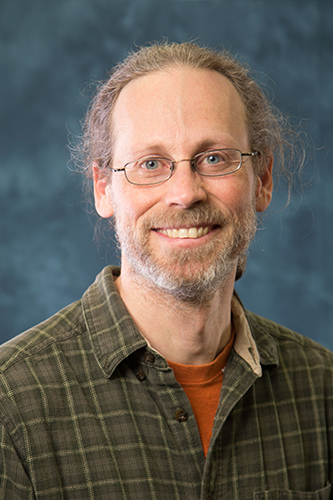
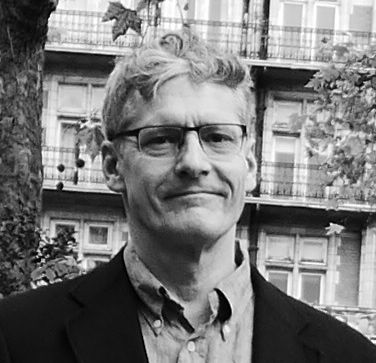
Frans Pretorius is a Professor of Physics at Princeton University and founding Director of the Princeton Gravity Initiative, a multidisciplinary effort to advance gravitational physics research. His work focuses on numerical solutions of Einstein's field equations, with applications to gravitational collapse, black hole mergers, cosmic singularities, and higher-dimensional gravity. He actively explores how gravitational wave observations can test the strong-field regime of general relativity. Primary Affiliation: Department of Physics, Princeton University Leadership Role: Director, Princeton Gravity Initiative Research Interests: Pretorius's research spans computational and theoretical aspects of general relativity, including: Gravitational wave astronomy Black hole dynamics and evaporation models High-dimensional spacetime simulations Strong-field gravity tests Scientific Recognition: Aneesur Rahman Prize for Computational Physics (APS) Blavatnik Award for Young Scientists New Horizons Prize in Physics
Xiaoliang Qi is a Professor of Physics at Stanford University. His research explores the interplay between quantum entanglement, quantum gravity, and quantum chaos, aiming to uncover connections between quantum information theory and spacetime geometry through tools like tensor networks and solvable models. He also investigates topological states in condensed matter systems. Ph.D., Institute for Advanced Study, Tsinghua University (2007) B.S., Tsinghua University (2003) His recent work includes analyzing holographic duality (AdS/CFT) to understand emergent spacetime dynamics. Videos of his talks are available via external links, and he can be reached at xlqi@stanford.edu .
Volker Schomerus is a Professor of Mathematical Physics at the University of Hamburg and a Lead Scientist at DESY (Deutsches Elektronen-Synchrotron). His research focuses on the unification of string theory, quantum field theory, and mathematical physics, particularly through geometric quantization of spacetime and solving quantum theory challenges via geometric techniques. He coordinates the European RTN GATIS initiative and previously led the DESY Theory Group (2007–2010). Research Interests : Schomerus explores string theory's role in fundamental physics, including quantum geometry, holographic dualities, and integrable models. His work bridges particle physics, conformal field theory, and statistical mechanics, with emphasis on bootstrap methods, thermal correlators, and defect CFTs. Publications : Recent articles (2020–2025) demonstrate advances in multipoint conformal bootstrap, holographic interfaces, and thermal field theory. Key themes include integrability in CFT, lightcone limits, and applications of Gaudin models to higher-dimensional quantum systems. Academic Leadership : Heads research groups at DESY and Universität Hamburg, fostering collaborations in theoretical high-energy physics. No awards or students are explicitly listed in the sources.
A. Shadi Tahvildar-Zadeh is a Professor of Mathematics at Rutgers University within the Department of Mathematics under the School of Arts and Sciences. His research focuses on nonlinear hyperbolic partial differential equations, general relativity, and quantum mechanics. His work explores the intersection of mathematical physics and differential equations, with an emphasis on relativistic quantum mechanics, black hole spacetime analysis, and field-singularity interactions. Key contributions include studies on Lorentz-covariant systems, Dirac operators in curved spacetime, and conservation laws for photons. Recent research trends analyze one-dimensional quantum systems, screened Coulomb potentials, and spectral properties of Dirac operators in extreme spacetime geometries. Publications often address foundational questions in quantum mechanics and general relativity, such as particle dynamics near singularities and zero-gravity limits.
Dr. Justin Dressel is an Associate Professor in the Department of Physics at Schmid College of Science and Technology , Chapman University. His research spans quantum information science, quantum computation, and foundational quantum physics, with a focus on superconducting circuits, weak measurements, and geometric algebraic methods. Ph.D. and M.A. in Physics from the University of Rochester Co-Program Director of Physics at Schmid College Leader of the Spin Group at Chapman, fostering interdisciplinary collaboration with global affiliates Dr. Dressel's work addresses the intersection of quantum technology and mathematics, including quantum measurement theory, machine learning applications, and spacetime geometry in electromagnetism. His recent publications explore Kerr-cat qubit design, counterfactual communication, and quantum Zeno effects in superconducting systems. Notable collaborations include experimental teams at institutions like the Hebrew University of Jerusalem, University of California, Berkeley, and Tel Aviv University. His group utilizes tools such as neural networks for quantum state estimation and investigates phenomena like optical ventriloquism and acoustic spin emergence.
John Huerta is a mathematical physicist currently affiliated with the Department of Mathematics at Instituto Superior Técnico (University of Lisbon) and the Mathematical Sciences Institute at the Australian National University. He will begin a position as senior researcher with the Faculty of Physics at Ludwig Maximilian University of Munich in November 2025. His academic journey includes a PhD in Mathematics from the University of California, Riverside (2011) under advisor John Carlos Baez. His research focuses on quantum topology and mathematical physics, with particular expertise in topological quantum field theories (TQFTs) with defects, factorization algebras, and supergeometry. His work connects deeply with the cobordism hypothesis, state sums, factorization homology, conformal field theories, and distributions on supermanifolds. Huerta's research demonstrates a consistent thread connecting algebraic structures, particularly division algebras, to physical phenomena. Analysis of his 15 most recent publications reveals a strong focus on supergeometry and its applications to theoretical physics, with particular emphasis on Poincaré duality for supermanifolds, bundle gerbes, and the emergence of spacetime structures from algebraic foundations. His work bridges abstract mathematical concepts with concrete physical applications, particularly in M-theory and supergravity. Huerta actively supervises graduate students and has previously advised Nino Scalbi (PhD 2019-2024), Rui Peixoto (MSc 2021-2023), and Diogo Freire de Andrade (MSc 2019-2021, now continuing as PhD student). He is currently advising Diogo Freire de Andrade, who will defend in early 2026. He is a key organizer of academic activities including the TQFT Club (with Roger Picken and Marko Stošić), and has recently organized learning seminars on the mathematics of quantum field theory (2024), higher categories (2023), and TQFTs with defects (2025). His teaching record shows consistently strong evaluations, with an average score of 4.2/5 across all terms taught.
Dr. Ornella Piccinni serves as a Postdoctoral Fellow at the Centre for Gravitational Astrophysics, Australian National University, where she conducts research in theoretical and observational gravitational phenomena. Her office is located in Physics North 1 76C. Her research specializes in: Gravitational Physics Astrophysics General Relativity Gravitational Waves As part of the Centre for Gravitational Astrophysics research group, she contributes to cutting-edge investigations into spacetime curvature and cosmic events. No scientific awards, student advising roles, or grant funding details were documented in the provided materials.
Dr. David Rabeling is a Research Fellow at the Centre for Gravitational Astrophysics within the College of Science at the Australian National University. He is an active member of the LIGO Scientific Collaboration, contributing to numerous gravitational wave detection and analysis efforts. His work focuses on gravitational wave physics with emphasis on binary black hole and neutron star systems. Dr. Rabeling's research spans multiple areas of gravitational wave astronomy, including data analysis techniques for LIGO detectors, tests of general relativity using gravitational wave signals, and the study of binary compact object mergers. His work on the GW170817 event (the first observed binary neutron star merger) has been particularly significant, contributing to our understanding of neutron star properties, equation of state, and multi-messenger astronomy. He has developed expertise in gravitational wave signal processing, detector characterization, and the search for continuous and transient gravitational wave signals. His publication record demonstrates expertise in gravitational wave data analysis across multiple detector observing runs. A significant portion of his recent work focuses on the GW170817 event, examining it from multiple perspectives including tests of general relativity, neutron star equation of state constraints, and searches for electromagnetic counterparts. His research bridges theoretical predictions with observational gravitational wave data, contributing to our understanding of fundamental physics and astrophysical phenomena. As part of the Centre for Gravitational Astrophysics at ANU, Dr. Rabeling works within a team of researchers focused on gravitational wave detection and analysis. The Centre is part of the international LIGO Scientific Collaboration, giving him access to cutting-edge gravitational wave data and collaborative opportunities with researchers worldwide. His work contributes to Australia's growing role in gravitational wave astronomy and multi-messenger astrophysics.
Steen Harle Hansen is a Professor at the DARK center within the Niels Bohr Institute at the University of Copenhagen . His career spans postdoctoral positions in Ferrara, Oxford, and Zurich, culminating in his current role since 2006. Education: PhD in 1999 Postdocs: Ferrara (Italy), Oxford (UK), Zurich (Switzerland) Research Interests focus on Dark Matter and its properties. He investigates equilibrated dark matter structures, velocity anisotropy profiles, and hot gas characteristics like temperature and density profiles. His work bridges particle physics and cosmological models . Recent Publications (2021–2024) explore topics such as phase-space distribution models, dark energy origins, and velocity-dependent forces. These studies highlight his contributions to modified gravity theories , cosmological expansion , and astrophysical simulations . Labs & Collaborations: Affiliated with DARK , a leading research center in astrophysics and cosmology. Collaborations span international institutions, reflecting a global network in dark matter and cosmological research.
Dr. Jun (Steed) Huang serves as an Adjunct Professor at the Carleton University and coordinates the NSERC Trust Connected Autonomous Vehicle Program. His research spans disciplines like biotechnology, AI, and quantum encryption, with applications in autonomous vehicles, healthcare, and smart cities. PhD (Southeast University) PDF (Concordia University) Dr. Huang's work focuses on 5G-enabled autonomous systems , network security , and multi-disciplinary innovation . His research team develops technologies for vehicular fog computing, energy-efficient IoT, and secure cloud collaborations. Key publication trends include: 5G and D2D communication optimization Machine learning applications in virology and finance Quantum-inspired algorithms and secure cloud frameworks Smart agriculture and environmental monitoring systems Multi-hop network coding and blockchain security His patented technologies have been implemented by organizations such as: Royal Canadian Mounted Police Canadian Space Agency Communications Research Centre Canada Canada Border Services Agency
David Maxwell is Professor of Mathematics at the University of Alaska Fairbanks , where he has been on the faculty since 2004. His office is located in Chapman Hall 308C on the Fairbanks campus, and he can be reached at damaxwell@alaska.edu . He earned his PhD in Mathematics from the University of Washington in 2004. Maxwell’s research lies at the intersection of differential geometry and partial differential equations, with a primary focus on the mathematics of general relativity . He investigates how distributions of matter determine the possible geometries of the universe, taking into account the ambiguities in defining a global notion of time and the presence of gravitational waves. Additional interests include geometric analysis , inverse problems , and the rigorous study of partial differential equations arising in gravitational physics. Across his recent publications, Maxwell has concentrated on foundational questions surrounding the conformal method for solving the Einstein constraint equations, demonstrating its equivalence to the conformal thin-sandwich approach and extending these techniques to non-vacuum spacetimes. His work often blends sophisticated geometric insights with careful PDE analysis, contributing to both theoretical understanding and practical construction of physically realistic initial data sets.
Eduardo Martin-Martinez is an Associate Professor at the University of Waterloo and an Affiliate of Perimeter Institute for Theoretical Physics. His research focuses on Relativistic Quantum Information (RQI) , integrating quantum information science with relativistic field theory on flat and curved spacetimes. This work addresses practical challenges in quantum communication, entanglement generation, and open quantum dynamics while providing insights into fundamental physics like black hole thermodynamics, cosmological models, and quantum gravity approaches. His YouTube research short WCA Research shorts: Eduardo Martin Martinez highlights his contributions.
Maarten van de Meent is an Associate Professor at the Niels Bohr Institute, University of Copenhagen, specializing in Theoretical High Energy, Astroparticle, and Gravitational Physics. His research focuses on gravitational wave astronomy, black hole dynamics, and waveform modeling for compact binary systems. Recent collaborative studies (2023–2025) highlight his work on Extreme Mass Ratio Inspirals (EMRIs) , Effective One-Body Formalism , Kerr Spacetime Perturbations , and Spin-Orbit Precession . His publications emphasize gravitational self-force calculations , orbital resonance treatments , and LISA/Einstein Telescope waveform models . Key collaborations include researchers like Alessandra Buonanno (Max Planck Institute), Niall Warburton (University College Dublin), and Guillaume Faggioli (University of Bern). His work addresses Gravitational wave detection Post-Newtonian theory Numerical relativity Space-based observatories
Professor Björn Garbrecht (born 1977) holds a position at the Department of Physics within the TUM School of Natural Sciences at the Technical University of Munich. He leads the Associate Professorship of Theoretical Physics of the Early Universe, where his research focuses on fundamental questions at the intersection of particle physics and cosmology. His academic journey began with physics studies in Heidelberg and at the University of Massachusetts, Amherst. After obtaining his doctorate from Heidelberg in 2005, he conducted postdoctoral research in Manchester, UK, and at the University of Wisconsin–Madison. From 2009 to 2012, he served as an assistant professor at RWTH Aachen before being appointed professor at TUM in 2012. Research focuses on particle physics processes in the early universe Develops theoretical methods for calculations on dynamics and reactions of elementary particles at very high temperatures Specializes in quantum fields in curved spacetimes and expanding universes Investigates matter-antimatter asymmetry and density perturbations from inflation Works on leptogenesis and baryogenesis mechanisms Connects theoretical models with experimental tests of charge-parity violation Professor Garbrecht's publication record shows consistent scholarly output since 2002, with significant contributions to understanding the early universe. His work increasingly focuses on vacuum transitions during inflation, neutrino physics in relation to leptogenesis, and precision calculations in quantum field theory under extreme conditions. His research bridges the gap between high-energy particle physics and cosmological observations, seeking to explain fundamental properties of our universe from first principles. As an educator, Professor Garbrecht teaches advanced courses including Special Topics in Quantum Field Theory, Theoretical Physics 3 (Quantum Mechanics), and seminars on Current Topics in Theoretical Physics of the Early Universe for both winter 2024/25 and summer 2025 terms. He maintains an active research group that develops methods for describing high-energy reactions out of thermal equilibrium and quantum fields in expanding space-times. His work contributes to the Collaborative Research Center 'Neutrinos and Dark Matter in Astro- and Particle Physics' (SFB 1258), particularly in areas related to neutrino physics and fundamental questions about the early universe.
Robert DiSalle is a Professor at the University of Western Ontario in the Department of Philosophy . His work bridges the history and philosophy of science with analytic philosophy, focusing on the evolution of spacetime concepts from Newton to modern physics. Education : BA from Georgetown University (1982) MA and PhD from the University of Chicago (1988) Research Interests include the historical development of physics, philosophical problems of space and time, and the connections between philosophy of science and analytic philosophy. His current research explores Newton's relativity of motion and its implications for physics and mathematics. Teaching spans both graduate and undergraduate levels, with courses like Proseminar: Perspectives in Analytic Philosophy and Physics and Reality , reflecting his interdisciplinary approach. Scientific Awards : No specific awards mentioned in the provided texts. Collaborations include work with the late George E. Smith (Tufts University), indicating active engagement in scholarly dialogue.