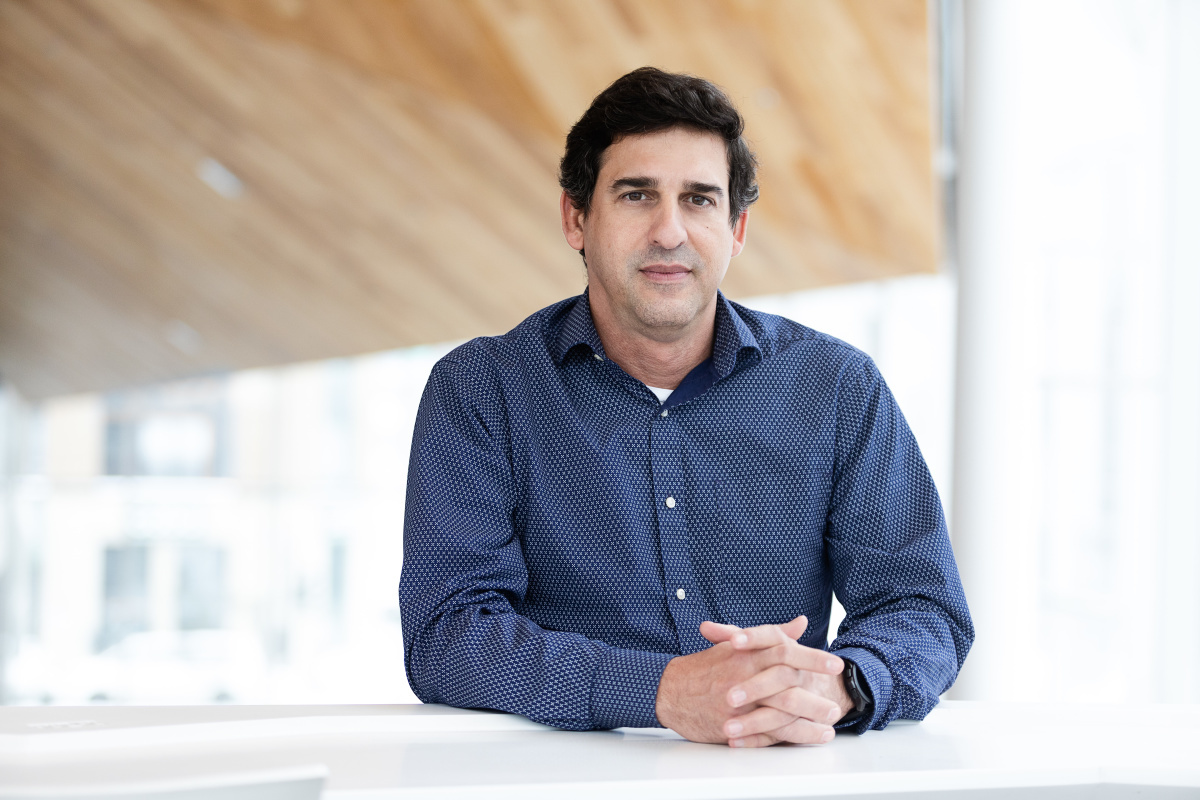
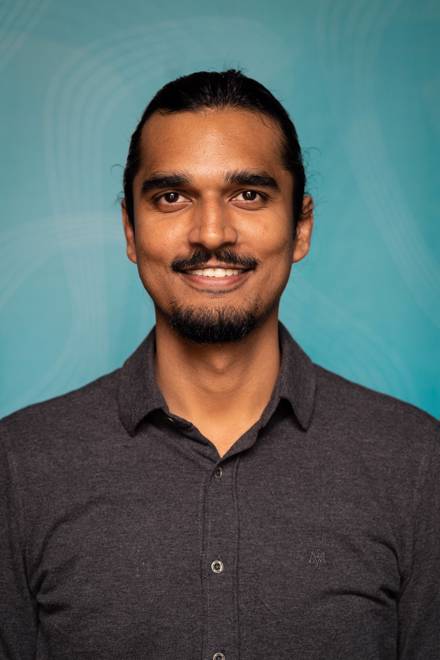
Carlos Vázquez is a Professor at the Department of Software Engineering and IT, École de technologie supérieure (ÉTS). He holds a B.Eng. and M.Sc. from ISPJAE, Cuba, and a Ph.D. from INRS, Montreal. His research focuses on computer vision, medical imaging, 3D reconstruction, and immersive video technologies. He co-leads the Summit Tech Research Chair in Immersive and Interactive Video and is affiliated with the Multimedia Research Laboratory (LABMULTIMEDIA) and the Open Innovation Laboratory in Health Technologies (LIO-ÉTS). His expertise includes stereoscopic imaging, multi-view video coding, and GPGPU programming. Notable research axes are software systems, multimedia, cybersecurity, and health technologies. He has supervised numerous doctoral and master’s theses, including works on 3D spine reconstruction, personalized femur modeling, and immersive video compression. Key contributions include advancements in medical imaging analysis, 3D reconstruction from biplanar radiographs, and efficient video coding for virtual reality. His work bridges clinical applications and engineering, with implications in surgical planning, patient rehabilitation, and multimedia systems optimization.
David Akin is a Professor and Director of the Space Systems Laboratory at the University of Maryland's A. James Clark School of Engineering, within the Department of Aerospace Engineering. He holds an AIAA Associate Fellow and Distinguished Lecturer title, with professional roles in multiple NASA committees and AIAA technical groups. His research focuses on space systems, EVA robotics, and human factors in exploration, supported by NSF grants and collaborations with NASA programs like ASTEP and RASC-AL. Education: B.S., M.S., Ph.D. in Aeronautics & Astronautics from MIT Research interests include planetary exploration robotics (e.g., BioBot suit), telerobotics, lunar base design, and space utility vehicles. Key projects involve Martian sampling systems, morphing spacesuits, and rover-based EVA support. His work bridges academia and industry through student competitions (e.g., winning RASC-AL awards) and advanced laboratory facilities like the Neutral Buoyancy Research Facility. Recent articles emphasize BioBot mobility systems, lunar habitat logistics, and exoskeleton teleoperation. Awards include AIAA recognition and leadership in NASA's Mars Exploration Program. Labs include the Space Systems Lab and Maryland Robotics Center, advancing technologies for next-generation space missions.
Puze Liu is a Senior Research Scientist and Deputy Head at the System AI for Robot Learning (SAIROL) department of the German Research Center for Artificial Intelligence (DFKI) , with a secondary affiliation at the Intelligent Autonomous Systems group of the Technische Universität Darmstadt . He completed his Ph.D. at TU Darmstadt under Prof. Jan Peters , focusing on safe reinforcement learning for real-world robotics. Education: Ph.D., Intelligent Autonomous Systems, TU Darmstadt M.Sc., Computational Engineering Science, Technische Universitaet Berlin Research Interests include robotics , reinforcement learning , safe exploration , and human-robot collaboration , with a focus on deploying learned policies in dynamic environments. His work addresses safety in high-dimensional tasks through constraint manifolds and implicit neural representations. Publication Trends span safe reinforcement learning , robot air hockey , kinodynamic planning , and reactive motion generation . Notable contributions include ReDSDF for real-time collision avoidance and ATACOM for constraint manifold control. Scientific Awards Best Paper Award Finalist (CoRL 2021) Best Entertainment and Amusement Paper Award Finalist (IROS 2021) IROS Student Travel Award (2022) Supervision includes mentoring students on topics like safe policy search , air hockey planning , and robot dynamics estimation . He is part of the SAIROL and Intelligent Autonomous Systems teams.
Frances K. Harper is an Associate Professor and Unit Head of Interdisciplinary Learning & Teaching at the University of Tennessee's College of Education, Health, and Human Sciences. Her research focuses on equity in mathematics education, emphasizing identity, power dynamics, and cultural relevance in teaching practices. NSF CAREER Grant (PLANAR): Centering Black and Latinx parents' voices in elementary mathematics education reform CRRAFT Partnership: Culturally relevant robotics and computational thinking in early childhood SEEK Initiative: Advancing STEM education in East Knoxville communities TEAM Teachers’ Circle: Supporting mathematics educators in Appalachian Tennessee Her work explores three key domains: curriculum adaptation to address power hierarchies, student identity negotiation in equity-focused classrooms, and family/community partnerships in educational reform. Recent publications analyze data visualization for social justice, cultural responsiveness in robotics education, and whiteness as a barrier to equitable pedagogy. Harper advocates for qualitative data methods that prioritize human stories, collaborating with parents on participatory action research while integrating arts-based approaches to humanize educational data. She maintains the solving world problems resource hub for equity-centered mathematics education.
Colin Holbrook is an Associate Professor at the University of California, Merced , affiliated with the School of Social Sciences, Humanities and Arts and the Department of Cognitive and Information Sciences . His research focuses on decision-making under threat , social determinants of trust , and human-AI interaction during crises . University of California, Merced Cognitive and Information Sciences Department School of Social Sciences, Humanities and Arts Research interests span evolutionary psychology , group prejudice , moral psychology , and human-robot interaction dynamics . Recent work investigates overtrust in AI recommendations , physical anthropomorphism effects , and cross-cultural pandemic behavior . Publications reveal consistent patterns in threat perception , social cognition , and robot trust calibration . Collaborative efforts include partnerships with institutions like the UCLA Center for Behavior, Evolution & Culture , the AHRC Culture and the Mind Project , and the Institute of Cognition & Culture . His lab develops virtual reality experiments for robot-guided emergency scenarios while exploring cognitive adaptations through transcranial magnetic stimulation and behavioral studies across diverse populations.
Dr. Hien Bui is a Lecturer in Marketing and Programme Director for MSc Marketing and MSc Strategic Digital Marketing at York Business School, York St John University . Her academic work bridges artificial intelligence , services marketing , and consumer behavior within tourism and hospitality contexts. Academic Affiliation: York Business School, York St John University Key Research Themes: AI applications in tourism, service robots, digital innovations, sustainable hospitality Her research focuses on the intersection of technology and consumer experiences , particularly examining: How human-like traits in service robots affect perceived authenticity and value The impact of AI-generated visual content on tourist decision-making Transition of commercial foodservices toward triple bottom line sustainability Behavioral patterns of older consumers in digital spaces Role of generative AI in value co-creation/destruction dynamics Recent publications in journals like Journal of Hospitality Marketing & Management and Tourism Management Perspectives reveal trends in digital transformation and emerging consumer technologies within the travel industry. Her QR-funded projects include: QR22-23-87 : Human-like service robots in hospitality QR23-24-26 : AI authenticity in tourism Institute of Social Justice Grant : Financial support uptake among older populations As an active reviewer for 15+ journals and editorial board member of Tourism and Hospitality Research , Dr. Bui shapes academic discourse while teaching postgraduate modules in Digital Marketing and Strategic Brand Management.
David Kingston, Ph.D., serves as Assistant Professor at the University of Nebraska at Omaha's College of Education, Health, and Human Sciences and directs the Movement Analysis Core Facility (MOVAN). MOVAN manages seven laboratory spaces in the Biomechanics Research Building, supporting UNO researchers and external partners including Children's Nebraska – Orthopedics and Fortune 500 robotic surgery company Intuitive Surgical Inc. His research centers on biomechanics with specialized focus on gait rehabilitation , pediatric mobility , and improving orthopedic surgical outcomes for lower limbs. Kingston employs advanced methodologies including 3D movement analysis, electromyography of muscle activation, and foot pressure distribution to address mobility challenges in children with neuromuscular disorders (particularly cerebral palsy) and persons with diabetes. His NIH-supported work pioneers data-driven rehabilitation protocols using both aquatic and conventional therapeutic environments to optimize clinical decision-making. Analysis of Kingston's recent publications reveals a dominant research trajectory in comparative gait mechanics across diverse populations. His work consistently examines environmental interactions (aquatic vs. land-based), device efficacy (knee walkers, biofeedback systems), and pathological conditions (cerebral palsy, stroke, diabetes). Key trends include the quantification of pelvic motion irregularities, plantar pressure adaptations during assistive device use, and validation of markerless motion capture systems for clinical applications - demonstrating clear translational impact for surgical planning and rehabilitation protocols. As Director of MOVAN, Kingston oversees a critical research infrastructure serving as Nebraska's biomechanics hub. The facility enables collaborative projects spanning pediatric orthopedics, diabetic mobility interventions, and robotic surgical development through partnerships with major healthcare providers and technology firms. His NIH-funded research program directly leverages this infrastructure to advance evidence-based rehabilitation practices.
Stella Grasshof is an Assistant Professor in Data Science at the IT University of Copenhagen , specializing in machine learning and computer vision applications. Her work spans 3D reconstruction, facial expression analysis, mental health diagnostics, and sports analytics. Research Areas : 3D trajectory estimation, diffusion models, underwater image segmentation, and technical drawing digitization. Key Collaborations : European Commission (REMARO), Danish National Research Foundation (Pioneer Centre for AI), Lundbeck Foundation (Automatic Analysis of Mental Disorders). Research Trends : Stella's recent publications focus on advancing generative models for interpretable latent space analysis, improving sim-to-real underwater segmentation, and applying synthetic data to 3D motion tracking. Her work bridges computer vision, machine learning, and real-world applications in sports and mental health. Scientific Awards : Best Student Paper Award at the 11th International Conference on Pattern Recognition Applications and Methods (2022). Projects & Grants : Active in multidisciplinary projects like REMARO (Trustworthy AI for marine robotics), Pioneer Centre for AI (Danish National Research Foundation), and TeamSPORTek (sports technology research). She has also developed datasets like MarinaPipe for marine robotics.
Sabrina Corpino is a Full Professor in the Department of Mechanical and Aerospace Engineering at the Polytechnic University of Turin. She serves as a Member of the PhotoNext Interdepartmental Center for Applied Photonics and holds scientific advisory roles with the Partnership Agreement with ALTEC, the International Astronautical Federation (IAF), and NEREUS. Research Interests: Aerospace design, systems engineering, CubeSat missions, and space propulsion. Key Projects: Scientific Manager for PNRR NODES Spoke 1, SINAV, Hera Mission Phase B/C/D/E1, and RAMSES CubeSat-1 Development. Teaching: Lecturer for 'Aerospace Systems' in multiple academic years and collaborator in interdisciplinary courses. Students: Supervises PhD candidates including Nicola Di Gruttola Giardino, Serena Campioli, and Antonio D'Ortona. Awards: Recipient of the 2018 ICAS Casimiro Montenegro Filho Award for Innovation in Aeronautics.
Lorenzo Vangelista serves as Associate Professor of Telecommunications at the Department of Information Engineering, University of Padua, Italy, a position held since 2006. He teaches core courses including Internet of Things and Smart Cities, Telecommunications, and Project Management. His academic leadership includes chairing the Information Engineering Degree curriculum from 2010 to 2014. His research expertise spans Internet of Things , Smart Cities , 5G systems (with focus on machine-to-machine traffic), DVB systems , and OFDM-based communications . He is a pioneer in LoRa and LPWAN technologies, contributing to standardization bodies such as IEEE 802.11, 3GPP, ETSI, and the LoRa Alliance. His work integrates statistical signal processing , embedded systems design , and protocol development for next-generation wireless networks. With over 80 publications, his recent work explores LoRaWAN enhancements for satellite IoT, vehicular communications, and interstellar optical systems. Key innovations include golden modulation for massive IoT and machine learning applications for network optimization. His research bridges theoretical advances with real-world deployment, as seen in field tests for vehicle-to-roadside communication and underwater acoustic modems. Professor Vangelista has supervised nine PhD students (including a dual PhD with Supèlec, Paris) and numerous MSc theses. He led European projects PACIF and SWAP (a Marie Curie best practice) and regional initiatives. His entrepreneurial endeavors include founding Patavina Technologies (acquired by A2ASmartCity in 2017) and Wireless and More, developing IoT solutions like the LoRa Suite. He maintains strong industry ties with Nokia Bell Labs, RAI, and Wisycom, and collaborates with international research centers including CTTC. His standardization contributions notably include co-authoring foundational DVB-T2 papers and serving as ETSI Rapporteur for LPWAN-CSS.
DAI Jiansheng is a Chair Professor at Southern University of Science and Technology (SUSTech) and Director of the Robotics Research Institute. He is a Fellow of the Royal Academy of Engineering (FREng), Fellow of the Academia Europaea, and holds multiple fellowships including IEEE, ASME, RSA, and IMechE. As Editor-in-Chief of the international journal Robotica, he has established himself as a leading authority in mechanisms and robotics research. His educational background includes a PhD from the University of Salford (1989-1993), a Master's degree from Shanghai Jiao Tong University (1982-1984), and a Bachelor's degree from the same institution (1978-1982). His academic journey has taken him from postdoctoral work at Salford University to research positions at Unilever Liverpool Research Centre before becoming a faculty member at the University of Sunderland and ultimately King's College London, where he served as Reader and then Chair Professor from 2007 until his current position at SUSTech. Professor Dai's research spans theoretical kinematics, screw theory, Lie algebra, and their applications to metamorphic and reconfigurable mechanisms. His pioneering work bridges the gap between versatile but expensive robots and efficient but non-flexible machines. His research interests include origami-inspired robotics, rehabilitation robotics for ankle treatment, soft robotics, and industrial applications in packaging and manufacturing. His theoretical framework has enabled significant advances in reconfigurable parallel mechanisms and metamorphic robotics. His extensive publication record shows a clear progression from fundamental theoretical work on screw algebra and Lie groups to practical applications in rehabilitation, manufacturing, and soft robotics. Recent publications demonstrate increasing focus on soft robotics, variable stiffness actuators, and continuum robots with Shape Memory Alloy applications, while maintaining strong theoretical foundations in screw theory and kinematic analysis of metamorphic mechanisms. ASME Mechanisms and Robotics Award (2015) ASME Machine Design Award (2020) IFToMM Excellence Award (2023) Tianjin Municipal Natural Science First Prize (2021) Crossley Award (2018) AT Yang Award in Theoretical Kinematics (2019) Professor Dai has supervised over 50 PhD students who now hold faculty positions at world-leading universities including University College London, Queen Mary University London, Purdue University, and Wollongong University. His research has been supported by numerous grants enabling the establishment of advanced robotics laboratories and international collaborations. He founded the IEEE Triennial International Conference on Reconfigurable Mechanisms and Robots (ReMAR), creating a major platform for international scholarly exchange in this specialized field. His research group maintains strong industry partnerships with companies including Cambridge Consultants, Goldman Sachs, and Amazon. The Robotics Research Institute he directs at SUSTech serves as a hub for interdisciplinary research, bringing together experts in mechanical engineering, computer science, biomedical engineering, and materials science. The institute focuses on both fundamental theoretical advances in mechanism design and practical applications in healthcare, manufacturing, and service robotics, with particular emphasis on metamorphic and reconfigurable systems that can adapt to multiple tasks.
Herke van Hoof serves as Associate Professor at the University of Amsterdam within the Informatics Institute, where he leads research in the AMLab at Science Park (Lab 42, L4.05). His academic journey spans from AI degrees at Groningen University through doctoral studies at TU Darmstadt under Professor Jan Peters to postdoctoral research at McGill University with Professors Joelle Pineau, Dave Meger, and Gregory Dudek. PhD: TU Darmstadt (2016), supervised by Prof. Jan Peters Postdoc: McGill University, Montreal AI Bachelor & Master: University of Groningen Van Hoof's research focuses on overcoming data inefficiency in reinforcement learning through modular and hierarchical approaches. His work explores how structured representations can enable knowledge transfer between tasks, improve learning efficiency, and facilitate applications in domains with complex state and action spaces. The lab investigates symmetry exploitation in multi-agent systems, gradient estimation techniques for discrete variables, and applications to combinatorial problem solving. His publication record shows consistent contributions to top AI venues including ICML, ICLR, NeurIPS, and JMLR over the past seven years. The research trajectory demonstrates evolution from foundational policy search methods toward increasingly sophisticated modular architectures, with recent emphasis on knowledge-assisted AI for critical infrastructure applications through the AI4REALNET project. Third place in ARC prize (Paper award) Van Hoof actively supervises PhD candidates and postdoctoral researchers, with current projects including human-robot collaboration using brain-computer interfaces (with Maryam Alimardani at VU) and interactive robot learning with flexible human input (through The Hybrid Intelligence Centre). His research receives support from multiple funding initiatives including the AI4REALNET project which focuses on applying AI to critical infrastructure systems. As co-organizer of the BeNeRL 2024 workshop and participant in the AI4REALNET consortium, van Hoof maintains strong connections with the broader European AI research community while directing the AMLab's research on modular reinforcement learning approaches.
Samar Abbas Nawaz is a Senior Researcher at the Peace Research Institute Oslo (PRIO) with expertise at the intersection of law and technology. He holds a PhD in "Safe integration of civil drones: Law, self-operation & infrastructure" from the Department of Criminology & Sociology of Law at the University of Oslo. His current research focuses on regulatory challenges of emerging technologies, particularly Artificial Intelligence and unmanned systems. Dr. Nawaz has been professionally involved in the legal field for nearly a decade, serving as a practitioner, in-house advisor, and academic researcher. His doctoral research was conducted as part of the 'RegulAIR' project funded by the Research Council of Norway between 2021-2024 under the supervision of Bruno O. Martins and Kristin B. Sandvik. His primary research interests lie in the regulatory frameworks governing emerging technologies, with special focus on: Legal challenges of integrating civil drones into civilian airspace Regulation of artificial intelligence in security and border management contexts Human oversight requirements for autonomous systems Infrastructure challenges for drone operations (U-Space) Policy coherence in EU regulatory approaches to drone technology and AI Conceptual issues in defining "autonomous operation" and "remote pilot" Dr. Nawaz's scholarly work demonstrates a consistent focus on the intersection of law, technology, and regulatory frameworks. His publications reveal an evolving research trajectory from foundational drone law analysis towards more complex issues of AI integration, autonomy spectrums, and institutional policy coherence. A notable trend in his work is the application of Science and Technology Studies (STS) perspectives to legal analysis of emerging technologies, highlighting regulatory lag and conceptual challenges in current frameworks. As a Senior Researcher at PRIO, Dr. Nawaz is currently working on the EU-funded 'TRANSCEND' project, researching challenges for civil society engagement in border management technologies. He is also engaged in an internal project analyzing AI-related frameworks in Kenya, Brazil, and South Korea. Between 2021-2024, he conducted doctoral research as part of the 'RegulAIR' project funded by the Research Council of Norway. In 2022 and 2025, he co-facilitated the 'Peace Research' summer course in collaboration with the University of Oslo.
Jorge Santos is Professor of Fishery Biology at The Norwegian College of Fishery Science, UiT The Arctic University of Norway, Tromsø. His work integrates fisheries ecology, socio-ecological systems, and innovative art-science approaches to address coastal and marine challenges. Research Focus: Fisheries ecology and bio-geography, trophic networks, effects of fishing, coasts and estuaries, small-scale fisheries, fisheries management, coastal culture, futures of coasts and fisheries, Blue Economy, education and outreach, and quantitative methods. Key Trends: Recent work emphasizes climate change impacts on marine communities, rotational harvesting effects, geographic life-history variations, and interdisciplinary art-science collaborations for ocean communication. His publications reveal a strong shift toward integrating ecological science with cultural narratives and future scenario planning. Scientific Recognition: No formal awards listed in provided materials. Advising: Supervises bachelor, master, and PhD students across biological and social dimensions of marine systems. Grants & Projects: Coordinates NorLanka Blue (marine sciences/blue economy in Sri Lanka), SAMAKI (MSc/PhD school in Tanzania/Zanzibar), and Blue Route (global PhD education). Serves on MASMA Programme Committee and leads consultancies for fisheries/education development. Active in CRAFT research group (Center for Arctic Humanities) and projects AFO-JIGG (small-scale fishing welfare) and FUTURES4Fish (coastal futures), Santos pioneers transdisciplinary approaches bridging science, art, and community engagement.
Bob Kirsch serves as Professor and Department Chair of Biomedical Engineering at Case Western Reserve University, where he also directs the Cleveland FES Center. His research focuses on restoring motor function for paralyzed individuals through neural engineering innovations in brain-computer interfaces and functional electrical stimulation systems. His educational background includes: Ph.D. in Biomedical Engineering from Northwestern University M.S. in Biomedical Engineering from Northwestern University (1986) B.S. in Electrical Engineering from the University of Cincinnati (1982) Dr. Kirsch's research spans intracortical brain-computer interfaces for movement restoration, neural decoding algorithms for grasp force and speech, and functional electrical stimulation integration with BCI systems. His work emphasizes closed-loop control architectures , artifact reduction in neural recordings , and reinforcement learning approaches for neuroprosthetic control, targeting clinical translation for tetraplegia rehabilitation. Analysis of his 2016-2020 publications reveals consistent focus on improving BCI calibration speed, enhancing movement decoding accuracy, and developing robust systems for real-world use. Key trends include leveraging human-generated rewards for controller training, addressing signal-independent noise limitations, and creating hybrid approaches combining cortical recordings with FES for functional movement restoration. His recognition includes: Faculty Distinguished Research Award from Case Western Reserve University (2023) As Department Chair and Cleveland FES Center Director, Dr. Kirsch leads multidisciplinary teams developing next-generation neuroprosthetics. His research program, supported by NIH and NSF grants, trains graduate students in neural engineering while advancing clinical applications through the BrainGate consortium collaboration. Current efforts focus on improving BCI communication rates and expanding movement restoration capabilities for paralyzed individuals. The Cleveland FES Center under his direction serves as a hub for neuroprosthetics innovation, integrating expertise in neural signal processing, biomechanics, and clinical rehabilitation to develop practical solutions for restoring lost motor function through implanted and non-invasive technologies.