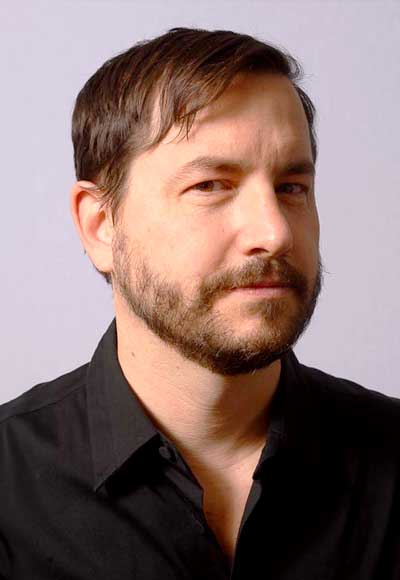
Katharina Fackler is a Lecturer in the Department of English, American Studies and Celtic Studies at the University of Bonn. Her research focuses on (Postcolonial) Ecocriticism, Life Writing, Visual Culture Studies, and Poverty Studies. She explores topics such as early American maritime literature, social photography history, and Black Feminism within civil rights movements. Her current projects investigate transoceanic life writing, the materiality of photography from analog to digital formats, and the visual legacies of social protests. She has published extensively on topics ranging from 19th-century Pacific narratives to Cold War famine iconographies. Her academic profile includes work on the intersections of class, space, and visual activism, particularly in contexts like the 1968 Poor People’s Campaign. She holds office hours Thursdays 1–2:30 PM at Genscherallee 3, room 3.022 during term time, with appointments required during breaks.
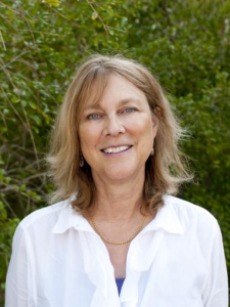
Dr. Ann Cleare is an Assistant Professor of Music and Media Technologies at Trinity College Dublin. She holds a PhD from Harvard University and an Honorary Doctorate from the National University of Ireland, recognizing her contributions to contemporary music. Her work spans concert music, opera, experimental sound installations, and hybrid instrument design, focusing on timbre, texture, and the psychological impact of sound. She is an artist-in-residence with the Crash Ensemble and a member of Young Academy Ireland. Her research explores intersections between sound and visual dimensions, exemplified by projects like rinn (a time-travel chamber opera) and TERRARIUM (a multimedia collaboration with Crash Ensemble). Key collaborations include works with Ensemble SurPlus, BBC Scottish Symphony Orchestra, and the National Symphony Orchestra of Ireland. Awards include the 2019 Ernst von Siemens Composer Prize and fellowships at Villa Concordia (2024) and Civitella Ranieri (2023). Her recent projects include MIDHE , a large-scale work commissioned by RTÉ for Ireland’s National Concert Hall, and The Little Lives , an opera addressing propaganda’s societal impact. Educational affiliations include Trinity College Dublin, IRCAM, and University College Cork. Education: PhD Harvard University, Studies at IRCAM, University College Cork Affiliations: Young Academy Ireland, Artist-in-Residence (Crash Ensemble) Notable Works: eyam series, eöl , Meridians , gravity dreams
Dr. Joeri Zwerts is an Assistant Professor at Utrecht University's School of Biology, specializing in Environmental Biology and Wildlife Ecology. His research focuses on managing multifunctional landscapes to balance resource production and biodiversity conservation, particularly in tropical forests. He evaluates the effectiveness of conservation strategies such as Forest Stewardship Council (FSC) certification and develops advanced biomonitoring methods using acoustic sensors and AI-driven camera traps. Key projects include assessing FSC-certified forestry impacts on African forest elephants and studying landscape connectivity in agro-commodity regions. His work bridges ecology, technology, and policy to inform sustainable practices. Research Themes : Planetary Health Landscape Connectivity Biomonitoring Innovations Wildlife Conservation in Human-Dominated Landscapes Recent publications highlight the benefits of FSC-certified forests for large mammals and the application of AI in real-time wildlife monitoring. He collaborates with organizations like the Precious Forest Foundation and serves on the Forest Stewardship Council’s Environmental Chamber.
Drew Daniel is a Professor and Director of Undergraduate Studies in the Department of English at Johns Hopkins University's Krieger School of Arts & Sciences. His work bridges early modern literature, critical theory, and contemporary artistic practices. He holds a Ph.D. in English from UC Berkeley and a Marshall Scholarship-funded B.A. in English Literature from Oxford University, alongside a prior degree in philosophy from UC Berkeley. Education: Ph.D. English (UC Berkeley, 2007), B.A. Philosophy (UC Berkeley), B.A. English Literature (Oxford University) Research explores intersections of affect theory, Renaissance epistemology, queer phenomenology, and avant-garde music. His 2022 book Joy of the Worm redefines understandings of suicide in early modern texts, while his 2013 Melancholy Assemblage applies Deleuzian theory to Elizabethan emotion studies. Collaborations with electronic duo Matmos integrate his theoretical work with sonic experimentation. Recent publications (2022-2025) analyze Shakespearean tragedy through queer temporalities, scatological symbolism in Antony and Cleopatra, and posthumanist readings of Renaissance devotional practices. His writing traverses film, visual art, and performance studies, maintaining rigorous interdisciplinary engagement. Teaching: Courses on Renaissance literature, critical theory, aesthetics at Hopkins, Berkeley, and San Francisco Art Institute Grants/Awards: Multiple book publications from top academic presses, ongoing creative collaborations Laboratory/creative work includes electronic music compositions with Matmos, exploring themes of queer soundscapes and industrial aesthetics. His research lab conceptually merges textual analysis with experimental sonic archives.
Barbara Kosta is Professor and Head of German Studies at the University of Arizona, with research focusing on gender, ethnicity, and identity in German/Austrian literature and film. Her scholarship examines cultural figures like Marlene Dietrich and Elfriede Jelinek through lenses of feminist theory, transculturalism, and historical memory. Notable publications analyze: Weimar cinema and star studies War narratives by women writers Turkish-German diaspora cinema Contemporary feminist literature Current project co-edits volume on Elfriede Jelinek's subversive aesthetics. Recipient of Fulbright and DAAD research awards, she has served as President of Women in German and on executive committees of major scholarly associations.
Michael Francis Duch is a Professor of Double Bass, Jazz, and Experimental Music at the Department of Music, NTNU. He has served as Deputy Head of Research and led initiatives like NTNU Artistic Research Week. Active in the Faculty of Humanities, he contributes to committees on artistic research implementation and national musicology initiatives. His research focuses on experimental music traditions, free improvisation, and collaborations with composers like Lene Grenager and Michael Pisaro-Liu. A prolific performer, he collaborates with ensembles like LEMUR and AMOR, touring internationally. Duch’s work bridges music, art, and interdisciplinary research, emphasizing improvisation’s role in contemporary practices. Education highlights include completing an artistic research fellowship at NTNU (2002–2018) and defending his project on free improvisation in 2010. He leads Norway’s artistic research school and editorial roles in VIS Nordic Journal. His performances explore spatiality, graphic notation, and historical avant-garde traditions, reflecting his commitment to expanding musical boundaries through artistic research.
Dr. Clare McCracken is a Senior Lecturer in the School of Art at RMIT University, serving as Program Manager for the Bachelor of Fine Arts and Photography (Honours). Her practice as an artist, curator, and researcher focuses on visual art, cultural geography, and cultural theory, with a critical exploration of mobility futures, climate change, and settler-colonialism. She holds a PhD from RMIT (2020), supported by a Vice-Chancellor's scholarship, examining mobility systems' impact on space and landscape through performance-based research. Her creative works include large-scale installations like The Becalmed Heart and Section 32 , temporary public artworks across Australia, and international exhibitions such as the 2019 Bienal de la Habana (Cuba) and Venice Biennale pop-ups. Notable awards include the RMIT Research Award (2019) and a Gold Award at UNLEASH (2017) for urban sustainability. Teaching and supervision interests include Art History, public space practices, and interdisciplinary research. Her work bridges art and academia, with publications in Geography, Urban Theory, and Anthropology.
Matthew J. Marr is an Associate Professor of Spanish at Pennsylvania State University, specializing in contemporary Spanish film, fiction, poetry, and popular culture. He holds a Ph.D., M.A., and A.B. from the University of Virginia and the College of William & Mary. His research focuses on age, disability, and cultural diversity in Spanish cinema, with notable works like The Politics of Age and Disability in Contemporary Spanish Film (2013) and Consequential Art: Comics Culture in Contemporary Spain (2019). His academic journey includes faculty roles at the University of Illinois at Chicago, Northwestern University, and Middlebury College. Marr has been awarded the James Whiston Memorial Prize (2019) and grants from Spain’s Ministry of Culture and Penn State’s Institute for the Arts & Humanities. His current research explores homeplaces and immovable property in Spanish film amid economic crises. Marr advises graduate students in related fields and has conducted extensive research in Spain, particularly in Madrid, Valencia, and San Sebastián.
Serena Ferrando is an Assistant Professor of Environmental Humanities and Italian at Arizona State University's School of International Letters and Cultures. She holds affiliations with the Humanities for the Environment Global Network, Lincoln Center Applied Ethics, and the Global Futures Scientists and Scholars program. Her research focuses on eco-digital studies of nonhuman elements in contemporary Italian poetry, digital humanities projects like the Navigli Project (exploring Milan's water canals), and experimental soundscapes. Education: Ph.D. in Italian Studies from Stanford University; M.A. in Comparative Literature and American Studies from UT Austin; B.A. in Modern Foreign Languages from Università di Genova. Research interests include modern Italian literature, digital humanities methodologies, sound studies, and environmental ethics. She has published in Rivista di studi italiani , Ecozon@ , and Italian Culture , among others. Current projects emphasize multisensory digital mapping and ecological poetry analysis. Teaching includes courses on Italian culture, environmental studies, and digital humanities. She co-edits academic journal issues on Italian poetry and ecology, and her work bridges literary analysis with environmental activism through innovative digital platforms.
Adjunct Professor Paul Roe is affiliated with the School of Computer Science in QUT's Faculty of Science. He holds a PhD from the University of Glasgow and an MEng from the University of York. His research focuses on interdisciplinary projects such as ecological acoustic monitoring, big data analysis, and Aboriginal communication systems. He leads the Microsoft-QUT eResearch Centre, a collaboration advancing tools for environmental research. Professor Roe has published over 200 papers, secured $10M+ in research funding, and supervised 21 PhD students. His work includes creating the world's first acoustic observatory (www.acousticobservatory.org) to monitor biodiversity via soundscapes. Education: MEng (Hons) in Engineering, University of York (1987) PhD in Computer Science, University of Glasgow (1991) Research Interests: Ecological Acoustic Monitoring Big Data & Machine Learning Indigenous Community Technologies Grants: Over $10M in competitive funding, with 50% in Category One research. Collaborations include Microsoft, Telstra, and Aboriginal organizations like the Anindilyakwa Land Council. Labs: Microsoft-QUT eResearch Centre, Australian Acoustic Observatory.
Professor Susan Fuller is a faculty member at Queensland University of Technology (QUT) within the Faculty of Science, School of Biology & Environmental Science. Her primary role is as a Professor in Ecology, specializing in conservation biology, biodiversity, and ecoacoustic innovations. She has been recognized for her research with Vice-Chancellor’s Performance Awards (2008, 2015) and for her teaching excellence with VC Awards for Excellence (2015–2016). Her work focuses on using interdisciplinary approaches, particularly ecoacoustics, to monitor ecosystem health and biodiversity. Her research interests include acoustic monitoring of endangered species (e.g., Pink Cockatoos), impacts of sensory pollution, and biodiversity assessments in agricultural landscapes. She collaborates with organizations like the Australian Wildlife Conservancy (AWC) and the Cotton Research Development Corporation. Teaching areas span conservation biology, ecology, and environmental science, emphasizing practical applications and student engagement. Professional memberships: International Society of Ecoacoustics (Councillor) Research grants: Includes projects on cotton industry sustainability and biodiversity monitoring Supervision: Overseen research on ecoacoustic assessments, frog evolution, and threatened plant genetics Publications highlight contributions to ecoacoustic methodologies, genetic analysis of threatened species, and landscape genetics of invasive species. Her work bridges ecology, technology, and conservation policy to address environmental challenges.
Rasheed Tazudeen is a Lecturer in English at Yale University, holding a Ph.D. from the University of California, Berkeley (2015). His research critically examines intersections of ecology, race, and sound in 20th- and 21st-century literature and music. His first book, Modernism’s Inhuman Worlds (Cornell UP, 2024), explores modernist responses to ecological precarity and nonhuman being through a decolonial lens. Current projects include The Musicked Earth , investigating diasporic sound ecologies in Black Atlantic, Caribbean, and Indian Ocean cultural works. His scholarship bridges ecocriticism, postcolonial theory, and sound studies, analyzing works by authors like Woolf, Joyce, Gumbs, and Coltrane. He co-founded Yale’s Antiracist Pedagogy Reading Group and developed a research guide on oral history as decolonial methodology. Key themes include decolonizing knowledge systems, antiracist pedagogy, and reimagining ecological futures through sound and metaphor. Publications span journals like Parallax and Humanities , with upcoming work in Black Environmentalisms (Duke UP, 2025) and the Oxford Handbook to Queer Modernisms . His interdisciplinary approach synthesizes literary analysis with musicology and environmental humanities, emphasizing marginalized voices in global ecological discourse.
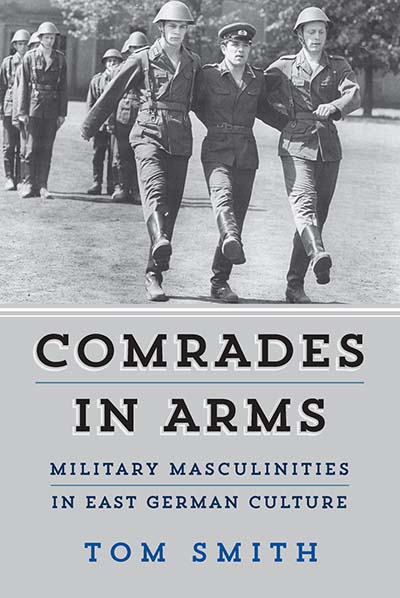
Dr. Tom Smith is a Senior Lecturer in German at the University of St Andrews' School of Modern Languages. He previously taught at Newcastle University, University College London, and Oxford's Worcester College and Lady Margaret Hall. His research focuses on post-war German literature, queer studies, music culture (especially electronic music in German contexts), East German cultural history, and decolonizing pedagogical approaches. He leads a project exploring queer-of-color perspectives in Germany's 1980s club scenes, funded by a Carnegie Trust grant. Notable achievements include being an AHRC/BBC New Generation Thinker (2019) and authoring Comrades in Arms: Military Masculinities in East German Culture (2020). Education History: Positions at Newcastle, UCL, and Oxford Colleges Key Projects: Afrogermanic? grant project, EGS equitable German studies initiative Broadcast Work: BBC Radio 3 contributions on techno's racial origins and GDR queer history Research interests span East German military masculinities, queer phenomenology in club culture, and decolonial academic practices. Supervised PhD topics include East German cultural studies and queer methodologies. Grants: Carnegie Trust Research Incentive Grant. Collaborations: Co-founded EGS platform for equitable German studies with Nicola Thomas, Rey Conquer, and Richard McClelland.
Maria Fernanda Bustamante Escalona is a Research Fellow in the Department of Spanish Philology, specializing in Latin American and Caribbean literature with a focus on pre-Hispanic myths, gender studies, and poetic analysis. She has been actively involved in academic projects since 2009, contributing to over 40 peer-reviewed publications and research initiatives. A notable contribution is her work as a Fellow in the Ministry-funded Inventory of pre-Hispanic myths in Latin American literature (2012–2014). Her research interests span interdisciplinary topics such as women's writing in contemporary Latin America, the role of narrative voice in 21st-century fiction, and the cultural intersections between Cuban poetry and Francoist Spain. She has authored books on Dominican and Cuban literary movements, including El gato y su cubanía (2024) and La mensajera vegetal (2024), which explore poetic identity and Andean sound symbolism. Bustamante Escalona’s recent work emphasizes transatlantic literary networks and the reconfiguration of traditional myths through modern narratives. Her publications often bridge literary criticism with anthropological insights, as seen in her analyses of Caribbean poetics and indigenous cultural expressions. Key Projects: Ministry of Science and Innovation grant (2012–2014) on pre-Hispanic mythological influences. Notable Works: Supervised doctoral thesis on José Agustín Goytisolo’s Cuban literary connections (2016) and a thesis on Dominican 21st-century narrative (2010).
Philippe Blondel is a Senior Lecturer in the Department of Physics at the University of Bath, affiliated with multiple interdisciplinary research centers including the Institute for Sustainable Energy and the Environment, Water Innovation and Research Centre (WIRC), EPSRC Centre for Doctoral Training in Statistical Applied Mathematics (SAMBa), Institute for Mathematical Innovation (IMI), Centre for Mathematical Biology, and Centre for Climate Adaptation & Environment Research (CAER). Research Interests: His work focuses on underwater acoustics , including innovative sonar systems, passive acoustics, seabed and habitat mapping, and marine soundscapes—particularly in the rapidly changing Arctic. He also explores acoustic de-risking of offshore renewable energies and space imaging for situational awareness and space debris monitoring. His research is highly experimental, involving fieldwork across all oceans (except Antarctica), custom sensor platforms, and large-scale acoustic data analysis. Research Output Trends: His recent publications emphasize automated analysis of Arctic acoustic environments, seabed mapping using echosounders, and integration of robotics with seismic arrays. These reflect a strong trend toward data-driven, interdisciplinary approaches combining acoustics, environmental monitoring, and climate science. Scientific Awards: No specific awards are listed in the provided text. Supervision and Grants: He is actively supervising doctoral students and has led or collaborated on 19 research projects, including major grants from EPSRC, NERC, Innovate UK, and Horizon Europe. Notable projects include Bio-inspired Acoustic Tactical Navigation (BATNav), HiAOOS (High Arctic Ocean Observing System), and SHIMASU (Shipping and Human Impacts for Marine Arctic Sustainability). Labs and Teams: He collaborates with international teams and contributes to global scientific standards and policy. His work integrates with networks focused on sustainable development, particularly in renewable energy, climate adaptation, and biodiversity.