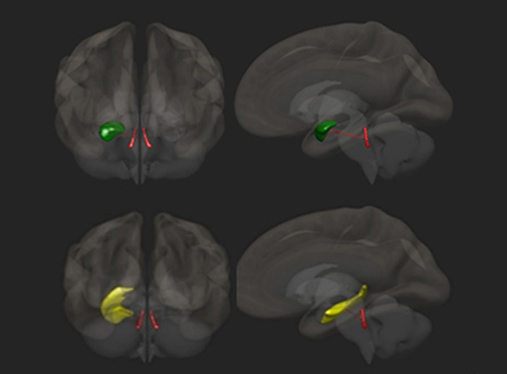
CLINT leads the Lab for Clinical & Integrative Neuroscience (Lab CLINT) at Trinity College Dublin , focusing on brain disorders through multimodal imaging and neuromodulation. The lab investigates predictive coding theory in phantom perceptions like tinnitus, Parkinson's, and chronic pain, while developing treatments through peripheral nerve stimulation. Research Pillars : Predictive coding, thalamocortical dysrhythmia, locus coeruleus noradrenergic pathways Key Disorders : Tinnitus, Alzheimer's, chronic pain, depression Scientific Contributions include: Developing TIDE consortium for tinnitus biomarkers Implementing BRAI3N clinic for neuromodulation therapies Creating Tinnitus Éire community for peer support Recent publications analyze: Deep learning applications for tinnitus prognosis HD-tACS effects on attention networks Bayesian models of chronic pain comorbidities CLINT's work bridges laboratory research with clinical translation, emphasizing patient-centered approaches and interdisciplinary collaborations across Europe and North America.
Dionysios Politis is an Assistant Professor at the Aristotle University of Thessaloniki in the Department of Informatics. He holds multiple degrees including a PhD in Informatics from Aristotle University (1998), a Master's in Computer Science from RMIT Australia (1991), and a Master's in Electronic Physics from Aristotle University (1990). His professional experience spans roles as Lecturer (2002), Special Educational Staff (1993-2002), and EU Expert in Legal Informatics. Research Interests: Politis leads research in interdisciplinary domains including Music Information Technology, Human-Computer Interaction, Mobile Device Interfaces, Legal Informatics, and E-Learning Methodologies. His work integrates computational approaches with cultural heritage preservation and accessibility technologies. Publications: Recent articles focus on computational musicology, biomedical interfaces, digital forensics in media distribution, and cross-cultural music analysis. Key themes include chromaticism modeling, ancient music reconstruction, cochlear implant technologies, and e-justice systems. Laboratory: Affiliated with the Multimedia & Human-Computer Interaction Computer Music Lab, where he explores audio-visual interfaces and digital sound applications.
Alison Kay is a Professor of Composition at the Royal College of Music, where she has been teaching since 2004. She holds degrees from the Royal Scottish Academy of Music and Drama, Guildhall School of Music and Drama, and Sussex University, where she completed her doctorate under Martin Butler. Her music is performed by leading ensembles including BBC Singers, Philharmonia Orchestra, and Tacet Ensemble, and has been featured at major festivals like Huddersfield and Brighton. BA(Hons) Royal Scottish Academy of Music and Drama ARCM(PG) Royal College of Music MMus Guildhall School of Music and Drama DPhil Sussex University Kay's compositional philosophy emphasizes physicality in music creation, focusing on instrumental properties and spatial acoustics. Her work explores visceral three-dimensional structures that balance rhythmic intensity with harmonic richness. Key projects include the 'Junctions' collaborations between classical and traditional musicians and upcoming commissions for the Goldberg project and Kevos Ensemble. Her compositions demonstrate particular interest in: Ethereal textural shapes Chamber ensemble innovation Extended piano techniques Sonic spatialization Collaborative classical/folk integration Dynamic structural gestures Alison Kay's recordings on NMC label include Rat Race performed by the Composers Ensemble and Two piano études performed by Stephen Gutman. Her works have been broadcast on Radio 3 and performed in the BMIC Cutting Edge Series, showcasing her commitment to contemporary music innovation through works like Dragon and Flux .
Haris Kittos is a Greek composer and visual artist teaching at the Royal College of Music since 2004, where he completed his DMus in 2008. His work bridges music composition , video art , and meditative drawing practices , exploring intersections between time perception , memory , and mental health . Doctor of Music (DMus), Royal College of Music (2008) Master of Music (MMus) with distinction, Guildhall School of Music and Drama (2001) Bachelor of Arts (BA), Thessaloniki music and fine art institutions His research investigates interdisciplinary art through projects like the Blue Touch Paper scheme with London Sinfonietta and RC Art exhibitions . Recent works focus on sensory memory triggers , ephemeral media , and cross-cultural collaborations with Japanese ensembles. Key trends in his 2025-2020 compositions include minimalist drawing techniques , time-based creative routines , and sound-visual integration . Major scientific awards include: First Prize, International Composition Competition Città di Udine (2016) First Prize, Greek Composers Workshops (2000) First Prize, Daryl Runswick Competition (1999) Honourable Mention, Earplay Competition (2017) Honourable Mention, Ensemble Nuove Musiche (2018) He mentors doctoral students and receives funding from AHRC , Daiwa Foundation , and RCM Research Development Fund . His 2024-2020 visual works employ frixion pens to document mental states through non-touching line patterns .
Dr. Martyn Smith serves as Senior Lecturer in Japanese Studies within the Department of East Asian Studies at the University of Sheffield's School of Languages, Arts and Societies. He joined the institution in 2019 after holding academic positions at Newcastle University, Birkbeck, Winchester University, SOAS, and Tokyo University of Foreign Studies (where he was Visiting Assistant Professor in 2018). His educational background includes BA and MA degrees in European Studies and French, followed by a PhD from SOAS (University of London) completed in 2014. After initial teaching experience in France, he spent seven years living in Japan's Kanto region working as an English language teacher before transitioning to academia. BA in European Studies and French MA in European Studies and French PhD from School of Oriental and African Studies (SOAS), University of London (2014) Smith's research centers on interdisciplinary sound studies within Asian contexts, examining how sound perception shapes gender, racial, and national identities through colonial and post-colonial experiences. His work decenters Western perspectives to analyze modernity in Asia through sound culture. Additional long-standing interests include Japanese nationalism, gender construction in media, and consumer society development in postwar Japan. His publication trends reveal a clear evolution from early focus on media and consumerism in Cold War Japan toward contemporary sound studies. The 2022-2023 period shows concentrated output on Asian sound cultures, particularly examining recording technology, aurality, and mobility within postwar contexts. Earlier work (2016-2018) established foundations in gendered consumerism through analyses of men's magazines like Heibon Punch. Smith co-founded the multi-year Asian Sound Culture Studies and Modernity Project with colleagues in Tokyo and the British Library. This collaborative initiative has produced significant outputs including the 2022 edited volume Asian Sound Cultures . His teaching portfolio includes core modules on East Asian studies, Japanese history, and gender identities. Current courses include EAS1000 (Exploring East Asia), EAS1032 (Understanding Japan 2), and EAS21008 (Gender and Identities in East Asia).
Andrew Kania is a Professor in the Department of Philosophy at Trinity University, College of Liberal Arts. His work focuses on the philosophy of music, ontology, and film analysis. Co-editor of The Routledge Companion to Philosophy and Music (2011) Research spans musical ontology, aesthetics, and cinematic narrative structures Key contributions to debates on musical recordings, jazz improvisation, and film realism Kania's recent publications (2011–2022) explore intersections between musical works and performances, the ontology of classical and jazz music, and philosophical interpretations of Christopher Nolan's films. His 2022 article The Heart of Classical Work-Performance redefines authenticity in musical interpretation. Emerging trends in his scholarship include the role of imagination in musical experience, ethical implications in artistic representation, and the ontological status of recorded music. While no explicit awards are listed, his prolific publication record demonstrates significant academic impact. Kania has collaborated extensively with Theodore Gracyk, particularly in editing foundational texts on music philosophy. Their work has shaped contemporary discourse around musical and cinematic realism.
Oliver Behrend is a Professor at the Department of Biology II within the Faculty of Biology at Ludwig-Maximilians-Universität München, where he serves as Managing Director of the Munich Center for Neurosciences - Brain & Mind . His research focuses on comparative neurobiology and auditory processing mechanisms across vertebrates. Behrend's work examines: 1) Amphibian lateral line systems for surface wave localization, 2) Mammalian sound localization through interaural time difference processing, and 3) Auditory feedback mechanisms in echolocating bats. His studies span neuroethology, auditory neuroscience, and sensory-motor integration. Publications reveal multidisciplinary approaches to sensory neuroscience with keywords: Neuroethology Computational neuroscience Auditory pathways Sensory integration Neural coding Comparative neuroanatomy Contact: o.behrend@lmu.de
Edward Golob is a Professor of Psychology in the College for Health, Community and Policy at the University of Texas at San Antonio (UTSA), where his research bridges cognitive psychology with critical healthcare and military applications. His work focuses on spatial cognition, attention mechanisms, and perceptual processes in both healthy and neurologically impaired populations. His academic foundation includes: Postdoctoral Fellow, University of California, Irvine Ph.D. in Experimental Psychology, Dartmouth College B.A. in Psychology, Capital University Dr. Golob's research program investigates spatial hearing in 360° environments , attentional modulation under sensory constraints , and cognitive mechanisms in medical diagnostics . His recent work demonstrates how hearing protection devices impair military personnel's spatial awareness and how targeted training can mitigate these deficits. In radiology, he pioneers eye-tracking methodologies to quantify expertise and reduce diagnostic errors. His studies on auditory attention reveal fundamental asymmetries between front and back spatial processing, while his work on listening effort identifies distinct fatigue and mood dimensions that impact communication. Analysis of his 2023-2025 publications shows a consistent pattern of translational cognitive science - taking laboratory findings into real-world settings like radiology suites and military operations. His research integrates machine learning with psychophysical methods to develop objective assessment tools, particularly in visual search optimization and spatial hearing rehabilitation. The cross-cutting theme is enhancing human performance through cognitive training and technology-assisted feedback. His professional recognition includes: Psychonomic Society Fellow (2017) While specific grant details and current advisees aren't documented in the source material, his active publication record in high-impact journals like Military Medicine and the Journal of the American College of Radiology indicates ongoing research leadership. His work directly addresses compliance barriers in hearing protection and diagnostic accuracy challenges in medical imaging through empirically validated interventions.
Fabrizio Riente is a Fixed-term Researcher at the Department of Electronics and Telecommunications (DET) , Politecnico di Torino. He holds academic responsibilities in multiple programs and contributes to editorial and conference committees. Member of College of Electronic, Telecommunications and Physics Engineering Invited Member of College of Computer, Film, and Mechatronics Engineering His research spans Nanocomputing , Quantum Technologies , and Machine Learning for environmental and healthcare applications, with a focus on: Qubit Control & Readout Systems IoT for Bee Health Monitoring 3D Audio-Visual Reproduction for Hearing Research Hybrid Simulation and Emerging Nanotechnologies Low-Power Electronic Systems His recent publications demonstrate interdisciplinary work bridging Quantum Electronics and Acoustic Ecology , particularly in developing VLSI architectures for novel applications. Notable scientific awards include Associate Editorship at Frontiers in Electronics and program committee roles at international conferences. He supervises PhD students in Quantum Engineering and Electronic Engineering , directing research projects funded by commercial contracts on quantum architectures and automotive technologies. His teaching portfolio includes courses on Microelectronic Systems and Low-Power Electronics .
Daniel Adolfo Llano is a Professor at the University of Illinois at Urbana-Champaign with multiple appointments: Professor in the Department of Molecular and Integrative Physiology, Neuroscience Program, and Biomedical and Translational Sciences. He serves as Director of the MD/PhD Medical Scholars Program at Carle Illinois College of Medicine and Theme Lead at the Beckman Institute for Advanced Science and Technology. His office phone is (217) 244-0740. Dr. Llano leads a laboratory investigating auditory processing mechanisms, particularly how complex sounds like speech are decoded by the brain. His research focuses on: Descending cortical projections in auditory processing Neural basis of generative sensory models Aging-related auditory network dysfunction Neurodegenerative disease mechanisms (especially Alzheimer's) Using electrophysiological, optical, and anatomical approaches, his team studies cortical-subcortical interactions in the auditory pathway. His recent publications (2019-2025) demonstrate strong focus on: Advanced neuroimaging techniques (super-resolution ultrasound, two-photon microscopy) Alzheimer's biomarkers (pTau proteins, amyloid detection) Auditory system organization (cortical layers, inferior colliculus) Neurovascular relationships in neurodegeneration Environmental impacts on auditory processing Major Scientific Honors: Presidential Early Career Award for Scientists and Engineers (PECASE, 2019) Helen Corley Petit Scholar (2017) Benjamin Goldberg Professorial Scholar (2017) Advances in Medicine Award, Carle Hospital (2016) Golden Apple Teaching Award (2015) Excellence in Teaching Recognition (2012-2019, 2021) Dr. Llano leads a research team at the Beckman Institute focusing on auditory neuroscience and neurodegenerative diseases. The laboratory employs cutting-edge techniques including in vivo two-photon imaging, ultrasound localization microscopy, and electrophysiology to study auditory processing and neurovascular changes in aging and disease models.
Dr. Marieke de Vries is an Assistant Professor at Utrecht University's Faculty of Social and Behavioural Sciences , affiliated with the Development & Education of Youth in Diverse Societies chair. Her work bridges Autism Research , Cross-Cultural Psychology , and Executive Functioning studies, with a focus on cultural influences on autism diagnosis, parental stress, and cognitive development. Current projects explore cultural differences in autism screening with PhD students Omidreza Fani and Wee Shin Ying Investigates language impacts on executive functions and music-autism trait relationships Previously studied neuropsychological consequences of pediatric diseases at Amsterdam Medical Centers Research Interests include autism's interaction with culture, multilingualism, and music; parental stress in neurodiverse families; and executive function interventions. She employs mixed-method approaches across clinical and educational contexts. Her recent publications analyze cultural validity of autism questionnaires , music's cognitive effects , and executive function training outcomes . Collaborations span institutions in the Netherlands, Malaysia, and international research networks. Academic Collaborations involve: Prof. Dr. Marian Jongmans (Utrecht University) University of Nottingham Malaysia Academic Medical Center Amsterdam Laboratory & Team Involvement : Lead researcher in Executive Function training games (e.g., Braingame Brian) Key player in the Dynamics of Youth (DoY) research program Co-developer of cross-cultural autism assessment protocols
Colin Andrews is a Lecturer at the School of Arts and Creative Industries, Edinburgh Napier University. His practice spans video, photography, installation art, sound, and light media, with works presented in galleries, cinema screenings, commissions, and public art contexts. He employs metaphor and analogy to explore connections between past/present/future and disparate subjects through visual, narrative, and aural associations. Research focuses on perception, uncertainty, time, memory, and technology's impact on human identity Investigates technological mediation of experience through recording devices, social media, and algorithms Active in the Art and Design Research Centre and Centre for Creative Practice Research Scientific Awards Fellow of The Higher Education Academy AHRC film award finalist (Innovation category) Recipient of multiple visual arts awards International artist residency in Ingolstadt, Germany His recent publications include contributions to the Journal of Design Practice and Research , while his creative works demonstrate expertise in interactive installations, light-based art, and site-specific interventions.
Lukas Haselböck is an Austrian composer and musicologist born in Vienna in 1972. He has been an assistant professor at the Institute for Musicology and Interpretation Research at the Vienna University of Music and Performing Arts since 2000. His academic career includes teaching, research, and significant contributions to musicological scholarship. He served as a visiting professor of music theory at the University of Music and Performing Arts Graz from 2007 to 2008. His institutional activities include board membership in the ÖGMW (2006-2009) and ongoing service on the works council of the University of Music and Performing Arts Vienna. He earned his Dr.phil. in musicology in 1997 with a dissertation on 'Analytical Investigations into Motivic Logic in Max Reger' and his Mag.art. in composition in 1999, studying under Iván Eröd and Erich Urbanner in Vienna. His scholarly work focuses on music analysis, aesthetics, and philosophy, with particular emphasis on 20th-century music, especially French music. His 2009 book on Gérard Grisey was the first German-language monograph on this composer, representing a significant contribution to spectral music scholarship. Since organizing the 'Sound Perspectives' symposium in 2009, Haselböck has increasingly focused on dimensions of sound and timbre in music analysis, addressing an area long neglected in traditional approaches. His methodological diversity bridges analytical, historical, and philosophical perspectives. His scholarly output spans from analyses of Max Reger's motivic logic to contemporary explorations of spectral music and timbre. His publications reveal a consistent exploration of spectral music, timbre analysis, and the intersection of philosophy and music, with a particular interest in how sound, atmosphere, and textual levels interact in musical composition. The most recent works demonstrate continued engagement with timbre studies, ecological perspectives in music, and interdisciplinary approaches to contemporary composition. 1998 Promotion Prize from Theodor Körner Foundation 1999 Ministry Appreciation Prize and scholarship from the Federal Chancellery 2000 Working Scholarship from the City of Vienna and Promotion Prize from the Czibulka Foundation 2001 Vienna Symphony Orchestra Composition Scholarship and grants from the Alban Berg Foundation 2019 Recognition Prize from the State of Lower Austria Haselböck has organized significant academic events including the Friedrich Cerha Symposium (2004) and 'Sound Perspectives' (2009). Since 2010, he has organized the Viennese New Music concert series 'cercle.' He serves on boards of musicological organizations including the ÖKB, ÖGZM, and IGNM, and acts as a musicological advisor to the Wiener Collage ensemble. His dual career as composer and musicologist provides him with a unique perspective that informs both aspects of his professional life.
Raphaël Magrou is a Lecturer in the Théories et pratiques de la conception architecturale et urbaine (TPCAU) field at the École nationale supérieure d’architecture Paris-Malaquais, a constituent school of PSL University. A DPLG-qualified architect specialising in performance venues and scenography, he created and leads the Master Studio on theatre architecture in partnership with the Comédie-Française. Education: DPLG architect diploma DEA (post-master) in History of modern and contemporary architecture Research interests: Magrou’s work interrogates the prospective evolution of performance spaces, morphological mutations of theatres, stage technology, stage writing, and the spectator’s constructed gaze. His on-going doctoral project, supervised by Sandrine Dubouilh at Université Bordeaux-Montaigne, analyses spatiality in the productions of author-director Joël Pommerat, focusing on the auditorium-stage relationship and the notion of the theatrical fourth wall. He is an active member of the ACS research laboratory at ENSAPM, the ARTES research group at Bordeaux Montaigne, and the International Federation for Theatre Research (Working Group Theatre & Architecture). He regularly contributes essays on new stage spaces to the magazines Théâtre(s) and La Scène . Recent publications (2021-22): Across four refereed chapters and journal issues, Magrou has explored how scenographic, acoustic and geometric innovations reshape live-performance venues. Recurring themes include the agency of scenographic models, the influence of sound on spatial perception, and the historical persistence of circular or centred stage forms. Advising & grants: No specific doctoral or master’s students are listed in the supplied text, and no grant information is provided. Labs & teams: Magrou carries out his research within the ACS laboratory of ENSAPM and the ARTES team of Université Bordeaux-Montaigne, collaborating with scholars in architecture, theatre studies and performance design.
Andrew Norman is a Grammy-nominated composer and Professor at the USC Thornton School of Music, renowned for his genre-defying orchestral works that blend cinematic storytelling with architectural metaphors. His compositions have been performed by leading ensembles including the LA Philharmonic and Royal Concertgebouw Orchestra. Academic Affiliation: Faculty member at USC since 2013 Major Works: Play (Grawemeyer Award winner), The Companion Guide to Rome (Pulitzer finalist), Switch, Split, Suspend Norman's research explores: Non-linear narrative techniques in music Extended instrumental techniques and physical gesture Temporal manipulation and hierarchical control systems Architectural and video game-inspired formal structures Interactive audience perception dynamics Human agency in orchestral performance His works feature in prominent festivals like Ojai and Tanglewood, with recent premieres at Carnegie Hall, Disney Hall, and international venues. Key collaborators include Gustavo Dudamel, Jeffrey Kahane, and Colin Currie. Major recognitions include: Musical America Composer of the Year (2017) Grawemeyer Award for Play (2017) Guggenheim Fellowship (2016) Rome Prize (2006) and Berlin Prize (2009) Three-time ASCAP award winner Pulitzer Prize finalist for The Companion Guide to Rome (2012) Norman actively champions music education through: LA Phil’s Composer Fellowship Program Educational residencies nationwide Compositions for youth ensembles Collaboration with music education initiatives