معرفی
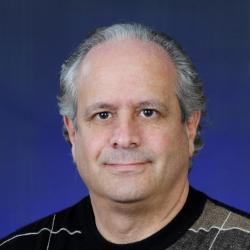
Edward Golob is a Professor of Psychology in the College for Health, Community and Policy at the University of Texas at San Antonio (UTSA), where his research bridges cognitive psychology with critical healthcare and military applications. His work focuses on spatial cognition, attention mechanisms, and perceptual processes in both healthy and neurologically impaired populations.
His academic foundation includes:
- Postdoctoral Fellow, University of California, Irvine
- Ph.D. in Experimental Psychology, Dartmouth College
- B.A. in Psychology, Capital University
Dr. Golob's research program investigates spatial hearing in 360° environments, attentional modulation under sensory constraints, and cognitive mechanisms in medical diagnostics. His recent work demonstrates how hearing protection devices impair military personnel's spatial awareness and how targeted training can mitigate these deficits. In radiology, he pioneers eye-tracking methodologies to quantify expertise and reduce diagnostic errors. His studies on auditory attention reveal fundamental asymmetries between front and back spatial processing, while his work on listening effort identifies distinct fatigue and mood dimensions that impact communication.
Analysis of his 2023-2025 publications shows a consistent pattern of translational cognitive science - taking laboratory findings into real-world settings like radiology suites and military operations. His research integrates machine learning with psychophysical methods to develop objective assessment tools, particularly in visual search optimization and spatial hearing rehabilitation. The cross-cutting theme is enhancing human performance through cognitive training and technology-assisted feedback.
His professional recognition includes:
- Psychonomic Society Fellow (2017)
While specific grant details and current advisees aren't documented in the source material, his active publication record in high-impact journals like Military Medicine and the Journal of the American College of Radiology indicates ongoing research leadership. His work directly addresses compliance barriers in hearing protection and diagnostic accuracy challenges in medical imaging through empirically validated interventions.