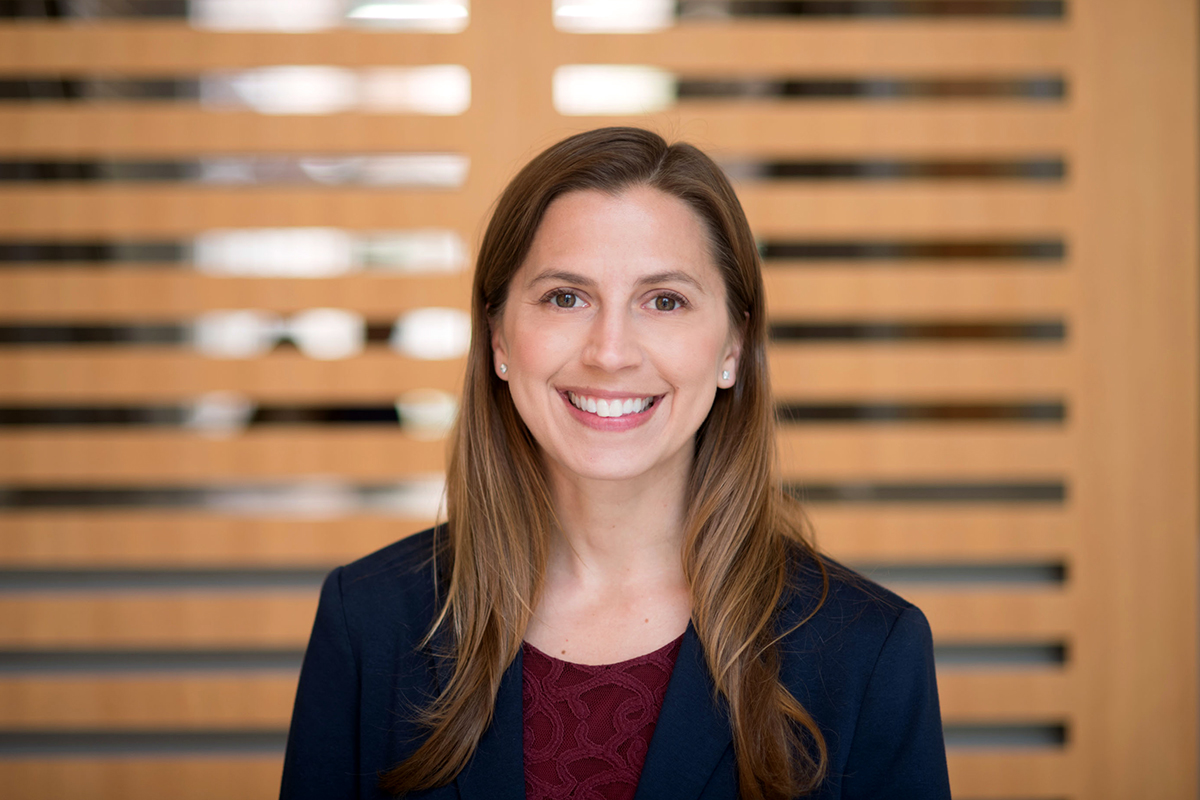
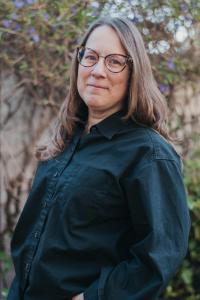
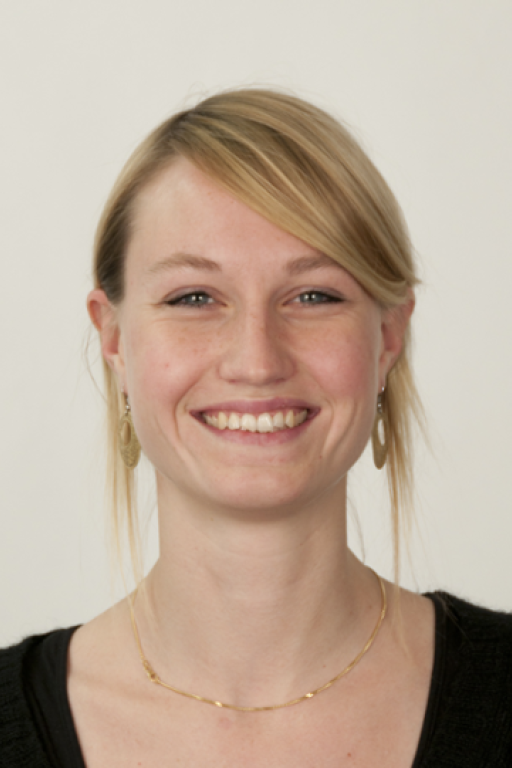
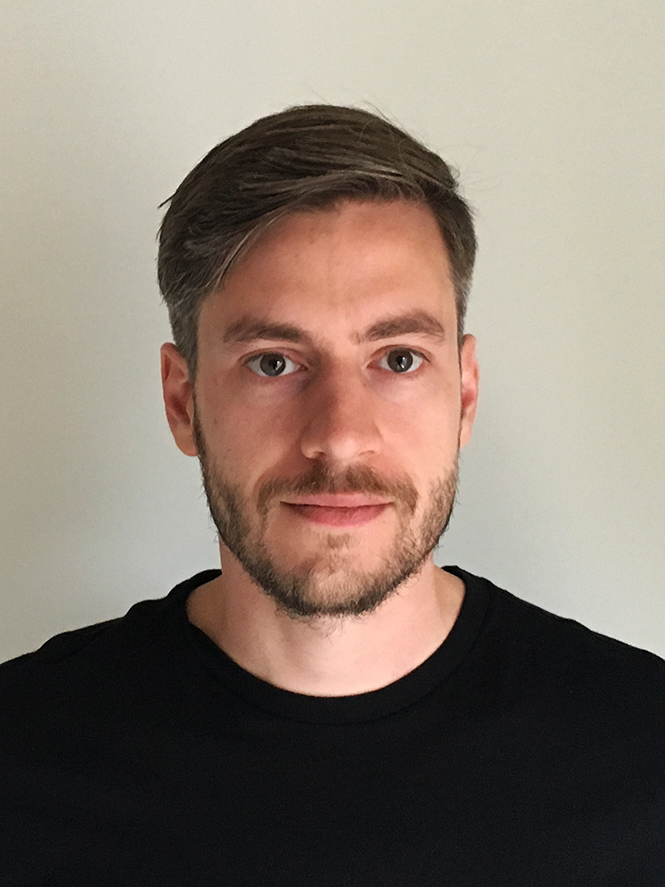
Sharese King is the Neubauer Family Assistant Professor of Linguistics at the University of Chicago, where she has taught since 2018. She earned her Ph.D. and Master's in Linguistics from Stanford University, focusing on language variation across African American communities. Her research bridges sociolinguistics, critical race theory, and phonetics to examine how African American speech is constructed, racialized, and socially evaluated. Education: Ph.D., Linguistics, Stanford University (2018) M.A., Linguistics, Stanford University Research Interests: Sociolinguistics Language Variation & Change African American Language Critical Race Theory Phonetic and experimental analysis Dialect and judicial systems Notable Contributions: Interdisciplinary studies on raciolinguistics and courtroom bias Analysis of /s/ articulation in intersectional contexts Reconceptualization of AAVE as AAL to emphasize linguistic diversity Fieldwork in Bakersfield, Rochester, and Chicago Publications in American Speech , Journal of Sociolinguistics , Language , and Nature Scientific Awards: Provost's Postdoctoral Fellowship Neubauer Family Assistant Professorship Labs & Projects: Co-founder of the Chicagoland Language Project
Gierad Laput is a Senior Engineering Manager at Apple, leading the Perception and Interaction Engineering organization under Machine Intelligence Neural Design (MIND) at Apple AI/ML (AIML). He is also an Adjunct Professor at Carnegie Mellon University's School of Computer Science and Human-Computer Interaction Institute. His research sits at the intersection of sensing systems, interactive technologies, and machine learning, with applications in ambient intelligence, wearables, and AI-driven interactive experiences. Ph.D. in Computer Science from Carnegie Mellon University Founding member of CMU's Future Interfaces Group Former Google Ph.D. Fellow, Disney Imagineer, and recipient of 10 Best Paper Awards/Nominations His research agenda at Apple leverages cutting-edge hardware to develop multimodal ML systems for vision, audio, and motion sensors, enabling features like head gesture detection for AirPods, Apple Intelligence integrations, and health monitoring tools. Recent collaborative projects include Vision Pro hand interaction systems and WatchOS updates for cycling/fall detection. Key research areas include human-computer interaction , machine learning for sensor fusion , and smart environment sensing . Over 35 publications cover transformative technologies like ViBand (bio-acoustic sensing), EM-Sense (touch recognition), SkinTrack (arm as touchpad), and ElectroDermis (stretchable electronics). Scientific honors include: Fast Company Innovation by Design Award (2017) Google PhD Fellowship (2018) Swartz Entrepreneurial Fellowship (2018) Best Paper Awards at ACM UIST (2016) and ACM CHI (2015) As an educator, he has taught courses at CMU and the University of Michigan on on-device machine learning , signal processing , and human-centered design . His lab has mentored numerous researchers now pursuing PhDs at MIT, UW, CMU, and Northwestern.
Kristen Grauman is a Full Professor in the Department of Computer Science at the University of Texas at Austin, where she leads the UT Computer Vision Group. Her research focuses on computer vision and machine learning, with applications in visual recognition, video analysis, and multi-modal perception. She received her B.A. from Boston College and her Ph.D. from MIT. Her research interests span visual recognition, image and video search, video analysis, first-person vision, embodied and multi-modal perception, and interactive machine learning. She has made significant contributions to the field, particularly in developing algorithms for understanding visual content and human activities from video, including foundational work on the Pyramid Match Kernel and relative attributes. Her recent publications reveal a strong emphasis on egocentric (first-person) vision, audio-visual learning, and view-invariant representations. There is a clear trajectory toward multi-modal integration (vision, audio, language) and real-world applications in instructional videos, human activity understanding, and embodied AI systems. She has received numerous awards including: AAAI Fellow (2019) J. K. Aggarwal Prize, International Association for Pattern Recognition (2018) Helmholtz Prize (2017) UT Austin Academy of Distinguished Teachers (2017) Best Paper Award, Asian Conference on Computer Vision (2016) Presidential Early Career Award for Scientists and Engineers (2014) Computers and Thought Award, International Joint Conferences on Artificial Intelligence (2013) Pattern Analysis and Machine Intelligence Young Researcher Award (2013) Alfred P. Sloan Research Fellow (2012) Marr Prize (2011) Prof. Grauman serves as Associate Editor-in-Chief for the IEEE Transactions on Pattern Analysis and Machine Intelligence. She has secured substantial research funding including the Presidential Early Career Award, NSF grants, and industry partnerships. Her advising has produced numerous influential publications and students who are now leaders in computer vision. She leads the UT Computer Vision Group, which collaborates closely with the Electrical and Computer Engineering Department. The group is pioneering large-scale egocentric video research through projects like Ego4D and Ego-Exo4D, focusing on real-world applications in human activity understanding, audio-visual perception, and interactive systems.
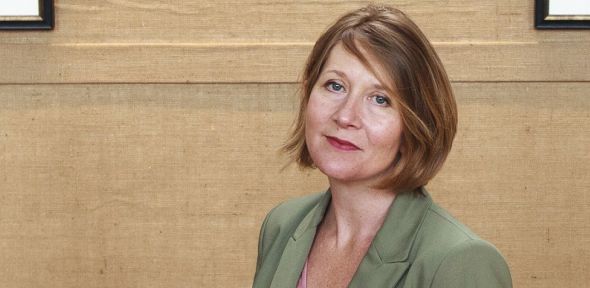
Professor Emma Widdis is a leading scholar at the Faculty of Modern and Medieval Languages and Linguistics at the University of Cambridge, specializing in the intersection of Soviet cinema, ideology, and cultural geography. Her work explores the reeducation of sensory perception through film, early Soviet urban spaces, and the construction of subjectivity via cinematic techniques. Teaches 20th-century Russian/Soviet literature, cinema, and film theory Focuses on sensory engagement, political avant-garde, and urban spatial representation Supervisor for MPhil and PhD students in Slavonic Studies Her recent book Socialist Senses (2017) examines how cinema shaped Soviet perceptions of reality. Her publications span topics like silence in sound film, set design materiality, and costume symbolism in early Soviet cinema. While no formal scientific awards are listed, her research has been supported through institutional grants and collaborations with centers like CRASSH and Cambridge Language Sciences.
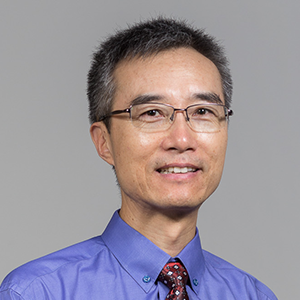
Shoudong Huang is a Professor at the School of Mechanical and Mechatronic Engineering , University of Technology Sydney, and Deputy Director of the UTS Robotics Institute. His research focuses on mobile robot navigation , SLAM , nonlinear state estimation , and surgical robotics . He has published over 200 papers and is recognized as one of the 100 Most Influential Scholars in Robotics (Aminer, 2018). PhD in Automatic Control, Northeastern University (China) Postdoctoral Research Fellow, University of Hong Kong (1998-2000) Research Fellow, Australian National University (2001-2003) Full-time academic roles at UTS since 2004 His work addresses challenges in robot localization across extreme environments (underwater, underground mining, surgical settings) and develops globally optimal SLAM algorithms with guaranteed performance. He has secured over $4 million AUD in external funding, including ARC Discovery grants and industry partnerships. Recent publications emphasize cross-modal calibration (camera-LiDAR), interval analysis for bounded noise , and template-based deformable surface reconstruction . These span applications in autonomous driving, surgical navigation, and UAV guidance. Chancellor’s Medal for Research Excellence (2020) Supervisor of the Year (2023) Best Paper Award (2016 ICARCV) Huang serves as Associate Editor for IEEE Transactions on Robotics and International Journal of Robotics Research , and has held leadership roles in top robotics conferences like IROS and RSS. His collaborations span MIT, USC, Zhejiang University, and industry partners including PMSW Research Pty Ltd and Multiplex Constructions Pty Ltd.
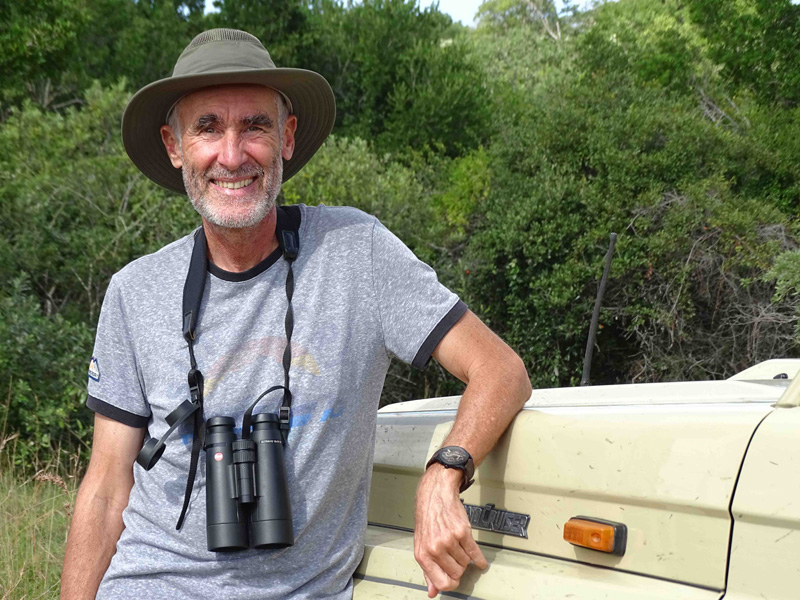
Nicolas Mathevon is a Professor at the University of Saint-Etienne and a Senior Member of the Institut universitaire de France (IUF). His research focuses on bioacoustics and animal communication, spanning from marine mammals to birds. He has held visiting positions at Hunter College (City University of New York) and the University of California, Berkeley. Education Habilitation à diriger les Recherches (2002, University of Saint-Etienne) PhD (1996, University of Lyon 1) Master's Degree (ranked 2nd, University of Lyon 1) Agrégation in Life and Earth Sciences (ranked 8th) Mathevon's research explores how animals use sound for social interactions, mate selection, and environmental adaptation. His work bridges bioacoustics, neuroethology, and behavioral ecology, with a focus on decoding vocal signals' complexity. His publications cover diverse topics including animal soundscapes, vocal memory in seals, and neural encoding of communication calls. The articles highlight interdisciplinary approaches combining neuroscience, behavioral studies, and acoustic signal analysis. Scientific Awards Prose Award for Excellence in Biological and Life Sciences, AAP (2024) Chevalier des Palmes Académiques (2017) IUF Senior Member (2015-present) IUF Junior Member (2005-2010) Mathevon has supervised 17 PhD students, 10 postdocs, and contributed to public outreach through media, documentaries, and public lectures. He leads the International Master of Bioacoustics program and serves as President of the International BioAcoustic Society.
Mary Bucholtz is a Professor in the Department of Linguistics at the University of California, Santa Barbara (UCSB). She holds affiliations with multiple departments including Anthropology, Feminist Studies, Spanish and Portuguese, the Gevirtz Graduate School of Education, Comparative Literature, and Latin American and Iberian Studies. Her research integrates sociocultural linguistics with anthropological, gender, and social justice frameworks. Education: PhD in Linguistics, University of California, Berkeley (1997) Bucholtz's work examines how language shapes and is shaped by social identities, particularly among youth, through dimensions like race, gender, and cultural practices. She emphasizes community-centered research , linguistic activism , and interdisciplinary methodologies to address systemic inequalities. Recent publications explore affective agency in Latinx youth, educational equity, and antiracist linguistics. Her collaborative projects often involve partnerships with educational institutions and youth communities in California, focusing on translanguaging , Black language justice , and raciolinguistic ideologies . Grants from the National Science Foundation, Spencer Foundation, and Wenner-Gren Foundation support her research. She co-edited the open-access volumes Decolonizing Linguistics and Inclusion in Linguistics (Oxford University Press, 2024), alongside authoring White Kids: Language, Race, and Styles of Youth Identity (Cambridge, 2011) and Talking College: Making Space for Black Language Practices in Higher Education (Teachers College Press, 2022).
Meredith Tamminga is an Associate Professor of Linguistics at the University of Pennsylvania, where she directs the Language Variation and Cognition Lab . Her work bridges sociolinguistics , psycholinguistics , and theoretical linguistics , focusing on how linguistic variability is represented in mental grammar and how social context influences speech perception and production. She co-leads the Philadelphia Signs Project , exploring sign language sociolinguistics with collaborators at Penn and Gallaudet University. PhD in Linguistics (2014), University of Pennsylvania BA in Linguistics (2009), McGill University Her research integrates experimental methods with naturalistic speech analysis to study individual and group-level language change. Keywords include phonetics-phonology mapping , intraspeaker variation , and quantitative modeling . Notable grants include NSF awards and SAS Dean’s Mentorship Award . Key affiliations include MindCORE , Penn’s hub for integrative mind sciences, and collaborative ties to the Phonetics Lab , Child Language Lab , and Cultural Evolution of Language Lab . Her lab emphasizes cross-departmental research and welcomes undergraduate RAs and PhD students.
WANG Ye is an Associate Professor in the Department of Computer Science at the School of Computing, National University of Singapore (NUS). He holds a PhD in Information Technology from Tampere University of Technology, Finland, and has been a tenured faculty member at NUS since 2002, following his industry research role at Nokia Research Center. He is the director of the Sound and Music Computing Lab at NUS, leading cutting-edge research in AI-driven music and health technologies. PhD, Information Technology, Tampere University of Technology, Finland (2002) MSc, Telecommunications, Braunschweig University of Technology, Germany (1993) BSc, Telecommunications, South China University of Technology, China (1983) His research is centered on Sound and Music Computing for Human Health and Potential (SMC4HHP) , with a focus on eHealth, eLearning, mobile/wearable computing, and music information retrieval. His work spans AI for stroke rehabilitation, language learning through singing, singing voice synthesis, and automatic music transcription. He has pioneered systems like SLIONS (language learning via karaoke), CocoLyricist (AI co-creation for stroke recovery), and SinTechSVS (expressive singing voice synthesis). The latest articles highlight a strong trend in AI-driven music and health technologies , particularly in controllable lyric generation, singing voice synthesis, automatic pronunciation assessment, and multimodal music transcription. The research increasingly integrates large language models, explainable AI, fairness, and real-world deployment, reflecting a shift from theoretical exploration to practical, human-centered applications in healthcare and education. Dr. Wang has received numerous scientific honors, including: Best Paper Awards at ACM MM, ISMIR, IEEE ISM, and CHI First Prize, Asia Pacific Assistive, Rehabilitative, and Therapeutic Technologies Challenge (2015) Faculty Teaching Excellence Award, NUS School of Computing (2024) Top Paper Award, ACM Multimedia 2022 AI in Medicine Collaborative Grant for CocoLyricist project He has supervised over 11 PhD and 20 MComp students and is currently guiding six PhD candidates. His grants come from MOE, NRF, A*STAR, Nokia, and Smule. He has served as General Chair of ISMIR2017 and TPC Co-Chair of ICOT2017, and is on the editorial boards of IEEE Transactions on Multimedia and Journal of New Music Research. He has also developed and taught the first course on Sound and Music Computing in Singapore. Dr. Wang leads the Sound and Music Computing Lab (SMC Lab) , a multidisciplinary team exploring the synergy of music computing, AI, mobile technology, and cloud systems for health and education. The lab actively collaborates with medical institutions such as NUS Yong Loo Lin School of Medicine, Singapore General Hospital, and Harvard Medical School, and is currently working on projects in AI-supported language learning, stroke rehabilitation, and intelligent music interfaces.
Pasquale Bottalico serves as Associate Professor in the Department of Speech and Hearing Science at the University of Illinois, with dual appointments as Associate Professor at the Center for Latin American and Caribbean Studies and Affiliate Faculty in the School of Music. His unique interdisciplinary profile bridges engineering, music performance, and speech science, reflecting his dual academic training and professional artistry. His educational foundation includes: Bachelor's in Telecommunications Engineering from Univeristà Mediterranea di Reggio Calabria, Italy Concurrent Opera Singing degree from F. Cilea Music Academy, Reggio Calabria Master's in Telecommunications Engineering from Politecnico di Torino, Italy Ph.D. in Metrology specializing in acoustics measurement uncertainty and classroom acoustics Dr. Bottalico's research centers on vocal load quantification and professional voice techniques , with significant contributions to understanding vocal fatigue in teachers and singers. His work spans Speech Intelligibility in educational environments, Room Acoustics for performance and learning spaces, and Musical Acoustics of historical vocal styles. A distinctive thread throughout his research examines how acoustic conditions modulate voice production and perception, increasingly incorporating virtual reality and bone conduction technologies for innovative assessment and intervention approaches. His Colombian vocal health study demonstrates cross-cultural applications of his work. Analysis of his 2023-2025 publications reveals three dominant research trajectories: (1) The impact of noise and dysphonia on children's speech processing in educational settings, using multimodal assessment including EEG; (2) Virtual reality applications for voice production research and therapeutic intervention; (3) Cross-cultural validation of vocal fatigue metrics and development of biofeedback systems. His work consistently bridges engineering precision with clinical applicability, particularly for professional voice users in challenging acoustic environments. No scientific awards were documented in the available information. While specific advising relationships aren't detailed, his research collaborations span international institutions including Colombian and Italian universities, suggesting graduate mentorship in interdisciplinary projects. No grant information was provided, though his systematic reviews and cross-cultural studies imply externally funded research activities. Though no dedicated laboratory is specified, his virtual reality voice studies and acoustic parameter assessments suggest affiliations with audio engineering facilities and voice clinics, likely through the Speech and Hearing Science department's research infrastructure.
Professor Carlo Harvey is a creative technologist at the School of Digital Arts (SODA), Manchester Metropolitan University. His interdisciplinary research merges games , machine learning , virtual production , and cultural heritage reinterpretation . He leads industry collaborations with entities like Jaguar Land Rover and Epic Games, focusing on AI-driven interactive audio, real-time visualization, and accessibility solutions. Award-winning projects : TIGA, Innovate UK, and Epic Games MegaGrant for Accession Industry partnerships : Automotive sector, cultural institutions His research spans human-computer interaction , multisensory virtual environments , and acoustic-visual cross-modal perception . Recent publications address robotic simulations, motion alignment, and haptic feedback systems. Scientific recognition : TIGA Award, Innovate UK Funding, Epic Games MegaGrant Advocacy : Digital inclusion, creative collaboration, social impact of technology
Viola S. Stoermer is Assistant Professor in Psychological and Brain Sciences at Dartmouth College, directing the BrainStörmer Lab. Her research examines cognitive and neural mechanisms of perception, attention, and memory using EEG and behavioral methods. Research investigates fundamental limits of selective attention and working memory capacity. Key findings demonstrate how meaningful objects expand memory capacity and how attention warps feature perception. Studies reveal cross-modal interactions where sounds influence visual processing and resolve ambiguities. Publications establish representational frameworks for attention, showing how feature-based selection operates globally. Research combines psychophysics with neural measures to characterize perceptual bottlenecks and capacity limits. Current Research Areas: Principles of selective attention in feature/space Meaningfulness effects on working memory capacity Auditory influences on visual perception
Nicolas Mathevon is a Professor at the University of Saint-Etienne, with a focus on Animal Behavior and Bioacoustics . He currently serves as Director of Studies at Ecole Pratique des Hautes Etudes and leads the ENES Team . His research explores acoustic communication across diverse species, including crocodiles, seals, penguins, and humans, with particular emphasis on vocal recognition, signal evolution, and neurobiological underpinnings. Major collaborations include Dr. T. Aubin (CNRS), Dr. I. Charrier (marine mammals), Dr. N. Grimault (crocodilian bioacoustics), and Prof. D. Reby (human communication). He also co-edits a new book, The Voices of Nature , published by Princeton University Press. His recent work spans ecoacoustic monitoring for conservation, multi-modal communication in crocodiles, and cross-species analysis of distress signals in bonobos, chimps, and humans. Neurobiological studies include brain activation patterns in response to vocalizations and sound localization mechanisms in reptiles. Scientific Awards include senior membership in the Institut universitaire de France .
Jan Herbst is a Professor of Music at the University of Huddersfield and Director of the Centre for Research in Music and its Technologies. His academic journey includes multiple doctorates (PhD, Dr. habil.) from Leuphana University Lüneburg and research expertise in popular music studies, music production, and systematic musicology. He leads AHRC-funded projects such as 'Heaviness in Metal Music Production' and 'Songwriting Camps in the 21st Century.' His work bridges practical music production and theoretical research, with over 80 publications including books like The Cambridge Companion to Metal Music and Heaviness in Metal Music Production . Herbst’s research focuses on metal music aesthetics, record production techniques, and the cultural dimensions of music technology. He has held roles at German and Swiss universities, including teaching guitar performance and music production. His editorial roles include the Cambridge Companions series and journals like Metal Music Studies . Current projects explore blockchain in music, gear acquisition syndrome, and extreme metal vocal techniques. His academic affiliations include the IASPM UK & I executive committee and editorial boards for major musicology publications. Herbst actively engages with industry through collaborations with producers and performers, maintaining a balance between academic rigor and practical music creation.
David Lindlbauer is an Assistant Professor at the Human-Computer Interaction Institute (HCII) of Carnegie Mellon University, where he leads the Augmented Perception Lab and co-directs the CMU Extended Reality Technology Center. His research bridges human perception, extended reality (AR/VR), and computational interaction techniques, focusing on developing systems that dynamically adapt interface elements based on environmental context, user cognition, and task requirements. He completed his PhD at TU Berlin under Prof. Marc Alexa and held a postdoctoral position at ETH Zurich's Advanced Interactive Technologies lab. His work has been published extensively at top venues including ACM CHI, UIST, and IEEE VR, with research themes spanning gaze tracking, spatial audio optimization, haptic feedback, and multimodal notification systems. Media outlets like MIT Technology Review and Fast Company Design have featured his innovations. Dr. Lindlbauer has received prestigious grants from Meta, NSF, and ETH Zurich, and serves on program committees for CHI, UIST, and ISMAR. He has been recognized with Best Paper awards at ISS 2023 and CHI 2016, and his lab develops tools like MineXR for personalized XR interfaces and RealityReplay for temporal change visualization in mixed reality environments.