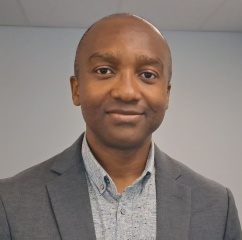
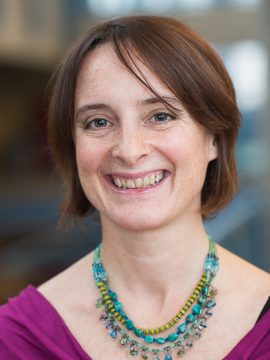
Milena Droumeva is an Associate Professor and Glenfraser Endowed Professor in Sound Studies at Simon Fraser University (SFU), serving as Director of the School of Communication since September 2024. Their research focuses on sound studies, gender, sensory ethnography, and urban soundscapes. They previously held roles as a postdoctoral fellow at York University and Associate Director of SFU’s School of Communication. Education: PhD in Education (SFU), MA in Interactive Arts and Technology (SFU). Current courses include CMNS 258 (History of Sound in Media) and CMNS 353 (Science, Technology, and Society). Research interests span mobile media, game-based learning, and sonic gentrification, with projects such as the 'Soundscapes of Productivity' Story Map and the 'Livable Soundscapes Toolkit' for community engagement. Affiliations include the International Community on Auditory Displays, Hush City Mobile Project, and WISWOS. They co-manage the Sonic Research Studio, exploring sonification, urban acoustics, and gender in video games. Their vision emphasizes revitalizing curricula, improving professionalization pathways, and enhancing the School’s role in civic literacy amid societal challenges.
Chris Joslin is a Professor at the School of Computer Science, Carleton University. His office is located in 4302 Canal Building, and he can be reached at Chris.Joslin@carleton.ca. He specializes in interdisciplinary research areas including computer graphics, medical imaging, virtual reality, computer vision, and human-computer interaction. His work bridges theoretical advancements with practical applications in animation, 3D modeling, and medical visualization. Research interests include developing novel techniques for 3D editing, medical image processing, and immersive virtual environments. Notable contributions include advancements in 3D Gaussian splatting, AI-driven MRI analysis, and robust sensor fusion for autonomous systems. His publications span from foundational studies on motion retargeting to applied work in procedural audio generation for soft-body simulations. Recent trends in his articles emphasize integration of deep learning with traditional computer vision tasks, optimization of medical imaging workflows, and enhancing accessibility in virtual reality systems. Despite prolific output, no scientific awards are explicitly mentioned in the provided texts. Advising and grant details remain unspecified, though his involvement in collaborative projects like VPARK and ISIS suggests engagement with interdisciplinary teams. His work is anchored at Carleton’s Herzberg Laboratories, a hub for advanced computational research.
Dr. Scott Bateman is an Associate Professor of Computer Science at the University of New Brunswick (UNB), where he leads the Human-Computer Interaction Lab and co-directs the Spatial Computing Research Centre (SPECTRAL). He holds leadership roles as Research Director of the Research Institute for Data Science and Artificial Intelligence (RIDSAI). His research focuses on applying emerging technologies like mixed reality, AI, and games to solve real-world challenges in healthcare, education, and industry collaboration. Education: PhD in Computer Science from the University of Saskatchewan (2012) Prior Experience: Researcher at Microsoft Research, IBM Watson Research, and institutions in Canada, Ireland, and Singapore. His research interests span Human-Computer Interaction , Mixed Reality , Serious Games , and AI-driven User Interaction . Recent work emphasizes wearable EMG-based control systems, AR/VR applications, and gamified training tools. His contributions have been recognized with a Best Paper Award and two Honourable Mentions at the ACM CHI Conference. Dr. Bateman actively collaborates with industry partners to translate research into practical solutions. He has designed health-focused games like Bubble Breather and Percussion Hero , which integrate biofeedback and gamification to improve patient adherence to therapies. His work also explores the ethical implications of discomfort design in wellbeing technologies. Labs/Teams: Human-Computer Interaction Lab (UNB), SPECTRAL (UNB)
Francis Juanes is Professor of Biology at the University of Victoria and holds the Liber Ero Chair for Fisheries Research. His lab studies fish ecology, marine acoustics, and conservation through field experiments and computational modeling. Research examines predator-prey interactions in marine ecosystems, salmon migration ecology, bioacoustic monitoring techniques, and anthropogenic noise impacts on aquatic life. Work integrates behavioral ecology with conservation applications for sustainable fisheries. Publications emphasize marine soundscape analysis, innovative acoustic monitoring methods, and evidence-based marine protected area design. Recent articles address global patterns in underwater acoustics and noise mitigation strategies. Awarded the Liber Ero Chair for leadership in conservation-focused fisheries research. Supervises graduate students in marine ecology and maintains field research stations across British Columbia.
Dr. Bill Kapralos is an Associate Professor at Ontario Tech University, with adjunct roles at York University and Shizuoka University. He leads the Collaborative Human Immersive Interaction Laboratory (CHISIL), focusing on medical VR/AR applications. His work bridges immersive technologies, serious gaming, and perceptual audio research. Education: BSc (Honours Computer Science, York University), MSc and PhD in Computer Science (York University). He has held leadership roles in conferences including chairing IEEE GEM 2014 and ACM FuturePlay 2007-2010. Awards include IBM CAS Faculty Award, Google Faculty Award, and Endeavour Fellowship. Research interests span medical simulation, spatial audio, and multimodal interaction. Key contributions include VR training systems for healthcare, perceptual studies in virtual environments, and serious game frameworks. His work is supported by SSHRC, NSERC, and industry partnerships. Technical Lead: CHISIL Lab Leadership: IMMERSe Syndicate (SSHRC) Keynote Speaker: SIM Expo 2017, IEEE IMCL 2016 Awards include IBM, Google, NSERC/JSPS, and Endeavour Fellowships. His interdisciplinary projects address clinical training, surgical education, and healthcare innovation through immersive technologies.
James Robb is an Associate Teaching Professor in the Faculty of Business and Information Technology at Ontario Tech University, where he specializes in Game Design and coordinates the Game Development Workshop in the Game Development and Entrepreneurship program. He holds a Master of Computer Science and is pursuing a part-time PhD focusing on e-sports and livestreamed game content, particularly exploring spectator experiences and player-audience dynamics. His research interests include interactive spectatorship, game audio design, and user experience evaluation. Robb teaches courses such as Digital Game Design, Game Development Workshop, and Discrete Mathematics. He actively collaborates with the Game Development Society to organize the annual GameCon event, showcasing student projects and fostering community engagement. His work bridges academic research with practical applications, emphasizing both player and spectator perspectives in evolving digital media landscapes. His publications span topics like controller design, audience effects on gameplay, and gamification strategies. He is affiliated with the Software and Informatics Research Centre (SIRC) and contributes to interdisciplinary research at Ontario Tech University.
Daniel Goldreich is an Associate Professor at McMaster University, holding joint appointments in the departments of Psychology and Neuroscience & Behaviour. His research bridges experimental and theoretical approaches to investigate tactile perception and neural processing. University: McMaster University School: College of Social Sciences Rank: Associate Professor Research Interests: Goldreich's laboratory explores how the nervous system decodes sensory input to generate perception, focusing on tactile phenomena such as perceptual learning, sensory compensation in blindness, sex differences in tactile acuity, developmental and aging changes in touch, and sensory illusions. His work integrates physics, neurophysiology, and probability calculus to build mathematically rigorous models of perception. Teaching Activities: He has taught advanced neuroscience courses since 2018, including Bayesian Inference (PSYCH 4KK3), Quantitative Methods (PSYCH 730), and various lab/research practicum courses at undergraduate and graduate levels. His teaching emphasizes hands-on learning and computational approaches. Contact: Phone: 905-525-9140 ext. 28666 Email: goldrd@mcmaster.ca
Richard Yanaky is a researcher and postdoctoral scholar at the School of Information Studies, McGill University. His work focuses on human-computer interaction, immersive technologies, and urban soundscape design. He holds an MSc from the University of Alberta and a BA from York University. Research Interests: Development of immersive tools for urban sound design Transdisciplinary collaboration in built environment planning Sound-based interaction systems Multimodal design interfaces Recent Work Trends : Recent publications emphasize the application of VR/AR for urban sound simulations, interdisciplinary tool development for non-specialists, and bridging gaps between acoustic professionals and urban planners. Awards : 2022 CIRMMT Student Travel Award 2022 McGill GREAT Award 2020 FRQSC Doctoral Grant 2018 Arthur C. Tagge Scholarship Grants include multiple FRQNT-funded projects (2021-2022) and collaborative initiatives like CIRMMT's 'Sound Fundamentals for Urban Professionals'. He has advised no students but collaborates closely with teams like the Multimodal Interaction Lab. Active in labs: Multimodal Interaction Lab Accessible Computing Technology Research Group
Mark Hannesson is an Associate Professor in the Department of Music at the University of Alberta's Faculty of Arts. He holds a BMus from Brandon University, an MMus from the University of Alberta, and a DMA in Composition from the University of British Columbia. His research focuses on acoustic and electroacoustic composition, human-computer interaction, experimental improvisation, and visual representation of music. He teaches courses in Composition, Music Technology, and Experimental Improvisation, leading the XiMe ensemble. As a composer and sound artist, Hannesson creates instrumental, electronic, and mixed works. He is affiliated with the Wandelweiser Collective and has exhibited works internationally, including hidden intensions (Mexico City, 2009), The Safety of Blankets (Russia, 2012), and Method and Madness (Canada, 2012–2013). His recordings appear on labels such as Edition Wandelweiser Records and Cyland Audio Archive. He actively performs live electronic music and recently contributed to the Extradition Ensemble's Extradition Plays Corner project, featuring a recorded performance of Philip Corner's work.
Kate Hennessy is an Associate Professor at the School of Interactive Arts & Technology (SIAT), Simon Fraser University. Her work bridges anthropology, digital humanities, and collaborative research-creation to address cultural heritage documentation and Indigenous-settler histories of place. Education MA, Anthropology of Media, University of London, School of Oriental and African Studies PhD, Anthropology, University of British Columbia Her research focuses on digital technologies’ role in safeguarding cultural heritage, Indigenous media practices, and collaborative methodologies. She directs the Making Culture Lab , which emphasizes reciprocal relationships with Indigenous communities, museums, and artists. Selected trends from her 15 most recent articles highlight explorations in transmediation , digital ethnography , and Indigenous knowledge systems . These works span collaborations with the UN’s One Planet Network, Indigenous communities, and interdisciplinary studies on technology’s materiality. Scientific Awards Confederation of University Faculty Associations of BC’s Early in Career Award (2017) FCAT Research Excellence Award (2019) FCAT Distinguished Teaching Award (2021) Kate mentors PhD students like Tylar Campbell and supports collaborative research through RA/TA funding. She advocates for ethical digital practices and community-led projects, particularly with Indigenous groups.
Oladapo Oyebode is an Assistant Professor in the Faculty of Computer Science at Dalhousie University, Canada. He is also the Co-Director of the Persuasive Computing Lab, where he leads research at the intersection of Human-Computer Interaction (HCI), Artificial Intelligence (AI), and Persuasive Computing. His work focuses on designing intelligent, adaptive, and personalized technologies for social good, particularly in health, wellness, education, and sustainability. PhD in Computer Science, Dalhousie University MSc in Computer Science, Western University, Canada His research interests center on Human-Centred AI , User Adaptive Systems , Persuasive Technologies , Dynamic User Modelling , and Intervention Design , with a strong emphasis on Digital Health . He explores how AI can be leveraged to deliver real-time, evidence-based, and personalized interventions that promote desirable behaviors in individuals and groups. His work integrates behavior change theories, multimodal data, and machine learning to create systems that are both effective and ethically sound. The most recent articles reflect a consistent trend in developing AI-driven, emotion-aware, and persuasive digital systems for health and wellness. These include gamified interventions, mobile apps for stress and sleep management, and social media-based analysis of public health sentiments. The research spans interdisciplinary domains such as mental health, nutrition, physical activity, and public health communication, often incorporating user-centered design and evaluation methodologies. Award-winning publications Media recognitions Oladapo Oyebode has over 10 years of industry experience in software engineering, machine learning, data science, and cloud solutions, including leadership roles such as Head of Innovation and Emerging Trends. He has served on editorial boards of reputable international journals and has reviewed for top-tier conferences and journals. His collaborative work spans academic and industry partners within and outside Canada. He mentors students and contributes to workshops and book chapters in persuasive technology and HCI. He is actively involved in the design and evaluation of persuasive systems, particularly in the context of mobile health and behavior change support systems. He is affiliated with the Persuasive Computing Lab at Dalhousie University, a research group focused on developing intelligent systems that support positive behavior change through persuasive and adaptive interfaces.
Nicolas Quaegebeur is an Associate Professor at the Department of Mechanical Engineering, Université de Sherbrooke, Canada. His research focuses on acoustics, biomedical technologies, signal processing, mechatronics, and non-destructive testing (NDT). He leads the Robotics Engineering Program and directs the Plateforme d'Instrumentation Mécanique de l'Université de Sherbrooke (PIMUS). Quaegebeur's work spans ultrasound applications in medical imaging, structural health monitoring, and industrial NDT. He develops advanced ultrasound transducer arrays, real-time imaging systems, and acoustic cameras for noise source localization. His projects integrate machine learning, guided wave propagation, and multi-physics data analysis. His research has produced 15+ recent publications in journals like NDT & E International , Journal of Neuroimaging , and Ultrasonics . These articles highlight applications in stroke diagnosis, composite material testing, and 3D medical imaging. He collaborates with institutions in France (Université de Bordeaux, Université de Lyon) and co-supervises PhD students. Honors include international mobility grants from France’s DGA, Best Poster/Paper awards from the Canadian Institute for NDE, and recognition at Acoustics Week Canada. He has secured over $1.5M in grants from NSERC, FRQNT, and industry partners like Pfizer Canada. Quaegebeur contributes to international conferences (IEEE IUS, SPIE, Acoustical Society of America) and holds patents in ultrasound NDT systems, active acoustic mapping, and structural condition monitoring. His team partners with LAFCUS (France) and maintains technical workshops like CRASH-UdeS Research Day.
Olivier Robin is an Assistant Professor in the Department of Mechanical Engineering at the Faculty of Engineering, Université de Sherbrooke, Canada. He joined the university as an Assistant Professor in 2021, following his roles as a Lecturer (since 2013), Research Professional (2015-2021), and Post-doctoral Researcher (2014-2015). He also has teaching experience at the University of Maine in France (2007-2013). His research focuses on acoustics, vibrations, noise control, and full-field vibration measurements. His work spans experimental methods, computational modeling, and practical applications in noise reduction and acoustic measurement techniques. He has developed innovative approaches including deflectometry for vibration measurement, methods for acoustic field synthesis, and applications of metamaterials for sound control. Dr. Robin's publication record shows a strong focus on turbulent boundary layer excitation, panel vibrations, sound radiation, and similitude laws. His recent work has expanded into science communication through comics and crowdsourcing listening tests, demonstrating an interdisciplinary approach that bridges engineering with human perception and educational outreach. Prix 'Yves Rocard' de la Société Française d'Acoustique (2014) Bourse Pratt & Whitney (2013) Bourse du vice-doyen à la recherche, Université de Sherbrooke (2013) 3e Prix d'excellence des professionnels et professionnelles de recherche 2021 - FRQNT 2020 CASCADE AWARD - Meilleure exposition, petite institution Dr. Robin has supervised 8 undergraduate internships between 2012 and 2021 and has been involved in numerous research grants totaling over $3 million. He serves as Principal Investigator on several projects including COMSILABE, flexible mechanical engineering laboratories, and positive energy compromise metamaterials for noise reduction. He is active in international collaborations, particularly with institutions in France, Chile, and Italy, and has organized multiple academic conferences including Acoustics Week in Canada 2021. His laboratory work focuses on vibroacoustics testing, full-field vibration measurements, and the development of novel acoustic measurement techniques. He leads the Material/Metamaterials axis of the Jacques Cartier Acoustics Center and has established collaborations with institutions worldwide to advance research in acoustics and vibration.
Rebecca Todd is an Associate Professor in UBC's Department of Psychology within the Faculty of Arts, and a member of the Centre for Brain Health. She specializes in cognitive neuroscience with a focus on the interaction between emotion and cognition in health and psychopathology. Her research employs brain imaging methods and laboratory experiments to investigate how we process affective salience and how this influences perception, learning, and memory. Dr. Todd earned her PhD in Developmental Science and Neuroscience from the University of Toronto in 2008. Prior to her academic career in neuroscience, she was a contemporary dance choreographer and journalist, which has informed her unique interdisciplinary approach to studying cognition through movement and interaction. Her research program focuses on neurocognitive processes underlying the interaction between human emotion and cognition. She investigates how we process affective salience (emotional/motivational importance) of objects and events, and how this influences perception, learning, and memory. Her work examines individual differences in how we filter the world to perceive specific categories of salient events (threatening vs. rewarding), how such filters develop over time, and their consequences for emotional health. Specific programs include investigation of neurocognitive processes underlying effects of acute stress on attention, learning, and memory, and attentional biases predicting treatment outcomes in depression. Dr. Todd's recent publications show an evolving research trajectory that increasingly integrates participatory sensemaking, ecological approaches to cognition, and multidisciplinary perspectives. Her work spans cognitive neuroscience, clinical applications, dance cognition, and embodied approaches to understanding how we interact with our environment. The breadth of her research demonstrates a commitment to understanding cognition as embedded in real-world contexts rather than isolated laboratory settings. Michael Smith Foundation for Health Research Scholar Award (2017) CIHR New Investigator Award (2016) Dr. Todd leads the Motivated Cognition Lab at UBC, where she employs a multi-method approach including EEG, fMRI, psychophysiology, eye tracking, and genotyping to assess how common genetic variations interact with life experience to shape brain activity. Her lab investigates how these interactions influence emotional filters for perceiving and remembering. She is affiliated with MATRIX-N: Multidisciplinary Alliance for Translational Research and Innovation in Neuropsychiatry, reflecting her commitment to interdisciplinary collaboration. While she is not currently accepting graduate students, her research continues to advance understanding of the neurocognitive basis of emotional experience and its impact on cognition.
Shana Poplack, CM, D. Litt, F.R.S.C., is a Distinguished Professor of Linguistics at the University of Ottawa and Director of the Sociolinguistics Laboratory since 1982. As a Canada Research Chair in Linguistics (Tier I) from 2001–2022, Fellow of the Royal Society of Canada (since 1998), and Fellow of the Linguistic Society of America (since 2009), her work bridges theoretical and applied sociolinguistics. D.Litt, Honoris Causa - University College Dublin (2017) Ph.D., Linguistics - University of Pennsylvania (1979) M.A., Linguistics and French Literature - New York University (1968) B.A., Romance Languages - Queens College, CUNY (1968) Her research specializes in linguistic variation and change through empirical analysis, focusing on bilingual language mixing, language contact, grammatical convergence, and the historical emergence of African American Vernacular English. She investigates how normative language prescription interacts with actual linguistic praxis, particularly in educational contexts. Recent work emphasizes code-switching mechanisms, phonetic integration in bilingual borrowing, and real-time language change dynamics. Publications span topics like grammaticalization of future tense in Brazilian Portuguese, subjunctive usage in North American English, and corpus-driven insights into Quebec French evolution. Member, Order of Canada (2014–present) Fellow, Royal Society of Canada (1998–present) Canada Research Chair, Tier I (2001–2022) Fellow, Linguistic Society of America (2009–present) The Sociolinguistics Laboratory under her direction has developed robust data management frameworks for multilingual corpora, contributing to open science initiatives like the Open Handbook of Linguistic Data Management . Her teaching includes advanced courses on sociolinguistic research and urban dialectology.