Peter Newman, Ph.D., serves as Dean of the Rubenstein School of Environment and Natural Resources at the University of Vermont since July 1, 2024, and holds the Suzie and Allen Martin Professor title. With a career spanning decades, he has conducted extensive research on visitor management in protected areas, soundscape management, and transportation planning, partnering with the National Park Service's Natural Sounds and Night Sky Division since 2012. Education Ph.D. in Natural Resources, University of Vermont M.S. in Forest Resource Management, SUNY College of Environmental Science and Forestry B.A. in Political Science, University of Rochester His research focuses on social carrying capacity decision-making in protected area management, with fieldwork across major U.S. parks including Denali, Grand Canyon, and Great Smokies. He has developed frameworks for acoustic management and Leave No Trace efficacy, contributing to sustainable outdoor recreation practices. Scientific Awards: Cooperative Ecosystem Studies Unit National Award (2012) George Wright Society National Award for Achievement in Social Sciences (2013) Throughout his career, Newman has led high-quality teaching at Penn State's Graduate Degree Program in Acoustics and mentored numerous students through research projects on wildlife approach norms, pandemic recreation shifts, and waste management strategies in national parks. He previously served as a Park Ranger in Yosemite and Backcountry Patrol member in Idaho.
Peter Karsmakers serves as Associate Professor at KU Leuven's Department of Computer Science within the Faculty of Engineering Technology, based at the Geel Campus. He coordinates the Declarative Languages and Artificial Intelligence (DTAI) research group and holds leadership roles including coordinator of Research and Education for Computer Science across Geel and Diepenbeek Campuses. Karsmakers earned his PhD in Engineering Science in May 2010, focusing on kernel-based learning algorithms for sparse modeling and efficient predictions from large datasets. His doctoral work established foundations for his current research trajectory in resource-constrained machine learning systems. His research integrates machine learning with signal processing for real-time sensor data interpretation, specializing in anomaly detection from acoustic, radar, and accelerometer signals on embedded devices. Current projects address industrial condition monitoring, elderly care systems, and livestock facility monitoring through three main tracks: acoustic monitoring (e.g., SINS, WATCHDOG), radar-based systems (e.g., FARADAY, NextPerception), and smart electronics for power converters. Recent publications demonstrate strong trends in constraint-guided deep learning architectures for industrial applications, cross-environment robustness in sensor systems, and domain-knowledge integration to reduce data requirements. His work consistently bridges theoretical machine learning with practical implementations in resource-constrained environments. No scientific awards or fellowships were mentioned in the provided materials. Karsmakers supervises over 10 master's theses annually and coordinates a research team of 10 PhD students and a post-doc within DTAI-ADVISE. He has secured approximately 2.3 million euros in funding through VLAIO, EU-ECSEL, and bilateral industry contracts, including 10 active projects such as AutoEdgeML (2024-2028) and Fault Tolerant Neural Networks for Space Applications (2024-2027). He leads the DTAI-ADVISE research group focused on developing software that attaches semantics to sensor data on resource-constrained devices. The team operates across multiple campuses with specialized labs for acoustic monitoring (Geel), radar-based systems (in collaboration with ESAT-TELEMIC), and smart electronics (with Electrical Engineering department), maintaining strong industry partnerships with companies in healthcare, manufacturing, and agriculture sectors.
Dr Bastien Lechat is a Research Fellow at Flinders Health and Medical Research Institute (FHMRI): Sleep Health, within the College of Medicine and Public Health at Flinders University. He is also a Full Member of the College of Science and Engineering and the Medical Device Research Institute. As an NHMRC Emerging Leadership Fellow, he leads innovative research at the intersection of sleep medicine, artificial intelligence, and wearable technology. Education: PhD in Sleep Health, Adelaide Institute for Sleep Health, Flinders University (2018–2021) Bachelor of Engineering in Engineering Science/Acoustics, Université du Maine, France (2014–2017) Dr Lechat’s research focuses on understanding the physiological mechanisms and consequences of obstructive sleep apnea (OSA), particularly night-to-night variability and patient subtypes. He develops AI-driven tools for efficient and accurate diagnosis using wearables and signal processing. His work aims to create a scalable, low-cost model of care for sleep-disordered breathing, addressing global diagnostic gaps. His recent publications reveal a strong trend in digital health innovation, with a focus on machine learning for OSA detection, circadian rhythm modeling, cardiovascular risk prediction, and climate impacts on sleep. His research has been published in top journals including Nature Communications , Journal of Sleep Research , and Sleep Medicine , demonstrating interdisciplinary reach. Scientific Awards and Recognition: NHMRC Emerging Leadership Fellow (2023) Helen Bearpark Memorial Scholarship (2022) Emerging Research Leader Award, Flinders University (2021) Multiple early-career awards from Sleep Down Under, Australasian Sleep Association, and Adelaide Sleep Retreat Ranked in the top 5% of international authors in sleep apnea by Expertscape Dr Lechat has secured over $2.5 million in competitive research funding and actively supervises and mentors junior researchers. He serves on the program committee of the American Thoracic Society meetings and contributes to clinical guidelines. He collaborates globally with industry and academic partners to translate research into clinical practice. Laboratories and Research Teams: He co-leads the 'Novel use of digital innovations & technology development' theme at FHMRI: Sleep Health, working closely with Professor Danny Eckert. His team integrates expertise in biomedical engineering, data science, and clinical sleep physiology to advance digital sleep medicine.
Dr. Steven Cummer is the William H. Younger Distinguished Professor of Engineering and Associate Chair of Faculty Affairs in the Department of Electrical and Computer Engineering at Duke University's Pratt School of Engineering. He is also recognized as a Bass Fellow at Duke University. Dr. Cummer received his educational foundation at Stanford University, earning his B.S.E.E. in 1991, M.S.E.E. in 1993, and Ph.D. in Electrical Engineering in 1997. After completing his doctorate, he spent two years at NASA Goddard Space Flight Center as an NRC postdoctoral research associate before joining Duke University in 1999. B.S.E.E. Stanford University, 1991 M.S.E.E. Stanford University, 1993 Ph.D. Stanford University, 1997 Dr. Cummer's research focuses on theoretical and experimental electromagnetic problems related to geophysical remote sensing and engineered electromagnetic materials. His work spans multiple disciplines, including lightning physics, terrestrial gamma-ray flashes, acoustic metamaterials, and transformation optics. He has made significant contributions to understanding the connection between lightning discharges and high-energy atmospheric phenomena, particularly terrestrial gamma-ray flashes (TGFs). His research in acoustic metamaterials has pioneered new approaches to sound manipulation and control, with applications in medical imaging, underwater acoustics, and noise control. Analysis of Dr. Cummer's recent publications shows a continued focus on atmospheric electricity phenomena, particularly lightning and terrestrial gamma-ray flashes, while simultaneously advancing the field of acoustic metamaterials. His work integrates experimental observations with theoretical modeling, often using sophisticated radio frequency and optical measurement techniques. The interdisciplinary nature of his research bridges electrical engineering, atmospheric science, and physics. Dr. Cummer has received numerous prestigious awards for his research contributions: National Science Foundation CAREER award (2001) Presidential Early Career Award for Scientists and Engineers (PECASE) (2001) Fellow of the Institute for Electrical and Electronics Engineers (2011) Stansell Family Distinguished Research Award from the Pratt School of Engineering (2018) As an educator, Dr. Cummer has taught a range of courses in electrical and computer engineering, including Fields and Waves, Waves in Matter, and various project-based courses. His research group has been consistently supported by grants from the National Science Foundation and other agencies, enabling both fundamental research and student training. Dr. Cummer has mentored numerous graduate students who have gone on to successful careers in academia and industry. Dr. Cummer leads a research laboratory that combines experimental and theoretical approaches to study electromagnetic phenomena. His team utilizes sophisticated radio frequency measurement systems, optical instrumentation, and computational modeling to investigate lightning physics, atmospheric electricity, and acoustic metamaterials. Recent field campaigns have included airborne observations of gamma-ray emissions from thunderstorms.
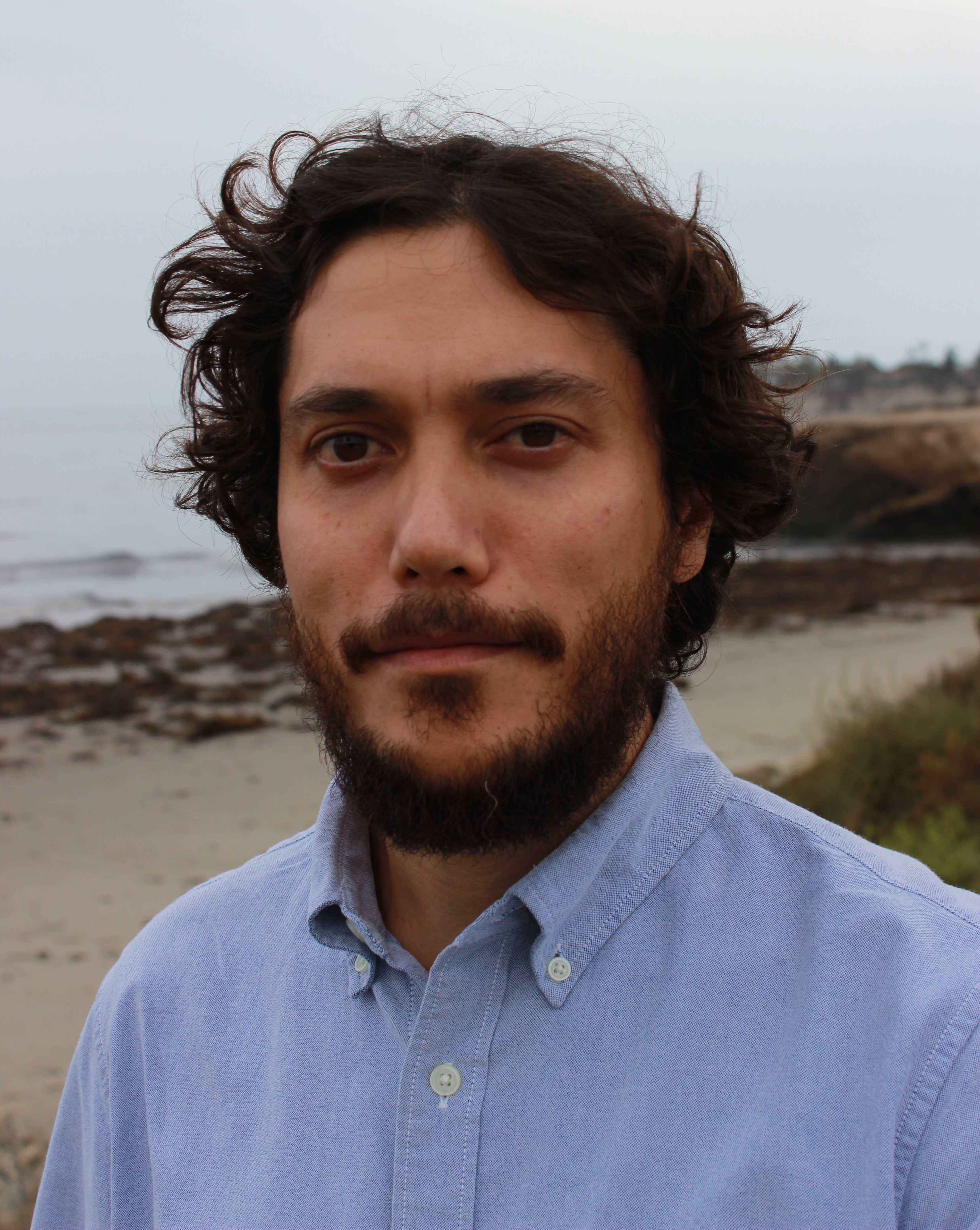
Robin S. Matoza is a Professor in the Department of Earth Science at the University of California, Santa Barbara (UCSB). His research focuses on volcano seismology, acoustics, and infrasound, with particular emphasis on understanding volcanic processes through seismic and infrasound data. He leads studies on volcanic eruption dynamics, infrasound propagation, and the application of seismoacoustic methods for hazard mitigation. Roles: Professor, Principal Investigator Affiliations: Department of Earth Science, Earth Research Institute, UCSB Research interests include volcano acoustics, infrasound source characterization, and the development of infrasound monitoring tools. He has contributed to global volcanic eruption detection systems, such as the IMS_VASC software for automated volcanic infrasound cataloging. His work integrates field data from volcanoes like Tungurahua (Ecuador), Yasur (Vanuatu), and Kīlauea (Hawaii) with computational modeling. Key projects include studying infrasonic signals from explosive eruptions, submarine volcanic activity, and the interaction between volcanic processes and atmospheric dynamics. He collaborates on international initiatives like the International Monitoring System (IMS) for nuclear treaty verification and volcanic monitoring.
Dr. Armin Mustafa is an Associate Professor in Computer Vision and AI at the University of Surrey, where he holds a prestigious Royal Academy of Engineering Research Fellow position. He is affiliated with the Centre for Vision, Speech and Signal Processing (CVSSP), the School of Computer Science and Electronic Engineering, and the Surrey Institute for People-Centred Artificial Intelligence (PAI). His research focuses on developing AI systems for visual understanding of complex dynamic scenes, with applications in entertainment, autonomous systems, and augmented/virtual reality. Dr. Mustafa completed his PhD in general dynamic scene reconstruction from multi-view videos in 2016 from the University of Surrey under the supervision of Prof. Adrian Hilton. Prior to his doctoral studies, he worked for three years (2010-2013) at Samsung Research Institute in Bangalore, India, in the field of Computer Vision. His research expertise spans Computer Vision, Scene Understanding, 3D/4D Vision, Virtual Reality, Light Fields, Machine Learning, Video Captioning, Augmented Reality, Artificial Intelligence, and Audio-visual Video Understanding. Dr. Mustafa has pioneered advances in 4D vision, NLP, and Scene Understanding over the past decade, with a particular focus on enabling machines to model and interpret real-world environments for socially beneficial applications. His work bridges theoretical advances in computer vision with practical applications in media production, virtual reality, and autonomous systems. Analysis of Dr. Mustafa's recent publications reveals a strong focus on multimodal learning, particularly the integration of audio and visual information for scene understanding. His work spans diverse areas including shadow detection and removal, audio event classification, video captioning, person image generation, and dynamic scene reconstruction. A notable trend is his exploration of transformer architectures for both vision and audio tasks, as well as the application of self-supervised learning techniques to reduce dependency on labeled data. Dr. Mustafa has received numerous prestigious awards: 2018 - Research Fellowship, The Royal Academy of Engineering, UK 2017 - Young Researcher award, CVPR 2016 - Doctoral Consortium grant, CVPR 2015 - BMVA travel grant for ICCV 2014 - Set-Squared Research to Innovator grant 2013 - Overseas Research Scholarship, FEPS, The University of Surrey 2010 - Cadence Silver Medal, Indian Institute of Technology, Kanpur As a dedicated mentor, Dr. Mustafa supervises several PhD students working on cutting-edge topics including multi-person reconstruction, audio-visual scene understanding, and automatic storyboard generation. His research is supported by significant grants including a £15 million UKRI Prosperity Partnership with the BBC (AI4ME), a 5-year Royal Academy of Engineering fellowship (4D Vision for Perceptive Machines), and multiple projects with industry partners such as Figment Productions and Foundry. Dr. Mustafa is an active member of the Centre for Vision, Speech and Signal Processing (CVSSP), one of the world's leading research centers in vision, speech, and signal processing. He also contributes to the Surrey Institute for People-Centred Artificial Intelligence (PAI), where he serves as a Surrey AI Fellow. His work often involves collaboration with industry partners and other academic institutions across Europe.
Archontis Politis is an Assistant Professor in the Department of Computing Sciences at Tampere University's Faculty of Information Technology and Communication Sciences. His research focuses on signal processing, machine learning, and their applications in audio engineering, particularly in spatial audio, sound source separation, and parametric audio coding. He explores topics such as Ambisonics, reverberation control, and neural network-based approaches for audio processing. His work emphasizes spatial audio reproduction, including six degrees of freedom (6DOF) rendering, microphone array processing, and efficient compression techniques for higher-order Ambisonics. He also investigates sound event localization and detection, leveraging machine learning for real-world acoustic scenarios. His contributions span theoretical advancements in spherical harmonics and practical implementations of spatial audio systems. Recent research highlights include developing datasets for music source separation, improving synthetic-to-real generalization in classical music, and creating neural encoding models for irregular microphone arrays. His methodologies often integrate deep learning with traditional signal processing to address challenges in multi-speaker environments and dynamic acoustic scenes.
Professor Guy Brown is Chair of Computer Science at the University of Sheffield's School of Computer Science. He holds a BSc in Applied Science (1984), PhD in Computer Science (1992), and MEd in Teaching and Learning (1997). His research focuses on Computational Auditory Scene Analysis (CASA), noise-robust speech recognition, auditory modeling, and binaural processing. Research interests include: Machine hearing systems for sound source separation Reverberation-robust speech processing Auditory scene analysis models for normal/impaired hearing Applications in robotics and healthcare technologies Publication trends show recent focus on deep learning approaches for biomedical applications including sleep apnea detection, respiratory sound analysis, and multimodal health monitoring systems using neural networks. Honors include: University Senate Award for Excellence in Teaching (2014) Microsoft Software Engineering Innovation Award (2013) He leads doctoral supervision for 15+ students and has secured research funding from EPSRC, Innovate UK, EU FP7, and AHRC. Manages the Speech and Hearing research group and has held visiting positions at international institutions including LIMSI-CNRS and ATR Japan.
Xavier Alameda-Pineda is a Research Director at Inria Grenoble Rhône-Alpes, where he leads the RobotLearn Team. He is affiliated with Université Grenoble Alpes and has been a key member of the Perception team. His work integrates machine learning, computer vision, and audio processing for scene understanding and human-robot interaction. Research Interests: His research lies at the intersection of multimodal machine learning and social behavior analysis. He focuses on developing algorithms for understanding human behavior in natural settings using audio-visual signals, with applications in robotics and AI companions. His work emphasizes real-world challenges such as noisy data, missing modalities, and dynamic environments. Publication Trends: His recent publications reflect a consistent focus on multimodal fusion, particularly combining vision and audio for social scene analysis. Themes include group behavior recognition, sound source separation, and cross-modal learning, often applied in robotics contexts. Scientific Awards: SIGMM Rising Star Award 2018 IEEE TMM Outstanding Associate Editor Award 2022 ACM TOMM Best Paper Award 2020 Best Paper Award, ACM MM 2015 Best Scientific Paper Award, ICPR 2016 Best Student Paper Award, IEEE WASPAA 2015 Outstanding Paper Award, ICMI 2011 Novel Technology Paper Award Finalist, IROS 2017 Advising and Grants: Xavier has mentored students and early-career researchers, evidenced by co-authored student papers. He coordinated the H2020 SPRING project on socially pertinent robots in gerontological healthcare and co-leads an AI chair on audio-visual perception for companion robots, indicating leadership in funded research initiatives. Labs and Teams: He is the leader of the RobotLearn Team at Inria and was previously part of the Perception team. He has also collaborated with the Multimodal and Human Understanding Group at the University of Trento.
Jilles Vreeken is a Professor of Computer Science at Saarland University and tenured faculty at the CISPA Helmholtz Center for Information Security, where he leads the Exploratory Data Analysis research group. He is also an ELLIS Fellow and Faculty of the Saarbrücken Unit on AI and ML. His work bridges theoretical foundations with practical applications in causal inference, unsupervised learning, and exploratory data analysis. Dr. Vreeken's research focuses on developing theory and algorithms for answering fundamentally exploratory questions about data: "what is going on in my data?", "what causes what and how?", and "what can we learn from this model?" without making unnecessary or unjustified assumptions. He takes a principled approach based on information theory to identify what is worth knowing, then develops efficient algorithms for extracting useful interpretable results. His work spans causal inference under realistic conditions (including hidden confounding, selection bias, and non-i.i.d. data), summarizing complex data and models in understandable terms, and combining these threads to create more robust and useful models across diverse data types. His recent publications demonstrate a strong trend toward causal discovery in increasingly realistic settings, including non-stationary time series, event sequences, and scenarios with hidden confounders. He has made significant contributions to federated learning, interpretable machine learning, and pattern mining. His work consistently applies information-theoretic principles to develop methods that are both theoretically sound and practically useful for extracting insights from complex data. Dr. Vreeken has received numerous prestigious awards including: IEEE ICDM'18 Tao Li Award for Excellence in Research IEEE ICDM'18 Best Paper Award UdS-CS'15 Busy Beaver Teaching Award ACM SIGKDD'11 Best Student Paper Award ACM SIGKDD'10 Doctoral Dissertation Runner-Up Award ECML PKDD'09 Best Student Paper Award As an advisor, Dr. Vreeken has mentored numerous doctoral researchers to completion, including Dr. Osman Ali Mian, Dr. David Kaltenpoth, Dr. Boris Wiegand, Dr. Sebastian Dalleiger, Dr. Janis Kalofolias, Dr. Jonas Fischer, Dr. Alexander Marx, Dr. Panagiotis Mandros, Dr. Kailash Budhathoki, Dr. Roel Bertens, Dr. Koen Smets, and Dr. Michael Mampaey. He has secured significant research funding as PI for multiple projects including "AI for Prediction and Therapy Guidance in Acute Stroke" (HAICU, 2025-2028), "Neuro-Explicit Models of Language, Vision and Action" (RTG, DFG, 2023-2028), and "Crushing Antimicrobial Resistance using Explainable AI" (HAICU, 2021-2024). Dr. Vreeken leads the Exploratory Data Analysis (EDA) research group at CISPA, which focuses on developing theory and algorithms for discovering novel insights from data, learning inherently interpretable models, and drawing reliable causal conclusions. The group has produced numerous influential algorithms and frameworks in causal inference, pattern mining, and exploratory data analysis, with applications spanning healthcare, materials science, and cybersecurity.
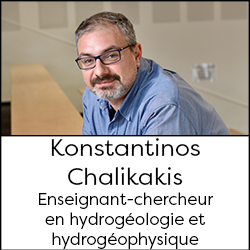
Konstantinos Chalikakis is a lecturer-researcher in hydrogeology and hydrogeophysics at Avignon University's UMR 1114 EMMAH laboratory. He focuses on groundwater sustainability and karst aquifer dynamics, coordinating the GeEAUde partnership chair involving Avignon University, INRAE, and IFPEN. His work integrates geophysical and hydrochemical methods to model groundwater systems in Mediterranean contexts. He leads projects addressing global change impacts on water resources and collaborates with international stakeholders. Key areas include karst recharge dynamics, evapotranspiration monitoring via remote sensing, and innovative techniques like muon detection. Chalikakis actively participates in science outreach, including the 2024 Science Festival, emphasizing groundwater's vital role in arid regions. Affiliations: Avignon University (UMR EMMAH), GeEAUde Partnership Chair Education: Not explicitly stated but inferred through academic role Research Interests: Combines hydrogeology with geophysics to study groundwater systems, particularly in karst environments. Key themes include: Groundwater recharge and availability Karst aquifer vulnerability mapping Multi-scale monitoring (gravimetric, isotopic, geoelectrical) Climate change adaptation strategies Grants & Projects: Coordinates national/international initiatives like GeEAUde, focusing on sustainable management in Mediterranean regions. Collaborates with Moroccan, Greek, and Malagasy institutions on field studies. Labs/Teams: Active in the Low Background Noise Underground Research Laboratory (LSBB) and OZCAR critical zone observatories. Leads hydrogeophysical teams integrating geophysical, chemical, and remote sensing data.
Daolang Huang is a Doctoral Researcher and Student in the Department of Computer Science at the School of Science, affiliated with Professor Samuel Kaski's group. He holds a Bachelor's degree in Engineering and Technology from Jinan University (2020). His research focuses on advanced machine learning techniques, including Bayesian inference, robust statistical modeling, and simulation-based methods. Key areas include experimental design optimization, neural processes, and equivariance in deep learning. Recent work emphasizes decision-aware algorithms and cost-effective simulation frameworks. Huang has collaborated internationally, with publications in top venues like NeurIPS. Despite no listed awards, his work demonstrates significant contributions to probabilistic modeling and optimization. Education : Bachelor's degree in Engineering and Technology, Jinan University (2020) Research Interests : Bayesian methods and amortized inference Robust statistics under model misspecification Continuous control and neural process architectures Optimization algorithms with decision-theoretic foundations Recent Research Trends : His articles (2020–2025) emphasize Bayesian experimental design, preference-based optimization, and equivariant neural networks. Themes include balancing statistical rigor with computational efficiency, particularly in high-dimensional decision-making contexts. Labs/Teams : Active member of Samuel Kaski’s research group, focusing on interdisciplinary applications of machine learning.
Konrad Kowalczyk is an Associate Professor at AGH University of Science and Technology in Krakow, Poland, where he heads the Signal Processing Group within the Faculty of Computer Science, Electronics and Telecommunications. With extensive international experience from institutions including Queen's University Belfast, Stanford University, and Fraunhofer Institute, he has established himself as a leading researcher in audio and speech signal processing. His academic journey includes B.Eng. and M.Sc. degrees from AGH University (2005), a Ph.D. from Queen's University Belfast (2009), and a Habilitation in ICT from AGH University (2020). B.Eng. and M.Sc. in Electronics and Telecommunications, AGH University of Krakow (2005) Ph.D. in Electronics, Queen's University Belfast, UK (2009) Habilitation (D.Sc.) in Information and Communication Technology, AGH University of Krakow (2020) Kowalczyk's research spans multiple cutting-edge areas in audio processing, with particular focus on speech and audio signal processing enhanced by machine learning techniques. His work integrates deep neural networks with traditional signal processing methods to address challenges in array signal processing , speech enhancement , and speaker recognition . The research group he leads explores innovative applications in distributed signal processing for IoT , acoustic event detection , and spatial audio rendering , bridging theoretical advances with practical implementations. His recent publications demonstrate a clear trend toward integrating deep learning with traditional signal processing techniques, particularly in speaker diarization, source separation, and robust speech recognition. The research increasingly focuses on real-world applications requiring reverberation-robust processing , distributed microphone array systems , and end-to-end neural architectures that can operate in challenging acoustic environments. There's a noticeable shift toward more complex, integrated systems that combine multiple signal processing tasks. Stanislaw Staszic Medal for best graduate of AGH (2005) IEEE Best Student Paper Contest finalist (2007) AES Student Technical Paper Award winner (2008) Best Student Paper Award at IWAENC conference (2014) Best Paper Awards at IEEE SPA conferences (2016, 2019) Polish Ministry of Science Scholarship for Distinguished Young Scientists (2016-2019) Prime Minister Award for outstanding scientific achievements (2020) As Principal Investigator, Kowalczyk leads multiple significant research projects including "Acoustic Intelligence" (2024-2028) funded by National Science Center, and "Deep extraction for robust speech recognition" (2023-2028). He has successfully secured funding from prestigious programs including First TEAM from the Foundation for Polish Science, and EU FP7 projects. His research group actively supervises Ph.D., M.Sc., and B.Eng. students, with strong connections to international institutions including Aalto University and IEEE Signal Processing Society. The research output includes numerous journal publications, conference papers, patents, and software implementations that have advanced the field of audio signal processing. Kowalczyk leads the Signal Processing Group at AGH University, which focuses on developing innovative solutions for speech and audio processing challenges. The group maintains strong collaborations with international institutions including Aalto University (Finland), and participates in European research initiatives. Their work spans theoretical development through practical implementation, with applications ranging from medical voice assistants to distributed acoustic sensor networks.
Mark Plumbley is a Professor of Signal Processing at the Centre for Vision, Speech and Signal Processing (CVSSP) within the School of Computer Science and Electronic Engineering at the University of Surrey. He holds an EPSRC Fellowship in 'AI for Sound' and has led major research initiatives, including the DCASE challenges. His work focuses on AI-driven analysis of acoustic scenes and events, with contributions to machine learning, audio source separation, and sparse representations. Previously, he was Director of the Centre for Digital Music at Queen Mary University of London and Head of the School of Computer Science at Surrey. Education: PhD in Neural Networks (1991). Academic roles include Professorships at King’s College London (1991–2002) and Queen Mary University of London (2002–2014). Research spans audio event detection, sound scene classification, and generative AI for audio synthesis. He leads projects like the EPSRC-funded 'Making Sense of Sounds' and 'Musical Audio Repurposing using Source Separation', and co-edited the Springer book on Computational Analysis of Sound Scenes and Events. Research Interests: AI for Sound: Machine learning applied to real-world audio analysis. Acoustic Scene and Event Recognition: Developing models for sound classification and localization. Generative Audio Models: Text-to-audio systems and diffusion models for sound synthesis. Healthcare Applications: Audio-based diagnostics and bioacoustic signal processing. Grants and Awards: EPSRC Fellowships, EU-funded networks (SpaRTaN, MacSeNet), and Fellowships from IET and IEEE. Notable awards include the IEEE Young Author Best Paper Award (co-authored with students) and leadership in the DCASE community. Labs and Collaborations: CVSSP at Surrey, collaborations with BBC R&D, and interdisciplinary projects on urban soundscapes and noise pollution (UK Acoustics Network Plus).
Slim Essid is a Full Professor at Télécom Paris, leading the Audio Data Analysis and Signal Processing (ADASP) group. He holds a Doctorat (Ph.D.) and Habilitation from Université Pierre et Marie Curie (UPMC). With 15+ years of research experience, he has advised 15 PhD graduates and currently co-advises 10 others. His work focuses on machine learning, signal processing, and multimodal systems, publishing over 150 peer-reviewed papers. He serves as a reviewer for top journals/conferences (e.g., IEEE Transactions) and research funding agencies. Education: State Engineering Degree, École Nationale d’Ingénieurs de Tunis (2001) M.Sc. (D.E.A.) in Digital Communication Systems, École Nationale Supérieure des Télécommunications, Paris (2002) Ph.D., Université Pierre et Marie Curie (2005) Habilitation (HDR), UPMC (2015) Research Interests: Multimodal learning, self-supervised representations, audio-visual segmentation, music structure analysis, domain generalization, and speech enhancement. Recent publications highlight innovations like TACO (training-free sound-prompted segmentation) and CLOUDS (domain-generalized semantic segmentation framework using foundation models). His work bridges audio processing with vision and language models, emphasizing unsupervised/zero-shot approaches. Key achievements include state-of-the-art methods in sound event detection, speaker diarization, and music segmentation. He collaborates with 14 post-docs and leads projects funded by French/EU agencies.