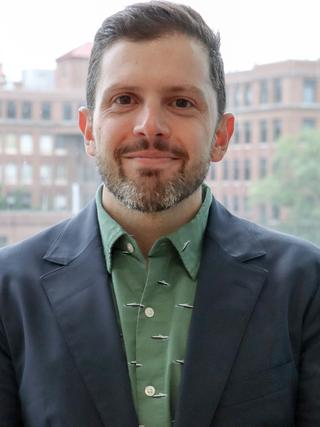
Belkis Ezgi Arikan is a researcher at Justus Liebig University Giessen , affiliated with the Department of Psychology and Sports Science . Her work focuses on sensorimotor integration, tactile suppression, and neural mechanisms underlying action-outcome monitoring. She collaborates with Prof. Dr. Fiehler and Dr. Voudouris on project A4 (Predictive somatosensory processing during voluntary movements). Department: Psychology and Sports Science Collaborators: Dr. Dimitris Voudouris, Prof. Dr. Katja Fiehler Her research investigates: How the brain processes self-generated vs. externally generated sensory feedback Neural correlates of tactile suppression networks Role of cerebellum and angular gyrus in temporal recalibration Modulation of BOLD responses during action monitoring Recent publications reveal trends in predictive coding , sensorimotor recalibration , and neural suppression mechanisms across tactile, visual, and multisensory domains. Her work employs neuroimaging techniques like fMRI and behavioral paradigms to study self-motion perception and feedback processing. She contributes to understanding how the brain distinguishes self-initiated from external sensory events, with implications for motor learning and perceptual timing mechanisms.
Tara McAllister is an Associate Professor and Director of the Doctoral Program in Communicative Sciences and Disorders at New York University’s Steinhardt School. She leads the Biofeedback Intervention Technology for Speech (BITS) Lab , focusing on speech learning mechanisms and biofeedback treatments for speech disorders. Her work emphasizes acoustic and ultrasound biofeedback efficacy in resolving residual speech sound disorders, particularly in children. McAllister directs development of the staRt iOS app, expanding access to biofeedback training. She holds degrees from Harvard, MIT, and Boston University, with clinical expertise in speech-language pathology. Education: A.B./A.M., Linguistics, Harvard University (2003) M.S., Communication Disorders, Boston University (2007) Ph.D., Linguistics, MIT (2009) Research Interests: Speech motor control, perception-production links, bilingual phonological development, and technology-driven interventions. Her NIH-funded studies investigate biofeedback applications for speech disorders and crowdsourcing methodologies for perceptual analysis. Grants & Labs: NIH/NIDCD-funded BITS Lab research staRt app development since 2014 Teaching: Courses include Critical Evaluation of Research and Speech Science Instrumentation , emphasizing evidence-based practices in communication sciences.
Dr. Elisa Donati is a researcher and independent group leader at the Institute of Neuroinformatics , affiliated with both the University of Zurich and the Swiss Federal Institute of Technology Zurich . Her work bridges neuromorphic engineering, biomedical signal processing, and wearable healthcare technologies, with a focus on creating brain-inspired systems for neuroprosthetics and rehabilitation. Affiliation: Institute of Neuroinformatics, University of Zurich & ETH Zurich Email: elisa@ini.uzh.ch Elisa’s research emphasizes developing neuromorphic signal processing strategies for wearable and embedded systems, enabling real-time closed-loop interactions with the nervous system. She specializes in translating neuroscience insights into energy-efficient technologies for digital health applications, including neuroprosthetics and personalized biomedical devices using neuromorphic hardware. Her recent publications (2024–2025) highlight advancements in gesture recognition via EMG and event-based systems, neuromorphic heart rate monitoring , and spiking neural network architectures . These works span biomedical signal processing, low-power computing, and adaptive algorithms, reflecting her commitment to robust, real-time, and brain-inspired solutions for healthcare. Elisa’s contributions to neuromorphic computing are evident in her exploration of heterogeneous population encoding , event-driven processing , and ultra-low-power microcontrollers . Her projects often integrate wearable systems with neuroscience, aiming to improve prosthetic control and rehabilitation technologies .
Ralf Haefner is an Assistant Professor in the Departments of Brain & Cognitive Sciences and Physics & Astronomy at the University of Rochester, holding this joint appointment since 2014. His interdisciplinary research bridges neuroscience and physics to investigate computational principles of perception and decision-making. Education and professional background: PhD, Oxford University, 1999 Visiting Research Fellow, Department of Neurobiology, Harvard Medical School Swartz Fellow, Sloan-Swartz Center for Theoretical Neurobiology, Brandeis University Haefner's research program centers on computational neuroscience , with primary focus on how the brain forms perceptual beliefs and uses them for decisions through Bayesian modeling . He employs machine learning tools to construct mathematical models explaining neural responses and behavior, particularly in the visual domain. His work addresses neural representation of uncertainty, causal inference mechanisms, and probabilistic computation in cortical circuits. Analysis of recent publications (2023-2025) reveals three dominant trends: (1) causal inference frameworks applied to motion perception and segmentation, (2) Bayesian modeling of perceptual biases and confidence computations, and (3) integration of generative and discriminative neural computations. His work extends beyond traditional neuroscience into scientific methodology through 'Generative Adversarial Collaborations' for improving research discourse. Honors and Awards: Swartz Fellowship, Sloan-Swartz Center for Theoretical Neurobiology NSF CAREER Award (2022) for 'Approximate inference at the intersection of neuroscience and machine learning' Haefner secured significant research funding through his NSF CAREER award, which supports foundational work on probabilistic inference at the neuroscience-ML interface. While specific students aren't listed, his active publication record and lab infrastructure suggest ongoing mentorship of graduate students and postdocs. His research has clinical relevance as shown by studies on perceptual abnormalities in autism spectrum disorder, indicating translational potential for understanding neurological conditions.
Ana Vives-Rodriguez, MD is an Assistant Professor of Neurology at Yale School of Medicine. She specializes in movement disorders and cognitive-behavioral neurology, caring for patients with Parkinson's disease, tremor, tics, dystonia, Alzheimer's disease, Dementia with Lewy bodies, and frontotemporal dementias. Based at Yale Physicians Building in New Haven, Connecticut, she provides both in-person and telehealth services to adult patients, accepting new patients without requiring referrals. Dr. Vives-Rodriguez's educational background includes: BS and MD from University of Costa Rica (2009), graduating Magna Cum Laude Residency at University Costa Rica/Calderon Guardia Hospital (2014) Clinical Fellowship in Movement Disorders at Yale New Haven Hospital (2018) Advanced Fellowship in Cognitive Behavioral Neurology at Boston University/VA Medical Center (2022) Her primary research interests focus on the behavioral and cognitive aspects of movement disorders and the early diagnosis of neurodegenerative disorders . Dr. Vives-Rodriguez examines structural and functional brain changes in conditions like Parkinson's disease, Wilson's disease, and Alzheimer's disease and their relation to clinical manifestations. Her work bridges clinical practice with translational neuroscience to improve diagnostic approaches and patient outcomes in complex neurological conditions. Analysis of her publications from 2017-2021 reveals a strong focus on movement disorders, cognitive impairment, and neuroimaging. Her research spans clinical observations of movement phenomena like index finger pointing and writing tremor, structural and functional brain changes in Wilson's disease, and innovative approaches to medical education in movement disorders. A recurring theme is the intersection between movement disorders and cognitive function, highlighting her dual expertise in both specialties. Dr. Vives-Rodriguez serves as a Sub Investigator for the Cognitive Training in Parkinson's Disease clinical trial (HIC ID 2000033352), which is recruiting participants aged 40+ through 2027. While specific grant funding isn't detailed in the available information, her active research program suggests ongoing support for her work in neurodegenerative disorders. She is affiliated with Yale's Movement Disorders and Neurodegenerative Disorders divisions, working within the Department of Neurology at Yale School of Medicine. Her clinical work at Yale Physicians Building integrates the latest research findings into patient care while contributing to the academic mission through teaching and scholarly activities.
James Warwick Bisley is a Professor of Neurobiology in the School of Medicine at the University of California Los Angeles (UCLA). His research focuses on the neural mechanisms underlying visual attention, eye movement control, and spatial processing in the brain. Dr. Bisley has made significant contributions to understanding how the brain guides attention and eye movements during visual search tasks, particularly through his work on the lateral intraparietal area (LIP) and frontal eye field (FEF). Dr. Bisley earned his PhD in Neuroscience from the University of Melbourne in December 1997. His research has been consistently supported by NIH funding, including R01 grants R01EY027968 (2018-2022) and R01EY019273 (2008-2019), where he served as Principal Investigator investigating neural processing in covert attention and the neural mechanisms underlying the guidance of visual attention. His research interests span visual attention, neural remapping, eye movement control, and the neural basis of spatial cognition. Dr. Bisley's work has demonstrated how brain areas like LIP and FEF contribute to visual attention and eye movement planning through the creation of priority maps. His recent publications show an expansion into haptic feedback applications in robotic surgery, demonstrating the translational potential of basic neuroscience research to improve surgical technologies. Dr. Bisley's publication record from 2016-2022 reveals a dual research focus: approximately half of his work continues to explore fundamental mechanisms of visual attention and neural processing, while the other half applies these principles to enhance robotic surgical systems through improved haptic feedback and tactile sensing. This interdisciplinary approach bridges cognitive neuroscience with biomedical engineering to address practical challenges in medical technology. Neural processing in covert attention (NIH R01EY027968, 2018-2022) The Neural Mechanisms Underlying the Guidance of Visual Attention (NIH R01EY019273, 2008-2019) Dr. Bisley has established himself as a leading researcher in visual neuroscience, with numerous highly cited publications in top journals including Journal of Neuroscience, Cerebral Cortex, and Proceedings of the National Academy of Sciences. His collaborative work spans multiple disciplines, connecting basic neuroscience with engineering applications to create innovative solutions for medical challenges.
Kara Leyzac is an Associate Professor in the Department of Otolaryngology - Head and Neck Surgery at the Medical University of South Carolina . Her work focuses on cochlear implants and hearing loss, with particular emphasis on optimizing implant function and understanding cochlear health's role in auditory outcomes. She holds dual doctoral degrees (AuD/PhD) and is affiliated with the MUSC College of Medicine. Research interests include cochlear implant efficacy, neural health preservation, and patient decision-making regarding implantation. Her work spans clinical trials (e.g., phantom percept treatments) and systematic reviews of long-term outcomes. Over 37 publications highlight contributions to auditory neuroscience, implant design, and rehabilitation strategies. No scientific awards were explicitly mentioned in the provided texts. Advising and grants sections remain unspecified due to lack of detailed information. Active research areas include electrode placement effects, auditory training protocols, and patient-specific outcomes in adult cochlear implant users.
Xilin Liu is an Assistant Professor at the Edward S. Rogers Sr. Department of Electrical & Computer Engineering (University of Toronto) and the Center for Advancing Neurotechnological Innovation to Application (CRANIA) . He obtained his PhD from the University of Pennsylvania and previously worked at Qualcomm Inc. in California. Expertise in integrated circuits and systems for brain-machine interfaces , neuromodulation , and edge AI Published in top venues including Nature Electronics , IEEE JSSC , and ISSCC Recipient of multiple best paper awards and IEEE Senior Member His research spans three main themes: High-speed data converters for wireless/wireline communication IC design for neural interfacing Accelerating machine learning via hardware Recent publications focus on closed-loop neuromodulation , ultra-wideband transceivers , and flexible biomedical sensors . These works integrate analog IC design , edge AI , and real-time neural interfacing across medical rehabilitation , parkinson's monitoring , and memory research . Awards include: IEEE Solid-State Circuits Society Predoctoral Achievement Award (2016) Best Paper Award at BioCAS (2015) ECE Department Teaching Award (2022) Multiple conference best paper finalists His lab collaborates with UHN , EMBS , and global institutions while maintaining strong commitments to equity, diversity, and inclusion (EDI) in research practices.
Frank E. Garcea, Ph.D., is a Research Assistant Professor in the Department of Neurosurgery and Neuroscience at the University of Rochester School of Medicine and Dentistry. His research focuses on the cognitive and neural mechanisms underlying tool use, apraxia, and stroke recovery. He employs neuropsychological testing, fMRI, and lesion-symptom mapping to study brain injury effects on functional connectivity and action knowledge. Education: Bachelor of Science in Psychology, St. John Fisher College (2006–2010) PhD in Brain and Cognitive Sciences, University of Rochester (2012–2017) Research Interests: Dr. Garcea investigates how brain regions like the parietal cortex and dorsal/ventral streams mediate object manipulation and tool use. His work explores stroke-related disconnection syndromes, motor speech coordination networks, and translational brain mapping to preserve neural function during surgery. He collaborates on projects involving epilepsy patients undergoing electrocorticography to study action-related neural pathways. Labs & Affiliations: Principal Investigator of the Garcea Lab at URMC, focusing on tool use deficits in brain tumor/stroke survivors. Affiliated with the Del Monte Institute for Neuroscience and the Neurobiology & Anatomy Program. His lab integrates neuroimaging, lesion analysis, and clinical care to advance personalized brain mapping strategies.
Alicia Che is an Assistant Professor of Psychiatry at Yale University School of Medicine and serves as Director of Graduate Admissions for the Interdepartmental Neuroscience Program. She joined the Yale Department of Psychiatry in 2021 after completing her postdoctoral fellowship with Dr. Natalia De Marco García at Weill Cornell Medical College and Dr. Gord Fishell at NYU. Her research is conducted through the Che Lab at Yale, where she investigates how early life experiences impact brain circuit assembly and mature function in models of psychiatric illness. Yale School of Medicine, Department of Psychiatry Interdepartmental Neuroscience Program Center for Brain & Mind Health Division of Molecular Psychiatry Wu Tsai Institute Yale Center for the Science of Cannabis and Cannabinoids Dr. Che earned her Ph.D. in Physiology and Neurobiology from the University of Connecticut in 2014, where she worked in the laboratory of Dr. Joseph LoTurco. She received her B.S. with triple majors in Biology, Physics, and Physical Chemistry from Pacific Lutheran University in Washington state in 2009. Her research focuses on understanding developmental trajectories following early life experiences to develop diagnostics and early interventions for psychiatric illnesses. Dr. Che's research examines how sensory inputs, social bonding, stress, and substance exposure impact brain development. She employs a multi-dimensional approach to assess transcriptional, circuit, neuronal activity, and behavioral changes across the entire developmental timeline. Her lab currently focuses on four specific areas: the role of oxytocin in social behavior development, circuit dysfunction in PTSD, early-life cannabinoid exposure effects, and the impact of early life stress on development and adulthood. She utilizes advanced techniques including mouse genetics, slice electrophysiology, and longitudinal in vivo 2-photon imaging on behaving animals. Her most recent publications demonstrate significant contributions to understanding neural circuit development, PTSD mechanisms, and the effects of early life experiences on brain function. Her work spans from molecular neuroscience to behavioral outcomes, with publications in top journals including Nature, Neuron, and Nature Communications. Her research has revealed important insights into how translaminar neuronal activity strengthens cortical columns, how oxytocin facilitates social touch development, and how PTSD affects brain transcriptomics. NARSAD Young Investigator Award (2020) K99/R00 Pathway to Independence Award from NINDS (2019) Dr. Che's work has significant implications for understanding and treating neurodevelopmental disorders, PTSD, and the consequences of early life experiences on mental health. She collaborates extensively with researchers across Yale and beyond, with frequent co-authorship with colleagues including Lin Lin, Alex Kwan, and Christopher Pittenger. Her research program bridges basic neuroscience with clinical applications, aiming to translate findings into potential interventions for psychiatric conditions.
Andrew J. Todd is a Professor and Honorary Fellow in the School of Psychology & Neuroscience at the University of Glasgow. His research focuses on neurochemistry and synaptic connections in the mammalian spinal cord, particularly the organization of neuronal circuits underlying pain and itch perception. He employs techniques like immunocytochemistry, confocal microscopy, and electron microscopy. Collaborations include researchers from institutions such as UCL, Saga University, and the University of Pittsburgh. His work is funded by the Wellcome Trust and BBSRC. Roles: Professor, Honorary Fellow Affiliations: School of Psychology & Neuroscience, University of Glasgow Research Interests Dr. Todd investigates spinal dorsal horn circuits, including projection neurons, interneurons, and synaptic plasticity. Key topics include: Neurochemical characterization of spinal neurons Role of neuropeptides like substance P and gastrin-releasing peptide Mechanisms of neuropathic pain and spinal circuit adaptations Functional roles of specific neuron populations in laminae I-III Articles Overview Recent work includes studies on spinal projection neuron markers (e.g., Tacr1, Gpr83), synaptic circuits involving GRP-expressing neurons, and interneuron subtypes' roles in pain/itch. Notable findings include the absence of neuronal loss in neuropathic pain models and the identification of novel spinal circuits. Grants & Funding Funded by the Wellcome Trust and BBSRC . Collaborations span international institutions, emphasizing spinal neurobiology and sensory processing.
Dr. Burkhard Maess is a Research Professor and Group Leader at the Max Planck Institute for Human Cognitive and Brain Sciences, leading the Methods and Development Group Brain Networks. His research focuses on auditory and language processing, signal analysis, and dynamic modeling of neuronal networks. He holds a Diploma in Physics (University of Leipzig, 1987) and a PhD in Physics (University of Leipzig, 1990). His career includes postdoctoral positions at the Academy of Sciences of the GDR and the Free University of Berlin before joining the MPI in 1995. Since 2000, he has led research groups on MEG/EEG signal analysis and cortical network dynamics. His work integrates advanced neuroimaging techniques like MEG and EEG to study sensory processing, neural network dynamics, and the effects of aging on auditory attention. Key contributions include developing high-resolution BEM-FMM methods for source localization and analyzing cross-frequency coupling in neuroscience data. His group also explores spinal cord electrophysiology and the neural underpinnings of perceptual decision-making. Dr. Maess’ research spans cognitive neuroscience, biomedical engineering, and computational modeling, with a focus on bridging empirical findings with theoretical frameworks in neuroscience.
Rob van Beers is an Assistant Professor at the Faculty of Behavioural and Movement Sciences at Vrije Universiteit Amsterdam, with affiliations to Neurocontrol, IBBA, and AMS - Sports. His research focuses on human motor control, spatial perception, and computational modeling using Bayesian approaches to understand sensory-motor integration under uncertainty. He holds ancillary roles as a Researcher at Radboud University (Nijmegen) since 2015 and serves on the Editorial Board of the Journal of Neurophysiology since 2015. His work contributes to UN Sustainable Development Goals related to health and well-being. Key research interests include motor learning dynamics, sensorimotor adaptation, and the neural basis of spatial orientation. Recent studies explore Alzheimer’s impacts on motor adaptation and Bayesian inference in vestibular path integration. Teaching responsibilities include courses on linear systems dynamics, physical measurement techniques, and motor systems regulation. His work spans 42 peer-reviewed articles, with datasets published on platforms like Dryad and Zenodo.
Christine Eckhardt is an Assistant Professor in the Department of Neurology at the T.H. Chan School of Medicine (UMass Chan Medical School), specializing in Neurocritical Care. She earned her MD from Harvard Medical School and holds an MS degree. Education: MD, Harvard Medical School, Boston, MA MS (unspecified field) Dr. Eckhardt's research focuses on neurocritical care, neurotoxicity syndromes, and EEG-based diagnostics. She develops quantitative EEG methods for assessing immune effector cell-associated neurotoxicity (ICANS) and delirium severity, with applications in CAR T-cell therapy and critical care neurology. Her recent publications (2022–2023) emphasize automated neurotoxicity detection , EEG signal processing , and health equity disparities in heart failure care. Key subfields include neurocritical care, computational neuroscience, and clinical outcome modeling.
Dr. Koen Haak is an Associate Professor at Tilburg University's Department of Cognitive Science and Artificial Intelligence within the Tilburg School of Humanities and Digital Sciences. His research focuses on vision science, neuroimaging, and AI applications in healthcare. He leads projects like 'Bridging the gap between visual function and functional vision' (NWO Vidi) and 'Neuroimaging biomarkers for predicting vision training success after stroke' (NWO KIC). He collaborates with institutions such as the Donders Institute and the Lifelong Vision Consortium. His work contributes to UN SDGs related to health and innovation. Research interests include analyzing brain imaging data to predict functional vision outcomes, developing machine learning tools for clinical trials, and studying visual cortex plasticity. He has authored 51+ publications, including papers in Nature Neuroscience and Translational Psychiatry . Awards include NWO Veni (2016) and Vidi (2020) fellowships. He teaches courses on computer vision and AI at Tilburg University. Current projects explore predictive analytics for eye treatments, thalamocortical connectivity, and sleep disruption effects in maritime pilots. His lab develops methods like connectopic mapping and deep learning for MRI analysis, with applications in Alzheimer's, autism, and psychiatric disorders.