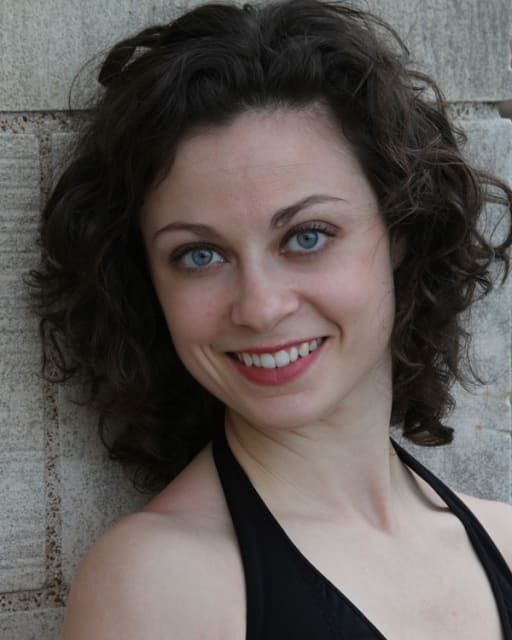
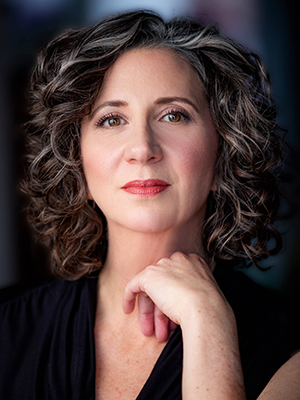
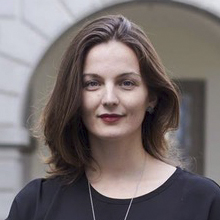
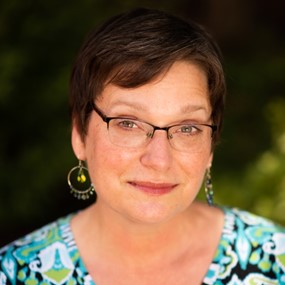
Erin Lane is an Assistant Professor of Dance at Principia College, specializing in Ballet, Modern, Jazz, and Dance History. Her teaching spans private studios, public schools, and collegiate programs, complemented by extensive performance experience in Chicago, New York City, Montreal, and Salzburg. She holds MFA and BFA degrees from the University of Wisconsin Milwaukee and New York University. Education: MFA: Peck School of the Arts, University of Wisconsin Milwaukee BFA: Tisch School of the Arts, New York University Her research focuses on integrating somatic practices with Western dance training, tracing non-Eurocentric influences in American dance forms, and leveraging dance as a community-building tool. Notable contributions include site-specific choreography (e.g., 2023’s Beyond the Divide in Alton, IL) and curriculum development in ballet and brain-compatible dance education. Erin has presented choreography at events like the Mississippi Earthtones Festival and Audubon Riverlands, and holds certifications in Vaganova Ballet Method, Progressing Ballet Technique, and RYT200 yoga instruction. Her professional affiliations include the National Dance Education Organization and Yoga Alliance.
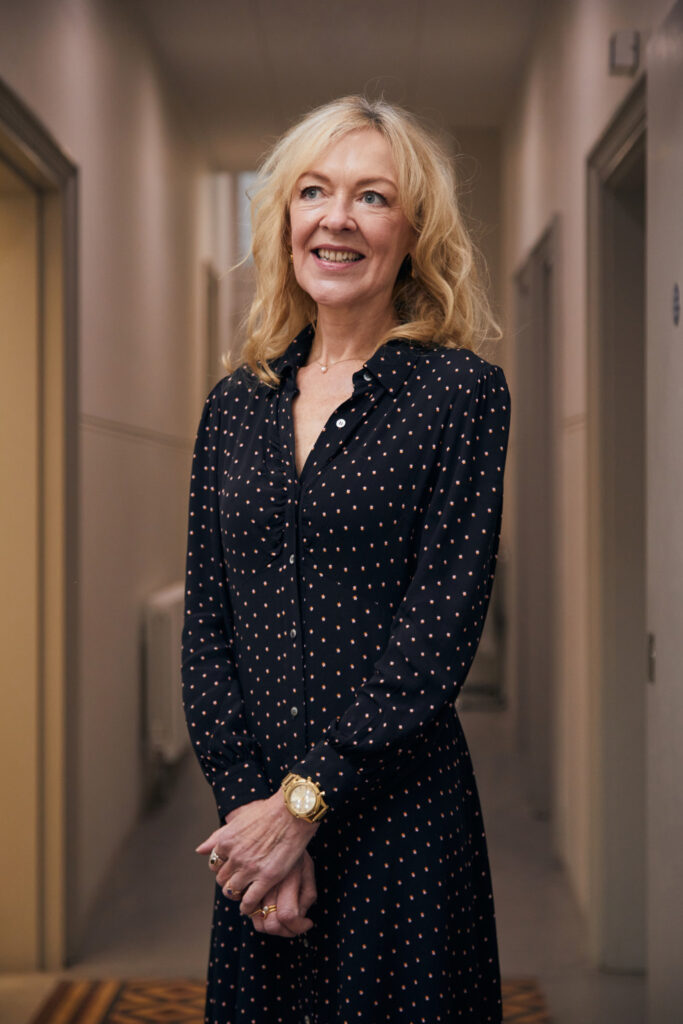
Ellie Nixon is a Professor and Director of Film and Performing Arts at Norwich University of the Arts. She holds a BA (Hons) from Middlesex University and trained at the Jacques Lecoq International Theatre School in Paris. As co-founder of La Mancha International Theatre Company and its affiliated school in Chile, she has produced over 30 theatre projects across multiple languages and regions, emphasizing devising processes and visual theatre. Her research explores embodied performance practices, integrating material engagement theory and environmental humanities. Nixon’s work bridges Lecoq’s pedagogy with contemporary interdisciplinary approaches, focusing on the interplay between the human body and the material world. Notable publications include her 2024 book *Imagining Bodies and Performer Training*, which explores Lecoq and Bachelard’s legacies, and a 2019 paper on Marcel Jousse’s influence. She has presented at international conferences such as the Body Matters AHRA Conference and the International Federation of Theatre Research. Nixon’s contributions span academic leadership, international collaboration, and pedagogical innovation in theatre education.
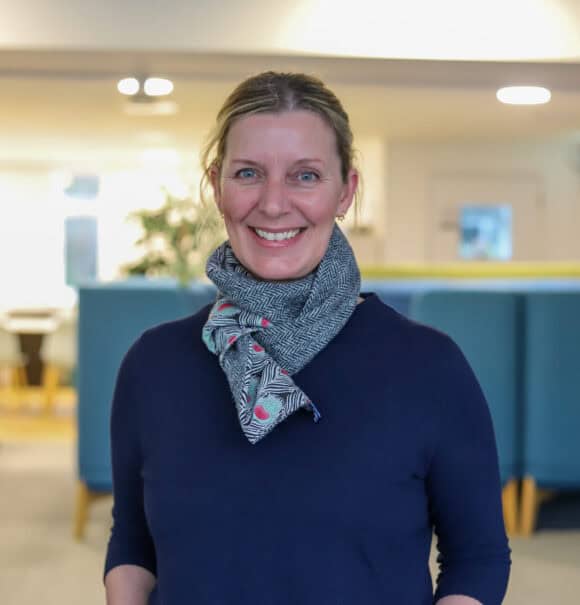
Dr. Louise Douse is a Senior Lecturer in Dance at the University of Bedfordshire, affiliated with the School of Arts and Creative Industries. She holds a PhD in Dance (2014) and a BA (Hons) in Performing Arts from the same institution. Her research focuses on dance and wellbeing, flow experiences in performance, and interdisciplinary arts projects. Key projects include the Generations Dancing initiative, exploring intergenerational arts' impact on well-being and citizenship. She has published in journals such as Journal of Higher Education Outreach and Engagement and Frontiers in Psychology , and presented at conferences like the Performance Philosophy Conference and Dance Improvisation events. Her teaching expertise includes dance theory, anatomy, and wellbeing integration. She is also involved in community arts collaborations and workshops on somatic practices. Education: PhD (2014) and BA (2010s) in Performing Arts from the University of Bedfordshire. Research interests span dance pedagogy, embodied cognition, and the intersection of technology and performance. She has led projects funded through university partnerships and contributed to national discussions on arts in health and education.
Jayne McKee is a Senior Lecturer in Dance at the University of Chichester Conservatoire, serving as Programme Leader for Dance Education & Teaching and Undergraduate Dance Programme Coordinator. She holds a BA (Hons) in Dance Theatre from Laban (1990) and completed an MSc thesis titled 'Dancing the Fascial Body: A New ‘Line of Flight?’ (2020). Her career spans performance with Transitions Dance Company, CanDoCo, and roles at La Scala (Milan) and the West End musical Notre Dame De Paris . McKee is also a qualified Sports & Remedial Massage Therapist, integrating somatic practices into her work. Her research focuses on embodiment, fascial systems in dance, and pedagogical innovation. Key themes include somatic education, injury prevention in dance students, and collaborative teaching approaches. Recent outputs include a chapter in The Female Dancer: A Soma-scientific Approach (2024) and presentations on spatial dynamics in dance practice (2023) and fascial science (2015). McKee’s teaching emphasizes student partnerships in research, redefining educational methodologies through practice-based inquiry. Advisees/Grants: No formal advisees listed. No specific grants detailed in text. Labs/Teams: Affiliated with the University of Chichester’s dance research initiatives, though specific lab names not mentioned.
Laura Gonzalez is a PhD Research Fellow at the Royal Conservatoire of Scotland and an Athenaeum Research Fellow with the Research and Engagement Sciences, Humanities and Arts Research Exchange (SHARE). She also serves as Reader in Contemporary Art and Performance Practice at Glasgow School of Art and faculty member at the Transart Institute. Her academic work bridges performance art, psychoanalytic theory, and contemplative practices with a particular focus on the intersections of breath, body, and consciousness. Her research interests span psychoanalytic approaches to art (particularly Freudian and Lacanian theory), hysteria in performance, durational and intimate performance practices, breath and voice studies, Eastern cosmologies, and the theoretical frameworks of seduction in artistic practice. Gonzalez has developed a unique methodology that combines psychoanalytic theory with embodied practices, creating innovative approaches to understanding the relationship between performer and audience, theory and practice. Gonzalez's scholarly output demonstrates a clear trajectory from early work on psychoanalytic approaches to art objects toward increasingly sophisticated explorations of breath, voice, and the hysteric body in performance. Her recent publications (2023-2025) show a deepening engagement with Eastern philosophical traditions, particularly yoga and pranayama, while maintaining her foundational psychoanalytic framework. This synthesis represents a significant contribution to performance studies, offering new methodologies for understanding the mind-body connection in artistic practice. Athenaeum Award (2018, 2023) Breath Practice: Creative Scotland Open Project Funding Award CS-1910-29042 (2019) Glasgow Medical Humanities Network Foundation Award (2023) RCS Student-led Awards: Outstanding Research Supervisor (2025) Gonzalez has supervised numerous PhD students across multiple institutions including the Royal Conservatoire of Scotland, Glasgow School of Art, and Transart Institute. Her supervision portfolio demonstrates remarkable breadth, spanning topics from Deaf performer training to the mytho-geographical line in drawing practice. She has secured research funding including the Creative Scotland Open Project Funding for her Breath Practice project, indicating strong grant-writing capabilities and institutional support for her interdisciplinary work. Gonzalez also co-directs @TheGlasgowJam, a Contact Improvisation organization that provides multidisciplinary performance opportunities to the community, demonstrating her commitment to bridging academic research with community engagement.
Vanio Papadelli is a Lecturer in Movement at Rose Bruford College, specializing in BA European Theatre Arts since 2011. She also teaches at Goldsmiths University and Trinity Laban Conservatoire, focusing on somatic practices, postmodern dance, and Laban/Bartenieff principles. Her doctoral research (Goldsmiths, 2013) explored Post-Grotowskian theatre traditions with Song of the Goat Theatre. She holds a PhD in Performance Practices and certifications in yoga and accessible performance. Education: PhD in Practice-Based Research (Goldsmiths, 2013) MA Performance Making (Goldsmiths, 2007) BA Theatre Studies (University of Athens, 2003) Research Interests: Physical theatre, dance-theatre intersections, embodied writing, feminist performance theory, and ecological perspectives in performance. Her work emphasizes somatic awareness, breathwork, and collaborative risk-taking. Performances include CANDID (2013–2020), THE AIR CHANGES THE COLOUR OF THINGS HERE… (2009–2014), and MY CITY MY REVOLUTION (2014). She has facilitated workshops globally on contact improvisation and movement pedagogy. Awards: Fellowship in Accessible Performance Practice (2017–2018) ERASMUS Scholarship (2000–2001) Teaching spans actor training, research methodologies, and practical dissertation supervision. Her practice integrates postmodern techniques with Eastern European laboratory theatre traditions.
Dorie Pinchin is a Lecturer in Movement at Rose Bruford College, specializing in Movement Anatomy, Chorus, Animal Studies, and Embodied Text. She holds an MFA in Lecoq-Based Actor Created Theatre from the London International School of Performing Arts (LISPA) and is a certified Alexander Technique teacher. Her research focuses on pedagogical approaches in movement and performance, including Lecoq pedagogy and the application of the Alexander Technique in actor training. Professionally, Dorie has performed nationally and internationally with devising ensembles. Notable projects include Theatre Témoin’s The Marked , which toured hostels and theaters to engage individuals with experiences of homelessness; Grafted Cede Theatre’s Nobody’s Home , touring military bases; and Paper Balloon’s family-oriented productions The Boy and the Mermaid and Once Upon a Snowflake . She is currently developing The Great Floating Balloon Radio Show with Paper Balloon. Dorie’s teaching emphasizes interdisciplinary approaches, blending physical theater techniques with somatic practices. Her work bridges academic training and applied performance, reflecting her commitment to accessible and socially engaged art.
Dr. Nicole Svobodny is a Teaching Professor of Global Studies and Russian Literature at Washington University, where she coordinates the Eurasian Studies concentration and serves as Study Abroad Advisor. She holds a PhD from Columbia University and teaches courses exploring Russian literature through comparative frameworks, often examining intersections of identity, law, and artistic media. Her research investigates interconnections between bodily movement and verbal expression, particularly in modernist contexts. Awarded an NEH Summer Stipend in 2019, her archival work informs publications analyzing how kinetic intelligence informs textual creation. Recent scholarship examines Nijinsky's multimodal creative processes through dance notation, drawing, and diary fragments. Her monograph 'Nijinsky’s Feeling Mind' argues that the dancer's 1919 project constitutes a profound meditation on embodiment, silence, and reader-writer dynamics. Publications demonstrate consistent focus on migration narratives, border studies, and Russian-Western cultural exchanges.
Dr Dominic J Paterson is a Senior Lecturer in the Department of History of Art at the University of Glasgow. His research focuses on methodological and theoretical intersections between Michel Foucault's work and art history, alongside avant-garde strategies in contemporary art, body politics, and post-war American art. He has collaborated with institutions like Glasgow International Festival of Visual Art and Glasgow Sculpture Studios, organizing exhibitions such as 'Points of Departure' and curating events for Ulrike Ottinger's film series. Paterson's research also engages with artistic interventions in body politics and the legacy of neo-avant-garde practices. He has contributed to edited volumes on contemporary art, including co-editing the Special Issue on 'Expanding Notions of Making' for Artmatters Journal (2021). His work frequently intersects with curatorial practices, as seen in exhibitions like 'Flesh Arranges Itself Differently' (2022) and 'Unravelling Times' (2023). His recent publications (2024–2023) explore filmic ethnography, postmodern aesthetics, and curatorial frameworks. Paterson maintains roles as Honorary Associate Member of Glasgow Sculpture Studios and selector for Axisweb's 'Open Frequency'. His teaching spans body art, American art history, and avant-garde techniques, reflecting his interdisciplinary approach.
Mark Nichter is Regents' Professor Emeritus of Anthropology, Public Health, and Family Medicine at the University of Arizona. A sociocultural medical anthropologist, he conducts global health research addressing health disparities, ethnomedicine, and health systems. Nichter's fieldwork spans South Asia, Southeast Asia, and West Africa, investigating topics including tobacco control, zoonotic diseases, pharmaceutical practices, and disaster response. He founded Project Quit Tobacco International (QTI), developing cessation programs across India and Indonesia. Current research examines wound care management in Benin and Côte d'Ivoire, and tobacco cessation in Turkey. His publications analyze global health governance, health policy implementation, and the cultural dimensions of illness. Nichter advocates engaged anthropology approaches through multi-stage formative research to address real-world health challenges. Teaching has included courses on culture and health, ethnomedicine, and global health anthropology. He maintains active research collaborations addressing community-based health interventions and health system strengthening.
Dr. Cristina Castaldi is an Associate Professor of Voice at Wichita State University's School of Music within the College of Fine Arts. Specializing in bel canto, early Verdi, and verismo repertoire, she combines vocal pedagogy with somatic movement practices rooted in Essential Somatics® and Feldenkrais principles. Her expertise includes body mechanics, chronic muscle tension management, and holistic approaches to vocal health. Education : Doctor of Musical Arts in Vocal Performance, Rutgers University Master of Music in Vocal Performance (with distinction), New England Conservatory Bachelor of Music in Vocal Performance, Kennesaw State University Research & Teaching : Dr. Castaldi pioneered the nation's first college-level "Essential Somatics® for Singers" course, emphasizing mind-body connection to enhance vocal technique and reduce performance anxiety. She integrates yoga and somatic education into her teaching, offering masterclasses nationally and internationally for organizations like KMEA, NATS, and NOA. Performance Highlights : Operatic roles include Alice Ford ( Falstaff ), Giovanna d’Arco (Sarasota Opera), and Mimì ( La Bohème ). She has performed major orchestral works such as Beethoven’s Ninth Symphony with the Wichita Symphony and Handel’s Messiah with Rhode Island Civic Chorale. Recognition : Featured workshop presenter for KMEA/NATS/NOA Award-winning vocal competitions Recipient of grants/fellowships not explicitly listed Advising & Grants : Mentors students in vocal and somatic techniques through personalized lessons. Her work is supported by institutional programs and collaborations with regional orchestras. Past faculty roles include Adjunct Professor at Rowan University and Part-Time Lecturer at Rutgers. Labs/Teams : Leads somatic movement workshops and online courses, fostering a community of practitioners in holistic vocal education.
Anaïs Bernard is a Lecturer in Visual Arts at the Université Catholique de l'Ouest (UCO Angers), serving as Academic Manager of the Visual Arts Department and Educational Manager for L1/L2 Visual Arts programs. She heads the Transversality Minor in Visual Arts and is a Full Researcher at the Center for Humanities and Societies Research (CHUS), with affiliations to the CiTu-Paragraphe research team (EA 349). Her academic roles include organizing international colloquia and directing master's theses. Education highlights include a Doctorate in Plastic Arts and Art Science (University of Lorraine, 2016), specialized trainings in Interior Design, Audiovisual Production, and Body Language (2017). Professional milestones include winning the WWFF Honorary Award (2014) and NIVEA/CNRS Research Prize (2012). Research focuses on Emersiology – the interplay between artistic immersion and neurophysiological responses. Key themes include body-brain interactions in immersive art, emotional intelligence development through artistic devices, and interdisciplinary research-creation methodologies. Notable projects include organizing Metz en Immersion (2015) and maintaining the Corps en Immersion blog. Publications span 50+ peer-reviewed articles/chapters since 2013, emphasizing immersive art's role in redefining human perception. Recent work explores urban data visualization (2023), haptic interfaces (2023), and neurofeedback in digital dance (2022). Awards include recognition for bridging neuroscience and artistic creativity. Teaching spans 8 years, with over 100h annual instruction in visual arts theory and practice. She advises master's projects like L’Histopad: Patrimony Mediation Tool and oversees admissions for UCO's arts programs. Active in academic outreach through conferences, jury panels, and exhibition curation. Labs/Teams: CHUS (UCO Angers), CiTu-Paragraphe (EA 349), and collaborative initiatives like the Palier research project on perception-emotion dynamics.
Anna Kerekes is a Professor of Art Education at the Nîmes School of Fine Arts (École Supérieure des Beaux-Arts de Nîmes), affiliated with the University of Nîmes. She holds a PhD in Art Studies and Practices from the Université du Québec à Montréal (2019), and completed a Professional Master’s in Exhibition Curating (Sorbonne-Paris IV, 2012) and a Research Master’s in Art History (Sorbonne-Paris IV, 2011). Her work integrates research-creation methodologies, focusing on somatic experiences in contemporary art theory and curatorial practices. She collaborates with institutions like the Canadian journal TURBA (performing arts curation) and the Hungarian University of Fine Arts (Budapest). Between 2018–2022, she served as Senior Curator at MO.CO. Montpellier Contemporain, developing exhibitions, talks, and publications. Her research explores ethical and political dimensions of art through Foucault’s “care of self and others” framework, notably in collaborations with artist Jonas Mekas. She contributes to PROJEKT, a design and social innovation research team at the University of Nîmes, and participates in artist residencies like ÉCHOTONE (Ganges). She mentors students in art theory and curating through international programs. Her publications span interviews with prominent artists (e.g., Berlinde De Bruyckere, Katarina Gregos) and catalog essays analyzing contemporary art’s intersection with memory, environment, and cultural identity. She balances academic teaching, curatorial practice, and research, emphasizing interdisciplinary and socially engaged art.
Tessa Carr is a Professor and Chair of the Department of Theatre and Dance at Auburn University, and Co-Director of the Mosaic Theatre Company, sponsored by the College of Liberal Arts. She holds a PhD from the University of Texas at Austin, an MA from Louisiana State University, and a BA from Lees-McRae College. Her research focuses on autobiographical and intersectional feminist performance, documentary theatre, and performance as a tool for social justice. She has created acclaimed plays like Alabama Love Stories and The Integration of Tuskegee High School , which blend archival research with community engagement. Mosaic Theatre Company, under her leadership, produces original works addressing equity and inclusive excellence across Alabama and beyond. Her articles and performances explore themes of embodiment, memory, and political activism in theatre. Recent publications include works on collaborative performance for social justice and intersectional feminist methodologies. She has contributed to journals like Text and Performance Quarterly and co-authored a Routledge book on performance as a social justice intervention strategy. Dr. Carr has served on the editorial board of Southern Theatre Magazine and delivered workshops nationwide. Her autoethnographic work Hauntings: Marking Flesh, Time, Memory has been performed at institutions such as the National Communication Association Conference.
Eva Maria Santos Sanchez-Guzman is a Professor at the Faculty of Fine Arts of the University of Murcia, specializing in Sculpture. With a PhD in Fine Arts from Complutense University of Madrid and a Master in Art Therapy from the University of Murcia, she integrates participatory art and therapeutic practices in her academic work. University of Murcia - Faculty of Fine Arts Complutense University of Madrid - PhD program Research Interests focus on participatory artistic practices for social inclusion, particularly through textile art and art therapy. Her work bridges creative processes with psychoanalytic theory, emphasizing gender equality and community engagement. Recent Publications show trends in participatory installations during social crises, therapeutic applications of textile art, and symbolic material use in sculpture education. Notable collaborations include projects in Spain, Bolivia, and Romania. Scientific Recognition : Caja de Ahorros de Segovia Fellowship Fundación Séneca international grants Selected for multiple cultural excellence calls Educational Impact includes designing integrated art courses for diverse populations and developing creative methodologies for social engagement. Her work extends to international art therapy collaborations and community transformation projects.