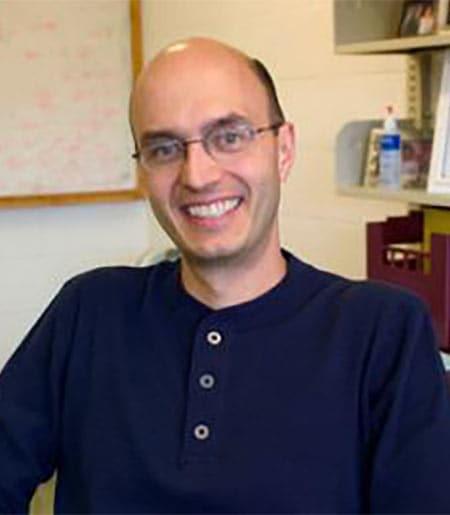
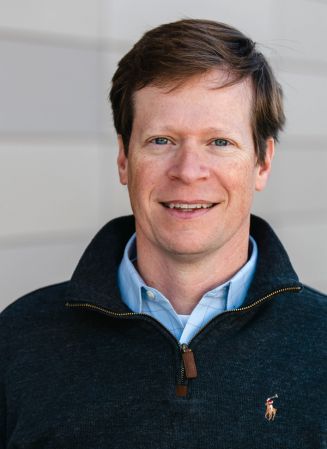
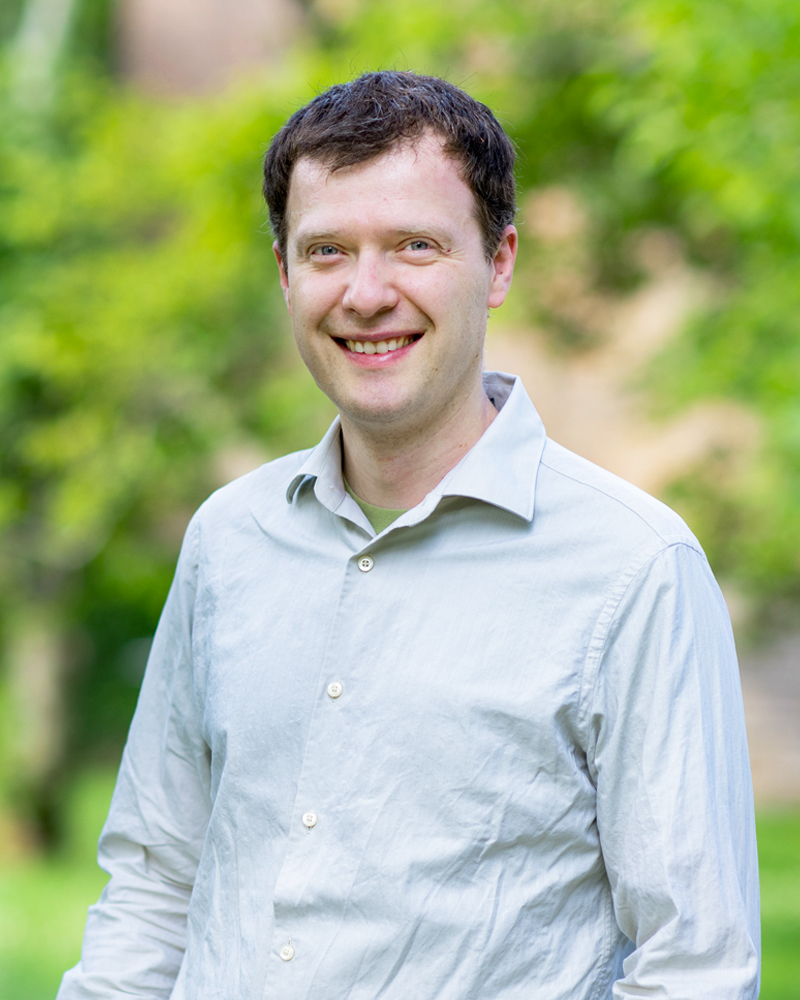
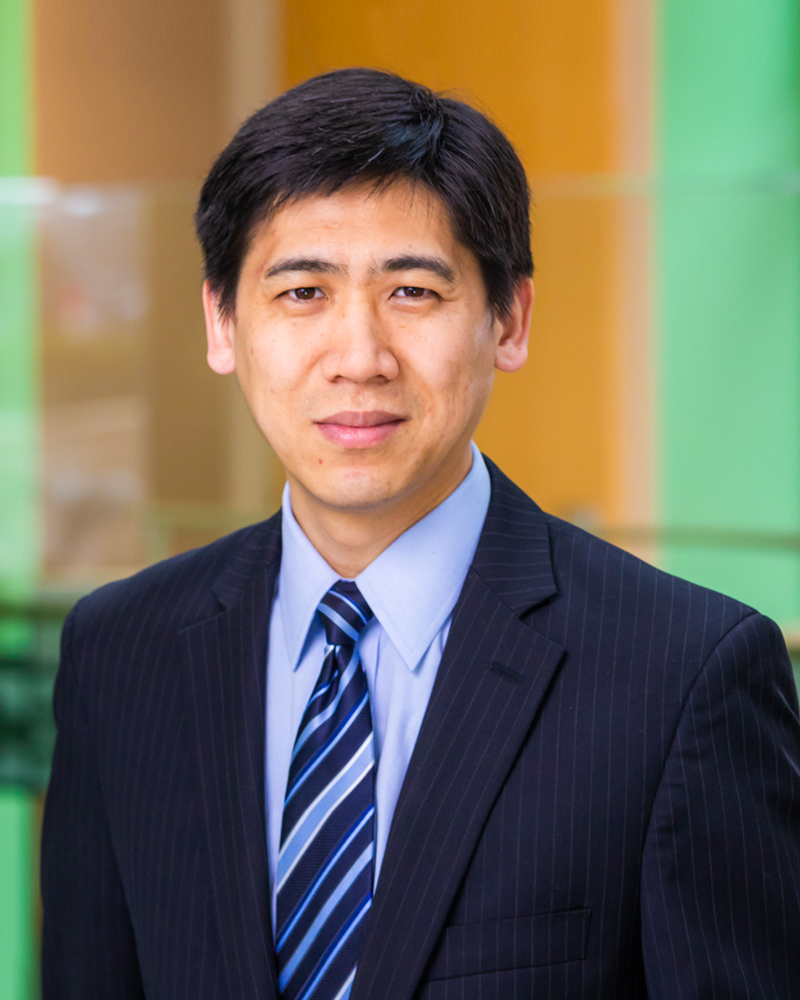
Simon Hodgson is a Senior Lecturer in Physical and Engineering Sciences at the University of Chester's School of Natural Sciences, and Programme Leader for the MRes Applied Science course. He holds a PhD from the University of Wales, Glyndwr (2014), focusing on quantum dot materials for photovoltaics, and an MChem from Bangor University (2009). His career includes roles at the Centre for Solar Energy Research (CSER) and research in laser surface engineering. His research spans three core areas : Photovoltaics : Developing low-cost photovoltaic materials and 3rd-generation technologies. Materials Synthesis : Rapid, eco-friendly methods for nanomaterials and functional thin films. Surface Engineering : Laser- and chemical-based treatments for antimicrobial surfaces and biomimetic applications. His work bridges energy technology, nanomaterials, and biomedical interfaces. Notable projects include antimicrobial silver-nanoparticle films, laser-modified surfaces for solar cells, and bioadhesion control mechanisms. He supervises postgraduate and master’s students in applied sciences. His lab activities are detailed on surfaces.chester.ac.uk , focusing on surface engineering innovations.
Dr. Sander Mann is a Visiting Professor at the Institute of Physics (IoP-WZI), Faculty of Science, University of Amsterdam. His research focuses on quantum optics, nanophotonics, and metasurface engineering. He can be contacted at Science Park 904, 1090 GL Amsterdam, or via email s.mann@uva.nl. His work explores light-matter interactions at the nanoscale, particularly in nonreciprocal systems and topological photonics. Recent publications highlight quantum metasurface design, thermal radiation control, and ultrafast optical switching mechanisms. Using nanophotonic and polaritonic systems, he investigates fundamental limits in optical resonators, nonlinear effects, and energy conversion efficiency. His studies span semiconductor physics, plasmonics, and quantum device engineering.
Dr. Max Attwood serves as an Academic Visitor in the Department of Materials at Imperial College London's Faculty of Engineering, with dual affiliations to the Centre for Processable Electronics and Quantum Engineering, Science and Technology Group . Based at the Royal School of Mines, South Kensington Campus, he drives cutting-edge research in quantum materials. His expertise spans: Room-temperature quantum information processing using molecular spins Organic maser development for portable quantum amplifiers Spin-crossover materials and n-type organic semiconductors Theoretical-computational chemistry of quantum systems Analysis of his 9 publications (2019-2024) reveals a strategic pivot toward quantum hardware solutions, with 5 high-impact papers in 2023-2024 focusing on eliminating cryogenic barriers for quantum devices. His work demonstrates exceptional interdisciplinary synthesis across chemistry, physics, and engineering. Dr. Attwood maintains robust international collaborations, evidenced by multi-institutional authorship on all recent papers. His research is supported by active quantum technology grants, enabling access to Imperial's advanced nanofabrication and spectroscopy facilities through the Quantum Engineering Centre. Students benefit from his industry connections in quantum sensing and photonics sectors. His research group operates at the nexus of the Centre for Processable Electronics and Quantum Engineering initiatives, focusing on molecular-scale solutions for scalable quantum technologies. Current projects emphasize optically controlled spin systems and organic gain media for next-generation quantum devices.
David Payne is Professor of Materials Chemistry at Imperial College London, leading the Solid State Electronic Structure Group. He holds a DPhil from the University of Oxford and directs the Advanced Photoelectron Spectroscopy Laboratory. His research focuses on oxide materials for energy applications including fuel cells, catalysis, and solar technologies. Research interests center on surface chemistry characterization using advanced photoelectron spectroscopy techniques, with applications in renewable energy conversion and storage. His group develops novel synthesis methods for functional oxide materials. Recent publications demonstrate substantial focus on nanoparticle catalyst design through exsolution processes, with applications in CO₂ utilization and hydrogen production. Collaborative work spans materials characterization, computational modeling, and device engineering. Awards include the Royal Society University Research Fellowship and ETH Medal. He serves on EPSRC committees and advises national research infrastructure strategy. He directs the Research Complex at Harwell and maintains laboratories for photoelectron spectroscopy, materials synthesis, and nanofabrication. Current projects explore energy materials design through atomic-scale surface engineering.
Tomás Arias is a Professor and Stephen H. Weiss Presidential Fellow in the Department of Physics at Cornell University's College of Arts and Sciences. His research bridges quantum mechanics with real-world materials science, focusing on nanoscale systems, crystal growth, solar cells, and computational methods. He employs large-scale quantum calculations and develops theoretical frameworks to connect atomic-scale phenomena with macroscopic behaviors. Education: B.Sc. in Physics, Massachusetts Institute of Technology (1986) Ph.D., Massachusetts Institute of Technology (1992) Research Focus: Arias' group investigates mechanical properties of nanoscale systems (e.g., carbon nanotubes), quantum processes in solution environments, and photoelectrochemical systems. Recent work integrates machine learning for colloidal nanocrystal synthesis and explores charge density wave dynamics in quantum materials. The team prioritizes problems where quantum perspectives offer transformative insights. Publication Trends: His 15 most recent articles emphasize computational material discovery, electrocatalysis mechanisms, and electron-phonon interactions, with consistent applications in renewable energy and quantum material design. Awards and Honors: Andrew Moore Lockett III Award (1990) SIAM Outstanding Paper Prize (2001) Alfred P. Sloan Foundation Research Fellowship (1993-1999) Advising: Current graduate students include Drake Niedzielski and Tyler Wu. His lab actively collaborates on DOE-funded projects, including energy center grants totaling $12.6M. Laboratories: Leads the Computational Materials Science Group at Cornell, utilizing supercomputing resources for quantum simulations and materials characterization.
James F. Gilchrist is the Ruth H. and Sam Madrid Professor of Chemical & Biomolecular Engineering at Lehigh University. His research investigates fundamental phenomena in particulate systems across colloidal and granular scales, focusing on suspension rheology, convective deposition, particle mixing/segregation, and self-organization. Applications include advanced coating processes for optoelectronics (LEDs, solar cells), microfluidic devices, and functional materials. Gilchrist develops novel experimental and computational methods to study far-from-equilibrium particulate processes exhibiting complexity and self-organization. He earned his Ph.D. from Northwestern University and B.S. from Washington University in St. Louis. Honors include the PSRI Fluidization Award (2024), North American Mixing Forum Young Faculty Award (2007), and visiting professorships at Caltech and UNSW. His Laboratory for Particle Mixing and Self-Organization explores systems ranging from nanoparticle assembly to industrial-scale powder processing.
Brian Saunders is Professor of Polymer and Colloid Chemistry in the School of Materials at the University of Manchester, with joint research themes in biomaterials and solar energy technologies. He leads the EPSRC-funded Healthy Ageing Research Group and co-founded spin-out company Gelmetix Healthcare. Research combines polymer colloid principles with applications in renewable energy and medical implants, particularly injectable microgels for intervertebral disc repair and perovskite solar cells achieving >21% efficiency. Recent work explores microgel additives, hydroxyapatite lead-scavenging, and structurally colored photovoltaics. Publications demonstrate consistent innovation in materials design, with recent articles focusing on stability enhancements for perovskite solar cells through nanoparticle strategies and conjugated additives. Research has secured £1.4M in perovskite solar cell funding and involves collaborations with Imperial College and Oxford University. Honors include the Davisson-Germer Prize and EPSRC Established Career Fellowship. Supervises multinational research group with students from China, Saudi Arabia, and Britain.
Eva Unger is a Researcher and junior group leader at the Department of Solution Processes for Hybrid Materials and Components (Helmholtz Center Berlin for Materials and Energy). Her work focuses on materials science and photovoltaics, particularly hybrid perovskite solar cells and scalable manufacturing techniques. Research Themes : Perovskite crystallization, solution processing, solar cell efficiency, and stability. Collaborations : Engages in cross-institutional studies on thin films and tandem solar cells. Recent publications highlight advancements in slot-die coating , ink design , and in situ monitoring of perovskite formation. Key subfields include materials engineering, nanotechnology, and photovoltaic device optimization.
Janardan Dagar is a Researcher in the Department of Solution Processes for Hybrid Materials and Components. His work focuses on advanced materials and processes for high-efficiency photovoltaic systems, including perovskite solar cells, tandem solar modules, and laser-based patterning techniques. He specializes in optimizing manufacturing processes like slot-die coating and inkjet printing while addressing stability and scalability challenges in energy technologies. Key research areas include laser-induced material modifications, in-situ process monitoring, and the development of eco-friendly, cost-effective solar cell architectures. His contributions span theoretical modeling, experimental validation, and techno-economic assessments of photovoltaic systems, emphasizing sustainability and real-world performance under varying conditions. Recent work highlights innovations in perovskite solar cell efficiency (>22% power conversion), outdoor durability evaluations, and the integration of perovskite materials with silicon-based tandem configurations. His studies also address environmental and economic trade-offs in photovoltaic technologies, advocating for circular economy principles in energy systems.
Paul Burn is Professor of Chemistry at the University of Queensland's School of Chemistry and Molecular Biosciences. His research focuses on the development of organic semiconductor materials for optoelectronic applications including solar cells, OLEDs, and chemical sensors. His research group designs novel dendrimer-based materials for energy conversion and sensing. Current projects investigate charge transport phenomena, energy transfer mechanisms, and device stability in solution-processed organic electronics. His team develops materials for efficient lighting and explosive detection. Burn's publications demonstrate innovations in fluorinated additives for perovskite solar cells, Y6-based homojunctions, and iridium complex-cored dendrimers. Recent work explores dielectric properties of organic semiconductors and thin-film fluorescence sensing. Methodologically, his lab combines molecular synthesis with advanced device characterization. Collaborations span computational modeling groups to optimize material architectures. His fundamental work on exciton management informs next-generation display and energy technologies. Burn leads the Centre for Organic Photonics and Electronics, directing projects on sustainable energy materials and detection technologies. His patents cover dendritic emitters and sensor designs for security applications.
Dr. Paul Shaw is an Associate Professor at the University of Queensland's School of Chemistry and Molecular Biosciences and Director of the Centre for Organic Photonics & Electronics. He researches organic semiconductor applications for optoelectronic devices including solar cells, sensors, LEDs, and lasers. Research focuses on three main areas: Fluorescence-based chemical sensors for threat detection Organic and hybrid solar cell development Emissive processes in organic semiconductors His publications demonstrate consistent focus on material properties and device optimization, with recent work exploring dielectric properties of organic semiconductors and emissive film characteristics. Dr. Shaw leads the Advanced Functional Materials research theme and UQ-node of the Australian Centre for Advanced Photovoltaics.
Barry P. Rand is Professor of Electrical and Computer Engineering and the Andlinger Center for Energy and the Environment at Princeton University, with additional affiliations at the Princeton Materials Institute (PMI) and High Meadows Environmental Institute (HMEI). His research program focuses on advancing thin-film electronic materials for energy conversion and optoelectronic applications, bridging electrical engineering, materials science, physics, and chemistry. His educational background includes a PhD in Electrical Engineering from Princeton University (2007) and a Bachelor of Engineering in Electrical Engineering from The Cooper Union (2001). This foundation supports his interdisciplinary approach to semiconductor research. Rand's work centers on emerging thin-film semiconductors—particularly organic, oxide, and metal-halide perovskites—for solar cells, LEDs, and transistors. He investigates fundamental optical/electrical properties, material processing techniques (both vacuum and solution-phase), and critical device stability challenges. His research emphasizes understanding degradation mechanisms while developing novel device architectures to improve efficiency and longevity in real-world conditions. Analysis of his recent publications reveals dominant themes in perovskite optoelectronics, with concentrated efforts on stability enhancement through interface engineering, halide chemistry control, and novel transport layers. Significant growth appears in machine learning applications for materials discovery (e.g., LLM-Prop) and expansion into neuromorphic photonics and terahertz modulation, indicating strategic diversification while maintaining core expertise in energy devices. His scientific recognition includes: Gordon and Betty Moore Foundation Experimental Physics Investigators Initiative award (2023) ONR Young Investigator Program Award (2016) DARPA Young Faculty Award (2015) DuPont Young Professor Award (2015) 3M Nontenured Faculty Award (2014) As Director of Graduate Studies and active mentor, Rand supervises a diverse cohort of graduate researchers across thin-film electronics topics. His lab operations are supported by substantial research funding from federal agencies (ONR, DARPA) and industry partnerships, enabling state-of-the-art thin-film fabrication and characterization facilities. The RandLab, established in 2013, serves as the operational hub for his research group, focusing on translating fundamental semiconductor discoveries into next-generation electronic and optoelectronic devices for computing, sensing, and renewable energy applications.
Professor Zhiyong Jason Ren is a faculty member at Princeton University , affiliated with the School of Engineering and Applied Science and Department of Civil and Environmental Engineering . As HMEI Associated Faculty, he leads the Princeton WET LAB with research spanning water-energy nexus , environmental biotechnology , and microbial electrochemistry . Current positions: Professor of Civil and Environmental Engineering Key affiliations: Andlinger Center for Energy and the Environment His research focuses on water resource recovery , carbon capture/utilization , and environmental remediation through innovative technologies like microbial electrolysis cells and electrochemical membranes . Recent work connects machine learning with environmental engineering for expert-level question answering and baseline reporting frameworks. Prof. Ren's 2024-2025 publications reveal trends in environmental sustainability , hydrogen production from wastewater, and AI-driven environmental solutions . Key themes include net-zero emissions , volatile fatty acid recovery , and greenhouse gas monitoring .
Gobinath Rajarathnam is a Lecturer in Chemical & Biomolecular Engineering and Director of External Engagement at the University of Sydney's School of Chemical & Biomolecular Engineering. He holds a B.Eng (1st Class Honours) and Ph.D. in Electrochemical Engineering from the University of Sydney, with research time at Imperial College London. His work focuses on leveraging AI/ML, AR/VR, and interdisciplinary approaches to advance sustainable engineering solutions. Research interests include machine learning applications for engineering design, ethics integration in engineering, and AR/VR educational tools. Key projects involve PFAS degradation modeling, AI-driven study agents, and energy systems optimization for the Western Sydney Aerotropolis. He coordinates courses like CHNG1108 and CHNG5009, embedding research training and AI skill development. He has facilitated $1M+ in industrial partnerships and launched the Sydney Open Journal for undergraduate research. His work spans energy storage (Zn/Br flow batteries), circular economy metrics, and bioenergy lifecycle analysis. He serves on the Engineering Faculty Research Steering Committee and collaborates internationally with Mitsubishi Heavy Industries. Publications highlight innovations in energy systems, sustainable materials, and electrochemical engineering. Awards and grants include competitive funding for interdisciplinary projects, though specific honors are listed in his full profile.
Dr. Tengfei Li is a Senior Lecturer in Chemistry at Manchester Metropolitan University, joining in 2022. Prior to this, he held a Banting Postdoctoral Fellowship at the University of Cambridge (2019-2022). His research focuses span electrochemical and photocatalytic processes for environmental and energy applications. Electrochemical nitrate reduction Organic electrosynthesis Photocatalytic plastic degradation Electrochemical CO2 reduction His recent work explores CO2 valorization, nitrate-to-chemical conversions, and sustainable plastic recycling. Publications highlight innovations in tandem electrochemical systems, flow reactor engineering, and photochemical material synthesis. He previously worked at Churchill College, University of Cambridge, under Professor Erwin Reisner. Scientific achievements include the prestigious Banting Postdoctoral Fellowship. His research integrates electrochemical engineering with environmental sustainability, targeting industrial-scale solutions for carbon and nitrogen cycling. Electrochemical hydrogenation mechanisms Chloride-repelling electrode materials CO2 adsorption optimization Zn-Cu catalyst development Photocatalytic lignin breakdown High-throughput catalyst screening