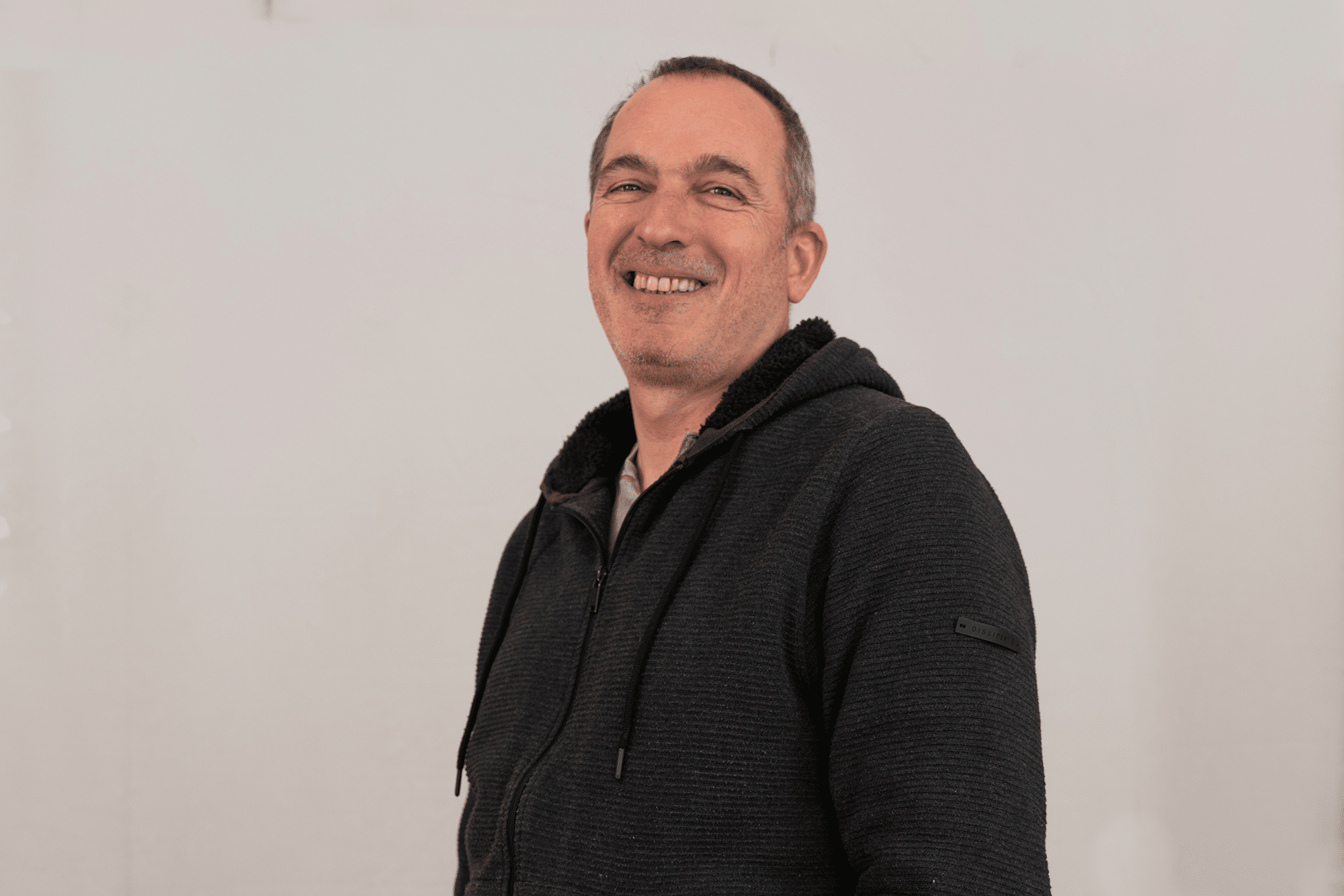
Valéry Botton is a Professor at the National Institute of Applied Sciences (INSA) Lyon and Director of the INSA branch of the Laboratoire de Mécanique des Fluides et d’Acoustique (LMFA - UMR 5509) . His research focuses on fluid dynamics, acoustics, and the solidification of metallic alloys. He teaches fluid mechanics, experimental methods, and engine-related subjects in the Department of Mechanical Engineering at INSA Lyon. Research Themes : Acoustic streaming, directional solidification, non-Newtonian fluid stability, solute segregation, and ultrasound applications in material processing. Recent Publications : 15 articles (2016–2024) explore topics like lattice Boltzmann simulations of acoustic flows, stability analysis of shear-thinning fluids, and ultrasound-enhanced silicon purification. Collaborations : Active in interdisciplinary projects such as the Carnot ASTRES initiative for photovoltaic silicon production and BRASSOA (Institut Carnot Ingénierie@Lyon). Technical Expertise : Experimental and numerical studies on convection, film flows, and mass transfer in liquid metals and complex fluids. Contact: valery.botton@insa-lyon
James Badro is a distinguished Professor at the Institut de Physique du Globe de Paris (IPGP), which is part of Université Paris Cité. He leads the Cosmochemistry, Astrophysics and Experimental Geophysics (CAGE) research team and maintains an active research laboratory at IPGP's Paris campus (Bureau 262 - 1, rue Jussieu). Professor Badro's research focuses on fundamental questions in planetary formation and evolution, with particular emphasis on Earth's interior structure, mantle dynamics, and core-mantle differentiation processes. His work bridges experimental high-pressure physics with planetary-scale geodynamics, utilizing advanced techniques including diamond anvil cell experiments and laser heating methodologies. His research interests span magma ocean solidification, metal-silicate partitioning, isotope fractionation during planetary differentiation, and the thermal and chemical evolution of terrestrial planets. Analysis of his recent publications reveals a strong focus on comparative planetology, with significant contributions to understanding both Earth's and Mars' interior structures. His research group has made groundbreaking discoveries regarding magma ocean solidification processes, the presence of molten layers at planetary core-mantle boundaries, and the geochemical signatures that constrain planetary formation histories. The interdisciplinary nature of his work connects mineral physics at extreme conditions with large-scale planetary evolution models. Among his notable achievements is the ERC SEPtiM (Solidification of Earth's Primitive Mantle) grant, a prestigious European Research Council award recognizing the significance and innovation of his research program. His work regularly appears in top-tier journals including Nature, Science Advances, and Proceedings of the National Academy of Sciences. Professor Badro actively collaborates with international research teams across Europe and North America, contributing to major planetary science initiatives including the Mars InSight mission. His research group maintains state-of-the-art experimental facilities for high-pressure and high-temperature studies, enabling cutting-edge investigations of materials under conditions relevant to planetary interiors.
Matthieu Rauch serves as a Professor in the Product Design and Industrial Systems Department at École Centrale Nantes, affiliated with the Research Institute in Civil and Mechanical Engineering (GeM). His work bridges advanced manufacturing research with industrial applications across aerospace, naval, and transportation sectors. His research expertise includes: Wire Arc Additive Manufacturing (WAAM) and Laser Metal Deposition process optimization Multiphysics modeling of titanium/aluminum alloy deposition Real-time process monitoring systems for arc-based DED Cost-complexity analysis frameworks comparing additive/subtractive manufacturing Tool path generation for thin-wall structures Hybrid manufacturing methodologies for large-scale components Recent publications (2021-2024) reveal consistent innovation in metallic additive manufacturing, with emphasis on thermal management, defect reduction, and industrial scalability. Key contributions include novel CTWD control models, gas-particle flow analysis for powder efficiency, and methodologies for polymer large-component fabrication. His work demonstrates strong cross-disciplinary integration between computational mechanics and production engineering. Rauch actively contributes to GeM's research ecosystem at École Centrale Nantes, focusing on translating academic advances into practical industrial solutions for complex manufacturing challenges. No information regarding student supervision, grant funding, or scientific awards was evident in the source documentation.
Severine Millet is a Researcher affiliated with the Turbulence & Instabilités team at the Laboratoire de Mécanique des Fluides et d’Acoustique - UMR 5509 in Lyon, France. Her research focuses on fluid dynamics, turbulence, and related phenomena, with contributions to geophysical fluid dynamics and multiphase flows. She collaborates internationally on projects such as silicon purification processes and fluid dynamics in rotating systems. Education & Affiliations: Not explicitly detailed in text, inferred from lab and team affiliation. Research Interests: She investigates turbulence modeling, flow instabilities, and their applications in geophysical and industrial contexts. Her work includes numerical simulations and experimental studies on fluid mixing, stratified flows, and energy-related systems. Grants & Collaborations: Key projects include Franco-Algerian collaborations (e.g., silicon purification via directed solidification) and interdisciplinary efforts with institutions like CEA, Airbus, and universities in India/UK. Notable funding includes ANR grants and regional innovation programs. Labs & Teams: Active in the Turbulence & Instabilités team, contributing to experimental facilities like wind tunnels and fluid dynamics instrumentation. Engaged in developing numerical methods and flow visualization techniques.
Dominique DALOZ is a University Professor at ENSGSI - Groupe INP in Nancy, France. He leads the Materials Science and Engineering Department and directs the C2MP doctoral school. His research focuses on solidification processes of metallic alloys and material degradation within the Jean Lamour Institute (IJL). Education: Habilitation to Supervise Research in Materials Science and Engineering (2009, INPL) PhD in Materials Science and Engineering (1995, INPL) DEA in Materials Science (1991, INPL) Teaching includes courses on Materials , Materials-Processes Interaction , and Solidification . He contributes to the IDEAS Master’s program (Innovation and Design) and the Engineering Degree in Systems and Innovation Engineering . Responsibilities include department leadership and doctoral school direction, emphasizing materials science education and research.
Sophie Miralles is a researcher at the Laboratory of Fluid Mechanics and Acoustics (LMFA - UMR 5509) at INSA Lyon , France. Her work focuses on the intersection of acoustic streaming , metallic alloy solidification , and flow measurement techniques such as velocimetry. Research Themes : Characterization of flows generated by acoustic streaming, solidification of metallic alloys and semiconductors, and development of velocimetry methods. Collaborations : Involved in projects like the 2021 Carnot Ingénierie@Lyon initiative on acoustic wave-driven stirring and a 2018 contract with Constellium C-TEC for ultrasound applications in molten alloys. Article Trends : Her publications emphasize fluid mechanics (8/12), acoustics (6/12), and MHD (4/12). Key subfields include acoustic streaming , solidification processes , turbulent mixing , and magnetic field interactions in fluid systems. Patents : Co-inventor of two patents related to ultrasonic interface tracking in silicon crystallization and conductive fluid velocimetry . Laboratory Context : Works within the Turbulence & Instabilities team at LMFA, utilizing advanced facilities like the 9-meter open flume channel for experimental studies on density-driven mixing in river confluences and industrial discharges.
Stéphane Labrosse is a Professor of Geophysics at École Normale Supérieure de Lyon (ENS de Lyon). He specializes in the dynamics and evolution of Earth's interior, focusing on mantle convection, core evolution, magma ocean solidification, and planetary formation. He holds a PhD from the Institute of Physics of the Globe in Paris (IPGP) and has held academic positions at IPGP and ENS de Lyon since 1998. Bachelor's in Physics (1992, Université Paris-XI) Master’s in Internal Geophysics (1994, IPGP/Paris-Diderot) PhD in Geophysics (1997, IPGP) His research explores thermal evolution of planetary cores, mantle dynamics, and magma ocean crystallization. Notable contributions include studies on Earth's secular cooling, mantle heat flux heterogeneities, and dynamics of icy ocean worlds. He is a former Junior member of the Institut Universitaire de France (2009-2015) and recipient of the Doornbos Memorial Prize (2002) and Paul Doistau-Émile Blutet Prize (2000). Key research themes include core-mantle interactions, thermal boundary layers, and planetary interior modeling. His work bridges geophysics with computational fluid dynamics and planetary evolution studies.
Philippe JACQUET is an Associate Professor at École Nationale Supérieure d'Arts et Métiers (ENSAM), part of the Materials Department. He serves as Deputy Director of LaBoMaP and leads the ANR Labcom CLAS project. His research focuses on materials science, thermal processing, and surface engineering for metals and alloys, with applications in foundry technology, automotive components, and sustainable manufacturing. His work emphasizes optimizing thermal treatments, analyzing material behavior under high-temperature conditions, and developing eco-innovative recycling methods for electric vehicle engines. Key research areas include low-pressure carburizing/nitriding, oxidation resistance of steels, and numerical simulation of casting processes. He has pioneered sensor-based process control for carburizing treatments and contributed to improving green sand thermal properties for foundry simulations. His interdisciplinary approach bridges experimental characterization and computational modeling to enhance material performance in industrial contexts. Recent publications highlight advancements in thin film stress analysis, tantalum carbide coatings, and tribological behavior of PVD coatings. His work has been recognized for integrating environmental sustainability into material lifecycle management, particularly in remanufacturing processes.
Dr. Rija RAOELISON is an Associate Professor (Maître de conférences) at the University of Technology of Belfort-Montbéliard (UTBM), where he has been a permanent faculty member since 2013. He is affiliated with the Institut Carnot de Bourgogne (ICB UMR CNRS 6303) and works within the Department of Metallurgical Processes, Sustainability, and Materials. In December 2021, he obtained his Habilitation à Diriger des Recherches (HDR) in process engineering with a dissertation titled 'Advancing the understanding on the optimization of emerging manufacturing methods based on a high-speed collision: cold spraying and magnetic pulse welding.' His research focuses on advanced manufacturing technologies with particular emphasis on additive manufacturing and high-speed collision welding processes. Dr. RAOELISON has made significant contributions to understanding cold spray additive manufacturing, including fluid/powder interactions, CFD analysis, bulk manufacturing, solid-state adhesion phenomena, thermomechanical phenomena, and process optimization. His work on high-speed collision welding encompasses metallurgical transformations under high-strain rate conditions, characterization of structures, phases and properties, and computational analysis of high strain-rate interfacial phenomena. He also conducts research on laser additive manufacturing, focusing on structures, properties, and multiphysics modeling of metallurgical processes. Dr. RAOELISON has been recognized as one of the 'World wide Top 2% Scientists' by Stanford University in both 2022 and 2024, highlighting the significant impact of his research in the field of advanced manufacturing and materials science. His publications demonstrate consistent contributions to the understanding of metallurgical processes under extreme conditions, with a particular focus on developing fundamental knowledge that can be applied to optimize industrial manufacturing processes. His research bridges experimental characterization with advanced computational modeling to provide comprehensive insights into complex metallurgical phenomena.
Eric Maire is a Professor of Materials Science at INSA Lyon, affiliated with the MATEIS laboratory (CNRS UMR5510). His research focuses on advanced materials characterization using X-ray tomography, with emphasis on microstructure analysis, fracture mechanics, and computational modeling. He has pioneered techniques for in situ experimentation and 3D imaging of materials under mechanical loading. Key research areas include: X-ray computed tomography applications in materials science, mechanical behavior of ceramics and composites, additive manufacturing of lattice structures, and microstructural modeling. Collaborations include institutions like the European Synchrotron Radiation Facility (ESRF) and McMaster University. His work has produced over 70 articles, advancing understanding of material failure mechanisms, phase transformations, and tomography-based analysis. Notable contributions include bioinspired ceramic design and fatigue mechanisms in dual-phase steels.
Professor Carl Labergere is a University Professor and Director of the LASMIS Research Unit (Laboratory of Mechanical & Material Engineering) at the University of Technology of Troyes. His research focuses on mechanical engineering and material science, with particular expertise in computational mechanics, material modeling, and manufacturing processes. He maintains an active research program with collaborations across multiple institutions as evidenced by his extensive publication record. Professor Labergere's research interests span several key areas in mechanical engineering and material science. His primary focus is on developing advanced computational models for predicting material behavior, particularly in the context of ductile damage, elastoplasticity, and metal forming processes. He has made significant contributions to the understanding of material failure mechanisms and has developed sophisticated numerical techniques for simulating complex manufacturing processes. His recent work has expanded into emerging areas such as 3D printing materials and nuclear waste containment applications. Analysis of Professor Labergere's recent publications reveals a strong trend toward increasingly complex multi-physics modeling approaches. His work consistently integrates mechanical behavior with thermal, chemical, and damage effects, reflecting the growing complexity of modern material systems. The research spans traditional manufacturing processes like metal forming while also addressing cutting-edge applications in additive manufacturing and nuclear safety. His publications demonstrate a progression from fundamental material modeling toward practical engineering applications that solve real-world industrial problems. Professor Labergere's research program demonstrates strong continuity and evolution over time. His early work focused on foundational aspects of material modeling and finite element methods, while his more recent publications address increasingly complex multi-physics problems with direct industrial applications. The consistent publication record across high-impact journals indicates sustained research productivity and relevance to the mechanical engineering community. As Director of the LASMIS Research Unit, Professor Labergere leads a team focused on mechanical engineering and material science research. The laboratory appears to maintain strong connections with industrial partners, particularly in manufacturing and nuclear sectors, as evidenced by the applied nature of the research topics. The research infrastructure likely includes advanced computational resources for finite element analysis and experimental facilities for material characterization and mechanical testing.
Zhidan SUN is an Associate Professor at the University of Technology of Troyes, France, affiliated with the Laboratory of Mechanical & Material Engineering (LASMIS). He has been serving in this position since September 2019, following his role as Assistant Professor from September 2013 to August 2019. His academic journey includes research and teaching positions at Université de Versailles Saint-Quentin-en-Yvelines, ISAE-ENSMA, and MINES ParisTech-CEMEF. Dr. Sun's research focuses on mechanical properties of materials in relation to microstructural and environmental parameters. His work encompasses characterization of tensile and fatigue properties, analysis of damage and fracture mechanisms, and numerical modeling with finite element methods. Key research areas include time-dependent grain boundary embrittlement of copper alloys, multiscale modeling of hot tearing during solidification of metals, fatigue crack growth affected by gaseous hydrogen, cohesive zone method based thermo-mechanical fatigue models, and characterization and multiscale modeling of materials processed by Surface Mechanical Attrition Treatment (SMAT). His recent publications demonstrate a consistent focus on surface treatment techniques, particularly SMAT and shot peening, and their effects on mechanical properties, fatigue behavior, and residual stress distribution. These works span from fundamental material characterization to advanced numerical modeling approaches, with applications in aerospace, biomedical, and electronic materials. The research shows a progression toward more sophisticated multiscale modeling and experimental validation techniques. With 87 publications, 24,998 reads, and 1,307 citations according to ResearchGate, Dr. Sun has established himself as a significant contributor to the field of material mechanics and surface engineering. He serves as a Guest Editor for the journal Metals, reflecting his standing in the academic community. Dr. Sun's research involves extensive collaboration with colleagues across multiple institutions, as evidenced by his co-authorship network. His work addresses critical challenges in material performance prediction and enhancement, particularly for components subjected to cyclic loading and demanding environmental conditions.
Valery Botton is a Professor at the University of Lyon, affiliated with the Laboratory of Fluid Mechanics and Acoustics (LMFA) under INSA Lyon. His research spans Complex Fluids and Transfers Dynamics of particles, drops and bubbles Non-Newtonian Fluids Interfaces and phase changes Turbulent mixing Environmental ecology and Energy Industrial processes and bioprocesses Transfers in boundary layers and complex geometries Land transport Free surface hydrodynamics . He has contributed to multi-scale modeling of impurity segregation during photovoltaic silicon solidification, focusing on turbulent transport in hydrodynamic boundary layers. His work addresses applications in environmental flows, energy, and industrial processes, emphasizing numerical simulations, experimental techniques (e.g., PIV, LDV), and societal issues like clean energy production and space weather modeling. He collaborates with institutions such as CEA, CNRS, and Euro-Mediterranean University of Fez.
Sabrina Carpy serves as a Lecturer in the Department of Physics within the Faculty of Science and Technology at the University of Nantes, concurrently conducting research at the Laboratory of Planetology and Geodynamics (LPG). Her dual role integrates academic instruction with planetary-scale fluid dynamics investigations. Her research specializes in transport phenomena involving moving fluids undergoing phase transitions (sublimation, condensation, boiling, solidification), with direct applications to planetary surface evolution. This work intersects planetary science, geodynamics, and advanced fluid mechanics, particularly examining sedimentary, matter, and chemical exchange mechanisms on celestial bodies. Her experimental approach connects laboratory-scale fluid dynamics with observable planetary morphological features. As an educator, she delivers courses spanning fluid mechanics, thermodynamics, energy systems, fluid-structure interactions, wave propagation, and turbulence modeling with computational applications. Her research group operates within the LPG, a prominent French research unit (UMR 6112) focused on planetary formation and geophysical processes through interdisciplinary methodologies combining physics, geology, and fluid dynamics.
Morgan Dal serves as Senior Lecturer and Team Leader of the Laser Processes research group at PIMM Laboratory, Arts et Métiers Institute of Technology. Appointed in 2012, he holds an HDR (Habilitation to Supervise Research) from CNAM (2020) and maintains active roles in doctoral training and laboratory leadership. His research bridges computational modeling with experimental laser processing. His academic credentials include: PhD in Mechanical Engineering, University of Southern Brittany (2011): 'Magneto-thermo-hydrodynamic simulation of TIG arc welding - estimation of the evolution of a fusion front' HDR, CNAM (2020): 'Laser application simulations: from development to validation' Professor Dal's research centers on laser-material interactions with five core pillars: (1) Laser Processing techniques including welding and additive manufacturing; (2) Multiphysics Numerical Simulation using finite element and fluid dynamics methods; (3) Heat Transfer and Fluid Mechanics in high-temperature regimes; (4) Inverse Methods for property estimation; and (5) Thermal Measurement via high-speed imaging. His experimental work frequently addresses industrial challenges in metal processing, particularly for refractory and high-reflectivity materials. Analysis of his 15 most recent publications reveals accelerating output in additive manufacturing (2019-2022), with dominant themes in melt pool dynamics (32% of papers), keyhole stability (24%), and specialized material processing like copper with green lasers (13%). His work consistently integrates experimental validation with computational models, showing particular innovation in dimensionless number approaches for predicting laser welding phenomena. As HDR-qualified supervisor, Professor Dal mentors doctoral candidates through Arts et Métiers' engineering doctorate program. His Laser Processes team operates within PIMM Laboratory's advanced infrastructure, including the Hephaestus' Laser Shock platform and Thermal Laser Processes facilities. The team maintains strong industrial partnerships, particularly with aerospace and energy sector companies, through PIMM's joint laboratory programs and regional collaborations.