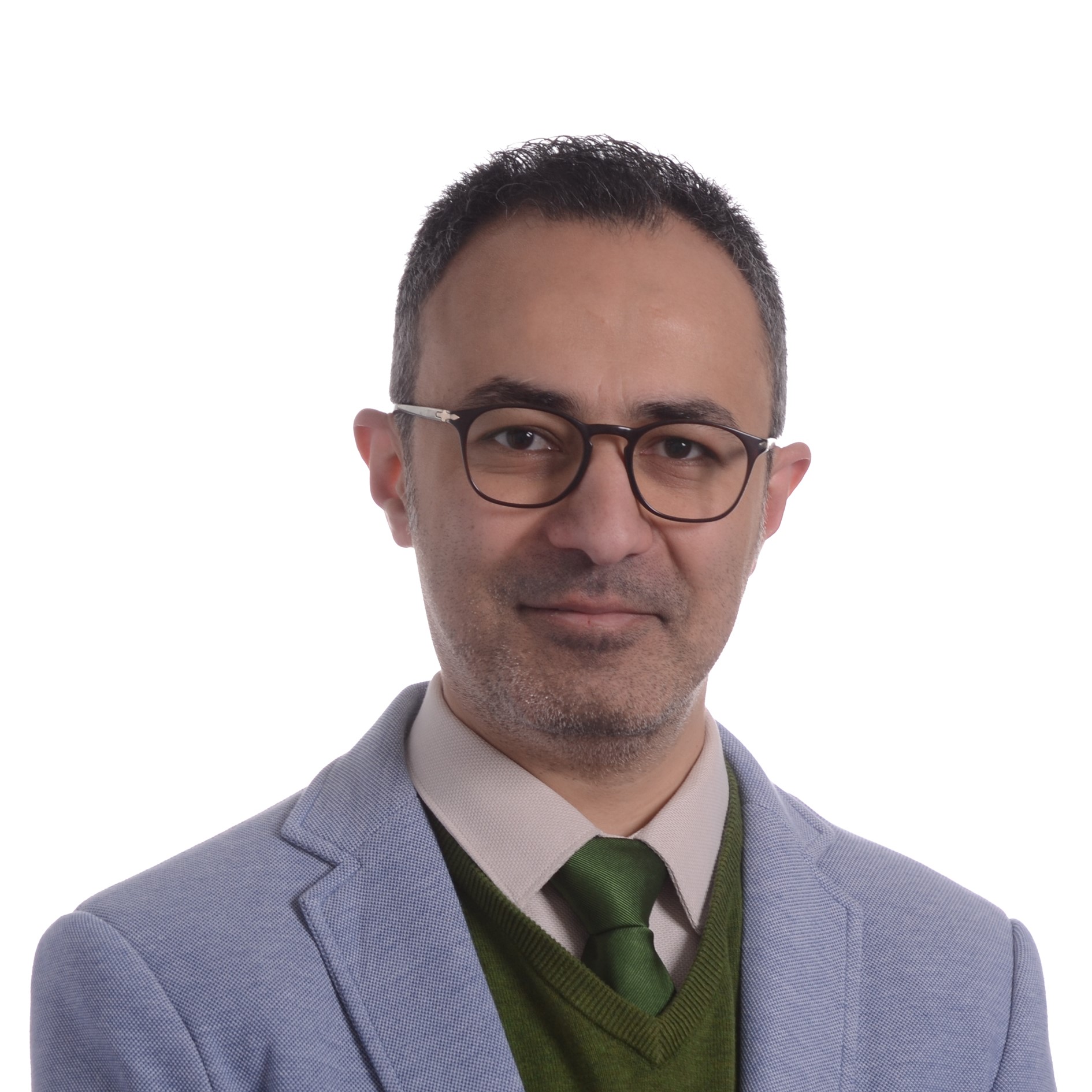
Professor John Evans is a leading researcher in the Department of Chemistry at Durham University. His work focuses on Inorganic and Materials Chemistry , particularly in oxide ion conductors, molecular ferroelectrics, and negative thermal expansion materials. Education: 1st Class M. Chem. and PhD from Oxford University Academic Career: Lecturer (1998), Reader (2003), Chair (2007), Head of Department (2009-2014) Key Research Areas: Solid-state materials, crystallography, neutron diffraction, and energy applications Email: john.evans@durham.ac.uk Professor Evans has made significant contributions to understanding crystal structures and their dynamic properties. His recent work explores polymorphism in molecular ferroelectrics, oxygen exchange mechanisms in hydrogen production, and structural engineering of multifunctional materials. His 1851 Fellowship at Oxford laid the foundation for his career in materials chemistry. Current supervisees include George Marshall , Oliver Wagstaff , and Talia Pryce . Collaborative projects span from neutron diffraction studies to catalytic materials development.
Anna Kobets is a Doctoral Researcher at the Department of Chemistry and Materials Science, School of Chemical Engineering, Aalto University. Her research focuses on electrochemical energy conversion, particularly in the areas of battery technology and materials science. Her primary research interests include: Electrochemistry Battery Technology Materials Science Energy Storage Lithium-ion Batteries Cathode Materials Dr. Kobets' research primarily centers on advancing battery technologies, with a focus on improving the performance and sustainability of lithium-ion and sodium-ion batteries. Her work involves materials synthesis, characterization, and electrochemical testing of novel battery components, with particular expertise in doping strategies, surface modification techniques, and understanding structure-property relationships in cathode materials. Her recent publications demonstrate a strong focus on cathode materials development, battery recycling, and sustainable energy storage solutions. The research shows significant contributions to improving energy density, thermal stability, and electrochemical properties of battery materials through innovative approaches like atomic layer deposition and gradient doping. Dr. Kobets is actively involved in multiple research projects including BATCircle3.0 (2024-2027), which focuses on establishing a Finland-based circular ecosystem for battery metals, and FinnCERES (2022-2026), the Competence Center for the Materials Bioeconomy. She has also contributed to HiQ-Carb projects (2023-2025) focused on advanced carbon materials for battery applications. Her research aligns with UN Sustainable Development Goals related to affordable and clean energy, industry innovation, and responsible consumption and production, with specific expertise in Lithium Ion Battery (100%), Transition Metal (57%), High Energy Density (42%), Doping (Additives) (38%), Coprecipitation (28%), Cathode Material (28%), Thermal Property (28%), and Electrochemical Property (28%).
Michael Grobbauer is a Professor and Senior Researcher at the Center for Alpine Construction within the Design and Green Engineering framework at Salzburg University of Applied Sciences. He has been active since 2012, with a focus on sustainable building practices and energy-efficient urban development. Key research areas: Sustainable Construction, Building Energy Modeling, Timber Engineering, Renewable Energy Integration His recent work explores parametric timber solutions and energy performance certificate-based urban modeling , contributing to climate-resilient building systems. He has published 42 works, including 2023 Energy journal articles and 2022 conference papers on modular construction. Salzburg State Architecture Prize (2006) Inventor of Graz University of Technology (2013) Salzburg Timber Construction Award (2007) IOC/IAKS Special Distinction (2007) Active in projects like ScaleUp_ZAB (2023–2025), Grobbauer leads initiatives in solid timber construction and photovoltaic integration . He has reviewed 14 publications and presented at events including the 2024 Austrian PV Conference.
Dr. Sharafat Ali is an Associate Professor in the Department of Built Environment and Energy Technology at Linnaeus University's Faculty of Technology. With over two decades of experience spanning academia, research, and industry, Dr. Ali has established himself as a leading materials scientist specializing in high-temperature synthesis, advanced materials, and sustainable energy applications. Dr. Ali's educational background includes: Master's degree in Material Process Technology (2002) from the Royal Institute of Technology (KTH), Sweden Ph.D. in Materials Chemistry (2009) from Stockholm University, Sweden Postdoc in Glass Science from Linnaeus University, Sweden and Nagoya Institute of Technology, Japan (2009-2012) Dr. Ali's research focuses on the development and characterization of advanced glass and ceramic materials, particularly nitrogen-rich glasses, oxide glasses, glass-ceramics, and their applications in solid-state batteries and sustainable technologies. His work spans fundamental materials science to applied industrial solutions, with emphasis on understanding structure-property relationships in complex glass systems. He has made significant contributions to the field of high-temperature synthesis of advanced materials and has developed innovative thin films for high-tech applications. Analysis of Dr. Ali's recent publications reveals a strong focus on oxynitride glasses and glass-ceramics, with particular attention to their structural, thermal, mechanical, and electrical properties. His research demonstrates interdisciplinary applications spanning energy storage, biomedicine, electronics, and sustainable construction materials. The work often involves sophisticated synthesis techniques such as spark plasma sintering and laser melting, combined with comprehensive characterization methods. Dr. Ali's research has been supported by competitive grants from: Vinnova Åfors Crafoord JSPS LNU Advanced Materials As an educator, Dr. Ali has developed and taught diverse courses in materials science and sustainable energy systems while mentoring numerous Postdoc, Master's, and Bachelor's students. His research leadership encompasses multiple ongoing projects including 'Complex oxynitride glasses – the quest for luminescence and structural origin' and 'Machine learning for predicting mechanical properties of high-performance oxynitride glasses.' His industrial collaborations with organizations like Corning Incorporated have translated research into practical applications. Dr. Ali's research group works within the Bioresource Technology environment at Linnaeus University, focusing on the intersection of materials science, energy technology, and sustainable development. The group maintains strong international collaborations and has access to state-of-the-art facilities for glass synthesis, thin film deposition, and materials characterization.
Donhee Ham is the John A. and Elizabeth S. Armstrong Professor of Engineering and Applied Sciences at Harvard University , focusing on the intersection of semiconductor technology, biomedical engineering, and quantum electronics . His lab develops advanced CMOS-based systems for neuronal interfaces, magnetic resonance imaging, and bio-silicon hybrid platforms, with applications in cellular electrophysiology, data storage, and quantum sensing . Recent work includes: High-density microhole electrode arrays (iMEA) for synaptic connectivity mapping Portable NMR/MRI systems for molecular fingerprinting and bacterial monitoring Gigahertz plasmonic devices and 2D electron gas systems for microwave non-reciprocity Hybrid cyto-silicon systems with closed-loop modulation Exploration of low-power electronics and DNA-based data storage His research often bridges solid-state circuits with biological applications , as seen in his Nature and Nature Communications publications. Collaborations span Harvard SEAS, MIT, and international institutions.
Sharif Haidar is a Researcher at the Institute for Particle Technology (iPAT) within the Faculty of Mechanical Engineering at the Technical University of Braunschweig. His work focuses on advanced energy storage systems, particularly all-solid-state lithium-sulfur batteries for sustainable aviation under the SE²A Cluster of Excellence . He also manages administrative tasks for the divisions Nanomaterials and Pharma- and Bioparticle Technology . Education : Master's in Sustainable Energy Engineering (2019-2023) and Bachelor's in Mechanical Engineering with Nuclear specialization (2002-2007) from the University of Aleppo. Research Focus : Development of hybrid electrolytes for composite cathodes in solid-state batteries and structural integration for aviation applications. His recent work on composite polymer electrolytes in Energy Advances highlights innovations in ion-conductive materials. Collaborations with Prof. Georg Garnweitner and Dr. Jan Henrik Finke underscore his integration into TU Braunschweig’s research ecosystem.
Zhigang Zak Fang is a Professor in the Department of Metallurgical Engineering at the University of Utah, specializing in advanced metallurgical processing technologies. His work focuses on sustainable metal production, titanium powder metallurgy, additive manufacturing, and hydrogen storage materials. With over 360 publications and 60 US patents, Fang has commercialized novel titanium production methods that could significantly reduce costs and greenhouse gas emissions. PhD in Materials Science and Engineering (University of Alabama at Birmingham, 1991) MS and BS in Materials Science and Engineering (University of Science and Technology Beijing, 1984) Research Interests: Fang's research bridges materials engineering with environmental sustainability, particularly through hydrogen-assisted metallurgy and powder-based manufacturing. His work on TiFe alloys for hydrogen storage and WC-Co composites demonstrates innovation in both fundamental science and industrial applications. Notable Awards: R&D100 Awards (2009, 2023) Humboldt Research Award (2023) Fellow, National Academy of Inventors (2017) Editor-in-Chief of the International Journal of Refractory Metals and Hard Materials Grants: Fang has secured ~$30M in external funding, including DOE projects for clean steel production (2024-2027) and ARPA-E energy storage initiatives.
Dileep Venkatarama Reddy is a Senior Research Fellow at the National Institute of Standards and Technology (NIST) and University of Colorado Boulder, affiliated with the Department of Physics. He leads research in quantum photonics within the FAINT PHOTONICS GROUP, focusing on integrated quantum devices and advanced optical measurements. Education: Ph.D. in Physics, University of Oregon (2017) M.Tech in Communications and Signal Processing, Indian Institute of Technology Madras (2009) B.Tech in Electrical Engineering (with Physics minor), Indian Institute of Technology Madras Research Interests: Dr. Reddy specializes in quantum information processing using photonic temporal modes, superconducting single-photon detectors, and integrated nonlinear optics. His work bridges quantum optics with practical device engineering, enabling advancements in quantum communication and detection technologies. Key areas include chip-scale quantum devices, frequency conversion techniques, and high-efficiency photon detection systems operating from ultraviolet to infrared wavelengths. Publication Focus: His extensive publication record demonstrates consistent contributions to quantum optics and photonics, with recent work emphasizing superconducting detector optimization, quantum frequency conversion, and entanglement distribution. Research trends show increasing focus on practical quantum networking implementations and device integration. Awards and Honors: Weiser PhD Thesis Award (University of Oregon, 2017-18) Science Literacy Program Fellowship (2013-2014) Weiser Teaching Assistant Awards (2010-2013) Summer Research Fellowship at JNCASR (2006) Top national ranks in IIT-JEE and AIEEE examinations Research Infrastructure: Conducts experiments through the FAINT PHOTONICS GROUP at NIST Boulder, leveraging advanced nanofabrication facilities for superconducting detectors and integrated photonic circuits. Collaborates widely on projects related to quantum networks and device-independent quantum protocols.
Zhao Jianwei is an Assistant Professor at the School of New Materials and New Energy, Shenzhen University of Technology. He received his Ph.D. in Materials Science and Engineering from North Carolina State University in 2020. Prior to his current position, he worked as a Postdoctoral Fellow and Assistant Research Fellow at the Shenzhen Institutes of Advanced Technology, Chinese Academy of Sciences, and the Shenzhen International Innovation Institute of Advanced Electronic Materials from 2021 to 2024. His academic journey includes a Master's degree from the University of Michigan-Dearborn and a Bachelor's degree from Wuhan University of Technology. Ph.D., Materials Science and Engineering, North Carolina State University (2016-2020) M.S., Mechanical Engineering, University of Michigan-Dearborn (2013-2015) B.S., Materials Science and Engineering, Wuhan University of Technology (2009-2013) Zhao's research focuses on developing advanced ceramic materials with emphasis on lead-free piezoelectrics, ferroelectrics, and transparent ceramics. His work incorporates cutting-edge in-situ analysis techniques using synchrotron radiation high-energy X-ray diffraction to understand material behavior under various conditions. His research program addresses critical challenges in the field of electronic ceramics, particularly in developing environmentally friendly alternatives to lead-based materials while maintaining high performance characteristics. His approach combines materials design, processing optimization, and advanced characterization to develop next-generation functional ceramics. Analysis of Zhao's recent publications reveals a strong focus on lead-free piezoelectric and energy storage ceramics, with particular emphasis on BiFeO 3 -BaTiO 3 based systems. His work demonstrates expertise in composition design, phase structure control, and property optimization. The research spans fundamental investigations of domain structures and phase transitions to applied research on energy storage performance and reliability. The publications appear in high-impact journals including Acta Materialia, Journal of the European Ceramic Society, and Journal of Materials Chemistry A, indicating strong recognition in the ceramics research community. Zhao has secured research funding as Principal Investigator for projects including the Guangdong Provincial Regional Joint Fund and the Shenzhen Excellent Science and Technology Innovation Talent Training Project. These projects support his research in lead-free piezoelectric ceramics and related materials. His research group works on several key areas: component design of lead-free piezoelectric and ferroelectric ceramics, application of synchrotron radiation XRD for in-situ analysis, and development of transparent ceramics. The team collaborates with multiple institutions including the Shenzhen Institutes of Advanced Technology and utilizes advanced characterization facilities for materials research.
Susanne Müller is a Lecturer at the University of Lorraine , affiliated with the Centre de recherche sur les médiations (CREM) . Her research focuses on the Unheimlich (the uncanny) in contemporary art, traces of World War II in artistic practices, and artistic writing/translation . She co-leads the Praxiteles research team since 2025. Research Themes: Exploration of the uncanny in contemporary visual culture Artistic responses to war heritage and historical trauma Interdisciplinary approaches to image education and media didactics Collaborations bridging art, cultural studies, and science communication Recent Articles (2024-2019) examine: Cultural heritage preservation in crisis contexts Art education frameworks in digital and post-crisis environments Geochemical implications for deep mantle processes Visual semiotics in media crisis narratives Artistic interpretations of war landscapes Interdisciplinary studies on hybrid artistic forms Projects include research contracts with the Ministry of Culture (France) , Lorraine Region , and Maison des Sciences de l'Homme Lorraine . She contributes to the Ciera (Interdisciplinary Center for Studies and Research on Germany) and integrates artistic practices into educational initiatives, particularly through the LéA PRO vocational high school research action.
Anji Munnangi is a Senior Lecturer in Energy Storage at Swansea University's School of Engineering and Applied Sciences , specializing in Materials Science and Engineering . They are actively involved in postgraduate supervision and contribute to industrial R&D through the EG-M39 MSc Industrial Experience module, alongside teaching EGA110 Instrumental and Analytical Chemistry . Research Focus : Solid-state batteries, fluoride ion chemistry, lithium/sodium intercalation, carbon-metal nanocomposites, and energy storage materials. Key Contributions : Development of novel aqueous binders for sodium batteries, investigation of hard carbon anodes, and optimization of ultramicroporous sulfur hosts for lithium-sulfur batteries. Recent publications highlight advancements in alkali metal electrode design , dual-halogen solid-state electrolytes , and fluoride ion battery degradation mechanisms . Their work spans fundamental studies of ionic conductivity and applied battery engineering, with a strong emphasis on sustainability and industrial collaboration. Dr. Munnangi's research group explores micron-scale single-crystal cathodes , garnet-type lithium electrolytes , and in situ TEM analysis of battery materials , aiming to improve energy density, cycling stability, and safety in emerging battery technologies.
Rongkun Zheng is a Professor at the School of Physics, University of Sydney, specializing in Condensed Matter and Materials Physics. His research focuses on growth-structure-property relationships in functional materials using advanced microscopy techniques like atom probe tomography and transmission electron microscopy. Research areas: Nanotechnology, Halide Perovskites, Energy Materials, Nanomagnetism, Microscopy Associated with The Net Zero Institute and The University of Sydney Nano Institute His work explores strain-engineered semiconductors, perovskite solar cells, and quantum materials. Recent projects include Atomic-scale understanding of perovskite instability and In-situ STEM investigation of photocatalysis . He leads PhD opportunities in Direct Epitaxy of Halide Perovskites and Atomic-scale degradation analysis . Scientific honors include the 2011 Sawamura Award (Japan), Australian Research Fellowship (2007-2011), and 1994 Chinese Physics Olympiad First-class Award. He has supervised 19 PhD/MPhil students since 2008, including Li Li (ANU), Jiangtao Qu (USYD), and Hansheng Chen (USYD).
Kimberly See is a Professor of Chemistry at the California Institute of Technology , where she leads the See Group. Her academic journey includes a B.S. in Chemistry from the Colorado School of Mines (2009), a Ph.D. in Materials Chemistry from the University of California, Santa Barbara (2014), and a Visiting Associate position at Caltech (2017). Current Position: Professor of Chemistry (2025–present) Prior Position: Assistant Professor (2017–2025) The See Group specializes in solid-state chemistry , electrochemistry , and energy storage , with a focus on: Structure-property relationships in battery materials Multivalent and multielectron battery chemistry Advanced characterization techniques (e.g., synchrotron, in situ Raman) Redox processes in alkali-rich sulfides and Mg-based systems Recent publications address critical challenges in Na-ion and Mg-ion batteries, superionic conductors, and Li-rich cathodes. The group emphasizes interdisciplinary research combining materials chemistry, analytical chemistry, and electrochemical device design. Collaborative Networks: Co-authors include researchers from Caltech, UCSB, and international institutions Active in developing electrolytes and characterization methods for next-gen batteries
Dr hab. inż. Beata Bochentyn is an Associate Professor at the Institute of Nanotechnology and Materials Engineering , Faculty of Applied Physics and Mathematics , Gdańsk University of Technology . She serves as Vice-Dean for Education and leads research in oxide-based energy materials. Research Interests include: Stabilization of perovskite phases for SOFC applications Development of catalytic materials for biogas reforming Thermoelectric properties of doped semiconductors Nanocrystalline oxide synthesis via microemulsion methods High-temperature transport in pyrochlore oxides Recent Publications (2022-2025) demonstrate expertise in: Topotactic alloy formation on ceramic anodes Microplastics isolation from food matrices Bimetallic catalysts for CO2/H2O co-electrolysis Phase transition control in doped oxides Organizational Involvement : Member of Gdańskie Towarzystwo Naukowe Active in Polskie Stowarzyszenie Wodoru i Ogniw Paliwowych Contributes to Zespół Fizyki Ciała Stałego (Solid State Physics Team) Methodological Expertise spans Pechini synthesis, FTIR gas analysis, and oxide reduction techniques for material fabrication.
Dr Julian Dean is a Senior Lecturer in Materials Science at the University of Sheffield , affiliated with the School of Chemical, Materials and Biological Engineering. His research focuses on functional materials, finite element modeling, and multi-physics simulations to optimize materials responses under external stimuli. PhD in Micro-Electromechanical Systems (University of Sheffield, 2007) MPhys in Physics (University of Sheffield, 2004) Research interests include: Magnetic and dielectric materials for energy applications Impedance spectroscopy for fusion technologies Finite element modeling of materials under multi-physics conditions Recent publications analyze electrode contact effects in ferroelectric ceramics, FLASH sintering mechanisms, and resistive surface layer modeling. Collaborations include industry partners like Volkswagen (VW), KAVX, and UK Atomic Energy Authority (UKAEA). Scientific Awards Co-awarded the 2009 Kroto Prize for Excellence in Science Education of Young People Dean actively engages in public outreach, developing educational tools like FlashyScience for A-level physics tuition and conducting hands-on workshops for ages 5–18. He leads the 1st-year Materials Science module MAT1643 and contributes to advanced finite element modeling instruction.