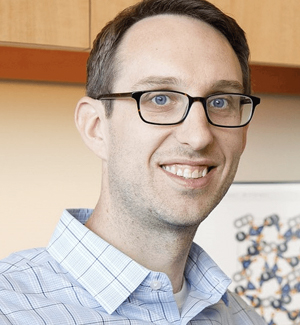
Jakoah Brgoch is an Assistant Professor in the Department of Chemistry at the University of Houston. His research focuses on leveraging machine learning to design inorganic compounds for applications in LED-based lighting and superhard materials. Key areas include phosphor development, sparse data handling, and predicting material formation. He leads the Brgoch Group, which emphasizes interdisciplinary approaches combining computational modeling and experimental synthesis. Research interests span luminescent materials, crystal chemistry, and defect engineering, with a particular emphasis on optimizing phosphors for solid-state lighting and high-performance materials under extreme conditions. His work bridges data science and traditional materials discovery to accelerate innovation in optoelectronics and mechanical materials. Recent publications highlight advancements in cyan-emitting nitridation processes, machine learning-guided phosphor discovery, and understanding oxidation resistance in silicides. His team has developed novel phosphors like Na2CaZr2Ge3O12:Cr³⁺ for NIR bioimaging and explored luminescent properties of Sr-based solid solutions. Active in translational research, Dr. Brgoch collaborates on applications like smartphone-readable diagnostic platforms using nanophosphors and point-of-care testing. His lab emphasizes open science practices and has pioneered methods like Single-crystal automated refinement (SCAR) for structural determination.
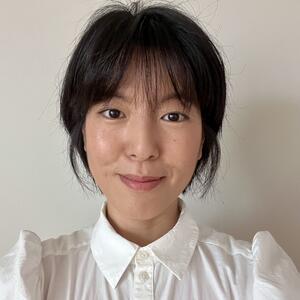
Lucia Lee is an Assistant Professor in the Department of Chemistry at Queen's University, affiliated with the Faculty of Arts and Science. Her research focuses on applying green chemistry principles to supramolecular interactions involving main-group elements, particularly sigma-hole interactions, with applications in materials science and medicine. She holds a PhD from McMaster University and has completed postdoctoral studies at the University of Geneva and Weizmann Institute of Science. Dr. Lee's educational background includes a PhD supported by an NSERC grant, which explored chalcogen bonding in supramolecular materials. Her postdoctoral work at Weizmann focuses on stimuli-responsive materials using chalcogen elements for photoswitching applications. She has also contributed to academic governance through roles in the McMaster Graduate Students Association. Her research interests span analytical chemistry, quantum chemistry, inorganic and bioinorganic chemistry, organic chemistry, and free radical chemistry. Key projects include integrating chalcogen bonding into d-metal coordination chemistry, catalysis, and chemical biology to create functional materials. Her lab, located in CHE513, emphasizes sustainable approaches to material design through main-group supramolecular systems. Her articles explore topics like chalcogen bonding mechanisms, anion transport, and photoswitching in confined spaces, reflecting a strong focus on molecular assembly and functional materials. She has no listed scientific awards but demonstrates significant contributions to supramolecular chemistry through her publications and cross-appointments at Queen's Carbon to Metal Coating Institute.
Dr. Paul G. O'Brien is an Associate Professor in the Department of Mechanical Engineering at York University, Canada, affiliated with the Lassonde School of Engineering. His research focuses on interdisciplinary clean energy solutions, including energy storage, thermophotovoltaic systems, decarbonization of buildings, and life cycle assessments. He leads the Advanced Materials for Sustainable Energy Technologies (AM-SET-Lab) and has authored over 50 journal articles. His work spans materials science, photonic crystal engineering, and radiative cooling technologies. Research interests include optimizing thermal energy storage systems, photonic crystal-based filters for solar applications, and CO2 capture via direct air capture systems. His lab develops materials for passive cooling, solar-thermal integration, and advanced photocatalytic CO2 reduction. Dr. O’Brien collaborates across engineering disciplines to address global energy challenges. Recent publications highlight innovations in ellipsoidal optical cavities for thermophotovoltaics, radiative cooling materials, and techno-economic assessments of carbon capture technologies. His work bridges fundamental material science with applied engineering solutions for sustainable energy systems.
Neal Sullivan is a Professor of Mechanical Engineering at the Colorado School of Mines (CSM), leading experimental research at the Colorado Fuel Cell Center as its director. His expertise lies in electrochemical ceramics, with a focus on fuel cells, electrolyzers, and membrane reactors for energy conversion and storage. Sullivan’s work spans from materials development to large-scale system integration, addressing applications such as hydrogen production, CO₂-to-fuels processes, and geothermic fuel cell systems for unconventional oil recovery. His research is supported by grants from the U.S. Department of Energy (DOE), NASA, and industry partners, totaling over $15M. Notable projects include the development of proton-conducting ceramic electrolyzers for water splitting, high-efficiency hybrid SOFC-IC engine systems, and Mars-based CO₂ methanation. Sullivan has led collaborative efforts with global leaders in electrochemistry, emphasizing scalability and durability in energy systems. Key contributions include innovations in protonic ceramic fabrication, catalyst integration, and multi-stack system design. His lab focuses on bridging early-stage materials research with full-scale demonstrations, achieving power outputs up to 100 kW. Sullivan’s work has been published in top journals like Nature Energy and International Journal of Hydrogen Energy , with a strong emphasis on practical applications and renewable energy solutions. Labs/Teams: Director of the Colorado Fuel Cell Center. Grants/Advising: PI/co-PI on multiple DOE and NASA grants, including $5M for hybrid SOFC systems and $1.5M for geothermic fuel cells. Advises on advanced materials and system integration for energy storage and conversion.
Kuo-Ching Mei is an Assistant Professor of Molecular Pharmaceutics in the College of Pharmacy at the University of Utah. His laboratory pioneers lipid nanoparticle (LNP)-based gene delivery platforms that span cancer immunotherapy, immune tolerance induction, and programmable nanomedicine. Education B.Sc., Taipei Medical University Ph.D., University of London Dr. Mei’s research integrates molecular pharmaceutics, immunoengineering, and translational pharmaceutical sciences to advance precision immunotherapies. Core themes include mRNA-LNP systems for both immunostimulatory (anti-cancer vaccines) and immunomodulatory (tolerogenic) applications, the influence of immunometabolic cues (IFN-γ, amino-acid deprivation) on RNA translation, and the development of next-generation lipid chemistries for organ- and cell-specific delivery. Across his recent publications, a clear trend emerges toward refining LNP composition and architecture to enhance RNA delivery specificity, minimize toxicity, and modulate innate and adaptive immunity. Studies range from fundamental formulation science to pre-clinical evaluation in syngeneic tumor models and assessments of anti-vector immune responses. Research Support & Collaborations While specific grant numbers are not listed, the breadth and continuity of projects—from programmable lipid synthesis to high-throughput in vivo screening—indicate robust funding and active interdisciplinary collaborations within the University of Utah’s bioscience ecosystem. Laboratory & Team Dr. Mei leads a dynamic lab that employs chemical synthesis, formulation development, high-throughput screening, and integrated in vitro/in vivo disease models to translate discoveries into clinically viable RNA therapeutics and immunoengineering solutions.
Dr. Qingbo Sun is a researcher at the Department of Materials Physics, Australian National University, specializing in advanced materials for energy and electronic applications. His work focuses on defect engineering, dielectric materials, and photovoltaic effects in nanocrystalline systems. Research interests include: Defect-driven local symmetry breaking Colossal dielectric permittivity Photocatalytic heterojunctions High-pressure material transformations Doping strategies in semiconductors Nonlinear electric polarization Research trends from his publications highlight innovations in TiO2-based photocatalysts, SnO2 dielectrics, and ferroelectric heterostructures. Collaborations span materials synthesis, computational modeling, and international experimental studies. His work is cited extensively in Scopus with 294 citations.
Dr. Hossein Alizadeh Otorabad is a Research Fellow at the Department of Engineering, School of Computing and Engineering, University of Huddersfield. He joined the Institute of Railway Research (IRR) in 2019 and was promoted to Research Fellow in 2022. His work focuses on finite element analysis, railway engineering, and thermal dynamics in wheel-rail interactions. BSc in Solid Mechanics, Tehran Polytechnic University MSc in Applied Mechanics, Khajeh Nasir Toosi University (2002) PhD in Railway Engineering (2018), focusing on wheel-flat fatigue crack initiation His research expertise spans Railway Engineering , Finite Element Analysis , and Thermal Modeling , with a particular focus on wheel-flat dynamics and fatigue analysis. He has contributed to studies on dynamic load effects in railway crossings, temperature evolution during wheel flat formation, and elasto-plastic behavior in railway wheels. Recent publications show a strong emphasis on Railway Systems (2018-2024), covering topics like: Dynamic load prediction in crossings Thermal analysis of wheel-rail sliding Contact mechanics in flatted wheels Fatigue life evaluation under transient loads His work aligns with UN Sustainable Development Goals for sustainable infrastructure and transportation systems. Scientific Recognition: h-index of 31 (Scopus metrics) 16+ citations for elasto-plastic wheel analysis Contributions to key railway engineering conferences At IRR, he conducts FE analysis, laboratory/field testing of railway assets, hammer testing, and signal processing. He previously received funding from Iran's Ministry of Science for sabbatical research at TU Delft's Material Science and Engineering department.
Gianni Dal Maso is a Professor of Mathematical Analysis at the International School for Advanced Studies (SISSA) in Trieste, Italy. He has been a faculty member at SISSA since 1985, first as Associate Professor and then as Full Professor since 1987. He has held several leadership positions at SISSA including Head of the Sector of Functional Analysis and Applications (1993-1998, 2001-2010), Deputy Director (2010-2015), and Coordinator of the Mathematics Area (2016-2020). His educational background includes: 1973-1977: Undergraduate student in Mathematics at the University of Pisa and Scuola Normale Superiore 1977: Degree in Mathematics with honors at the University of Pisa (thesis: "Gamma-limits of set functions," advised by Ennio De Giorgi) 1977: "Diploma" in Mathematics from the Scuola Normale Superiore 1977-1981: Post-graduate Research Fellowship in Mathematics ("Perfezionamento") at the Scuola Normale Superiore Dal Maso's research focuses on the Calculus of Variations, with particular emphasis on semicontinuity and relaxation problems, Gamma-convergence, and more recently, free discontinuity problems and their applications to mechanics. His work bridges pure mathematical analysis with practical applications in material science, particularly in plasticity and fracture mechanics. He has developed mathematical frameworks for understanding crack propagation, material failure, and the behavior of solids under stress, contributing significantly to both theoretical foundations and practical modeling approaches in these areas. His extensive publication record shows a clear evolution from foundational work in Gamma-convergence (culminating in his influential book "An Introduction to Gamma-Convergence" in 1993) toward increasingly sophisticated models of material behavior, particularly in fracture mechanics and plasticity. Recent work demonstrates continued innovation in handling complex discontinuities, non-local effects, and multi-scale phenomena in material science applications. Among his notable scientific recognitions: 1982: Stampacchia Prize, awarded by the Scuola Normale Superiore 1990: Caccioppoli Prize, awarded by the Italian Mathematical Union 1996: Medaglia dei XL per la Matematica, awarded by the Accademia Nazionale delle Scienze detta dei XL 2003: Prize of the Minister for the Cultural Heritage for Mathematics and Mechanics, awarded by the Accademia Nazionale dei Lincei 2005: Prize Luigi and Wanda Amerio, awarded by the Istituto Lombardo Accademia di Scienze e Lettere Dal Maso has supervised 42 PhD students at SISSA, demonstrating a strong commitment to academic mentorship. His research has been significantly supported by multiple National Research Projects (PRIN) in Italy, and notably by an ERC Advanced Grant "Quasistatic and Dynamic Evolution Problems in Plasticity and Fracture" (QuaDynEvoPro) from 2012-2017, where he served as Principal Investigator. This major project focused on nonlinear evolution problems in plasticity and fracture, with three main research directions: plasticity with hardening and softening, quasistatic crack growth, and dynamic fracture mechanics. His scholarly activities extend to editorial service, with membership on the boards of numerous prestigious journals including Archive for Rational Mechanics and Analysis, SIAM Journal on Mathematical Analysis, and Journal of Convex Analysis. He has also been active in the mathematical community through membership in scientific committees and academies, including the Accademia Nazionale dei Lincei since 2014.
Dr Stathis Tingas is a Lecturer at Edinburgh Napier University's School of Computing Engineering and the Built Environment. His research focuses on hydrogen fuel systems, combustion engineering, and sustainable transportation technologies. With numerous publications in high-impact journals and conference proceedings, Dr Tingas has established himself as a significant contributor to the field of alternative energy systems. Dr Tingas' research interests center on hydrogen and ammonia as alternative fuels for transportation, with particular emphasis on combustion characteristics, engine performance, and emissions control. His work spans theoretical modeling, computational analysis, and practical applications for decarbonizing various transportation sectors including aviation, heavy-duty vehicles, and maritime transport. Recent publications demonstrate his focus on hybrid propulsion systems combining fuel cells with traditional engine technologies. Dr Tingas' publication record shows consistent productivity with research outputs spanning from fundamental combustion science to applied engineering solutions. His work often employs computational singular perturbation techniques for analyzing complex combustion phenomena, with recent focus shifting toward practical applications of hydrogen and ammonia fuels in real-world engine systems. The trend in his publications indicates growing emphasis on zero-emission transportation solutions aligned with net-zero targets. Dr Tingas serves as a second supervisor for PhD students, including Richard Wallace who is working on subsurface hydrogen storage simulation. He has successfully secured multiple research grants from UK government bodies including the Department for Science, Innovation & Technology, Scottish Government, and the Royal Society of Edinburgh, with projects totaling over £500,000 in funding. His current research portfolio includes projects focused on accelerating clean energy technology development, creating sustainable cities, advancing electromobility, and developing zero-carbon hydrogen engines for heavy transport applications. These projects demonstrate his commitment to addressing practical challenges in the transition to sustainable energy systems.
Associate Professor Judy Hart is a materials scientist at the School of Materials Science & Engineering, UNSW Sydney , specializing in the development of semiconducting materials for renewable energy applications. Her work integrates computational (DFT) and experimental approaches to understand composition-property relationships in systems like solid solutions , heterostructures , and doped materials for photocatalysis and solar cells . She leads projects funded by ARC Discovery and Linkage grants , including work on photo-electro-catalysis systems and stabilizing ceramic materials . Education: PhD in Materials Engineering (Monash University, 2007), BEng (Materials) (Monash, 2002) Professional Experience: Senior Lecturer (UNSW, 2017–), Lecturer (UNSW, 2013–2017), University of Bristol (2007–2012) Research Interests Her research focuses on designing materials for renewable energy , particularly photoelectrochemical water splitting and organic oxidation reactions . Key areas include Density Functional Theory (DFT) , defect engineering , band gap tuning , and nanostructured materials . She investigates ferroelectric polarization effects , metal oxide heterostructures , and stability of battery components , with applications in hydrogen production , CO2 conversion , and advanced battery materials . Scientific Awards Ramsay Memorial Fellowship (University of Bristol, 2007–2009) Teaching Contributions She is co-author of the 1st Australian & New Zealand edition of "Materials Science and Engineering: An Introduction" , and teaches courses on computational materials science , corrosion-resistant surfaces , mechanical behavior of metals , and materials design .
Rui Shi is an Assistant Professor in the Department of Chemical Engineering at Pennsylvania State University. Her research focuses on sustainability engineering at the intersection of natural and engineered systems, prioritizing sustainable pathways for transportation fuels, bioproducts, agricultural systems, and food-energy-water systems through integrated sustainability analyses. She develops frameworks for quantitative sustainable design (QSD) and system-level environmental impact assessments to navigate technical, economic, and environmental trade-offs. Her work has led to advancements in plastic recycling via cold sintering technology, biofuel lifecycle assessments, and frameworks for sustainable aviation fuels. Notable projects include assessments of renewable jet fuels in the U.S. Northern Great Plains, cold sintering of LLZO-based composites, and quantifying uncertainties in greenhouse gas abatement costs. Shi has secured grants such as the $3.4M contract for plastic waste solutions and IEE seed grants for interdisciplinary sustainability research. Shi collaborates on global low-carbon transition initiatives and integrates computational tools like BioSTEAM-LCA for agile biorefinery modeling. Her research spans from fundamental material science (e.g., repurposing polyolefin waste) to policy-relevant analyses of land use change and bioenergy systems. She contributes to the Integrated Energy Systems and Water Sustainability research themes at Penn State's Institutes of Energy and the Environment.
Dr. Beata Gorczyca is a Professor in the Department of Civil Engineering at the University of Manitoba, affiliated with the Price Faculty of Engineering. Her research focuses on potable water treatment, with expertise in solid/liquid separation, chlorine disinfection by-products control, and fractal analysis of materials. She leads a research group collaborating with Canadian water utilities like Portage la Prairie and Pembina Valley Water Co-op. Education: PhD in Chemical Engineering (2000, University of Toronto), M.Sc. in Civil Engineering (1992, University of Toronto), B.Sc. in Geological Engineering (1986, AGH University, Poland). Active roles: Member of the Particle Specialist Group at the International Water Association, keynote speaker at conferences. Research interests include water purification processes, membrane filtration, and bioremediation. Her work addresses challenges in high-DOC and high-hardness water treatment, with contributions to nanofiltration fouling mechanisms and microbial remediation solutions. She has supervised numerous graduate students and is involved in advancing water treatment technologies through interdisciplinary collaborations.
Caner Ünlü is an Associate Professor in the Department of Chemistry at Istanbul Technical University with 39 publications and 10 active research projects through 2025. His work focuses on quantum dot synthesis, photophysical characterization, and applications in environmental sensing and renewable energy systems. Research interests center on carbon dots, chalcogenide quantum dots, and their interactions with biological systems. Key areas include tunable emission design, photosynthetic enhancement for algae biomass production, eco-friendly ATP sensing, and micropollutant removal. His methodology integrates experimental synthesis with computational modeling and machine learning for nanomaterial optimization. Recent publications (2024-2025) demonstrate strong thematic coherence in quantum dot engineering for specific functionalities: dopant-driven metal ion sensing, defect state manipulation in chalcogenides, and spectral modulation of photosynthetic complexes. This work bridges nanomaterials science with biotechnology and environmental engineering. Scientific awards: None mentioned in source material. Ünlü has supervised 14 research students and secured multiple grants including TÜBİTAK funding for quantum dot applications in solar cells and environmental remediation. Current projects involve quantum dot integration with metal-organic frameworks and development of fuel-marking nanomaterials. While specific lab names are unreported, his collaborative projects indicate active participation in interdisciplinary teams advancing quantum dot technology for energy and environmental solutions.
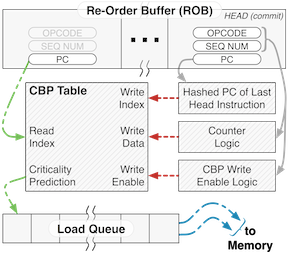
Saugata Ghose is an Assistant Professor in the Siebel School of Computing and Data Science at the University of Illinois Urbana-Champaign (UIUC), with affiliate appointments in the Coordinated Science Laboratory and the Department of Electrical and Computer Engineering. His research focuses on data-centric computing, processing-in-memory architectures, memory systems, and hardware-software co-design. He holds a Ph.D. and M.S. in Computer Engineering from Cornell University and dual B.S. degrees in Computer Engineering and Computer Science from SUNY Binghamton. His academic positions include roles at Carnegie Mellon University (2016–2020) and postdoctoral research at CMU (2014–2016). Ghose has received notable awards such as the 2024 HPCA Hall of Fame, 2023 Intel Rising Star Faculty Award, and the 2019 CMU Wimmer Faculty Fellowship. His work has been supported by grants from NSF, Samsung, and Sandia National Laboratories. Research Interests: His group (ARCANA) explores data-centric architectures, processing-in-memory (PIM), and emerging memory technologies. Key areas include architectures for smart cities, autonomous systems, and genomics. He teaches courses on computer architecture and systems organization. Awards: HPCA Hall of Fame (2024) Intel Rising Star Faculty Award (2023) CMU Wimmer Faculty Fellow (2019) Cornell ECE Teaching Assistant Award (2013) Grants & Projects: NSF $2M for semiconductor advancements Samsung/Sandia grants for PIM programming models UIUC/ZJU DREMES collaboration on neuromorphic PIM Labs/Teams: Leads the ARCANA Research Group, focusing on reimagining computing around new applications. Collaborates with ASAP and HYBRID centers for co-design tools and neuromorphic architectures.
Antti Poso is a Professor of Drug Design at the University of Eastern Finland (Kuopio), affiliated with the School of Pharmacy under the Faculty of Health Sciences. His research focuses on computer-aided molecular design, particularly targeting anti-cancer drugs and anti-microbials. Key projects include the EDCMET project (2019–2024) and the GeneCellNano Flagship (2020–2028). He leads the Molecular Modeling and Drug Design Research Group, specializing in QSAR analysis, kinase inhibition profiling, and systems-level drug response modeling. Recent work includes studies on SARS-CoV-2 inhibitors, endocrine disruptors, and bacterial pathogenesis. His findings bridge chemical structure with biological outcomes, leveraging computational tools like CCA and molecular dynamics simulations. Collaborations span medicinal chemistry, pharmacology, and systems biology, contributing to both academic and applied drug discovery efforts. Education: Not explicitly stated in texts; assumed to hold advanced degrees in pharmacy or chemistry. Research Themes: Drug design, molecular modeling, QSAR, computational biology, and anti-infective agents. Key Contributions: Over 150+ publications, including influential works on chemoinformatics-driven drug response analysis and structure-based inhibitor design. Publications highlight advancements in kinase inhibitors, anti-microbial strategies, and viral hijacking mechanisms. His work emphasizes translating computational insights into therapeutic solutions for cancer, infectious diseases, and metabolic disorders.