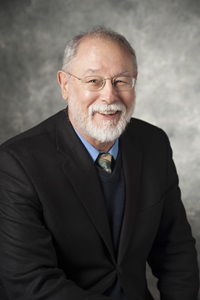
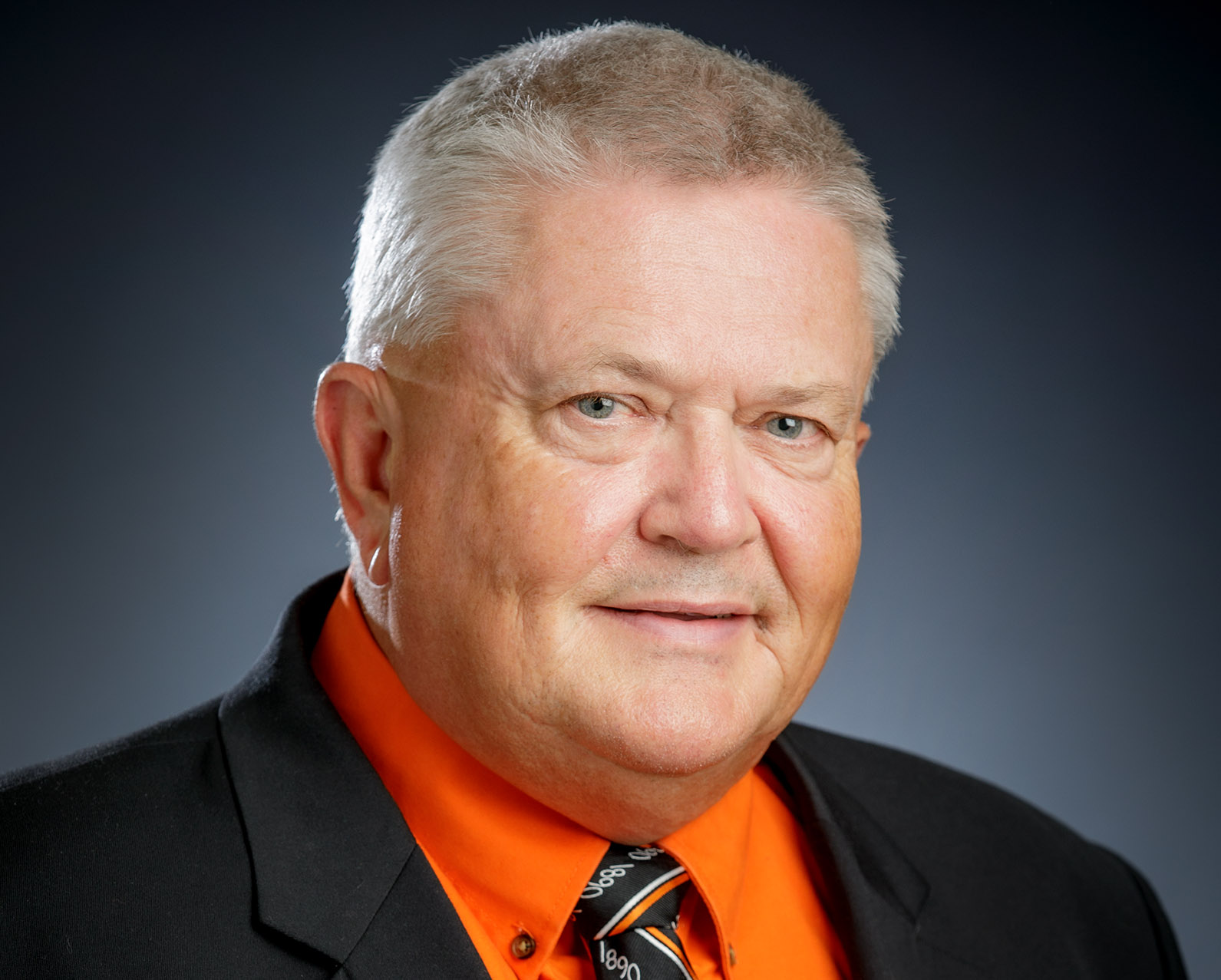
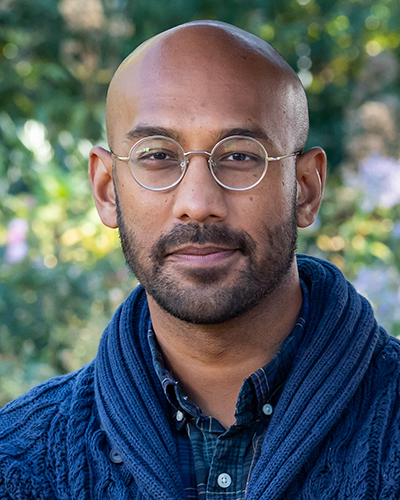
Robert T. Gregory is a Professor of Geology at Southern Methodist University (SMU), specializing in isotope geochemistry and Earth system science. His research focuses on tracing fluid-rock interactions in the Earth's crust and oceans using stable isotope ratios (D/H, 13C/12C, 18O/16O) to understand planetary evolution. He holds a Ph.D. in Stable Isotope Geology from the California Institute of Technology (Caltech). Research Interests: Evolution of Earth's fluid envelope and lithosphere Climate history and ocean chemistry dynamics Midocean ridge hydrothermal systems Stable isotope analysis in urbanized watersheds Quartz vein formation and crustal processes His publications (1991-1995) emphasize seawater-rock interactions, isotopic tracers in crustal fluids, and environmental geochemistry in Texas watersheds. No scientific awards are explicitly listed in the provided text. Teaching: Courses include GEOL 1307 - The Solar System.
Geir Hareland, Ph.D. is a Professor and Continental Resources Chair in Petroleum Engineering at Oklahoma State University's Chemical Engineering department within the College of Engineering . His expertise includes drilling optimization, rock mechanics, well completions, and geothermal drilling systems. He holds a Ph.D. from Oklahoma State University (1991), an M.Sc. from the University of Tulsa (1985), and a B.Sc. from the University of Minnesota (1981). Dr. Hareland's research focuses on optimizing drilling and completion processes to enhance oil/gas well profitability. Key areas include drill bit modeling, drilling fluid hydraulics, wellbore integrity, and geothermal drilling efficiency. His work bridges academia and industry, addressing challenges in unconventional reservoirs and hard rock formations. Recent publications emphasize nanoparticle-enhanced cements, real-time drilling optimization systems, and geothermal drilling advancements. His grants include projects funded by the DOE and industry partners, focusing on wellbore integrity and drilling cost reduction. He teaches advanced courses like Drilling Modeling and Simulation and Well Design Analysis . Dr. Hareland leads research teams investigating drilling efficiency, cementing technology, and geothermal energy applications. He has advised numerous graduate students and contributes to industry tools like GUI-based drilling optimization software.
Bayram Çelik is a Professor in the Department of Astronautical Engineering at Istanbul Technical University's College of Aeronautics. His research focuses on hypersonic flows, shock-boundary layer interactions, and computational fluid dynamics with applications in atmospheric re-entry systems. His research interests span Hypersonic Flows , Shock-Boundary Layer Interactions , and Heat Transfer Enhancement . Recent work examines vortex formation mechanisms in high-speed flows, non-equilibrium dissociating nitrogen flows, and conjugate heat transfer using advanced numerical methods including lattice Boltzmann and high-order Euler solvers. Selected publications demonstrate expertise across fluid dynamics subfields: 2025: Mach 7 reacting flows over double wedges 2023: Shock stand-off distances in non-equilibrium flows 2021: ENO/AUSM schemes for compressible solvers Scientific recognition includes: En iyi Sunum Ödülü (Best Presentation Award) - 2003 He leads multiple research projects including hypersonic flow modeling for atmospheric re-entry, wind tunnel testing for solar-powered vehicles, and computational modeling of thermal power plant systems using OpenFOAM. His supervised work encompasses 16 research projects with applications in aerospace and energy systems.
Kosmas Gazeas is a Lecturer of Observational Astrophysics in the Department of Physics at the National and Kapodistrian University of Athens (UOA), with prior research roles at the Harvard-Smithsonian Center for Astrophysics and the European Space Agency (ESA) in the Netherlands. Since 2012, he has served as an ESA scientific consultant specializing in space optics, while conducting observational campaigns at the University of Athens Observatory (UOAO) using data from Hubble, CHEOPS, and TESS missions. Education: Physics, Aristotle University of Thessaloniki MSc & PhD in Observational Astrophysics, National and Kapodistrian University of Athens Post-doctoral research, Harvard-Smithsonian Center for Astrophysics Research Focus: Dr. Gazeas's work spans three interconnected domains: (1) Exoplanetary Systems —atmospheric characterization of hot Jupiters and mini-Neptunes, orbital dynamics, and exomoon searches; (2) Stellar Astrophysics —eclipsing binaries, blazars, supernovae, and asteroseismology; (3) Solar System Bodies —asteroids, trans-Neptunian objects, and comets. His methodology integrates space-based photometry with ground-based observations and emphasizes applied optics for astronomical instrumentation. Publication Trends: Analysis of his 2024-2025 publications reveals dominant themes in CHEOPS-driven exoplanet research, particularly thermal inversion layers in exoplanet atmospheres and resonant planetary systems. Significant secondary efforts address blazar jet physics and rotational properties of ancient asteroid families, demonstrating methodological versatility across time-domain astrophysics through international collaborations (TESS, HARPS-N). Scientific Recognition: No formal awards are documented, though he was shortlisted among the top 500 global candidates in the 2008 ESA Astronaut Selection Process—a testament to his scientific caliber. Mentorship & Outreach: He mentors students at UOA, supervises UOAO observational projects, and spearheads public engagement via 'Public Nights - Astronomy for All' and the Athens Science Festival. His 'Planets In Your Hand' initiative provides tactile astronomy experiences for visually impaired audiences, reflecting deep commitment to science communication. Research Infrastructure: Primary observational work occurs at UOAO, with data analysis leveraging CHEOPS, TESS, and international facilities. He coordinates multinational teams for asteroid campaigns (e.g., Ancient Asteroids project) and contributes to space mission science teams.
Frederick Gent is an Assistant Professor at the Nordic Institute for Theoretical Physics (Nordita) and a Research Fellow at the Department of Computer Science, affiliated with the Korpi-Lagg Maarit and Vehtari Aki professorships. He holds a PhD in Natural Sciences from Newcastle University (2012) and has been a Visiting Researcher there since 2018. His research focuses on magnetohydrodynamics, dynamo theory, and interstellar medium dynamics, with applications to solar magnetic activity and supernova-driven turbulence. Gent has been awarded the 2018 Grand Challenge Award for his work on galactic dynamo interactions. He supervises postgraduate students, including A. Capobianco and P. Tengnér, and collaborates internationally, notably through the Pencil Code project. His work bridges computational astrophysics and theoretical physics, addressing challenges in high-performance computing and numerical simulation. Education: Doctoral degree in Natural Sciences (Newcastle University, 2012). Research interests include magnetic field dynamics in galaxies, supernova-driven turbulence, and the interplay between magnetic fields and interstellar medium structures. His computational methods leverage advanced numerical models to simulate astrophysical phenomena, such as magnetic buoyancy instabilities and dynamo transitions. Recent studies examine the destruction of supernova dust in magnetized environments and the transition from small- to large-scale dynamos in multiphase media. Scientific awards include the 2018 Grand Challenge Award for interdisciplinary dynamo research. He actively participates in conferences and workshops, notably organizing the Pencil Code User Meeting (2024) and presenting invited talks on galactic dynamo models. Gent’s advising roles include co-supervising doctoral students alongside Prof. Shukurov and mentoring visiting researchers at Nordita and Newcastle University. Labs/Teams: Pencil Code Collaboration (software developer), Korpi-Lagg Maarit Research Group (visiting fellow), and Nordic Institute for Theoretical Physics (primary affiliation).
Dr. Noushin Nasiri is Associate Professor and Head of the NanoTech Laboratory at Macquarie University's School of Engineering. Her research develops nanostructured materials for wearable sensors enabling personalized preventive medicine, including UV radiation monitoring devices for skin cancer prevention and breath analyzers for disease diagnosis. Research focuses on nanotechnology-enabled solutions for healthcare: developing miniaturized gas sensors for medical diagnostics, UV photodetectors for sun exposure monitoring, and electrochemical sensors for real-time health monitoring. Core expertise includes nanomaterial synthesis, semiconductor devices, and wearable technology integration. Publications show 60% focus on photodetectors (ZnO nanostructures, UV sensors), 25% on chemical sensors (gas detection, breath analysis), and 15% on materials synthesis. Recent work emphasizes medical applications of nanotechnology, particularly non-invasive diagnostics and preventive health monitoring. Awards include L'Oréal-UNESCO For Women in Science Fellowship (2022), ARC Industry Fellowship (2024), Cancer Institute NSW Fellowship (2023), and NSW Young Tall Poppy Science Award (2019). Secures major grants including ARC Industrial Transformation Research Hub ($1.22m) and NSSN Grand Challenge Fund ($100k). Leads NanoTech Laboratory with projects including SunWatch UV monitoring, breath-based disease detection, and bee colony monitoring. Advocates for women in STEM through G2G: Girls to Graduates program and as Superstars of STEM ambassador.
Tayebeh Hosseinnejad is a Research Fellow in the Department of Research & Innovation at RMIT University. Her work focuses on catalytic processes, computational chemistry, and nanomaterials development. She holds a PhD and is actively involved in postdoctoral research, particularly in designing efficient heterogeneous catalysts and studying reaction mechanisms through experimental and theoretical approaches. Her research interests span catalysis, materials science, and green chemistry, with a strong emphasis on developing nanostructured catalysts for applications in organic synthesis, solar energy systems, and environmental remediation. She employs computational methods like density functional theory (DFT) to model reaction pathways and optimize catalytic systems. Recent trends in her publications highlight advancements in heterogeneous catalyst design, including metal-organic frameworks, nanozymes, and polymer-supported nanoparticles. She has contributed to studies on selective oxidation reactions, dye-sensitized solar cells, and regioselective organic syntheses. Her work bridges experimental synthesis with computational insights to enhance catalytic efficiency and sustainability. Tayebeh is open to supervising Masters and PhD students in catalysis, materials chemistry, and computational modeling. She collaborates with international research teams and has published extensively in top journals such as ACS Catalysis , Nanoscale , and Journal of Molecular Structure .
Collin Holgate is a Research Fellow in the Levi Group at the University of California, Santa Barbara (UCSB), within the College of Engineering. His research focuses on advanced materials science, particularly in the design and characterization of thermal barrier coatings, refractory alloys, and oxide materials. He investigates topics such as phase stability in complex oxides, corrosion resistance mechanisms, and high-temperature material interactions with silicate melts. His work bridges fundamental materials science with practical applications in aerospace and industrial settings. Key areas of expertise include silicate-metal reactions, precipitation kinetics in multi-component alloys, and the development of novel coatings for extreme environments. Holgate collaborates on projects exploring the thermodynamic and kinetic behavior of materials under extreme conditions, with a focus on enhancing durability and performance. His research contributions span both experimental and computational methodologies, addressing challenges in materials compatibility, thermal protection systems, and the synthesis of advanced ceramic-based composites. Current studies emphasize optimizing alloy compositions and coating architectures to withstand corrosive environments and high-temperature operational demands.
Sujit Datta is a Professor of Chemical Engineering, Bioengineering, and Biophysics at the California Institute of Technology (Caltech), where he leads the Datta Lab. Previously, he held positions at Princeton University (2017–2024) and conducted postdoctoral research at Caltech (2013–2017). His research focuses on transport phenomena in soft and living systems, including complex fluids, microbial communities, and porous media. He earned his B.A. and M.S. from the University of Pennsylvania (2008) and Ph.D. in Physics from Harvard University (2013). Research Interests: Datta’s lab explores transport processes in confined environments, combining microscopy, microfluidics, and computational modeling. Key areas include: (1) Complex Fluids : Rheology of polymers and immiscible fluids in porous media; (2) Hydrogels : Swelling mechanics and environmental applications; (3) Microbial Systems : Bacterial motility and community organization in 3D environments. These studies aim to address challenges in biotechnology, sustainability, and environmental remediation. Awards & Recognition: Datta has received prestigious awards, including the Arthur B. Metzner Early Career Award (2023), Camille Dreyfus Teacher-Scholar Award (2022), and Pew Biomedical Scholar designation (2021). His work bridges disciplines, influencing fields from fluid dynamics to microbiology. Advising & Mentorship: As of 2024, Datta has advised 14 postdocs, 10 graduate students, and nearly 30 undergraduates. Notable advisees include Anna Hancock and Sanjana Kamath. He emphasizes hands-on research opportunities for early-career scholars. Labs & Teams: The Datta Lab at Caltech develops innovative tools to study microbial behavior and material dynamics. Collaborations span academia and industry, focusing on applications like solar-driven water purification and sustainable hydrogel design.
Francois Tissot is a Professor of Geochemistry at California Institute of Technology and Investigator at the Heritage Medical Research Institute (HMRI). He holds a Diplôme d'Ingénieur from École Nationale Supérieure de Géologie (2009), an M.Sc. from Lulea University of Technology (2009), and a Ph.D. from the University of Chicago (2015). His academic journey includes roles as a Visiting Associate at Caltech (2017-2018), Assistant Professor (2018-2024), and current Professor since 2024. He has been an HMRI Investigator since 2021. His research focuses on three core areas: (1) Solar System formation and evolution, (2) reconstructing ancient ocean-atmosphere redox conditions, and (3) applying non-traditional stable isotopes to magmatic processes. Techniques include clean-lab sample preparation, MC-ICPMS analysis, and physical modeling. Notable projects involve meteorite nucleosynthetic anomalies, chondrule formation mechanisms, and isotopic tracking of planetary evolution. Tissot teaches advanced courses such as Ge 140b (Radiogenic Isotope Geochemistry) and Ge 219 (Non-Traditional Isotopes Seminar), emphasizing radiogenic isotope systems, cosmochemistry, and seminar-based exploration of cutting-edge isotope applications. Courses alternate biennially, with recent offerings in 2023-24 and prior terms.
Victor R. Baker is a Regents' Professor in the Department of Hydrology and Atmospheric Sciences at the University of Arizona, with joint appointments in Geosciences, Planetary Sciences, and Global Change. His educational background includes a Ph.D. in Geology from the University of Colorado. Research specializes in paleohydrology and related aspects of geomorphology, particularly flood processes, planetary geomorphology, and Mars hydrology. Additional interests include Earth science in relation to public policy, the environment, and philosophy of science. Baker investigates catastrophic flooding phenomena on Earth and Mars, landscape evolution, and planetary surface processes. Recent publications demonstrate strong focus on Martian hydrology, megaflood geomorphology, and machine learning applications in planetary science. Baker's work examines evidence for ancient oceans on Mars, megaflood erosion features, and solutions to planetary climate paradoxes. He develops comparative approaches between terrestrial and Martian hydrological processes. Recent methodological innovations include applying machine learning to analyze valley networks and flood landscapes. Philosophical Contributions: Advocates for geological thinking in natural hazard management and promotes abductive reasoning in earth sciences. Explores epistemological foundations of geomorphological investigation and the role of outrageous hypotheses in advancing science.
Dr. Elisa Garcia-Tabares Valdivieso is an Assistant Professor in the Department of Physics at Carlos III University of Madrid. Her research focuses on advanced materials for solar energy applications, semiconductor growth techniques (e.g., MOVPE), and surface engineering for electron emission control. Key areas include GaAs/Si integration for multijunction solar cells, structural color generation via plasmonics, and cryogenic material behavior for accelerator technologies. Research Groups: Advanced materials for solar energy applications Teaching Subjects: Chemistry, Electronics, Materials Science, Renewable Energies Her work addresses challenges in semiconductor epitaxy, defect analysis, and functional coatings. Notable projects include 'Caracterización Avanzada de Espejos para Aplicaciones en Energía Solar' (2022–2025) and 'Nanostructured sputtered coatings for solar particle receivers' (2022–2023). Publications span 2016–2025, with recent emphasis on ultra-flexible silicon foils, bismuth-based metasurfaces, and GaInAs solar cell optimization. Her research combines experimental methods (e.g., TEM, MOVPE) with computational modeling for device performance enhancement. Funding: Principal investigator on energy storage projects and collaborator on EU-funded initiatives Lab Affiliations: Physics Department laboratories at UC3M
Gonzalo Martin, Alicia is an Assistant Professor in the Department of Physics at Universidad Carlos III de Madrid. Her work focuses on advanced materials for solar energy applications, particularly in quantum dot solar cells, plasmonic nanoparticles, and semiconductor alloy engineering. She leads research on GaAs-based photonic materials and has pioneered studies on gallium nanoparticles for antireflection coatings and localized surface plasmons for enhanced optical absorption. Her research integrates nanotechnology, materials science, and renewable energy technologies. Key projects include optimizing multi-junction solar cells using type-II superlattices and investigating nitrogen incorporation in GaAsSbN systems to improve photovoltaic efficiency. She has published extensively in Solar Energy Materials and Solar Cells , Applied Physics Letters , and Nanophotonics . Current projects include a Madrid-funded initiative on hydothermal particle receivers and a UC3M project on luminescent nanoparticles for photonic conversion layers. Her work bridges fundamental materials research with applied solar energy solutions, emphasizing defect control, bandgap engineering, and scalable fabrication techniques.
Harry Varvoglis is a Professor in the Department of Physics at Aristotle University of Thessaloniki, specializing in astrophysics and celestial mechanics. His work bridges theoretical and applied physics, focusing on the dynamics of planetary systems and complex Hamiltonian systems. Non-linear Dynamical Systems Asteroidal Transport Mechanisms Three-Body Coulomb Interactions Two-Fixed-Centers Problem His research reveals fundamental properties of phase space structure, chaotic behavior, and diffusion processes in celestial and atomic systems. Collaborators include prominent scientists like Menios Tsiganis and Karl Wodnar. Recent publications analyze free-floating planet scattering, asteroid belt dynamics, and orbital resonance stability. His work demonstrates interdisciplinary applications of celestial mechanics to astrophysical and plasma physics problems. Contact: varvogli@shift_2.physics.auth.gr varvogli@astro.auth.gr
Dr. Zhiwei Gao is an Associate Professor in the Department of Mathematics, Physics and Electrical Engineering at Northumbria University. He holds prestigious fellowships including IEEE Fellow (2023), Royal Academy of Engineering/Leverhulme Trust Research Fellowship (2024), and Fellowships of AAIA and AIIA. His research focuses on control systems, renewable energy, fault diagnosis, and real-time systems, with applications in wind turbine systems and wave energy conversion. Education: PhD in Engineering (1996). Research Interests: Real-time diagnosis and resilient control for industrial systems Energy management and renewable energy technologies Machine learning applications in anomaly detection and music generation Fault-tolerant control for fuzzy systems and multi-agent coordination Recent articles highlight advancements in distributed observers for LTI systems, deep reinforcement learning for energy management, and hybrid approaches for fault diagnosis. His work contributes to UN Sustainable Development Goals related to sustainable energy and technological innovation. Awards: IEEE Fellow, RAEng/Leverhulme Trust Fellowship, Alexander von Humboldt Awards (2015, 2018, 2022). Editorial Roles: Co-EIC of IEEE Transactions on Industrial Informatics, Senior Editor of IEEE Access, and editorial board member of Renewable Energy (Elsevier). Projects: Leading research on wave energy conversion systems and resilient control strategies. He advises PhD students in health monitoring and resilient control for complex systems, contributing to cutting-edge advancements in industrial informatics.