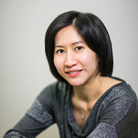
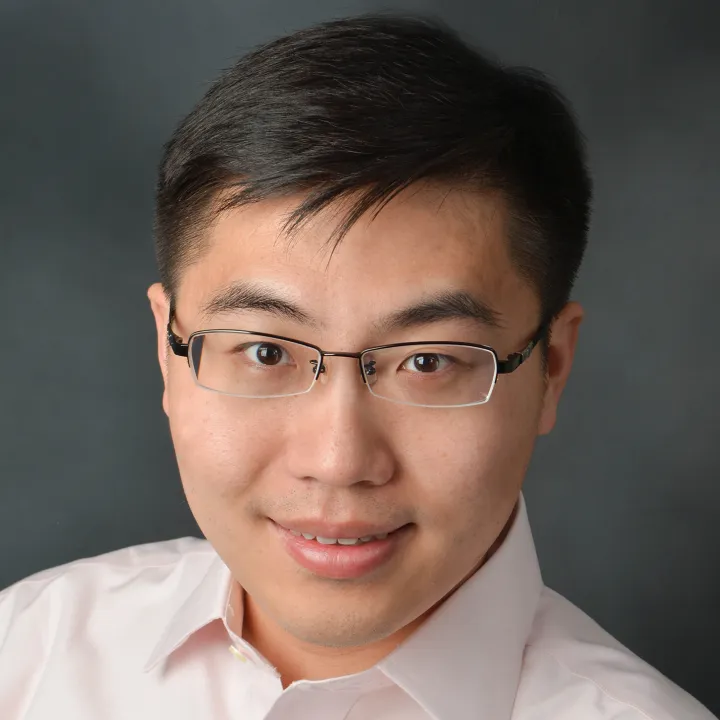
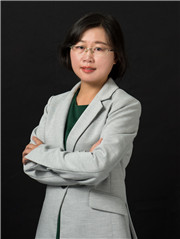
Xiaohang Li is an Associate Professor in the Department of Electrical and Computer Engineering at the King Abdullah University of Science and Technology (KAUST) , where he serves as Principal Investigator of the Advanced Semiconductor Laboratory (ASL) . He holds a Ph.D. (2015), M.S. (2011), and B.S. (2008) in Electrical Engineering and Applied Physics from Georgia Institute of Technology, Lehigh University, and Huazhong University of Science and Technology, respectively. Research Focus: Professor Li specializes in (ultra)wide bandgap semiconductors (III-nitrides, III-oxides) for next-generation devices, including LEDs, lasers, transistors, and sensors. His work spans materials growth, simulation, fabrication, and characterization, targeting applications in energy, communications, and biomedical industries. Key Trends in Publications: Recent articles highlight advancements in InGaN micro-LED fabrication, β-Ga2O3 flexible transistors, AlN MOSFETs, and machine learning-optimized plasmonic structures. Themes include wide bandgap materials , 3D integration , thermal management , and flexible electronics . Scientific Awards: Harold M. Manasevit Young Investigator Award (2018) IEEE North Jersey Section ED/CAS MTT/AP Chapters Award (2019) Georgia Tech representative, Global Young Scientist Summit (2015) IEEE Photonics Society Graduate Student Fellowship (2014) D. J. Lovell Scholarship (2013) Mentorship: Since joining KAUST, Li has advised over 100 students and leads the ASL team in pioneering semiconductor research. His group focuses on fundamental and applied studies of wide bandgap materials to drive innovations in energy and health sectors.
Mark MacLachlan is a distinguished Professor and currently serves as the Dean of the Faculty of Science at the University of British Columbia (UBC). He leads a vibrant research group in the Department of Chemistry focused on supramolecular materials, with expertise spanning organic, inorganic, and polymer chemistry. His work bridges fundamental molecular design with practical applications in energy, electronics, and sustainable materials. Dr. MacLachlan's research interests center on supramolecular chemistry and materials science, with emphasis on nanomaterials, porous structures, and cellulose-based systems. His group develops novel organic and inorganic molecules and materials with applications in electronics, photonics, catalysis, and environmental technologies. Key research areas include mesoporous materials for optics and catalysis, supramolecular chemistry with macrocycles, structurally interesting molecules, and self-assembled systems including gels. His work often addresses environmental challenges and alternative energy applications such as solar energy conversion and hydrogen fuel cells. Analysis of his recent publications reveals a strong focus on cellulose nanocrystals and their applications in photonic materials, energy storage, and responsive systems. His work integrates supramolecular chemistry with platinum-based systems for molecular machines and recognition. The research demonstrates interdisciplinary approaches combining chemistry, materials science, and nanotechnology to create functional materials with precisely controlled properties. Fellow of the Royal Society of Chemistry (UK) (2016) Tier 1 Canada Research Chair in Supramolecular Materials (2015-2029) Elected Fellow of the Royal Society of Canada (FRSC) (2014) Rutherford Memorial Medal (Royal Society of Canada) (2013) Killam Award for Excellence in Graduate Student Mentorship (UBC) (2013) NSERC Steacie Memorial Fellowship (2012-14) Dr. MacLachlan has mentored numerous graduate students and postdoctoral researchers, fostering a collaborative research environment that spans multiple disciplines. His group employs a wide range of characterization techniques including electron microscopy, spectroscopy, and X-ray crystallography. The MacLachlan research group maintains active collaborations with institutions worldwide, including the WPI Nano Life Science Institute at Kanazawa University where he serves as a Visiting Professor. The MacLachlan group operates state-of-the-art facilities for synthesizing and characterizing novel materials, with particular expertise in chiral nematic structures, mesoporous materials, and supramolecular assemblies. Their work on cellulose nanocrystals has led to innovative applications in photonic materials, energy storage devices, and responsive systems.
Jinsong Huang serves as Adjunct Professor in the Materials Science and Engineering department at the University of North Carolina at Chapel Hill, where he leads an interdisciplinary research group focused on perovskite-based electronic materials and devices. His laboratory, housed in Murray Hall 1115, maintains active collaborations with academia, industry, and national laboratories while training next-generation scientists and engineers for competitive job markets. Dr. Huang earned his educational credentials through a rigorous academic path: Ph.D. in Materials Science & Engineering from UCLA (2007), M.S. in Semiconductor Physics from Chinese Academy of Sciences (2003), and B.E. in Materials and Photoelectronic Physics from Xiangtan University (2000). His research program spans Perovskite Solar Cells , Photodetectors , and X-ray Imagers , with particular emphasis on fundamental material physics, device design, stability enhancement, and scalable manufacturing. The group's work bridges applied research with deep scientific understanding, focusing on high-performance, low-cost electronic materials that address critical energy and medical imaging challenges. Current projects include self-powered photon-counting detectors, bifacial perovskite modules, and all-perovskite tandem solar cells. Analysis of recent publications reveals a strategic research trajectory toward commercialization of perovskite technologies, with increasing focus on stability, scalability, and real-world performance metrics. The work spans fundamental science (defect engineering, crystal growth) to applied technologies (medical imaging detectors, flexible solar cells), demonstrating remarkable breadth while maintaining technical depth in perovskite material systems. Highly Cited Researcher 2021 in Material Science and Chemistry Principal Investigator for $1.5 million UNC System Research Opportunities Initiative (2025) Multiple student/postdoc awards including Postdoctoral Awards for Research Excellence Consistent high-impact publications in Nature, Science, and Advanced Materials Huang actively mentors students and postdocs, with notable alumni including four of the 41 Tar Heels ranked as 'highly cited researchers' in December 2023. His research group has secured significant funding including the recent $1.5 million UNC System grant for 'Ultra-High Efficiency Perovskite Tandem Solar Cells' focusing on North Carolina's energy production and reduced fossil fuel dependence. The laboratory maintains strong industry partnerships that facilitate technology transfer and real-world implementation of research findings. The Huang Research Group operates as a dynamic interdisciplinary team with scientists from chemistry, materials science, physics, and electrical engineering backgrounds. Their collaborative culture has produced numerous breakthroughs including record-efficiency perovskite modules certified by NREL, self-powered photon-counting detectors published in Nature, and lead-recycling technologies highlighted in Nature Communications. Current facilities support crystal growth, device fabrication, and advanced characterization of perovskite materials for both energy and radiation detection applications.
Kalaichelvi Saravanamuttu is an Associate Dean in the Faculty of Science and a Professor in the Department of Chemistry and Chemical Biology at McMaster University. Her research focuses on optochemical self-organization in soft materials, nonlinear optics, and photonics, with applications in light capture, waveguide architectures, and all-optical computing. She holds a PhD in Chemistry from McGill University (2001) and conducted postdoctoral research at the University of Oxford (2001-2003). Her work combines polymer chemistry, photochemistry, and optical physics to develop functional materials like photoresponsive hydrogels and waveguide-encoded lattices. Key research themes include light-induced structural changes in soft matter, dynamic optical systems, and bio-inspired optical devices. Teaching includes courses on equity in science (SCIENCE 2AR3/4AR6) and advanced materials (CHEM 4W03). She has received funding from NSERC, the Canadian Foundation for Innovation, and the US Army Research Office. Her research group collaborates widely, with recent studies exploring electroactive hydrogels and switchable self-trapped light beams.
Dr. Yu Zhong is an Assistant Professor in the Department of Materials Science and Engineering at Cornell University's College of Engineering, where he leads the Yu Zhong Group. His research laboratory focuses on the design and synthesis of novel soft materials and nanomaterials for applications in electronics, energy, healthcare, and sustainability. As a principal investigator, he oversees a dynamic research team comprising postdoctoral associates, graduate students, and undergraduate researchers working on cutting-edge materials science projects. Dr. Zhong received his educational training at prestigious institutions, earning his B.S. in Chemistry from the University of Science and Technology of China (USTC) in 2011, followed by a Ph.D. in Chemistry from Columbia University in 2017 under the supervision of Prof. Colin Nuckolls. His doctoral research centered on designing contorted molecules for electronic and energy applications including organic solar cells, photodetectors, and gas sensors. He then conducted postdoctoral research at the University of Chicago in Prof. Jiwoong Park's group, where he worked on the design and synthesis of 2D polymers for ultrathin electronic circuits and energy conversion. Dr. Zhong's research program spans three primary directions: (1) the bottom-up synthesis of ultrathin nanoporous membranes using techniques like laminar assembly polymerization (LAP) for applications in water desalination, nanofiltration, and gas separation; (2) the study of transport behaviors in hybrid organic-inorganic 2D heterostructures created through layer-by-layer assembly for use in optical, electronic, and thermal management devices; and (3) the development of mixed ionic-electronic materials for bio-inspired and bioelectronic devices. His group employs advanced synthesis methods including organic/polymer synthesis, supramolecular and reticular chemistry, and 2D materials characterization to explore novel scientific phenomena and technological applications. An analysis of Dr. Zhong's recent publications reveals a strong focus on the synthesis and characterization of 2D polymers and organic-inorganic hybrid materials. His work bridges fundamental materials science with practical applications in energy conversion, electronics, and separation technologies. A notable trend is his development of innovative synthesis techniques like laminar assembly polymerization that enable precise control over material structure at the molecular level, leading to breakthroughs in areas such as lithium-ion transport, osmotic power generation, and ultra-narrowband photodetection. Dr. Zhong's scientific achievements have been recognized with several prestigious awards: Pegram Award for Meritorious Graduate Research, Columbia University (2016) Camille and Henry Dreyfus Postdoctoral Fellowship, Dreyfus Foundation (2016) Arun Guthikonda Memorial Fellowship, Columbia University (2015) Jack Miller Award for Excellence in Teaching, Columbia University (2014) As an advisor, Dr. Zhong mentors a diverse group of researchers including postdoctoral associate Qiyi Fang, multiple Ph.D. students (Yuhe Zhang, Kaushik Chivukula, William Xie), M.S. students, and undergraduate researchers. His group has secured funding for research on soft and nanomaterials, with projects spanning organic electronics, 2D materials synthesis, and biomimetic membranes. Dr. Zhong actively seeks motivated graduate students and postdoctoral fellows to join his research team, emphasizing the importance of interdisciplinary collaboration in advancing materials science. The Yu Zhong Group operates state-of-the-art laboratories in Bard Hall at Cornell University, equipped for organic synthesis, materials characterization, and device fabrication. The research team works collaboratively across disciplines, partnering with experts in physics, chemistry, and engineering to tackle complex challenges in materials science. Current projects focus on developing novel synthesis methodologies and exploring structure-property relationships in soft materials to enable next-generation electronic, energy, and healthcare technologies.
Juan-Pablo Correa-Baena is an Associate Professor at the Georgia Institute of Technology , holding the Goizueta Early Career Faculty Chair in the School of Materials Science and Engineering. He leads the Materials for Solar Energy Harvesting and Conversion research initiative at the Institute for Materials (IMat) and Strategic Energy Institute, aiming to consolidate Georgia Tech's expertise in photovoltaics and interdisciplinary energy research. Education: PhD in Environmental Engineering, University of Connecticut (2014) MS in Environmental Engineering, University of Connecticut (2011) BS in Management and Engineering for Manufacturing, University of Connecticut (2008) His research focuses on the chemistry-structure-property relationships of low-cost semiconductors for optoelectronic applications. Key areas include halide perovskites , nanoscale control , and advanced deposition/characterization techniques . He develops atomic layer deposition and synchrotron-based imaging to address metastable material behavior. Recent publications highlight innovations in dimensional control , machine learning for thermal stability , and flexible photovoltaic devices . His work integrates materials synthesis , quantum phenomena , and industrial scalability . Scientific recognition: Highly Cited Researcher (Web of Science, 2019–2021) Nature Index Leading Early Career Researcher in Materials Science (2019) NSF, DoE, and industry-funded projects Students and team: He advises 14 graduate students and postdocs, including Sanggyun Kim, Diana LaFollette, and Leonardo Josué Lugo Salas, fostering interdisciplinary collaboration through workshops and symposia.
Professor James Im serves as Professor of Materials Science in the Departments of Earth and Environmental Engineering and Applied Physics and Applied Mathematics at Columbia University, with an office at 1106 S.W. Mudd (Mail Code 4701). His academic career spans over three decades at Columbia, where he progressed from Assistant Professor (1991-1994) to Associate Professor (1995-2002), and ultimately to full Professor (2002-present), including a tenure as Chair of the Materials Science and Engineering Program (2002-2014). His educational background includes a B.S. with Distinction in Materials Science from Cornell University (1984) and a Ph.D. in Electronic Materials from MIT (1989), followed by postdoctoral research at Caltech (1989-1991). Cornell University: B.S. Materials Science (1984) MIT: Ph.D. Electronic Materials (1989) Caltech: Postdoctoral Scholar (1989-1991) Im's research centers on ultra-rapid phase transitions in beam-irradiated thin films, specifically focusing on laser crystallization of silicon films , energy-beam-induced melting and solidification , and nucleation in discontinuous phase transitions . His work employs experimental, computational, and theoretical approaches to develop innovative semiconductor materials for advanced displays, solar cells, and integrated circuits. Notably, his invention of Sequential Lateral Solidification (SLS) technology has been licensed to major display manufacturers (Samsung, LG, Sharp) and implemented in products by Apple, Blackberry, and Nokia. Current research focuses on advancing the Spot-Beam Crystallization (SBC) platform using fiber lasers for next-generation microelectronics. His publication record spans environmental aerosol studies (2019-2024), oilfield operations technology (2002-2014), and foundational atmospheric research (1980s), reflecting interdisciplinary expertise bridging materials science, environmental engineering, and petroleum technology. The most recent works emphasize low-cost sensor development and aerosol monitoring. Professional recognition includes membership in prestigious societies: Bohmisch Physical Society Sigma Xi Alpha Sigma Mu Materials Research Society American Physical Society Im's research group maintains strong industry connections through technology licensing and collaborative projects, particularly in display manufacturing. His leadership as former department chair demonstrates administrative commitment alongside scientific innovation. The laboratory leverages state-of-the-art laser systems and beam delivery optics for materials development, with recent focus shifting toward environmental monitoring applications while maintaining core semiconductor research.
Prof. Dr. Wouter Van Gompel is an Assistant Professor (Tenure Track) at Hasselt University's Faculty of Sciences, leading the Hybrid Materials Design (HyMaD) research group. His work focuses on designing hybrid materials for optoelectronics, particularly low-dimensional hybrid perovskites. He holds a PhD from Hasselt University (2019) and completed postdoctoral research at EPFL and the University of Cambridge, supported by FWO and BOF grants. Education: Master in Chemistry, Ghent University (2015) PhD in Chemistry, Hasselt University (2019) Research Interests: Hybrid perovskite design and synthesis Optoelectronic applications (solar cells, photovoltaics) Charge transfer dynamics and energy funnelling Material stability and structural engineering Organic-inorganic interfaces Grants & Projects: FWO-SB PhD grant (2015–2019) FWO-SBO project collaboration with imec and Belgian universities (postdoc) BOF postdoctoral mandate (2022) Current projects include optoelectronic materials for neuromorphic computing and solar cells Teaching & Supervision: Coordinating lecturer for courses like Fundamentals of Materials Chemistry and Hybrid Materials and Functional Interfaces Supervising PhD students in areas like perovskite stability, chirality, and neuromorphic applications Labs & Groups: Head of HyMaD expertise group at Hasselt University Collaborates with IMOMEC institute and international labs
Joel Rosenthal is Professor and Chair of the Department of Chemistry and Biochemistry at the University of Delaware, where he also serves as Associate Dean for Research and Graduate Affairs in the College of Arts and Sciences. His group integrates inorganic synthesis, electrochemistry, and photochemistry to create functional materials and catalysts for energy, environmental, and biomedical challenges. Education & Training B.S. with Honors, New York University (2001) Ph.D., Massachusetts Institute of Technology (2007) NIH Postdoctoral Fellow, MIT (2007-2010) Research Directions The Rosenthal Research Lab pursues four intertwined themes: Environmental & energy sustainability via CO₂ reduction and solar-to-fuel conversion. Design of catalytic platforms for small-molecule up-conversion. Light-activated therapeutics targeting cancer and other diseases. Electrosynthetic routes to advanced inorganic materials and coordination complexes. To tackle these goals, the group synthesizes non-traditional tetrapyrroles, porous inorganic frameworks, and metal alloys, then interrogates them with electrochemical, spectroscopic, and ultrafast methods in collaboration with colleagues across UD, other universities, and National Laboratories. Recent Publication Trends Between 2021-2025 the group has published extensively on (i) selective electrochemical CO₂ reduction using bismuth, tin, and alloy catalysts, (ii) structure–function relationships in palladium and ruthenium tetrapyrrole complexes for singlet-oxygen generation, and (iii) new metal–organic framework (MOF) electrosyntheses. The work bridges fundamental mechanistic insights with practical device demonstrations, including 3-D-printed flow cells and solar-powered reactors. Scientific Awards & Honors While specific awards are not enumerated in the provided text, Prof. Rosenthal has garnered recognition through sustained federal funding, invited colloquia, and extensive peer-reviewed publication records. Students, Collaborators & Infrastructure The group actively recruits graduate students, post-docs, and undergraduates interested in interdisciplinary research. Trainees gain expertise spanning chemical synthesis, electrochemical cell design, ultrafast spectroscopy, computational modeling, and biological assays through partnerships both on campus and at national user facilities. The lab maintains state-of-the-art instrumentation for electrochemistry, photochemistry, and materials characterization, and communicates its latest findings via Twitter @rosenthal_lab .
Michael Turner is a Professor of Materials Chemistry and Director of the Organic Materials Innovation Centre (OMIC) at the University of Manchester's School of Chemistry. He holds a Chair in Materials Chemistry and leads the Knowledge Centre for Materials Chemistry (KCMC), a virtual interdisciplinary research hub. His research focuses on synthesizing conjugated molecules for applications in organic electronics, including transistors, LEDs, sensors, and solar cells. He coordinates the EPSRC-funded Organic Materials for Electronics Consortium (OME-C), involving collaborations across multiple institutions. Education: Bachelor's and PhD from the University of Bristol (organometallic chemistry with Prof. Selby Knox). Postdoctoral work in the U.S. with Prof. Harry Allcock on polyphosphazenes, followed by research at the University of Sheffield on Fischer-Tropsch reactions under Prof. Peter Maitlis. Research Interests: Synthesis of conjugated liquid crystals and polymers, organic electronics, electro-optical devices, and nanoscale fabrication. His work addresses challenges in energy, environment, and material synthesis through novel polymer architectures and functional nanoparticles. Key Projects: Principal Investigator for KCMC, advancing applied materials chemistry and knowledge transfer. Leading projects on CRISPR-Cas technology integration into organic electronics and roadside breath analysis of narcotics. Contributions to neuromorphic computing via printed electronics and bioelectronics networks. Awards: Royal Society University Research Fellowship (1993). Grants & Collaborations: Coordinates EPSRC consortia and collaborates internationally on polymer synthesis, sensor systems, and bio-inspired materials. His work aligns with UN Sustainable Development Goals, particularly energy and environmental innovation. Labs & Teams: Directs OMIC and KCMC, fostering interdisciplinary research in organic materials, device fabrication, and nanotechnology applications.
Jennifer Chen is an Associate Professor in the Department of Chemistry at York University's Faculty of Science. She leads a research group focused on designing nanomaterials for optical sensing, biomedical diagnostics, and solar energy conversion , with an emphasis on plasmonic nanostructures and hybrid materials. Research spans analytical, inorganic, and physical chemistry Eligible supervisor for Physics and Astronomy graduate students Key funding: CFI, NSERC, Ontario Research Fund Her work bridges fundamental studies of materials interfaces with applications in healthcare and sustainability. Recent publications explore charge transfer mechanisms and DNA-nanoparticle interactions for biosensing. 2022: J. Mater. Chem. A on Mn-doped quantum dots 2020: Analyst and ACS Appl. Nano Mater. on DNA-based sensing 2018: JPCC on interfacial charge dynamics 2013: JACS on plasmonic microRNA detection Major awards include the Canadian Society for Chemistry Fred Beamish Award (2019), Nano Ontario Early-Career Award (2018), and Top 40 Under 40 Analytical Scientist (2018). Her group has trained 15+ graduate students, including PhD graduates Brian and Anthony.
Shu Hu is an Assistant Professor in the Department of Chemical & Environmental Engineering at Yale University, affiliated with the Energy Sciences Institute. He holds a PhD from Stanford University and a B.S. from Tsinghua University. His research focuses on solar energy conversion, photocatalytic devices, and sustainable chemical synthesis using CO₂ and water. The Hu Lab develops photocatalysts and reactor designs for producing H₂, CO, and small molecular-weight chemicals from renewable sources. Key areas include semiconductor photoelectrochemistry, functional coatings, and cascade catalysis under molecular flux. Notable achievements include an ACS ENFL Emerging Researcher Award (2024), a DOE Early Career Award (2021), and the Scialog Fellow designation (2020). The lab has published 86 peer-reviewed papers, graduated 5 PhD students, and employs 14 researchers. Funding comes from prestigious grants supporting energy-efficient AI hardware and scalable PEC systems. Research interests span semiconductor-electrochemistry interfaces, non-equilibrium catalysis, and multi-scale modeling. The lab’s work integrates photocatalyst discovery, device engineering, and practical reactor design to advance clean energy technologies.
Marika Edoff is a Professor in Solid State Electronics specializing in solar cells at Uppsala University. She leads the Thin Film Solar Cell group at the Ångström Solar Center and has held a 50% pro-dean appointment (2014-2018). Her research focuses on Cu(In,Ga)Se2 (CIGS)-based thin film solar cells, including physical deposition methods, alkali-metal doping, and nanostructured passivation strategies. Education : PhD in Solid State Electronics (KTH 1997), Master in Electrical Engineering (KTH 1990) Professional Experience : Full Professor (2012-), Senior Lecturer (2006-2012), Spin-off company founder (Solibro AB) Recent publications highlight her work on rear contact passivation , light management architectures , and wide-gap CIGS solar cells with efficiency breakthroughs (23.6%). Collaborations span institutions in Belgium, Portugal, France, and Slovenia. Scientific Awards : Member, Swedish Research Council Board (2019-2024) Project Leader, EU Horizon Projects (ARCIGS-M, SITA) Coordinator, Ångström Thin Film Solar Center She supervises PhD students including Dorothea Ledinek and Olivier Donzel-Gargand , and has contributed to thermally integrated PV-water splitting and industrial-scale CIGS module development .
Professor Richard E Douthwaite is a distinguished academic in the Department of Chemistry at the University of York, where he leads research in molecular and materials chemistry with a focus on photocatalysis and solar energy conversion. His work bridges fundamental inorganic chemistry with practical applications in renewable energy technologies. His research interests span multiple areas of sustainable chemistry: Synthesis and application of materials for photocatalysis using renewable energy Development of metal complexes for catalytic applications Photocatalytic water splitting for hydrogen production Environmental applications of photocatalysis for pollutant degradation Structure-property relationships in catalytic materials Analysis of Professor Douthwaite's recent publications reveals a strong emphasis on materials design for solar energy conversion, particularly focusing on: Advanced characterization of photocatalytic materials using in-situ techniques Development of hybrid materials combining semiconductors with metal complexes Engineering of nanostructured materials for improved photocatalytic efficiency Understanding fundamental mechanisms of light-induced chemical reactions Professor Douthwaite has been recognized with the prestigious FRSC (Fellow of the Royal Society of Chemistry) award in 2010 for his contributions to the field. His research portfolio includes significant grant funding from EPSRC and other organizations, with current projects focusing on environmental electron microscopy of photocatalysts and quantum transport for advanced spintronics. As chair of the graduate school and inorganic section leader, he has mentored over 100 undergraduate students and numerous postgraduates. His teaching spans inorganic and physical chemistry, with a focus on metal-ligand bonding, reaction mechanisms, and materials chemistry. Professor Douthwaite's laboratory is equipped with state-of-the-art facilities including UV-Vis and diffuse reflectance spectrometers, electrochemical workstations, and access to the York JEOL Nanocentre for advanced microscopy. His research group collaborates extensively across disciplines, working at the intersection of chemistry, materials science, and renewable energy technologies.
Associate Professor Hu Yunfei is affiliated with the School of New Materials and New Energy at Shenzhen University of Technology , where she leads the New Energy Systems and Smart Microgrids Laboratory . She is a member of the China Renewable Energy Society and Guangdong Solar Energy Association . PhD in Materials Processing Engineering (2005), South China University of Technology Bachelor of Engineering (2000), South China University of Technology Her research focuses on new energy systems , solar-storage direct-flexible systems , and high-efficiency photovoltaic devices , including perovskite solar cells , tandem solar cells , and transparent conductive oxides . Her work spans fundamental materials science and applied energy systems. The 15 most recent publications highlight her expertise in polycrystalline silicon thin films , transparent conductive oxides , perovskite solar cells , and optoelectronic materials . These works reflect trends in improving solar cell efficiency, stability, and manufacturing scalability. She has led projects such as the development of consumer solar power optimizers , optical performance testing for bifacial solar panels , and industrial collaborations on silicon ribbon substrates . Her projects are funded by institutions like the Norwegian Science Foundation and National Natural Science Foundation of China . At Shenzhen University of Technology, she oversees the New Energy Systems and Smart Microgrids Laboratory , integrating advanced materials and system design for renewable energy applications.