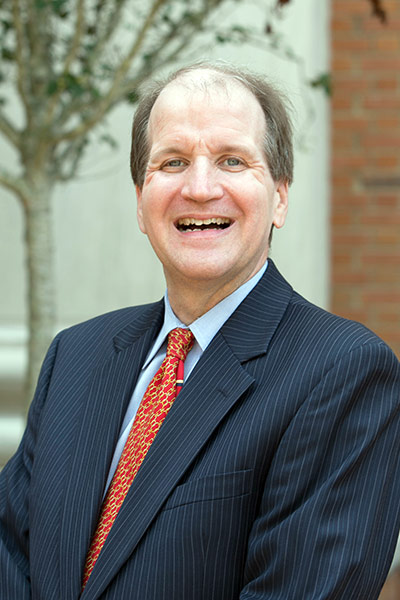
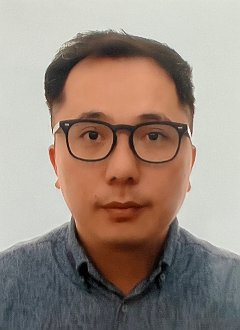
Joon Yeon Choeh is a Professor in the Department of Software at Sejong University 's College of Artificial Intelligence Convergence. With a Ph.D. in Management Engineering from KAIST, he leads the Intelligent Contents Lab , focusing on predictive analytics through social media and user-generated content. Education: Ph.D. (2006), MS (1998), BS (1996) from KAIST Current: Professor at Sejong University (2008–present) Previous: SK Telecom (2003–2008), Communication Intelligence Division His research spans NLP for social media analysis , market trend prediction , and neural network applications . Recent work includes economic sentiment indexing , personality prediction , and COVID-19 behavioral analysis . Key publication trends (2020–2025) show expertise in: Electronic Word-of-Mouth (eWOM) modeling Bayesian networks and ensemble methods Time-aware microblog analysis Neuroticism and mental health prediction Consumer-generated content integration Speech spectrogram-based biometrics Contact: zoon@sejong.edu | Lab: Intelligent Contents Lab | Phone: 02-3408-3887
Dr. Elizabeth Rasnick is an Assistant Professor at the University of West Florida's Center for Cybersecurity, where she focuses on cybersecurity education, workforce development, and supply chain security. Her work bridges academic research with practical community engagement, including leadership roles in Women in CyberSecurity (WiCyS) and extensive conference participation. Ph.D. in Information Technology (Old Dominion University, 2016) M.B.A. in Information Technology (Old Dominion University, 2011) M.S. in Computer Science (Old Dominion University, 2009) B.S. in Computer Science (Longwood University, 1997) Dr. Rasnick's research investigates the recruitment and retention of underrepresented populations in cybersecurity, develops modeling and simulation frameworks for cybersecurity events, and analyzes supply chain disruptions through discrete-event simulation. Her work emphasizes practical applications in both academic and real-world contexts. Her publications and presentations demonstrate interdisciplinary expertise across cybersecurity education, supply chain security, and technological innovation in specialized industries. Key contributions include role-playing pedagogy for security education and modeling systemic risks in networked environments. Order of the Sword and Shield National Honor Society (2021) WiCyS Conference Attendance Grant (2019) Beta Gamma Sigma International Honor Society (2016) Alpha Iota Delta International Honor Society (2015) Dr. Rasnick serves as Senior Vice President for WiCyS-FL and co-founded the WiCyS Georgia Affiliate. She has reviewed for IEEE Simulation, CCERP, and served as Student Paper Track Chair for SEDSI since 2018. Her community outreach includes cyber essentials workshops for diverse audiences.
Steven T. Jones is a Professor at Samford University's Brock School of Business in the Department of Economics Finance and Quantitative Analysis. He joined the faculty in 2001 and holds a Ph.D. in Finance from the University of Cincinnati. Education: Ph.D. in Finance, University of Cincinnati MBA, Vanderbilt University BA, Huntingdon College His research focuses on Credit Scoring , Financial Services , Corporate Finance , and Finance Theory , with publications spanning value investing, behavioral finance, and financial education. Recent publications analyze themes like financial ethics , market sentiment , and credit policy , reflecting his expertise in finance theory, behavioral finance, and consumer credit dynamics. Excellence in Teaching award (2004, 2008) George Macon Memorial Award (2011) He advises the Financial Management Association International student chapter and has reviewed academic texts, including Lucy Ackert and Richard Deaves' Behavioral Finance .
Felipe Montes serves as an Associate Research Professor in the Department of Plant Science within the College of Agricultural Sciences at Pennsylvania State University. His research profile demonstrates continuous scholarly activity from 2004 to 2025 with 38 total research outputs, including significant publications in 2025, 2024, and 2023. His work contributes to UN Sustainable Development Goals related to environmental sustainability and food security. Dr. Montes' research focuses on critical agricultural systems challenges, particularly agricultural emissions and climate adaptation. His fingerprint analysis reveals expertise in emissions (100%), silage (73%), volatile organic compounds (52%), manure management (41%), corn silage (35%), ammonia emissions (35%), and nitrous oxide emissions (30%). This work bridges fundamental soil science with practical agricultural applications, addressing climate change impacts on food production systems. His recent publications demonstrate a clear trajectory toward integrated modeling approaches for agricultural systems. The 2025 nuclear winter adaptation paper, 2024 Cycles agroecosystem model, and 2023 Cycles-L landscape model represent progressively sophisticated frameworks connecting climate scenarios, land surface processes, hydrology, and crop production. These works have generated substantial academic impact with 63 citations for his 2019 soil analysis methodology paper and notable media attention including coverage by 38 news outlets and references in Wikipedia. Dr. Montes' research has achieved significant dissemination beyond academic circles, with his work being picked up by 38 news outlets, blogged by 8 sources, posted by 6 X users, referenced in 1 Wikipedia page, featured in 1 video, and referenced by 5 Bluesky users. His papers maintain strong readership with 122 Mendeley readers for the 2019 soil analysis paper. His collaborative network spans multiple institutions with co-authors including Kemanian, Shi, Fabio, Smart, and Richard. While specific grant information isn't detailed in the provided text, the semi-commercial willow biomass study suggests industry partnerships. Current research directions indicate expansion into climate catastrophe preparedness and integrated landscape modeling.
Dr. Iñaki Aliende is an Assistant Professor at the Complutense University of Madrid , affiliated with the Faculty of Economics and Business and the Department of Applied Economics, Public Economics, and Economic Policy. He serves as Visiting Lecturer at the University of Portsmouth and is a member of the UCM Research Group No. 940051 on Data Analysis in Social Studies and the Institute of Statistics and Data Science. His academic roles include co-directing UCM's Permanent Training Certificate in Behavioral Economics, editing the Handbook on Behavioral Economics , and teaching in master's programs, summer schools, and postgraduate courses across multiple institutions. Education Bachelor's in Economics, Complutense University of Madrid (UCM) PhD in Data Science (cum laude, International Mention), UCM Dr. Aliende's research focuses on applying Data Science to Economics, Social Studies, and Behavioral Economics . His work explores football refereeing career dynamics, automation's impact on labor markets, corporate reputation strategies, and econometric teaching tools. Publications span journals like Economics Letters , PLOS ONE , and International Journal for Applied Behavioral Economics , emphasizing empirical analysis, survival models, and behavioral policy frameworks. Recent research trends include: Climate change financial disclosures in energy sectors Behavioral economics in sports officiating Automation's long-term labor market effects Corporate reputation analytics Interactive econometric teaching systems (SADMER) Football referee retention strategies He supervises doctoral theses and undergraduate/masters dissertations at UCM while maintaining a popular YouTube channel for economics and data science education. His professional experience as a consultant includes projects with the World Bank and Grupo Cegos, focusing on Business & People Analytics.
Dr. Daniel C.S. Wilson is a Lecturer in Cultural Analytics & Knowledge Systems at University College London's Department of Information Studies, with an additional appointment as Honorary Research Fellow in UCL's Department of Science & Technology Studies. He holds a current Turing Research Fellowship at the Alan Turing Institute (2023-2025) and previously served as Senior Research Associate on the 'Living with Machines' project, a major collaboration between historians, curators, and data scientists exploring British industrialization through digital methods. Wilson's research focuses on the culture and politics of data and machines from the nineteenth century to the present, combining traditional archival study with computational techniques. His primary areas include digital history, British history, history of science and technology, and computational humanities, with specific interests in language, infrastructure, and analysis of large text and map collections. His current projects employ language models and computer vision to examine historical datasets including British Library newspaper collections and Ordnance Survey maps, with attention to bias, provenance, changing language, economic history, and spatial infrastructure development. Wilson's recent publication record demonstrates consistent output in digital humanities methodology, particularly in text and map analysis. His work shows a clear trajectory toward developing computational approaches for historical research, with increasing focus on addressing representativeness and bias in digitized collections. His research bridges humanities scholarship with data science, creating new methodologies for historical inquiry while critically examining the assumptions embedded in both historical sources and contemporary analytical techniques. Professional activities include Fellowship in the Royal Historical Society (since 2022), membership in the Association of Digital Humanities Organisations (since 2019), and the British Society for the History of Science (since 2009). He has served as a reviewer for ACM FAccT since 2022, demonstrating engagement with ethical considerations in algorithmic systems. Wilson teaches techniques and theory of text analysis for large collections 'as data,' metadata systems, and digital humanities to MA/MSc students. His educational background includes a PhD from the University of London, with additional research experience at institutions including the Science Museum Group, University of Cambridge (CRASSH), and EHESS in Paris. He is fluent in French and maintains active collaborations across academic and cultural heritage institutions.
Reva Freedman is an Associate Professor in the Department of Computer Science at Northern Illinois University . Her work bridges Artificial Intelligence , Natural Language Processing , and Intelligent Tutoring Systems , with additional interests in Scientometrics and Cognitive Science . Education: Ph.D. in EECS (Northwestern University) M.A. in EECS (Northwestern University) B.A. in Mathematics (University of Chicago) Research Interests include: AI and Computational Linguistics: Text generation, knowledge representation, declarative formalisms (logic programming, constraint-based programming), dialogue annotation Linguistics: Romance and Semitic language structures Educational Technology: Gamified learning tools, adaptive systems for anatomy and physiology education Key article trends show a focus on AI-driven educational tools (2023), deep learning for stylistic analysis (2024), and long-term research impact metrics (2022). Publications span NLP, ITS, and scientometric studies. Advising and Collaborations: Co-author of ITS projects (ALAST, CRAM) with teams including Pi-Sui Hsu, Virginia Naples, and Ben Kluga Collaborated on cross-disciplinary studies with Ashli Fain (syntax), Melissa Wright (literary analysis), and others Labs and Teams: Actively involved in developing interactive tutoring systems (ALAST, CRAM) and contributing to graduate research methods courses. Notable projects include gamified tools for middle-school science and minigame-based physiology teaching systems.
Dr. Brent T. Langhals serves as Associate Professor of Information Resource Management at the Air Force Institute of Technology (AFIT), Department of Systems and Engineering Management, Wright-Patterson AFB, OH. He directs the AFIT Data Analytics Program and chairs the Information Systems specialization curriculum, actively contributing to defense-focused research and graduate education. Education: Ph.D. in Management - Management Information Systems Concentration (minor: Systems and Industrial Engineering), University of Arizona, Eller College of Management (2011). Dissertation: "Using Eye and Head Based Psychophysiological Cues to Enhance Screener Vigilance" M.S. in Information Resource Management, Air Force Institute of Technology (2001). Thesis: "The Effect of Varying Arousal Methods upon Vigilance and Error Detection in an Automated Command and Control Environment" B.S. in History, United States Air Force Academy (1995) Research Focus: Dr. Langhals' work integrates data analytics , database systems , and human-computer interaction with systems engineering principles. His investigations into psychophysiological cues and operator vigilance bridge cognitive science with defense applications, yielding practical solutions for security screening, aviation interfaces, and military decision-making. Current projects emphasize machine learning for predictive analytics in high-stakes environments. Publication Trends: Recent work demonstrates interdisciplinary reach across defense logistics (F-22 sortie cancellations, construction contracts), public health (marijuana use, food insecurity), and emerging technologies (UAS applications, NoSQL databases). His scholarship consistently applies data science to military challenges while advancing fundamental research in human factors and database engineering. Scientific Recognition: Two-time Sigma Iota Epsilon Instructor of the Year (2024, 2018) Department Educator of the Year (2013) Multiple Air Force commendations including Field Grade Officer of the Quarter (2008, 2006) Mentorship & Leadership: Dr. Langhals has graduated 59 Master's/PhD students (38 residential, 21 distance learning) while teaching core courses in Database Systems, Data Analytics, and Strategic Information Management. His research leadership spans contracts in data management, systems engineering, and human performance optimization for Department of Defense applications. Research Infrastructure: As Data Analytics Program Director, he oversees AFIT's research ecosystem for defense data science, coordinating faculty and resources across the Department of Systems and Engineering Management to develop next-generation analytical capabilities for Air Force missions.
Dr. Torrey Wagner serves as an Assistant Professor of Data Analytics at the Air Force Institute of Technology (AFIT), where he supports the Data Analytics graduate certificate program. He develops and teaches core courses including DASC 522 Machine Learning, SATI 532 Data Visualization & Communication, and DASC 511 Object-Oriented Programming using Python. His instructional focus centers on applying data analytics techniques to solve military problems through the CRISP-DM process framework. Dr. Wagner earned his PhD in Electrical Engineering with an Electro-optics focus from AFIT in 2010, an MS in Aerospace Systems Engineering from Loughborough University (UK) in 2004, and a BS in Electrical Engineering from the University of Minnesota in 2000. His educational background bridges electrical engineering, aerospace systems, and advanced data analytics. His research concentrates on applying predictive and generative artificial intelligence techniques to enhance Department of Defense organizational efficiency and performance. Dr. Wagner's scholarly work spans machine learning applications for defense systems, energy optimization for military operations, quantum computing advancements, and natural language processing solutions for defense contexts. He has developed specialized methodologies for military problem-solving through data analytics, with emphasis on practical implementation in operational environments. Dr. Wagner's publication record reveals a strategic evolution toward cutting-edge AI applications. Recent work demonstrates significant focus on large language models, retrieval-augmented generation systems, and quantum computing implementations. His research portfolio includes machine learning applications for aircraft engine cost prediction, satellite imagery analysis, seismic event classification, and energy system optimization for austere military environments. This work consistently bridges theoretical AI advances with tangible defense applications. As an educator and mentor, Dr. Wagner has guided dozens of students through their first publications and presentations. His students frequently co-author peer-reviewed journal articles and conference papers, primarily at the master's level with several doctoral candidates. He has contributed to AI education within military contexts through his chapter "Augmenting a Curriculum Review with Generative AI" in the AFIT Generative AI Teaching Guidebook and other educational resources. Dr. Wagner's research supports multiple AFIT initiatives focused on data analytics for defense applications. His work involves extensive collaboration with Department of Defense organizations to implement AI technologies in practical military settings, particularly in energy systems optimization, aircraft operations analytics, and decision support tools for commanders. Current projects include secure offline large language model implementations, quantum communication network resilience, and advanced data visualization techniques for military decision-making.
Prof. Dr. Annette Hoxtell is a Professor of Business Administration specializing in Marketing at the Faculty of Economics, Logistics, and Transport at Erfurt University of Applied Sciences. Her office is located at Altonaer Straße 25 | 6.2.05, and she holds office hours by appointment on Mondays. Her educational background includes: Doctorate in economics and social sciences from University of Potsdam MA in Central and Eastern European Studies from University of Krakow Dipl.-Betriebswirtin VWA Stuttgart / BA (Honours) from The Open University Training as air traffic management assistant at Deutsche Lufthansa AG Hoxtell's research focuses on interdisciplinary marketing approaches with strong emphasis on: Social Marketing : Behavioral change initiatives for societal good AI Applications : Automating market research and recommendation systems Entrepreneurship : Founder case studies and business development frameworks Educational Equity : Marketing approaches to reduce educational disparities Her publications frequently employ case study methodologies and examine contemporary challenges in consumer behavior and business innovation. She maintains active professional memberships including: Working Group for Marketing (AfM) – Spokesperson for Public Marketing/Social Marketing German Society for Online Research (DGOF) European Social Marketing Association (ESMA) Foundation for International Business Administration Accreditation (FIBAA) assessor Leibniz Society of Sciences in Berlin
Dr. Zheng Zheng is an Assistant Teaching Professor in the Multidisciplinary Graduate Engineering Programs at Northeastern University's Toronto Campus. He holds a Ph.D. in Computer Science from McMaster University and a Master of Engineering from the University of Chinese Academy of Sciences. His research focuses on Data Management , Database Systems , Machine Learning , and Deep Learning , with applications in AI-driven infrastructure and digital transformation. Previously, he served as Technical Vice President and Head of AI Institute at a NASDAQ-listed company, leading technical teams in enterprise-wide digital transformation. His work emphasizes data quality , text mining , and automated systems . He leads the DSAI Research Lab , exploring intersections of AI and data science. He actively reviews for top conferences like VLDB , ACM SIGKDD , and IJCNN . Key achievements include developing RadGen (a cross-modal fusion system for radiology report generation) and Contextual Data Cleaning methodologies. His publications span top-tier journals like ACM JDIQ and SIGMOD, with awards including the Runner-Up Paper Award and AI Youth Star Award . Education : PhD, Computer Science, McMaster University, Canada Master of Engineering, Computer Technology, University of Chinese Academy of Sciences, China Grants & Projects : "Northeastern Toronto Professor Fuses AI and Art to Preserve Historical Murals" Research collaboration with McMaster University's Department of Computing and Software His work bridges academia and industry, emphasizing practical AI solutions for complex systems. Current research trends include safety-critical control , intention-aware systems , and resilient estimation in cyber-physical systems.
Abid Hussain serves as Associate Professor at Copenhagen Business School's Department of Digitalization, specializing in the convergence of digital technologies and organizational practices with emphasis on data-driven solutions and privacy-centric systems development. His research portfolio spans: Design Science in Information Systems Big Social Data and Big Data Analytics Enterprise Software Development (web, database, desktop solutions) Privacy by Design frameworks and data protection tools He has engineered solutions for data collection, transformation, and analytics pipelines alongside enterprise system integrations involving API security, document sharing, and WSDL protocols. Publication trends (2018-2025) reveal consistent innovation in privacy-preserving technologies (blockchain-based access control), immersive educational tools (VR classrooms), and multilingual social analytics. His work demonstrates interdisciplinary impact across computational social science, business informatics, and public health through event management systems, climate psychology studies, and interorganizational data sharing frameworks.
DongGyun Han is a Lecturer (equivalent to Assistant Professor) in the Department of Computer Science at Royal Holloway, University of London. His research specializes in Software Engineering, with emphases on Empirical Study, AI for Software Engineering (AI4SE), Software Engineering for AI (SE4AI), and Code Review. He holds a PhD from University College London (UCL), an MPhil from Hong Kong University of Science and Technology (HKUST), and a B.Eng from Jeju National University. Dr. Han's research integrates empirical methods with AI techniques to address challenges in software maintenance, code quality, and developer productivity. His work spans automated code review, defect prediction, vulnerability repair, and AI model applications in software artifacts. He actively collaborates with industry partners including Amazon Web Services. His recent publications focus on leveraging large language models for software tasks, analyzing dataset biases, and improving automated developer tools. Common themes include empirical validation of AI techniques, security enhancement, and optimizing developer workflows. Awards: No scientific awards mentioned in source materials. Academic Service: Dr. Han contributes extensively to program committees for top-tier conferences including ICSE, FSE, ASE, and MSR. He has chaired tracks at ICTSS 2024 and reviewed for journals including TOSEM, EMSE, and JSS. Affiliations: Previously affiliated with Singapore Management University's SOftware Analytics Research (SOAR) group and Secure Mobile Centre. Maintains industry connections through past roles at Amazon Web Services.
Arda Goknil serves as an Assistant Professor in the Department of Computer Science at the Faculty of Technology, Art and Design, Oslo Metropolitan University (OsloMet). His research focuses on critical challenges in Industrial Internet of Things (IIoT), sustainable computing, and data reliability within cyber-physical systems. Dr. Goknil's primary research areas include: Carbon-aware machine learning pipelines for environmental sustainability Intermittent computing solutions for batteryless IoT devices Industrial data quality assurance and repair mechanisms Edge-based AI for manufacturing applications Computer vision in retail technology His work addresses real-world industrial needs through publications in ACM conferences and journals, emphasizing practical implementations in manufacturing and resource-constrained environments. Recent publications (2023-2025) reveal a strong trend toward developing tools like 3D-DaVa for point cloud validation and REPTILE for continual learning in IIoT, demonstrating cross-cutting contributions to data reliability and energy efficiency. While specific advising relationships are unlisted, his research aligns with OsloMet's Innovation, Digital Transformation and Sustainability group. No scientific awards or grant details appear in the provided text, though his active publication record indicates ongoing research leadership in sustainable IoT systems.
Jarmo Viinikanoja serves as a Senior Lecturer at the Institute of Information Technology within the School of Technology at JAMK University of Applied Sciences. His institutional contact includes phone +358406604071 and email jarmo.viinikanoja@jamk.fi. His research spans critical domains of modern computing infrastructure: Information Technology (core systems and applications) Computer Science (theoretical and practical foundations) Software Engineering (development methodologies) Data Science (analytical techniques) Artificial Intelligence (algorithmic intelligence systems) Networking (communication protocols and architectures) No scientific awards were documented in the source material. Advisory activities and research grant involvement cannot be confirmed from available information. Research team affiliations or laboratory leadership roles were not specified in the provided text.