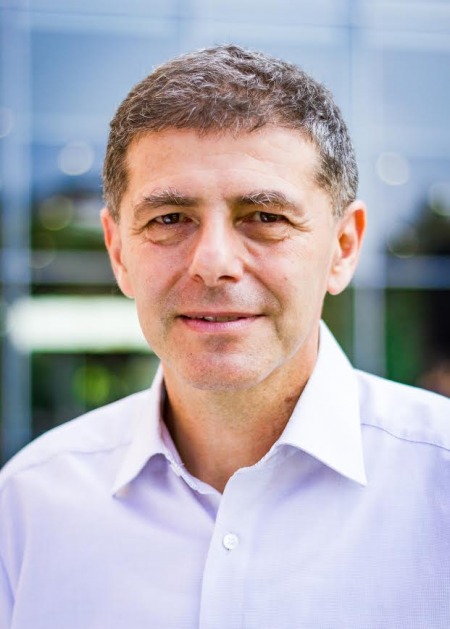
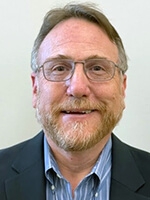
Viktor Prasanna is the Charles Lee Powell Chair in Engineering and Professor of Electrical and Computer Engineering and Computer Science at the University of Southern California. He holds courtesy appointments in Computer Science and leads the Center for Energy Informatics, focusing on interdisciplinary research linking energy technologies, computer science, and engineering. Education: BE in Electronics (Bangalore University), ME (Indian Institute of Science), PhD in Computer Science (Pennsylvania State University) His research spans reconfigurable computing, FPGA accelerators, parallel and distributed systems, and big data applications. He has pioneered high-performance architectures and algorithms using FPGAs, impacting domains like networking, security, HPC, and machine learning. Prasanna has published over 600 papers, received 22 best paper awards, and secured >$50M in grants. His work emphasizes energy-efficient computing, with recent grants totaling $12.9M (2016–2021). His h-index is 73, with 23,454 total citations. Scientific Awards: IEEE Fellow, ACM Fellow, AAAS Fellow, W. Wallace McDowell Award, multiple Distinguished Alumnus Awards He has advised over 70 doctoral students and led major centers including CiSoft (Big Data in oilfield tech) and CAST. His editorial roles include Editor-in-Chief of IEEE Transactions on Computers and Journal of Parallel and Distributed Computing.
Dr. Tamás Koltai is a Professor and Dean at the Faculty of Economics and Social Sciences of Budapest University of Technology and Economics (BME). He leads the doctoral school's Specialization Group in Production Management. His roles include overseeing academic programs and research in production management, operations research, and efficiency analysis. Education: Doctor of the Hungarian Academy of Sciences (2016) Dr. habil. (2000), Budapest University of Technology and Economics Candidate of Technical Sciences (1987), Hungarian Academy of Sciences M.Sc. in Mechanical Engineering (1983), BME Faculty of Mechanical Engineering Research Interests: Dr. Koltai focuses on production management optimization, including the application of Data Envelopment Analysis (DEA), sensitivity analysis in mathematical models, and the integration of robotics in assembly lines. His work bridges theoretical models (e.g., MILP/CP optimization) with practical industrial challenges, particularly in healthcare efficiency and educational management. Notable Awards: IEOM Society Teaching Excellence Award (2021) BME GTK Faculty Memorial Medal (2016) János Susánszki Award (2013) Széchenyi Professorship Scholarship (1999–) Teaching & Leadership: He has held visiting roles at the University of Seville (1990–1992) and the University of Michigan (1988/89). His teaching excellence is recognized through awards and his contributions to business simulation education. His research often collaborates with industry partners to address real-world operational challenges. Labs/Teams: Leads the Production Management Specialization Group and contributes to interdisciplinary teams focusing on manufacturing efficiency and healthcare operations within BME.
Dr. Wei David Dai is an Assistant Professor of Computer Science at Purdue University Northwest and Director of the Advanced Intelligence Software (AIS) Lab. His research focuses on robust deep learning, data quality, and public safety technologies like gunshot detection systems. He previously worked at IBM China as a senior engineer and served in Arkansas state government as a data scientist. Education: Ph.D. in Computer and Information Sciences (University of Arkansas at Little Rock, USA, 2020) M.S. in Information Science (University of Arkansas at Little Rock, USA, 2016) M.S. in Software Engineering (South China University of Technology, China, 2013) B.S. in Computer Science (Central South University, China, 2007) Research Interests: His work spans robust deep learning models, distributed computing systems, and privacy-preserving technologies. Notable projects include public safety innovations such as acoustic gunshot detection and AI-driven campus security systems. Articles Trends: Recent publications emphasize public safety applications (e.g., mass school shooting simulations) and deep learning robustness evaluation (e.g., the Accuracy-Stability Index metric). Earlier works address cloud computing optimization and data quality frameworks. Awards: Recipient of the 2024 Excellence in Research Award and multiple IBM honors for technical excellence and instruction. Grants & Advising: Leads the Indiana Space Grant Consortium-funded satellite imaging project and Purdue Provost Grant for gunshot detection. Advises doctoral and master’s students on AI ethics, distributed systems, and public safety. Labs: The AIS Lab develops AI tools for public safety, equipped with GPU resources for audio and image analysis.
Inigo Flores Ituarte is a Research Professor at Tampere University's Faculty of Engineering and Natural Sciences, affiliated with the Automation Technology and Mechanical Engineering department. He leads the Digital Design and Manufacturing (D2M) research lab, focusing on sustainable manufacturing and twin-transition strategies integrating digital and green technologies. His work emphasizes optimization-driven design, additive manufacturing innovations, and AI-driven expert systems to enhance energy efficiency and reduce environmental impacts. Key research pillars include: Pillar 1: Twin-transition in Engineering Design and Manufacturing Processes, addressing sustainable manufacturing and intelligent systems Pillar 2: Development of open D2M systems and Process-Structure-Property-Performance (PSPP) linkages in advanced materials His research explores multi-disciplinary optimization combining model-based simulations and data-driven techniques. Notable contributions include generative AI integration in CAD systems, cognitive manufacturing systems, and cost-effective process monitoring using CNN-based methods. Inigo's work emphasizes environmental sustainability, with a focus on reducing manufacturing's energy consumption (54% of global use) and CO2 emissions. He advocates for interconnected material systems, smart manufacturing processes, and AI-assisted decision-making to achieve cognitive intelligence in industrial operations. His D2M lab's overarching goal is to maximize product/process performance while improving cost-effectiveness and minimizing environmental footprints. Recent projects include railway bogie demonstrators via multi-material deposition and sensor systems leveraging IoT and ChatGPT integration.
Gaetano Miraglia is a Fixed-term Assistant Professor in the Department of Structural, Building and Geotechnical Engineering (DISEG) at Politecnico di Torino, where he conducts research in structural health monitoring, seismic analysis, and computational modeling. He is a member of the Interdepartmental Center R3C – Responsible Risk Resilience Centre, contributing to interdisciplinary efforts in risk mitigation and infrastructure resilience. His work spans both theoretical and applied domains, with strong emphasis on heritage preservation and sustainable urban development. His research interests include Bayesian calibration of nonlinear models, hybrid simulation, peridynamics, masonry structures, and the integration of satellite interferometric (InSAR) data with in-situ measurements for structural monitoring. He applies advanced computational and machine learning techniques to improve the accuracy and reliability of structural assessments, particularly in historical and monumental buildings. His work supports UN Sustainable Development Goals 9, 11, and 13. His recent publications demonstrate a consistent focus on data fusion, digital twinning, domain adaptation, and real-time damage detection. He frequently collaborates with researchers such as Rosario Ceravolo and Erica Lenticchia, publishing in high-impact journals like Computer-Aided Civil and Infrastructure Engineering , Structures , and Scientific Reports , as well as at major conferences including EWSHM, SAHC, and EVACES. His research is applied in projects such as the monitoring of the Vicoforte Sanctuary and the development of the CAMELOT and HY-LEARN toolboxes. Research Projects: MONITORAGGIO VICOFORTE (2024–2026) – Member of Research Group CAMELOT – PoC Transition (2023–2024) – Member of Research Group HY-LEARN – Model Calibration via Hybrid Simulation and ML (2022–2024) – Scientific Manager (PNRR Mission 4) He teaches in various programs, including as a course collaborator in PhD, Master’s, and Bachelor’s level courses such as Earthquake Engineering , Structural Consolidation , and Seismic Risk of Cultural Heritage . He is also an inventor on national and international patents and software related to the CAMELOT toolbox, highlighting the translational impact of his research. He has no listed scientific awards or formal advisees in the provided text.
Kyprianos Papadimitriou is a Researcher at the Microprocessor and Hardware Laboratory within the School of Electrical and Computer Engineering at the Technical University of Crete . He holds a PhD in Electronic and Computer Engineering (2012) and has been involved in teaching laboratory courses such as Logic Design , Computer Architecture , and VLSI/ASIC Circuit Design . Research Areas : His work spans Reconfigurable Systems , Hardware Design , Computer Architecture , RFID Systems , and Real-Time Systems . He has developed innovative approaches in FPGA-based dynamic reconfiguration, MPSoC security, and 3D stereo vision for surveillance. Key Trends : Runtime reconfiguration for FPGAs Security frameworks for NoC-based MPSoCs Low-cost embedded vision systems Optimization of reconfiguration overhead Hardware task scheduling methodologies Genetic algorithm implementations on FPGAs Scientific Contributions : 1 USA patent (2005) Co-author of VLSI-SoC 2013 paper nominated for 1st Prize Active member of scientific committees (FPL, ReConFig) Peer reviewer for IEEE, Elsevier, and Springer journals Session chair at IEEE CNS and HPCC conferences Grants & Projects : Participated in competitive European and national programs, serving as scientific manager, coordinator, and technical coordinator. Developed spin-off company (2003-2005) to commercialize master's thesis research. Laboratory & Teaching : Affiliated with the Microprocessor and Hardware Laboratory , focusing on practical training in digital systems, processor-based systems, and VLSI design.
Karen Hampson is a Senior Lecturer in Optometry at the University of Manchester, serving as the first-year Optics Theme Lead. Her research focuses on adaptive optics systems for vision science, particularly using retinal imaging technology for early diagnosis of neurodegenerative and psychiatric diseases. She is a member of the Consortium for Vision and Oculomics in Psychiatry and co-founder of the European Adaptive Optics Summer School. Education: MPhys (Swansea University, 2000), PhD in Physics (Imperial College London, 2004), Post-Graduate Certificate in Higher Education Practice, and SEDA Professional Development Award. She trained in Transactional Analysis Psychotherapy and mental health first aid. Research interests include adaptive optics applications across vision science, microscopy, and astronomy. She led an EPSRC-funded project on pre-symptomatic disease diagnosis via ocular biomarkers. Key roles include Chair of Optica’s Applications of Visual Science Technical Group (2021–2024) and Associate Editor for Frontiers in Ophthalmology. Teaching contributions include senior laboratory roles at Oxford’s Physics Department and tutorial leadership at Corpus Christie College. Her work aligns with UN SDG targets for health and innovation.
Richard Pawlowicz is a Professor in the Department of Earth, Ocean & Atmospheric Sciences at the University of British Columbia (UBC), within the Faculty of Science. His research focuses on ocean physics, seawater properties, geophysical fluid dynamics, and coastal processes. He holds a PhD from the MIT/WHOI Joint Program and has been a faculty member at UBC since 1996. His work integrates field observations, numerical modeling, and novel instrumentation, such as neutrally buoyant floats (Swish floats) and satellite-tracked drifters, to study coastal circulation, estuarine dynamics, and double diffusion processes. He leads research in the Salish Sea, Strait of Georgia, and Gulf of St. Lawrence, emphasizing subsurface mixing, dispersion, and the impacts of climate change on marine ecosystems. Education & Background: B.Sc. (Hons) from Queen's University (1987), PhD from MIT/WHOI (1994), Postdoctoral research at Institute of Ocean Sciences (1994–1996). Research Interests: Ocean circulation, nonlinear waves, estuarine mixing, double diffusion in stratified basins, and the application of TEOS-10 seawater standards. He collaborates on projects like the MEOPAR Observation Core and has developed influential software tools for oceanographic analysis. Students & Supervision: Active supervisor of graduate students and postdocs in physical oceanography. Notable supervisees include Mark Halverson, Caixia Wang, Sam Stevens, and Grace Watts. He emphasizes mathematical rigor and writing skills, requiring strong backgrounds in PDEs and fluid dynamics. Labs & Teams: Member of the MEOPAR Research Management Committee, co-chair of SCOR/IAPWS/IAPSO seawater committees, and collaborator with the Pacific Salmon Foundation's citizen science programs. His work contributes to coastal resource management and climate resilience initiatives.
Hongyi Xu is a Senior Lecturer at the Australian National University's Research School of Chemistry and a researcher/principle investigator at Stockholm University (0.2 FTE). He holds a PhD in Materials Engineering from the University of Queensland (2013) and a Bachelor of Engineering (Mechatronics) from the same institution (2008). His research focuses on developing electron crystallography methods for studying materials, small molecules, peptides, and macromolecules, with applications in drug design and structural biology. He has pioneered MicroED techniques, including solving the first new protein structure using this method and demonstrating protein-inhibitor binding analysis. Key research areas include electron crystallography methodology, multidimensional electron microscopy toolkits, metalloenzyme charge state analysis, and fragment-based drug design. He has secured grants such as the Swedish Research Council Starting Grant and has collaborated with over 25 international groups. Notable achievements include the development of SerialED and contributions to cryo-EM advancements like Single Particle Analysis (SPA) and cryo-ET. Recent publications highlight advancements in perovskite photovoltaics, electrocatalytic hydrogen peroxide production, and zeolite structural analysis. His work bridges materials science and biology, addressing challenges in structural determination through innovative microscopy techniques. Awards include the Dean’s Accommodation for Academic Excellence (2013) and the Best Thesis Award (2013).
Anthony D. Joseph is a Chancellor's Professor in the Department of Computer Science at the University of California, Berkeley, within the College of Engineering. He is a faculty member in the Computer Science Division and part of the RISE Lab and AMP Lab at UC Berkeley. His research spans multiple domains in computer science with a focus on security, distributed systems, and networking. Education: 1998, Ph.D., Computer Science, MIT 1988, S.M./S.B., Electrical Engineering and Computer Science/Computer Science and Engineering, MIT Professor Joseph's primary research interests include Computer and Network Security, Distributed Systems, Mobile Computing, Wireless Networking, Software Engineering, Operating Systems, Genomics, Secure Machine Learning, and Datacenters. His work has significant implications for both theoretical computer science and practical applications in industry. He leads multiple research projects including Mesos, SecML (Secure Machine Learning), D-Trigger, DETER, and Tapestry/Brochure. His research has been instrumental in advancing the fields of distributed systems and security, particularly in the context of machine learning applications. His publications reflect a strong focus on the intersection of security and distributed systems, with recent work emphasizing secure machine learning techniques and resource management in data centers. Professor Joseph's research has evolved from foundational work in networking and distributed systems to addressing contemporary challenges in cloud computing and AI security. Scientific Awards: Diane S. McEntyre Award for Excellence in Teaching Computer Science (2007) NSF Faculty Early Career Development Award (CAREER) (2000) Okawa Research Grant (1999) Professor Joseph has advised numerous graduate and undergraduate students, many of whom have gone on to make significant contributions in academia and industry. His research has been supported by various grants, including the NSF CAREER award. He has been actively involved in teaching core computer science courses including CS162: Operating Systems and Systems Programming and CS262: Advanced Topics in Computer Systems. He leads several research groups including the AMP Lab (which focuses on data analytics) and has been instrumental in projects like Mesos (for resource sharing in data centers) and SecML (focusing on the security of machine learning systems). His labs work on cutting-edge problems at the intersection of systems, networking, and security, with applications ranging from cloud computing to critical infrastructure protection.
Professor David Taubman is a distinguished academic serving as Professor and Deputy Head of School (Research) at the School of Electrical Engineering and Telecommunications (EE&T) at the University of New South Wales (UNSW) in Sydney, Australia. He is also co-director of Kakadu Software Pty. Ltd. and its affiliates Kakadu R&D and Kakadu GPU. With a career spanning over three decades, Professor Taubman has made significant contributions to the field of image and video compression, most notably as the author of the EBCOT coding algorithm adopted in the JPEG2000 international standard. Professor Taubman earned his B.Sc. in Mathematics and Computer Science (1986) and B.E. (Medal) in Electrical Engineering (1988) from the University of Sydney, followed by an M.Sc. (1992) and Ph.D. (1994) in Electrical Engineering from the University of California at Berkeley. His professional journey includes engineering work at the Electricity Commission of N.S.W. (1988-1990), research positions at Hewlett-Packard Laboratories in Palo Alto (1994-1998), and an academic career at UNSW where he progressed from Senior Lecturer (1998-2003) to Associate Professor (2004-2009) and finally to Professor (2009-present). He has held various leadership roles including Head of the EE&T Telecommunications Research Group (2003-2014), Head of the EE&T Signal Processing Research Group (2014-present), Director of Research for the School of EE&T (2011-2016), and Deputy Head of School (Research) since 2017. Professor Taubman's research interests center on image and video compression, with particular expertise in JPEG2000 standards and implementations. His work spans signal processing, wavelet transforms, scalable video coding, motion modeling, and multimedia systems. He has pioneered numerous compression algorithms and frameworks, including the EBCOT coding algorithm that became central to the JPEG2000 standard. His recent research focuses on efficient motion modeling with cuboidal partitioning, learned lifting-based transform structures, and high-throughput implementations of JPEG2000 for video applications. His work bridges theoretical foundations with practical implementations, as evidenced by the commercially successful Kakadu Software tools that have garnered around 500 commercial licensees. Analysis of Professor Taubman's recent publications reveals a consistent focus on advancing compression technologies with particular emphasis on scalability, efficiency, and adaptability. His work spans traditional image compression (JPEG2000 extensions), video coding (cuboid-based partitioning for UHD/360-degree video), and emerging applications (nanopore sequencing data compression). A notable trend is the integration of machine learning techniques with traditional compression frameworks, as seen in his work on learned lifting-based transform structures. His research maintains strong connections to real-world applications across diverse domains including medical imaging, astronomical data processing, and genomic sequencing. IEEE Fellow Engineers Australia Fellow (by invitation) Professor Taubman has served as Associate Editor for the IEEE Transactions on Image Processing for two four-year appointments (2003-2005 and 2010-2013). He has been actively involved in numerous research grants focused on image and video compression technologies, particularly those related to the JPEG2000 standard and its extensions. His work has received significant industry support, reflected in his consultancy with various U.S., Japanese, and Australian corporations. He has also contributed to international standards development as a member of Standards Australia Technical Committee MS-065 (mirroring ISO TC42 on Digital Photography) and as a constitutional member of Standards Australia Technical Committee IT-029 (Coded Representation of Picture, Audio and Multimedia/Hypermedia Information). Professor Taubman co-directs Kakadu Software Pty. Ltd. and its research affiliates Kakadu R&D and Kakadu GPU, which have developed the commercially successful Kakadu Software tools for JPEG2000. His research group at UNSW focuses on advanced image and video compression techniques, with particular expertise in wavelet-based methods, scalable coding, and motion modeling. The group maintains strong industry connections and has contributed significantly to the development and standardization of image compression technologies worldwide.
Dr Elies Dekoninck is a Senior Lecturer in the Department of Mechanical Engineering at the University of Bath, where she has been employed since 2004. She holds a PhD in Eco-innovation from an unspecified institution, completed in 2003 following industrial experience as a Design Strategy consultant. Her academic leadership includes developing and directing the MEng in Integrated Design Engineering (IDE), which integrates mechanical, electronic, and software engineering through studio-based projects. Research Focus: Her interdisciplinary research spans: Design creativity methodologies and innovation processes User-centered eco-design and sustainable product development Spatial augmented reality applications in co-creative design Human-robot collaboration frameworks for Industry 5.0 Inclusive design principles for neurodivergent populations Research Projects & Grants: Principal Investigator for Horizon 2020 SPARK project on spatial augmented reality in design sessions Led EU project G.EN.ESI on eco-innovation tools and AHRC-funded game-design project resulting in commercial product 'Beasts of Balance' Managed 5 Knowledge Transfer Partnerships (KTPs) with industry partners Secured funding from Arts and Humanities Research Council, EU Horizon 2020, and Designability Academic Contributions: Supervised multiple PhD students in areas including virtual design teams and eco-design Authored 114+ research outputs including journal articles, conference papers, and patents Associated with research centers: The Foundry (Digital Manufacturing & Design), IAAPS (Augmented Human), Centre for Sustainable Energy Systems, and Centre for Regenerative Design
Christof Lutteroth is a Professor in the Department of Computer Science at the University of Bath and Director of the REal and Virtual Environments Augmentation Labs (REVEAL). His work focuses on Human-Computer Interaction (HCI) with emphasis on eye-gaze interaction and virtual reality (VR), particularly for health, exercise, and learning applications. He leads multiple research projects funded by organizations like EPSRC, The British Academy, and The Royal Society. Research Interests include developing gaze-controlled interfaces, immersive VR systems, and adaptive UI/UX for fitness and cognitive training. He explores affective design tools, emotion recognition in VR exergaming, and biometric data analysis for health applications. Recent Publications highlight advancements in gaze-based text entry, emotion measurement in VR, AI-driven UI development, and cross-European XR innovation networks. His work spans from foundational HCI methodologies to applied projects in rehabilitation and immersive learning. Grants include EPSRC IAA, British Academy, and Royal Society funding for projects like TapGazer, Hyper-immersive XR, and Affective Design Tools for VR. He collaborates with institutions across Europe through the EMIL project. Laboratory : REVEAL Lab at the University of Bath drives research in immersive technologies, motion analysis, and augmentation of human interaction with digital environments.
Daniel B. Vigneron, PhD is a Professor at the University of California, San Francisco (UCSF) Department of Radiology and Biomedical Imaging. He serves as Director of the Hyperpolarized MRI Technology Resource Center (HMTRC), Director of Human Imaging Core Services, Director of Advanced Imaging Technologies SRG, and Operations Director of the Surbeck Laboratory for Advanced Imaging. As a core member of the UCB/UCSF Graduate Group in Bioengineering, Vigneron has established himself as a leader in molecular imaging research with over three decades of experience at UCSF. Vigneron's research focuses on developing advanced functional and metabolic MRI techniques, particularly hyperpolarized carbon-13 technology, for studying prostate cancer, brain tumors, and other diseases. His work enables non-invasive imaging of metabolic processes, allowing clinicians to monitor therapy effectiveness and guide treatments. The HMTRC, which he founded in 2011 with NIH funding and recently secured a 5-year renewal for, has supported 20 external projects domestically and 15 internationally, produced 239 publications, and trained 149 researchers. Vigneron's lab develops novel coil and software techniques for high-field MRI, MR spectroscopy, and diffusion imaging at 3T and 7T for studying brain, prostate cancer, and other organs. His recent publications demonstrate a clear trajectory toward clinical translation of hyperpolarized carbon-13 MRI across multiple organ systems. The research spans abdominal imaging with advanced denoising techniques, cardiac metabolism studies, whole-brain coverage applications, and cerebral perfusion analysis. This work represents a significant shift from basic science toward practical clinical applications in oncology, cardiology, and neurology, with particular emphasis on standardization for multi-center studies. Scientific Awards: 2022 Outstanding Faculty Mentoring Award from UCSF Department of Radiology and Biomedical Imaging Vigneron has mentored 149 trainees throughout his career, with several former students now serving as faculty members including Duan Xu, Peder Larson, and Susan Noworolski. As Principal Investigator overseeing eight grants, he has secured significant NIH funding for the HMTRC and other research initiatives. His administrative leadership extends to co-chairing the department's Safety and Compliance Committee, where he has helped establish robust safety protocols for PET-MR programs. Vigneron's mentoring philosophy emphasizes adapting to individual needs at different career stages, moving from instructor to coach to manager to cheerleader as trainees progress. The Vigneron Lab, located in Byers Hall on the UCSF Mission Bay campus, operates within the Surbeck Laboratory for Advanced Imaging. The lab group develops novel acquisition techniques and hardware for multinuclear MR spectroscopy, with particular focus on hyperpolarized carbon-13 metabolic imaging. The HMTRC serves as a hub for team science, bringing together researchers from diverse disciplines to advance metabolic imaging technology and its clinical applications.
Professor Ashish Sharma is a Professor of Hydrology and Water Resources in the School of Civil and Environmental Engineering at the University of New South Wales, Sydney, Australia. With a PhD in Civil Engineering from Utah State University and extensive experience in hydrological research, he has established himself as a leading expert in his field. Dr. Sharma's research focuses on hydrological uncertainty, with particular emphasis on the impact of climate change and variability on hydrological practice. His work spans multiple areas including remote sensing applications, stochastic hydrological modeling approaches, development of hydrological models, and addressing key hydrology challenges such as design flood estimation and water resources management. He has made significant contributions to understanding how climate change affects hydrological extremes and water availability. His publications reveal a strong trend toward advanced modeling techniques for climate change impact assessment, with recent work focusing on spectral transformation methods, multivariate bias correction in climate models, flood forecasting improvements, and the relationship between temperature and precipitation extremes. His research increasingly integrates remote sensing data with hydrological modeling to address challenges in data-scarce regions. Professor Sharma has held significant leadership positions including President of the International Commission of Hydrologic Sciences (IAHS) Commission on Statistical Hydrology (STAHY) since 2016, service on the Australian Research Council's College of Experts twice, and participation on the Technical Committee for the Australian Rainfall and Runoff Design Flood Estimation guidelines (ARR2016). In addition to his research leadership, Professor Sharma actively mentors students and collaborates with researchers globally, as evidenced by his extensive publication record across top hydrology and climate journals. His work bridges theoretical hydrology with practical applications for water resources management under changing climate conditions.