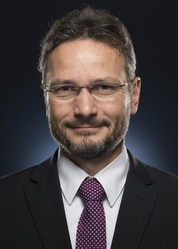
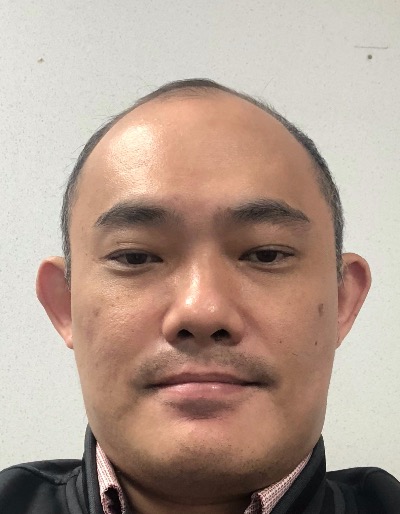
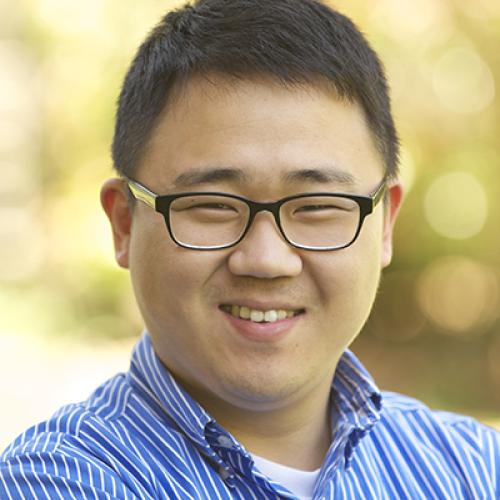
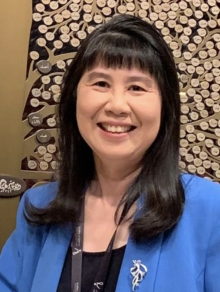
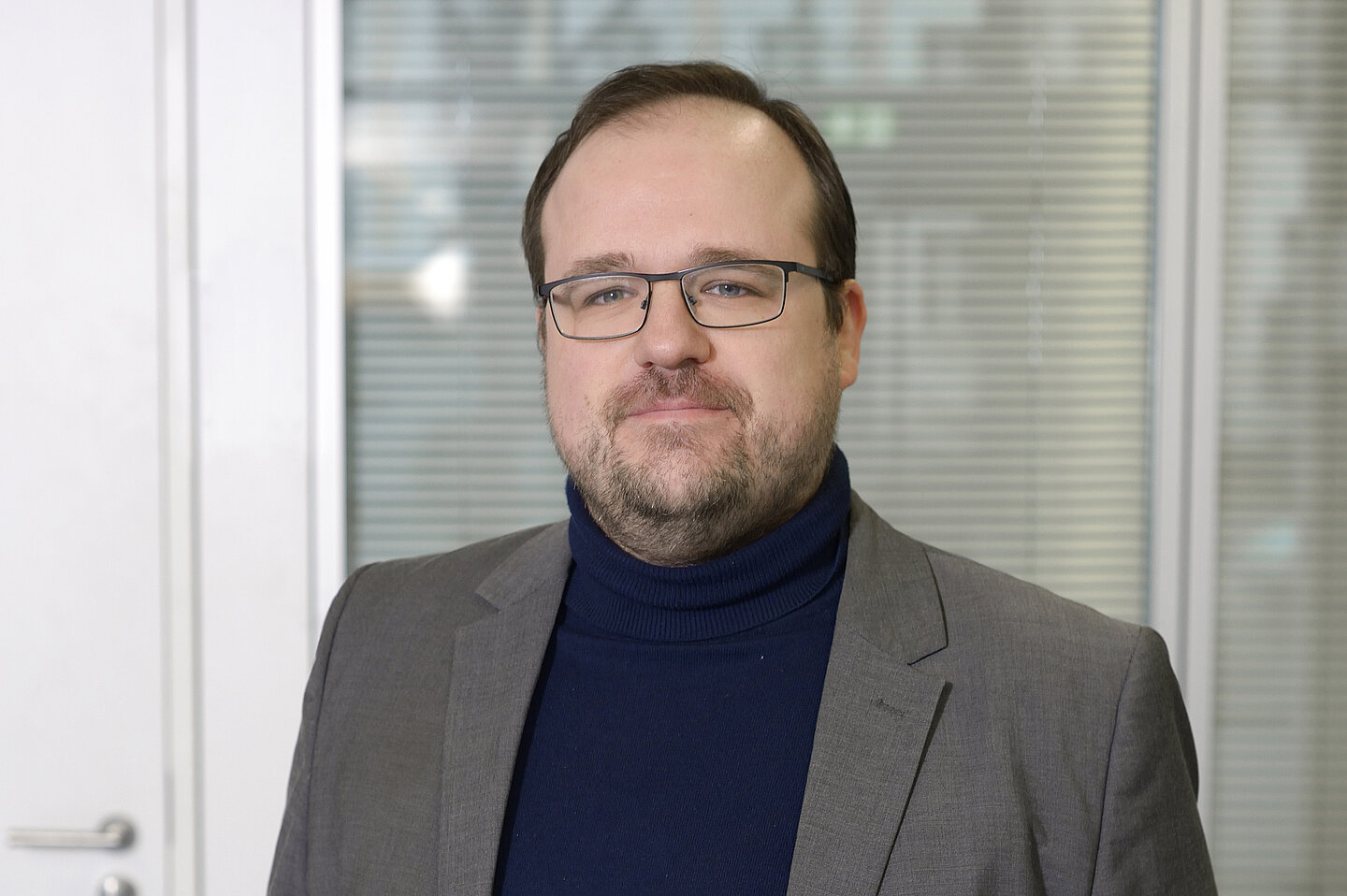
Prof. Dr.-Ing. Eric Sax is a Professor of Electronic Systems Engineering and Management at the Karlsruhe Institute of Technology (KIT), serving as Dean of the Department of Electrical Engineering and Information Technology (ETIT). He leads the Institut für Technik der Informationsverarbeitung (ITIV) and directs the Forschungszentrum Informatik ESS division . As Program Director of the Electronic Systems Engineering & Management (ESEM) master's program at the HECTOR School, he focuses on integrating academic and professional education. His research spans automotive systems engineering , self-learning functions , cybersecurity , and data-driven validation . Key themes include over-the-air updates, scenario-based testing, and the synergy between machine learning and automotive systems. His work addresses challenges in autonomous driving validation, software-defined mobility, and cyber-physical system security. Prof. Sax's contributions include frameworks for automotive software partitioning, cloud-enabled vehicle architectures, and methodologies for quantifying data quality impacts on perception systems. He actively collaborates with industry partners to bridge academic research with industrial application. His recent projects include OptiCAM (cloud/edge function offloading), Drive4C (autonomous driving benchmarking), and UNCOVER (data-driven security monitoring). He holds leadership roles in both KIT and the HECTOR School's technology business programs.
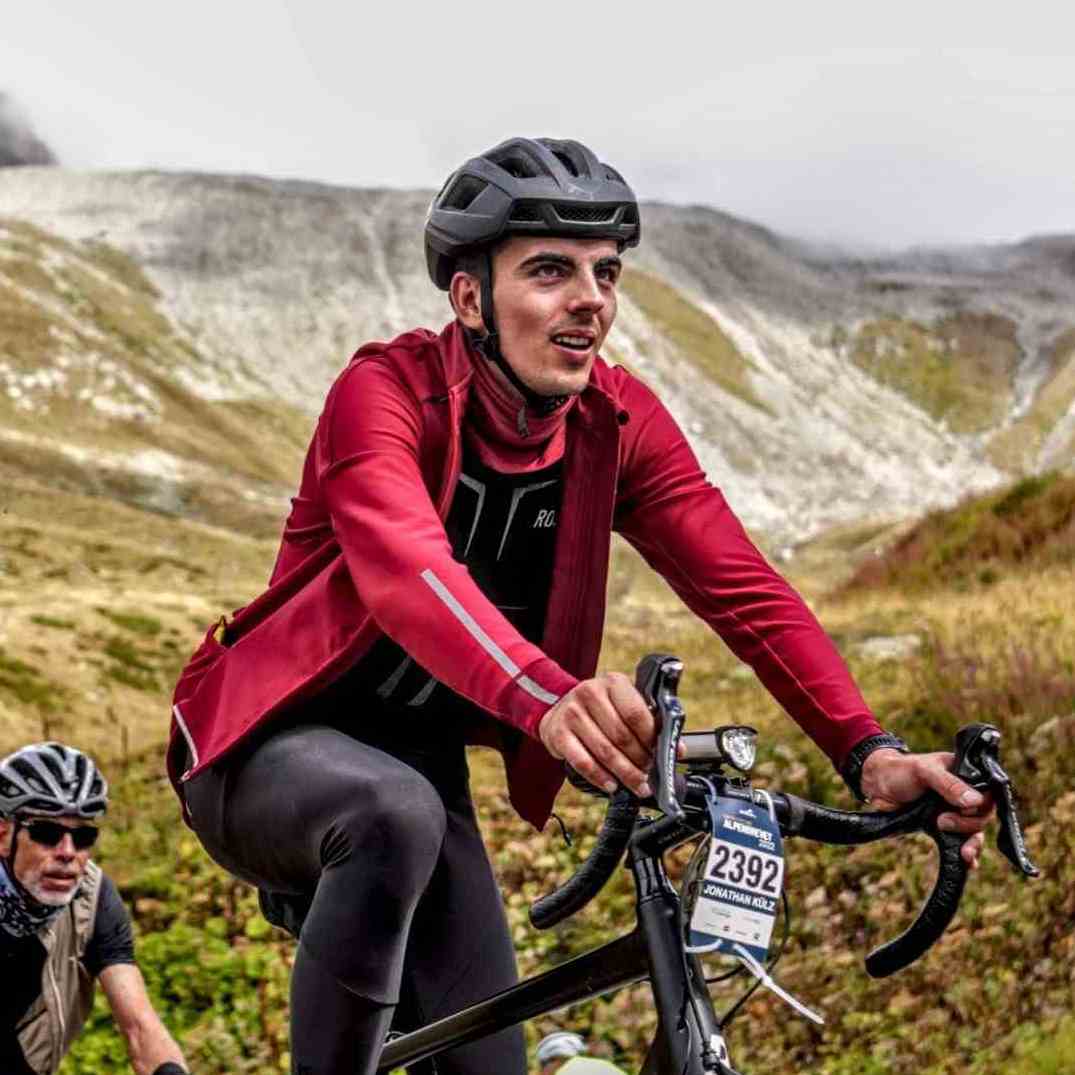
Jonathan Külz is a Researcher at the Technical University of Munich (TUM) , affiliated with the Department of Informatics 6 - Chair for Cyber Physical Systems under Prof. Matthias Althoff. His research focuses on Modular Robotics , Reinforcement Learning , Cyber-Physical Systems , and Control Systems . His work includes algorithmic synthesis of modular robot compositions, model-based manipulator co-design, and unifying benchmarks for robotics. He has supervised multiple Master’s theses Bachelor’s theses Practical courses on topics like Robot Workspace Representation and Dynamic Model Identification . Notable supervised projects include Autonomous Navigation of Reachbot and Task-Based Modular Robot Configuration Synthesis . His recent publications span Robotics , Benchmarking , and Computational Social Science . Key trends include Computationally efficient assessment of robot capabilities Deep reinforcement learning for robotics Analysis of political discourse polarization Jonathan emphasizes structured thesis supervision, requiring exposés, shared folders, and protocol-driven meetings. He advocates for LaTeX in scientific writing and tools like NotebookLM and Zettlr for research documentation.
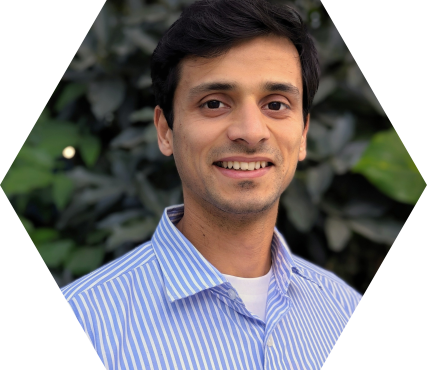
Karthik Menon serves as an Assistant Professor with a joint appointment in the Woodruff School at Georgia Institute of Technology and the Coulter Department of Biomedical Engineering. His research integrates fluid mechanics, computational modeling, and data-driven methodologies to address critical challenges in healthcare, renewable energy, and bio-inspired engineering systems. His academic credentials include: Ph.D. in Mechanical Engineering, Johns Hopkins University (2021) M.S. in Mechanical Engineering, Johns Hopkins University (2019) B.E. in Mechanical Engineering, Birla Institute of Technology and Science, Pilani, India (2015) Menon's research program centers on three interconnected domains: cardiovascular flows for personalized treatment of heart disease, fluid-structure interactions in biological systems like heart valves and bio-mimetic robots, and vortex-dominated flows for renewable energy applications. His approach combines high-fidelity computational modeling with machine learning to uncover fundamental physics and develop clinical solutions, such as cardiovascular digital twins for non-invasive risk assessment. Current projects focus on patient-specific hemodynamics using CT imaging and uncertainty quantification to improve surgical planning. Analysis of his 15 most recent publications (2023-2025) reveals a dominant focus on advancing multi-fidelity computational frameworks for cardiovascular applications. Key trends include Bayesian uncertainty quantification, zero-dimensional solver development, and integration of clinical imaging data to create predictive digital twins. His work bridges fluid dynamics with clinical cardiology, targeting improved outcomes in coronary artery disease and Kawasaki-related complications through physics-informed machine learning. Menon's scholarly contributions have been recognized through competitive awards: WCCM-PANACM 2024 Travel Award, U.S. Association for Computational Mechanics (2024) Future Faculty Symposium Travel Award, Society of Engineering Science Conference (2023) Mark O. Robbins Prize in High-performance Computing, Johns Hopkins University (2021) Corrsin-Kovasznay Outstanding Paper Award, Johns Hopkins University (2020) Prosperetti Travel Award, Johns Hopkins University (2017) Mechanical Engineering Departmental Fellowship, Johns Hopkins University (2016) As principal investigator of the ComBiNE Fluid Dynamics Lab, Menon mentors graduate students in developing computational tools for fluid-structure interaction problems. His collaborative projects with cardiologists at Stanford and Emory hospitals translate engineering principles into clinical applications for cardiovascular disease management. Current grant activities focus on NSF and NIH-funded initiatives for uncertainty-aware cardiovascular modeling and bio-inspired flow energy harvesting. The ComBiNE Fluid Dynamics Lab operates as an interdisciplinary hub where engineers, clinicians, and data scientists collaborate on fluid mechanics challenges. Current lab initiatives include developing real-time hemodynamic simulators for surgical planning, creating reduced-order models for cardiac device optimization, and investigating vortex dynamics in fish schooling for underwater vehicle design. The lab maintains strong partnerships with Children's Healthcare of Atlanta and the Parker H. Petit Institute for Bioengineering and Bioscience.
Özer Özkahraman is a postdoctoral researcher at the Division of Robotics, Perception and Learning (RPL) at KTH Royal Institute of Technology. He works under Ivan Stenius and John Folkesson, focusing on underwater mission planning, simulation, and integration of autonomous systems. His email is ozero@kth.se . He completed his PhD at KTH under Petter Ögren, researching large-scale multi-agent coverage planning for autonomous underwater vehicles (AUVs). Current projects include the SMaRCSim multi-domain simulation platform and development of underwater vehicles like LoLo, SAM, and Evolo. Research interests span autonomous underwater systems, multi-agent coordination, control systems, and simulation infrastructure. He emphasizes modular, accessible frameworks for vehicle testing and real-world deployment. His work bridges theoretical methods (e.g., control barrier functions) with practical applications in marine robotics. Publications focus on AUV navigation, environmental sensing, and adaptive control. Projects like Real2Sim aim to align simulation with real-world vehicle dynamics using motion capture data. He collaborates internationally on topics like data-driven damage detection and model compression for resource-constrained robots. No academic awards are explicitly mentioned. He actively seeks collaborators for projects in sonar simulation, flow field modeling, and cyber-physical system integration.
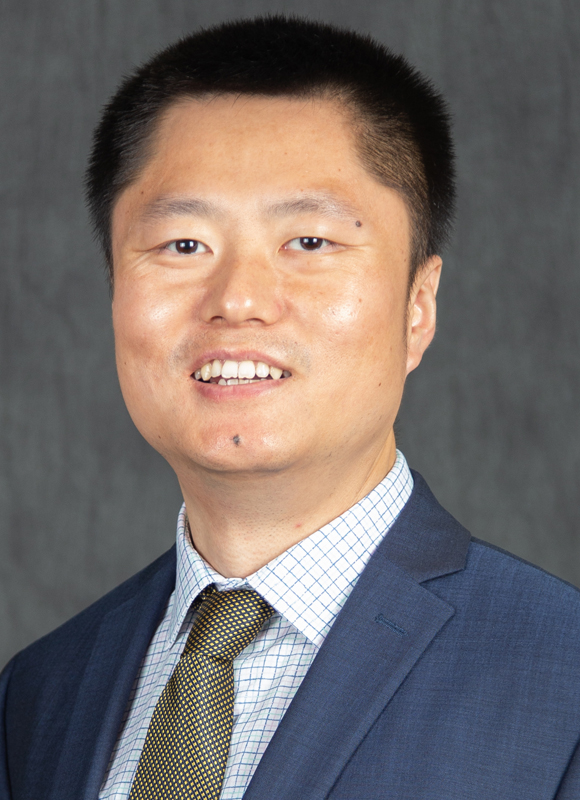
Dr. Yanchao Liu is an Associate Professor at Wayne State University's College of Engineering, Department of Industrial and Systems Engineering. He has received research funding from the National Science Foundation and the State of Michigan, including the NSF Career Award. His academic career spans prior industry roles as a Data Scientist and Manager of Advanced Analytics at Sears Holdings Corporation (2016-2017) and Director of Brand Marketing Analytics at Catalina Marketing Corporation (2017). He teaches courses in data science, IoT, and stochastic processes. B.S. Industrial Engineering, Huazhong University of Science and Technology (2006) M.S. Industrial Engineering, University of Arkansas (2008) Ph.D. Industrial and Systems Engineering, University of Wisconsin-Madison (2014) Dr. Liu's research focuses on mathematical modeling for transportation systems, industrial AI, and data analytics. His work addresses drone traffic management, battery-constrained delivery routing, and optimization algorithms for urban mobility. He has developed novel methods for UAV safety diagnostics, random forest implementations, and fairness-aware path planning in urban air mobility. His publications span journals like Journal of Guidance, Control and Dynamics , Transportation Research Part C , and IEEE Transactions on Intelligent Transportation Systems , with conference contributions at IISE and FAIM. His research combines theoretical advancements with practical applications in smart cities and logistics. NSF Career Award (2020) Faculty Research Excellence Award (2021) IEEE PES Best Conference Paper (2015) IEEE Transactions on Smart Grid Best Reviewer (2015) Hubei Province Distinguished Bachelor’s Thesis Award (2006) Dr. Liu advises PhD students like Zhenyu Zhou and J. Chen. He has contributed to energy market modeling (with M.C. Ferris) and published extensively on drone operations, machine learning algorithms, and stochastic processes. His work includes U.S. patent pending applications for UAV safety systems.
Dr. Leah Perlmutter is a tenure-track Assistant Professor in the Computer Science Department at Grinnell College, focusing on inclusive pedagogy and student belonging in post-secondary CS education. She earned her Ph.D. (2023) and M.S. (2020) in Computer Science and Engineering from the University of Washington, and her B.A. (2012) in Computer Science and Engineering from Colby College. Her research examines how course policies and teaching assistant interactions impact student inclusion in computer science, with a particular emphasis on resubmission opportunities and justice-centered approaches to teaching. Her work also includes human-robot interaction projects like GestureCalc (an eyes-free calculator for touchscreens) and EMAR (a social robot for emotional clarity support). Recent publications explore themes such as algorithmic ethics in education, student belonging in CS, and accessible interface design. She received the NSF Graduate Research Fellowship (2017) and the Outstanding Female Engineer Award (2018). At Grinnell, she teaches courses like Functional Problem Solving, Software Design, and Algorithms, Ethics, and Society.
Dr. Chee Kiat Seow is an Associate Professor at the University of Glasgow's School of Computing Science. He holds a PhD from Nanyang Technological University (NTU) and an MSc from the National University of Singapore (NUS). His research focuses on cyber-physical security, wireless communication localization, and IoT systems leveraging AI/ML. He has led projects valued in the millions, winning awards like the IEEE Best Student Paper and National Instruments Engineering Impact Awards. Education: PhD (NTU), MSc (NUS) Research: Specializes in UWB positioning, spoofing detection, and IoT integration with 5G/GNSS. Teaching: Courses include Big Data, Software Engineering, and Data Analytics. His recent work addresses NLOS mitigation in indoor localization and cyber-physical security threats. Over 63 publications span journals like IEEE Transactions and conferences such as IPIN and WF-IoT. Supervised 6+ PhD/MSc students on topics like autonomous robotics and AI-driven localization. Grants: Includes $853K for 5G-X Smart Building projects and $797K for GNSS signal authentication. Awards: IEEE PIERS Best Student Paper (2019), NI Engineering Impact Awards (2015-2016). He advises on IoT and cybersecurity for organizations like ARTC and National Instruments. Active in IEEE Signal Processing and Computer Society.
Renate Sachse is a Researcher and Responsible Investigator at the Chair of Structural Analysis, Technical University of Munich (TUM), under Prof. Kai-Uwe Bletzinger. She holds a Dr.-Ing. from the University of Stuttgart and has held postdoctoral positions at Harvard University (Bertoldi Lab) and TU Munich's Institute for Computational Mechanics. Her research focuses on biomimetic adaptive structures, biomechanics, and smart materials. Education M.Sc. in Civil Engineering (University of Stuttgart, 2014) – Thesis: "Isogeometric Contact Analysis of Thin-Walled Structures" B.Sc. in Civil Engineering (University of Stuttgart, 2011) – Thesis: "Elementary School Pavilion Structural Analysis" Study Abroad: École Spéciale des Travaux Publics (ESTP, France, 2012) Research Interests Her work integrates principles from biology and mechanics to design adaptive structures, including motion design, soft robotics, and active metamaterials. Notable projects include studying snapping mechanisms in plants (e.g., Venus flytrap) and developing bio-inspired systems like Flectofold shading devices. She also explores isogeometric analysis and structural optimization for thin-walled and slender structures. Grants & Awards Bertha Benz Prize 2022 (Daimler and Benz Foundation) Klaus Tschira Boost Fund Fellowship (€80,000 interdisciplinary grant) 3rd Place AVK-Prize for Innovations (2017, Flectofold Shading System) GAMM Juniors Fellowship (2020–2022) Teaching & Grants She teaches advanced finite element methods and nonlinear mechanics at TUM and has supervised projects in computational mechanics. Her grants include CareerDesign@TUM funding and the Klaus Tschira Fellowship for high-risk, interdisciplinary research. Labs & Teams Associated with the Chair of Structural Analysis at TUM, collaborating on projects like livMatS (Living Materials Systems) and the Harvard SEAS Bertoldi Lab. Involved in software development (e.g., Carat++, Kiwi!3d) and third-party initiatives (CoDA, FlexWing).
Dr. Heesung Woo is an Assistant Professor of Advanced Forestry at the College of Forestry, Oregon State University , specializing in robotics, sensor integration, and precision forestry. His work focuses on autonomous forestry machinery, AI-driven forest management, and sustainable practices. He advises two graduate students and collaborates internationally through research projects. Research Interests: Autonomous Forest Machinery Development Sensor Integration & ICT Solutions Precision Forestry via Remote Sensing/LiDAR/GIS Machine Learning for Forest Inventory Advanced Forestry Practices for Sustainability Publications emphasize innovative applications of technology in forestry, including LIDAR integration, harvester data analytics, and carbon offset project modeling. His work bridges engineering, environmental science, and policy. Dr. Woo leads the Advanced Forestry Lab at Oregon State, focusing on real-world deployment of cutting-edge technologies to address challenges in forest operations, sustainability, and resource optimization.
Professor Barry Porter is a faculty member at Lancaster University in the School of Computing and Communications . His research focuses on emergent software platforms that address software complexity through component models , meta-software platforms , and machine learning . Key areas include distributed systems, cloud integration with sensor nodes, green computing, and real-time visualization. Research Interests : Runtime adaptation in complex systems Self-assembling software architectures Machine learning for code optimization Distributed emergent systems at scale Green computing for multi-core environments Edge-cloud continuum integration Recent Publication Trends : His 2025 work explores genetic improvement for software using speciation algorithms , program geometry projection , and multi-agent decision frameworks . Earlier studies (2022-2024) investigate edge-cloud systems , neural transfer learning , and ecosystem curation in emergent software. Supervision & Projects : He supervises PhD student Ben Craine and leads projects like B-EGI (Bio-Enhanced Genetic Improvement) and BBC Prosperity Partnership for media delivery. Collaborations span environmental IoT, multi-agent learning, and fog computing. Labs & Groups : Affiliated with the Lancaster Intelligent, Robotic and Autonomous Systems Centre , Centre of Excellence in Environmental Data Science , and the Distributed Systems group.
Ming Lin is a Distinguished University Professor at the University of Maryland, College Park, holding joint appointments in Computer Science (Department of Computer Science), the Institute for Advanced Computer Studies (UMIACS), Electrical and Computer Engineering (ECE), and the Maryland Robotics Center. She holds the Dr. Barry Mersky and Capital One E-Nnovate Endowed Professorships. Her research focuses on physically-based modeling, virtual environments, haptics, robotics, and AI applications in healthcare and urban computing. Education: Ph.D., M.S., and B.S. in Electrical Engineering & Computer Sciences from UC Berkeley. She previously spent 20 years at UNC Chapel Hill before joining UMD in 2018. Research interests include collision detection algorithms (e.g., Lin-Canny algorithm), real-time physics simulation, virtual/augmented reality systems, and medical imaging applications. Her work has led to over 2 million downloads of her group's software tools and licenses with 60+ companies. Notable contributions include the Oculus Rift-related VR technologies and Amazon's virtual try-on system. Awards: IEEE Fellow (2012), ACM Fellow (2011), NAI Fellow (2022), and Washington Academy of Sciences Distinguished Career Award (2020). Active in professional service, she serves on the CRA Board and chairs the Committee on Widening Participation in Computing Research. Advising: Supervises 12+ PhD/Master's students. Her lab (GAMMA Group) focuses on AI-driven robotics, autonomous systems, and physically-based simulations. Key projects include traffic simulation frameworks, medical VR applications, and 3D garment modeling.
Prof. Dr. Oliver Crönertz serves as Dean and Professor of Business Administration and IT-Supported Business Processes at the Faculty of Digital Transformation , HTWK Leipzig. His work bridges digital transformation with business management, focusing on interdisciplinary project management, digital business models, and sustainability. Current roles: Dean, supervising professor for HTWK Robots/nao Team Research areas: Digital Transformation, Business Analytics, Industry 4.0, Stoffstrommanagement Research Trends : Recent publications emphasize digital solutions for environmental management, business process optimization, and smart urban logistics. His work connects Industry 4.0 with financial sustainability and societal impacts of digitalization. Projects : Leads Mittelstand-Digital Zentrum Leipzig-Halle, involved in EXIST-Potentiale, Future Parking, and FAssMII (Feedback-based E-Assessment in STEM).
Wang Jianmin serves as Professor and Doctoral Supervisor at Tongji University's School of Art and Media, concurrently holding the position of Vice Dean since 2014. With a computer science PhD from Sun Yat-sen University, he bridges engineering and media arts through pioneering research in intelligent communication systems and digital media interfaces. His work focuses on human-centered design for emerging technologies, particularly in automotive and virtual environments. His academic foundation includes: PhD in Engineering (Computer Software and Theory), Sun Yat-sen University (2003) Master's in Computational Mathematics, Sun Yat-sen University (1999) Bachelor's in Computational Mathematics, Nankai University (1996) Professor Wang's research centers on intelligent communication systems and digital media art, with significant contributions to automotive human-machine interfaces (HMI), virtual reality applications, and user experience methodologies. His investigations into driver-robot transparency, augmented reality navigation, and mixed-reality educational platforms demonstrate interdisciplinary innovation connecting computer science, cognitive psychology, and design theory. Current projects explore AI-driven media systems for urban environments and safety-critical interaction frameworks. Analysis of his recent publications reveals a cohesive research trajectory focusing on automotive HMI (40% of output), human-robot interaction (30%), and mixed reality applications (30%). His work consistently emphasizes experimental validation through driving simulators and user studies, yielding practical design guidelines for industry implementation. The interdisciplinary nature spans computer science, cognitive ergonomics, and media studies, with increasing emphasis on AI integration in communication systems. His scientific recognition includes national and provincial awards for innovation in human-computer interaction and educational technology: 2019 China Industry-University-Research Innovation Award for automotive HMI systems 2020 China User Experience Alliance Excellence Award 2012 Guangdong Dingying Science and Technology Award Multiple national/provincial science progress awards (2001-2009) 2020 Tongji University Teaching Achievement Award for curriculum development As an educator, Professor Wang mentors graduate students in national design competitions including the 'Core Cup' Future Automotive HMI Challenge and International User Experience Innovation Competition. His research program is supported by substantial funding from diverse sources: National Grants: National Natural Science Foundation projects on driver behavior modeling and cognitive testing Ministry of Education: 15+产学合作 projects for virtual simulation labs and curriculum development Shanghai Municipal: Publicity Department funding for smart city media research Industry Partnerships: Huawei (intelligent vehicle HMI), SAIC Motor (AR-HUD design), and automotive electronics firms He directs Tongji's Media Experiment and Practice Teaching Center and the All-Media Research Institute, leading teams developing virtual simulation platforms for emergency news reporting, intelligent vehicle interaction testing systems, and mixed reality educational tools. Current initiatives focus on AI-enhanced media art for urban applications and next-generation HMI frameworks for autonomous mobility solutions.
Akio Kodaira is affiliated with the Institute of Science Tokyo as a researcher. His work focuses on soft robotics, mechatronics, and advanced actuator design using materials like IPMC (Ionic Polymer-Metal Composites) and flexible fuel cells. Primary institution: Institute of Science Tokyo Research Interests Kodaira's research spans the development of soft robots, thin-film actuators, and bio-inspired mechanical systems. Key areas include IPMC fabrication techniques, energy-efficient actuators using Au/Pt electrodes, and 3D crafts using paper/fabric materials. Publication Trends Recent publications emphasize soft robotics, material hybridization (e.g., paper/fabric-assisted IPMC), and flexible fuel cell applications. His collaborations with researchers like Koichi Suzumori and Hiroyuki Nabae highlight interdisciplinary efforts in mechatronics and mechanical engineering. Collaborations Frequent co-authors include Koichi Suzumori (Professor, Institute of Science Tokyo), Kinji Asaka , and Hiroyuki Nabae . Projects involve thin-film robotics, McKibben muscles, and simulator-based navigation software.
Dr. Dijiang Huang is an Associate Professor in the School of Computing and Augmented Intelligence at Arizona State University (ASU). He joined ASU in 2005 after completing his Ph.D. in Telecommunications and Computer Networking from the University of Missouri-Kansas City (2004). His research focuses on cybersecurity, mobile computing, and cloud computing, supported by grants from the National Science Foundation (NSF), Office of Naval Research (ONR), and industry partners like HP. He has received prestigious awards, including the ONR Young Investigator Award and HP Innovative Research Award. Education: B.E. in Telecommunications, Beijing University of Posts and Telecommunications (1995) M.S. in Computer Science, University of Missouri-Kansas City (2001) Ph.D. in Telecommunications and Computer Networking, University of Missouri-Kansas City (2004) Research Interests: Huang’s work emphasizes secure communication protocols, privacy-preserving techniques, and resilient network architectures. He has pioneered frameworks like Secure Group Communication (SeGCom) and Attribute-Based Cryptography , addressing challenges in VANETs, SDN, and edge computing. His recent projects include developing Waterfall for SDN security and SmartDefense for DDoS mitigation. Grants & Awards: ONR Young Investigator Award (2008) HP Innovative Research Award (2008) NSF grants for secure mobile cloud frameworks and cyber-physical systems Professional Contributions: Huang has served as a reviewer for journals like IEEE Transactions on Wireless Communications and conferences such as ACM MobiArch. He co-developed the Open Human-Robotic Mobile Networking and Security Testbed (OHReST) and the Virtual Laboratory (VLab) for cybersecurity education.