Dr. Pascal Reuss is a Researcher at the Intelligent Information Systems (IIS) Division within the Institute of Computer Science , University of Hildesheim . His work focuses on Case-Based Reasoning (CBR) systems, Multi-Agent Systems , and Knowledge Management applications. Active in CBR framework development and game-based AI research Teaching Computer Science III (Databases) for winter 2025/26 Participating in university sustainability initiatives like Stadtradeln 2024/25 Reuss contributes to AI education through practical implementations in gaming environments and has developed visualization tools for CBR agent behavior. His research spans multi-agent collaboration , dynamic case bases , and domain-specific language implementations for knowledge maintenance. Notable contributions include: Co-developing the FEATURE-TAK framework for knowledge extraction Designing case factories for distributed CBR systems Implementing finite state machines for tactical game agents Creating CBR-based fitness planning systems His work appears in various CBR and Game Development publications from 2011-2024. The research demonstrates practical applications of CBR in aircraft maintenance diagnostics , training plan generation , and educational technology contexts.
Thuy T. Le is a Professor of Electrical Engineering at San Jose State University's College of Engineering. With a distinguished career spanning several decades, he teaches graduate and undergraduate courses in digital system design, computer architecture, microprocessor systems, and related fields. His academic journey began with earning B.S., M.S., and Ph.D. degrees from the University of California, Berkeley. Professor Le's research interests encompass a broad spectrum of cutting-edge technological domains. His primary focus areas include System-on-Chip (SoC) and Embedded System Design, Hardware Accelerators for complex algorithms, Quantum Computing, implementation of Probability theory and Monte Carlo simulation, and radiation effects on electronic devices and systems. His work bridges traditional electrical engineering with emerging computational paradigms, demonstrating a consistent ability to adapt to evolving technological landscapes while maintaining strong foundations in core engineering principles. Analysis of Professor Le's publication record reveals a consistent trajectory from nuclear reactor physics and computational methods toward modern hardware acceleration and quantum computing. His early work focused on nuclear reactor simulation and radiation shielding, then evolved to parallel computing and distributed systems, and has recently centered on hardware acceleration for complex algorithms, quantum computing applications, and AI hardware. This progression demonstrates his ability to transition between major technological paradigms while maintaining expertise in computational methods and hardware implementation. Professor Le has demonstrated significant leadership in professional service, having served as keynote speaker, general chair, technical program chair, session chair, reviewer, and committee member for numerous international conferences. His service extends beyond academia through his role as Co-Founder and Advisor of the Vietnamese Strategic Ventures Network and Chairman of the Board of the United States–Vietnam Foundation. In his educational role, Professor Le has made substantial contributions to engineering curriculum development and assessment. He has taught a wide range of courses including EE271 (Advanced Digital System Design), EE210, EE250, and various project/thesis courses. His research advising spans digital system design, ASIC, SOC, and hardware accelerators. He has also collaborated with local companies on projects related to high-performance system architectures, parallel algorithms, digital arithmetic, and System-on-Chip verification.
Irith Pomeranz is the Cadence Professor of Electrical and Computer Engineering at Purdue University's College of Engineering. Her research focuses on advanced testing methodologies for VLSI circuits, including functional test compaction, fault diagnosis, and built-in self-test (BIST) techniques. She is affiliated with the Department of Electrical and Computer Engineering and has contributed extensively to improving test efficiency and fault coverage in digital circuits. Her work addresses challenges such as aging effects, transition faults, and path delay faults, with a particular emphasis on practical implementations for industrial applications. Key areas of interest include modular test sequences, configuration-based compaction, and dynamic testing strategies for in-field environments. She has developed algorithms for dual-target diagnostic testing and synchronization mechanisms for online fault detection in logic blocks. Research Trends in her publications emphasize innovations like storage-based BIST schemes, adaptive test scheduling, and shared test data architectures. These advancements aim to reduce test data volume, improve fault coverage, and enhance reliability in modern integrated circuits. Her work often bridges theoretical foundations and practical hardware implementations. Grants & Advising : While specific grants or student advisees are not listed, her prolific publication record indicates active involvement in research projects and graduate supervision within Purdue's ECE department. Labs & Teams : Her contributions are likely tied to Purdue's VLSI and testing research groups, though specific lab affiliations are not detailed in the provided text.
Bedrich Benes is a Professor and Associate Department Head in the Department of Computer Science at Purdue University. He holds a Ph.D. and M.S. in Computer Science from Czech Technical University in Prague (1998 and 1991, respectively). His research focuses on generative methods for geometry synthesis, procedural modeling, simulation of natural phenomena, and additive manufacturing. He has published over 200 research papers and secured grants from organizations like the NSF, NASA, and DOE. Editor-in-Chief of Elsevier's Graphical Models Senior Member of ACM and IEEE Fellow of Eurographics Association Research interests include graphics, visualization, geometric modeling, and computational biology. He leads projects on tree digital twins, urban forestry modeling, and immersive VR/XR education. Advised students include Bosheng Li and Xiaochen Zhou, who recently defended their Ph.D. theses. Notable contributions include neural ranking algorithms for forest reconstruction and tools like Tree-D Fusion for tree dataset generation. His work bridges computer graphics with environmental science and agriculture.
Yung-Hsiang Lu is a Professor of Electrical and Computer Engineering at Purdue University's Elmore Family School of Electrical and Computer Engineering. His research focuses on mobile/cloud computing, energy-efficient computing, and image/video processing. He holds a BSEE from National Taiwan University (1992), an MSEE (1996), and a PhD (2002) from Stanford University. Dr. Lu's academic background includes significant contributions to VLSI and circuit design, with primary emphasis on computer engineering. His work spans theoretical and applied domains, including optimizing neural networks for edge devices, securing deep learning models, and leveraging large language models for software development. Recent research trends in his articles emphasize energy efficiency in AI systems, interdisciplinary applications of transformers (e.g., music analysis), and challenges in model interoperability and security. His publications also highlight innovations in global camera networks and real-time visual data analysis. While no specific grants or awards are explicitly mentioned, his extensive list of publications reflects sustained academic engagement. His educational contributions include developing C programming resources and teaching large-scale image processing using global camera networks. Dr. Lu's professional address is at Purdue's Materials and Electrical Engineering Building in West Lafayette, Indiana, where he maintains an active research lab focused on embedded systems and low-power computing innovations.
Anand Padmanabhan is a Research Associate Professor in the Department of Geography & Geographic Information Science at the University of Illinois at Urbana-Champaign (UIUC), affiliated with the School of Earth, Society & Environment within the College of Liberal Arts & Sciences. He holds a Ph.D. in Computer Science from the University of Iowa, alongside an MS in Computer Science (University of Iowa) and a BE in Computer Engineering (University of Mumbai). His research focuses on advanced cyberinfrastructure, cyberGIS, geospatial data science, and high-performance computing. He leads the spatial algorithms and systems team at the CyberGIS Center for Advanced Digital and Spatial Studies, developing cyberGIS capabilities to leverage advanced computing for geospatial innovation. His work emphasizes scalable geocomputation, cloud-based frameworks, and reproducible research environments, with contributions to tools like CyberGIS-Compute and EasyScienceGateway. Recent publications highlight advancements in science gateway frameworks, middleware systems, and geospatial education platforms. He serves as Online MS Program Adviser and has secured NSF and EPA grants for interdisciplinary projects. His work spans transdisciplinary training programs, urban sensing analytics, and integration of social media with geospatial data.
David Garlan is a Professor at the Software and Societal Systems Department within the School of Computer Science at Carnegie Mellon University , where he also serves as Associate Dean for Master’s Programs . He received his Ph.D. from Carnegie Mellon in 1987 after working in industry as a software architect. His research focuses on controlling complexity in large software systems through formalized architectural design, self-adaptive systems, and cyber-physical systems. He developed AcmeStudio , a widely used architecture design environment, and pioneered formal representation and analysis of software architecture. Education : Ph.D. in Computer Science (Carnegie Mellon, 1987) Research Interests include: Software Architecture: Formal methods for architectural design, end-user composition, and architectural styles Self-Adaptive Systems: Stochastic planning, model checking, security adaptation, and uncertainty reduction Cyber-Physical Systems: Multi-view design methods, consistency checking, and automotive systems Recent Article Trends address microservice resiliency, hybrid planning (combining formal methods and ML), simulation-augmented robotics, and sustainable machine translation. Themes include stochastic modeling , probabilistic verification , and adaptive decision-making . Scientific Awards : Stevens Award Citation (2005) ACM SIGSOFT Outstanding Research Award (2011) Allen Newell Award for Research Excellence (2016) IEEE TCSE Distinguished Education Award (2017) Nancy Mead Award (2017) Fellow of IEEE and ACM Advising and Grants : He has advised 25+ graduate students and collaborated on projects with Toyota and the Software Engineering Institute. His work includes model-based adaptation, automated planning, and formal verification of adaptive systems. Labs & Teams : Affiliated with the Institute for Software Research and works on tools like AcmeStudio, Rainbow, and IPL for architectural modeling and self-adaptation.
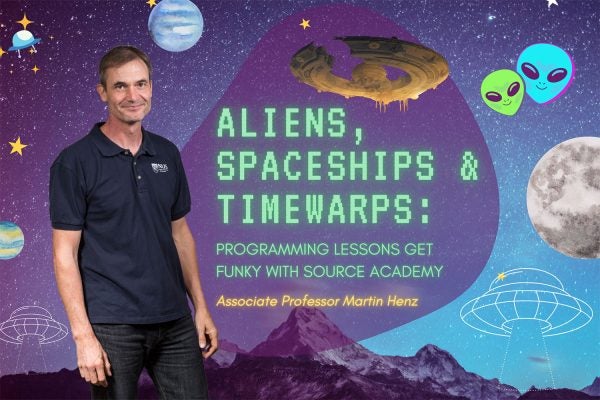
Martin Henz is an Associate Professor at the National University of Singapore , affiliated with the School of Computing and its Department of Computer Science . His academic journey includes an M.Sc. in Computer Science from Stony Brook University (1993) and a Dr.rer.nat. in Computer Science from Saarland University (1997). He has also worked as a Research Scientist at the German Research Centre for Artificial Intelligence. Research Focus : Scalable Experiential Learning, Systems for Teaching/Learning, AI in Education, Programming Languages, Algorithms, and Constraint Programming. Key Projects : Source Academy (immersive programming environment), Deep Teaching (LMS enhancements), and NUS Seafarers (maritime experiential learning). Publications span education technology, programming languages, and sustainable engineering, with recent works focusing on JavaScript-based pedagogy, automated question generation, and electric vehicle conversions. He supervised Rahul Singhal 's PhD, leading to the educational startup Cerebry, and co-founded Workforce Optimizer Pte Ltd with Alan Sevugan. Awards : NUS Annual Digital Education Award (2021) NUS Annual Teaching Excellence Award (2016/17) Fulbright Scholarship (1990) Startup @ Singapore Champion (2001)
Andreas Maier is a Researcher at the University of Hamburg's Faculty of Mathematics, Informatics and Natural Sciences, affiliated with the Computational Systems Biology department. He began his PhD in May 2021 with Cosy.Bio (Center for Systems Biology) at UHH, focusing on drug repurposing projects such as REPO-TRIAL. Previously, he completed a Bioinformatics master's thesis at TUM (Technical University of Munich), developing a web application for analyzing molecular disease networks. His research interests emphasize network medicine, drug repurposing, and computational tools for biomedical discovery. He has contributed to platforms like NeDRex-Web, Drugst.One, and BioCypher, which democratize access to systems medicine workflows. His work bridges heterogeneous data integration, federated learning for rare diseases, and quantum computing applications in genetics. Maier's publications highlight innovations in knowledge graph-based drug discovery, privacy-preserving federated learning, and single-cell network analysis. He actively develops open-source bioinformatics tools to address challenges in disease module identification and patient stratification. His projects align with the REPO4EU consortium and other collaborative initiatives in translational bioinformatics.
Weiwen Jiang is a tenure-track Assistant Professor in the Department of Electrical and Computer Engineering at George Mason University (GMU), affiliated with the College of Engineering and Computing (CEC). He leads the JQub lab, focusing on hardware/software co-design for computing systems, spanning classical (FPGAs, ASICs) and quantum computing applications in AI-driven fields like medical imaging and geophysics. Prior to GMU, he held a postdoctoral position at the University of Notre Dame and earned his PhD in Computer Science from Chongqing University with a joint PhD in Electrical and Computer Engineering from the University of Pittsburgh. His research emphasizes quantum computing, AI accelerators, and domain-specific computing. Notable achievements include the 2025 NSF CAREER Award, ACM Sigda Meritorious Service Award (2024), and IEEE QuantumWeek Best Paper Award (2023). His work is funded by NSF, DoE, ARO, Meta, and Leidos. He co-chaired IEEE QuantumWeek (2023–2025) and created workshops like StableQ at ESWEEK 2023. Key contributions include developing frameworks like QuPAD for quantum learning and JQub's AI-driven geophysical and medical imaging tools. His lab graduated Dr. Yi Sheng (now at University of South Florida) and Dr. Zhepeng Wang (Amazon Applied Scientist). Current research explores quantum machine learning, noise mitigation, and fairness in AI for edge devices.
Xiaodong Yu is an Assistant Professor in the Department of Computer Science at Stevens Institute of Technology (since 2023), leading the Advanced Parallel and distributEd Computing and Systems (APECS) lab. Previously, he served as an Assistant Computer Scientist at Argonne National Laboratory (2019–2023) and a Scientist-at-Large at the University of Chicago’s Consortium for Advanced Science and Engineering (2022–2023). He holds a Ph.D. in Computer Science from Virginia Tech (2019). His research focuses on parallel/distributed computing systems, next-generation AI hardware, high-performance MLSys for large language models (LLMs), and federated learning communication/privacy. Over 50 peer-reviewed publications appear in top-tier venues like HPDC, ICS, and SC. He leads NSF and DOE-funded projects, including an NSF CRII award (2024–2026) and Argonne LDRD initiatives. Technical leadership roles include serving on conference committees (ICS, SC, IPDPS) and review boards (IEEE TPDS). Key contributions include compressor frameworks for AI accelerators (e.g., DCT-based), MPI collective communication optimizations, and GPU-based ptychographic reconstruction. His work bridges hardware-software co-design for HPC and AI systems. Current advising includes five Ph.D. students at Stevens and prior mentorship of over 10 researchers at Argonne. Professional activities include institutional service (Stevens CS faculty search committee) and roles as finance chair (ISPASS), technical program committee member (DRBSD, IWBDR), and reviewer for journals like Future Generation Computer Systems.
Ali Ghanbari is an Assistant Professor in the Department of Computer Science and Software Engineering at Auburn University's College of Engineering. His research focuses on software engineering, programming languages, and data science, with an emphasis on automated program repair, deep learning, and mutation analysis. He received his Ph.D. in Software Engineering from the University of Texas at Dallas and his M.Sc. and B.Sc. from Amirkabir University of Technology in Tehran, Iran. Education: Ph.D. Software Engineering, University of Texas at Dallas M.Sc. Software Engineering, Amirkabir University of Technology B.Sc. Software Engineering, Amirkabir University of Technology Research Interests: Dr. Ghanbari's work spans automated program repair, deep neural network analysis, and mutation-based fault localization. He explores techniques to enhance software quality through methods like patch correctness assessment, object similarity-based prioritization, and optimization of mutation testing frameworks. His contributions include frameworks such as PRF and tools like Shibboleth for hybrid patch evaluation. Publications Trends: His recent work highlights advancements in accelerating mutation analysis, improving deep learning models via modular decomposition, and refining automated repair techniques. Notable contributions include Rocq for goal clone detection and MeMu for faster mutation analysis. Awards & Grants: No specific awards or grants mentioned in the provided materials. Advising & Labs: While no advisees are listed, his research group likely focuses on program repair and deep learning applications. His work is supported by datasets like Defexts, which provides reproducible real-world bugs for JVM languages.
Biresh Kumar Joardar is an Assistant Professor in the Electrical and Computer Engineering Department at the University of Houston's Cullen College of Engineering. He holds a BE from Jadavpur University (2016) and PhD from Washington State University (2020), with postdoctoral training at Duke University as a Computing Innovation Fellow. His research integrates machine learning with hardware design to develop efficient deep learning accelerators, ReRAM-based architectures, and heterogeneous manycore systems. Current projects focus on enhancing reliability, security, and performance of AI hardware through in-memory computing and 3D integration techniques. Research themes include hardware security (e.g., Rowhammer mitigation), fault-tolerant neural network training, and hardware-software co-design for bioinformatics. Recent articles explore energy-efficient architectures for graph neural networks and cross-layer optimization for AI workloads. Awards: Best Paper Award, International Symposium on Networks-on-Chip (NOCS 2019) Joardar leads the Heterogeneous and In-Memory Computing Lab, seeking PhD students with backgrounds in VLSI, computer architecture, or machine learning. His work has been supported by NSF and industry partnerships.
Alexandru G. Bardas is an Associate Professor at the University of Kansas in the Department of Electrical Engineering & Computer Science (EECS) and the Institute for Information Sciences (I2S) . He received his PhD from Kansas State University under advisors Xinming (Simon) Ou and Scott A. DeLoach. His research focuses on cybersecurity from a systems perspective , including moving target defenses, security operations center (SOC) metrics, DevOps security, power grid cybersecurity, and defensive technologies for political activists. He explores UDP-based DDoS detection, DNS traffic analysis, and the intersection of AI with cybersecurity, emphasizing foundational knowledge over tool-specific training. Key research areas: Cybersecurity, Systems Security, Moving Target Defenses, SOC Metrics, DevOps Security Recent publications in ACSAC 2024 , USENIX Security 2024/2023 , and IEEE Security & Privacy 2022 Dr. Bardas has received significant recognition including: NSF CAREER Award (2022) for SOC automation Bellows Scholar (2021) at KU NSA SoS Honorable Mention (2023) He actively advises students across disciplines, with graduates now at Sandia National Laboratories , Blue Cross Blue Shield , and Pacific Northwest National Laboratory . Dr. Bardas participates in NSF grant reviews , serves on program committees for SOUPS and MILCOM , and leads outreach initiatives like the GenCyber Summer Camp .
Pekka Abrahamsson is a Professor at the Faculty of Information Technology and Communication Sciences at Tampere University , Finland. He actively contributes to research in Software Engineering , Artificial Intelligence , and AI Ethics , with recent work focusing on generative AI, multi-agent systems, and ethical software design. Published over 42 research outputs (2016–2025) Editorial roles in multiple international conferences (2016, 2019, 2022–2024) His research emphasizes practical applications of AI in software development, including tools like ChatGPT for full-stack coding, multi-agent systems for requirements engineering, and frameworks for AI ethics in software practices. He also explores challenges in continuous software engineering and quantum computing architecture. Key publication trends (2024–2025) include: Agile methodologies enhanced by AI Ethical alignment in AI systems Autonomous software development platforms AI tool adoption in programming education Quantum software architecture reviews Technical debt in embedded systems Awards and recognitions : PlumX Metrics highlight 1 scientific prize (unspecified) High readership on platforms like Mendeley (up to 211 readers) Multiple citations in Scopus (up to 53 citations for quantum computing work) Grants and collaborations include global studies on work-from-home impacts, AI tool usage in programming courses, and projects like CodePori for autonomous development. His work influences policy and industry practices, particularly in AI ethics and multi-robot systems.