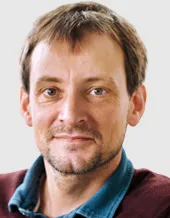
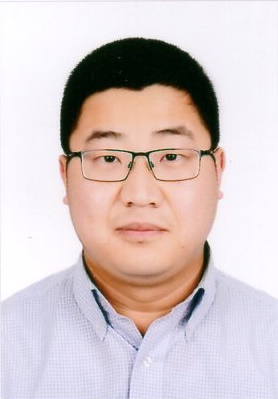
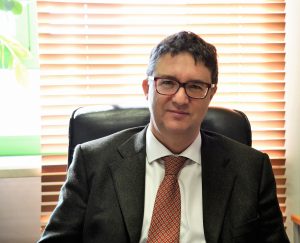
Angelo Sotgiu is an Assistant Professor at the University of Cagliari's Department of Electronic and Computer Engineering. His research focuses on machine learning security, adversarial attacks, and malware detection. He holds an MSc in Telecommunication Engineering and a PhD in Electronic and Computer Engineering from the University of Cagliari. During his PhD (2019–2023), he conducted a visiting research period at CISPA Helmholtz Center for Information Security (Saarbrücken, Germany). He has worked as a Research Collaborator for the National Interuniversity Consortium for Informatics (CINI) from 2022–2023. His work emphasizes adversarial robustness, AI security, and practical defenses against attacks on machine learning systems. Key contributions include the ImageNet-Patch dataset for adversarial patch benchmarking, the secml Python library for secure ML, and frameworks like Fader for fast adversarial example rejection. His research bridges theoretical advancements with real-world cybersecurity applications.
Ruben Portugues is a Professor at the Technical University of Munich (TUM) within the Institute of Neuroscience, part of the TUM School of Medicine. His academic journey includes a PhD in theoretical physics from the University of Cambridge, followed by postdoctoral research in neurobiology at Harvard University and the Max Planck Institute of Neurobiology. He leads the Focus Group on 'Brain Circuit Function and Dysfunction.' His research focuses on understanding how the brain encodes sensory information and translates it into motor actions. Using zebrafish as a model organism, he employs advanced techniques like whole-brain calcium imaging, electrophysiology, and computational modeling to study sensorimotor integration and neural circuit dynamics. Key projects involve mapping neural activity during behaviors, analyzing cerebellar circuits, and investigating mechanisms of learning and adaptation. Portugues has contributed to breakthroughs in understanding rheotaxis, optomotor responses, and the neural basis of decision-making. His lab develops tools like the stytra software for behavioral experiments and collaborates on anatomical atlases using brainrender . His work bridges theoretical physics and experimental neuroscience, emphasizing interdisciplinary approaches. He holds the Rudolf Mößbauer Tenure Track Fellowship and has mentored numerous researchers. His lab is affiliated with the TUM Institute for Advanced Study (TUM-IAS), contributing to initiatives in advanced computation and neuroscience.
Fraser Brown is a Courtesy Professor in the Department of Electrical and Computer Engineering at Carnegie Mellon University, affiliated with the College of Engineering. His research focuses on the intersection of systems, programming languages, and security, with particular emphasis on verified compilers, cryptographic applications, and finding vulnerabilities in real systems. He holds a position at the university's Pittsburgh campus located at 5000 Forbes Avenue. His research interests include compiler optimization verification, cryptographic protocol compilation, and secure execution environments. Notable projects involve verified components of browser JIT compilers and compilation infrastructure for cryptographic use cases. He has contributed to frameworks like WaVe (verifiably secure WebAssembly runtime) and Icarus (trustworthy JIT compilers). Recent publications (2021–2025) explore topics such as zero-knowledge proof compilers, secure MPC protocols, and microarchitectural vulnerability mitigation. His work frequently combines formal verification techniques with practical system implementations to enhance software and hardware security. Fraser has collaborated on grants like the SaTC-funded project on verified secure sandboxed systems. While no formal advisees are listed, his research contributions reflect collaborative efforts in academic and industrial contexts. His work is disseminated through venues like programming language and security workshops (e.g., PLAS 2023) and peer-reviewed journals/conferences.
Dr. Robert Chatley is a Professor and Director of the Software Engineering Practice group and DoC EdTech Lab at Imperial College London. He holds a PhD from Imperial and has extensive industry experience as a senior engineer and consultant before transitioning to academia. His work bridges industry and academia, focusing on improving software engineering education and developer productivity. Education: Completed his PhD at Imperial College London. His research emphasizes practical software engineering problems, particularly in education, serverless computing, and developer tooling. He leads initiatives to integrate DevOps practices into curricula and has published widely on topics like lean learning and agile methodologies. Research Interests: Software engineering education, serverless computing, developer experience, software testing, and programming languages. His work includes tools like PerfMock for performance testing and Diggit for automated code review, alongside frameworks like Nimbus for serverless applications. Articles highlight trends in education technology, serverless architectures, and developer tools. Collaborations include the Horizon 2020 RADON project and international workshops. He advises prospective PhD students interested in industry-relevant software engineering challenges. Labs/Teams: Leads the Software Engineering Practice group, focusing on industrial skills and tools. Collaborates with the Royal College of Art and global institutions. His consultancy, Develogical, extends his industry-academia bridge.
Dr. Sergio Davies serves as a Senior Lecturer in the Department of Computing and Mathematics at Manchester Metropolitan University, leveraging extensive experience from both academic research and industry leadership. His career spans the University of Manchester's SpiNNaker project, the European Human Brain Project, and strategic roles in hardware/software development before returning to academia in 2019. His educational foundation includes an MSc-equivalent in Telecommunication Engineering from the University "Federico II" in Naples and a Ph.D. in Computer Science from the University of Manchester (2012). MSc-equivalent: Telecommunication Engineering, University "Federico II", Naples Ph.D.: Computer Science, University of Manchester (2012) Davies specializes in spiking neural networks and neuromorphic computing, with pioneering work on the SpiNNaker architecture. His current research focuses on applying these technologies to computer network security and robotics, developing event-driven systems for real-time applications like gesture recognition and intrusion detection. This work bridges theoretical neuroscience with practical engineering challenges, emphasizing low-power, real-time operation. Analysis of his 15 most recent publications (2012-2025) reveals a clear evolution from foundational SpiNNaker development toward applied security and robotics. Recent work integrates event-based vision with neuromorphic hardware for multi-object tracking and gesture recognition, while maintaining core contributions to learning algorithms like STDP. The consistent thread is practical implementation on neuromorphic platforms for security-critical applications. Professional recognition includes: Member of the Institution of Engineering and Technology (MIET) Member of the Institute of Electrical and Electronics Engineers (MIEEE) Fellow of the Higher Education Academy (FHEA) His industry experience as an IT consultant at KPMG and subsequent leadership of hardware/software teams informs his applied research approach. Though specific student advisees aren't listed, his work involves mentoring through the SpiNNaker ecosystem and Human Brain Project collaborations. Current projects focus on neuromorphic security solutions developed through university-industry partnerships. Davies operates within Manchester Metropolitan University's neuromorphic computing research group, maintaining active ties to the original SpiNNaker team at Manchester and the Human Brain Project consortium. His lab focuses on translating theoretical neural models into deployable security and robotics systems using SpiNNaker hardware.
Prof. Dr. Stefan Edlich is a Professor at the Beuth University of Applied Sciences Berlin, leading the Data Science Master program and the Data Science Lab. He holds a Dr. med. Ing. and has authored 13 books, including the world's first NoSQL book. His research focuses on NoSQL databases, Big Data systems, AI applications in health, industry, and education, and data quality. Edlich organizes conferences on Big Data, functional programming, and Clojure, and manages the NoSQL Archive. He has been part of the Berlin Big Data Center (BBDC) since 2014. His work spans over 60 publications, with recent contributions in AI-driven healthcare, blockchain, and distributed systems. He advises students and maintains strong industry ties with companies like Zalando, Amazon, and IBM. His teaching excellence has earned him the 'Top 25 Lecturer' award multiple times at Beuth. Edlich's collaborations include projects like the MOMO mobile app for machine learning and the BBC-DaaS open-data platform. Research interests include data science applications in biodiversity, HCI innovations, and education technology. He actively contributes to open-source projects like Clarango (Clojure driver for ArangoDB) and advocates for data literacy through the Stifterverband initiative.
Sharon Simmons is a Professor of Computer Science at James Madison University (JMU), where she has served since 2010. Previously, she held academic positions at the University of West Florida (2001–2010) and the University of West Georgia (1997–2001). She holds a Ph.D. in Computer Science from The College of William and Mary (1999), an M.S. (1991), and a B.S. (1984) in Computer Science from the University of Southern Mississippi. Her research focuses on Program Comprehension Monitoring, Distributed Systems, and Network Security, with additional expertise in Cybersecurity, Power Systems Control, and Software Engineering. Her educational contributions include pioneering work in K-12 computer science outreach and curriculum design, particularly through backward design methodologies and broadening participation initiatives. She has also developed innovative tools like the SOA Laboratory for education and research. Her publications span technical domains such as intelligent multi-agent frameworks for power systems, SOA application maintenance, and AI-driven educational tools. While no scientific awards are explicitly listed, her work demonstrates sustained engagement with both technical and pedagogical challenges in computer science. Her professional activities include advising on technical course development (e.g., Web Services and SOA) and maintaining a lab focused on SOA innovation. She is affiliated with the College of Integrated Science & Engineering at JMU, reflecting her interdisciplinary approach to science and technology education.
Robert A. Nehmer is a Professor of Accounting at Oakland University's School of Business Administration, where he has served since at least 2006 (evidenced by a 10-Year Service Award in February 2016). His research bridges accounting theory with cutting-edge technology, focusing on internal controls, continuous auditing frameworks, and emerging systems like blockchain and drone technology. Dr. Nehmer teaches assurance and accounting information systems courses at both graduate and undergraduate levels from his office in Elliott Hall, Room 200H. Dr. Nehmer's academic foundation was built at the University of Illinois at Urbana-Champaign: Ph.D. in Accounting Master's in Accountancy Bachelor's in Accountancy His research agenda centers on formal systems and technological disruption in auditing, with current projects exploring XBRL representations, distributed ledger technologies, and software agent implementations for internal controls. Notable work includes pioneering research on drone applications in auditing that led to an ongoing KPMG collaboration, alongside investigations into blockchain-based assurance frameworks and financial ontologies. His methodology often combines mathematical modeling with practical implementations in transaction processing environments. Analysis of his 15 most recent publications reveals a clear evolution from foundational XBRL and agent-based modeling (2009-2016) toward immersive technologies like IoT, blockchain, and AI (2020-2024). The research trajectory demonstrates increasing industry relevance, with recent work directly addressing audit evidence frameworks for drone-collected data and ChatGPT applications in accounting education. Cross-cutting themes include risk assessment formalization, control system optimization, and semantic representation of financial concepts. Dr. Nehmer's contributions have been recognized through: University Service Award, Oakland University/SBA (April 2016) 10 Year Service Award, Oakland University (February 2016) As an active researcher with strong industry partnerships including KPMG, ISACA, and XBRL-US, Dr. Nehmer likely secures research funding through collaborative projects and professional organization engagements. His extensive publication record in top journals like the Journal of Emerging Technologies in Accounting suggests successful grant acquisition for technology-focused accounting research. While specific student advising details aren't provided, his graduate teaching responsibilities indicate mentorship of master's and doctoral candidates in accounting information systems.
Dr. Xiaohui Zhao serves as a Senior Lecturer at the Institute of Innovation, Science and Sustainability (IISS), Federation University Australia, based at the Mt Helen campus. His academic role bridges business process theory with practical IT implementation, focusing on real-time analytics integration within organizational workflows. His educational foundation includes: Bachelor of Engineering (Computer Science and Technology) Master of Engineering (Computer Science and Technology) PhD in IT from Swinburne University of Technology (2007) Zhao's research centers on Business Process Management with specialized expertise in artifact-centric modeling, situational awareness systems, and real-time business intelligence. His work demonstrates how data analytics can dynamically optimize business operations through context-aware process adjustments. Current projects explore hyper-automation frameworks that merge AI-driven decisioning with traditional BPM workflows. Analysis of his 15 most recent publications reveals a consistent trajectory from foundational process modeling (2010-2015) toward real-time analytics integration (2016-2022). Key thematic clusters include artifact-centric process specialization, resource scheduling under constraints, and RFID-enabled business logic implementation. His interdisciplinary approach spans computer science, operations research, and business analytics. Dr. Zhao actively mentors doctoral candidates including Sira Yongchareon (artifact-centric BPM), Jiajie Xu (resource optimization), and Shangfeng Hu (knowledge networks). His research program is supported by competitive grants from: Ministry of Science and Innovation (New Zealand) Department of Education and Training (Australia) Department of Foreign Affairs and Trade (Australia)
José María Conejero is an Associate Professor in the Department of Systems Informatics and Telematics at the University of Extremadura, Spain. He holds a PhD in Computer Science (2010) from the same institution. His research focuses on Model-Driven Software Development, Big Data, Machine Learning, Web Engineering, and Educational Technology. He has published over 50 articles in journals and conferences, and actively participates in program committees. Research interests include software modernization, reproducible data science workflows, legacy system migration (e.g., MigraSOA project), and AI applications in education. He co-founded MetrikaMedia, a university spin-off startup. Notable contributions include model-driven approaches for service-oriented architectures, aspect-oriented software metrics, and smart city applications using unmanned systems. His educational contributions involve developing recommender systems for student enrollment decisions and analyzing ChatGPT's impact on engineering education assessment methods. He has received the 'Best Paper' award at JENUI 2023. Key projects include semantic alignment of business processes with web services, aspect mining methodologies, and DSL development for smart home automation (HAAIS-DSL). He has also explored crosscutting concerns in software product lines and technical debt impact analysis.
Nicola Blefari Melazzi is a Full Professor of Telecommunications at the University of Rome Tor Vergata, leading the Department of Electronic Engineering since 2002. He has held pivotal roles, including Director of the National Inter-University Consortium for Telecommunications (CNIT) from 2017 to 2023 and current President of CNIT and the RESTART Foundation (managing a €116M research program). His expertise spans 5G/6G networks, electromagnetic field exposure analysis, network security, and IoT applications. He has coordinated over 30 EU projects, including leadership in the 5G Public-Private Partnership and the 6G Infrastructure Association. Education: Full Professor since 2002 at University of Rome Tor Vergata. Roles include Chair of PhD programs in Telecommunications Engineering and Department Director (2010-2016). Research focuses on telecommunications network performance, 5G/6G architecture, and security. Notable work includes studies on electromagnetic field exposure from 5G infrastructure, positioning systems, and wireless network integrity. His contributions address regulatory and health impacts of dense 5G deployment, as well as innovations in network architecture design and cybersecurity. Contributions include leadership in EU initiatives like the 5G Infrastructure Association (now 6G IA) and the Smart Networks and Services Joint Undertaking (funded €900M by the European Commission). He has authored/co-authored ~260 papers, with a focus on experimental validation and real-world network analysis. Labs/Teams: Active in CNIT (41 universities), RESTART Foundation, and collaborations with industry leaders like Ericsson and Telecom Italia. His teams investigate emerging technologies such as SDN/NFV, IoT integration, and information-centric networking for disaster scenarios.
Anh Nguyen-Duc is a researcher affiliated with the University of South-Eastern Norway (School of Business) and Norwegian University of Science and Technology , focusing on Software Engineering , Artificial Intelligence , and Startup Research . His work bridges technical and entrepreneurial aspects of software development. University of South-Eastern Norway, School of Business Norwegian University of Science and Technology Research Themes : Software startups, AI integration in development, agile practices, technical debt, and requirements engineering. Recent studies include fairness in educational machine learning models and generative AI adoption in software organizations. Collaborative work with Pekka Abrahamsson, Xiaofeng Wang, and Kai-Kristian Kemell. Key Trends : 2025 studies on AI fairness and generative AI in software processes; 2024 work on hybrid work impacts; 2023 research on startup AI tools and education. Advising & Grants : Collaborates with academic institutions and industry partners on empirical studies about software development practices.
Associate Professor Cesar Ortega-Sanchez is affiliated with Curtin University's School of Electrical Engineering, Computing and Mathematical Sciences (EECMS), where he holds the role of Associate Professor since 2005. He has served in leadership roles including Academic Lead of the Engineering Foundation Year (2015-2022), Associate Dean of Teaching and Learning (2013-2014), and Chair of IEEE WA Section (2016-2017). His expertise spans bio-inspired systems, embedded systems, robotics, and engineering education. Education: BEng (Hons) from the Metropolitan Autonomous University (Mexico), MSc from Brunel University (UK), and PhD from the University of York (UK). Specializes in curriculum design, assessment methodologies, and promoting student employability. Mentor of Curtin Robotics Club and IEEE Curtin Student Branch since 2009. Research Interests: Embedded systems, bio-inspired architectures, educational pedagogy, and indigenous content integration in engineering curricula. Over 60 publications in areas like FPGA-based assistive technologies, smart home systems, and energy storage monitoring. Awards include the 2015 Australian Office of Learning and Teaching Citation and M.K. Stott Prize (2000). Teaching roles include leading ELEN1000 (Electrical Systems) and ENGR1000 (Engineering Connections), with a focus on innovative teaching methods like project-based learning (e.g., 'Crazy Machine' lab projects). Active in educational committees at university and national levels.
Enrico Corradini is a Researcher at the Department of Information Engineering , School of Engineering, Università Politecnica delle Marche (UNIVPM), Italy. His work focuses on information systems, cybersecurity, and social network analysis using network theory and machine learning approaches. Academic Rank: Researcher Research Focus: Cybersecurity, Social Network Analysis, Machine Learning, Network Theory Contact: e.corradini@univpm.it His recent publications demonstrate expertise in anomaly detection for Internet of Everything ecosystems, multilayer network modeling, and social platform analysis. Office hours available every Tuesday 10:30-12:30 at UNIVPM campus.
Xylomenos Georgios is an Associate Professor at the Department of Informatics, School of Information Sciences and Technology, Athens University of Economics and Business. His research focuses on computer networks, telecommunications networks, and systems software. He has published numerous papers in top-tier networking conferences and journals, and has led multiple EU-funded research projects in the field of future internet technologies. Degree in Computer Science, Athens University of Economics and Business, 1993 Master (MS) in Computer Science, University of California, San Diego, 1996 Doctorate (Ph.D.) in Computer Science, University of California, San Diego, 1999 Xylomenos Georgios specializes in Computer Networks, Telecommunications Networks, and Systems Software . His research has particularly focused on enhancing internet performance over wireless links, multimedia broadcast/multicast services, information-centric networking, and reliable storage systems. He has made significant contributions to link layer architectures, quality of service support, and error control mechanisms for wireless networks. His work bridges theoretical networking concepts with practical implementations, addressing real-world challenges in modern communication systems. His publication record shows a clear evolution from foundational work on TCP performance and wireless link protocols to more advanced concepts like publish-subscribe internet technologies and content-centric networking. The research trajectory demonstrates consistent focus on performance optimization in wireless environments, with recent work expanding into multimedia delivery for network music performance and secure data spaces. His publications appear in leading venues including Computer Networks, IEEE Communications Magazine, and Wireless Communications and Mobile Computing. Best non-student paper award at European Wireless (EW) 2007 Xylomenos Georgios has supervised doctoral research, including a dissertation on 'Multi Service Link Layers: An Approach to Enhancing Internet Performance over Wireless Links.' He has secured substantial research funding through multiple EU projects including PURSUIT, PSIRP, EIFFEL, and B-BONE. Currently, he leads newer initiatives including AViD-NMP, SeEDS, and TENeMP projects, demonstrating continued relevance and leadership in networking research. As Scientific Director of the AUEB Network Management Center, he bridges theoretical research with practical network operations. His current research focuses on integrating 5G/6G networks with network music performance, implementing Data Spaces compliant with ETSI standards on Named Data Networking architecture, and developing telepresence-enhanced network music performance applications using holograms and realistic user representations.