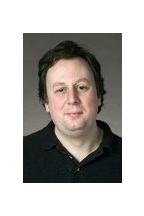
Paul Ward is an Associate Professor in the Department of Electrical and Computer Engineering at the University of Waterloo and a faculty fellow at the IBM Centre for Advanced Studies. He holds a PhD (2002) and MASc (1993) from Waterloo and a BScE (1998) from the University of New Brunswick. His research focuses on distributed systems management, dependable systems, autonomic computing, wireless networks, and IoT. Key areas include fault detection in web services, service-oriented networking, and optimization of wireless mesh networks. Ward's publications span computer networks, cognitive science, and sports analytics, reflecting interdisciplinary applications of computational methods. He holds two patents in mobile web services and fault resolution.
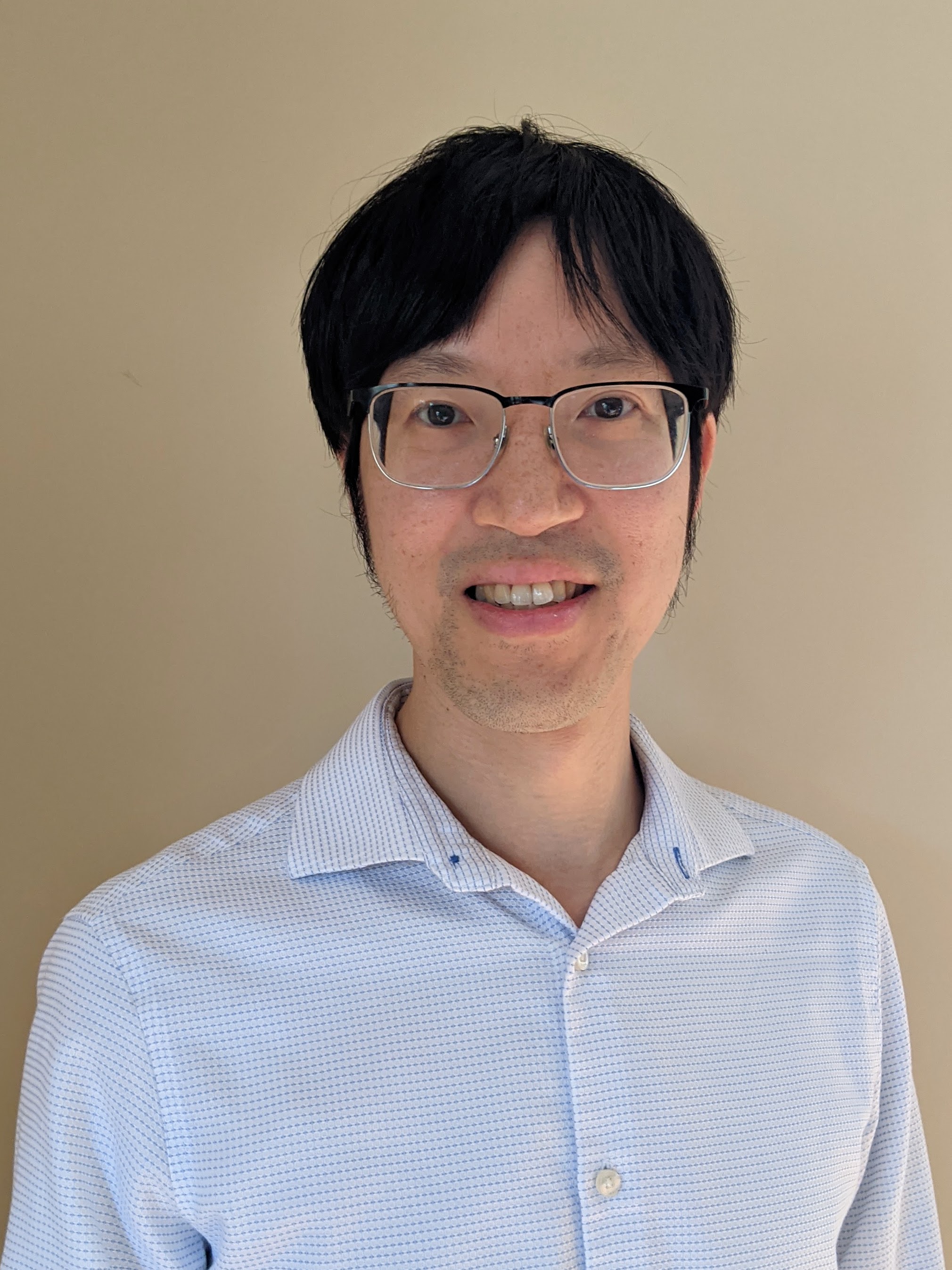
Samuel W.K. Wong is an Associate Professor in the Department of Statistics and Actuarial Science at the University of Waterloo. He holds a Ph.D. in Statistics from Harvard University (2013) under Prof. Samuel Kou. His research focuses on statistical methodology for complex data science challenges in protein structure modeling, dynamic systems inference, and reliability engineering of wood-based products. He has held academic positions at the University of Florida (2013–2018) and has been at Waterloo since 2018. His research interests include Bayesian computation, statistical inference for dynamic systems, and spatial-temporal data analysis. Notable contributions include the development of manifold-constrained Gaussian processes (MAGI package) and sequential Monte Carlo methods for protein folding studies. He has advised over 15 graduate students and researchers, many of whom are now in academic or industry roles worldwide. Wong has received teaching distinctions at Harvard and holds awards including the Nash Medal (2008) for academic excellence. His work bridges computational statistics with applications in bioinformatics, structural engineering, and environmental science. He has published extensively in top-tier journals like Journal of Computational and Graphical Statistics and Biometrics , and collaborates with wood scientists to improve real-time lumber quality assessment using laser imaging data. His teaching portfolio includes courses on probability theory, statistical inference, and spatial data analysis at both undergraduate and graduate levels. Beyond academia, he maintains an active passion for classical piano performance, having performed recitals combining music with his statistical research interests.
Bjorn Sandstede is the Alumni-Alumnae University Professor of Applied Mathematics at Brown University. His research focuses on applied dynamical systems, nonlinear waves, pattern formation, and computational biology. He holds a PhD from the University of Stuttgart and has held faculty positions at The Ohio State University and the University of Surrey before joining Brown in 2008. Sandstede has received numerous awards, including the SIAM J.D. Crawford Prize and the Royal Society Wolfson Research Merit Award. He served as Department Chair at Brown and directed the Data Science Initiative. His work involves interdisciplinary collaborations, such as modeling zebrafish stripe formation and developing computational tools like SCOT for single-cell data integration. Sandstede also mentors extensively, advising over 30 PhD students and postdoctoral researchers. He leads the NSF-funded Institute for Computational and Experimental Research in Mathematics (ICERM) and contributes to initiatives promoting diversity and inclusion in STEM. Education: PhD in Mathematics, University of Stuttgart Undergraduate Degree, University of Heidelberg Research Interests: Applied Dynamical Systems Nonlinear Waves and Pattern Formation Computational Biology Data Science PDE Analysis Awards and Recognition: Alfred P. Sloan Research Fellowship SIAM J.D. Crawford Prize Royal Society Wolfson Research Merit Award Elsevier Jack Hale Award Teaching Excellence Awards from Brown University Fellow of the AMS and SIAM Grants and Leadership: Principal Investigator of NSF grant establishing ICERM Director of Brown's Data Science Initiative Member of Research Advisory Board and Tenure Committees Labs and Teams: Leads the Sandstede Lab at Brown, focusing on computational biology and dynamical systems. Collaborates with the Volkening Lab on zebrafish pattern modeling and the Singh Lab on optimal transport methods.
Melissa C. Smith is a Professor of Electrical and Computer Engineering and Associate Dean for Graduate Studies at Clemson University. She holds a Ph.D. from the University of Tennessee and degrees from Florida State University. Her research focuses on machine learning, reconfigurable computing, and high-performance systems, with applications in embedded systems and interdisciplinary scientific advancements. Before joining Clemson in 2006, she was a research associate at Oak Ridge National Laboratory (ORNL), contributing to projects like the Spallation Neutron Source and PHENIX experiments. Education: Ph.D., Electrical and Computer Engineering, University of Tennessee M.S., Electrical Engineering, Florida State University B.S., Electrical Engineering, Florida State University Research Interests: Machine Learning and AI High-Performance and Reconfigurable Computing System Performance Modeling Embedded Systems Articles Summary: Her recent work spans machine learning applications, GPU/FPGA architectures, speech enhancement, and medical systems. Key themes include optimizing heterogeneous computing for real-time and scientific workloads, and advancing interdisciplinary solutions through architecture-application co-design. Lab & Collaborations: Leads the Future Computing Technologies Lab and collaborates with ORNL and national labs on projects like GEMmaker and HPC-enabled medical systems.
Shaowu Pan is an Assistant Professor of Aerospace Engineering at Rensselaer Polytechnic Institute (RPI), affiliated with the Future of Computing Institute (FOCI) and the Scientific Computation Research Center (SCOREC). He holds a Ph.D. in Aerospace Engineering and Scientific Computing from the University of Michigan and completed a postdoctoral fellowship at the University of Washington’s AI Institute in Dynamic Systems. Education: Ph.D., University of Michigan, 2021 M.S., University of Michigan, 2015 B.E. & B.S., Beihang University, 2013 Research Interests: His work focuses on the intersection of computational fluid dynamics, data-driven modeling, and scientific machine learning. Key areas include operator-theoretic modeling of fluid flows, generative AI for physical systems, and physics-informed neural networks. He develops novel algorithms for reduced-order modeling and stability-preserving surrogate models, with applications in turbulence, plasma physics, and aerodynamics. Key Contributions: Developed PyKoopman , an open-source Python package for Koopman operator approximation. Pioneered mesh-agnostic representation methods like Neural Implicit Flow for spatio-temporal data. Advanced physics-informed neural networks for solving Grad-Shafranov equations and plasma equilibrium problems. Awards & Recognition: John Tichy Junior Faculty Travel Grant (2024) Chinese Outstanding Student Abroad Award (2021) Richard and Eleanor Towner Prize Nominee (2019) Teaching & Mentorship: He teaches courses like MANE 2110: Numerical Methods and Programming for Engineers and mentors multiple Ph.D., master’s, and undergraduate students. His doctoral committee involvement spans interdisciplinary projects in fluid dynamics and AI. Grants & Software: Lead PI for NSF-funded projects on neural representation learning for turbulent flows. Developed software tools like spKDMD and Warp-DG for dynamics analysis and CFD simulations. Labs & Collaborations: Collaborates with institutions like Los Alamos National Laboratory and actively participates in conferences (e.g., AIAA SciTech, SIAM). His research bridges computational science, machine learning, and fluid dynamics to address complex nonlinear systems.
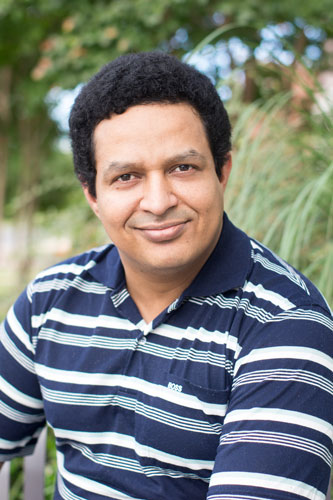
Ragib Hasan is a Professor in the Department of Computer Science at the University of Alabama at Birmingham (UAB), affiliated with the College of Arts and Sciences. His research focuses on cybersecurity, with specialties in cloud security, IoT systems, digital forensics, and biomedical device security. He leads the Secure and Trustworthy Computing Lab (SECRETLab) and contributes to the UAB Center for Cyber Security and NIST Cloud Forensics Working Group. Education: M.S. and Ph.D. in Computer Science from the University of Illinois at Urbana-Champaign, followed by a postdoctoral fellowship at Johns Hopkins University. Affiliations: NIST Cloud Forensics Working Group, UAB Center for Cyber Security. His research addresses threats in smart cities, autonomous vehicles, and healthcare technologies. Key interests include securing IoT networks, mitigating cyberattacks on critical infrastructure, and advancing forensic methodologies in cloud environments. Recent work emphasizes threat modeling for connected vehicles, medical devices, and AI-driven systems. Dr. Hasan’s funding comes from the Department of Homeland Security, NSF, ONR, and industry partners like Facebook, Google, and Amazon. His awards include the NSF CAREER Award (2014), Google RISE Award (2013), and Deutsche-Welle Best of Blogs (2014) for his BanglaBraille initiative. Grants & Projects: Supported by DHS, NSF, and corporate collaborations. Outreach: Founded Wikimedia Bangladesh, Shikkhok.com (STEM education platform), and contributed to Bangla and English Wikipedia. His lab develops frameworks like StreetBit for pedestrian safety and InSight for emergency alert systems, integrating Bluetooth beacon technology to enhance urban security and sustainability.
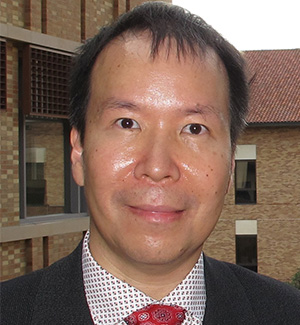
Professor Albert Cheng is a faculty member in the Department of Computer Science at the University of Houston. His research focuses on real-time systems, cyber-physical systems, smart cities, and embedded systems with societal impacts. He has authored over 270 publications and a textbook on real-time systems. Cheng holds roles as an Associate Editor for the IEEE Transactions on Knowledge and Data Engineering and ACM Computing Surveys. His research interests span real-time scheduling, machine learning applications, and systems optimization. Recent work includes vehicular traffic modeling for epidemiological risk reduction, quantum computing response time analysis, and satellite mission planning. Awards include Fulbright Specialist, Distinguished ACM membership, and IEEE Senior Member status. Cheng’s articles demonstrate expertise in real-time scheduling algorithms, cyber-physical systems development, and smart city infrastructure. His contributions bridge theoretical computer science with practical implementations in transportation, healthcare, and aerospace domains. Ongoing efforts include fault-tolerant systems, energy-efficient scheduling, and CPS education initiatives. Awards: Fulbright Specialist, ACM Distinguished Member, IEEE Senior Member, Institute of Physics Fellow Labs/Teams: Hewlett Packard Enterprise Data Science Institute (HPE DSI), Research Computing Data Core (RCDC)
Kuanshi Zhong is an Assistant Professor in the Department of Civil and Architectural Engineering and Construction Management at the University of Cincinnati. He holds a PhD from Stanford University (2021) in Civil and Environmental Engineering, with prior degrees from Stanford (Master, 2017) and Tongji University (Bachelor, 2015). His research focuses on earthquake engineering, structural resilience, and advanced computational methods for infrastructure safety. Key research interests include seismic design of tall buildings, probabilistic modeling of structural response (e.g., using Probabilistic Learning on Manifolds), and material failure mechanisms in reinforced concrete. He also explores multi-hazard resilience, regional risk assessment, and software tools for disaster simulation (e.g., R2DTool and EE-UQ). Dr. Zhong has secured grant funding as PI/Co-PI, including a National Science Foundation grant (2023-2026) for equitable building decarbonization strategies and a Concrete Reinforcing Steel Institute grant (2024-2025) for bar performance improvements. He teaches graduate/undergraduate courses on concrete design and structural mechanics. His work spans collaborations with institutions like Stanford University and the SimCenter, contributing to open-source tools for regional loss assessments and hurricane impact modeling. Current projects address cascading hazards, steel reinforcement durability, and high-resolution seismic risk evaluation.
Alan Sussman is a Professor and Associate Chair of Undergraduate Education in the Computer Science department at the University of Maryland. His research focuses on databases, high-performance computing, parallel systems, and educational curriculum development for computing disciplines. He holds a Ph.D. from Carnegie Mellon University (1991) and a B.S.E. from Princeton University (1982). His educational contributions include integrating parallel and distributed computing concepts into early undergraduate courses, supported by NSF-funded initiatives like the CyberTraining program. He has advised students such as Harshit Soora (Master's) and Xiaolong Tian (PhD). His research spans compiler optimizations for parallel programs, distributed data management systems, and scientific workflow frameworks like DYFLOW. He collaborates with UMIACS and contributes to interdisciplinary projects like the TASCS center. Key innovations include VeloxDFS for distributed dataset streaming, compiler techniques for irregular memory access in PGAS programs, and NetCDFaster for geospatial data optimization. His work emphasizes productivity improvements for high-performance applications and curriculum modernization to address emerging computational challenges. Awards: No individual awards explicitly listed; however, collaborator Jik-Soo Kim received a best paper award in 2006. Grants: NSF CyberTraining, TCPP Curriculum Initiative, and Center for Technology for Advanced Scientific Component Software (TASCS). Labs/Teams: Active in UMIACS and interdisciplinary collaborations, including the TASCS center and InterComm framework development.
Lena Simine is an Associate Professor in the Department of Chemistry at McGill University, affiliated with the Faculty of Science. She holds a B.Sc. (2009) and Ph.D. (2015) from the University of Toronto, followed by a postdoctoral fellowship at Rice University (2015–2019). Her laboratory is located in P&P 118A, focusing on developing computational approaches for modeling molecular phenomena in theoretical chemistry and chemical physics. Her research interests center on computational materials design, quantum dynamics, and the application of machine learning to chemistry. Specific areas include simulating amorphous materials, aptamer design, and quantum systems modeling. She teaches CHEM 365 (Statistical Thermodynamics) and CHEM 593 (Statistical Mechanics and Machine Learning for Chemistry). Her work explores interdisciplinary frontiers, such as path-integral simulations, GFlowNets for molecular design, and the physical principles underlying deep learning in materials science. Recent studies highlight innovations like DeltaGzip for binding affinity prediction and the MAP protocol for 3D disordered matter simulations. Her lab’s contributions span computational methods, material innovation, and quantum phenomena, with a focus on advancing both theoretical frameworks and practical applications in chemistry and materials science.
Dr. Thilina Halloluwa is a Teaching Focused Lecturer in the Department of Human-Centred Computing at The University of Queensland (UQ). He holds a PhD in Human-Computer Interaction from Queensland University of Technology (2019) and a Computer Science undergraduate degree from the Sri Lanka Institute of Information Technology. With over 15 years of academic and industry experience, his research emphasizes real-world impact in education technology, financial inclusion, smart agriculture, and HCI. Educational Background: PhD in Human-Computer Interaction, Queensland University of Technology (2019) Bachelor of Computer Science, Sri Lanka Institute of Information Technology Research Interests: Education for All: Leveraging technology to enhance collaborative learning and social experiences in education. Human Money Interaction: Designing ethical AI solutions for financial services, particularly for underserved communities. Smart Agro: Developing AI-driven tools for crop disease detection, yield optimization, and precision agriculture. Software Project Estimation: Improving effort estimation accuracy through explainable AI (Metrix project). Key Contributions: Developed UrbanAgro (tomato disease detection) and BellCrop (bell pepper disease datasets). Pioneered Dhana Labha , a financial management tool for rural Sri Lankan communities. Advanced online exam proctoring systems for low-resource settings. Previous Roles: Lecturer at University of Sydney (2023) Senior Lecturer at University of Colombo (2013–2023) Lab/Team Affiliations: Smart Agro Project: AI-driven agricultural solutions Metrix Initiative: Software project estimation frameworks
Vicente Grau Colomer is a Professor of Engineering Science and Biomedical Image Analysis at the University of Oxford, affiliated with the Institute of Biomedical Engineering. He serves as Director of the Centre for Doctoral Training in Healthcare Innovation and a Professorial Fellow at Mansfield College. His work bridges biomedical engineering, medical imaging, and artificial intelligence. Education: PhD in medical image analysis from Universidad Politécnica de Valencia, Spain. Postdoctoral research at Harvard University and LSU Health Sciences Center. Joined Oxford in 2004, awarded full professorship in 2015. Research focuses on medical image analysis, AI-driven diagnostics, and collaborations between academia, industry, and clinicians. Notable tools include the MSP-tracker software for cellular analysis and advancements in bone marrow fibrosis quantification. Recent articles highlight interdisciplinary efforts in AI applications, MPN pathophysiology, and biomedical software development. Awards include recognition as a Professor at Oxford. Advising: Leads the Healthcare Innovation CDT and mentors students in biomedical engineering. Active in Oxford’s e-Research Centre and Systems Approaches to Biomedical Sciences CDT. Collaborates globally to translate research into clinical solutions.
Antonello Monti is a Professor and Director of the Institute for Automation of Complex Power Systems at RWTH Aachen University. His research focuses on modern power systems, including smart grid technologies, hybrid AC-DC grids, and quantum computing applications in energy systems. Recent publications demonstrate innovations in grid resilience, EV charging optimization, quantum-assisted power system planning, and advanced simulation techniques. His team develops open-source tools like JuliaGrid for power system analysis and validates concepts through real-time testing platforms. Research addresses energy transition challenges including renewable integration, grid modernization, cyber-physical security, and next-generation optimization methods combining quantum computing with traditional power engineering approaches.
Professor Guy-Vincent Jourdan is affiliated with the School of Electrical Engineering and Computer Science at the University of Ottawa. He holds a Ph.D. from Université de Rennes/INRIA (France, 1995) focusing on distributed systems analysis. Prior to academia, he served as CTO and CEO of Decision Academic Graphics, an Ottawa-based firm. His research interests span software security, cybersecurity (including cybercrime prevention), distributed systems modeling, formal methods, mobile applications, and rich internet applications. Specific technical emphases include phishing detection systems, blockchain fraud analysis, and adversarial machine learning. Professor Jourdan has pioneered tools like D-ForenRIA for reconstructing user interactions in Rich Internet Applications and contributed to cybersecurity frameworks such as HEART for log anomaly detection. His work integrates machine learning techniques with domain-specific challenges in network security and software verification. His publications (2023-2025) reflect advancements in AI-driven vulnerability analysis, blockchain fraud detection, and automated phishing detection systems. Notable projects include SV-TrustEval-C for source code vulnerability analysis and Intellitweet for social media threat detection. While no scientific awards are explicitly listed, his prolific publication record and industry-academia transition highlight sustained contributions to computer science and cybersecurity domains.
Peter F. Halpin is an Associate Professor in the Department of Learning Sciences and Psychological Studies at the University of North Carolina at Chapel Hill School of Education. He holds a PhD in Psychology (Theory and Methods) from Simon Fraser University and completed postdoctoral research at the University of Amsterdam. His research focuses on psychometric methodology, educational measurement, and statistical approaches to analyzing collaborative learning and teacher practices. Halpin has been recognized with awards including the National Academy of Education/Spencer Fellowship and NYU's High Merit Distinction in Research. Key research areas include developing statistical models for small group collaborations, analyzing educational technology data, and improving measurement tools for early childhood development (e.g., IDELA assessments). His work bridges theoretical psychometrics with applied educational research, addressing challenges in global education measurement and program evaluation. Halpin has authored over 20 peer-reviewed articles and contributed to open-source software projects like the scirt and hawkes R packages. He has advised numerous graduate students and led grants totaling over $2 million, including IES-funded studies on collaboration assessment and UNESCO-linked projects measuring educational outcomes in low-resource settings. Halpin also serves on editorial boards for journals like Psychometrika and Journal of Educational Measurement , and has presented globally at venues including the Psychometric Society and NCME conferences.