Mahdi Saeedi Nikoo is a researcher affiliated with the Eindhoven University of Technology under the Mathematics and Computer Science school in the Software Engineering and Technology department. His research focuses on Software Engineering , Business Process Modeling , Service Composition , Clone Detection , and Industrial Internet of Things . The titles of his recent publications reflect a strong emphasis on empirical studies in software engineering, domain-specific languages, and architectural frameworks for IoT. Key trends in his work include the application of variability modeling in software systems, integration of cloud platforms, and analysis of open-source repositories like GitHub. Mahdi's contributions span datasets, conference papers, and journal articles, with citations in areas such as Industrial Internet of Things and Service Composition . He has no listed scientific awards, and his supervised work includes datasets and collaborative research outputs.
Brian Bush is a Researcher at the National Renewable Energy Laboratory (NREL) and a Haskell software engineer at Input Output (IOHK). He holds a Ph.D. in theoretical physics from Yale University (1990) and a B.S. in physics from Caltech (1985). His academic roles include Principal Scientist at NREL, Technical Staff Member at Los Alamos National Laboratory (LANL), and visiting scientist at the National Center for Atmospheric Research (NCAR). His research spans nuclear physics, statistical mechanics, quantum computing, and infrastructure systems modeling. Bush’s work focuses on energy systems, including biomass-to-bioenergy supply chains, renewable energy infrastructure, and quantum information science. He developed the BioLUC land-use change model and contributed to projects like TRANSIMS (traffic simulation) and EPISIMS (epidemic modeling). His software expertise includes C++, Haskell, and system dynamics tools like the Biomass Scenario Model (BSM). His research interests include formal methods for domain-specific languages (e.g., Marlowe for smart contracts), data mining, and visualization. Bush has led interdisciplinary teams in critical infrastructure protection, energy policy analysis, and pandemic simulation. His technical contributions include patents, open-source software, and peer-reviewed publications in physics, environmental science, and computational modeling.
Rafael Palacios is a Professor of Computational Aeroelasticity at the Department of Aeronautics, Imperial College London (since 2007), and Deputy Head of the Department. He leads the Load Control and Aeroelastics (LoCA) Lab, focusing on computational methods for flexible aircraft and offshore wind turbines. He directs the Brahmal Vasudevan Institute for Sustainable Aviation, a multidisciplinary research center for net-zero aviation technologies. His academic lineage traces back to 18th-century German physicians, with a B.Sc. from Universidad Politécnica de Madrid and a Ph.D. in Aerospace Engineering from the University of Michigan (2001–2004). Research interests include nonlinear aeroelasticity, multibody dynamics, and sustainable aviation. He has developed frameworks like SHARPy for aeroelastic simulations and contributed to open-source tools such as SU2. Awards include the AIAA Wright Graduate Award, Fulbright Fellowship, and Imperial’s Best Supervisor (2013). He serves as an Associate Editor for the Journal of Aircraft and previously for Journal of Fluids and Structures . His work spans academic-industry collaborations with Airbus, MSC Software, and Facebook Inc. Notable publications include Dynamics of Flexible Aircraft (Cambridge University Press, 2023) and over 100 peer-reviewed articles on aeroelastic control, fluid-structure interaction, and wind energy systems.
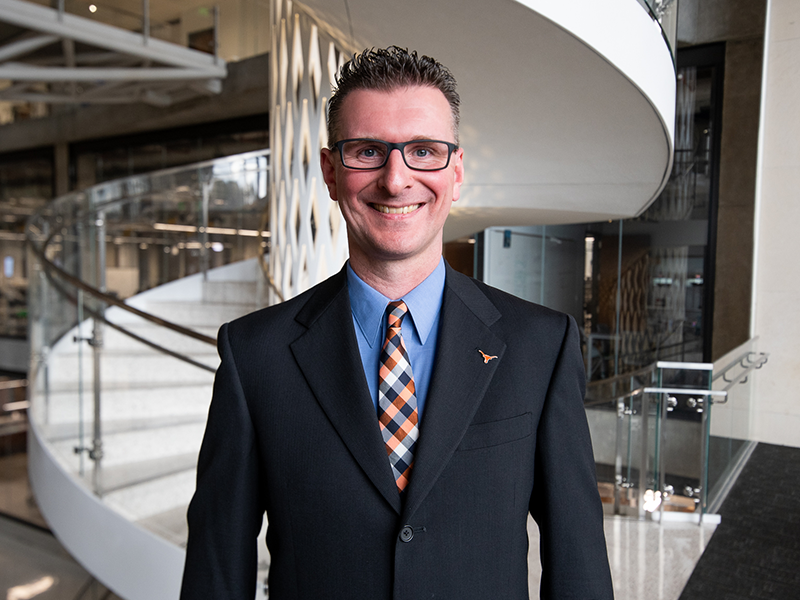
C. Tyler Dick serves as an Assistant Professor at The University of Texas at Austin, specializing in Transportation Engineering with emphasis on railway systems. His research addresses critical challenges in railway capacity, operations resilience, safety, and emerging technologies through the Texas Railway Analysis & Innovation Node (TRAIN). Dr. Dick's educational background includes: Ph.D. in Civil Engineering, University of Illinois Urbana-Champaign, 2019 M.S. in Civil Engineering, University of Illinois Urbana-Champaign, 2001 B.S. in Civil Engineering, University of Manitoba, 1999 His research spans railway capacity design, railroad network operations, advanced traffic control systems (virtual/moving blocks), energy efficiency, autonomous rail operations, predictive maintenance analytics, and hazardous materials safety. This work integrates simulation, machine learning, and risk analysis to enhance railway performance. Analysis of his 15 most recent publications (2022-2025) reveals dominant themes in derailment risk assessment (particularly for hazardous materials), optimization of railway capacity through moving-block systems, energy-efficient electrification frameworks, and autonomous railcar applications. His methodology consistently employs simulation modeling and empirical data to solve operational challenges in freight/passenger rail. Scientific awards: None mentioned in available documentation. Dr. Dick leads the Texas Railway Analysis & Innovation Node (TRAIN), securing research funding for projects including youth STEM outreach expansion and virtual learning rail programs. His grant portfolio likely supports predictive analytics and operational efficiency initiatives, though specific awards aren't detailed. As faculty, he advises graduate students in railway engineering despite no named advisees in the text. The TRAIN research center drives collaborative innovation in railway technology, focusing on capacity planning, safety systems, and workforce development through industry partnerships and national campus networks.
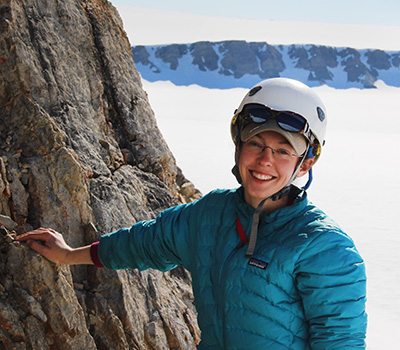
Wilma Huneke is a Research Fellow at the Research School of Earth Sciences (RSES) at the Australian National University (ANU). She holds an associated investigator role at the Australian Centre of Excellence in Antarctic Science (ACEAS) since 2022 and previously participated in an ARC Discovery Project on Antarctic ocean risks (2020). Her research focuses on coupled atmosphere-ocean models to study large-scale ocean circulation, Antarctic ice shelf dynamics, and the impact of ocean resolution in climate systems. Wilma completed her PhD in climate physics at the University of Tasmania, Australia (2019), following studies at GEOMAR in Germany. Her doctoral work explored the Antarctic Slope Front using ocean-ice shelf models. She has taught courses such as EMSC4017 (Research Methods for Earth Sciences, 2021) and EMSC2021 (Fundamentals of Climate Science, 2023). Her research interests span Antarctic ocean dynamics, ice shelf interactions, climate modeling, and the influence of ocean resolution on coupled systems. She also investigates marine ecosystems and their responses to environmental changes in the Antarctic Peninsula region. Wilma has supervised HDR students Hanyu Meng (ANU, 2022–ongoing) and Chenhui Wang (ANU, 2021), and mentored undergraduate researchers including Franka List (DAAD project, 2021), John Reilly (CLEX summer project, 2021), and Ellen Zheng (ANU, 2020). She is affiliated with the Climate and Fluid Physics research group at ANU and contributes to software development via the COSIMA project. Her work includes projects like Ocean feedbacks to Antarctic ice melt (Supervisor) Southern Ocean Circulation (Supervisor) No scientific awards have been explicitly mentioned in the provided texts. She collaborates through labs/teams including the ARC Centre of Excellence for Climate Extremes (CLEX) and maintains an active GitHub profile with repositories on Antarctic ocean modeling and climate science tools.
Jessie Galasso-Carbonnel is an Assistant Professor in the Department of Electrical and Computer Engineering at McGill University's Faculty of Engineering. Her research focuses on software reverse engineering, knowledge extraction, variability management, and software repository mining. She holds a Ph.D. in Computer Science from the University of Montpellier (2018) and completed postdoctoral research at the French National Institute for Sustainable Development (IRD) and the University of Montréal's Geodes group. She is currently co-chairing several international conferences and workshops, including the Poster Track at MODELS’24 and the Doctoral Symposium at SPLC’24. Her academic background includes: Ph.D. in Computer Science, University of Montpellier (2018) Postdoctoral Researcher at IRD (2019–2020) and University of Montréal (2020–2023) Recipient of IVADO Postdoctoral Research Funding (2020) Research interests span: Software product line engineering Formal concept analysis AI-driven code recommendation systems Domain-specific language design Reproducible software development practices Recent contributions include advancements in: Automated repair of semantic errors in model transformations Social diversity metrics for collaborative problem-solving Low-code development frameworks for AI pipelines She actively contributes to the academic community through roles such as PC member for SANER’25 and co-chair of multiple international workshops. Her work intersects software engineering, AI, and formal methods to advance scalable and accessible software development practices.
Prof. Joachim Vogt is an Associate Professor of Physics at the School of Science, Constructor University. His research focuses on near-Earth space environment dynamics, geospace systems, and satellite mission analysis. He leads studies using multi-satellite constellations and ground-based observations to investigate solar-wind interactions and magnetospheric structures. Key research interests include ionospheric dynamics, field-aligned currents, and planetary magnetospheres. He has developed tools like SwarmFACE for analyzing spacecraft data and contributed to models such as EMVIM for Venus' magnetic field. His work bridges observational data with theoretical frameworks to address space weather challenges. Publications span over two decades, emphasizing multi-scale analysis, mission simulations, and planetary space environments. His research impacts understanding of Earth’s upper atmosphere and other planetary systems, with applications to satellite technology and infrastructure protection. No scientific awards are explicitly mentioned in the text. His advising and grants details are not provided here, but his lab affiliations include the Physics of Near-Earth Space research group at Constructor University.
Jiang Dong is a Visiting Professor in the Department of Computer Science at Aalto University, Finland. He holds a Professorship Ylä-Jääski A. and is affiliated with the Helsinki Institute for Information Technology (HIIT). He earned his Doctor of Science (Technology) in Telecommunications software from Aalto University in 2017. His research focuses on mobile computing, network systems, and sensor technologies, with significant contributions to indoor navigation systems, mobile crowdsensing, and IPv6 transition protocols. He has also conducted interdisciplinary work in geoscience, including studies on sedimentary records and climate dynamics. Key research interests include energy-efficient mobile systems, vision-based navigation, and leveraging crowdsourced data for environmental and infrastructure monitoring. His work bridges computer science with practical applications in civil engineering (e.g., tunnel visualization) and climate science (e.g., Holocene environmental reconstructions). Education: Doctor of Science (Technology), Aalto University (2017) Notable collaborations include projects on Arctic sea ice dynamics, Lena River sedimentation, and East China Sea geochemistry. His publications span computer science, geology, and astrophysics, reflecting a multidisciplinary approach to research.
Jessica Creveling is an Associate Professor at Oregon State University's College of Earth, Ocean, and Atmospheric Sciences (CEOAS). Her research focuses on sea-level change during Earth's ice ages and its connections to paleoceanography, paleoclimatology, and paleoecology. She integrates field observations with numerical models to refine sea-level estimates during both warm and cold intervals. Notably, her work bridges Quaternary glacial cycles and Neoproterozoic Snowball Earth events, exploring how glacioeustatic sea-level shifts impact geological records. Creveling holds a B.A. in Geology (cum laude) from Colorado College (2006), a Ph.D. in Earth & Planetary Sciences from Harvard University (2012), and was an Agouron Post-Doctoral Fellow at Caltech. She teaches courses such as GEO 203 (Evolution of Planet Earth), GEO 370 (Stratigraphy and Sedimentology), and GEO 599 (Advanced Stratigraphy). Her research group studies Snowball Earth's deglaciation dynamics, including postglacial rebound effects and sea-level rise. A recent model revealed that global ice melt overwhelmed continental rebound, explaining widespread postglacial sea-level rise. This work underscores Earth's resilience to extreme climate states. Current projects explore the interplay between tectonic uplift, ice sheet configurations, and sea-level variability across glacial cycles. Creveling advises three graduate students: Cedric Hagen (PhD), Meghan King (MS), and Schmitty Thompson (PhD). She collaborates on numerical tools like the Align app for stratigraphic correlation and maintains a Google Scholar profile. Her lab is part of CEOAS, with an office at Wilkinson Hall 202D in Corvallis, OR.
Franciscus Bernardus Johannes Leferink is a Full Professor at the University of Twente, holding dual appointments in the Digital Society Institute and Radio Systems department. He also serves as Director of EMC at Thales Nederland B.V. since 1984. His research focuses on electromagnetic compatibility (EMC), power quality, radio systems, and interference mitigation, with applications in 5G, smart metering, and lightning protection. He has contributed to over 470 publications and received prestigious awards like the 2022 Richard B. Shultz Best Transaction Paper Award. Teaching: Introduction to EMC, Post-Academic EMC courses, IEEE Clayton Paul Global University lectures, and Life-Long-Learning programs. Research Interests: EMC engineering, reverberation chambers, spoofing/jamming countermeasures, and TEMPEST (compromising emanations). Recent articles highlight advancements in EMC measurement techniques, adaptive filters, and EMI reduction strategies for power electronics. He actively contributes to conferences and professional societies, including the Dutch EMC-ESD Society where he served as Chair in 2005. His work aligns with UN Sustainable Development Goals related to infrastructure and innovation. Awards: 2022 Richard B. Shultz Best Transaction Paper Award Innovation Honours Thales 2003 Grants/Advising: Extensive collaboration with industry partners like Thales and leadership in interdisciplinary projects. Leferink leads research teams focused on cutting-edge EMC challenges and maintains a strong presence in both academic and industrial R&D ecosystems.
Øystein Haugen is a Professor at the Department of Computer Science and Communication at Høgskolen i Østfold (HiØF), Norway. He specializes in Cyber-Physical Systems (CPS), Modeling Languages (e.g., UML/SysML), and Software Engineering. His work focuses on standardization efforts for modeling languages (ITU/OMG), variability modeling, and real-time systems. Haugen has led EU projects like Productive4.0 and Arrowhead Tools, emphasizing Industrial IoT and digital twin technologies. He co-chaired MODELS 2010 and currently contributes to SysML v2 development. Collaborations include SINTEF Digital, University of Oslo, and Luleå Technical University. Research Interests : Cyber-Physical Systems & IoT Model-Driven Engineering Software Product Line Engineering Formal Methods in Systems Design Standardization of Modeling Languages (SDL/MSC/UML/SysML) Industrial Applications of CPS (Manufacturing, Automation) Recent Article Trends : His 2020-2024 work emphasizes CPS applications, digital twin evolution, industrial IoT interoperability, and imitation learning in manufacturing automation. Key areas include model-based debugging, energy-efficient IoT networks, and autonomic service orchestration in industrial systems. Grants/Projects : Led EU ECSEL projects Productive4.0 (smart manufacturing) and Arrowhead Tools (IoT middleware). Active in standardization through OMG committees and ITU. Recent contributions include WP leadership in EU Horizon projects focusing on industrial digitalization. Labs/Teams : Leads the CPS Research Group at HiØF. Involved in the Arrowhead Tools consortium and Productive4.0 industrial partnerships (Jotne, Prediktor, Unger Fabrikker).
Aliaksandr Hubin is an Associate Professor of Statistics at Østfold University College (OUC), affiliated with the Section for Research Administration. He provides statistical support to researchers at OUC while conducting methodological research in Bayesian statistics, machine learning, and operations research. His academic background includes a PhD from the University of Oslo (2014–2018), a Master's from Molde University College (2012–2014), and a Specialist degree from Belarusian State University (2008–2013). His research focuses on Bayesian model selection, nonlinear regressions, neural networks, and weak supervision in machine learning. Hubin has held positions at the Norwegian Computing Center (2018–2020) and the University of Oslo as a postdoc (2021–2022). His work spans methodological advancements in MCMC algorithms, variational inference, and applications in epigenetics, econometrics, and healthcare. Key achievements include developing the GMJMCMC algorithm for Bayesian logic regression and the 'skweak' framework for weak supervision in NLP. His awards include the NIMA 2014 award for best MSc graduate, Belarusian Ministry of Education First Award (2013), and recognition at the Graybill 2017 conference. His research has been published in journals like Bayesian Analysis , Neural Computing & Applications , and Scientific Reports , with a focus on model uncertainty quantification and scalable Bayesian methods.
Ahmet Serkan Karataş is a Lecturer in the Department of Computer Engineering . His academic work focuses on Software Engineering and Feature Modeling , particularly in the context of Constraint Logic Programming and Software Product Lines . Research Themes : Feature modeling, variability management, constraint logic programming, and automated analysis of software systems. Key Publications : Explore applications of feature models to constraint logic programming and variability management in product lines, with a focus on digital television systems. Absence of scientific awards or student advising information suggests a concentration on technical research contributions rather than formal mentorship or recognition.
Antonio Ruiz-Cortés is a Professor of Software and Service Engineering at the University of Seville (since 2016) and Chief Scientist of the Unit of Excellence on Informatics (since 2019). He previously served as Chair of the Computer and Languages Department (2013–2016) and Secretary of the Unit of Excellence on Informatics (2017–2019). He is also President of the Spanish Society on Software Engineering (SISTEDES) since 2018. His research focuses on variability management in software engineering, service-level agreements, replicability in scientific experimentation, and business process management. Education: PhD in Software Engineering (unspecified year) His work emphasizes software testing, automation of SLA analysis, and configurable process models. He founded the 'Applied Software Engineering' (ISA) research group in 2005. Key contributions include influential papers on software product lines and automated experimentation frameworks. He has supervised 13 PhD theses (12 with international distinction, three awarded the University of Seville’s extraordinary doctorate prize). Awards: Most Influential Paper Award (SPLC 2017), best PhD thesis (2002), and top undergraduate Informatics prize (1994). He leads the Spanish Network of Excellence in Services Science and Engineering and serves on the PhD Commission at the University of Seville. His current research explores micro-service architectures and reliability optimization through user agreements and third-party infrastructure integration.
Thorsten Berger is a Professor and Head of the Chair of Software Engineering at Ruhr University Bochum. He previously held positions as an Associate Professor at the University of Gothenburg and Chalmers University of Technology. His research focuses on variability management, software engineering, and model-based systems, with notable contributions to cybersecurity, AI, and robotics. Berger has been awarded prestigious grants including the Wallenberg Academy Fellowship and VR Starting Grant, and his work has been recognized with multiple best paper and influential paper awards. Research Interests : Berger’s work emphasizes software evolution, variability management in systems engineering, and privacy-by-design frameworks for AI systems. His projects include data-driven root-cause analysis, behavior tree verification, and secure mission specification for autonomous systems. He has led initiatives such as the REVaMP2 platform and contributed to collaborative robotics research under the H2020-funded CO4ROBOTS project. Awards : Most Influential Paper Award (SLE 2024, VaMoS 2023) Wallenberg Academy Fellowship (2020) ERC Starting Grant Finalist (2020) He has organized major conferences like SPLC and Dagstuhl seminars, and serves on editorial boards for journals like Science of Computer Programming. His funded projects include collaborations with industry partners like Volkswagen and Phoenix Contact, addressing challenges in configurable systems and safety-critical applications. Thorsten Berger is a member of the Wallenberg AI, Autonomous Systems, and Software Program (WASP) Faculty, the German Hochschulverband, and ACM.