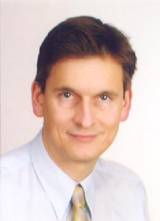
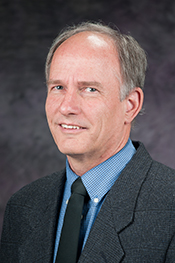
Professor Ahmed Hemani is a faculty member at the Division of Electronics and Embedded Systems, KTH Royal Institute of Technology, affiliated with the Digital Futures Faculty. He holds the role of PI for the project 'New Chip Architectures for Industrial Vision' and leads research in reconfigurable computing, memristor-based systems, and hardware acceleration for AI and edge computing. His work bridges theoretical computer science with practical VLSI design and embedded systems development. He actively contributes to cross-disciplinary initiatives at Digital Futures, a joint center with Stockholm University and RISE Research Institutes of Sweden focused on digital innovation. His research emphasizes scalable FPGA/HPC architectures, low-power neuromorphic systems, and optimization techniques for custom silicon solutions. Current projects include a Lego-inspired edge AI framework and memristor-driven MIMO acceleration. Teaching responsibilities span advanced courses in SOC design, digital system verification, and embedded systems. He supervises advanced-level degree projects across computer engineering and ICT innovation specializations, emphasizing hands-on hardware-software co-design methodologies. Recent publications highlight innovations in memristor applications, FPGA-based acceleration, and reconfigurable architectures for neural networks and bioinformatics. His work addresses challenges in dark silicon utilization, energy-efficient computation, and high-performance embedded systems.
Dr. Shuangshuang Jin is an Associate Professor in the School of Computing with a joint appointment in the Department of Electrical and Computer Engineering at Clemson University's College of Engineering, Computing and Applied Sciences. Previously, she served as a Senior Research Scientist at Pacific Northwest National Laboratory. Her educational background includes a Ph.D. in Computer Science (2007), M.S. in Computer Science (2003) from Washington State University, and a B.S. in Computer Science (2001) from Wuhan University. Ph.D., 2007 - Washington State University, Computer Science M.S., 2003 - Washington State University, Computer Science B.S., 2001 - Wuhan University, Computer Science Dr. Jin specializes in high-performance computing (HPC), distributed and parallel computing, general-purpose computation on graphical processing units (GPGPU), and HPC-based big data analysis, machine learning, scientific computation, and visualization. Her research focuses on applying these technologies to electrical engineering (power and energy systems, power electronics), automotive engineering, systems biology, and computer graphics. She leads the High-Performance Computing Enabled Science and Engineering (HPCeSE) Lab, where she supervises six PhD students working on HPC implementations for power system dynamic simulation, GridPACK application development, data-driven model-based smart control of power electronics converters, and other cutting-edge projects. Her recent publications demonstrate expertise in accelerating power system simulations, PV inverter reliability assessment, edge computing for power systems, and virtual prototyping of vehicle powertrain systems. The research trends show increasing focus on GPU acceleration, real-time simulation capabilities, and integration of HPC with emerging power system challenges. Junior Faculty Excellence in Teaching award (2021) Churchill Carter Fellowship (2022-2023) Zucker Graduate Education Center PhD Grant (2023) Doctoral Dissertation Completion Award (2023-2024) Outstanding Masters Student in Computer Science award (2022) Dr. Jin has successfully secured multiple grants from DOE, DOD, and other agencies for projects including 'Vehicle Propulsion Digital Twins', 'GridPACK-Wind', and 'Tool for Reliability Assessment of Critical Electronics in PV (TRACE-PV)'. She has advised numerous PhD and Master's students who have gone on to positions at national laboratories and industry. Her HPCeSE Lab maintains strong connections with Pacific Northwest National Laboratory, Fermi National Accelerator Laboratory, and other research institutions, providing students with valuable internship opportunities. Dr. Jin leads the High-Performance Computing Enabled Science and Engineering (HPCeSE) Lab at Clemson University, which focuses on developing optimized HPC-based parallel programming algorithms and architectures to solve complex scientific and engineering domain problems. The lab works on smart grid modeling and simulation, power electronics reliability assessment, ground vehicle systems prototyping, and advanced grid analytics, utilizing OpenMP, MPI, Pthreads, and CUDA/OpenCL on various computing platforms.
Kevin Clarno is a tenured Associate Professor in the Department of Nuclear and Radiation Engineering at the University of Texas at Austin, holding the Charlotte Maer Patton Centennial Fellowship in Engineering. His research focuses on computational nuclear energy, multiphysics reactor simulation, and high-performance computing (HPC). Previously, he spent 15 years at Oak Ridge National Laboratory (ORNL), where he led major initiatives such as the Consortium for Advanced Simulation of Light Water Reactors (CASL) and contributed to the development of software tools like SCALE, CTF, and VERA. Education and Career: Assistant Professor at University of Tennessee-Knoxville (2010–2016) Senior Research Scientist at ORNL (2006–2021) Research Interests: Multiphysics coupling methods for reactor simulation Multiscale neutronics and thermal-hydraulics modeling Advanced reactor design (e.g., molten salt reactors) HPC-driven software integration for nuclear analysis Uncertainty quantification in coupled simulations Grants and Projects: Lead of CASL’s Physics Integration Focus Area Development of the Advanced Multi-Physics (AMP) fuel code ORNL-led strategic research projects in reactor simulation Labs and Tools: VERA: Virtual Environment for Reactor Applications CTF: Thermal-hydraulic solver for PWR analysis MPACT: Neutronics simulation tool within SCALE
Xinfeng Gao is a Professor of Mechanical & Aerospace Engineering at the University of Virginia, leading the CFD & Propulsion Laboratory. She specializes in high-performance computing (HPC) algorithms for fluid dynamics, combustion, and plasma systems. Her work integrates numerical methods, parallel computing, and data analytics to address complex engineering challenges. Prior to UVA, she held a professorship at Colorado State University from 2011 to 2023, establishing the CFD and Propulsion Lab there. She earned her PhD in Aerospace Engineering from the University of Toronto in 2008, followed by postdoctoral research at Lawrence Berkeley National Laboratory (LBNL). Her research focuses on three core areas: high-order CFD methods for high-speed flows, parallel adaptive algorithms for spatial and temporal domains, and HPC combined with data analytics for aerospace design optimizations. Applications include reduced-order models for turbulence, propulsion device innovation, and quantum computing for fluid simulations. She collaborates with national labs (LLNL, LBNL), aerospace industries (Boeing), and software companies to translate research into practical solutions. Her recent grants include the NSF Mid-Career Advancement Award (2022–2025) for CFD+DA integration in commercial tools and UVA’s RIG Award (2025–2026) for gas-surface material studies under extreme conditions. She teaches MAE 6720 (Computational Fluid Dynamics) and MAE 3420 (Computational Methods). Key awards include the 2023 University of Virginia Research Achievement Award and the 2022 NSF MCA Award. Her work emphasizes cross-disciplinary innovation, blending computational science with experimental validation through initiatives like the Gas-Surface-Materials RIG project, involving experts from MAE, MSE, Chemistry, and Physics.
Vivek Sarkar is the John P. Imlay, Jr. Dean of the College of Computing at Georgia Institute of Technology and a professor in the School of Computer Science. He leads the Habanero Extreme Scale Software Research Laboratory, focusing on parallel computing, programming languages, compilers, and runtime systems. Previously, he was a Professor and Chair of Computer Science at Rice University and held senior roles at IBM Research, where he contributed to projects like the X10 programming language and the Jikes Research Virtual Machine. Research Interests: His work spans parallel computing software, including programming languages (e.g., X10, Habanero-Java), compiler optimizations, runtime systems, and debugging tools for high-performance systems. He emphasizes scalability and correctness in distributed and heterogeneous environments. Awards & Affiliations: ACM Fellow (2008), IEEE Fellow, Ken Kennedy Award (2011), member of the US Department of Energy’s ASCAC, and former IBM Academy of Technology member. He chairs the Center for Research into Novel Computing Hierarchies (CRNCH) at Georgia Tech. Grants & Students: His research is supported by NSF grants. He advises students in parallel computing, with openings for researchers interested in his lab’s work on asynchronous systems, graph processing, and quantum-classical programming. Labs & Projects: Habanero Lab, CRNCH, and collaborations on Chapel runtime systems, actor-based programming models, and exascale computing challenges.
Charles Gillan is a Senior Lecturer at Queen's University Belfast's School of Electronics, Electrical Engineering and Computer Science, affiliated with the High Performance and Distributed Computing department and the Institute of Electronics, Communications & Information Technology. His research bridges HPC systems, AI applications in healthcare, and computational physics. Key projects include managing ICU patient care via neural networks, exascale-ready mathematical packages, and edge computing architectures. Research interests focus on high-performance computing (HPC), quantum computing, real-time data analytics, and electron-molecule scattering simulations. Notable contributions include developing microserver architectures for edge analytics and advancing AI-driven clinical decision support systems. Gillan has collaborated on interdisciplinary projects like food authenticity testing using spectroscopy and improving ventilator management in intensive care units. Publications span AI in healthcare, HPC system design, and computational methods for physics problems. He has secured funding for initiatives such as the KTP partnership with Foods Connected Ltd and the HANDHELD olfactory detection project. Gillan's work emphasizes practical applications of advanced computing across healthcare, engineering, and cybersecurity domains.
Prof. Dr. Thomas Ludwig is the Director of the German Climate Computing Center (DKRZ) and a Professor at the Universität Hamburg. He holds a doctoral degree and habilitation from the Technische Universität München, with expertise in High-Performance Computing (HPC), energy efficiency, and data storage systems. His research focuses on optimizing parallel systems, storage technologies, and computational efficiency for climate science applications. He leads projects like AIMES and PeCoH, advancing HPC storage and energy-aware computing. Education: Doctoral degree and habilitation from TU München (1988–2001). Chair in Parallel Computing at Universität Heidelberg (2001–2009). Research Interests: HPC, data reduction techniques, energy-efficient systems, parallel I/O optimization, and climate modeling infrastructure. Recent Research Trends: His work emphasizes storage system efficiency, machine learning in HPC, and convergence between HPC and Big Data. Key contributions include frameworks for portability (Vecpar), automated performance tools, and energy-aware storage solutions. Awards: Some publications received recognition, e.g., a Best Paper award in 2014 for work on energy efficiency. However, no personal awards are explicitly listed. Advising & Grants: Supervised numerous theses in HPC, I/O optimization, and energy efficiency. Leads major projects funded by national and international initiatives. Labs/Teams: Heads the DKRZ team providing supercomputing and data management for climate research, collaborating with global institutions like the University of Hamburg and European research networks.
Mitchell L. Neilsen is a Professor in the Department of Computer Science at Kansas State University's College of Engineering, where he also serves as the graduate program director. He holds the Warren and Gisela Kennedy - Carl and Mary Ice Keystone Research Scholar position and maintains an active research program with multiple ongoing projects. His educational background includes a Ph.D. in Computer Science (1992), M.S. in Computer Science (1989), and M.S. in Mathematics (1987), all from Kansas State University, plus a B.S. in Mathematics Education from the University of Nebraska-Kearney (1982). After beginning his career as an assistant professor at Oklahoma State University, he returned to K-State in 1996. Research Interests: Cyber-Physical Systems: Design, Analysis, Verification of systems integrating computing, networking, and physical processes Distributed Systems: Algorithms, design, and analysis of distributed computing systems Scientific Computing: Computational Fluid Dynamics, Finite Element Analysis, High Performance Computing, and Simulation Application Areas: Agriculture technology, Dam safety analysis, Mobile applications, Natural resources management, and Real-time Embedded Systems His research program shows clear evolution toward agricultural technology applications, particularly high-throughput phenotyping, while maintaining strong foundations in cyber-physical systems and scientific computing. Recent publications indicate increasing integration of machine learning and computer vision techniques into traditional research areas. Research Funding: National Science Foundation U.S. Department of Agriculture Sandia National Laboratories Department of Homeland Security Private industry partners Dr. Neilsen has mentored numerous graduate students through their M.S. and Ph.D. programs, with recent advisees focusing on applications in agricultural technology, dam safety, and embedded systems. His advising approach emphasizes practical applications of theoretical computer science concepts. Current Teaching (Fall 2024): CIS 450 - Computer Architecture and Operations CIS 625 - Concurrent Software Systems CIS 720 - Advanced Operating Systems
Roberto Giorgi is an Associate Professor of Computer Engineering at the Department of Information Engineering, University of Siena, Italy. He has held this position since October 1, 2006, following his tenure as an Assistant Professor since March 15, 1999. His educational background includes a Ph.D. in Computer Engineering from the University of Pisa (1999) with a thesis on coherence protocols for shared-memory multiprocessors, and an Electronic Engineering degree (1995) with a thesis on trace-driven performance evaluation of multiprocessors. Giorgi's primary research focuses on Computer Architecture , particularly on multiprocessor/multicore issues including processor design, coherence protocols, programmability, and energy efficiency. His work spans both theoretical and practical aspects of computer architecture, with emphasis on real-world implementations and educational tools. He has coordinated significant EU-funded projects including AXIOM (2014-2018) on Smart Cyber-Physical Systems and TERAFLUX (2009-2014) on Many-Cores. His recent publications (2022-2025) demonstrate a strong progression toward practical applications of computer architecture research, with particular emphasis on RISC-V architecture, FPGA-based acceleration, dataflow computing models (especially DF-Threads), and graph processing. Many of his papers address educational tools for computer architecture education, real-time object detection on embedded platforms, and novel execution paradigms for edge computing and HPC. IEEE Senior Member ACM Lifetime Member Coordinator of EU-funded AXIOM project (2014-2018) on Smart Cyber-Physical Systems Coordinator of EU-funded TERAFLUX project (2009-2014) on Many-Cores Giorgi has been actively involved in securing research funding and building collaborations, particularly in high-performance computer architecture research with emphasis on scalable architectures and embedded systems. He leads the Computer Architecture Lab (ROOM 223) at the University of Siena, which was established in 2007, and has been instrumental in developing practical implementations of architectural concepts including the AXIOM platform for cyber-physical systems.
Dong Li is an Associate Professor at the University of California, Merced , where he directs the Parallel Architecture, System, and Algorithm Lab (PASA) and co-directs the High Performance Computing Systems and Architecture Group . He co-founded Yotta Labs Inc. and previously held research roles at Oak Ridge National Laboratory (2011-2014) and a PhD from Virginia Tech. Research Interests: Dong's work focuses on High performance computing (HPC) Memory heterogeneity and non-volatile memory Systems for machine learning and AI Fault tolerance in large-scale systems His innovations include heterogeneous memory optimization for recommendation models and GNNs, CXL memory integration, and persistent memory debugging tools. Recent Publications highlight advancements in CXL-based inter-node communication Memory tiering for laminography reconstruction ML-guided memory optimization for DLRM and GNN Fault tolerance benchmarks and error analysis Awards & Recognition: NSF CAREER Award (2016) Oracle Research Award (2022) ASPLOS Distinguished Artifact Award (2021) Virginia Tech Early Career Alumni Award (2023) Advising & Funding: Dong has mentored 22 students (8 PhD, 6 Master’s, 8 undergraduates) and secured grants from NSF, NVIDIA, Meta, and national labs (Argonne, Lawrence Berkeley, Lawrence Livermore). Collaborations include Microsoft (DeepSpeed, Intel PMDK), AMD, SK Hynix, and Intel/MICRON hardware donations.
Marc Parizeau is a Professor at Université Laval, affiliated with the Faculty of Science and Engineering and the Department of Electrical and Computer Engineering. His office is located at PLT-1138-B, and he can be reached at (418) 656-2131 ext. 407912 or via email at marc.parizeau@gel.ulaval.ca. Academic Background: Ph.D., École Polytechnique de Montréal, 1992 M.Sc.A., École Polytechnique de Montréal, 1987 B.Eng., École Polytechnique de Montréal, 1984 His research focuses on Pattern Recognition, Evolutionary Computation, Neural Networks, 2D and 3D Computer Vision, and parallel and distributed systems . He integrates these areas to develop scalable computational models and tools for intelligent systems. His work bridges theoretical AI with practical software engineering for high-performance environments. His teaching includes courses such as Programmation parallèle et distribuée (GIF-4104) , Réseaux de neurones (GIF-21410) , and various algorithm and programming courses in Python and engineering. His recent publications reflect a strong trend in distributed evolutionary algorithms and concurrent programming frameworks, particularly using Python-based tools like DEAP and SCOOP, emphasizing scalability and real-world deployment. Scientific Leadership and Software Contributions: Director, Calcul Québec Creator, Distributed Evolutionary Algorithms in Python (DEAP) Creator, Scalable Concurrent Operations in Python (SCOOP) Contributor, Portable Agile Classes in C++ (PACC) Contributor, Open Beagle Marc Parizeau has supervised multiple collaborative projects and students, though specific names are not listed. He has secured research support through leadership roles and software development. His work is supported by institutional and provincial computing infrastructure initiatives. Conference Involvement: Organizing Committee, High Performance Computing Symposium (HPCS'08) International Workshop on Frontiers in Handwriting Recognition (IWFHR'02) International Conference on Pattern Recognition (ICPR'02) Vision Interface (VI'99) Conférence Internationale sur l'Écrit et le Document (CIFED'98) He leads the Computer Vision and Systems Laboratory at Université Laval, a research group focused on intelligent systems, machine learning, and high-performance computing applications in vision and optimization.
Summary Pawel Andrzej Herman is an Associate Professor at the Division of Computational Science and Technology within the School of Computer Science and Communication (CSC) at KTH Royal Institute of Technology. His research focuses on computational neuroscience, brain-inspired AI, and machine learning applications in healthcare and cognitive science. He teaches multiple courses including Artificial Neural Networks and Deep Architectures , supervises degree projects across computer engineering and electrical engineering disciplines, and actively contributes to interdisciplinary research initiatives. His work bridges theoretical neuroscience with practical AI solutions, emphasizing synaptic plasticity models, neuromorphic computing, and medical diagnostic systems. Key areas include olfactory perception modeling, working memory mechanisms, and FPGA-accelerated neural networks. He collaborates internationally on projects such as AI-driven medical imaging and cognitive neuroscience studies. Dr. Herman’s research has been published in high-impact journals and conferences, with recent contributions to understanding neural mechanisms of odor naming deficits, beta/alpha oscillations in working memory, and spiking neural network architectures. His technical leadership spans HPC frameworks like StreamBrain and interdisciplinary tools for scientific data storage (NoaSci).
Charles E. Leiserson is a Professor of Computer Science and Engineering at MIT, holding the Edwin Sibley Webster Professorship in Electrical Engineering and Computer Science. He leads the Supertech Research Group and is Faculty Director of the MIT-Air Force AI Accelerator. His work focuses on parallel computing, performance engineering, and algorithms. Leiserson is renowned for co-authoring the foundational textbook Introduction to Algorithms , widely used in computer science education globally. He has pioneered technologies like the Cilk multithreaded programming language and contributed to supercomputing architectures such as the Connection Machine CM-5. His research bridges theoretical computer science with practical applications, emphasizing cache-oblivious algorithms and compiler optimizations. Leiserson has received multiple awards for his academic contributions and educational impact, including the ACM-IEEE Ken Kennedy Award and Margaret MacVicar Fellow distinction at MIT. Education: B.S., Yale University, 1975 Ph.D., Carnegie Mellon University, 1981 Research Interests: Leiserson’s work addresses performance engineering challenges in post-Moore’s Law computing. His group develops algorithms, software systems, and hardware strategies for scalable parallelism. Key areas include parallel programming frameworks (e.g., OpenCilk), cache-aware algorithms, and compiler optimizations. He emphasizes making parallel computing accessible to mainstream programmers through tools like Cilk and educational initiatives such as MIT’s Software Performance Engineering course. Projects & Leadership: Leiserson leads the Supertech Research Group and contributed to the Cilk Arts Inc. venture, acquired by Intel. He chairs the MIT Undergraduate Practice Opportunities Program (UPOP) and teaches courses on algorithms and discrete mathematics. His leadership workshops for faculty have educated hundreds worldwide on team management in academia. Awards & Recognition: 2014 ACM-IEEE Ken Kennedy Award IEEE Taylor L. Booth Education Award ACM Paris Kanellakis Theory and Practice Award Member of the National Academy of Engineering Labs & Teams: Active in MIT’s CSAIL, Leiserson collaborates through the Supertech Group and Theory of Computation communities. His current projects include Tapir compiler infrastructure, graph neural network applications for anti-money laundering, and deterministic parallel scheduling algorithms.
Prof. Benjamin Stamm is a Professor of Numerical Mathematics at the University of Stuttgart, leading the Chair of Numerical Mathematics for High Performance Computing within Faculty 08. He holds a Ph.D. and master's degree in mathematics from École Polytechnique Fédérale de Lausanne (EPFL) and has previously worked at RWTH Aachen University, Sorbonne Université UPMC Paris 6, UC Berkeley, and Brown University. His research focuses on numerical analysis, scientific computing, and simulations, particularly efficient discretizations for PDEs, eigenvalue problems, error certification, reduced basis methods, and HPC implementations. He develops scalable numerical methods for problems in computational chemistry and physics, emphasizing accuracy, efficiency, and interdisciplinary collaboration with chemists, physicists, and materials scientists. Prof. Stamm’s work includes contributions to domain decomposition methods, polarization energy calculations, and software development like the ddX library. His publications span topics such as model order reduction, quantum simulations, and molecular dynamics. Collaborations and software tools underscore his commitment to bridging computational methods with real-world scientific challenges.
Giulia Guidi is an Assistant Professor of Computer Science at Cornell University, affiliated with the Cornell Ann S. Bowers College of Computing and Information Science. She leads the Cornell High-Performance Computing (HPC) Group and is an Affiliate Faculty at Lawrence Berkeley National Laboratory’s Performance and Algorithms Research Group. Her research focuses on high-performance computing for computational sciences, sparse linear algebra, and scalable software infrastructure for parallel systems. She holds a PhD in Computer Science from UC Berkeley (2022) and has been recognized with awards including the 2024 SIAG/Supercomputing Early Career Prize and the 2023 ISSNAF Young Investigator Award. Her work addresses challenges in genomics, population genetics, and scalable computational methods through collaborations like the NSF-funded 'ACED' project with April Wei’s Lab. Guidi mentors a diverse group of PhD, MEng, and undergraduate students, emphasizing parallel programming and HPC applications. Her lab’s research spans GPU-accelerated algorithms, sparse matrix computations, and bioinformatics tools like the Popcorn and BELLA aligners. She is also a Graduate Field Faculty in Computational Biology and Applied Mathematics at Cornell.