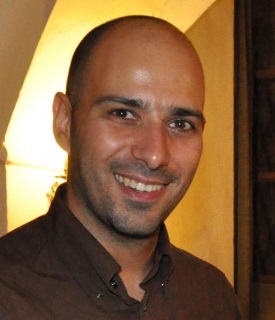
Dr. Anh Nguyen Nguyen Duc serves as Full Professor at the University of South-Eastern Norway and the Norwegian University of Science and Technology (NTNU), with visiting scholar positions across Norwegian, Finnish, Italian, and Vietnamese institutions. His academic work centers on software engineering with emphasis on human, process, and ecosystem dimensions of development. Education: MS: Technical University of Kaiserslautern and Blekinge Institute of Technology (double degree) PhD: Norwegian University of Science and Technology Research fingerprint analysis reveals dominant focus on software startups (27%), supplemented by software processes (6%) and engineering education (5%). His expertise spans cybersecurity, global software development, business-driven methodologies, and software analytics, consistently addressing human-organizational challenges in dynamic development environments. Recent publications (2024-2025) demonstrate accelerating integration of AI in software engineering, particularly through large language models for startup assistance, generative AI adoption frameworks, and autonomous agent systems. Concurrently, he investigates risk management in software ventures and fairness in educational ML applications, reflecting interdisciplinary work bridging software engineering with business, AI ethics, and educational technology.
Angelo Corallo is an Associate Professor at the Department of Experimental Medicine, University of Salento, specializing in technologies and methodologies for collaborative processes in industrial systems. His research spans Digital Business Ecosystems , Cybersecurity , and Collaborative Product Design , focusing on the interplay between technology and organizational dynamics. He leads interdisciplinary research divisions in Open Networked Business Management , Learning and Innovation , and Collaborative Product Design . Research Interests : Corallo's work integrates Information and Communication Technologies (ICT) with Business Management, particularly in Digital Twins for healthcare and manufacturing Knowledge Modeling and Ontology Engineering Industry 4.0 and Smart Manufacturing Agri-Food Sustainability through digitalization Scientific Contributions : His recent articles explore trends in Cybersecurity for Industrial IoT Metaverse Applications in business models Traceability Systems in food supply chains Collagen-Based Biomaterials from aquaponics
Gemma Catolino is an Assistant Professor at the Department of Computer Science, University of Salerno, and affiliated with the Software Engineering (SeSa) Lab. She has also served as an Assistant Professor at Tilburg University and Eindhoven University of Technology through the Jheronimus Academy of Data Science from September 2022 to December 2023, and previously as a Postdoctoral Researcher at Delft University of Technology and Tilburg/Eindhoven institutions. PhD in Computer Science, University of Salerno (2020), supervised by Prof. Filomena Ferrucci MSc in Management and Information Technology, University of Salerno (2016, magna cum laude) BSc in Computer Science, University of Molise (2014) Her research centers on empirical software engineering, focusing on both technical and social aspects affecting software development. Key areas include code smells, defect prediction, testability, changeability, and the emerging concept of “Community Smells”—social dysfunctions in developer teams. She investigates how human factors, team diversity (especially gender), and developer experience influence software quality and maintenance effort, often using mining software repositories and machine learning techniques. Her recent publications span high-impact journals and conferences such as IEEE TSE, EMSE, JSS, ICSE, and ICSME, with a strong trend toward integrating social and technical metrics for just-in-time defect prediction in mobile applications, analyzing community dynamics, and applying software quality metrics to cybersecurity contexts like dark web analysis. She has also contributed to MLOps and serverless computing. She has received several honors including a DEI research grant (2020), Best Technical Paper at BENEVOL 2019, first and second place in ACM Student Research Competitions (2018, 2017), and the Best Master Thesis award from the Italian Software Metrics Association (2017). Gemma Catolino has been actively engaged in academic service as a referee for top journals like IEEE TSE, EMSE, JSS, and IST, guest editor for special issues, and program/organizing committee member for major conferences including ICSE, MSR, SANER, and MobileSoft, where she served as Program Co-Chair in 2022. She has also contributed as a teaching assistant, lecturer, and course coordinator in machine learning and software engineering courses. She leads and contributes to research projects involving international collaborations, particularly with researchers such as Prof. Filomena Ferrucci, Prof. Andy Zaidman, Prof. Willem-Jam van den Heuvel, and Prof. Alexander Serebrenik. Her work bridges empirical software engineering with practical tool development and socio-technical analysis, positioning her at the forefront of modern software engineering research.
Bilal Ahmad serves as a Postdoctoral Researcher and Technology Lead for Software Solutions in Edtech at the Learnovate Centre, Trinity College Dublin, focusing on translating stakeholder needs into innovative web and mobile applications. Education: PhD in Software Engineering from Lero, the Irish Software Research Centre (University of Limerick) MSc in Computer Science BSc in Computer Science His research bridges Software Engineering and Human-Computer Interaction, with specialized expertise in Edtech, Smart Ageing, UX Research, and Global Software Development. He has extensive experience developing technology solutions for diverse user groups, notably creating a social volunteering network application for older adults during his PhD collaboration with IBM Ireland. His work emphasizes practical implementation of software solutions to address real-world challenges in aging populations and educational technology. Scientific awards: No specific awards documented in the source material. Advising and grants: No information provided regarding student supervision, research grants, or funding sources. Labs and Teams: Bilal is actively engaged with the Learnovate Centre (a Trinity College Dublin-affiliated Edtech research hub) and previously collaborated with IBM Ireland. He recently participated in NDRC Dublin's Pre-commercialisation program as part of a multi-disciplinary postdoctoral research team, while maintaining entrepreneurial involvement through hackathons and startup events.
Giampaolo Liuzzi is an Associate Professor at the Department of Computer, Automation, and Management Engineering 'Antonio Ruberti' (DIAG) at Sapienza University of Rome since July 2023. Previously, he was a fixed-term researcher at the same department (July 2020-June 2023) and a Senior Researcher at the Institute of Systems Analysis and Computer Science 'A. Ruberti' of the CNR until July 2020. He teaches Mathematical Programming, Complements of Mathematics, and Mathematical Analysis 2 for various engineering programs at Sapienza University. Dr. Liuzzi's research focuses on Nonlinear Optimization , particularly derivative-free methods for constrained and unconstrained optimization, global optimization, mixed integer nonlinear programming, and applications in operations research and machine learning. His work spans theoretical developments in optimization algorithms as well as practical applications in engineering design, simulation-based optimization, and biomedical systems. He has made significant contributions to derivative-free optimization techniques that don't require gradient information, which is particularly valuable for black-box optimization problems where derivatives are unavailable or expensive to compute. His recent publications (2022-2025) demonstrate a strong focus on advancing derivative-free optimization methods, with particular attention to complexity analysis, convergence properties, and practical implementations for challenging problem classes including nonsmooth, constrained, multi-objective, and mixed-integer optimization problems. His work bridges theoretical computer science with practical engineering applications, with publications appearing in top optimization journals like Optimization Methods & Software, Computational Optimization and Applications, and Journal of Optimization Theory and Applications. Dr. Liuzzi has received significant professional recognition through National Scientific Habilitations for both Associate Professor (2014) and Full Professor (2018) positions in Italy. He is actively involved in the academic community as an administrator of the Derivative-Free Library (DFL), a collection of algorithms and methods for derivative-free optimization developed through collaboration among several prestigious Italian research institutions. As an educator, Dr. Liuzzi has developed comprehensive teaching materials for courses in Mathematical Programming, Complements of Mathematics, and Mathematical Analysis. He is also engaged in academic entrepreneurship as a co-founder of DEIX s.r.l., a Sapienza startup focused on algorithms and industrial software for planning and control of complex systems. Additionally, he organized the 2nd Derivative-Free Optimization Symposium (DFOS'24) in June 2024 in Padua, highlighting his leadership role in this specialized optimization community.
Davide Bacciu is a Full Professor of Machine Learning at the University of Pisa, where he leads the Pervasive Artificial Intelligence Laboratory (PAILab) and coordinates the EIC-Pathfinder EMERGE project. He is also Director of AI Research at Aptus.AI and founder of ContinualIST and QuantaBrain startups. His academic roles include Vice President of AIxIA (Italian Association for Artificial Intelligence) and former Senior Editor of IEEE Transactions on Neural Networks and Learning Systems. He holds a PhD in Computer Science from IMT Lucca and is affiliated with the Department of Computer Science at the University of Pisa. His research focuses on machine learning fundamentals, graph neural networks, continual learning, and applications in robotics and healthcare. Key projects include the EMERGE initiative exploring collective awareness in AI systems and QuantaBrain’s diagnostic tools for autism spectrum disorders. Bacciu’s work emphasizes interdisciplinary collaboration, integrating AI with cyber-physical systems and societal impact. His contributions span foundational theory (e.g., causal abstractions, graph structure learning) and applied domains (e.g., autonomous systems, medical AI). He has organized workshops on AI for Space exploration and Geometric Deep Learning, showcasing his commitment to advancing AI frontiers. Education: PhD in Computer Science (IMT Lucca), MSc & BSc from University of Pisa. Labs/Teams: PAILab, EMERGE project, QuantaBrain startup. Grants/Projects: EIC Pathfinder EMERGE, TEACHING_H2020, AI for Space initiatives. His recent publications address challenges in dynamic graph learning, continual learning, and causal discovery. Bacciu advocates for a national AI strategy in Italy, stressing long-term vision and ethical AI governance aligned with EU regulations like the AI Act.
Salvatore Ammirato is an Associate Professor in the Department of Economic and Management Engineering at the University of Calabria, Italy. He is part of the Department of Mechanical, Energy and Management Engineering, where he contributes to both teaching and research activities. His academic work focuses on the intersection of business management, digital transformation, and innovation. Dr. Ammirato's research interests span multiple domains of modern business and management: Digital transformation and business process management Startup ecosystems and corporate-startup collaboration Business modeling for digital enterprises Human resources management in innovative organizations Cultural industries in the digital age (Industry 4.0) Healthcare systems management His recent publications demonstrate a strong focus on the impact of digital technologies on business models and organizational structures. Analysis of his 15 most recent articles reveals a consistent emphasis on how digital transformation is reshaping traditional business processes across various sectors including cultural industries, healthcare, and public administration. His work often employs systematic literature review methodologies and empirical investigations to understand emerging trends in business innovation. Dr. Ammirato has received recognition for his research contributions through participation in numerous national and international projects: Echopress srl: academic spin-off focused on advanced communication services BASS (Bank Security and Safety) project for smart bank branches SMAL (Smart street Lighting) project SIRENE project for innovative ICT business modeling DIRECT-FOOD project for agri-food supply chains DEEVA project on data-driven value co-creation SMARTCAL project for smart tourism in Calabria As an educator, Dr. Ammirato teaches courses including Economics and Enterprise Organization, Business Process Management, and Healthcare Systems Management. He is actively involved in research supervision and has contributed to the development of several research laboratories, particularly the Judas Lab which focuses on research and teaching in business process engineering, digitalization, and management of organizational information systems.
Nicola Frega is a full-time Researcher at the Department of Mechanical, Energy and Management Engineering of the University of Calabria (UniCal). His career spans over three decades, focusing on digital transformation in economic, organizational, and technological domains. Graduated summa cum laude in Computer Engineering from UniCal (1991) PhD in Computer Engineering (MURST, 9th cycle) Held a Research Grant (ING-IND/35) at DEIS-UniCal (1999-2002) His research interests include: Digital transformation in public administration and business Agri-food system innovation Social media and multichannel communication Smart technologies for NFC/QRCode applications Collaborative networks for sustainability Recent publications (2013-2025) emphasize: Systematic analysis of Cultural Industries 4.0 Mobile-based services in agri-food chains Collaborative platforms for food awareness Smart parking systems using NFC technology Scientific achievements: 1992: BULL HN Sud Degree Award Multiple EU-funded research projects (DIRECT-FOOD, HERAKLES, etc.) Teaching activities since 1992: Taught modules in Information Systems, Digital Services, and e-Economy Collaborated in exam commissions for Computer and Management Engineering Active in the GIUDA Lab , focusing on: Collaborative knowledge management Digital process automation ICT for organizational governance
Luca Roffia is a Contract Professor at the University of Bologna, affiliated with both the Department of Computer Science and Engineering and the Department of Electrical, Electronic, and Information Engineering 'Guglielmo Marconi'. His research focuses on software architecture innovation, particularly SEPA (Sparql Event Processing Architecture), leveraging Semantic Web technologies for distributed, interoperable applications in dynamic environments like the Web of Things. PhD in Electronic, Computer and Telecommunications Engineering (2005) Degree in Computer Engineering (2001) His research spans agri-food, healthcare, energy efficiency, and cultural heritage, with expertise in Semantic Web technologies and open-source solutions. He has managed EU H2020 projects such as DASI Breaker (2021), DESMO-LD (2022), and My3Sec (2023), and participated in European initiatives like SWAMP (2017-2020), SOFIA (2009-2011), and EPOCH (2005-2007). Luca leads collaborations with companies including Ducati Energia Spa, Telecom Italia Spa, and Shell through startups like VAIMEE srl (founding partner and President). His technical consulting spans IoT systems, ontology development, and RFID firmware design for clients like ArTeN s.r.l. and CPL Concordia.
Xiaofeng Wang is a Tenured Associate Professor at the Faculty of Engineering, Free University of Bozen-Bolzano, Italy. Her academic roles include teaching courses such as Agile Software Development, Entrepreneurial Software Engineering, and Software Project Management. She holds a PhD from the University of Bath, UK, and previously worked at Lero, the Irish Software Engineering Research Centre as a postdoc. Her research focuses on agile and lean software development, software startups, and human factors in software engineering. Key areas include managing technical uncertainty in startups, generative AI applications in software inception, and hybrid work impacts on development practices. She actively publishes in journals like IEEE Software and conferences such as XP 2024. Dr. Wang’s work emphasizes innovation in software ecosystems and startup success factors, with contributions to metrics for software startups and secure DevOps approaches. Her recent studies explore post-pandemic remote work dynamics and blockchain applications for virtual teams. She has led or participated in national and European projects, bridging academic research with industry needs. Her teaching integrates real-world projects, such as the Students Sprint course, to enhance student engagement. She has pioneered educational tools like the ‘Essencery’ for essentializing software practices and ‘Digital Mentor’ chatbots for startup hypothesis generation. Her research and teaching aim to advance both technical and entrepreneurial competencies in software engineering.
Luca Mainetti is a Full Professor in the Department of Innovation Engineering at the University of Salento, where he leads the GSA Lab (Graphics and Software Architectures Lab) and founded the Mobile and Multi-Device Applications research group. He has been a key figure in advancing software and web engineering, particularly in model-driven approaches for IoT and service-oriented systems. His research interests include: Software Engineering Web Engineering Model-Driven Engineering for middleware and IoT Service-Oriented Architectures Embedded and mobile applications His recent publications reflect a strong trend toward model-driven development of IoT systems, integration platforms like WoX, and academic entrepreneurship through spin-offs such as VidyaSoft and SofThings. These works emphasize software architecture, automation, and real-world application in domains like FinTech and CRM. Scientific recognitions include: Senior Member of the ACM Member of IEEE Luca Mainetti has supervised over ten doctoral and post-doctoral researchers and coordinated the Doctoral School in Information Engineering from 2012 to 2017. He has held leadership roles including Vice-Director of the Department of Innovation Engineering and Rector’s Representative for the Digital Agenda. He also coordinates the National Technical Committee for Digital University under MIUR, highlighting his influence in national academic ICT policy. He is actively involved in research labs and innovation initiatives, including: GSA Lab – Graphics and Software Architectures Lab (Scientific Director since 2007) IDA Lab – IDentification Automation Lab (Scientific Director, 2008–2016) Spin-off leadership in VidyaSoft and SofThings
Anna Bernasconi is a Tenure-Track Researcher (Assistant Professor) at the Department of Electronics, Information and Bioengineering at Politecnico di Milano, where she leads the Bioinformatics and Data Science Lab within the Genomic Computing group. She has been a visiting researcher at Universitat Politècnica de València (Jan-June 2022). Her research focuses on applying conceptual modeling, data integration, and knowledge engineering in life sciences and other applied sciences domains, with an emphasis on building open-source tools and services. Dr. Bernasconi earned her Master in Computer Engineering in 2015 from Politecnico di Milano and the University of Illinois, Chicago. She completed her PhD from Politecnico di Milano in 2021 with a thesis on genomic data integration. Her academic journey has positioned her at the intersection of computer science and bioinformatics. Her research interests span multiple areas of bioinformatics and data science. She specializes in bioinformatics data and metadata integration methodologies to support complex biological query answering. In recent years, she has focused on viral genomics , particularly sequence modeling, integration, and search systems for mitigating the effects of pandemics like COVID-19. She applies conceptual modeling and knowledge engineering techniques to develop open-source tools for genomic data analysis. Her work bridges computer science with life sciences, addressing challenges in genomic surveillance, data integration, and knowledge management. Dr. Bernasconi's recent publications demonstrate a clear trend toward developing practical tools for genomic surveillance and text analysis. Her work spans from viral genome analysis (Nature Communication 2024) to database systems (SIGMOD 2024) and topic modeling for large text corpora (EDBT 2025), showing her ability to work across multiple technical domains while maintaining a focus on real-world applications in health and environmental science. National Scientific Habilitation in two categories: 09/H1 – Sistemi di Elaborazione delle Informazioni (II Fascia) and 01/B1 – Informatica (II Fascia) Principal Investigator of the SENSIBLE PRIN PNRR 2022 project (funded with ~240K Euros) Principal Investigator of the NGI Search TETYS project (150K Euros funding) Co-founder of LegisRatio S.r.l., a Politecnico di Milano spin-off innovative startup Academic Editor for Plos One and BMC Bioinformatics Dr. Bernasconi actively mentors students and collaborates across disciplines. She is Principal Investigator of significant research projects including SENSIBLE, which aims to develop an early warning system for viral pathogens based on genomic surveillance, and TETYS, which focuses on topic modeling and visualization for large text corpora. Her research has secured funding from the Italian Ministry of University and Research (MUR) and the European Union's Horizon Europe program. She collaborates with experts across disciplines, including virologists like Prof. Ilaria Capua from Johns Hopkins University. She leads the Bioinformatics and Data Science Lab at Politecnico di Milano, which has developed several notable tools including ViruClust (for comparing SARS-CoV-2 genomic sequences), VariantHunter (for monitoring mutation evolution), and RecombinHunt (for identifying recombination events in viral species). Her team also created CORToViz for exploring the CORD-19 dataset and TETYS for topic modeling in various domains including climate change research.
Angelo Bonfanti is an Associate Professor of Business Management at the University of Verona's Department of Management since 2016. He holds a PhD in Business Administration from the University of Naples 'Parthenope' (2006). His roles include Coordinator of Department Research (since 2016), President of the Teaching Committee for Business (2018–present), and General Secretary of the CUEIM Foundation (2017–present). He has coordinated courses like 'Strategic Service Management' across multiple academic years and contributed to sustainability initiatives like the 'University of Verona at the Festival of Sustainable Development'. Research focuses on service management, entrepreneurship (especially social entrepreneurship), and customer experience design in retail/hospitality contexts. Notable achievements include the 2017 Outstanding Paper Award for 'Servicescape navigation'. He serves on editorial boards of Sinergie Italian Journal of Management and Journal of Innovation and Entrepreneurship , and has reviewed for 15+ international journals. Teaching responsibilities span undergraduate and graduate courses in business management, marketing, and strategic service management across various campuses. Third mission activities include organizing sustainability events and contributing to policy-oriented research projects like 'Enterprise 4.0 and digital transformation for SMEs in Verona'. Research collaborations involve studies on service quality measurement, digital transformation challenges, and the role of B Corps in driving social impact. His work bridges academic research with practical applications in hospitality, retail, and nonprofit sectors.
Riccardo Lazzeretti serves as Associate Professor at Sapienza University of Rome since September 2022, following progression from Assistant Professor roles (RTD-A/B) at the same institution from 2017-2022. His academic trajectory includes post-doctoral research at the University of Siena's VIPP group, a research grant at the University of Padua, and industry experience at Italian startup Cynny s.p.a. His educational foundation comprises: MSc in Computer Science Engineering, University of Siena (2007) PhD in Information Engineering, University of Siena (2012) Lazzeretti's research centers on privacy-preserving technologies with emphasis on Secure Multi-Party Computation for encrypted signal processing. His work spans biometric security (including multi-biometric authentication), IoT security protocols, blockchain applications in healthcare, and social network misinformation detection. Recent publications demonstrate deep integration of cryptographic techniques with machine learning for resource-constrained devices and critical infrastructure protection. Analysis of his 15 most recent publications reveals dominant trends in IoT/drone security (32% of works), browser/API vulnerabilities (13%), and privacy-preserving architectures (27%). His research consistently bridges theoretical cryptography with practical system implementations, particularly for emerging technologies like NDN and programmable data planes. His scholarly recognition includes: SIGMM Test of Time Paper Honourable Mention (2021) for Multimedia Security contributions IET Biometrics Premium Best Paper Award (2021) Lazzeretti has supervised graduate students at the University of Siena and secured research funding through collaborations with NATO's CMRE, Digital Catapult (UK), and IMT Lucca. Current projects include privacy-preserving consensus algorithms for IoT and blockchain-based health applications. He maintains active partnerships with European research entities including Centre for Maritime Research and Experimentation and Digital Catapult. His laboratory affiliations encompass the VIPP research group at University of Siena and ongoing collaborations with Sapienza's cybersecurity initiatives, focusing on cross-disciplinary teams integrating signal processing, cryptography, and machine learning expertise.
Roberto Beraldi is an Associate Professor at the Department of Computer, Control and Management Engineering (DIAG) at Sapienza University of Rome since 2002. He leads the Edge Computing Lab, which focuses on distributed algorithms, resource sharing, and scheduling policies for edge and fog environments. His research interests include edge computing, fog computing, and past work on mobile ad hoc networks (MANETs) and peer-to-peer systems. He co-founded Ubiquitous Srl, a startup spun off from Sapienza University. Research & Grants: Current PI of the Italian PRIN 2022 grant 'EV2 Edge Vision against Varroa' and former PI of the FogAware project. Active in EU-funded research initiatives such as BLEND and ReSIST. His lab uses Raspberry Pi clusters and Oculus Quest devices for experiments in edge-assisted VR and distributed computing. Teaching & Advising: Supervises MSc and PhD theses on edge computing applications, including AR/VR integration and real-time task scheduling. Recent advisees include Lipari, Iannola, Bazzana, and Di Stefano. Service: Serves as TPC member for IEEE MSWIM 2025 and ACM IEEE MASS 2025. Active in promoting edge computing through conferences and startup collaborations. Lab Highlights: The Edge Computing Lab develops edge-native solutions for smart cities, using Docker/Kubernetes and reinforcement learning for dynamic scheduling. Current projects explore energy-efficient VR applications and collision prevention systems in glider flight via extended reality.