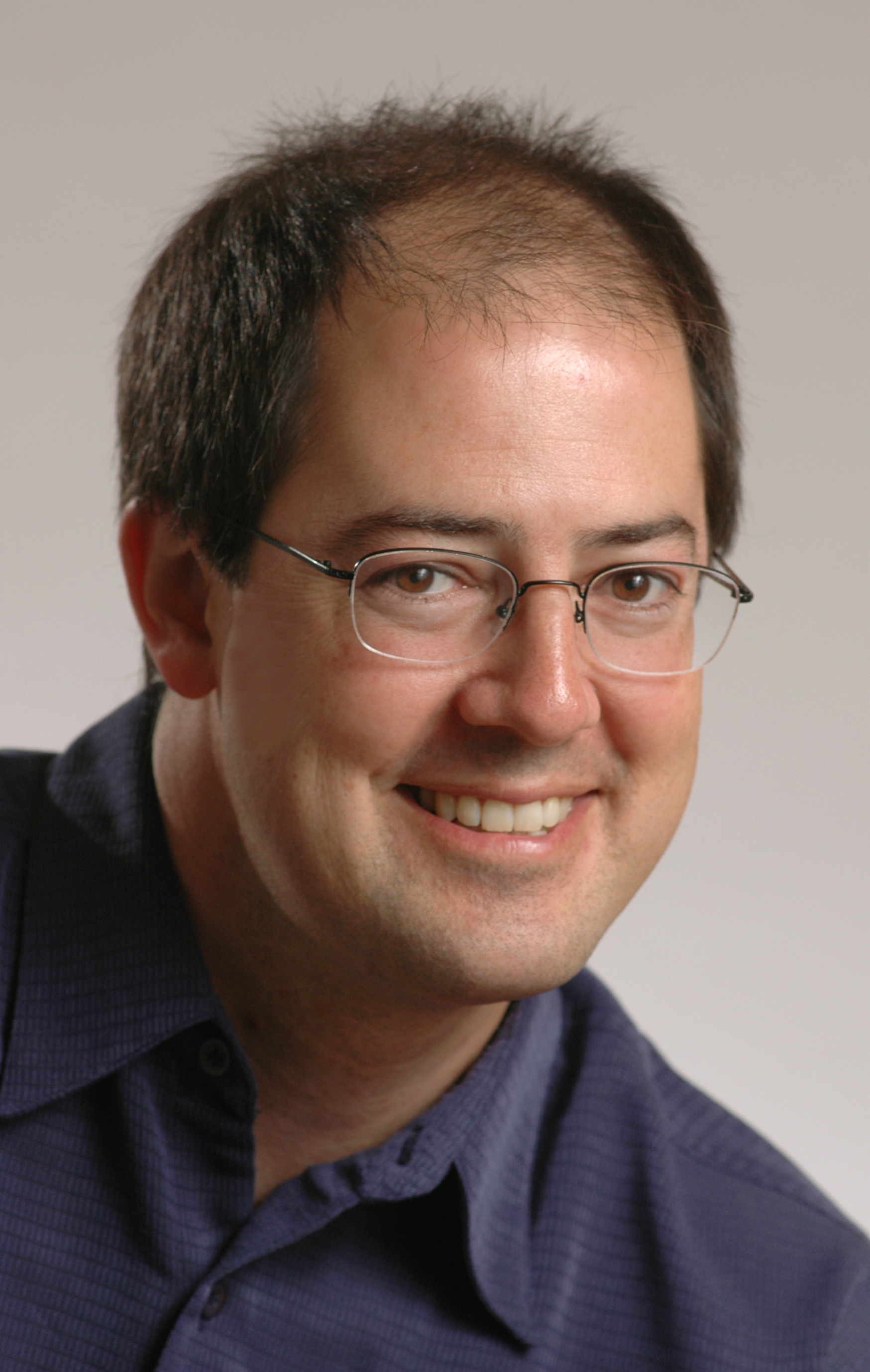
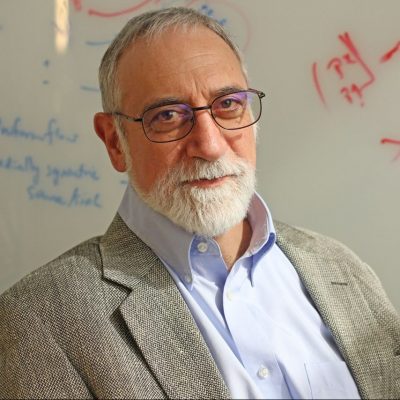
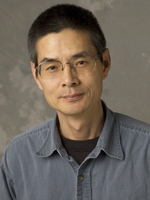
Professor Simon Godsill MA PhD FIET FIEEE is a University Professor of Statistical Signal Processing in the Department of Engineering at the University of Cambridge. He heads a research team specializing in statistical signal processing, digital audio restoration, and Bayesian inference. His work addresses the processing and analysis of digital speech, audio, tracking systems, and financial datasets, with a focus on probabilistic modeling and computational methods. Research interests include statistical signal processing , degraded signal restoration , and Bayesian computational methods . Recent publications emphasize Gaussian processes, variational inference, and multi-object tracking for applications in audio enhancement and financial data analysis. He co-founded the audio remastering company CEDAR Audio Ltd in 1988. Scientific awards: Fellow of the Institution of Engineering and Technology (FIET) Fellow of the Institute of Electrical and Electronics Engineers (FIEEE) Outside academia, he enjoys singing, cricket, piano/organ playing, and running. His team at Cambridge's Engineering department focuses on robust tracking algorithms and signal enhancement techniques.
Kristofer Pister is a Professor in the Department of Electrical Engineering and Computer Sciences at the University of California, Berkeley. He co-directs the Berkeley Sensor and Actuator Center (BSAC) and the Ubiquitous Swarm Lab. His career spans groundbreaking innovations in Micro/Nano Electro Mechanical Systems (MEMS), Control Systems, and Low-Power Circuits, with a focus on Smart Dust and synthetic insects. Education: Ph.D. and M.S. in EECS from UC Berkeley (1992, 1989); B.A. in Applied Physics from UC San Diego (1986). His research areas include MEMS , Control Systems , Robotics , and Integrated Circuits , with recent work on self-powered micro-sensors, crystal-free radios, and interplanetary swarm networks. Key awards include the ISA Albert F. Sperry Founder Award (2009) , Alexander Schwarzkopf Prize (2006) , and the NSF CAREER Award (1996) . He has authored numerous influential publications in wireless sensor networks and microrobotics. His lab, Ubiquitous Swarm Lab , explores distributed robotics and swarm intelligence. Pister emphasizes open collaboration in research, ethical conduct in academia, and efficient resource utilization for graduate students.
Juergen Dingel is a Professor in the School of Computing at Queen's University, Canada. He joined the faculty in 2000 and holds a PhD in Computer Science from Carnegie Mellon University (1999). His research focuses on software modeling, model-driven engineering, formal methods, and formal verification, with applications in real-time systems and embedded systems. He leads the Modeling and Analysis in Software Engineering (MASE) research group. Education: PhD in Computer Science, Carnegie Mellon University (1999) M.Sc. in Pure and Applied Logic, Berlin University of Technology (1994) M.Sc. in Computer Science, Berlin University of Technology (1992) Research Interests: Model-driven engineering and transformation Formal specification and verification Automated testing and debugging Real-time and embedded systems Service composition and distributed systems His work emphasizes practical tools like Papyrus-RT and MDebugger , integrating formal methods into software development. Grants & Collaborations: Funded by NSERC, OCE, and industry partners (IBM, GM, Ericsson) Focus on automotive systems, IoT, and safety-critical applications Service: Editorial board member for SoSyM , STTT , and JOT Former chair of the MODELS Steering Committee (2016–2018) PC co-chair for MODELS 2014 and FMOODS/FORTE 2011 Labs & Teams: Leads the MASE group, which develops open-source tools for model-driven engineering. Collaborates with industry on automotive and IoT projects.
Daniel E. Koditschek is the Alfred Fitler Moore Professor in the Department of Computer and Information Science at the University of Pennsylvania’s School of Engineering and Applied Science. He also holds primary appointments in the Department of Electrical and Systems Engineering and a research affiliation with the Department of Mechanical Engineering and Applied Mechanics. He is a leading figure in the GRASP Lab, where he leads the Kod*lab, a specialized group focused on physical interaction and locomotion in autonomous robots. His research lies at the intersection of dynamical systems theory and robotics, emphasizing legged locomotion, hybrid control systems, and bio-inspired design. Koditschek's work integrates formal mathematical modeling with empirical testing of physical robots that run, jump, climb, and manipulate objects. He actively explores how biological insights into animal mobility can inform robotic autonomy and control. His group maintains strong collaborations with biologists and emphasizes embodied intelligence in machine behavior. The recent publications reflect a strong trend in applying theoretical control frameworks—such as hybrid dynamical systems, averaging methods, and navigation functions—to practical robotic challenges in unstructured environments. Topics include terrain adaptation, energy-efficient locomotion, reactive planning, and affordance-based interaction. There is a clear focus on bridging abstract mathematical models with real-world robotic performance, particularly in legged and mobile manipulation systems. IEEE RAS Pioneer Award Heilmeier Research Award AFOSR MURI Award (2010) Daniel Koditschek has advised numerous PhD students and postdoctoral researchers, many of whom now hold faculty positions or leadership roles in robotics companies like Ghost Robotics and Boston Dynamics. His research is supported by major grants from the NSF and AFOSR, including the MURI award and REU/RET programs that engage K-12 and undergraduate educators. He has also been involved in international outreach, including activities at the Penn Wharton China Center. Koditschek leads the Kod*lab within the GRASP Lab’s PERCH facility, which houses advanced legged robots such as the Ghost Minitaur, XRHhex, Inu, Delta Hopper, and Jerboa platforms. The lab emphasizes experimental validation of control theories using custom hardware and real-world terrain challenges.
Prof. Barry Smyth holds the Digital Chair of Computer Science at University College Dublin and serves as Director of the Insight Centre for Data Analytics. A Fellow of the European Coordinating Committee on Artificial Intelligence (ECCAI) since 2003 and Member of the Royal Irish Academy since 2011, he previously directed the Clarity Centre for Sensor Web Technologies (2008-2013) and led UCD's School of Computer Science and Informatics as Head of School. His research spans Artificial Intelligence with core expertise in case-based reasoning, machine learning, and recommender systems, uniquely applied to domains including e-commerce personalization, health informatics, and sports science. Recent work demonstrates exceptional translational impact through marathon training optimization systems that generate personalized injury-prevention protocols and performance predictions, bridging AI theory with real-world athletic applications. Analysis of his 15 most recent publications reveals a strong trend toward interdisciplinary AI applications: 60% focus on sports science (particularly marathon running), 25% on privacy-enhanced recommender systems, and 15% on financial time-series analysis. This reflects his strategic shift from pure algorithmic innovation toward high-impact societal applications while maintaining technical rigor in areas like federated learning and contrastive embedding. Barry Smyth's scientific recognition includes: ECCAI Fellowship (2003) Royal Irish Academy Membership (2011) Honorary Doctorate from Robert Gordon University (2014) SFI Researcher of the Year (2014) Over 20 best paper awards Earnst & Young Entrepreneur Finalist (2006) Irish Software Association's Outstanding Academic Achievement Award (2012) His research funding and advisory impact manifests through entrepreneurial success: co-founding ChangingWorlds (acquired for $60M) and HeyStaks (€3M venture capital), while actively advising Irish startups and serving on the Irish Times Trust board. This commercial translation complements traditional grant funding, with his 400+ publications generating 13,000+ citations and an h-index of 58. Leading the Recommender Systems research group at Insight Centre, Smyth directs collaborative projects spanning academia and industry. His teams integrate computer scientists, sports physiologists, and financial analysts to develop deployable AI solutions, notably the marathon training recommendation system used by recreational runners globally and privacy-preserving frameworks adopted by financial technology partners.
Dr. Philippe Dixon is an Assistant Professor in the Department of Kinesiology & Physical Education at McGill University, with a division in Biomechanics and Neuroscience. He holds adjunct professor roles at the University of Montreal (School of Kinesiology and Physical Activity Sciences) and the University of Laval (Department of Kinesiology). His research focuses on human movement biomechanics using motion capture systems and wearable sensors, combined with machine learning for health and athletic performance optimization. He has expertise in gait analysis, muscle coactivation patterns in cerebral palsy, and predictive modeling of physiological states. Dr. Dixon earned a Post-doctoral fellowship in Public Health at Harvard University, a PhD in Engineering Science from the University of Oxford, and dual degrees in Biomechanics and Physics from McGill University. His education includes a Bachelor of Education in Mathematics and Physics (McGill), a Master of Science in Biomechanics (McGill), and a PhD in Engineering Science (Oxford). He has received grants such as the NSERC Discovery Grant (2022–2027) and the FRQSC AUDACE Grant (2022). His work emphasizes wearable sensor integration, with contributions to datasets like NACOB and tools like OpenOFM. He currently supervises Master’s and PhD students in biomechanics and machine learning applications. Key research themes include gait adaptations on uneven surfaces, machine learning for cough detection via smart garments, and musculoskeletal coordination in clinical populations. His articles span biomechanical modeling, wearable sensor validation, and neuro-musculoskeletal analysis, reflecting interdisciplinary innovation in human movement science.
Zhu-Tian Chen is an Assistant Professor in the Department of Computer Science and Engineering at the University of Minnesota, Twin Cities, where he leads research in data visualization, human-computer interaction, and augmented reality. Prior to this, he held postdoctoral positions at Harvard University and UC San Diego, working with leading researchers in visual computing and interactive design. Ph.D. in Computer Science, Hong Kong University of Science and Technology B.Eng. in Software Engineering, South China University of Technology His research focuses on augmenting human intelligence through hybrid human-AI systems, particularly in everyday and outdoor environments. He specializes in designing intelligent AR interfaces, embedded visualizations, and language-oriented interactions for applications in sports analytics, education, and data analysis. His work integrates human-centered design with applied machine learning to create intuitive and effective visualization tools. The recent trend in his publications shows a strong emphasis on intelligent AR systems for dynamic scenes, LLM-based code generation interfaces, and real-time augmentation of sports videos using natural language and gaze-based interactions. His work frequently appears in top-tier venues such as IEEE VIS, ACM CHI, and UIST. Best Paper Award, ACM CHI'23 Best Short Paper Honorable Mention, EuroVis'23 Best Paper Honorable Mention, IEEE VIS'22 (twice) Certificate of Distinction and Excellence in Teaching, Harvard University Hong Kong Ph.D. Fellowship Dr. Chen actively mentors undergraduate, master’s, and PhD students, as well as visiting scholars and interns, and is building a new research lab focused on visualization for intelligent AR systems. He has served on program committees for major conferences including ACM CHI, IEEE VIS, and EuroVis, and has been invited to speak at institutions such as Apple, JP Morgan, and multiple universities worldwide. He also contributes to the academic community through grant reviewing for NSF and the Department of Energy. He leads research projects in intelligent AR systems for sports, language-oriented interactions with LLMs, and immersive data visualization, often in collaboration with institutions like Harvard, UC San Diego, and HKUST. His lab welcomes students and collaborators interested in visualization, HCI, and applied AI.
Yintong Huo is a tenure-track Assistant Professor in the Department of Computer Science at Singapore Management University (SMU), School of Computing and Information Systems. He joined SMU in early 2024 after completing his PhD at The Chinese University of Hong Kong (CUHK) under Prof. Michael R. Lyu. His academic journey includes a Bachelor's degree from the University of Electronic Science and Technology of China. Education: PhD in Computer Science and Engineering, The Chinese University of Hong Kong (2024) Bachelor's degree, University of Electronic Science and Technology of China Huo's research focuses on intelligent software engineering , particularly empowering AI models (especially LLMs) for software development, testing, and operations. His work spans AI4SE, LLM4SE, AIOps, code intelligence, and multimodal software engineering . Two flagship projects define his current research: LogPAI - an open-source AI platform for automated log analysis adopted by leading tech companies, and WebPAI - a multimodal intelligence project for automatic webpage development. His research addresses critical challenges in software reliability, log analysis, and UI code generation through innovative applications of AI. His recent publications reveal a strong trend toward multimodal approaches in software engineering , combining vision and language models for UI code generation, and increasingly sophisticated applications of LLMs for log analysis and software reliability. Huo's work demonstrates exceptional impact, with multiple papers accepted at top-tier venues including ASE, ICSE, and FSE with high acceptance rates (e.g., 9.5% for ASE'25). Scientific Awards: ICSE Distinguished Reviewer Award (2025) ISSRE Distinguished Reviewer Award (2024) IEEE Open Software Services Award (2022, for LogPAI with 3k+ GitHub stars and 70k+ downloads) ACM SIGSOFT CAPS Travel Grants (ASE'23, ICSE'24, FSE'24) Nomination for Best Teaching Assistant Award (2022) National Scholarship (2019) Huo actively mentors students at multiple levels, currently supervising PhD students Shi Ying Chang and Dan Huang (co-supervised with Prof. David Lo), research engineer Minxing Wang, and visiting students including Shiwen Shan. His undergraduate mentee Truong Hai Dang will intern at Apple Inc. He maintains strong industry connections, with his LogPAI project adopted by world-leading tech companies. Huo serves on program committees for major conferences including ASE'25, ICSE'26, and FSE'26, and is recruiting fully-funded PhD students and research assistants for projects in AI4SE and multimodal software engineering. Huo leads the LogPAI and WebPAI research initiatives, which have evolved into substantial open-source projects with significant industry adoption. His team focuses on practical applications of AI in software engineering, with particular emphasis on reliability and usability in real-world systems. The research environment benefits from SMU's strong position in software engineering research, where the university ranks No. 2 globally in Software Engineering according to CSRankings (2020-2025).
Steffi Colyer is a Senior Lecturer in Biomechanics at the Department for Health, University of Bath. She is affiliated with the Centre for Health and Injury and Illness Prevention in Sport and the Bath Institute for the Augmented Human. Her research is supported by major grants from EPSRC and ESA, focusing on elite athletic performance, rehabilitation, and motion analysis technologies. Her research interests center on biomechanics of athletic performance, particularly in sports such as skeleton, badminton, and sprinting. She investigates the kinetic and kinematic determinants of elite performance, develops markerless motion capture systems for real-world analysis, and applies musculoskeletal modelling to understand internal loading and adaptation in normal and simulated gravity environments. Her work bridges sports science, engineering, and rehabilitation. The recent trend in her publications shows a strong focus on markerless motion analysis, pose estimation, musculoskeletal modelling, and the biomechanics of sprinting and racket sports. She leverages advanced computational methods, including deep learning and in silico simulations, to improve performance analysis and injury prevention. Her scientific awards include: ISBS New Investigator Award finalist (oral) (co-author), 2022 Departmental Staff Award for Innovation in Learning and Teaching, 2025 She has supervised multiple research students and projects, including PhD and postdoctoral work, and is actively involved in peer review for journals such as Journal of Sports Sciences , Scientific Reports , and Journal of Biomechanics . She leads the IAA project on markerless motion capture for skeleton push-start analysis and contributes to the CAMERA initiative, a major interdisciplinary research center focused on motion analysis and virtual reality applications. Her research is conducted within the Centre for the Analysis of Motion, Entertainment Research and Applications (CAMERA), where she collaborates with computer scientists, engineers, and sports scientists to develop and apply cutting-edge motion capture technologies in real-world settings.
Zhiyuan Li is a Professor in the Department of Computer Sciences at Purdue University's College of Engineering. His primary research and teaching focus on program analysis, transformation, and run-time management for high-performance computing and multicore systems, as well as reliable software for networked embedded systems. Professor Li teaches graduate-level courses including CS502: Compiling and Programming Systems and CS591RS1: Research Seminar for First-year Graduate Students. Office: LWSN 3154H Contact: li@cs.purdue.edu Phone: +1 765-494-7822 Professor Li's research spans multiple areas within computer science, with particular emphasis on compiler design, program analysis, and parallel computing. His work addresses fundamental challenges in enabling efficient execution of applications on modern parallel architectures, including multicore processors and large-scale distributed systems. He has made significant contributions to techniques for data dependence analysis, loop parallelization, array privatization, and memory optimization in compilers. His research also extends to reliable software development for embedded and sensor network systems, where resource constraints and reliability requirements present unique challenges. Professor Li's publication record demonstrates consistent contributions to top-tier conferences and journals in computer science, particularly in the areas of parallel computing, compiler optimization, and high-performance numerical methods. His work shows a progression from foundational compiler techniques to applications in scientific computing domains such as computational fluid dynamics for jet engine noise simulation. This interdisciplinary approach connects low-level program analysis with real-world engineering applications requiring petascale computing resources. Principal Investigator for NSF/PetaApps project on jet engine noise simulation Principal Investigator for Intel-sponsored research on data dependence profiling Extensive service on program committees for major conferences including ICS, PPoPP, and LCTES Professor Li has been actively involved in mentoring graduate students through research projects and course instruction. His jet engine noise simulation project specifically mentions training three Ph.D. graduate students and involving undergraduate research assistants. As coordinator for the first-year graduate research seminar, he plays a significant role in guiding new students through the transition to graduate research work in computer science. His laboratory work focuses on developing compiler techniques and runtime systems for parallel and high-performance computing. The research infrastructure includes implementations in GCC for fast data dependence profiling and support for SIMD/SSE instructions, demonstrating practical applications of theoretical compiler techniques.
Professor Andreas Baas is a leading academic in aeolian geomorphology, holding a Professorship at King's College London's Department of Geography within the School of Global Affairs. His research focuses on dune dynamics on Earth and Mars, aeolian sand transport, and climate change impacts. He earned BSc/MSc from the University of Amsterdam and a PhD from the University of Southern California, supported by an NSF Research Award. Previously, he was an Adjunct Professor at California State University San Bernardino. Research interests include desert dune hazards, microplastics transport, and Martian dune bedforms. He has published 40+ peer-reviewed articles, 10+ book chapters, and his work has been cited over 3,500 times. His grants include funding from the Leverhulme Trust, Nuffield Foundation, and UK NERC. He supervises PhD students on topics like barchan swarms and Mars dune dynamics. His lab work includes developing tools like PyShoreVolume for shoreline change analysis. He is an associate editor for Earth Surface Dynamics and a member of the NERC Peer-Review College.
Helmholtz Centre Potsdam - German Research Centre for GeosciencesGermany
Dr. Tomislav Hengl is a leading researcher and Technical Director at OpenGeoHub Foundation and Envirometrix BV, specializing in spatial statistics, machine learning, and environmental data science. With over 20 years of experience in predictive soil mapping and geostatistics, he has pioneered open source frameworks for automated global environmental mapping. Co-founder of OpenGeoHub Foundation Initiator of OpenGeoHub Summer Schools (running since 2007) Project leader of OpenLandMap system Recipient of Clarivate Highly Cited Researcher (2021) His research focuses on: Machine learning for spatial/spatiotemporal data Environmental data cube systems Global soil and vegetation mapping Open source geospatial software development Spatio-temporal predictive modeling Cloud computing for Earth observation data Recent research trends include: Development of high-resolution global terrain models Analysis of vegetation productivity using satellite time-series Ensemble machine learning for environmental mapping Integration of multi-source geospatial datasets Applications in climate change impact assessment Advancing open data infrastructures Scientific contributions include: Clarivate Highly Cited Researcher (2021) Over 60 journal publications Founding Vice-Chair of the International Society for Geomorphometry (2011-2015) Development of open source R packages for geospatial analysis
Don G. Wardell is a tenured Professor and Francis A. Madsen Scholar in the Department of Operations and Information Systems at the University of Utah's David Eccles School of Business. Holding the David Eccles Faculty Scholar designation, he serves as a key contributor to the school's academic mission through teaching, research, and service. His educational background includes: Ph.D. in Management Science from Purdue University (1990) MS in Metallurgical Engineering from University of Utah (1987) BS in Metallurgical Engineering from University of Utah (1985) Wardell's research centers on quality management and statistical process control (SPC), with significant contributions to understanding SPC under non-ideal conditions like autocorrelation. His recent work extends into service operations management, particularly examining service scripting and customer perception. He has pioneered methods for adapting SPC to educational contexts and service industries, challenging traditional assumptions through rigorous probability distribution analysis. His publication record shows a strong focus on operations management with recurring themes in SPC methodology, service quality measurement, and educational applications of statistics. Articles consistently address practical implementation challenges in both manufacturing and service environments, with increasing attention to customer experience metrics in service operations. His scientific recognition includes: Production and Operations Management Society’s Most Influential Paper Award (2015) Multiple university-level teaching honors including the Calvin S. Hatch Prize (2020) Brady Superior Teaching Award (awarded 2024, 2015, 1999) Distinguished University Teaching Award (2007) Purdue University Dissertation Competition Winner (1991) Wardell maintains active industry engagement through consulting with organizations including American Express, Utah Transit Authority, and the LDS Church Family History Department. His teaching philosophy emphasizes critical thinking development and student-centered learning, reflected in his receipt of the Center for Disability Services Teaching Award (2007). He has taught internationally in Costa Rica (in Spanish) and Spain, and serves on editorial boards for Production and Operations Management and IIE Transactions.
National and Kapodistrian University of AthensGreece
Steve Blackburn is a research scientist at Google DeepMind and professor of computer science at the Australian National University in the College of Engineering and Computer Science. His primary research focus is on programming language implementation, with expertise spanning memory management, virtual machines, and performance analysis. He has served in significant leadership roles including Associate Dean for Diversity and Inclusion (2016-2019) and as Program Chair for PLDI 2015 and General Chair for PLDI 2023. Blackburn's research interests center on making software run faster and more power-efficiently on modern hardware. His primary areas include microarchitectural support for managed languages, fast and efficient garbage collection, and the design and implementation of virtual machines. He maintains a strong interest in sound methodology and infrastructure for successful research innovation. His work bridges theoretical computer science with practical systems implementation, with particular focus on memory management frameworks and performance benchmarking. His publication record reveals a consistent focus on memory management systems, with recent work exploring garbage collection in modern contexts including CRuby, Julia, mobile devices, and memory-disaggregated datacenters. His research shows an evolution from foundational garbage collection algorithms toward practical implementations addressing real-world constraints in contemporary programming languages and hardware platforms. A notable trend is his increasing focus on quantifying and understanding the true costs of garbage collection in production environments. Fellow of the ACM Blackburn has supervised numerous doctoral students including Zhen He, John Zigman, Robin Garner, Ting Cao, and currently advises Wenyu Zhao, Zixian Cai, and others. He has also served on multiple program committees for major conferences including PLDI, ASPLOS, ISMM, and OOPSLA, demonstrating his significant contributions to the programming languages and systems research community. His service includes editorial roles for ACM Transactions on Programming Language Applications and Systems from 2017-2020. He leads two major research infrastructure projects: the MMTk memory management framework and the DaCapo benchmark suite, both of which have become foundational tools for researchers in programming languages and systems. These projects reflect his commitment to shared research infrastructure and reproducible methodology in systems research.
May Haidar is an Assistant Professor in the Department of Electrical Engineering & Computer Science at York University. Her work bridges theoretical and applied domains, focusing on software engineering, web applications, and formal verification techniques. Education: Ph.D. in Computer Science (Université de Montréal, 2008), M.S. (Concordia University), B.S. (American University of Beirut) Current Role: Teaching Object-Oriented Programming, Advanced Programming, and Web Development courses Her research explores formal methods in software engineering, particularly temporal logics and run-time verification for web applications. She has contributed to hybrid analysis techniques for composite web services and anomaly detection frameworks. Publications span formal verification, web application security, and embedded systems design, with a focus on integrating temporal logic extensions into validation processes. While no explicit awards are listed, her work has been presented at global conferences, including events in Dubai, Cambridge, and Las Vegas.